Secures Over $60 Million in Funding from Dragonfly, Sequoia, and Others. An In-Depth Look at the On-Chain Derivatives Protocol Variational | CryptoSeed

链捕手Опубліковано о 2026-05-22Востаннє оновлено о 2026-05-22

Анотація

Variational, a decentralized derivatives trading platform, has raised over $61.8 million in total funding, including a recent $50 million Series A led by Dragonfly Capital. Investors include Sequoia Capital, Coinbase Ventures, Bain Capital Crypto, and Hack VC. The platform, with over $810 million in Open Interest (ranking 4th among on-chain derivatives protocols), is founded by Lucas Schuermann and Edward Yu. Both are Columbia University graduates and former partners at quant fund Qu Capital. They later held senior roles at Genesis Trading, handling billions in trading volume. The broader team includes talent from Google, Meta, and top trading firms like Jane Street. Operating on Arbitrum, Variational distinguishes itself by aggregating external liquidity from CEXs, DEXs, and traditional market makers using an RFQ (Request-for-Quote) model, positioning itself more as a broker than an exchange like Hyperliquid. Its dual product line features Omni for retail users (offering up to 50x leverage on ~450+ crypto and TradFi pairs) and Pro for institutional OTC trading. Currently in a pre-TGE phase, Variational has launched an "Omni Points" system, with 50% of its upcoming $VAR token supply allocated for community incentives through trading-based rewards and referrals until Q3 2026.

Author: momo, ChainCatcher

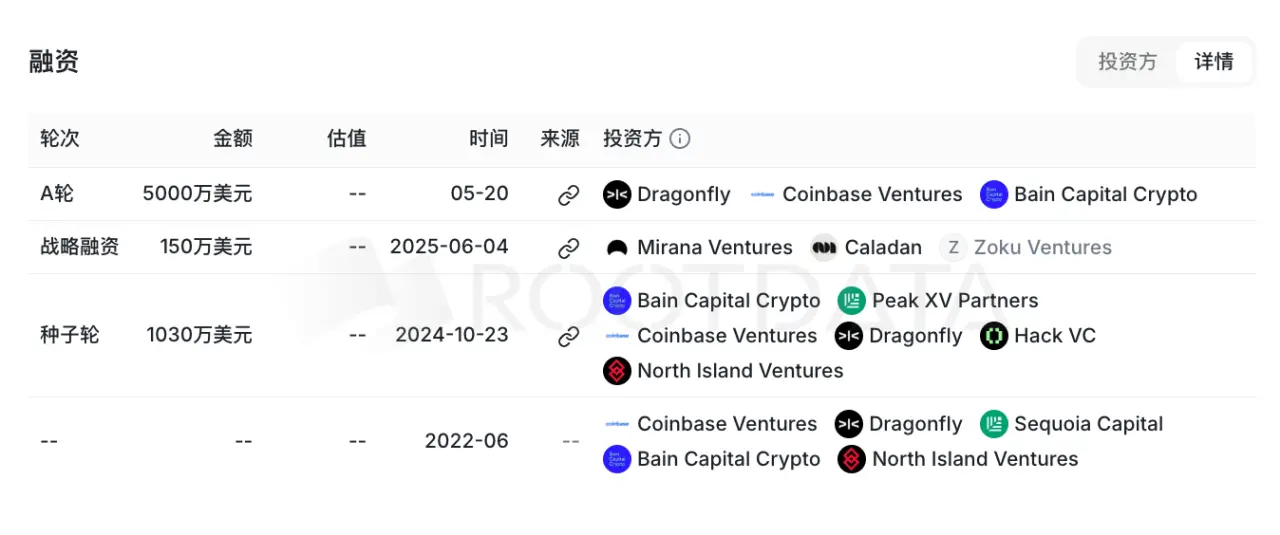
Recently, the decentralized derivatives trading platform Variational announced the completion of a $50 million Series A financing round led by Dragonfly. Combined with three previous funding rounds, Variational has raised a cumulative total of $61.8 million. Its investor lineup is quite impressive, including not only Dragonfly but also renowned institutions such as Sequoia Capital, Coinbase Ventures, Bain Capital Crypto, Hack VC, and others.
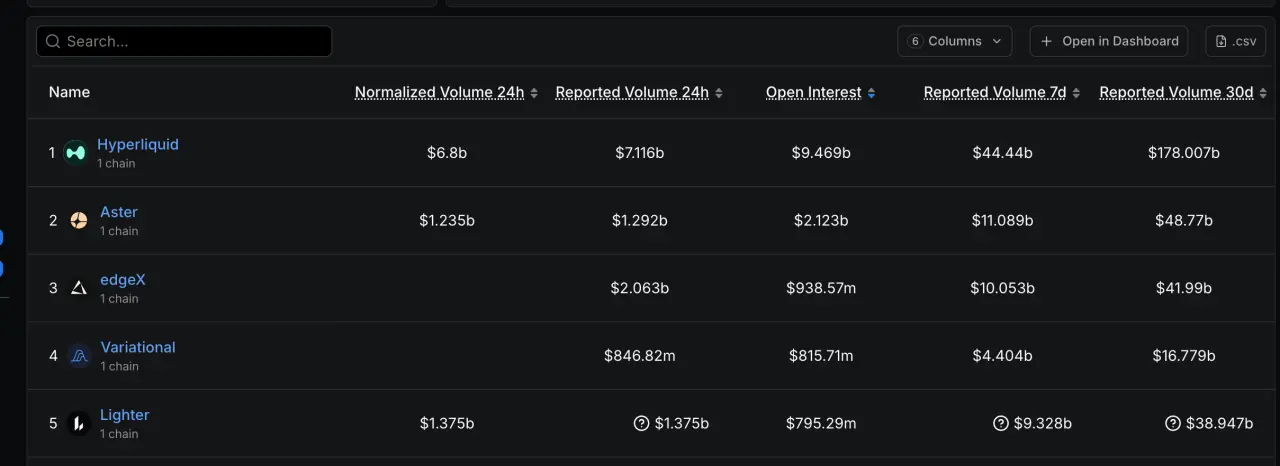
According to DeFiLlama data, the open interest (OI) on Variational has exceeded $810 million. While there remains a significant gap compared to Hyperliquid's $9.4 billion, its OI currently ranks fourth among on-chain derivatives protocols.
In the fiercely competitive decentralized derivatives sector, why has Variational continued to secure backing from top-tier institutions? What is the team's background? What are its differentiated approaches? This article provides a brief overview.

What is the team's background?

In terms of team background and entrepreneurial experience, Variational and Hyperliquid share several similarities: both teams graduated from prestigious universities, come from quantitative trading backgrounds, founded quantitative funds, and subsequently transitioned to building on-chain derivatives platforms.

However, unlike Hyperliquid's early mystique and anonymous team approach, Variational discloses its founding team's background and entrepreneurial journey in its whitepaper.
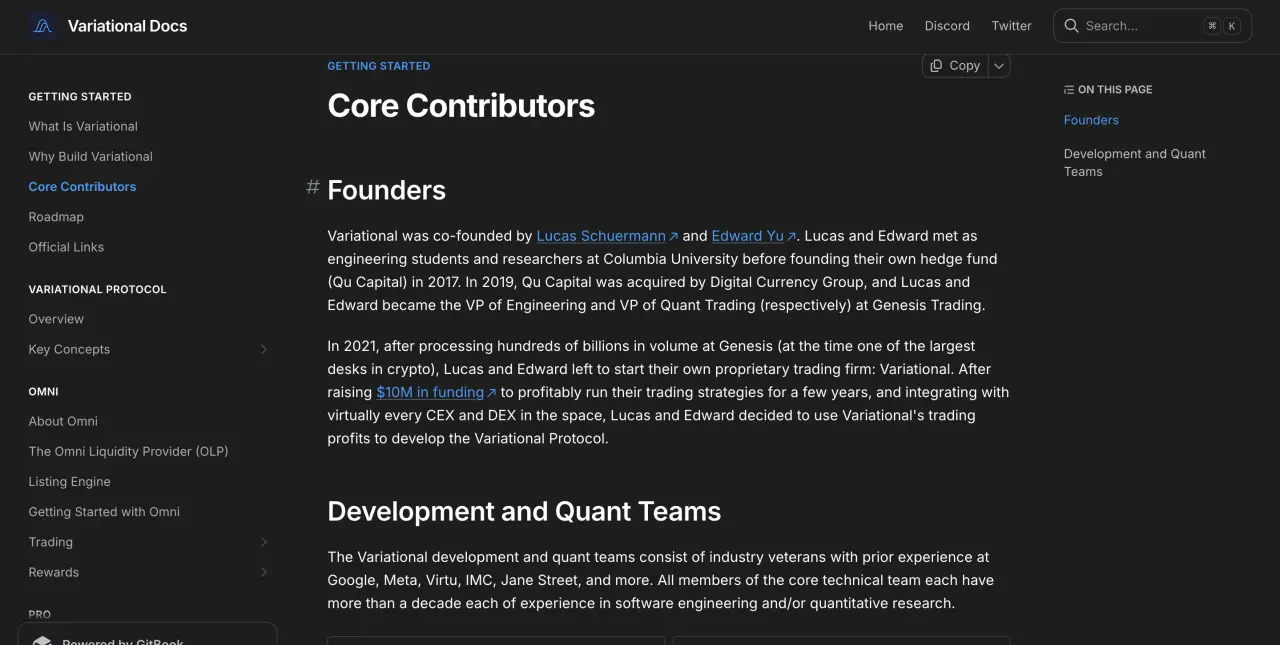
Variational was co-founded by Lucas Schuermann and Edward Yu. CEO Lucas graduated from Columbia University and was previously responsible for trading systems engineering architecture; Edward Yu has a Chinese background and was originally a quantitative analyst. The two met while studying and conducting research in the engineering department at Columbia University and co-founded the quantitative hedge fund Qu Capital in 2017.

In 2019, Qu Capital was acquired by Digital Currency Group. Subsequently, both joined Genesis Trading: Lucas served as Vice President of Engineering, and Edward Yu served as Vice President of Quantitative Trading.

According to the whitepaper, before leaving Genesis in 2021, their team had processed trading volumes in the hundreds of billions of dollars. After leaving, they founded their proprietary trading firm, Variational, and secured $10 million in funding.

In the following years, the team operated proprietary trading strategies while integrating with mainstream CEX and DEX trading interfaces. Later, based on their own trading business and system experience, they began developing and operating the Variational Protocol.

Additionally, Variational's development and quantitative team members also hail from technology and quantitative institutions such as Google, Meta, Virtu Financial, IMC Trading, and Jane Street. The whitepaper states that core technical team members generally possess over a decade of experience in software engineering or quantitative research.

What are its product features? How does it differ from Hyperliquid?

Judging from the trading interface, there isn't a significant difference between Variational and Hyperliquid. The platform currently lists approximately 450 trading pairs, mainly covering cryptocurrency and TradFi assets, offering users leverage up to 50x. The TradFi section is currently in Beta testing. According to official disclosures, the TradFi market will list over 100 trading pairs.
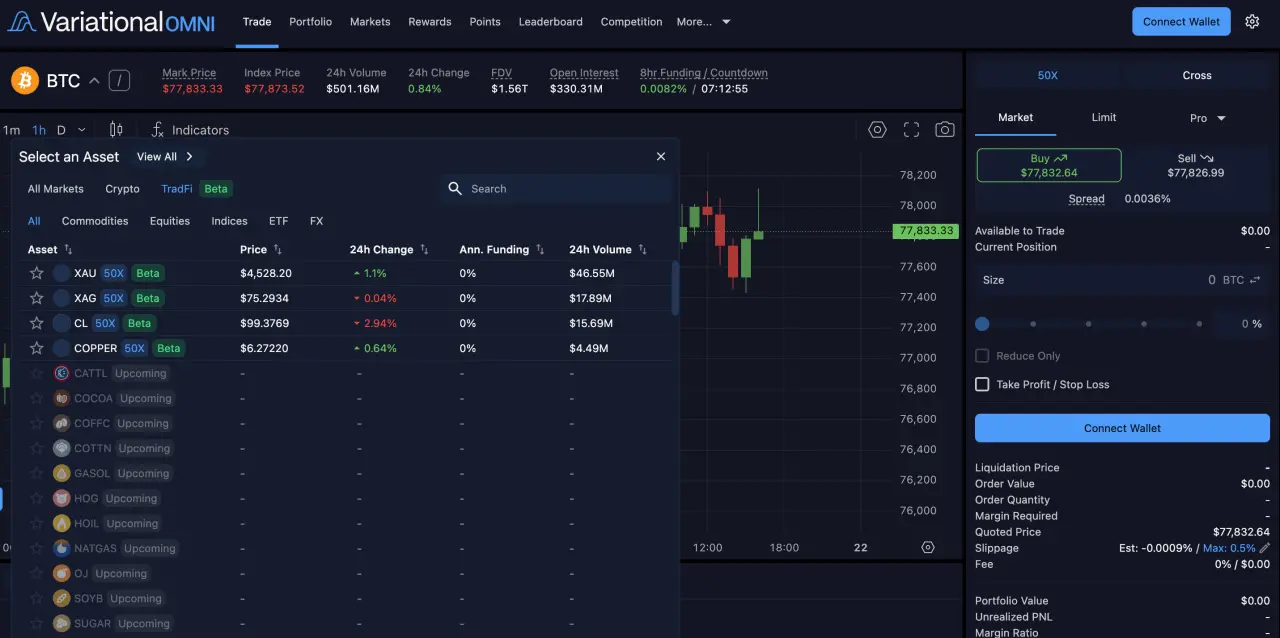
However, in its press release, Variational emphasizes a distinctly different positioning from Hyperliquid.

Variational describes its model as more akin to a brokerage rather than another exchange in the style of Hyperliquid. Its target users are not limited to crypto-native traders; it aims to make the on-chain derivatives trading experience closer to traditional markets through zero-fee trading and liquidity aggregation.

Currently operating on Arbitrum, Variational employs a dual-product-line model. The Omni version primarily targets retail users, positioned as a perpetual contracts trading product aggregating liquidity from multiple sources, while the Pro version caters to institutional over-the-counter derivatives trading.

The most significant difference from Hyperliquid lies in order matching and liquidity mechanisms. Hyperliquid relies on its self-built L1 chain and a public central limit order book (CLOB), with market makers or the HLP treasury within the protocol competing to provide quotes, and traders paying maker/taker fees. In contrast, Variational uses an RFQ (Request for Quote) model, with a single liquidity provider as the counterparty. It does not rely on on-chain internal market making but instead aggregates external liquidity in real-time from sources like CEXs, DEXs, OTC channels, and traditional financial market makers, managing risk through hedging.

The rationale for choosing this differentiated path, according to Variational CEO Lucas, is that on-chain liquidity still lags far behind traditional trading venues like the CME, and order book models face a "cold start" problem. Aggregating liquidity from external sources avoids the need to rebuild liquidity from scratch on-chain.

What is the current stage? What participation opportunities are available?

Variational is currently still in the Pre-TGE stage; the $VAR token has not been issued. The project initially planned a TGE in Q1 2025, which has since been postponed. No new definitive TGE date has been officially announced.

In December 2025, Variational launched the Omni Points points system. The official statement indicates that 50% of the $VAR supply will be allocated for community incentives, distributed gradually through mechanisms like Points rather than a one-time airdrop.

Regarding points, 3 million points have been retroactively distributed to early users. Subsequently, points are distributed every Friday based on the previous week's trading snapshot. The points program is scheduled to conclude by Q3 2026 at the latest.

The main current participation opportunity is to engage in perpetual contracts trading on the Omni platform. Trading volume is the core factor for earning points, with additional point bonuses available for holding positions over time and referring others.


Пов'язані питання

QWhat is the total funding amount raised by the decentralized derivatives platform Variational, and who led its Series A round?

AVariational has raised a total of $61.8 million. Its Series A round of $50 million was led by Dragonfly.

QWhat are the key differences between Variational and its competitor Hyperliquid in terms of their operational models?

AThe key difference lies in their order matching and liquidity mechanisms. Hyperliquid relies on its own L1 blockchain with a public Central Limit Order Book (CLOB). Variational uses an RFQ (Request for Quote) model, acting as a single liquidity provider counterparty that aggregates external liquidity from CEXs, DEXs, OTC channels, and TradFi market makers, then manages risk through hedging.

QWhat is the professional background of Variational's founding team prior to starting the protocol?

ACo-founders Lucas Schuermann and Edward Yu met at Columbia University. They co-founded the quantitative hedge fund Qu Capital in 2017, which was later acquired by Digital Currency Group. They then joined Genesis Trading, where Lucas served as VP of Engineering and Edward Yu as VP of Quantitative Trading, before leaving in 2021 to found Variational.

QWhat is the current stage of Variational's token ($VAR) launch, and how is the project engaging its community?

AVariational is currently in the Pre-TGE stage, and the $VAR token has not been launched yet. The previously planned TGE for Q1 2025 has been postponed with no new official date announced. The project is engaging its community through an 'Omni Points' loyalty program launched in December 2025, with 50% of the $VAR supply designated for community incentives distributed via points and other mechanisms over time.

QOn which blockchain does Variational primarily operate, and what are its two main product lines?

AVariational primarily operates on the Arbitrum blockchain. It follows a dual-product line model: the 'Omni' version targets retail users as a perpetual contracts trading product aggregating liquidity from multiple sources, while the 'Pro' version is designed for institutional over-the-counter (OTC) derivatives trading.

Пов'язані матеріали

Ten-Thousand-Word Analysis: From $10 to $290, MRVL Wins the Entire AI Era by 'Not Making GPUs'

Marvell Technology's stock price surged from under $10 in 2016 to a record $290 in June 2026, fueled not by making GPUs, but by dominating AI infrastructure connectivity. This analysis argues the market misvalues MRVL as merely a smaller Broadcom in custom AI chips, overlooking its true, unique position. Marvell's core strength lies in enabling high-speed data flow for AI clusters through three interconnected businesses. First, it holds a commanding ~70% market share in high-speed optical DSPs (essential for data center light modules), a deep-moat business with accelerating growth. Second, its custom AI chip design business serves hyperscalers like AWS, Microsoft, and Google, with a significant revenue pipeline despite lower margins. Third, stable cash flows come from Ethernet switch chips and enterprise storage controllers. Together, they form a full-stack "AI data movement" platform. CEO Matt Murphy's transformative leadership since 2016, involving strategic divestments, key acquisitions (like Inphi for optical DSPs), and securing long-term agreements with major cloud providers, repositioned the company. A pivotal $2 billion strategic investment from NVIDIA in 2026 underscored Marvell's critical role in the AI ecosystem, particularly through collaborations like NVLink Fusion. While Marvell faces risks—including client concentration (losing the Amazon Trainium3 design), lower-margin business mix, competitive threats, insider selling, and complex supply chains—its fundamentals remain strong. The optical interconnect moat is widening with the acquisition of Celestial AI (photonics fabric), and financial metrics show accelerating revenue growth and operating leverage. With a PEG ratio suggesting undervaluation relative to its growth, the thesis is that the market undervalues Marvell's monopolistic position in AI "plumbing" while overemphasizing its competitive custom chip segment. The story transcends investing, symbolizing how in any complex system—from the internet to AI—the value of "connection" ultimately surpasses that of individual "nodes."

marsbit17 хв тому

Ten-Thousand-Word Analysis: From $10 to $290, MRVL Wins the Entire AI Era by 'Not Making GPUs'

marsbit17 хв тому

AI Relay Stations Spark Heated Debate on Zhihu: Behind Cheap Tokens, What Are Users Really Worried About?

A discussion on Zhihu about "AI relay stations" shifted the niche developer topic of "cheap tokens" into broader user awareness. Users moved beyond simply questioning the legitimacy of these services to focus on practical concerns: Where do cheap tokens truly come from? Is the model being accessed the real one? Can relay stations see prompts, code, and API keys? For occasional users, are the risks worth it? The core debate centered less on price and more on trust. A primary worry is model authenticity—the risk of "model swapping," where users paying for a premium model might be routed to a cheaper one, creating an information asymmetry. Others argued that cost comparisons matter; while cheaper than official pay-as-you-go APIs, relay stations may not be the lowest-cost option versus subscriptions, domestic models, or free tiers, making user needs assessment crucial. Speculation about token sources ranged from legitimate bulk discounts to gray-area methods like account sharing or exploiting regional pricing. This opacity makes risk assessment difficult for users. Data security emerged as a critical concern, especially for enterprise use. When processing sensitive information like code, contracts, or client data, the inability to verify a relay station's data handling, retention, or access policies poses significant compliance and confidentiality risks. The evolving consensus suggests relay stations can be used cautiously for low-sensitivity, disposable tasks (e.g., summarizing public info, simple translation). However, they should not be the default for sensitive, professional, or production workflows involving proprietary data, Agents, or automated systems. Recommendations include avoiding large prepayments, not relying on a single service, using test prompts to monitor quality, anonymizing data where possible, and keeping official channels as backups. Ultimately, the discussion framed tokens not just as a billing unit but as a measure of real cost encompassing price, model integrity, data security, and service stability. The popularity of relay stations highlights user demand for affordable access, but the debate underscores a key trade-off: the savings from cheap tokens may come at the price of trust, transparency, and control over one's data and AI experience.

marsbit47 хв тому

AI Relay Stations Spark Heated Debate on Zhihu: Behind Cheap Tokens, What Are Users Really Worried About?

marsbit47 хв тому

In-Depth Research Report on TradFi: The Convergence Wave of Crypto and Traditional Finance

In 2026, the crypto industry is undergoing a profound infrastructure-level transformation—TradFi assets are migrating on-chain at an unprecedented pace. According to CoinGecko's Q1 2026 report, the total value locked (TVL) of tokenized real-world assets (RWA) has surpassed $31 billion, a nearly 4x increase from $7.8 billion at the beginning of 2025, with the sector’s aggregate market capitalization reaching $19.3 billion. Among these, the market cap of tokenized stocks surged from $2 million to $486 million, with Q1 spot trading volume reaching $15.1 billion—a single quarter already surpassing the entire second half of 2025. RWA perpetual contract Q1 trading volume reached a staggering $524.8 billion, far exceeding the $313 billion for all of 2025. Meanwhile, BlackRock's BUIDL fund has reached $2.3 billion in scale and has filed for two new tokenized funds, signaling that the world's largest asset manager's tokenization strategy is evolving from pilot to product suite expansion. HTX, as a core participant in the crypto exchange sector, officially launched TradFi perpetual futures products including NVDA, AAPL, MSFT, META, and SPY in 2026, enabling crypto users to gain 24/7 trading access to core U.S. equities. Boston Consulting Group predicts that global tokenized asset scale could reach $16 trillion by 2030, while McKinsey offers a conservative estimate of approximately $2 trillion. The on-chain migration of TradFi assets is no longer a "future narrative" but a structural transformation unfolding in real time, as crypto exchanges evolve from single crypto asset trading platforms toward "multi-asset-class trading infrastructure."

HTX Learn50 хв тому

In-Depth Research Report on TradFi: The Convergence Wave of Crypto and Traditional Finance

HTX Learn50 хв тому

Торгівля

Спот
Ф'ючерси
活动图片