Reddit Discussion: After 11 Years in Crypto, RWA Is One of the Few Things That Doesn't Feel Like 'Old Wine in a New Bottle'

marsbitОпубліковано о 2026-05-29Востаннє оновлено о 2026-05-29

Анотація

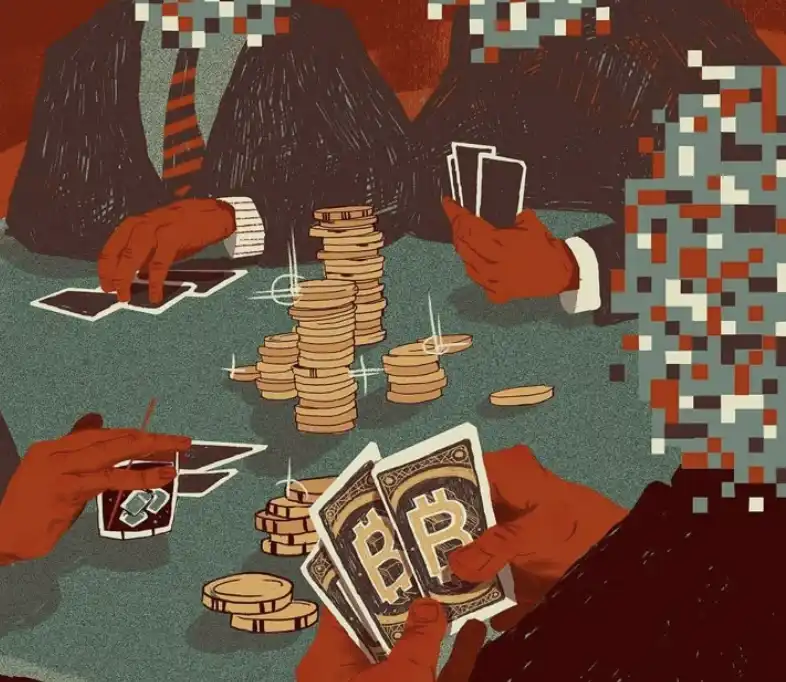
Reddit Discussion: After 11 Years in Crypto, RWA Feels Unlike the Usual 'Old Wine in a New Bottle' A user with experience since 2014 shares that, having witnessed major crypto cycles from ICOs to FTX, most new narratives are just rebranded old ideas. However, Real World Assets (RWA) feel genuinely different. It's not about moving existing on-chain capital but bringing yields from real-world assets onto the blockchain. While many projects are flawed, the underlying premise is stronger than most. The user outlines key checks before engaging with any RWA project: 1) Existence of a lending business *before* the token launch (citing examples like Maple and 8lends). 2) Clear, transparent handling of defaults, using Goldfinch's 2023 issues as a critical lesson about inevitable credit risk. They note a crucial distinction for newcomers: RWA lending involves slow recovery from real assets (taking months), unlike the instant liquidations of over-collateralized DeFi protocols like Aave. Ultimately, the hard part is the traditional credit work, not the blockchain. Commenters agree, emphasizing the importance of documented default procedures and teams with pre-token real-world credit experience. They observe that a project's response to its first default is more telling than any metrics dashboard, summarizing RWA as "old credit on a new rail."

Author: LateNeverr1

Compiled by: Deep Chao TechFlow

I started mining in 2014 and switched to ETH when it launched in 2015. I've seen it all since then: the DAO hack, the ICO craze, DeFi Summer, the Terra collapse, Celsius, FTX.

After enough cycles, you stop getting excited about "new" narratives. Most of them are just the same thing returning under a different name. Liquidity mining became points mining, ICOs became IDOs.

RWA feels different, and I don't say that lightly.

It's not just another way of moving capital around on-chain, but bringing yields from assets that have never been on-chain before onto the chain. This doesn't mean it solves all problems, many projects are vaporware, but the fundamentals behind this sector are more solid than most project whitepapers.

Things I check before touching any RWA project:

  • Whether the lending business existed before the token appeared. Maple's founders have a traditional credit background. 8lends was launched based on a platform that had been doing offline P2P lending for years. I value this more than tokenomics or headline APRs.
  • Whether defaults are explained clearly or covered up. The Goldfinch incident in 2023 was a lesson for the entire sector. Real credit risk will surface eventually, and anyone pretending it won't isn't worth your time.

I maintain small positions in a few projects just to observe their performance. Most of my holdings are still in ETH and validation nodes.

If you're new, one thing to understand clearly:

Over-collateralized lending like Aave involves instant liquidation, while RWA lending involves slow recovery from real-world assets, which can take months. These are two completely different types of risk.

Ultimately, it's largely about moving old-fashioned credit work onto a new track. The difficult part has never been the blockchain.

Selected Comments:

Careful_keklin: I entered in 2017, and after Celsius, my criteria for screening projects are similar to yours. The most important point for me is whether default scenarios are clearly documented somewhere or glossed over lightly. Most RWA protocols I checked in 2022-23 couldn't even explain their own recovery processes clearly, which speaks volumes. Goldfinch's outcome was inevitable for this model, not an exception.

be_boss: Completely agree, especially that "test of real business before the token." The ICO era relied on whitepapers, DeFi Summer on APY, 2022 on "we are compliant." The signature phrase of each cycle looks rigorous until the next one starts. Those that survive each round of shuffling are basically the teams that had credit businesses running off-chain before launching a token. That point about Goldfinch is spot on—default is the real stress test, not TVL. A team's reaction the first time something goes wrong says more than a year's worth of data dashboards. "Old credit on a new track" is so accurate; the smart contracts were never the hard part.

Пов'язані питання

QAccording to the article, why does the author, with 11 years of experience in crypto, find the RWA narrative unique compared to others?

AThe author finds RWA unique because it is not just another method of moving capital around on-chain. Instead, it introduces the yields of real-world assets that have never been on-chain before. This feels more substantive, even though many projects are still vaporware, as the concept is backed by more solid foundations than most project whitepapers.

QWhat are the two key things the author checks before engaging with any RWA project?

A1. Whether a lending business existed *before* the token was introduced. The author values projects where the founders have traditional credit backgrounds or where the platform was built on an existing offline P2P lending business. 2. How defaults are handled. The author looks to see if default scenarios are clearly explained and documented or if they are glossed over, citing the 2023 Goldfinch incident as a critical lesson for the sector.

QWhat core difference does the author point out between Aave-style lending and RWA lending regarding risk?

AAave-style lending uses over-collateralization with instant liquidation. In contrast, RWA lending involves slow recovery from real-world assets, which can take months. The author emphasizes that these two models represent completely different types of risk.

QSummarize the viewpoint of the commenter 'be_boss' regarding the evolution of project narratives across crypto cycles.

AThe commenter 'be_boss' agrees with the author's view that each crypto cycle has its own hallmark narrative that appears rigorous until the next cycle begins: ICOs relied on whitepapers, DeFi Summer on APY, and 2022 on claims of being 'compliant.' The survivors after each shakeout are typically teams that ran credit businesses offline *before* launching a token. The commenter also stresses that a team's reaction to its first default or crisis is a more telling test than a year's worth of dashboard data.

QWhat is the common sentiment expressed by both the author and the commenter 'Careful_keklin' about the Goldfinch incident and RWA protocols in general?

ABoth the author and the commenter view the Goldfinch incident not as an exception but as an inevitable outcome for the RWA model when real credit risk materializes. They criticize protocols that cannot clearly document their default scenarios or recovery processes, seeing this lack of transparency as a major red flag. The incident served as a critical lesson and stress test for the entire RWA sector.

Пов'язані матеріали

Bitwise: Crypto Becomes a Contrarian Investment, Three Logics to Understand the Current Market

**Summary** Matt Hougan, Bitwise's CIO, analyzes the current crypto market through three key lenses, arguing it has shifted from a momentum-driven to a contrarian investment. **1) Crypto Becomes a Contrarian Play:** The market is weak, with major assets like Bitcoin and Ethereum down significantly. Capital has moved to hot sectors like AI, leaving crypto as an "unloved" asset class. This transforms crypto investing from trend-following to a test of patience and fundamental analysis. Investors now favor projects with solid fundamentals (e.g., Hyperliquid) over speculative ones. **2) Regulatory Overhang:** The uncertain fate of the U.S. CLARITY Act, a major crypto regulatory framework, is a key headwind. With its passage in 2024 seen as far from guaranteed (estimates range from 30-55%), institutional capital remains on the sidelines, choosing less risky alternatives like AI stocks. The market needs clarity—whether the bill passes or fails—more than any specific outcome to move decisively. **3) Capital Rotates to New Fundamentals:** This cycle differs from past bear markets where money fled to Bitcoin. Now, capital seeks smaller assets with strong use cases. While major cryptos fell in May 2024, tokens like Hyperliquid (+72%), Zcash (+50%), and XLM (+44%) rallied on their specific fundamentals. This rotation confirms the new contrarian, fundamentals-driven logic and signals the bear market may be in its later stages. **Conclusion:** Short-term pressure persists due to regulatory uncertainty and competition from AI narratives. Investing in crypto now requires a contrarian mindset—acting against the crowd and focusing on fundamental value. Patience and targeting high-quality projects based on their merits are essential for capturing long-term gains.

marsbit14 хв тому

Bitwise: Crypto Becomes a Contrarian Investment, Three Logics to Understand the Current Market

marsbit14 хв тому

ChatGPT Might Be Disappearing Soon

OpenAI announced at its "Intelligence at Work" event that its coding assistant, Codex, will be fully integrated into the ChatGPT app within weeks. This move marks a strategic shift from a conversational AI (Chat) towards a unified "agentic" platform capable of execution. Codex, originally launched to compete with Anthropic's Claude Code, has grown rapidly to 5 million weekly active users, with 20% being non-developers like analysts and designers. Its enterprise revenue now constitutes 40% of OpenAI's total. The integration is the first step in creating a super-app combining ChatGPT (interface), Codex (execution engine), and the Atlas browser (web access). OpenAI also unveiled new Codex features: specialized Agent plugins for six professional roles, an "Annotations" tool for direct document editing, and a "Sites" function to turn work into shareable web apps. Internally, this reflects a power shift; the Codex team now leads core product strategy. While the ChatGPT brand remains for its vast user base, the platform's future is focused on autonomous agents that perform tasks, not just chat. The article notes that competition with Claude Code pushed OpenAI's development, with Codex competing on cost-effectiveness and accessibility rather than raw coding quality. It concludes that the essence of "ChatGPT" is evolving from a chatbot into an AI agent platform, with the name potentially becoming a legacy symbol of its original function.

marsbit25 хв тому

ChatGPT Might Be Disappearing Soon

marsbit25 хв тому

WWDC26 Ultimate Preview: The All-New Siri is the Main Course, iOS 27 is Another Year of Refinements

Apple has confirmed WWDC26 will begin on June 8, with the keynote at 10 AM PT (1 AM Beijing Time, June 9). This year's focus is expected to shift significantly from routine OS updates to Apple's progress in AI, particularly a major overhaul of Siri. Reports indicate the highlight will be a new Siri, reportedly powered by Google's Gemini technology. This upgraded assistant is expected to appear as a lightweight bubble from the Dynamic Island and be accessible via a unified "Search or Ask" system-wide entry point. It aims to deeply integrate with iOS 27, iPadOS 27, and macOS 27, accessing personal data like messages, photos, and documents, with a potential standalone Siri app also in development. For iOS 27, leaks suggest incremental improvements rather than major redesigns. Key updates may include a redesigned, more customizable Camera app, enhanced photo editing tools within the Photos app, and potential early system optimizations for a future foldable iPhone. The update is also rumored to prioritize bug fixes, stability, and performance optimization. iPadOS 27 is anticipated to focus on improving productivity features like window management, file systems, and external display support to better utilize the iPad's hardware. macOS 27 is seen as a core platform for Apple Intelligence, likely receiving an optimized Siri, new AI features, and continued refinement of the "Liquid Glass" design language. Notably, macOS 27 may finally drop support for Intel-based Macs. The overarching theme for WWDC26 is whether Apple can effectively integrate AI across its ecosystem. The success of the new Siri and Apple Intelligence will be judged on their ability to move beyond standalone features and become a cohesive, context-aware system layer that understands user workflows across iPhone, iPad, Mac, and other devices, while maintaining Apple's emphasis on privacy and stability. The conference represents Apple's critical attempt to catch up and redefine the AI assistant experience after a perceived slow start in the generative AI era.

marsbit50 хв тому

WWDC26 Ultimate Preview: The All-New Siri is the Main Course, iOS 27 is Another Year of Refinements

marsbit50 хв тому

Торгівля

Спот
Ф'ючерси

Популярні статті

Як купити ONE

Ласкаво просимо до HTX.com! Ми зробили покупку Harmony (ONE) простою та зручною. Дотримуйтесь нашої покрокової інструкції, щоб розпочати свою криптовалютну подорож.Крок 1: Створіть обліковий запис на HTXВикористовуйте свою електронну пошту або номер телефону, щоб зареєструвати обліковий запис на HTX безплатно. Пройдіть безпроблемну реєстрацію й отримайте доступ до всіх функцій.ЗареєструватисьКрок 2: Перейдіть до розділу Купити крипту і виберіть спосіб оплатиКредитна/дебетова картка: використовуйте вашу картку Visa або Mastercard, щоб миттєво купити Harmony (ONE).Баланс: використовуйте кошти з балансу вашого рахунку HTX для безперешкодної торгівлі.Треті особи: ми додали популярні способи оплати, такі як Google Pay та Apple Pay, щоб підвищити зручність.P2P: Торгуйте безпосередньо з іншими користувачами на HTX.Позабіржова торгівля (OTC): ми пропонуємо індивідуальні послуги та конкурентні обмінні курси для трейдерів.Крок 3: Зберігайте свої Harmony (ONE)Після придбання Harmony (ONE) збережіть його у своєму обліковому записі на HTX. Крім того, ви можете відправити його в інше місце за допомогою блокчейн-переказу або використовувати його для торгівлі іншими криптовалютами.Крок 4: Торгівля Harmony (ONE)Легко торгуйте Harmony (ONE) на спотовому ринку HTX. Просто увійдіть до свого облікового запису, виберіть торгову пару, укладайте угоди та спостерігайте за ними в режимі реального часу. Ми пропонуємо зручний досвід як для початківців, так і для досвідчених трейдерів.

346 переглядів усьогоОпубліковано 2024.12.12Оновлено 2026.06.02

Як купити ONE

Обговорення

Ласкаво просимо до спільноти HTX. Тут ви можете бути в курсі останніх подій розвитку платформи та отримати доступ до професійної ринкової інформації. Нижче представлені думки користувачів щодо ціни ONE (ONE).

活动图片