Post-Mortem of the Venus THE Attack: How to Profit in a Fleeting Window?

marsbitОпубліковано о 2026-03-16Востаннє оновлено о 2026-03-16

Анотація

Approximately two hours ago, Venus Protocol's THE token was exploited using a classic Mango Markets-style price manipulation attack. The attacker targeted THE, a low-liquidity collateral asset, by depositing it, borrowing other assets, and using those to buy more THE, artificially inflating its price. Once the time-weighted average oracle updated, the inflated price allowed further leveraged borrowing. To bypass THE's borrowing cap, the attacker performed a "donation attack" by transferring THE directly to the vTHE contract, increasing the recognized collateral value. After the first manipulation phase, THE's price stabilized around $0.50. The attacker attempted to further amplify gains by continuing to buy THE, but mounting sell pressure limited price increases and pushed their health factor near 1.0, risking liquidation. The collateral, nominally valued around $30M, had extremely low liquidity, making large-scale liquidation at inflated prices impossible. Recognizing the situation, the writer opened a short position on THE with high leverage, anticipating a price collapse due to overvaluation, illiquidity, and forced selling. After liquidation, THE price plummeted to ~$0.24, below its pre-attack level, resulting in a ~$15K profit for the writer. Venus Protocol was left with ~$2M in bad debt. The attacker likely gained little or lost funds, though may have profited from off-chain positions. The event highlights that nominal collateral value in DeFi does not equal realizabl...

Two hours ago, VenuV's THE token was hit with a classic Mango Markets-style price manipulation attack.

The attacker targeted the low-liquidity collateral THE:

· First, collateralized THE

· Borrowed other assets

· Used the borrowed assets to buy more THE

· Pushed THE price higher

· Waited for the time-weighted average oracle price to update, then obtained higher collateral value and continued the cycle of borrowing.
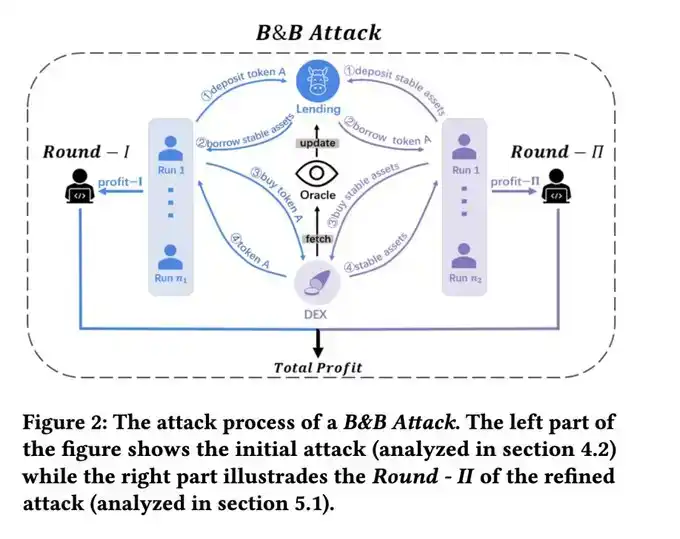
Due to THE's extremely poor on-chain liquidity, its price was driven from $0.27 to nearly $5. The oracle price subsequently updated to around $0.5 (time-weighted average), giving the attacker room to further amplify leverage.

More critically, THE itself has a supply cap.


Normally, this would limit the attacker's ability to expand their position. But they used a classic old trick to bypass it: the Compound fork donation attack. After depositing a large amount of THE, they directly transferred THE to the vTHE contract, "donating" to further inflate the collateral value recognized by the system and break through the cap.

Attack transaction: 0x4f477e941c12bbf32a58dc12db7bb0cb4d31d41ff25b2457e6af3c15d7f5663f
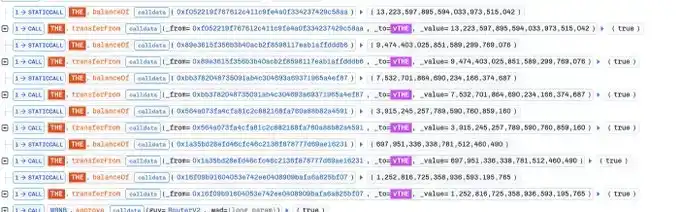
After the first wave of the attack, THE's price stabilized around $0.5.

At this point, the attacker could have walked away with the borrowed assets. But they clearly wanted to maximize profits, so they continued to use the borrowed assets to buy THE, attempting another pump.

The problem arose: Although the price was abnormally high, selling pressure from the market became extremely intense. The attacker kept buying but could barely push the price higher. Eventually, they almost exhausted their borrowing capacity, and their position's health factor dropped close to 1, nearing liquidation.
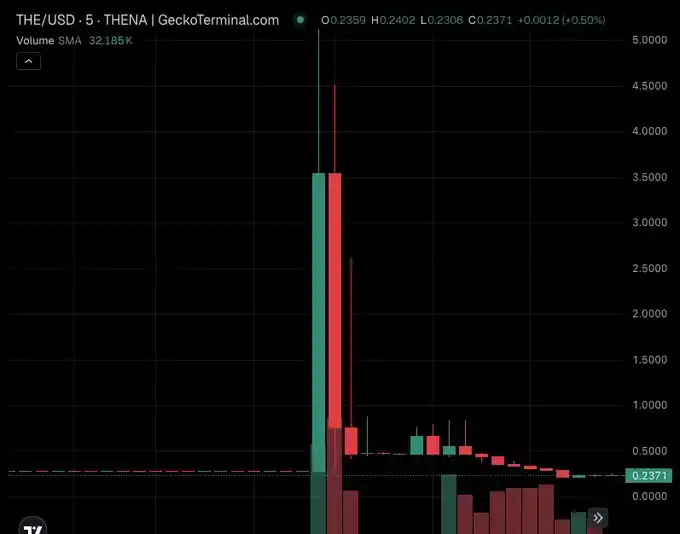
By then, the situation was very clear: The attacker's collateral, including their pre-prepared assets and THE bought during the attack, had a nominal value of about 30M. But the core issue with this collateral was—there was simply not enough liquidity to absorb it. Once liquidation began, this THE would be dumped onto the market. And no one in the market could possibly absorb such a large volume at these inflated prices.

So what did I do?

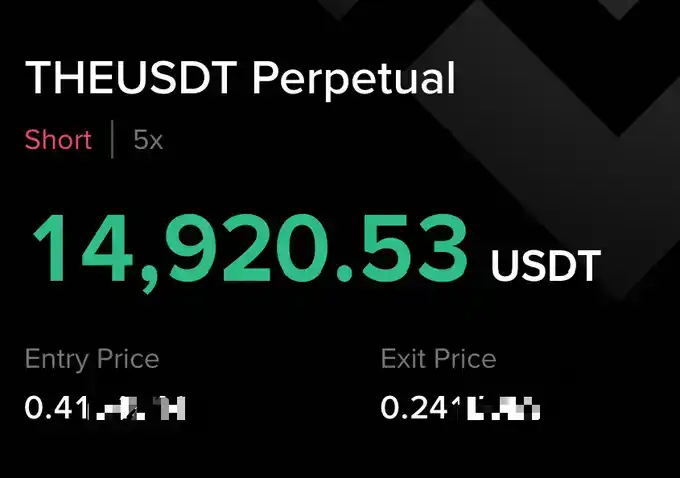
When liquidation started, I directly opened a short position on THE. And this was a position where relatively higher leverage could be applied.

The reason was simple: High valuation, low liquidity, massive passive selling pressure, no buyers.

The outcome was unsurprising: After the liquidation ended, THE's price fell all the way back to around $0.24, even lower than the pre-attack price, because original holders also sold during the process.

I closed my short position here, profiting about 15K.
In the end, Venus was left with about 2M in bad debt.

As for how much the attacker actually profited, I haven't done a complete analysis; but judging from the operations of some addresses, they likely made little to no profit, or even blew themselves up. However, the attacker might still have profited from off-chain perp positions (just like our operation).

Venus's ~2M bad debt address: https://debank.com/profile/0x1a35bd28efd46cfc46c2136f878777d69ae16231
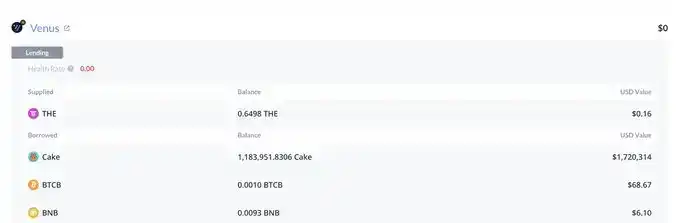
This incident once again demonstrates:


In DeFi, "nominal collateral value" does not equal "liquidation value". When the collateral itself lacks liquidity, the system sees 30M, but the market might only be able to realize a fraction of that.

In 2023, I published a paper titled 'Unmasking Role-Play Attack Strategies in Exploiting Decentralized Finance (DeFi) Systems' which provides a detailed mathematical model of this type of attack. Interested readers can refer to: https://dl.acm.org/doi/10.1145/3605768.3623545


Пов'язані питання

QWhat was the core strategy used by the attacker in the Venus THE exploit?

AThe attacker used a price manipulation strategy similar to the Mango Markets attack. They deposited the low-liquidity collateral THE, borrowed other assets, used those assets to buy more THE to drive its price up, waited for the time-weighted average oracle price to update to reflect the inflated value, and then repeated the cycle to gain higher borrowing power.

QHow did the attacker bypass the supply cap limitation on THE?

AThe attacker used a 'donation attack' by directly transferring THE tokens to the vTHE contract after a large deposit. This 'donation' artificially increased the total supply recognized by the system, allowing them to further inflate the collateral value and bypass the supply cap.

QWhy did the author of the article decide to open a short position on THE?

AThe author opened a short position because the attacker's collateral (THE tokens) had an extremely high nominal value but very low liquidity. They anticipated that once liquidation began, the massive sell pressure from the forced selling of these tokens would cause the price to crash dramatically, as there would be no market to absorb such a large volume at the inflated price.

QWhat was the final outcome for the attacker and the Venus protocol?

AThe attacker likely made little to no profit and may have even lost money from their on-chain maneuvers, though they might have profited from off-chain perpetual positions. The Venus protocol was left with approximately $2 million in bad debt.

QWhat key DeFi concept does this event highlight according to the article?

AThe event highlights that 'nominal collateral value' is not the same as 'liquidation value.' When collateral itself lacks sufficient liquidity, the value the system calculates can be vastly higher than the amount the market can actually realize during a liquidation event.

Пов'язані матеріали

NVIDIA Begins Adding Soap to the Bubble

NVIDIA is taking on a dual role: not just as a leading chip supplier, but as a massive capital allocator across the entire AI supply chain. In 2026, the company has committed over $40 billion in investments within five months, targeting everything from optical fiber manufacturing and data center operations to foundational AI model development. This investment spree, described as a systematic "sprinkler" approach, primarily funds companies that are major buyers of NVIDIA's own GPUs. Critics, including analysts from Goldman Sachs, label this a "circular revenue" loop—comparable to a supplier financing a customer to buy more of its products. A prominent example is NVIDIA's investment in OpenAI, which is expected to generate around $13 billion in revenue for NVIDIA, much of which may be reinvested back into OpenAI. While CEO Jensen Huang dismisses the "circular financing" critique as "absurd," arguing the investments are confidence votes in long-term generational shifts, some analysts express discomfort. They note that while investments in critical supply chain components like optics are strategically sound, funding new cloud providers like CoreWeave feels like "pre-paying for your own GPUs." The strategy carries significant risks. If the AI investment cycle turns, the market may question how much demand is genuine versus artificially sustained by NVIDIA's own balance sheet. Despite posting record-breaking earnings—$215.9 billion in annual revenue and $120 billion in net profit for FY2026—NVIDIA's stock fell after its report, signaling that "beating expectations" may no longer be enough to assure investors about the duration of the AI spending boom. The article concludes that while a bubble isn't necessarily a fraud, NVIDIA's actions resemble adding soap to a bubble—making it appear more robust and durable. This creates a complex scenario requiring extreme冷静 from investors to distinguish between real structural growth and financial engineering.

marsbit12 хв тому

NVIDIA Begins Adding Soap to the Bubble

marsbit12 хв тому

Short Positions Have Been Squeezed Out: Will the Next Leg of the U.S. Stock AI Rally Continue in Seoul?

"Short Squeeze Exhausted: Will the Next Leg of the AI Rally Continue in Seoul?" A Nomura report suggests the US AI stock rally, which saw the S&P 500 rise ~16.6% in 28 days largely driven by 10 key stocks, may be pausing. The fuel from short covering, CTA fund positioning, and volatility-control strategies is nearing its limit. For the rally to continue, new momentum from retail and sentiment-driven FOMO (Fear Of Missing Out) is needed. South Korea's market provided a potential answer on the very day the report was published. The KOSPI index surged 4.32%, triggering a buy-side circuit breaker, led by massive gains in chip giants SK Hynix (+11.98%) and Samsung. This surge is characterized by retail "hynix FOMO" and overseas funds precisely buying into AI themes via chip-focused ETFs, shifting from broad Korean market ETFs. The Korean rally is a high-beta extension of the US AI capital expenditure story, as major cloud providers plan massive infrastructure spending, directly benefiting memory chip leaders. However, this linkage also implies vulnerability. The sustainability of this next leg depends on whether US tech stocks correct, the trajectory of US inflation (with upcoming CPI data key), and geopolitical tensions around the Strait of Hormuz. Seoul has emerged as the new epicenter of the AI trade, but its fate remains tied to these broader macro and market dynamics.

marsbit17 хв тому

Short Positions Have Been Squeezed Out: Will the Next Leg of the U.S. Stock AI Rally Continue in Seoul?

marsbit17 хв тому

Borrowing Money from a Hundred Years Later, Building Incomprehensible AI

Tech giants like Alphabet, Amazon, Meta, and Microsoft are undergoing a radical financial transformation due to AI. Their traditional "light-asset, high-free-cash-flow" model is being dismantled by staggering capital expenditures on AI infrastructure—data centers, GPUs, and power. Combined 2026 guidance exceeds $700 billion, a 4.5x increase from 2022, causing free cash flow to plummet (e.g., Amazon's fell 95%). To fund this, they are borrowing unprecedented sums through long-dated, multi-currency bonds (e.g., Alphabet's 100-year bond). The world's most conservative capital—pensions, insurers—is now funding Silicon Valley's most speculative bet. This shift makes these companies resemble heavy-asset industrials (railroads, utilities) rather than software firms, threatening their premium valuations. Historically, such infrastructure booms (railroads, fiber optics) followed a pattern: genuine technology, overbuilding fueled by competitive frenzy, aggressive debt financing, and a crash triggered by financial conditions—not technology failure. The infrastructure remained, but many original builders and financiers did not survive. The core gamble is a "time arbitrage": using cheap debt today to build scale and lock in customers before AI capabilities commoditize. They are betting that AI revenue will materialize before debt comes due. Their positions vary: Amazon is under immediate cash pressure; Meta's path to monetization is unclear; Alphabet has a robust core business buffer; Microsoft has the shortest path from infrastructure to revenue. The contract is set: the most risk-averse global capital has lent its time to Silicon Valley, awaiting a future that is promised but uncertain.

marsbit1 год тому

Borrowing Money from a Hundred Years Later, Building Incomprehensible AI

marsbit1 год тому

Торгівля

Спот
Ф'ючерси
活动图片




