Polymarket Just Dropped Its Toughest Insider‑Trading Rules Yet – But Can They Really Calm DC?

bitcoinistОпубліковано о 2026-03-24Востаннє оновлено о 2026-03-24

Анотація

Polymarket, the world's largest prediction market, has introduced stricter rules against insider trading and market manipulation. These updates explicitly ban trading on confidential information, illegal tips, and participation by individuals who can influence event outcomes, such as government officials or athletes. The move comes amid increased regulatory scrutiny, including a new bipartisan Senate bill targeting prediction markets. Competitor Kalshi also announced similar guardrails. Both platforms are strengthening compliance to address ethical concerns and regulatory pressures, which may lead to tighter KYC procedures and reduced tolerance for trading on non-public information.

Polymarket, the world’s largest prediction market, is rolling out new safeguards against insider trading and manipulation.

Polymarket’s Most Recent Bet

The pressure generated from the growing scrutiny that prediction markets have come under as of late seems to have done the trick. Polymarket updated its rules on Monday and shortly after, Kalshi, its main competitor, announced new guardrails that preemptively block politicians, candidates and sports insiders from trading on related markets, Bloomberg claims.

Neal Kumar, Polymarket’s chief legal officer, said in a statement that the goal of this update to the rulebook is clarifying the expectations they have for the users. “Markets thrive on clarity”, he claims:

“These rule enhancements make our expectations abundantly clear for every participant across both platforms and highlight the compliance infrastructure we have already built. As Polymarket continues to scale, we will build on our foundation with clear communication to Polymarket’s users to ensure our markets do what they do best — surface truth.”

The timing is not casual. Also on Monday, Senators Adam Schiff (D-CA) and John Curtis (R-UT) introduced a bipartisan Senate bill targeting sports‐style bets on platforms like Polymarket and Kalshi, after a string of “suspiciously well‐timed” trades. The Senate concerns go beyond the law, citing the surge of gambling culture promoted by online betting can easily lead to addiction.

What Actually Changed At Polymarket And Kalshi

Polymarket updated its Terms of Use and U.S. Rulebook with enhanced “market integrity” rules across both its DeFi platform and CFTC‐regulated U.S. exchange. The new language explicitly bans trading on stolen or confidential information when using it would violate a duty of trust or confidence (classic insider‐trading standard). It also prohibits trading on illegal tips, where a user knows or should know the person sharing the information is themselves barred from trading on it. Additionally, users who can influence the outcome of a bet, such as government officials, corporate executives, or athletes tied to the event, are barred from trading on related contracts.

The rulebook also spells out broader manipulation bans, including spoofing, wash trading, fictitious transactions, front‐running, self‐dealing and other disruptive practices. The dedicated “Market Integrity” provide tools to report suspicious activity across both platforms, highlighting a multi‐layer surveillance and enforcement framework that combines automated monitoring with human review to flag and investigate questionable trades.

Similarly, on its side, Kalshi announced expanded “guardrails” against insider trading and market manipulation, framed as a response to CFTC guidance and the latest congressional proposals. The exchange is rolling out technological screens that aim to preemptively block politicians, political candidates and campaign insiders from trading on their own races. Similar screens will bar athletes and other “relevant people”, like team staff, league insiders and other connected personnel, from trading in sports markets they are involved with.

What This Means For Traders

Prediction markets have exploded into a multi‐billion‐dollar venue for trading politics and sports, but that scale brought CFTC scrutiny, state‐level pushback and now congressional bills aimed squarely at their growth engines. Some of the critiques show valid ethic concerns. Let’s not forget that not too long ago, Argentinian authorities ordered a full national ban of Polymarket after it “predicted” inflation data back in February. On top of that, the platform faced terrible backlash recently after bettors sent death threats to Times of Israel military reporter Emanuel Fabian, following his report of an Iranian ballistic missile on March 10.

Polymarket and Kalshi are now racing to build compliance as a moat: whoever convinces regulators first may become the default institutional on‐ramp, while weaker venues risk being regulated into the ground. Traders can expect tighter KYC/surveillance and less tolerance for “edge” based on non‐public info.
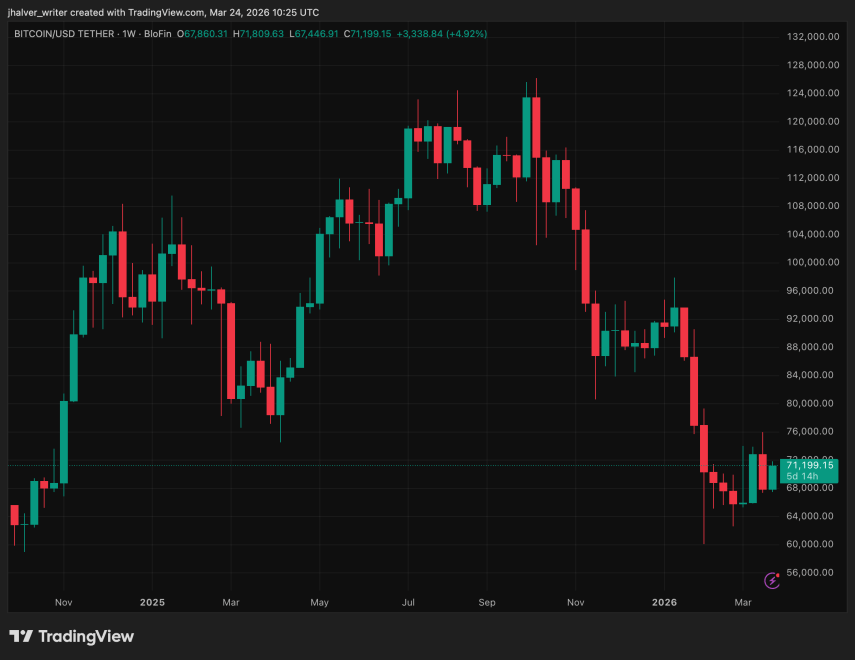
BTC’s price hangs in $71k on the daily chart. Source: BTCUSDT on Tradingview

Cover image from Perplexity, BTCUSDT chart from Tradingview

Пов'язані питання

QWhat are the main reasons behind Polymarket's recent update to its insider-trading rules?

APolymarket updated its rules due to growing regulatory scrutiny from the CFTC, state-level pushback, and new congressional bills targeting prediction markets, alongside a series of suspiciously well-timed trades that raised concerns about market integrity.

QWhat specific activities are now explicitly banned under Polymarket's enhanced 'market integrity' rules?

APolymarket now explicitly bans trading on stolen or confidential information that violates a duty of trust, trading on illegal tips, and trading by users who can influence the outcome of a bet. It also prohibits broader manipulation practices like spoofing, wash trading, fictitious transactions, front-running, and self-dealing.

QHow did Polymarket's main competitor, Kalshi, respond to the regulatory pressure?

AKalshi announced expanded 'guardrails' against insider trading and market manipulation, including technological screens to preemptively block politicians, candidates, and sports insiders from trading on markets related to their own events, in response to CFTC guidance and congressional proposals.

QWhat broader concerns did U.S. Senators express about prediction markets beyond insider trading?

AU.S. Senators expressed concerns that the surge of gambling culture promoted by online betting platforms can easily lead to addiction, which is why they introduced a bipartisan bill targeting sports-style bets on these platforms.

QWhat are the potential long-term implications for prediction market platforms like Polymarket and Kalshi according to the article?

AThe platforms are racing to build compliance infrastructure as a competitive moat. The one that convinces regulators first may become the default institutional on-ramp, while weaker venues risk being regulated out of existence. Traders can expect tighter KYC/surveillance and less tolerance for trading on non-public information.

Пов'язані матеріали

NVIDIA CPU Advances, China's RISC-V Responds: Semiconductor Deep Dive - Part Four

NVIDIA is set to launch its new Vera AI data center CPU in China as early as August, with high pricing. While this move offers a new option, it highlights China's continued dependence on foreign-controlled Arm architecture. In response, the Chinese semiconductor industry is increasingly turning to RISC-V as a strategic alternative for achieving high-performance computing autonomy. The article explores the concept of the "impossible triangle" in CPU development—balancing prosperity, control, and autonomy—and posits that RISC-V's open-source, modular nature offers a unique path to achieving all three. While RISC-V is already dominant in embedded systems, the focus is now shifting to data centers and AI workloads. China has become a global hotspot for RISC-V development, driven by AI-driven compute demand, supply chain concerns from export controls, cost benefits of open-source, and strong policy support. Multiple Chinese companies have reportedly crossed the key performance threshold of 15 SPECint per GHz, a benchmark for entering the high-performance CPU club. Progress extends beyond single-core benchmarks. Companies are developing complete computing subsystems, including commercial-grade coherent network-on-chip (NoC) technology and server processors with up to 40 cores that strictly adhere to the RVA23 standard to ensure software compatibility. Real-world applications are emerging in areas like video transcoding and edge AI. However, significant challenges remain. The RISC-V ecosystem faces fragmentation, immature toolchains and verification processes, and gaps in single-core performance and energy efficiency compared to mature x86 and Arm architectures. The formidable software moat, epitomized by NVIDIA's CUDA, is a long-term hurdle. In conclusion, while RISC-V cannot immediately replace offerings like NVIDIA's Vera, it represents a viable long-term path for China to develop a self-sufficient, high-performance CPU ecosystem. The journey is acknowledged to be long and arduous, requiring sustained effort to overcome technical and ecosystem challenges.

marsbit6 год тому

NVIDIA CPU Advances, China's RISC-V Responds: Semiconductor Deep Dive - Part Four

marsbit6 год тому

My Coding Betting Dashboard is Profiting, but Polymarket is Truly Not a Good Place for 'Arbitrage'

The author built a custom monitoring dashboard for Polymarket, a prediction market platform, and tested it with $1,600, achieving over 30% returns. However, the core argument is that Polymarket is not a good venue for traditional arbitrage. The dashboard has two main sections: a "Portfolio Dashboard" for tracking active positions with key metrics like total capital, P&L, and a risk-control module using a tier system (T1, T2, T3), and an "Opportunity Watchlist" for monitoring markets. The article details a critical structural trap in binary markets: a bet with a high perceived probability of success still carries a 100% loss risk if wrong. The author's T1/T2/T3 system is designed to manage this by limiting position sizes based on conviction and time horizon, emphasizing that high confidence should not equal high concentration. A key insight is the danger of "pseudo-diversification"—betting on different markets driven by the same underlying variable. The author concludes that Polymarket offers few true low-risk, arbitrage opportunities. It is instead a high-risk environment where wins can create a false sense of mastery, leading to large losses. The platform is better viewed as a training ground for honing judgment through disciplined, framework-driven betting rather than a reliable income source. The tools help transform intuition into structured, rule-based decisions to mitigate the risk of catastrophic errors.

marsbit9 год тому

My Coding Betting Dashboard is Profiting, but Polymarket is Truly Not a Good Place for 'Arbitrage'

marsbit9 год тому

WeChat AI Card Hands-On Guide: Has the AI Shopping Era Arrived?

**"WeChat AI Card" Practical Test Guide: Has the Era of AI Shopping Arrived?** WeChat has officially launched the "AI Exclusive Card," a feature integrated into its Workbuddy AI assistant. This card is designed to handle payments for AI-initiated purchases. Our hands-on test reveals it's not yet a tool for fully autonomous AI shopping, but rather a controlled payment layer for AI agents. The AI Card functions as an isolated sub-wallet within WeChat Pay. Users must bind the card and transfer funds into it from their main wallet. Crucially, every transaction requires explicit user confirmation via smartphone scan; AI cannot spend autonomously. Currently accessible through the Workbuddy agent, the card targets specific digital consumption scenarios: purchasing paid content (reports, data), calling paid APIs/tools, and subscribing to services. Its design prioritizes security and control by separating funds and mandating approval for each payment. We tested a real-world scenario: ordering bubble tea via Workbuddy using a "Meituan Life Assistant" skill. The process encountered multiple hurdles: high "skill" usage costs (exceeding daily free credits), and most importantly, while a payment was successfully initiated, the AI purchased an incorrect product (a mismatched group-buy coupon instead of the desired drink). This highlights the current limitation: the **AI Card only solves the payment step**. The broader challenge lies in the **AI agent's execution chain**—accurately understanding intent, navigating third-party platforms, selecting the right product, and ensuring proper fulfillment. The payment succeeded, but the purchase failed to meet the user's need. In conclusion, the WeChat AI Exclusive Card is a cautious, early-step experiment in AI commerce. It provides a secure, user-controlled payment method for agent interactions but is not yet capable of reliable, end-to-end complex purchases. For now, it's best used for low-value, low-risk digital services with careful user verification at each step. The vision of AI handling complete shopping tasks remains a work in progress.

marsbit11 год тому

WeChat AI Card Hands-On Guide: Has the AI Shopping Era Arrived?

marsbit11 год тому

Торгівля

Спот
Ф'ючерси
活动图片