Out Of Office, Into Crypto: Ex-NYC Mayor Debuts ‘NYC Token’ Memecoin

bitcoinistОпубліковано о 2026-01-14Востаннє оновлено о 2026-01-14

Анотація

Former New York City Mayor Eric Adams launched the "NYC Token" memecoin on the Solana blockchain on January 12, 2026, promoting it as a tool to support education and combat antisemitism and anti-American sentiment. The token briefly reached an implied market cap between $580 million and $730 million before its price dropped by roughly 80%, falling from $0.46 to around $0.10. Critics raised concerns about insufficient transparency, missing documentation, and sudden liquidity withdrawals, which led to accusations of a potential rug pull. Adams, known for his pro-crypto stance as mayor, faced scrutiny for using his public profile to promote a privately issued token, while his successor declined to endorse the project.

Former New York City Mayor Eric Adams unveiled a new cryptocurrency called “NYC Token” on January 12, 2026, drawing quick attention and equally fast criticism.

According to reports, Adams presented the project in Times Square and framed it as a way to support education and to fight anti-semitism and anti-American sentiment. The token is built on the Solana blockchain, based on information released at the launch.

Token Launch And Purpose

According to the official pitch and subsequent statements, proceeds from the token were to help fund scholarships and blockchain training programs for underserved communities.

Adams described the coin as a civic symbol tied to New York’s identity and global reach. The launch was promoted with promises of community benefits, but critics said the public information about governance and fund handling was thin.

Market Moves

The market reacted in a rush. Based on reports, the token briefly showed an implied market cap of about $580 million–$730 million in the first hours after trading began. Then prices tumbled.

Trades showed a fall of roughly 80% as the token’s price dropped from near $0.46 to about $0.10 shortly after markets opened for the asset. Trading volume spiked and then collapsed, leaving many traders facing big losses.

Liquidity And Allegations

On-chain observers and crypto analysts flagged sudden withdrawals of liquidity minutes after the token’s debut. Reports have disclosed that millions of dollars were pulled from trading pools, which prompted accusations of a rug pull from some corners of the crypto community.

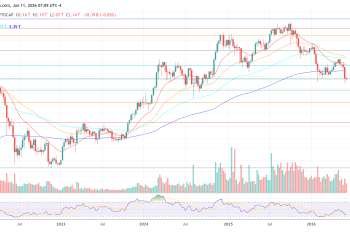
Total crypto market cap currently at $3.1 trillion. Chart: TradingView

The token’s official website was also criticized for missing or nonfunctional links to key documents, and there was little detail about which groups would receive funds or how decisions would be made.

Adams’ Crypto Record: Political Context

Eric Adams is no stranger to digital assets. During his time in office he converted parts of his salary to Bitcoin and Ethereum and pushed policies to attract blockchain firms to the city.

His successor, Mayor Zohran Mamdani, declined to take part in the token project and did not endorse it. That split in approach raised questions about whether a former official should use his public profile to promote a privately issued coin.

New York City at night. Image: Anthony Nazario for Lonely Planet

Public Response

Analysts called for transparency and urged a closer look at on-chain data. Based on reports from blockchain trackers, some transfers and liquidity extractions were visible publicly on the Solana network, which added to the scrutiny.

Community groups and investors asked for clearer disclosures, while legal experts warned that investigations or regulatory attention could follow if money was moved in ways that harmed ordinary buyers.

Featured image by ThomasShanahan / iStock.com, chart from TradingView

Пов'язані питання

QWhat is the name of the cryptocurrency launched by former New York City Mayor Eric Adams and on which blockchain was it built?

AThe cryptocurrency is called 'NYC Token' and it was built on the Solana blockchain.

QWhat was the stated purpose of the NYC Token according to its official pitch?

AThe stated purpose was to help fund scholarships and blockchain training programs for underserved communities, and to fight anti-semitism and anti-American sentiment.

QWhat happened to the token's price shortly after it began trading?

AThe token's price tumbled roughly 80%, dropping from near $0.46 to about $0.10 shortly after markets opened.

QWhat specific event after the token's debut prompted accusations of a 'rug pull' from the crypto community?

AOn-chain observers flagged sudden withdrawals of liquidity, where millions of dollars were pulled from trading pools minutes after the token's debut.

QHow did Eric Adams' successor, Mayor Zohran Mamdani, respond to the NYC Token project?

AMayor Zohran Mamdani declined to take part in the token project and did not endorse it.

Пов'язані матеріали

Annual Salary of Millions Competing for Electricians, Meta Rushes to Open Its Own Technical School

The AI boom is facing an unexpected bottleneck: a severe shortage of skilled construction workers and electricians. As tech giants like Meta, OpenAI, and Alphabet race to build massive data centers—such as OpenAI's $16 billion "Stargate" project—they are hitting a critical labor wall. The U.S. needs an estimated 130,000 more electricians, 240,000 construction workers, and 150,000 supervisors by 2030 for AI infrastructure alone, but tens of thousands of electrician jobs go unfilled each year. While AI companies offer high premiums, with electricians earning up to $280,000 annually, worker scarcity still causes massive losses—delays on a single project can cost $14.2 million per month. The complexity of building AI data centers, which require immense power (equivalent to powering hundreds of thousands of homes), sophisticated electrical systems, and advanced liquid cooling solutions, demands highly skilled technicians who are in short supply. To combat this, companies are investing heavily in training. Meta has committed $115 million to a free training school offering tuition, housing, and stipends, targeting 5,000 new workers. OpenAI is partnering with unions to secure skilled labor. These efforts are paying off, with a significant rise in Gen Z interest in trade schools over college. However, the power demands are staggering. AI data centers are driving a rapid surge in electricity consumption, projected to account for up to 12% of U.S. power use by 2028 and raising costs for consumers. Furthermore, the construction boom is project-based, leading to a potential future glut of trained workers once building peaks, which could depress wages industry-wide. The race for AI supremacy now depends as much on skilled hands as on advanced chips.

marsbit1 год тому

Annual Salary of Millions Competing for Electricians, Meta Rushes to Open Its Own Technical School

marsbit1 год тому

OpenAI No Longer Sells Its Most Expensive Model for Profit

OpenAI is shifting its business strategy away from promoting its most expensive, flagship models for every task. Recent price cuts—80% for GPT-5.6 Luna and 20% for Terra—signal a deeper change: the company now actively advises users that many tasks don't require the most powerful model. Instead, OpenAI recommends a tiered approach: use the high-end GPT-5.6 Sol for complex planning and analysis, then delegate execution to cheaper models like Luna. This mirrors moves by Anthropic, which recently launched Claude Opus 5 at half the price of its top model, Fable 5. Both companies are de-emphasizing flagship models as primary revenue drivers, using them instead for brand prestige and technological showcases. The industry is entering a "mass-market" phase, similar to automotive, where high-volume, cost-effective models handle daily operations and drive scale. OpenAI's price reductions are partly enabled by AI models themselves optimizing underlying code and infrastructure, creating a self-reinforcing cycle of efficiency gains and cost reduction. Competition is shifting from "who is smartest" to "who offers the best value." The goal is no longer selling individual models but fostering widespread API adoption and ecosystem lock-in. By making AI calls cheap and ubiquitous, companies like OpenAI aim to become the indispensable, utility-like infrastructure powering automated workflows—the "water and electricity" of software, quietly embedded everywhere.

marsbit1 год тому

OpenAI No Longer Sells Its Most Expensive Model for Profit

marsbit1 год тому

Торгівля

Спот
活动图片