Opinion: The AI Bubble in Stocks Has Arrived. Why I'm Turning to Bet on Bitcoin?

marsbitОпубліковано о 2026-07-02Востаннє оновлено о 2026-07-02

Анотація

This article argues that the AI-driven stock market surge shows clear signs of a bubble. The author, citing Howard Marks' cycle theory, presents a checklist of behaviors signaling a market top—excessive optimism, easy capital, and the belief "no price is too high"—and finds the current AI stock mania matches most criteria. Consequently, the author has sold AI-related ETFs and shifted focus to accumulating Bitcoin within a $50k-$60k range, viewing it as a scarcer asset with a wider margin of safety amid high equity valuations. The piece contrasts the narrow, frothy AI rally with what it sees as a more rational long-term opportunity in Bitcoin, especially given indicators like high CAPE ratios and selective risk appetite. The author's personal strategy involves holding significant cash, with capital allocated across trading, long-term accumulation (primarily BTC), and illiquid investments.

Author:Investing Beanstock

Translation:Deep Tide TechFlow

Deep Tide's Guide: AI stocks are soaring, but this trader is actually selling tech stocks and turning to bottom-fish Bitcoin. He used Howard Marks's cycle theory to examine the current market point by point and found that AI already meets almost all the characteristics of a "bubble top." For investors, this article provides a calm framework for cycle positioning, helping you judge whether it's time to be greedy or fearful now.

The stock market is experiencing an AI-driven, frenzied bull market, which should come as a surprise to no one.

Not being positioned feels downright stupid—because capital expenditure (CAPEX) will only continue to rise, and the forward valuations of all these stocks will only become crazier.

I won't comment on specific stocks or indices; banks and financial media worldwide are already providing blanket coverage. I'm more interested in figuring out—or at least trying to decipher—what stage of the market we're in. Not just in cryptocurrency, but across the entire financial markets.

To do this, I drew heavy inspiration from one of my favorite books: Howard Marks's *Mastering the Market Cycle*.

Most people understand cycles as a series of events. Most also understand that these events typically follow each other in a regular sequence: an upswing is followed by a downswing, and then eventually a new upswing. But to fully understand cycles, this isn't enough. Events in a cycle shouldn't just be seen as one following another; more importantly, each event *causes* the next to happen.
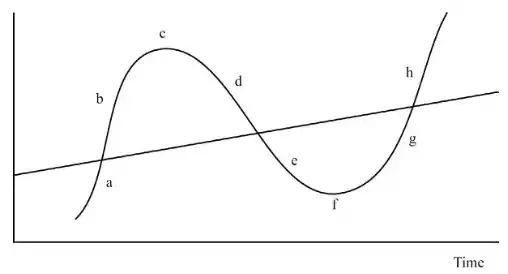
The straight line = the midpoint. The market's pendulum is the wavy line oscillating around the midpoint. Together they form the market cycle, driven by various market forces that cause it to deviate from the midpoint from time to time.

The movement of cyclical phenomena can be easily recognized in several stages:

a: Recovery from an overly depressed low extreme or "trough" towards the midpoint.

b: Continuing past the midpoint to swing towards the high extreme or "peak."

c: Reaching the peak.

d: Correcting downward from the peak back to the midpoint or mean.

e: Continuing the downward movement past the midpoint towards a new low.

f: Reaching the trough.

g: Recovering from the trough back to the midpoint.

h: The cycle repeats.

So Where Are We Now?
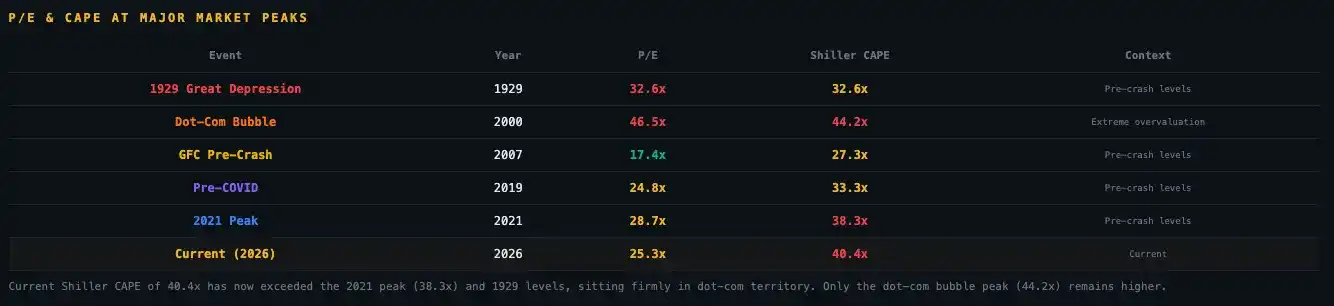
Is this a bubble? I think it's quite evident at this point that AI indeed *is* a bubble. According to Marks, a bubble is signaled when the sentiment that "price doesn't matter" is strong.

In a bubble, investors often conclude that you can make money by borrowing (using leverage) to buy the frenzied asset. No matter what your borrowing rate or funding fee is, the asset will surely appreciate faster than that.

"No price is too high" is the ultimate ingredient of a bubble, a fairly obvious signal that the market has gone too far.

There are actually conflicting schools of thought, believing the market can stay far above its intrinsic value and still reward multiples due to the frenzy.

What to Do?

Since we can't be sure when the bubble will burst, in my view, we have two clear approaches to portfolio allocation.

Dollar-Cost Averaging (I mean real DCA, no timing, you just buy in boring, mechanical dribs and drabs. The more batches you split into, the smoother your final cost basis, that's the whole point.)

Heavy cash allocation, but still allowing yourself to participate in the market through tactical/satellite positions, like active trading.

I personally prefer the second method. But that's because I actively monitor the markets day in and day out; I rely on my own market experience and intuition to navigate all this.

DCA isn't a bad method either. But it does require one to truly extend their time horizon. Not 1 or 3 years, but at least 5 years to really see results. Most people DCA for a few weeks, or try to DCA while also timing, and it backfires. If you plan to DCA into a particular investment, make sure you fully understand that business/industry, and then just stick to it in a super boring, repetitive way and go on with your life.

In my 2025 review and reflection post, I mentioned allocating 25% of my portfolio to passive ETFs, including QQQ, SOXQ, XAR, URA, and UFO. I think a large part of the gains came from QQQ and SOXQ, but I sold all of it in May because I believe the market had swung far past the midpoint.

I also said I was overall bearish on crypto until early 2026 (which turned out right), I managed to keep a lot of cash, and am now patiently deploying a portion into BTC. The target accumulation range is $50k–$60k, so I've already started allocating as of writing this.

"Crypto Is Dead, Pivot to AI"

Honestly, my only regret is not allocating more to speculative private market exposure in Anthropic and xAI. I think frontier models still offer the purest AI exposure, compared to public market "picks and shovels" types, like the GPU/semiconductor/storage narrative. Since those are already consensus, I don't think chasing them now offers asymmetric upside. That ship sailed a long time ago. Stocks like MU are up almost 10x in a year, and stocks like SNDK basically move like memecoins. Upside might still be there, but downside risk looks worse.

But the CAPEX! Yes, this might translate into real incremental value in the future, but it's still speculative. Overly speculative, excess money all funneling into the same thing, I've seen this movie before.

Is it disappointing to miss a big chunk of the AI bull run? Sure, it stings a bit. But I still have exposure, and it's doubled. I really don't think it's responsible to tell someone AI stocks are truly worth buying at today's valuations, unless they *really* know what they're doing and are in it for the long term (most aren't, they're here for quick money).

Market Sanity Checklist

Now, let's go back to how Marks judges if we are near/approaching a market top:

The economy is growing; economic reports are positive.

Corporate profits are rising and beating expectations.

The media only reports good news.

The securities markets are strong.

Investors are becoming increasingly confident and optimistic.

Risk is perceived as scarce and mild.

Investors believe taking risks is the necessary path to profits.

Greed drives behavior.

Demand for investment opportunities exceeds supply.

Asset prices exceed intrinsic value.

Capital markets are wide open; raising money or rolling over debt is easy.

Defaults are rare.

Skepticism is low, confidence is high, meaning risky trades can be made.

No one can imagine things going wrong. No favorable development seems impossible.

Everyone assumes things will get better forever.

Investors ignore the possibility of loss, only worry about missing out.

No one can think of a reason to sell, and no one is forced to sell.

There are more buyers than sellers.

If the market dips, investors are happy to buy.

Prices reach new highs.

The media celebrates this exciting event.

Investors become euphoric and carefree.

Equity holders marvel at their own cleverness; perhaps they'll buy more.

Those who stayed on the sidelines feel regret; therefore, they capitulate and buy.

^ This means:

Future returns are low (or negative).

Risk is high.

Investors should forget about missed opportunities, only worry about losing money.

This is a time for caution!

So, how many of these do you think the current stock market is exhibiting?

On the flip side of the "market top" checklist, the opposite scenario can also manifest:

The economy slows; reports are negative.

Corporate profits are flat or falling, missing expectations.

The media only reports bad news.

The market is weak.

Investors become worried and despondent.

Risk is perceived as everywhere.

Investors believe taking risks is just a way to lose money.

Fear dominates investor psychology.

Demand for securities is less than supply.

Asset prices are below intrinsic value.

Capital markets are closed; it's hard to issue securities or refinance debt.

Defaults surge.

Skepticism is high, confidence is low, meaning only safe trades can be made, or none at all.

No one thinks improvement is possible. No outcome seems too negative to happen.

Everyone assumes things will get worse forever.

Investors ignore the possibility of missing opportunities, only worry about losing money.

No one can think of a reason to buy.

There are more sellers than buyers.

"Don't try to catch a falling knife" replaces "buy the dip."

Prices reach new lows.

The media focuses on this depressing trend.

Investors become despondent and panicked.

Equity holders feel stupid and disillusioned. They realize they don't really understand the reasons behind their investments.

Those who didn't buy (or who sold) feel vindicated and are praised for their cleverness.

Those who held capitulate and sell at depressed prices, furthering the downward spiral.

^ This means:

Implied future returns are sky-high.

Risk is low.

Investors should forget about the risk of losing money, only worry about missing opportunities.

This is a time to be aggressive!

Based on the checklist above, I do think BTC is exhibiting many of these (especially in the Saylor/MSTR situation). So I do feel BTC presents a more attractive investment prospect compared to today's high-flying AI stocks.

However, note that the above progressions are simplified, they may not even appear in the same order, nor necessarily appear in every market cycle, but these behaviors are real, they are indeed elements that rhyme in markets over decades.
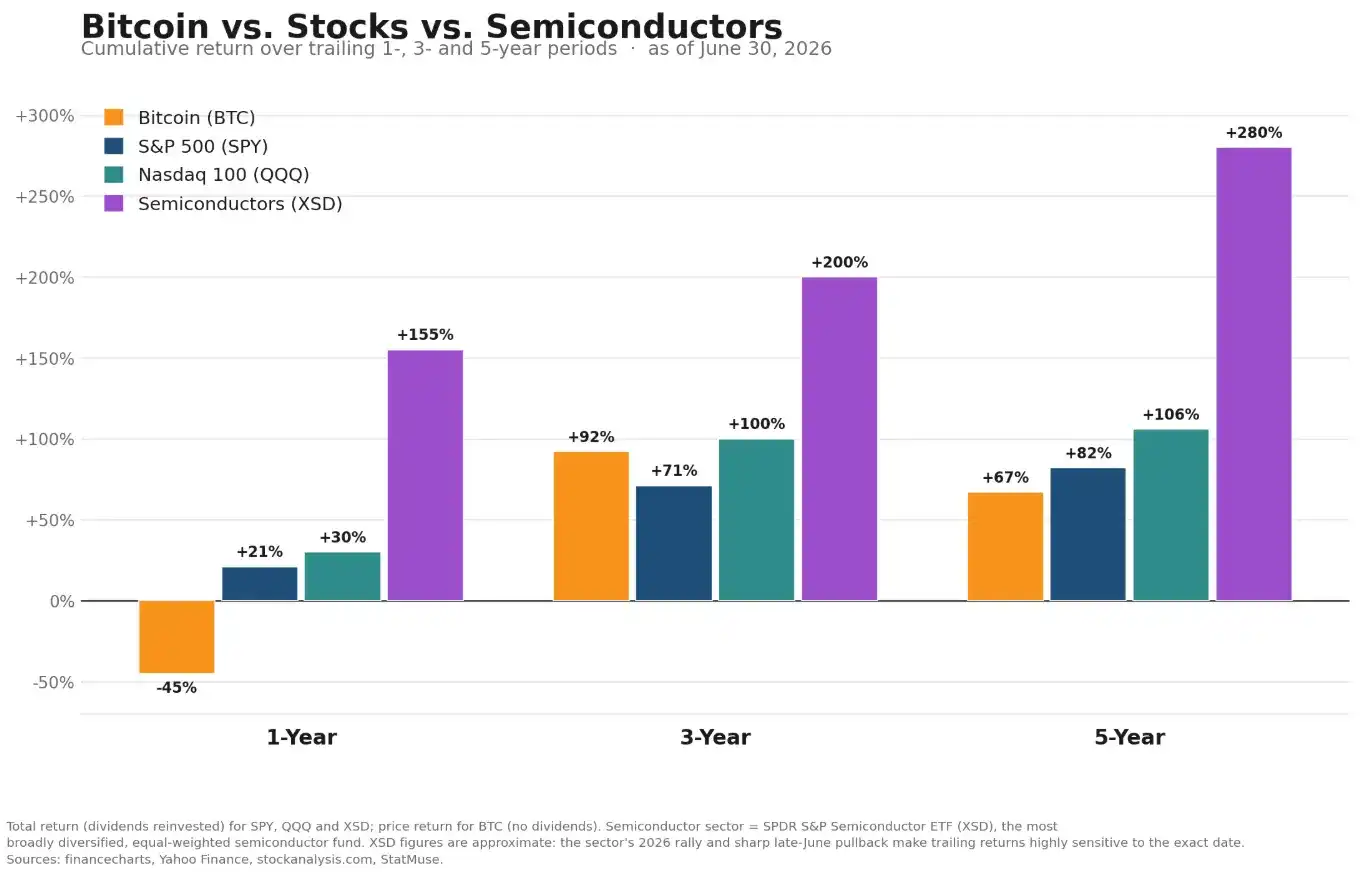
The AI revolution has clearly benefited tech stocks, especially semiconductors over 1/3/5 year periods.

But investing is never done by looking in the rearview mirror (unfortunately, most people do and take reference from the past), advantage emerges where people ignore/dismiss it. We need to look at "what happens 1 to 10 years from now," not what today's environment is.

Looking at the chart above, saying you're a crypto investor and you should have invested in stocks would look silly.

Based on the above chart, if you chose stocks, statistically speaking, the likelihood of future underperformance is high.

Also, reading this in 2026 might sound like a joke now, but based on past lessons from cycles and an understanding of forward return/valuation fundamentals, I do think BTC will outperform stocks over the next few years.

The Most Dislocated Macro Environment Ever

We are also in one of the most dislocated, irrational market environments ever.

Under new Fed Chair Wash, interest rates are currently at 3.5–3.75%, and he's also publicly struck a hawkish tone. But rates aren't compressing; stocks instead keep rising, all because AI will cure cancer and everyone will make infinite money forever, right?

The Shiller CAPE ratio for stocks has broken above 40 for the first time, the first time since the peak of the dot-com bubble era. US stock market capitalization is now near 2x its GDP, valuations are higher than during the 2000 bubble.

Multiple expansions during a tightening cycle, this is textbook definition of dislocation.

This dislocation is primarily driven by a three-engine narrative/liquidity machine.

AI CAPEX supercycle: Large hyperscale cloud providers spending up to $725 billion in 2026, nearing $1 trillion, now accounting for over 30% of the entire S&P 500.

Late-cycle fiscal stimulus: Lower corporate and personal taxes/tariff rebates boosting nominal earnings, even as the Fed tightens.

Passive index fund flows: Index funds mechanically funnel every 401(k) dollar into the largest market cap companies, regardless of price. Boomers are now forced to buy these hyperscale cloud provider stocks at all-time highs, and they continue.

Risk Appetite Is Selective

Today capital is rushing into AI/semiconductors, while everything else including Bitcoin (last cycle's darling) is barely growing or bleeding. This is not a universally greedy market, but one funneling all capital into a single narrative (AI and its related verticals).

In 2025, AI-related stocks accounted for roughly 80% of the entire US stock market gains. Behind these all-time highs, market breadth is extremely narrow, most stocks aren't even contributing to the rally (unless you're AI-related).

Cracks Are Forming

The entire edifice assumes AI CAPEX can be met with real demand, and that energy-driven inflationary shocks will subside/not matter. Core PCE rose from 3% to 3.3%, oil prices surged from $57 to $113 during the Iran war then fell to $76, this is exactly why rate cuts were ruled out.

Cracks have already shown.

In the last full week of June, South Korea's KOSPI halted trading twice, Samsung and SK Hynix fell 12% in a single day, a warning of seller count versus remaining buyers.

Dalio also said his bubble gauge is near 1929 and 2000 levels, Buffett... still holds a record $381 billion in cash. Prices have become dependent on narrative, positioning, and leverage, there really isn't much margin of safety left.

My Personal Plan

Considering all of the above, here's how I, as a capital allocator, think about the whole picture.

Please note this is highly tailored to my own life situation, investment goals, and personality. Please do your own research, none of this constitutes financial advice.

I currently split my capital into 3 distinct buckets and manage accordingly based on a specific bucket.

Trading capital (highest risk, highest volatility, highest variance)

Long-term accumulation capital (buy-and-hold type I don't intend to sell)

Illiquid capital (private equity – SPVs, alternative investments)

How to allocate capital to which bucket is highly dependent on market environment and liquidity.

Right now, I keep most cash for Bucket 2. I've drastically reduced allocation to Bucket 1 due to deteriorating market edge. In crypto, I currently only deem BTC, HYPE, and LIT worth holding. Looking at stocks is playing musical chairs. Given current valuations, long-term allocation to stocks also doesn't make sense.

For Bucket 3, the amount is mostly fixed, about 20% of my net worth. Given its illiquidity and years needed to realize full returns, this bucket remains largely unchanged for the foreseeable future.

As of writing, I'm mostly cash (>80%), with allocation weights across the 3 buckets at 10%, 70%, 20% respectively.

Under Bucket 2, I've made 4 buys of spot BTC so far, average price around $59k. I'm also interested in certain ETFs, which I'll disclose when I decide on a long-term allocation.

In summary, nothing too fancy. More like fishing, waiting for that big fish. I don't mind catching a few small ones before the big one comes, but the point is to keep fishing, stay focused, and not give up.

Perpetual DEX Airdrop Farming Still an Edge

Although my trading decreased in June, I think one massively undervalued edge in crypto is perpetual DEX farming, especially Variational.
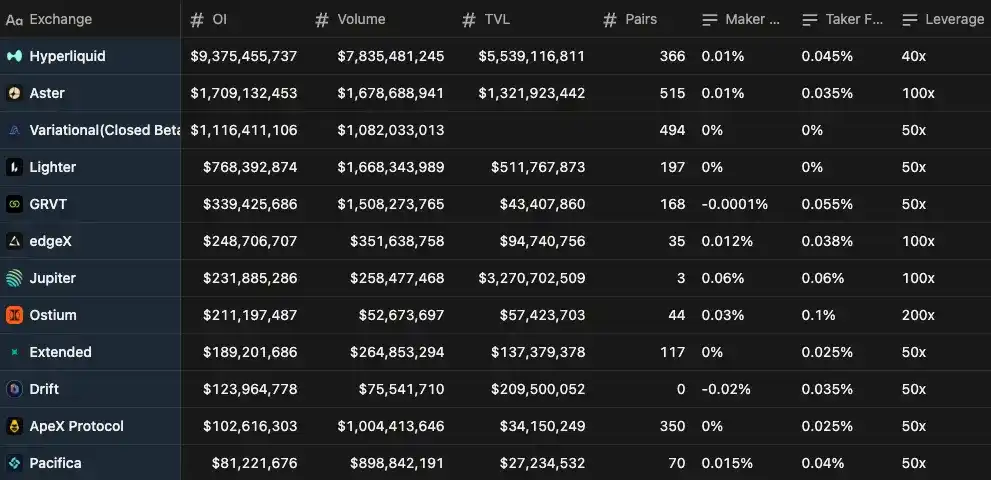
Though primarily driven by airdrop incentives, it's still ranked top 3 among perpetual DEXs, excluding the clear market leader Hyperliquid.

Variational is still in private beta, meaning you need an invite to use. What's special? It's an RFQ-based perpetual DEX, theoretically meaning they can list all sorts of pairs (even the most obscure) and still have deep liquidity, unlike order books that need crazy bootstrapping.

I mainly use it to trade commodities like crude oil, gold, silver, copper, and some other pairs. Focusing on open interest and holding long-term gets the most efficient points.
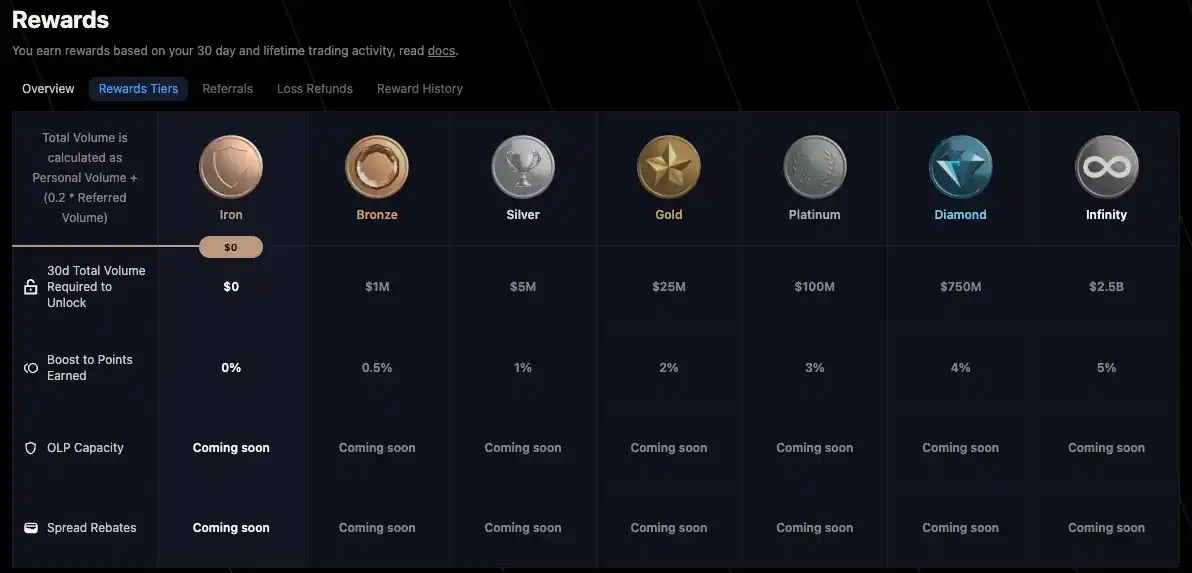
Referrals get a 15% points boost, my code automatically grants you SILVER tier for 90 days upon sign-up.

Other platforms I'm still farming with significant point allocation are:

The TGE target for all mentioned perpetual DEXs is Q3 2026.

I think the fear around STRC is overdone. But this financial engineering does alter investor behavior around it. Unwillingness to allocate until Saylor finishes selling $1B of BTC is now a key "bottom signal."

At $58k BTC price, I think valuations are reasonable. It's even below the 200-day moving average now.

This means H2 2026 could be a significant period for long-term accumulators. I do think there will be one last capitulation and heavy forced selling (including Saylor), likely coinciding with stocks starting to weaken.

While this isn't a pure BTC bullish post, I think among all assets that exist today, BTC offers one of the widest margins of safety, even if the ultimate low is about 15–20% down from here.

Think about it, in a long-term stagflation environment, scarce assets perform best. It was gold in the past, an asset outside the monetary system that existed for millennia.

I think ten years from now, accumulating BTC today will be seen as one of the most rewarding moments in a long time.

While stocks will indeed rise over time in the future, at this moment, I can't justify buying at such high valuations and am happy to watch from the sidelines until it comes back to earth.

What do you think? How are you thinking about capital allocation now?

Трендові криптовалюти

Пов'язані питання

QAccording to the author, what are the two main portfolio allocation methods suggested for dealing with the current market, which one does he prefer, and why?

AThe author suggests two methods: 1) DCA (Dollar-Cost Averaging) in a true, non-timing, mechanical way. 2) Being heavy on cash while allowing participation through tactical/satellite positions like active trading. He personally prefers the second method. The reason is that he actively monitors the market daily and relies on his market experience and intuition to navigate it. He finds DCA requires a genuine long-term horizon (at least 5 years) and strict discipline, which most people lack as they often try to time the market within it.

QBased on Howard Marks' framework from 'The Cycle', what key characteristics does the author believe the current AI-driven stock market is exhibiting that signal a potential bubble top?

AThe author believes the AI-driven market exhibits many characteristics from Howard Marks' 'market top' checklist. Key ones include: prices seeming irrelevant ('no price is too high'), the belief that leverage is a sure path to profit, widespread investor confidence and optimism, greed driving behavior, asset prices exceeding intrinsic value, easy capital raising, low skepticism, high confidence enabling risky trades, and investors worrying more about missing out (FOMO) than losing money. He argues the market shows 'price doesn't matter' sentiment, a hallmark of a bubble.

QWhy does the author view Bitcoin as a more attractive investment prospect compared to high-flying AI stocks at this moment?

AThe author views Bitcoin as more attractive because he believes it is exhibiting many characteristics from the *opposite* side of Howard Marks' checklist—the one indicating a market bottom or undervalued state. He implies BTC shows signs like fear dominating investor psychology, prices potentially below intrinsic value, high skepticism, low confidence, and investors worrying about losing money rather than missing gains. He also cites BTC trading below its 200-day moving average around $58,000, offering a wider 'margin of safety' and reasonable valuation, especially in a potential long-term stagflation environment where scarce assets historically perform well.

QWhat are the three main drivers the author identifies as creating the current 'dislocated' and 'irrational' macro market environment?

AThe author identifies three main drivers: 1) The AI Capital Expenditure Supercycle, with hyperscalers spending massively (projected $725B in 2026), now representing over 30% of the S&P 500. 2) Late-cycle fiscal stimulus, including tax and tariff rebates boosting nominal profits even as the Fed tightens policy. 3) Passive index fund flows, where funds mechanically funnel retirement savings (like 401(k)s) into the largest market-cap companies regardless of price, forcing buying at historic highs.

QHow has the author personally allocated his capital across different 'buckets' based on the current market outlook, and what is he specifically accumulating in his 'long-term accumulation' bucket?

AThe author has allocated his capital into three buckets: 1) Trading capital (highest risk), 2) Long-term accumulation capital (buy-and-hold), and 3) Illiquid capital (private equity/SPVs). Given the current market, he has significantly reduced allocation to bucket 1 due to poor market edge. He holds most of his cash for bucket 2 (>80% cash overall). His current weightings are approximately 10% for bucket 1, 70% for bucket 2, and 20% for bucket 3. Within bucket 2 (long-term accumulation), he is specifically accumulating spot Bitcoin, having made four buys at an average price of around $59,000.

Пов'язані матеріали

Торгівля

Спот

Популярні статті

Що таке DOGE M

Doge Matrix ($doge m): Нова порода криптовалюти, що керується спільнотою Вступ У постійно змінюваному ландшафті криптовалюти нові проекти постійно з'являються, кожен з яких прагне привернути увагу інвесторів та ентузіастів. Одним з останніх учасників цього домену є Doge Matrix, представлений тикером $doge m. Цей проект привернув увагу завдяки своїм корінням у популярній культурі мемів навколо Dogecoin, закріплюючи своє місце в просторі web3. Ця стаття має на меті надати всебічний аналіз Doge Matrix, охоплюючи його огляд, творця, інвесторів, функціональність, хронологію та помітні аспекти. Що таке Doge Matrix ($doge m)? Doge Matrix — це проект криптовалюти, що керується спільнотою, який, здається, будує на широкій привабливості Dogecoin, цифрової валюти, відомої своїм маскотом Shiba Inu та мем-походженням. Хоча загальні цілі Doge Matrix не є детально визначеними, він характеризується зобов'язанням залучати участь та підтримку спільноти. На відміну від традиційних криптовалют, які часто підкреслюють корисність або внутрішню цінність через підлягаючі технології, Doge Matrix позиціонує себе в просторі, що охоплює культурне явище криптовалют, особливо приваблюючи тих, хто резонує з етикою активів на основі мемів. Спираючись на сильні сторони спільноти Dogecoin, Doge Matrix працює як частина більш широкої екосистеми, запрошуючи участь та залучення користувачів, які поділяють інтерес до криптовалюти та цифрового простору. Хто є творцем Doge Matrix ($doge m)? Особистість творця Doge Matrix залишається невідомою. Ця відсутність прозорості не є рідкісним явищем у сфері криптовалют, де деякі проекти запускаються без розкриття ідентичностей своїх засновників. Відсутність інформації про засновницьку команду може викликати питання серед потенційних інвесторів щодо відповідальності та напрямку проекту. Хто є інвесторами Doge Matrix ($doge m)? На даний момент немає публічно доступної інформації про інвесторів або інвестиційні фонди, які підтримують Doge Matrix. Проект, здається, покладається переважно на підтримку спільноти, а не на інституційні інвестиції. Ця модель узгоджується з природою ініціативи, що керується спільнотою, сприяючи середовищу, де напрям проекту формується його учасниками, а не диктується вибраними фінансовими спонсорами. Як працює Doge Matrix ($doge m)? Специфіка операційних механізмів Doge Matrix є дещо розмитою, відображаючи ширшу тенденцію проектів у просторі мем-коінів, де інноваційні функціональності не завжди чітко сформульовані. Проте Doge Matrix, здається, розроблений для того, щоб використовувати існуючу екосистему криптовалют, заохочуючи участь користувачів, одночасно використовуючи знайомі культурні посилання, пов'язані з Dogecoin. Його потенційно унікальні характеристики походять від взаємодій у спільноті, а не від технологічних досягнень, підкреслюючи спільний досвід та співпрацю серед власників токенів. Хоча точні інновації не були чітко окреслені, проект, здається, створює простір, де члени спільноти можуть взаємодіяти, ділитися ідеями та просувати потенціал проекту вперед. Хронологія Doge Matrix ($doge m) Розглядаючи хронологію проекту, можна виявити помітні події, які визначили його шлях до цього часу: 25 листопада 2024: Doge Matrix досяг свого історичного максимуму, що стало значною віхою в його ранній історії. 1 січня 2025: Навпаки, Doge Matrix досяг свого історичного мінімуму, ілюструючи волатильність, яка часто асоціюється з криптовалютами, особливо на ранніх етапах життєвого циклу проекту. Триває: Проект продовжує активно торгуватися та підтримуватися своєю спільнотою, хоча конкретні майбутні віхи або цілі ще не були розкриті. Ключові моменти про Doge Matrix ($doge m) Орієнтація на спільноту У центрі Doge Matrix лежить зобов'язання до залучення спільноти. Проект процвітає на основі співпраці та спільних цілей серед своїх учасників, підкреслюючи важливість колективних зусиль. На відміну від централізованих проектів, які часто мають визначену структуру керівництва, Doge Matrix наразі демонструє більш гнучкий підхід до управління, де голос кожного члена спільноти має значення. Волатильність Ринок криптовалют відомий своєю волатильністю, і Doge Matrix не є винятком. Його історія цін відображає значні коливання між високими та низькими значеннями, що є типовим для багатьох нових криптовалют, але підкреслює ризики, пов'язані з інвестиціями в нові токени. Відсутність детальної інформації Однією з найпомітніших рис Doge Matrix є брак детальної інформації щодо його технологічних основ та операційних механізмів. Ця невизначеність вимагає від потенційних інвесторів провести ретельну перевірку перед залученням до проекту. Висновок Підсумовуючи, Doge Matrix ($doge m) ілюструє нову хвилю проектів криптовалюти, які сильно покладаються на залучення спільноти та культурну значущість. Хоча йому бракує певних специфікацій — таких як чітке керівництво, визначені цілі та детальна функціональність — проект зміг викликати інтерес у криптоспільноті, використовуючи вже встановлену привабливість культури мемів. Як і з будь-якими інвестиціями в сфері криптовалют, розуміння вроджених ризиків і проведення всебічного дослідження є важливими для потенційних учасників. Doge Matrix слугує нагадуванням про динамічну, іноді непередбачувану природу криптоіндустрії, що відзначається постійною еволюцією та ентузіазмом щодо ініціатив, що керуються спільнотою.

492 переглядів усьогоОпубліковано 2025.02.03Оновлено 2025.02.03

Що таке DOGE M

Що таке $M

Розуміння Mantis ($M): Нова ера в кросчейн-інтероперабельності У постійно змінюваному ландшафті Web3 та криптовалют нові проекти прагнуть запропонувати інноваційні рішення, спрямовані на покращення користувацького досвіду та розширення функціональних можливостей у рамках децентралізованої фінансової екосистеми. Один з таких проектів, що привертає увагу, - це Mantis ($M), піонерський протокол, заснований на принципах кросчейн-інтероперабельності та угод на основі намірів. Ця стаття розглядає основні аспекти Mantis, включаючи його основну функціональність, творців, інвестиційну підтримку, інноваційні особливості та ключові етапи. Що таке Mantis ($M)? Mantis описується як протокол врегулювання намірів у кількох доменах, який спрощує кросчейн-взаємодії, дозволяючи користувачам безперешкодно виконувати складні фінансові транзакції на різних блокчейн-платформах. Протокол працює через три основні шари: Вираження намірів: Користувачі можуть формулювати свої цілі транзакцій, використовуючи природну мову, що забезпечується DISE LLM, передовою мовною моделлю штучного інтелекту. Наприклад, користувач може висловити бажання обміняти Ethereum (ETH) на Solana (SOL) з певною допустимою похибкою в 1%. Виконання: Цей шар використовує мережу розв'язувачів, які змагаються за виконання намірів користувачів. Транзакції виконуються за допомогою механізмів, таких як Coincidence of Wants (CoWs) та Order Flow Auctions (OFAs), які забезпечують оптимальне задоволення запитів користувачів. Врегулювання: Використовуючи протокол міжблокчейн-комунікації (IBC), Mantis дозволяє атомарні кросчейн-транзакції, що дозволяє користувачам працювати на різних підтримуваних ланцюгах, включаючи Ethereum, Solana та Cosmos. Mantis розроблений для впровадження рідної генерації доходу для бездіяльних активів, використовуючи криптографічні докази для підтримки цілісності транзакцій протягом усього процесу. Творці та команда розробників Mantis був задуманий Composable Foundation, дослідницькою організацією, відомою своїм акцентом на рішеннях для блокчейн-інтероперабельності. Ця організація співпрацює з відомими академічними установами, такими як Гарвардський університет та Університет Лісабона, сприяючи широким дослідженням та розробкам, які формують архітектуру та функціональність Mantis. Зобов'язання Composable Foundation сприяти інноваціям у сфері блокчейн-технологій позиціонує Mantis як надійне рішення для зростаючого попиту на інтероперабельність між кількома блокчейн-мережами. Інвестори та підтримка Хоча конкретні деталі про окремих інвесторів не були публічно розкриті, Mantis користується значною підтримкою від різних суб'єктів, включаючи: Гранти екосистеми від ланцюгів, що підтримують IBC, які підтримують зростання протоколу та інтеграцію в децентралізовані фінансові екосистеми. Стратегічні партнерства з постачальниками інфраструктури, які покращують мережеві можливості Mantis та стратегії впровадження. Фінансування через казну Composable Foundation, що забезпечує стабільну фінансову підтримку для поточних розробок та операційних витрат. Ці спільні зусилля відображають консенсус серед зацікавлених сторін щодо важливості покращення кросчейн-функціональності та потенційної корисності інфраструктурних інновацій Mantis. Ключові інновації Mantis вирізняється кількома піонерськими інноваціями, які покращують його функціональність та корисність: Незалежні від ланцюга наміри: Користувачі можуть ініціювати транзакції з будь-якого підтримуваного ланцюга, при цьому врегулюючи їх на іншому. Ця гнучкість надає користувачам більше можливостей, стимулюючи взаємодію між різними платформами. Інтерфейс на базі штучного інтелекту: Інтеграція DISE LLM дозволяє користувачам виконувати складні DeFi-операції, використовуючи природну мову, що спрощує взаємодію та робить технологію блокчейн доступною для ширшої аудиторії. Захоплення MEV у кросдоменному середовищі: Mantis створює внутрішній ринок для максимального екстракційного значення (MEV) через конкуренцію серед розв'язувачів. Цей інноваційний підхід дозволяє досягати більшої ефективності та екстракції вартості в складних транзакціях. Модульний шар врегулювання: Протокол підтримує різні методи верифікації, включаючи нульові знання та оптимістичні роллапи, забезпечуючи універсальну структуру, яка може адаптуватися до нових блокчейн-технологій. Історична хронологія Розвиток Mantis відзначений кількома критичними етапами, які окреслюють його траєкторію та зростання: | Рік | Етап | |————|————————————————————————-| | 2022 | Початкова розробка концепції в дослідницькому підрозділі Composable Foundation. | | Q3 2024 | Запуск тестової мережі з можливостями мосту між Solana та Ethereum. | | Q1 2025 | Очікувана подія генерації токенів (TGE) разом із запуском основної мережі. | | Q2 2025 | Очікувана інтеграція DISE LLM та розширення кросчейн-можливостей. | | 2025 H2 | Запланована підтримка понад 15 ланцюгів через подальші оновлення IBC. | Ця хронологія окреслює еволюцію Mantis, від концептуальних обговорень до активної реалізації та майбутніх етапів зростання. Стратегія зростання екосистеми Стратегія Mantis щодо зростання екосистеми включає кілька ініціатив, спрямованих на заохочення участі користувачів та залучення розробників: Система кредитів: Користувачі можуть заробляти кредити протоколу, надаючи ліквідність та беручи участь у реферальних програмах. Ці кредити можна буде обміняти на винагороди в майбутньому, сприяючи формуванню сильної спільноти користувачів. Модульний набір для розробки програмного забезпечення (SDK): Цей набір інструментів надає розробникам можливість створювати додатки на основі моделей, що керуються намірами, використовуючи інфраструктуру Mantis, тим самим сприяючи інноваціям у його екосистемі. Модель управління: У міру розвитку протоколу, власники токенів $M отримають можливість брати участь в управлінні протоколом, що дозволить їм голосувати за запропоновані оновлення та зміни, підвищуючи залученість спільноти та децентралізацію. Mantis представляє собою значний прогрес у сфері кросчейн-архітектури. Завдяки безперешкодній інтеграції передових алгоритмів штучного інтелекту з надійною структурою врегулювання, Mantis прагне вирішити проблеми фрагментації в багатоланцюгових екосистемах. Його інноваційний підхід ставить на перше місце покращення користувацького досвіду, дотримуючись основоположних принципів децентралізації та безпеки, встановлюючи новий стандарт для майбутньої інтероперабельності блокчейн-технологій. Оскільки Mantis продовжує свій шлях зростання та реалізації, він обіцяє стати проектом, за яким варто уважно стежити в конкурентному середовищі Web3 та децентралізованих фінансів. Зосереджуючись на подоланні кордонів та підвищенні залученості користувачів, Mantis готовий стати невід'ємною частиною майбутніх розробок у сфері криптовалют.

60 переглядів усьогоОпубліковано 2025.03.18Оновлено 2025.03.18

Що таке $M

Як купити M

Ласкаво просимо до HTX.com! Ми зробили покупку MemeCore (M) простою та зручною. Дотримуйтесь нашої покрокової інструкції, щоб розпочати свою криптовалютну подорож.Крок 1: Створіть обліковий запис на HTXВикористовуйте свою електронну пошту або номер телефону, щоб зареєструвати обліковий запис на HTX безплатно. Пройдіть безпроблемну реєстрацію й отримайте доступ до всіх функцій.ЗареєструватисьКрок 2: Перейдіть до розділу Купити крипту і виберіть спосіб оплатиКредитна/дебетова картка: використовуйте вашу картку Visa або Mastercard, щоб миттєво купити MemeCore (M).Баланс: використовуйте кошти з балансу вашого рахунку HTX для безперешкодної торгівлі.Треті особи: ми додали популярні способи оплати, такі як Google Pay та Apple Pay, щоб підвищити зручність.P2P: Торгуйте безпосередньо з іншими користувачами на HTX.Позабіржова торгівля (OTC): ми пропонуємо індивідуальні послуги та конкурентні обмінні курси для трейдерів.Крок 3: Зберігайте свої MemeCore (M)Після придбання MemeCore (M) збережіть його у своєму обліковому записі на HTX. Крім того, ви можете відправити його в інше місце за допомогою блокчейн-переказу або використовувати його для торгівлі іншими криптовалютами.Крок 4: Торгівля MemeCore (M)Легко торгуйте MemeCore (M) на спотовому ринку HTX. Просто увійдіть до свого облікового запису, виберіть торгову пару, укладайте угоди та спостерігайте за ними в режимі реального часу. Ми пропонуємо зручний досвід як для початківців, так і для досвідчених трейдерів.

519 переглядів усьогоОпубліковано 2025.07.02Оновлено 2026.06.02

Як купити M

Обговорення

Ласкаво просимо до спільноти HTX. Тут ви можете бути в курсі останніх подій розвитку платформи та отримати доступ до професійної ринкової інформації. Нижче представлені думки користувачів щодо ціни M (M).

活动图片













