On L1 Value Capture from Two Solana Proposals

marsbitОпубліковано о 2026-08-05Востаннє оновлено о 2026-08-05

Анотація

The article, "Discussing L1 Value Capture Through Two Solana Proposals," by Max Resnick, explores how Layer 1 (L1) blockchain tokens derive their fundamental value, drawing parallels to traditional asset pricing theory. Resnick argues that L1 token value, like stock value, stems from claims on future income streams for holders, not merely from network activity or technological promise. This value is captured when fees are either burned (economically akin to a buyback) or distributed to stakers (akin to dividends). Inflationary staking rewards, by contrast, redistribute value among holders rather than creating it. The core challenge is the quality and defensibility of fee-based revenue. High-quality fees come from sustainable, recurring demand for the network's economic utility (e.g., long-term financial activity), not from transient speculation (e.g., meme coins, airdrops). The strength of a blockchain's network effects—liquidity, applications, users—can make its revenue more defensible and grant it greater pricing power than often assumed. The article proposes a foundational valuation framework for L1s, separating revenue (fees captured for token holders), costs, and total token supply. A key accounting principle is that inflationary rewards should not be counted as a cost unless the newly minted tokens are symmetrically counted as a value input; otherwise, it misrepresents profitability. Finally, Resnick discusses the economics of increasing protocol fees to boost reven...

Author: Max Resnick, Chief Economist at Anza

Compiled by: Jiahuan, ChainCatcher

I am publishing this article as SIMD 550 (doubling the rate of inflation reduction) and SIMD 553 (resource costs) are about to enter the voting stage. This piece is not a specific commentary on these two proposals; I have already left my comments on the respective GitHub proposals. Here, I primarily discuss how the problems these proposals aim to address relate to the valuation of L1s.

Part 1: The Establishment of Asset Pricing Theory

Before asset pricing theory was formally established, investors were not short of methods to value companies. Some focused on hard assets and liquidation value, others emphasized profits, dividends, growth, management quality, or market psychology. There were many metrics available; what was truly missing was a rigorous framework to explain exactly which metrics determine value and how these metrics should be weighed against each other.

By the late 1920s, on the eve of the Great Depression, this ambiguity had become dangerous. Investors could cite facts like profit growth, market expansion, new technologies, and improved corporate governance, but these facts were often used to justify market prices rather than to derive asset value.

Graham and Dodd (1934) later described that era as one where analysis gave way to "potential and prophecy." Even when data was presented, it became "pseudo-analysis to support the illusions of the moment."

Anyone who frequently indulges in Crypto Twitter should find this scene familiar. Today's discussions around L1 tokens are similarly filled with the potential, prophecy, and pseudo-analysis that characterized the stock market of the late 1920s.

The number of people participating in blockchain development is at a record high. Transaction activity is at an all-time peak. Tokens will become currency, collateral, digital oil, or a call option betting on the future financial system.

Some of these claims may be true and could even imply upside for the underlying network. But if they cannot explain how these factors translate into token holder surplus, they do not constitute a coherent valuation framework.

John Burr Williams was the first to push asset pricing towards rigor. In "The Theory of Investment Value," Williams (1938) argued that value is "the present worth of future dividends, or of future coupons and principal in the case of a bond."

Gordon (1959) later expressed the same idea more succinctly: "A stock, like any other asset, is worth to a buyer only the benefits he expects to receive from it in the future."

Equity has value not because a company is impressive, active, important, or technologically irreplaceable. It has value because equity grants shareholders a claim on future income.

For L1 tokens, value can accrue in two ways. The first is fee burning, which economically resembles a buyback. The second is distributing fees to stakers, which economically resembles a dividend.

Staking rewards funded by issuance are different. They are neither income created by the network nor a cost borne by the network. The protocol creates new tokens and distributes them to stakers while diluting the holdings of non-stakers.

This mechanism may be necessary to secure the network and may determine who gradually comes to own the network over time. But from the perspective of all token holders, it neither creates nor destroys value.

A blockchain can process millions of transactions while creating almost no value for token holders because the surplus may be captured by users, applications, validators, or other intermediaries. Conversely, a chain with less activity may be more valuable if it converts a larger proportion of economic activity into token holder value.

But not all fees are created equal. The 'R' in ARR stands for recurring, meaning sustainable and repeatable income. Dichev, Graham, Harvey, and Rajgopal (2013) noted that high-quality earnings should be "sustainable and repeatable." The same standard applies to L1 fees.

One dollar of fees generated by long-term financial activity is not the same as one dollar generated by airdrops, meme coin mania, cascading liquidations, or temporary network congestion.

Some fees come from users' ongoing demand for scarce block space. Others are merely exhaust from speculative cycles. Once incentives disappear, volatility subsides, or users run out of money, these activities also vanish.

Fee quality depends on persistence and defensibility.

Are users paying because the chain provides long-term economic utility, or because a short-term activity happens to be on this chain? Can the protocol continue to charge these fees without driving users, applications, or order flow elsewhere? Can the token continue to capture these profits, or will this value eventually be competed away by validators, applications, searchers, block builders, users, or other chains?

Historically, crypto investors have often made two opposite errors regarding earnings quality simultaneously.

On one hand, they overestimated earnings quality because much crypto activity is speculative, reflexive, and episodic.

On the other hand, they underestimated earnings quality because they did not fully appreciate the strength of L1 network effects. Liquidity, applications, wallets, infrastructure, users, developers, assets, and order flow reinforce each other.

These network effects may make certain fees harder for competitors to capture than they initially appear. They also suggest that dominant blockchains like Solana and Ethereum may have stronger pricing power than the market generally believes, potentially benefiting from raising fees.

Part 2: Accounting Standards for Revenue, Inflation, and Total Supply

The next step is to specify a minimal fundamental model for L1s that can lead to valuation multiples.

It may be premature to call it the "standard model" now. There is currently no universally accepted standard model for L1 valuation. But the categorization below is the form I believe a standard model should take. It intentionally mirrors the methods stock analysts use to value companies.

The reason this needs to be explicitly written down is that there isn't even consensus on the most basic accounting objects.

I've discussed this framework with some of the smartest people I know, and they often disagree on fundamental questions. Are validator rewards funded by inflation considered a cost? Should foundation expenditures be treated as operating expenses? Should the unspent portion of foundation tokens be included in the token supply? Should MEV paid to validators count as protocol revenue, validator revenue, or neither?

Some of the confusion may stem from the fact that there can be more than one correct way to write a valuation model. Accounting classifications are not unique. As long as the corresponding offsetting items are also adjusted, you can move an item from one side of the ledger to the other while keeping the model correct.

But this flexibility is also dangerous. Many models are internally consistent, but many are not. Having multiple correct methods does not mean there are fewer incorrect ones.

Inflation rewards are the simplest example.

Staking rewards funded by issuance are essentially rewards paid by token holders to stakers via dilution. From the perspective of all token holders combined, the two offset each other. The protocol does not earn revenue when it mints new tokens, nor does it incur a real external cost when distributing these tokens to stakers.
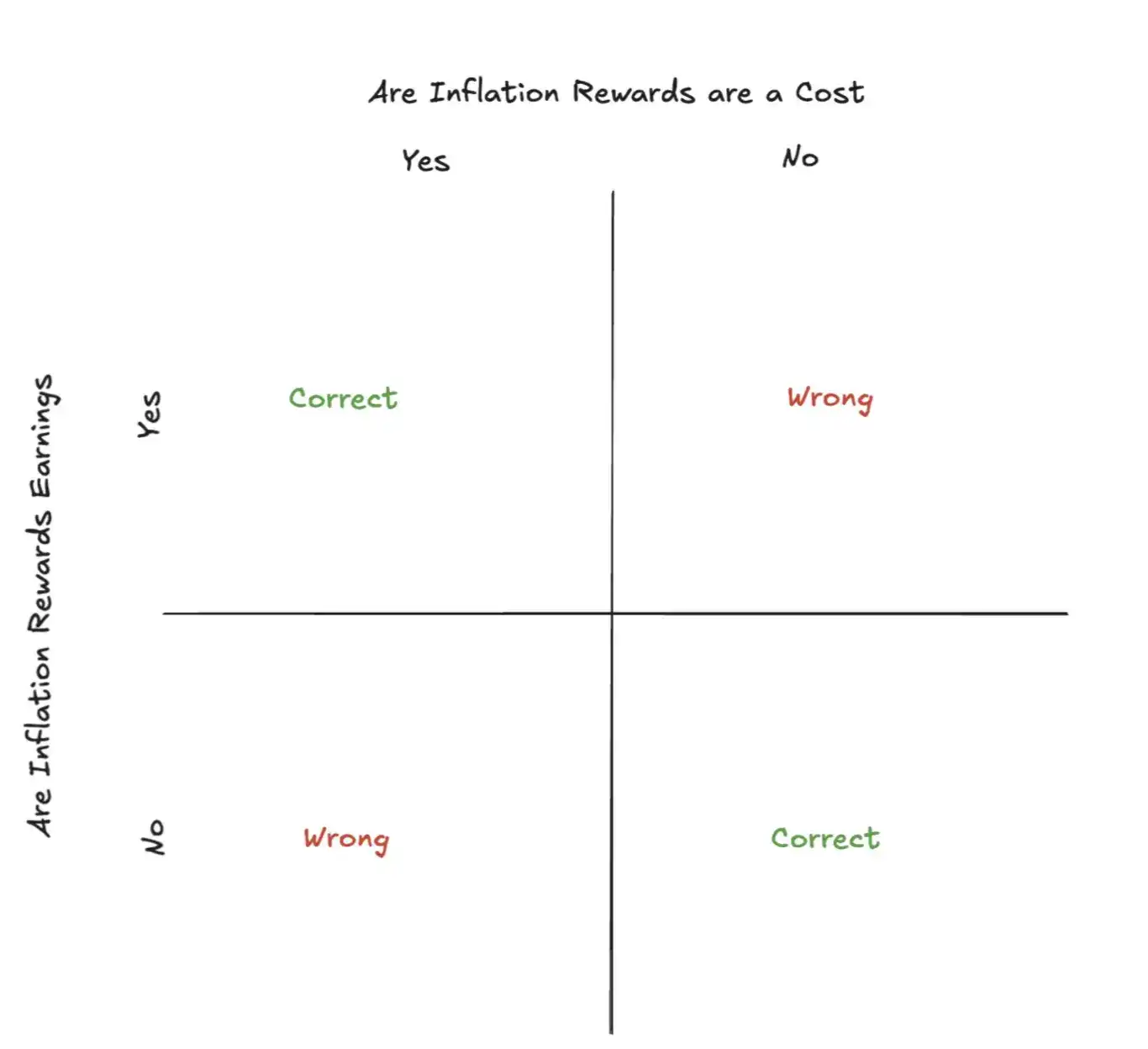
You can create a correct model that treats inflation rewards as a cost, but only if you simultaneously count newly issued tokens as a source of value to offset that cost. Otherwise, the model leads to absurd conclusions, such as Solana being unprofitable because it pays large staking rewards.

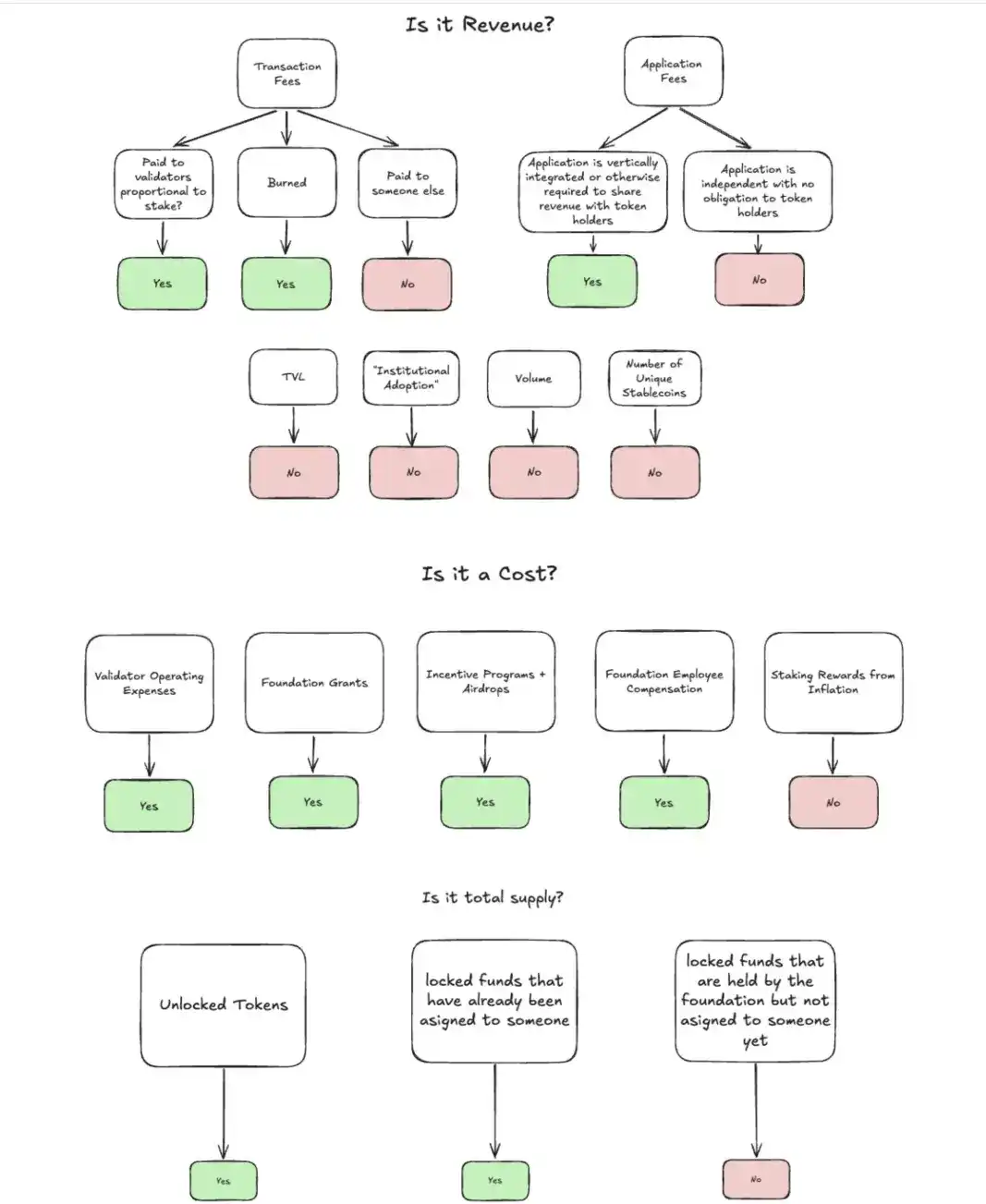
The categorization below is my proposed baseline. It separates three objects: revenue, costs, and total supply.

I believe these definitions most closely resemble the models stock analysts are already familiar with, making them easier to understand and reason about.

Other classifications may be correct, but deviations from this one must have clear justification. Proprietary models come with two costs.

First, they are harder for others to understand. Second, it is easy to miss dependencies between items.

For example, if foundation expenditures are classified as a cost, then the unspent portion of foundation tokens cannot also be included in the total supply, or it would be double-counted. If inflation rewards are classified as a cost, newly issued tokens must be treated symmetrically.
Part 3: Supply, Demand, and Price

Recently, several blockchains have explicitly raised fees with the goal of increasing revenue. However, revenue equals price multiplied by quantity.

Raising fees increases the revenue contributed by transactions that remain, but it also causes some transactions to disappear. Therefore, the net effect of a fee increase on revenue is uncertain; it hinges on the price elasticity of demand for transactions.

To understand the reasoning behind these adjustments, I spoke with some of the decision-makers involved. They believed the fees on these chains were originally too low, so demand was relatively inelastic within that price range.

This argument might apply to specific cases but is not universally true.

I have done some past research utilizing randomness in EIP-1559 pricing. The analysis showed that the price elasticity of gas demand is roughly between 0.6 and 0.8. That is, a 10% price increase leads to a 6% to 8% decrease in quantity demanded.

Moreover, this data only reflects short-term price fluctuations and does not capture the aggregate effects of applications migrating off-chain or optimizing their programs.
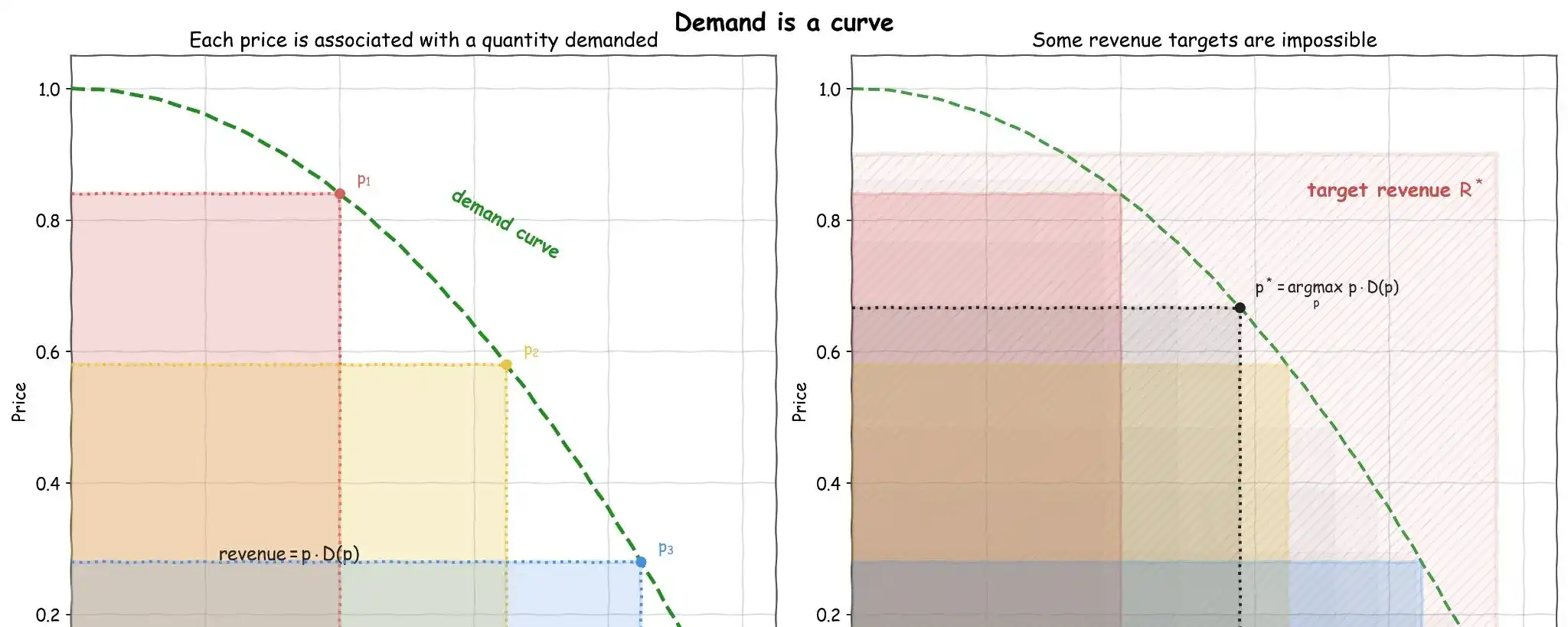
Therefore, a flat fee is a rather blunt instrument for generating revenue. Different types of on-chain transactions have different willingness to pay.

A small wallet transfer, a large stablecoin transfer, and a liquidation may consume the same block space, but they generate different total surplus and have different willingness to pay.
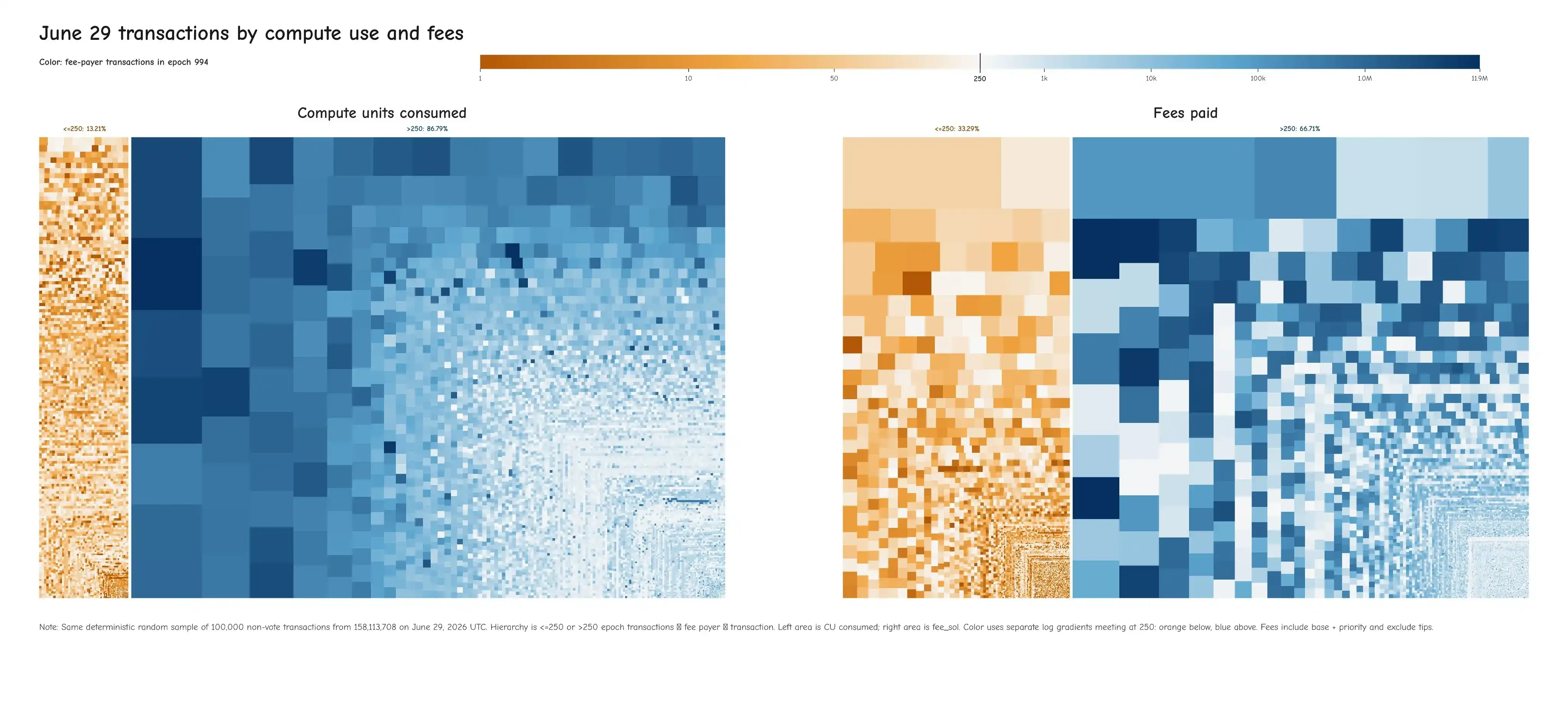
Note: Blue dots represent fee payers who initiated more than 250 transactions in the period, suggesting they are more likely to be bots and thus have higher price elasticity. Bots typically have thin profit margins, so they tend to reduce resource consumption significantly when prices rise.

Protocols want to charge higher fees for transactions with a higher willingness to pay. Computation-based fees are a step in this direction but not thorough enough.

For financial activity, the nominal transaction amount is often a better indicator of willingness to pay than computational load. This is why exchanges typically charge fees based on basis points.

Token programs can provide a way to charge fees proportional to transaction value. By modifying token programs, a small percentage-based fee can be levied on token transfers. This way, even if a high-value transfer uses similar computational resources as a low-value one, the high-value transfer still pays more.


Трендові криптовалюти

Пов'язані питання

QAccording to the article, what are the two primary ways that value can be aggregated to L1 token holders, and how do they differ economically from staking rewards funded by inflation?

AAccording to the article, value can be aggregated to L1 token holders in two primary ways: 1) Burning fees, which is economically equivalent to a share buyback, and 2) Distributing fees to stakers, which is economically equivalent to paying a dividend. These differ from staking rewards funded by inflation, which are neither network income nor a real external cost. They represent a redistribution from non-stakers to stakers through dilution, not the creation of value for token holders as a whole.

QWhat is the key difference between 'high-quality' fees and lower-quality fees for an L1 blockchain, as discussed in the article?

AThe key difference lies in the sustainability and defensibility of the fees. High-quality fees are recurring and repeatable, stemming from persistent demand for scarce block space due to long-term economic utility. Lower-quality fees are temporary and non-recurring, often generated by speculative activities like airdrop farming, memecoin frenzies, liquidations, or temporary network congestion that can disappear when incentives fade or volatility subsides.

QIn the author's proposed 'standard model' for L1 accounting, how should inflationary staking rewards and new token issuance be treated, and why?

AIn the author's proposed standard model, inflationary staking rewards should not be treated as a network cost, and newly issued tokens should not be treated as network income. This is because, from the perspective of all token holders, they are offsetting internal transfers—the dilution from new issuance is the 'cost' paid by holders to fund the staking rewards. Treating them as a cost without a corresponding income entry would incorrectly suggest the network is unprofitable.

QWhat caution does the article offer regarding the strategy of increasing protocol fees to raise revenue, and what economic concept is central to this caution?

AThe article cautions that increasing protocol fees does not automatically lead to higher revenue because revenue equals price multiplied by quantity. Raising fees can reduce the quantity of transactions. The central economic concept is the price elasticity of demand. If demand is elastic, a fee increase will lead to a proportionally larger drop in transactions, reducing total revenue. The article cites research suggesting Ethereum gas demand has a price elasticity between 0.6 and 0.8, meaning it is somewhat elastic.

QWhat is the proposed alternative to a uniform fee structure that the author suggests could better capture value from high-willingness-to-pay transactions?

AThe author suggests that a more effective alternative to a uniform fee structure would be to implement fees based on the nominal transaction value, similar to how exchanges charge basis points. This could be done by modifying token programs to levy a small proportional fee on token transfers. This way, a high-value transfer pays more than a low-value transfer even if they consume similar computational resources, better capturing value from transactions with a higher willingness to pay.

Пов'язані матеріали

Meme Coin with $60 Million Market Cap Plunges 65% in One Minute, FOMO Faces Renewed Scrutiny

A Solana-based meme token, $CATE, which had surged from a $20M+ to over $80M market cap in about a week, experienced a dramatic 65% crash within one minute. This flash crash has intensified scrutiny on the trading app 'fomo' and highlighted the speculative nature of the current meme coin market. The crash coincided with two events: the token's X account being suspended and the fomo app experiencing downtime, preventing users from trading. While the X suspension was straightforward, the fomo outage raised significant questions. $CATE's primary narrative driver was the open endorsement by Poorgoat, a top-ranked trader on fomo with over 200,000 followers, who had turned a ~$45,000 investment into over $2M at the peak. The token itself had no novel fundamentals, being a "cat sister" to Doge, a concept already existing on Ethereum without success. The crash, triggered by less than $1.5M in selling volume despite over 60,000 holder addresses, exposed a harsh reality: purely "organic" community-driven meme tokens (excluding past successes like $SPX) may now have a market cap ceiling around $17M, as exemplified by the long-term chart of $neet. This incident has fueled existing controversies surrounding fomo. Critics have grown skeptical of the app, alleging that rankings dominated by KOLs who receive lucrative token airdrops could be manipulated to create "pump-and-dump" schemes, luring in retail users before a rug pull. The timing of the crash during fomo's outage—preventing many of its users (who represent over 60% of $CATE holders) from reacting—was viewed as highly suspicious. Further controversy arose when another popular fomo trader publicly sold near the peak, and concerns were raised about the security of accessing private keys during the app's downtime. Fomo's official explanation of server overload due to surging user traffic was met with skepticism, given its substantial funding. The event serves as a stark reminder of the risks in meme coin speculation and the potential vulnerabilities of relying on a single trading platform during market volatility.

marsbit1 год тому

Meme Coin with $60 Million Market Cap Plunges 65% in One Minute, FOMO Faces Renewed Scrutiny

marsbit1 год тому

Торгівля

Спот

Популярні статті

Що таке SOLANA

HarryPotterWifHatMyroWynn10Inu,$solana: Занурення у модний проект мем-койнів Вступ У постійно змінюваному світі криптовалют інноваційні проекти постійно з’являються, привертаючи уяву інвесторів та ентузіастів. Один з таких проектів – це HarryPotterWifHatMyroWynn10Inu,$solana, мем-койн, який почав займати свою нішу в криптоспільноті. Метою цієї статті є надати вам всебічний огляд проекту, пояснивши його мету, архітектуру, творця, інвесторів та значні досягнення на шляху. Що таке HarryPotterWifHatMyroWynn10Inu,$solana? Огляд HarryPotterWifHatMyroWynn10Inu,$solana – це проект мем-койну, структурований на блокчейні Solana – платформі, відомій своєю масштабованістю та швидкістю. Метою проекту є приносити радість і креативність у криптопростір, він не тільки слугує торговим токеном, а й каталітиком для генерації та поширення мем-контенту. Спільнота в його основі заохочується до активної участі, створюючи динамічну екосистему, де процвітає креативність і співпраця. Цілі та завдання Суть проекту полягає в сприянні середовищу, де ентузіасти мемів можуть збиратися, ділитися та створювати новий мем-контент. Цей наративно орієнтований підхід надає енергії спільноті, стимулюючи залученість, у той же час висвітлюючи міцні функції, притаманні блокчейну Solana. Визначаючи проект, орієнтований на спільноту, HarryPotterWifHatMyroWynn10Inu,$solana також бажає досліджувати соціальний вплив цифрових валют як засобу вираження. Хто є творцем HarryPotterWifHatMyroWynn10Inu,$solana? Ідентичність творця HarryPotterWifHatMyroWynn10Inu,$solana залишається загадкою. Проект структуровано таким чином, що право власності було відмовлено; тому він розвивається як ініціатива, що очолюється спільнотою. Ця децентралізація сприяє прозорості та демократичній участі всіх залучених сторін. Такий підхід стає дедалі популярнішим у світі мем-койнів, де активна участь спільноти є найвищою цінністю. Хто є інвесторами HarryPotterWifHatMyroWynn10Inu,$solana? На цей момент немає публічно доступної інформації про конкретних інвесторів або фонди, що підтримують HarryPotterWifHatMyroWynn10Inu,$solana. Відсутність відомих інвесторів ще більше підкреслює орієнтований на громаду дух проекту, оскільки він існує незалежно від традиційних фінансових структур. Ця незалежність дозволяє проекту розвивати свою ідентичність без зовнішнього тиску, покладаючись замість цього на колективний інтерес своєї бази користувачів. Як працює HarryPotterWifHatMyroWynn10Inu,$solana? Економічна модель Проект використовує унікальну економічну модель, що підкріплює його функціональність і залучення користувачів. Транзакції в межах HarryPotterWifHatMyroWynn10Inu,$solana призначені для того, щоб бути вигідними для всіх учасників. Кожна угода передбачає комісію, яка потім перераспреділяється серед поточних власників, одночасно підвищуючи ліквідність. Основні компоненти цієї моделі включають: Механізм відображення: Частина транзакційних зборів повертається власникам, сприяючи довгостроковим інвестиціям у токен. Придбання ліквідності: Кошти розподіляються для підвищення ліквідності, забезпечуючи, щоб угоди купівлі-продажу могли виконуватись гладко. Механізми спалювання: Частина токенів може бути спалена для створення дефіциту, потенційно підвищуючи вартість, оскільки попит зрештою зростає. Такий дизайн сприяє самодостатній екосистемі, яка процвітає завдяки взаємодіям спільноти та інвестиціям. Залучення спільноти В основі HarryPotterWifHatMyroWynn10Inu,$solana лежить цінність, дана залученню спільноти. Дозволяючи користувачам брати участь у розвитку проекту через різні активності, такі як створення мемів та промоції, проект сприяє розвитку вітальної екосистеми, де креативність може розквітати. Хронологія HarryPotterWifHatMyroWynn10Inu,$solana Шлях HarryPotterWifHatMyroWynn10Inu,$solana має кілька значущих подій, які визначили його поточну позицію в крипто спільноті: Створення: Конкретна дата створення залишається невідомою, але початок проекту корениться в культурі мемів, що пронизує цифрову епоху. Перехід до спільноти: Після відмови від права власності його творцем проект перейшов на модель, що очолюється спільнотою, що дозволяє усім учасникам мати частку в його успіху. Аудит і колекція NFT: Щоб підвищити свою довіру, проект завершив ретельний аудит, одночасно запустивши колекцію NFT, яка слугує втіленням його мемоцентричного духу. Партнерства та розробка: Проект наразі перебуває в процесі пошуку потенційних партнерств з іншими токенами та організації розробки унікального веб-сайту та мерчендайзингових опцій на основі його легендарних мемів. Ключові моменти Отже, HarryPotterWifHatMyroWynn10Inu,$solana постає як помітний гравець у секторі мем-койнів криптовалюти. Ось деякі ключові висновки: Ініціатива, що керується спільнотою: Проект процвітає як колективний зусилля, заохочуючи активні внески від його членів спільноти, при цьому відокремлюючись від претензій на власність. Інноваційна економічна модель: Використовуючи механізми відображення, придбання ліквідності та спалювання, він створює міцне та захоплююче фінансове середовище для користувачів. Залучення NFT та мерчандайзу: Запуск колекції NFT має на меті поглибити залученість у громаді, підкреслюючи зв’язок між культурою мемів і цифровою валютою. Дослідження партнерств: Ініціатива не стоїть на місці – постійна розробка та потенційні партнерства вказують на прогресивний підхід, спрямований на сталий розвиток. Висновок У міру того як HarryPotterWifHatMyroWynn10Inu,$solana продовжує здобувати популярність у світі криптовалют, його унікальне поєднання залучення спільноти, інноваційних економічних структур та інтеграції культури мемів окреслює його потенційний шлях вперед. Попри таємницю навколо його витоків та зв’язків з інвесторами, проект втілює цікаву історію, що говорить про суть децентралізованих інновацій. У світі, де криптовалюти часто розглядаються виключно з фінансової точки зору, HarryPotterWifHatMyroWynn10Inu,$solana демонструє, що крипторух включає креативність, спільноту та співпрацю. Чи ви досвідчений інвестор, чи новачок, розгортання цього проекту мем-койнів безсумнівно служить захоплюючим випадком, що заслуговує на увагу.

695 переглядів усьогоОпубліковано 2024.04.04Оновлено 2024.12.03

Що таке SOLANA

Що таке SOLANA 2.0

BarbieCrashBandicootRFK777Inu, $SOLANA 2.0: Новий гравець на крипто-ландшафті Вступ до BarbieCrashBandicootRFK777Inu, $SOLANA 2.0 У постійно змінюваному світі криптовалют нові учасники постійно привертають увагу інвесторів та ентузіастів. Серед цих нових проектів — BarbieCrashBandicootRFK777Inu, представлений криптовалютою з символом $SOLANA 2.0. Ця унікальна ініціатива поєднує елементи гламуру, пригод та культури мемів, прагнучи перевершити очікування в надзвичайно конкурентному середовищі. З амбіціями зростання та інновацій, цей проект втілює дух аутсайдера, що бореться з усталеними гігантами. Що таке BarbieCrashBandicootRFK777Inu, $SOLANA 2.0? У своїй основі BarbieCrashBandicootRFK777Inu — це криптовалютний проект, що черпає натхнення з різних культових культурних посилань. Включаючи елегантність і чарівність Барбі, динамічну енергію Crash Bandicoot та невтомну рішучість, що представлена RFK, проект прагне запропонувати багатогранний досвід у світі криптовалют. Основною метою проекту BarbieCrashBandicootRFK777Inu є об'єднання цих різноманітних елементів у єдину екосистему, що приваблює широку аудиторію. Приймаючи капризність культури мемів, залишаючись при цьому в рамках принципів децентралізації та фінансової підтримки, проект зарекомендував себе як приваблива альтернатива для як досвідчених інвесторів, так і новачків у криптовалютному світі. Хто є творцем BarbieCrashBandicootRFK777Inu, $SOLANA 2.0? Попри зростаючий інтерес до BarbieCrashBandicootRFK777Inu, інформація щодо його творця залишається в значній мірі невідомою. Анонімність засновника або команди розробників викликає питання щодо структури та управління проектом. У світі криптовалют не рідкість, коли проекти працюють без публічних творців. Ця відсутність інформації може відлякати деяких потенційних інвесторів, тоді як інші можуть сприймати це як можливість embrace духу децентралізації, що лежить в основі багатьох ініціатив у криптовалютній сфері. Хто є інвесторами BarbieCrashBandicootRFK777Inu, $SOLANA 2.0? На даний момент доступна обмежена інформація про інвестиційні фонди або організації, що підтримують BarbieCrashBandicootRFK777Inu. Відсутність детального інвестиційного фінансування проекту підкреслює незалежний характер численних криптовалют. У цьому випадку ще належить з'ясувати, чи буде фінансування проекту походити від широкої підтримки спільноти або від підтримки більших фінансових установ. Як працює BarbieCrashBandicootRFK777Inu, $SOLANA 2.0? BarbieCrashBandicootRFK777Inu розроблено з низкою характеристик, які сприяють його унікальності в переповненому крипто-просторі. Хоча конкретні технічні деталі залишаються під покриттям, проект, як очікується, інтегрує функціональність, спрямовану на покращення залученості користувачів і сприяння зростанню спільноти. Поєднання різноманітних впливів — від моди та пригод до ігор — сприяє створенню інклюзивної атмосфери, що відповідає різним інтересам. Крім того, зв’язки проекту з екосистемою $SOLANA 2.0 передбачають потенційні технологічні переваги. Це може включати інноваційні швидкості транзакцій, масштабованість та ефективність витрат, що відповідає технічним можливостям блокчейну Solana. Засновники проекту, здається, намагаються спиратися на цю технологічну основу для створення тривалого досвіду спільноти та значної пропозиції продукції. Хронологія BarbieCrashBandicootRFK777Inu, $SOLANA 2.0 Шлях BarbieCrashBandicootRFK777Inu містить кілька ключових етапів, що дають уявлення про розвиток проекту на сьогоднішній день: Концептуалізація проекту: Початкові ідеї виникли навколо об'єднання гламуру, пригод та культури мемів, що надало основу для унікальної концепції проекту. Створення токена: Символічний токен $SOLANA 2.0 був встановлений, розроблений для втілення амбіцій проекту та залучення інтересу потенційних інвесторів. Розвиток проекту: Наразі проект проходить подальший розвиток, з акцентом на виклики для великих гравців у крипто-просторі та пропонуючи інноваційні рішення. Ці етапи відображають траєкторію зростання проекту, підкреслюючи його прагнення до розробки інноваційного досвіду криптовалюти. Ключові моменти про BarbieCrashBandicootRFK777Inu, $SOLANA 2.0 Унікальна концепція: BarbieCrashBandicootRFK777Inu виділяється завдяки поєднанню елементів гламуру, пригод і культури мемів в єдиному криптовалютному проекті. Дух аутсайдера: Проект приймає образ аутсайдера, прагнучи кинути виклик усталеним криптовалютним проектам і створити нішу в індустрії. Фаза розвитку: Активні зусилля з розвитку тривають з метою надання нових та інноваційних рішень, що відповідають очікуванням спільноти та інвесторів. Висновок BarbieCrashBandicootRFK777Inu, представлений символом $SOLANA 2.0, є цікавим новим учасником на ринку криптовалют. Його унікальне поєднання культурних посилань та амбітна візія можуть відгукнутися на запити тих, хто шукає альтернативні цінності проекту в крипто-ландшафті. Хоча невідомий статус його творця та інвесторів може викликати запитання, акцент проекту на чарівності і пригодах представляє захопливу історію, що розширює межі того, що можуть втілювати криптовалюти. У процесі розвитку проекту буде цікаво спостерігати його еволюцію в більш широкій крипто-індустрії та те, як він позиціонує себе серед своїх конкурентів. Для тих, хто залучений, BarbieCrashBandicootRFK777Inu, можливо, відкриє несподівані досвіди, які перевизначать залученість до цифрових активів. Поки що, коли проект рухається вперед, його шлях є нагадуванням про те, що інновації в крипто-просторі не знають меж, пропонуючи все — від захоплення і розваг до потенціалу фінансової підтримки.

253 переглядів усьогоОпубліковано 2024.04.05Оновлено 2024.12.03

Що таке SOLANA 2.0

Як купити SOL

Ласкаво просимо до HTX.com! Ми зробили покупку Solana (SOL) простою та зручною. Дотримуйтесь нашої покрокової інструкції, щоб розпочати свою криптовалютну подорож.Крок 1: Створіть обліковий запис на HTXВикористовуйте свою електронну пошту або номер телефону, щоб зареєструвати обліковий запис на HTX безплатно. Пройдіть безпроблемну реєстрацію й отримайте доступ до всіх функцій.ЗареєструватисьКрок 2: Перейдіть до розділу Купити крипту і виберіть спосіб оплатиКредитна/дебетова картка: використовуйте вашу картку Visa або Mastercard, щоб миттєво купити Solana (SOL).Баланс: використовуйте кошти з балансу вашого рахунку HTX для безперешкодної торгівлі.Треті особи: ми додали популярні способи оплати, такі як Google Pay та Apple Pay, щоб підвищити зручність.P2P: Торгуйте безпосередньо з іншими користувачами на HTX.Позабіржова торгівля (OTC): ми пропонуємо індивідуальні послуги та конкурентні обмінні курси для трейдерів.Крок 3: Зберігайте свої Solana (SOL)Після придбання Solana (SOL) збережіть його у своєму обліковому записі на HTX. Крім того, ви можете відправити його в інше місце за допомогою блокчейн-переказу або використовувати його для торгівлі іншими криптовалютами.Крок 4: Торгівля Solana (SOL)Легко торгуйте Solana (SOL) на спотовому ринку HTX. Просто увійдіть до свого облікового запису, виберіть торгову пару, укладайте угоди та спостерігайте за ними в режимі реального часу. Ми пропонуємо зручний досвід як для початківців, так і для досвідчених трейдерів.

1.5k переглядів усьогоОпубліковано 2024.12.12Оновлено 2026.06.02

Як купити SOL

Обговорення

Ласкаво просимо до спільноти HTX. Тут ви можете бути в курсі останніх подій розвитку платформи та отримати доступ до професійної ринкової інформації. Нижче представлені думки користувачів щодо ціни SOL (SOL).

活动图片