North Korea steals $2.8B in 2 years – Here’s what U.S. Treasury wants to do

ambcryptoОпубліковано о 2026-03-09Востаннє оновлено о 2026-03-09

Анотація

The U.S. Treasury is intensifying efforts to combat illicit financial activities involving digital assets, as highlighted in a report under the GENIUS Act. The study identifies significant risks, particularly with stablecoins, which accounted for 84% of illicit crypto transactions in 2025. The Treasury recommends enhanced monitoring using AI and real-time blockchain analytics, and proposes treating major stablecoin issuers like regulated financial institutions. The report also underscores growing threats from state-backed actors, notably North Korea, which stole an estimated $2.8 billion in crypto over two years to fund weapons programs. These findings support legislative push for acts like the CLARITY Act to establish clearer regulatory frameworks for digital assets.

As digital asset adoption grows, regulators are increasing efforts to prevent illicit financial activity, and in this U.S. Treasury has made a bold move.

Under the GENIUS Act, the U.S. Treasury was tasked with studying tools to detect illicit activity involving digital assets. As a part of the process, the Treasury reviewed industry feedback and examined technologies such as AI, digital identity, blockchain analytics, and APIs.

In this, they also found the risks linked to digital assets. These included the misuse of mixers, distributed ledgers, and DeFi, while outlining measures to combat illicit crypto finance.

Stablecoins take centre stage from a regulatory point of view

Seeing such setbacks, the report calls for stronger monitoring of the crypto ecosystem, particularly stablecoins. Treasury data shows stablecoins accounted for about 84% of illicit crypto transaction volume in 2025, making them a key focus for regulators.

To address this risk, the Treasury proposes AI-powered monitoring tools and real-time blockchain analytics to track transactions involving unhosted wallets and decentralized platforms.

Under this framework, major stablecoin issuers could be treated more like regulated financial institutions with stricter compliance requirements.

Remarking on the same, Galaxy Research Head Alex Thorn also weighed in,

Rising criminal and state-backed threats

Beyond regulation, the report also highlighted the growing scale of cybercrime and state-backed activity in the crypto sector.

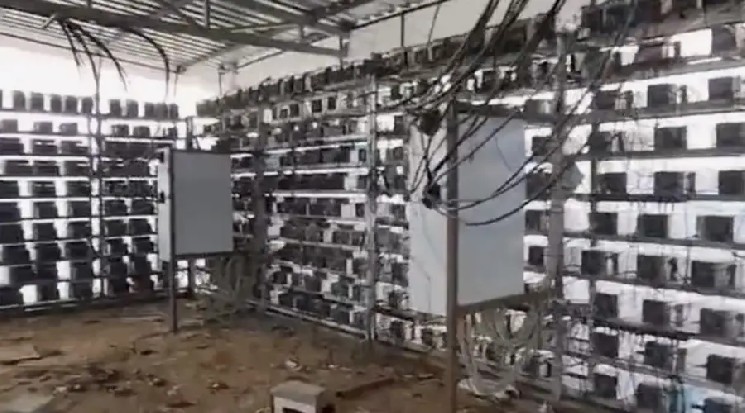
One major concern came from North Korea, which emerged as one of the most aggressive cyber actors targeting the industry.

Using advanced hacking and social engineering tactics, North Korean groups stole $1.5 billion in crypto in early 2025, bringing their estimated total to $2.8 billion over the past two years, reportedly used to fund weapons programs.

At the same time, online scams are also expanding rapidly.

This highlights how the Treasury’s findings are closely tied to the proposed CLARITY Act, which aims to create clearer regulatory rules for digital assets rather than forcing crypto into traditional banking frameworks.

The need for tighter oversight

Additionally, the 2026 Chainalysis report recently highlighted how sanctioned entities moved around $104 billion through cryptocurrency in 2025, representing a massive 694% increase from the previous year.

Together, these findings deepen the Treasury’s concerns and may push lawmakers toward advancing legislation like the CLARITY Act.


Final Summary

  • With stablecoins linked to a large share of illicit transactions, regulators are prioritizing stricter oversight of issuers and transaction flows.
  • North Korean hacks, global scams, and sanctions evasion highlight how crypto is increasingly tied to international security concerns.

Пов'язані матеріали

Huang Renxun Dramatically 'Saves' South Korean Stock Market

In early June, South Korea's stock market experienced a sharp decline, with the KOSPI index dropping over 5% and triggering a trading halt. Amid this volatility, NVIDIA CEO Jensen Huang's visit to Seoul provided a dramatic boost to market sentiment. During his trip, Huang held a dinner meeting with SK Group Chairman Chey Tae-won and SK Hynix CEO Kwak Noh-Jung. He announced that NVIDIA's new Vera CPU would utilize SK Hynix DRAM and confirmed a multi-year technical collaboration between the two companies. This partnership aims to co-develop next-generation memory for NVIDIA's AI infrastructure roadmap, covering products from data center supercomputers to personal AI devices. Huang also publicly commented that AI company stocks were attractively priced. A key announcement was that NVIDIA's upcoming Vera Rubin AI supercomputer systems will use HBM4 memory, with supply qualifications granted to all three major suppliers: SK Hynix, Samsung Electronics, and Micron Technology. Despite this multi-sourcing strategy, Huang warned that the industry-wide chip shortage, affecting everything from wafers to packaging, is expected to persist for several years due to relentless demand from global AI factory construction. The collaboration extends beyond memory supply. SK Hynix will employ NVIDIA's AI platforms and Omniverse digital twin technology to enhance its own semiconductor design, simulation, and manufacturing processes, aiming for more autonomous factory operations. This visit builds upon a prior October 2025 agreement for SK Group to build a large-scale AI data center using over 50,000 NVIDIA GPUs. Huang's itinerary also included meetings with other Korean giants like Hyundai, LG, and Samsung, indicating NVIDIA's broader strategy to deepen ties with South Korea's tech industry.

链捕手4 год тому

Huang Renxun Dramatically 'Saves' South Korean Stock Market

链捕手4 год тому

When Inference Becomes a Scarce Resource, Who Captures the Value?

When Inference Becomes the Scarce Resource, Who Captures the Value? The core AI bottleneck has shifted from model training to inference (runtime execution). While concerns persisted about an "AI compute gap"—initially a $200B, now a $600B problem—the market is now recognizing that the solution and value lie in the inference layer. Nvidia's financial restructuring around "serving tokens" and Cerebras's successful IPO highlight this shift. Inference is a recurring, usage-based cost, estimated to be 10-50x larger than the one-time training market, especially with the rise of agentic AI. The inference stack spans six layers: silicon (e.g., Nvidia), bare metal (e.g., CoreWeave), GPU rental/aggregation, deployment/optimization, model APIs, and end applications. Most companies operate in one layer. However, Hyperbolic uniquely spans three layers (GPU rental, deployment, and model APIs) without owning any hardware. It aggregates fragmented GPU supply from multiple cloud providers into a standardized pool, offering developers the cheapest available compute through intelligent routing. Its multi-cloud aggregation creates a data moat and a flywheel: more supply leads to better pricing data and liquidity, attracting more developers and providers. In contrast, applications like Venice operate at the top of the stack, reselling privacy-wrapped inference but remaining dependent on and constrained by the underlying compute costs they purchase. As inference demand explodes, value accrues not just to consumer applications but increasingly to the aggregation and routing layer that captures their cost of revenue. The coming potential GPU oversupply reinforces this dynamic. While hardware owners may suffer from depreciation, asset-light aggregators like Hyperbolic benefit from price arbitrage, routing workloads to the cheapest available capacity. The ultimate winner in the inference economy may not be the entity with the most GPUs, but the one that can most efficiently discover, aggregate, and route the world's fragmented compute.

链捕手4 год тому

When Inference Becomes a Scarce Resource, Who Captures the Value?

链捕手4 год тому

Торгівля

Спот
Ф'ючерси
活动图片