NIGHT, with a Daily Trading Volume of Nearly $10 Billion, Actually Comes from the 'Outdated' Cardano?

marsbitОпубліковано о 2025-12-24Востаннє оновлено о 2025-12-24

Анотація

The NIGHT token, associated with Cardano's privacy-focused sidechain Midnight, recently achieved a 24-hour trading volume of nearly $10 billion shortly after its listing on major exchanges like Binance, OKX, and Bybit. Its price surged over 3x from around $0.025 to approximately $0.114 within two weeks, though it later corrected to about $0.08. Developed by Cardano’s parent company IOG, Midnight emphasizes "programmable data protection" using zero-knowledge proofs (ZKPs) accessible via TypeScript APIs, targeting enterprise adoption with optional privacy features. The project employs a dual-token model: NIGHT for governance and generating DUST, which serves as gas and privacy fees. A significant airdrop to 37 million addresses across multiple blockchains and partnerships with exchanges distributed nearly 30% of the total 24 billion NIGHT supply, fueling market excitement. Cardano plans to boost its ecosystem in 2026 with scalability upgrades, Midnight’s mainnet launch, native stablecoin integrations, and enhanced interoperability—all supported by increased funding for marketing, investments, and DeFi liquidity.

Recently, a token called NIGHT, which was listed for spot or contract trading on Bitget, Binance, OKX, and Bybit at the beginning of the month, saw its 24-hour global trading volume exceed $9 billion, approaching $10 billion. Bybit even surpassed Binance in 24-hour spot trading volume thanks to NIGHT.

NIGHT was officially launched on December 9. According to CoinGecko data, the token's price rose from around $0.025 to nearly $0.114 in less than two weeks, a increase of over 3 times. Its FDV also once exceeded $2.5 billion, which could rank it within the top 50 by market capitalization. As of the time of writing, the price of NIGHT has retreated to around $0.08.
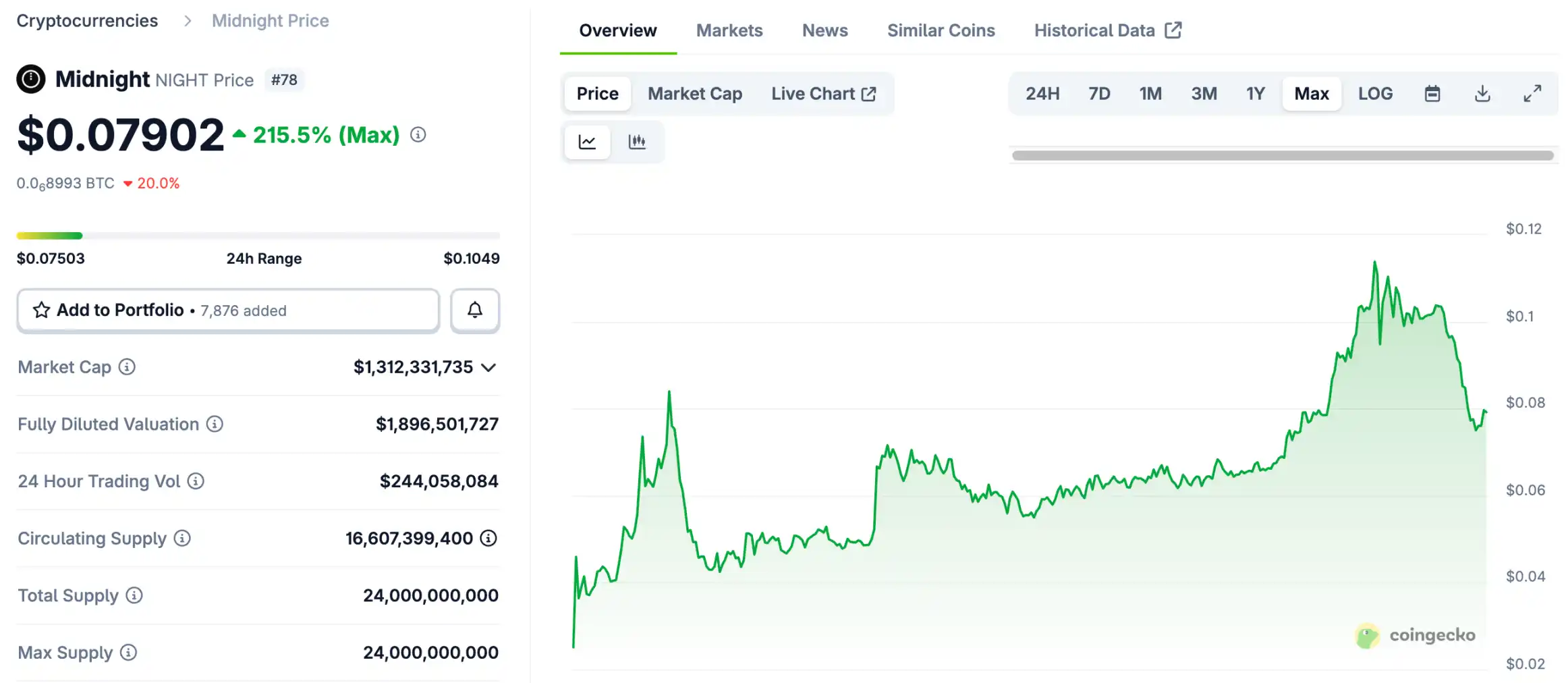
Such performance from a token simultaneously listed on several major exchanges is not entirely unexpected, but what's interesting is that NIGHT is the token of Midnight, a privacy sidechain of Cardano. A project labeled with both "Cardano" and "privacy" having such explosive power truly surprising to most.

What Makes Midnight "Valuable"?

Midnight is a sidechain developed by Input Output Global (IOG, the parent company of Cardano) with "programmable data protection" as its core selling point. It packages zero-knowledge proofs (ZKP) into a ready-to-use TypeScript API, allowing Web2 developers to implement "selective disclosure" on-chain without needing to learn cryptography. The entire network uses Cardano as its consensus foundation and Halo2 as its ZK backend, adopting a dual-token model (NIGHT+DUST). Its goal is to first implement the "data availability without visibility" that enterprises care about most, and then gradually expand to scenarios like DeFi, RWA, and on-chain compliant identity.

Overall, it doesn't seem particularly unique. It uses ZKP for privacy technology, but it doesn't natively protect privacy; instead, it makes privacy features optional to meet practical needs.

IOG first publicly announced the plan to develop Midnight in November 2022, but it wasn't until nearly two years later, in October 2024, that the testnet was launched. This is indeed IOG's style—it took almost 5 years from announcing that Cardano would introduce smart contracts to actually implementing them, finally gaining smart contract functionality in September 2021, long after the bull market had cooled.

In May of this year, Midnight established a foundation, with Fahmi Syed, former CFO of the Polkadot development team Parity, as its chairman, indicating that the first step towards TGE had been taken. Just two days after announcing the foundation's establishment, Cardano founder Charles Hoskinson revealed plans to airdrop tokens to 37 million addresses on 8 major blockchains, stating that the airdrop would only target retail investors, with no VC participation in the project.

Perhaps what truly ignited market sentiment was Midnight's "massive airdrop." In addition to the airdrop, Midnight also distributed nearly 3 billion NIGHT tokens in cooperation with Binance, OKX, and Bybit. This large-scale approach, which contrasts sharply with the recent popular ICO models, has garnered a positive market response.
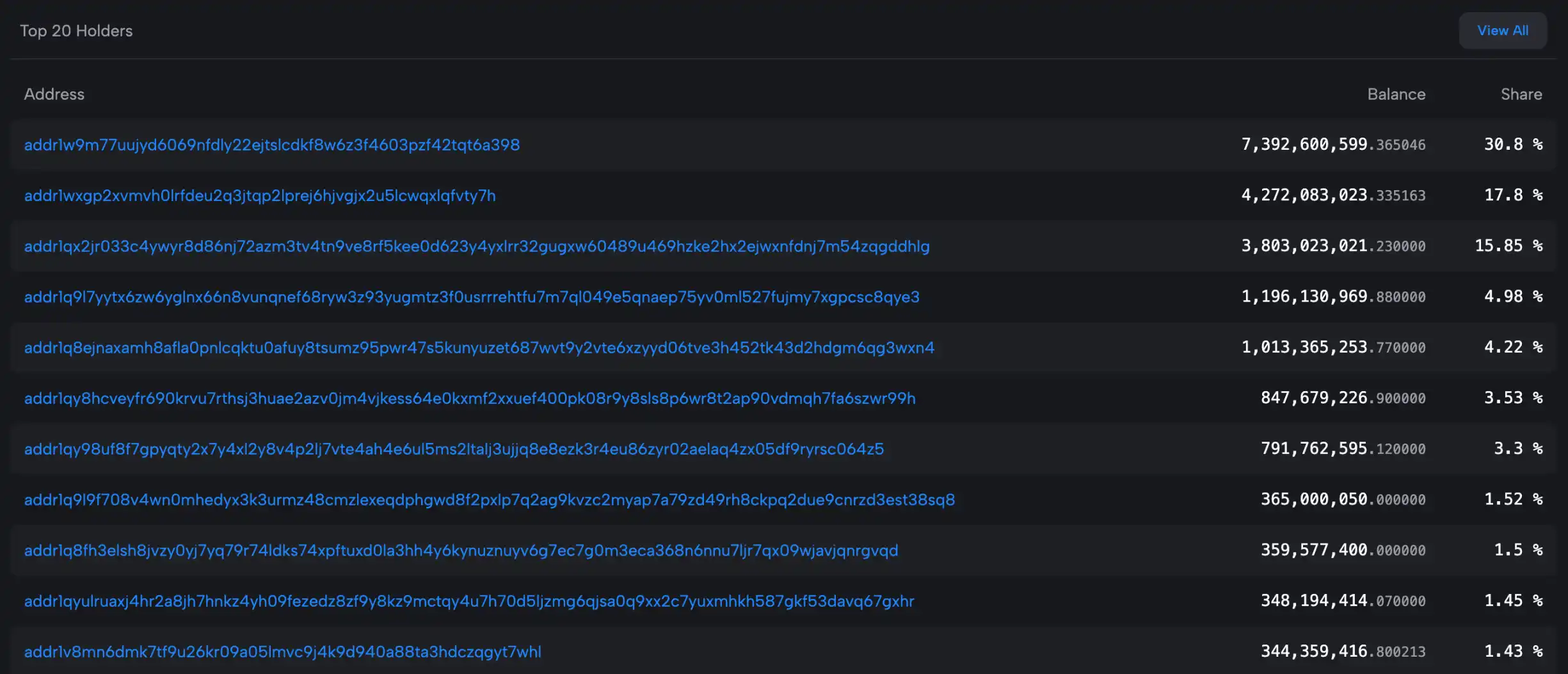
According to the block explorer, aside from the top three addresses which likely belong to IOG or the Midnight Foundation, the remaining top NIGHT holding addresses are relatively decentralized. Based on data provided on the official website, the author estimates that the tokens distributed through NIGHT's own airdrop and cooperative activities with exchanges amount to nearly one-third of the total supply (24 billion tokens), which can indeed be considered a massive effort.

Midnight's tokens are not limited to NIGHT; it uses a dual-token model of "NIGHT+DUST." This rare design is not due to some whimsical idea but rather to ensure compliance with regulatory requirements. NIGHT can be used for network governance, incentives, and generating another token, DUST. NIGHT itself is not related to privacy and supports on-chain auditing.

DUST, generated by holding NIGHT, is used to pay transaction fees, similar to Gas. Additionally, DUST will be used to pay for privacy fees—if one wants to add optional privacy features to on-chain transactions, they must pay DUST as a fee. DUST is automatically distributed to NIGHT holders' accounts as blocks are produced and "decays" over time to prevent malicious hoarding and network attacks.

Thus, Midnight's "equity" token, NIGHT, does not participate in paying on-chain transaction fees but exists solely as a governance token and for generating DUST, the actual on-chain fuel. DUST itself, as a "renewable resource" generated by NIGHT and decreasing over time, would be considered a resource rather than an asset under regulatory policies, meeting regulatory requirements in various regions.

Cardano to Heavily Invest in On-Chain Ecosystem Next Year

According to Cardano's roadmap, next year will be all about boosting on-chain activity.

First and foremost, as a foundation, Cardano will undergo a network upgrade to increase throughput to 1,000–10,000 TPS through parallel block processing and a layered structure for vertical scaling, while maintaining security and decentralization. Next is the mainnet launch of the protagonist of this article, Midnight. Cardano believes that Midnight's launch will bring more DeFi activity and TVL through its optional privacy features. Additionally, the Cardano Treasury will allocate funds to support the native issuance of major stablecoins like USDT and USDC on Cardano.

The last point, which the author finds most important, is that Cardano plans to focus on interoperability—not simple cross-chain functionality, but allowing users from other chains to interact directly with DApps on Cardano by consuming the Gas token of the source chain.

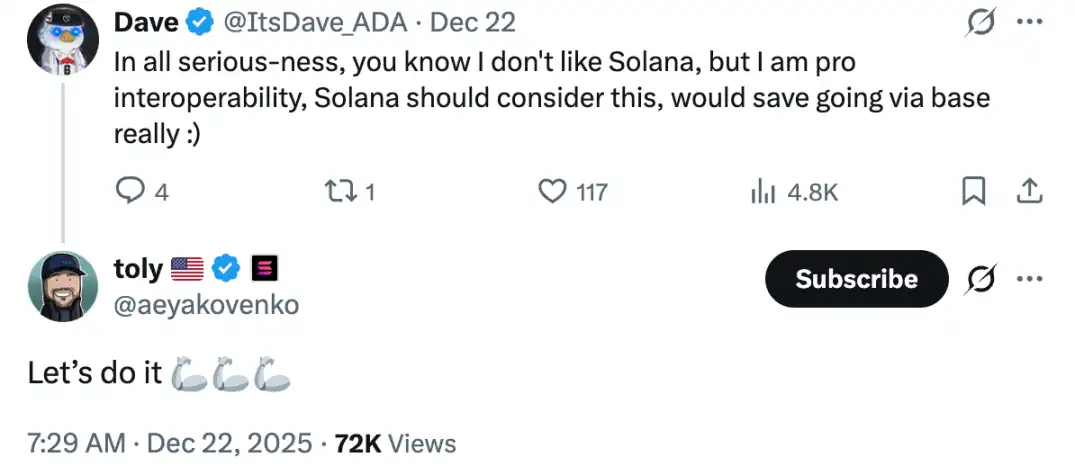
Last week, Cardano achieved atomic swaps between BTC and ADA through Fluid, not via cross-chain bridges, wrapped tokens, or centralized custody, but directly through underlying script-to-script transactions, which also somewhat benefits from Cardano's own UTXO ledger model. Two days ago, interactions between Cardano's stake pool operators and a Solana co-founder on X confirmed this development direction.
Accompanying the strategic and product plans is financial investment. The Cardano Foundation plans to increase its marketing budget by 12% and "make an appearance" at events like TOKEN2049 and Consensus. Venture Hub will also invest 2 million ADA to support startups and ecosystem projects. Furthermore, the Cardano Foundation plans to inject tens of millions of ADA into on-chain DeFi to improve liquidity and attract institutional participation.

From this perspective, driving up the price of NIGHT might just be the appetizer Cardano is serving for a series of plans. Perhaps in 2026, it's worth keeping an eye on this project, which launched its mainnet back in 2017 and has been almost forgotten by the mainstream Web3 market.


Пов'язані питання

QWhat is the 24-hour trading volume of the NIGHT token and on which major exchanges was it recently listed?

AThe NIGHT token had a 24-hour trading volume of nearly $10 billion. It was recently listed on major exchanges including Bitget, Binance, OKX, and Bybit for spot or perpetual trading.

QWhich blockchain is the NIGHT token associated with, and what is the core feature of its parent project, Midnight?

AThe NIGHT token is the native token of Midnight, which is a privacy-focused sidechain of Cardano. The core feature of Midnight is 'programmable data protection' using zero-knowledge proofs (ZKPs) to enable selective data disclosure.

QWhat is the unique dual-token model used by the Midnight network and what are the roles of each token?

AMidnight uses a dual-token model consisting of NIGHT and DUST. NIGHT is the governance token used for staking and generating DUST. DUST acts as the gas token for paying transaction fees and for optional privacy features on the network.

QWhat was a major market event that significantly boosted interest in the NIGHT token?

AA major event that boosted market interest was a large-scale airdrop of NIGHT tokens to 37 million addresses across 8 major blockchains, specifically targeting retail users with no VC participation. Additionally, nearly 3 billion NIGHT were distributed through collaborations with Binance, OKX, and Bybit.

QAccording to the article, what are some of Cardano's key plans for improving its ecosystem in the coming year?

ACardano's key plans for the coming year include a network upgrade to increase throughput to 1,000-10,000 TPS, the mainnet launch of Midnight, treasury funding for the native issuance of major stablecoins like USDT and USDC on Cardano, and a focus on interoperability to allow users from other chains to interact with Cardano dApps directly.

Пов'язані матеріали

STRC Breaks Below $95: Why Does It Continue to Depeg? Is There Default Risk?

"STRC Falls Below $95: Why the Persistent Depegging and Is There Default Risk?" The article discusses the recent decline in the price of STRC, a perpetual preferred stock issued by Strategy (MSTR) designed to trade around a $100 par value. As of publication, STRC traded at $94.65, raising market concerns. STRC is described as a high-yield cash flow product, offering an 11.50% annual dividend paid monthly. Its "preferred" status grants it priority over common stock for dividends and in liquidation. Key reasons cited for the price depegging include: 1. **Bitcoin's Price Drop:** MSTR's assets are heavily tied to Bitcoin (BTC), which fell over 21% from its recent high, pressuring all Strategy-related products. 2. **Competitive Pressure:** Rival Strive Asset Management's similar product, SATA, offers daily dividends and has maintained its $100 par value with a ~13% yield. In response, Strategy has proposed changing STRC's dividend frequency from monthly to bi-weekly, pending shareholder vote. 3. **Technical Selling:** A break below $100 may have triggered algorithmic selling and stop-losses, exacerbating the decline. Regarding default risk, the analysis suggests it is currently low. Strategy founder Michael Saylor confirmed the June 2026 dividend rate remains at 11.50% with no cuts or suspensions. The company's massive reserve of 843,706 BTC provides a significant backstop for its obligations. Industry opinions are mixed. Some analysts view the BTC holdings as reliable support for dividends, while critics like Peter Schiff warn of potential dividend cuts leading to price crashes and lawsuits. Others highlight inflation risk and the company's ability to reduce dividends without a formal default. In summary, STRC's drop is attributed to BTC volatility, competition, and technical factors. While immediate default risk appears contained, the product faces challenges from market conditions and competitive dynamics.

marsbit31 хв тому

STRC Breaks Below $95: Why Does It Continue to Depeg? Is There Default Risk?

marsbit31 хв тому

AI Trading Cools, South Korean Stocks Plunge 1.8%, Spot Gold Rises 1%, Bitcoin Dives

A sell-off in AI-related stocks, triggered by Broadcom's disappointing earnings forecast, sent shockwaves through global markets. South Korea's KOSPI led Asia's decline, plunging 1.8% as the risks from concentrated chip stock gains and surging leveraged investments came to the fore. The tech-heavy Nasdaq 100 futures fell 0.5% following Broadcom's 14% after-hours plunge, which signaled a slower-than-expected transition to AI clients. This pullback extended Wall Street's weakness, halting the S&P 500's nine-day rally amid hawkish Fed signals and renewed Middle East tensions. South Korean authorities convened an emergency meeting, pledging "immediate measures" against market volatility and warning of record-high stock margin debt. The adjustment rippled across assets: Bitcoin fell to around $64,000, its lowest since February, while safe-haven gold rose 1% on bargain hunting. Oil prices dipped on Middle East ceasefire news. Market analysts noted the sell-off was driven by profit-taking after massive gains, particularly in chip stocks like Samsung and SK Hynix, which now dominate the KOSPI. Wall Street banks are divided on Korea's outlook, with Goldman Sachs raising its target while Citigroup and others warn of overvaluation and a potential bubble. Bridgewater's Ray Dalio noted that great technological shifts often create bubbles. Meanwhile, Fed officials' hints at potential future rate hikes added to the cautious mood ahead of key U.S. jobs data.

华尔街日报57 хв тому

AI Trading Cools, South Korean Stocks Plunge 1.8%, Spot Gold Rises 1%, Bitcoin Dives

华尔街日报57 хв тому

Seeking Alpha's Hot Article: Why Might the U.S. Stock Market Crash in June?

In a recent Seeking Alpha article, financial professor and analyst Damir Tokic argues that the US stock market may be poised for a significant crash in June 2026. The core thesis centers on a "mega-bubble" in equities, particularly within the technology sector, which has driven the S&P 500 to near-record valuations, with a Shiller P/E ratio exceeding 40—a level comparable to the 2000 dot-com bubble. Tokic identifies two primary catalysts for a potential collapse. First, he points to unsustainable market exuberance fueled by what he terms the "Trump Stimulus"—massive AI capital expenditure by tech giants, which he believes is politically driven and cannot last. Second, and more urgently, he highlights the escalating Iran war as a critical threat. The ongoing closure of the Strait of Hormuz has created a severe global energy supply crunch. Strategic petroleum reserves are projected to hit critically low operational levels by June, potentially causing oil prices to spike above $200 per barrel and triggering a severe, supply-driven inflationary shock. This scenario, Tokic warns, would force the Federal Reserve's hand. Despite currently maintaining a dovish bias, the Fed would likely be compelled to officially pivot to a hawkish stance at its June FOMC meeting to combat soaring inflation and bond yields. He contends that such a shift—or even a failure to act, which would destroy Fed credibility—could be the trigger that punctures the market bubble. The resulting downturn, he concludes, could rival the bear markets of 2000 and 2008, advising investors to prepare for a major correction.

marsbit1 год тому

Seeking Alpha's Hot Article: Why Might the U.S. Stock Market Crash in June?

marsbit1 год тому

Торгівля

Спот
Ф'ючерси

Популярні статті

Як купити BILL

Ласкаво просимо до HTX.com! Ми зробили покупку Billions Network (BILL) простою та зручною. Дотримуйтесь нашої покрокової інструкції, щоб розпочати свою криптовалютну подорож.Крок 1: Створіть обліковий запис на HTXВикористовуйте свою електронну пошту або номер телефону, щоб зареєструвати обліковий запис на HTX безплатно. Пройдіть безпроблемну реєстрацію й отримайте доступ до всіх функцій.ЗареєструватисьКрок 2: Перейдіть до розділу Купити крипту і виберіть спосіб оплатиКредитна/дебетова картка: використовуйте вашу картку Visa або Mastercard, щоб миттєво купити Billions Network (BILL).Баланс: використовуйте кошти з балансу вашого рахунку HTX для безперешкодної торгівлі.Треті особи: ми додали популярні способи оплати, такі як Google Pay та Apple Pay, щоб підвищити зручність.P2P: Торгуйте безпосередньо з іншими користувачами на HTX.Позабіржова торгівля (OTC): ми пропонуємо індивідуальні послуги та конкурентні обмінні курси для трейдерів.Крок 3: Зберігайте свої Billions Network (BILL)Після придбання Billions Network (BILL) збережіть його у своєму обліковому записі на HTX. Крім того, ви можете відправити його в інше місце за допомогою блокчейн-переказу або використовувати його для торгівлі іншими криптовалютами.Крок 4: Торгівля Billions Network (BILL)Легко торгуйте Billions Network (BILL) на спотовому ринку HTX. Просто увійдіть до свого облікового запису, виберіть торгову пару, укладайте угоди та спостерігайте за ними в режимі реального часу. Ми пропонуємо зручний досвід як для початківців, так і для досвідчених трейдерів.

268 переглядів усьогоОпубліковано 2026.05.07Оновлено 2026.06.02

Як купити BILL

Що таке ATWO

I. Вступ до проектуArena Two - це децентралізована інтерактивна платформа, яка дозволяє фанатам грати активну, токенізовану роль у результатах подій в реальному часі. На відміну від традиційних моделей трансляції, які зменшують фанатів до пасивних глядачів, Arena Two використовує технологію блокчейн, щоб дозволити фанатам безпосередньо голосувати в реальному часі та впливати на результати на полі.II. Інформація про токенНазва токена: ATWO(Arena Two)III. Пов'язані посиланняВебсайт:https://arenatwo.com/Експлорери:https://basescan.org/token/0x499D35eBE6cEe9B2Ac35Fd003fcBbeeB9CFc7B32Twitter:https://x.com/arenatwoXПримітка: Вступ до проекту взято з матеріалів, опублікованих або наданих офіційною командою проекту, які є лише для довідки і не є інвестиційною порадою. HTX не несе відповідальності за будь-які прямі або непрямі збитки, що виникають внаслідок цього.

214 переглядів усьогоОпубліковано 2026.05.18Оновлено 2026.06.02

Що таке ATWO

Як купити ATWO

Ласкаво просимо до HTX.com! Ми зробили покупку Arena Two (ATWO) простою та зручною. Дотримуйтесь нашої покрокової інструкції, щоб розпочати свою криптовалютну подорож.Крок 1: Створіть обліковий запис на HTXВикористовуйте свою електронну пошту або номер телефону, щоб зареєструвати обліковий запис на HTX безплатно. Пройдіть безпроблемну реєстрацію й отримайте доступ до всіх функцій.ЗареєструватисьКрок 2: Перейдіть до розділу Купити крипту і виберіть спосіб оплатиКредитна/дебетова картка: використовуйте вашу картку Visa або Mastercard, щоб миттєво купити Arena Two (ATWO).Баланс: використовуйте кошти з балансу вашого рахунку HTX для безперешкодної торгівлі.Треті особи: ми додали популярні способи оплати, такі як Google Pay та Apple Pay, щоб підвищити зручність.P2P: Торгуйте безпосередньо з іншими користувачами на HTX.Позабіржова торгівля (OTC): ми пропонуємо індивідуальні послуги та конкурентні обмінні курси для трейдерів.Крок 3: Зберігайте свої Arena Two (ATWO)Після придбання Arena Two (ATWO) збережіть його у своєму обліковому записі на HTX. Крім того, ви можете відправити його в інше місце за допомогою блокчейн-переказу або використовувати його для торгівлі іншими криптовалютами.Крок 4: Торгівля Arena Two (ATWO)Легко торгуйте Arena Two (ATWO) на спотовому ринку HTX. Просто увійдіть до свого облікового запису, виберіть торгову пару, укладайте угоди та спостерігайте за ними в режимі реального часу. Ми пропонуємо зручний досвід як для початківців, так і для досвідчених трейдерів.

121 переглядів усьогоОпубліковано 2026.05.18Оновлено 2026.06.02

Як купити ATWO

Обговорення

Ласкаво просимо до спільноти HTX. Тут ви можете бути в курсі останніх подій розвитку платформи та отримати доступ до професійної ринкової інформації. Нижче представлені думки користувачів щодо ціни A (A).

活动图片










