New protocol targets redemption delays in $20B tokenized market

cointelegraphОпубліковано о 2025-12-17Востаннє оновлено о 2025-12-17

Анотація

Uniform Labs, a blockchain infrastructure firm founded by Standard Chartered veterans, has launched Multiliquid, a protocol designed to solve liquidity issues in the $20 billion tokenized real-world asset (RWA) market. The system enables 24/7 conversions between tokenized money market funds and major stablecoins like USDC and USDT, allowing institutional investors to access on-demand liquidity instead of being limited by traditional redemption windows. The protocol responds to the U.S. GENIUS Act, which prohibits stablecoin issuers from paying yield directly. Multiliquid instead facilitates yield generation through regulated tokenized funds. The launch comes as tokenized money market funds have grown rapidly—from $770 million to nearly $9 billion in two years—but face liquidity risks, especially if on-chain redemptions exceed off-chain liquidity during market stress. The Bank for International Settlements has warned that these funds, often used as crypto collateral, could introduce operational risks if not properly managed.

Uniform Labs, a blockchain infrastructure company founded by veterans of Standard Chartered, has launched a new protocol designed to address persistent liquidity constraints in the emerging tokenization market.

Announced on Wednesday, Uniform Labs unveiled Multiliquid, a protocol designed to enable 24/7 conversions between tokenized money market funds and major stablecoins, including USDC (USDC) and USDt (USDT).

At launch, Multiliquid supports integrations with tokenized Treasury assets issued by Wellington Management and other asset managers, allowing institutional holders to access on-demand liquidity rather than relying on issuer-controlled redemption windows.

The launch comes as tokenized real-world assets (RWAs) continue to expand, with the market currently valued at around $20 billion, according to industry data. While that figure is below a peak of over $30 billion earlier this year, growth has remained steady, particularly in tokenized Treasury products.
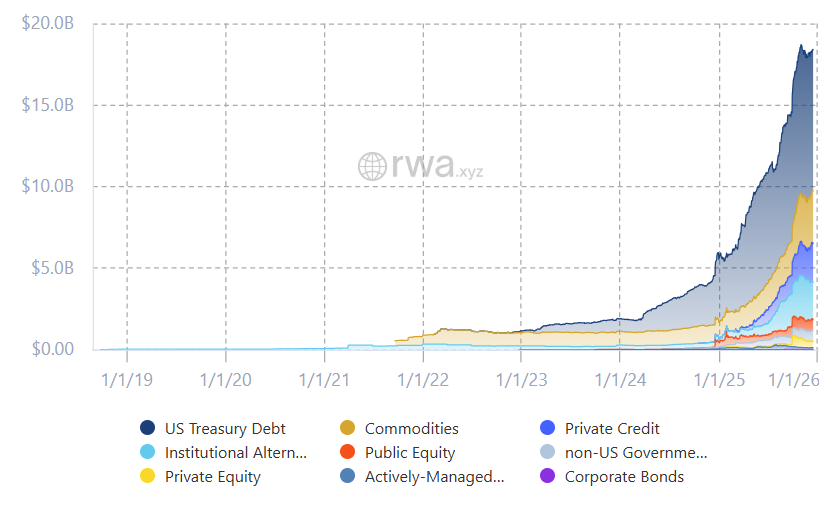
Total RWA market size, excluding stablecoins. Source: RWA.xyz

Uniform Labs said the protocol was developed in response to the GENIUS Act, recent US stablecoin legislation that establishes a regulatory framework for payment stablecoins but prohibits issuers from paying yield directly to holders.

In that regulatory environment, the company said, Multiliquid is designed to keep stablecoins as pure payment instruments while enabling yield to be generated through regulated tokenized money market funds and other RWAs connected via its swap layer.

Related: US banks could soon issue stablecoins under FDIC plan to implement GENIUS Act

Liquidity risks shadow the rapid growth of tokenized money market funds

Tokenized money market funds have emerged as one of the fastest-growing segments of the RWA landscape, alongside private credit and tokenized US Treasury bonds. However, their rapid growth has also exposed a persistent weakness: Liquidity often remains constrained by traditional redemption processes, limiting their usefulness in round-the-clock onchain markets.

That concern was recently highlighted by the Bank for International Settlements (BIS), which acknowledged the expansion of tokenized money market funds — from $770 million to nearly $9 billion in assets in about two years — but warned that the sector faces material liquidity risks.

As these funds increasingly serve as a source of collateral in crypto markets, the BIS noted that they could introduce operational and liquidity risks if onchain demand for redemptions outpaces the availability of offchain liquidity, particularly during periods of market stress.
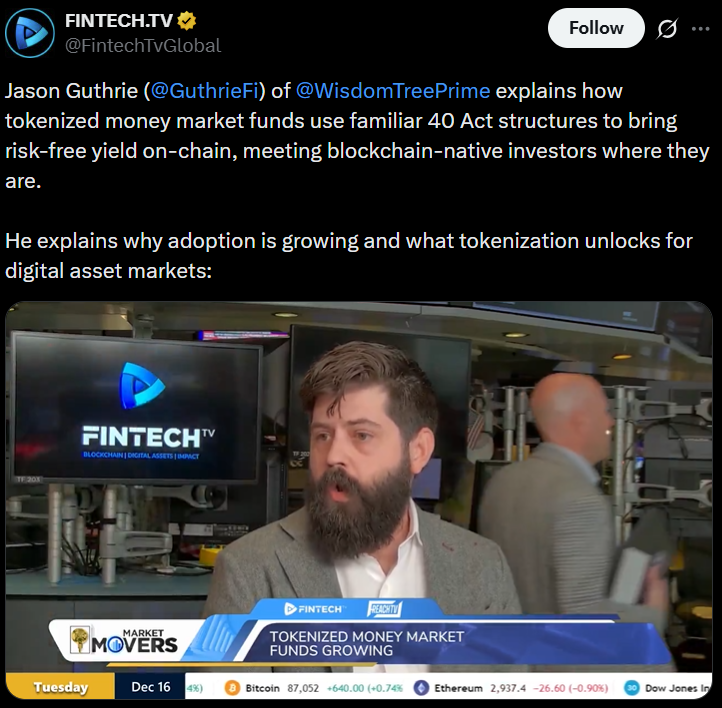
Source: Fintech.TV

Their use as collateral could expand as more financial institutions begin to view tokenized funds as a form of “cash as an asset,” potentially offsetting growth in stablecoins, according to JPMorgan strategist Teresa Ho.

Magazine: The one thing these 6 global crypto hubs all have in common...

Трендові криптовалюти

Пов'язані матеріали

The Biggest Political Economy Question in the AI Era: As Robots Become More Capable, How Do Humans Share the Value?

In the AI era, the most pressing political economy question is: as machines become increasingly capable, how can humanity share in the value they create? An article originally critiquing China's tech focus has sparked a deeper debate on this global challenge. Historically, industrial progress improved efficiency but still relied on human labor for wealth creation and distribution. AI is fundamentally different—it is now replacing cognitive and knowledge work. As AI and robots take over more tasks, economic growth may continue while direct human participation in value creation shrinks, creating a core tension between productivity gains and widespread income generation. The issue is not unique to China. While leading tech companies amass enormous wealth, labor's share of income is declining globally. The core problem is a broken link: technological innovation and corporate profits are not translating into sufficient consumer income and demand. Three potential paths forward are outlined: a traditional capitalist model where profits primarily go to capital owners; a state-capitalist approach with public investment in AI; and more innovative models like digital sovereign wealth funds, universal shareholding, or AI-era basic income schemes to directly distribute AI-generated value. The future competitive advantage may lie not just in technological supremacy, but in which society can build a new, inclusive distribution system for the intelligent economy. The ultimate challenge is ensuring that as AI creates value, humans have a means to obtain income and share in the resulting widespread social benefits.

marsbit4 хв тому

The Biggest Political Economy Question in the AI Era: As Robots Become More Capable, How Do Humans Share the Value?

marsbit4 хв тому

Generating Profits for Seven Consecutive Quarters, Emerging Markets Carry Trade Outperforms Everything

For the seventh consecutive quarter, dollar-funded emerging market carry trades have delivered positive returns, marking the longest winning streak since 2008. According to Bloomberg's index, this strategy has gained approximately 22% since late 2024, outperforming U.S. Treasuries, emerging market sovereign, and corporate dollar debt. The core of the trade involves borrowing low-interest currencies like the U.S. dollar, euro, or yen to invest in high-yielding emerging market assets, such as Turkish lira bonds offering over 40% returns. Returns were amplified by favorable currency moves, with the dollar weakening against most emerging market currencies and other traditional funding currencies. For instance, the trade gained 48% on the Colombian peso in the past year. A key test came in August 2024 with a historic joint U.S.-Japan currency intervention, which caused only a modest 1% dip in the carry trade risk premium as investors shifted funding from the yen to the euro and Swiss franc. Looking ahead, the primary risk is the timing of Federal Reserve policy changes. While persistent inflation allows the Fed to hold rates, a rapid rise in long-term U.S. yields could threaten the trade. Another concern is crowding, as massive inflows increase vulnerability to a sudden reversal. High interest rates in regions like Latin America and Eastern Europe, supported by external factors like Middle East tensions and energy prices, continue to sustain the opportunity. Major investors remain engaged, favoring currencies like the Mexican peso, South African rand, and Turkish lira.

marsbit19 хв тому

Generating Profits for Seven Consecutive Quarters, Emerging Markets Carry Trade Outperforms Everything

marsbit19 хв тому

Unpacking the Truth Behind On-chain Assets: Leverage, Liquidity, and Risk

The article analyzes the concept of "real-world asset" (RWA) tokenization, arguing that while tokenizing assets on-chain is a useful step, it is far from transformative on its own. The author compares it to placing a barcode on a shipping container—it enables identification but does not build the necessary market infrastructure. The core argument is that true value emerges not from tokenization, but from integrating these tokens into DeFi systems where they can be valued, financed, hedged, traded, and liquidated under stress. Key challenges identified include: 1. **Multiple Time Clocks**: A fundamental tension exists between blockchain's 24/7 settlement and the slower, business-hour-dependent processes of traditional markets, custody, and redemption. This "duration mismatch" can create dangerous liquidity gaps during crises. 2. **Liquidity Misconceptions**: True liquidity is not measured by Total Value Locked (TVL) or trading pairs, but by the ability to exit a position within a required timeframe at an acceptable price. It requires analyzing multiple exit paths and stress-testing scenarios. 3. **Leverage and Risk**: Leverage unlocks economic utility (e.g., using tokenized assets as collateral) but also introduces fragility. Risk models must account for more than asset volatility, incorporating factors like legal enforceability, oracle freshness, and market structure. Paradoxically, a "safer" asset like tokenized Treasury bonds could require a higher collateral discount than ETH due to slower, less-proven liquidation mechanisms. 4. **A Risk Graph**: RWA risk should be modeled as a network of interconnected dependencies (e.g., issuers, custodians, oracles, stablecoin pools), not a single score. Failures can propagate through this graph, turning operational issues into systemic liquidity crises. The article states that tokenized government bonds are merely an entry point, while more complex frontiers like computing power and energy assets present greater challenges and opportunities. It also examines the interplay and risks between tokenized stocks and perpetual futures contracts. The conclusion is that the future lies not in "tokenizing everything," but in building robust market layers where tokenized rights become resilient financial primitives within a programmable capital system. The token is just the barcode; the market is the machine.

marsbit43 хв тому

Unpacking the Truth Behind On-chain Assets: Leverage, Liquidity, and Risk

marsbit43 хв тому

Торгівля

Спот

Популярні статті

Як купити SKDD

Ласкаво просимо до HTX.com! Ми зробили покупку GraniteShares 2x Short SK Hynix Daily ETF (SKDD) простою та зручною. Дотримуйтесь нашої покрокової інструкції, щоб розпочати свою криптовалютну подорож.Крок 1: Створіть обліковий запис на HTXВикористовуйте свою електронну пошту або номер телефону, щоб зареєструвати обліковий запис на HTX безплатно. Пройдіть безпроблемну реєстрацію й отримайте доступ до всіх функцій.ЗареєструватисьКрок 2: Перейдіть до розділу Купити крипту і виберіть спосіб оплатиКредитна/дебетова картка: використовуйте вашу картку Visa або Mastercard, щоб миттєво купити GraniteShares 2x Short SK Hynix Daily ETF (SKDD).Баланс: використовуйте кошти з балансу вашого рахунку HTX для безперешкодної торгівлі.Треті особи: ми додали популярні способи оплати, такі як Google Pay та Apple Pay, щоб підвищити зручність.P2P: Торгуйте безпосередньо з іншими користувачами на HTX.Позабіржова торгівля (OTC): ми пропонуємо індивідуальні послуги та конкурентні обмінні курси для трейдерів.Крок 3: Зберігайте свої GraniteShares 2x Short SK Hynix Daily ETF (SKDD)Після придбання GraniteShares 2x Short SK Hynix Daily ETF (SKDD) збережіть його у своєму обліковому записі на HTX. Крім того, ви можете відправити його в інше місце за допомогою блокчейн-переказу або використовувати його для торгівлі іншими криптовалютами.Крок 4: Торгівля GraniteShares 2x Short SK Hynix Daily ETF (SKDD)Легко торгуйте GraniteShares 2x Short SK Hynix Daily ETF (SKDD) на спотовому ринку HTX. Просто увійдіть до свого облікового запису, виберіть торгову пару, укладайте угоди та спостерігайте за ними в режимі реального часу. Ми пропонуємо зручний досвід як для початківців, так і для досвідчених трейдерів.

212 переглядів усьогоОпубліковано 2026.08.19Оновлено 2026.08.19

Як купити SKDD

Що таке SKUU

Розроблений для забезпечення подвійних щоденних прибутків з використанням кредитного плеча акцій SK Hynix, це однодневний ETF з кредитним плечем під брендом GraniteShares. Він підходить для інвесторів з короткостроковим оптимістичним прогнозом щодо SK Hynix для тактичного розподілу активів.

270 переглядів усьогоОпубліковано 2026.08.19Оновлено 2026.08.19

Що таке SKUU

Як купити SKUU

Ласкаво просимо до HTX.com! Ми зробили покупку GraniteShares 2x Long SK Hynix Daily ETF (SKUU) простою та зручною. Дотримуйтесь нашої покрокової інструкції, щоб розпочати свою криптовалютну подорож.Крок 1: Створіть обліковий запис на HTXВикористовуйте свою електронну пошту або номер телефону, щоб зареєструвати обліковий запис на HTX безплатно. Пройдіть безпроблемну реєстрацію й отримайте доступ до всіх функцій.ЗареєструватисьКрок 2: Перейдіть до розділу Купити крипту і виберіть спосіб оплатиКредитна/дебетова картка: використовуйте вашу картку Visa або Mastercard, щоб миттєво купити GraniteShares 2x Long SK Hynix Daily ETF (SKUU).Баланс: використовуйте кошти з балансу вашого рахунку HTX для безперешкодної торгівлі.Треті особи: ми додали популярні способи оплати, такі як Google Pay та Apple Pay, щоб підвищити зручність.P2P: Торгуйте безпосередньо з іншими користувачами на HTX.Позабіржова торгівля (OTC): ми пропонуємо індивідуальні послуги та конкурентні обмінні курси для трейдерів.Крок 3: Зберігайте свої GraniteShares 2x Long SK Hynix Daily ETF (SKUU)Після придбання GraniteShares 2x Long SK Hynix Daily ETF (SKUU) збережіть його у своєму обліковому записі на HTX. Крім того, ви можете відправити його в інше місце за допомогою блокчейн-переказу або використовувати його для торгівлі іншими криптовалютами.Крок 4: Торгівля GraniteShares 2x Long SK Hynix Daily ETF (SKUU)Легко торгуйте GraniteShares 2x Long SK Hynix Daily ETF (SKUU) на спотовому ринку HTX. Просто увійдіть до свого облікового запису, виберіть торгову пару, укладайте угоди та спостерігайте за ними в режимі реального часу. Ми пропонуємо зручний досвід як для початківців, так і для досвідчених трейдерів.

201 переглядів усьогоОпубліковано 2026.08.19Оновлено 2026.08.19

Як купити SKUU

Обговорення

Ласкаво просимо до спільноти HTX. Тут ви можете бути в курсі останніх подій розвитку платформи та отримати доступ до професійної ринкової інформації. Нижче представлені думки користувачів щодо ціни A (A).

活动图片