Multicoin Co-founder: PropAMM is Changing the Perception That 'Decentralization is Slower'

比推Опубліковано о 2026-03-13Востаннє оновлено о 2026-03-13

Анотація

Multicoin Capital co-founder Kyle Samani argues that PropAMM (Proactive Automated Market Maker) is one of the most significant innovations in market microstructure in decades, challenging the long-held belief that decentralized systems are inherently slower than centralized ones. In traditional centralized exchanges (CEXs), market makers co-locate servers and engage in constant bidirectional communication with the exchange, leading to latency due to data transmission delays. In contrast, PropAMM on Solana runs market-making algorithms directly on the blockchain, eliminating the need for inter-server communication. Price updates occur within the same physical silicon, drastically reducing latency. PropAMM already offers narrower spreads for SOL-USDC spot trading on Solana than major CEXs. Samani predicts it will dominate on-chain trading for spots, perpetuals, and prediction markets this year. Current challenges include ensuring best execution for takers due to private algorithms and non-deterministic routing across multiple PropAMMs, but solutions from aggregators like Jupiter, dFlow, and Phoenix are expected. Upcoming Solana upgrades—such as higher compute limits, reduced slot times, and improved network latency—will further enhance PropAMM performance, solidifying its advantage over traditional systems.

Author: Kyle Samani, Multicoin Co-founder

Compiled by: Azuma, Odaily Planet Daily

Original Title: Multicoin Co-founder: Is Decentralization Always Slower Than Centralization? PropAMM is Breaking This Bias


Editor's Note: The man who knows how to hype Solana best, Multicoin Capital's former co-founder Kyle Samani, who recently made a high-profile exit from the industry, is back!

Last night, Kyle Samani published a long Thread on his personal X account. In the post, Kyle Samani once again demonstrated his highly persuasive "hype" (not meant derogatorily) rhetoric, using "efficiency"—a shortcoming in the decentralized narrative—as a breakthrough point. He detailed how Solana ecosystem's currently promoted PropAMM will catch up to or even surpass traditional centralized models in efficiency, arguing that PropAMM is one of the most important innovations in market microstructure in recent years, or even decades.

Below is the original content:

PropAMM is one of the most important innovations in market microstructure in recent years, and perhaps even one of the most significant in decades.

To help everyone understand this conclusion, let's first look at how market makers (MMs) quote prices on traditional centralized exchanges (CEXs).

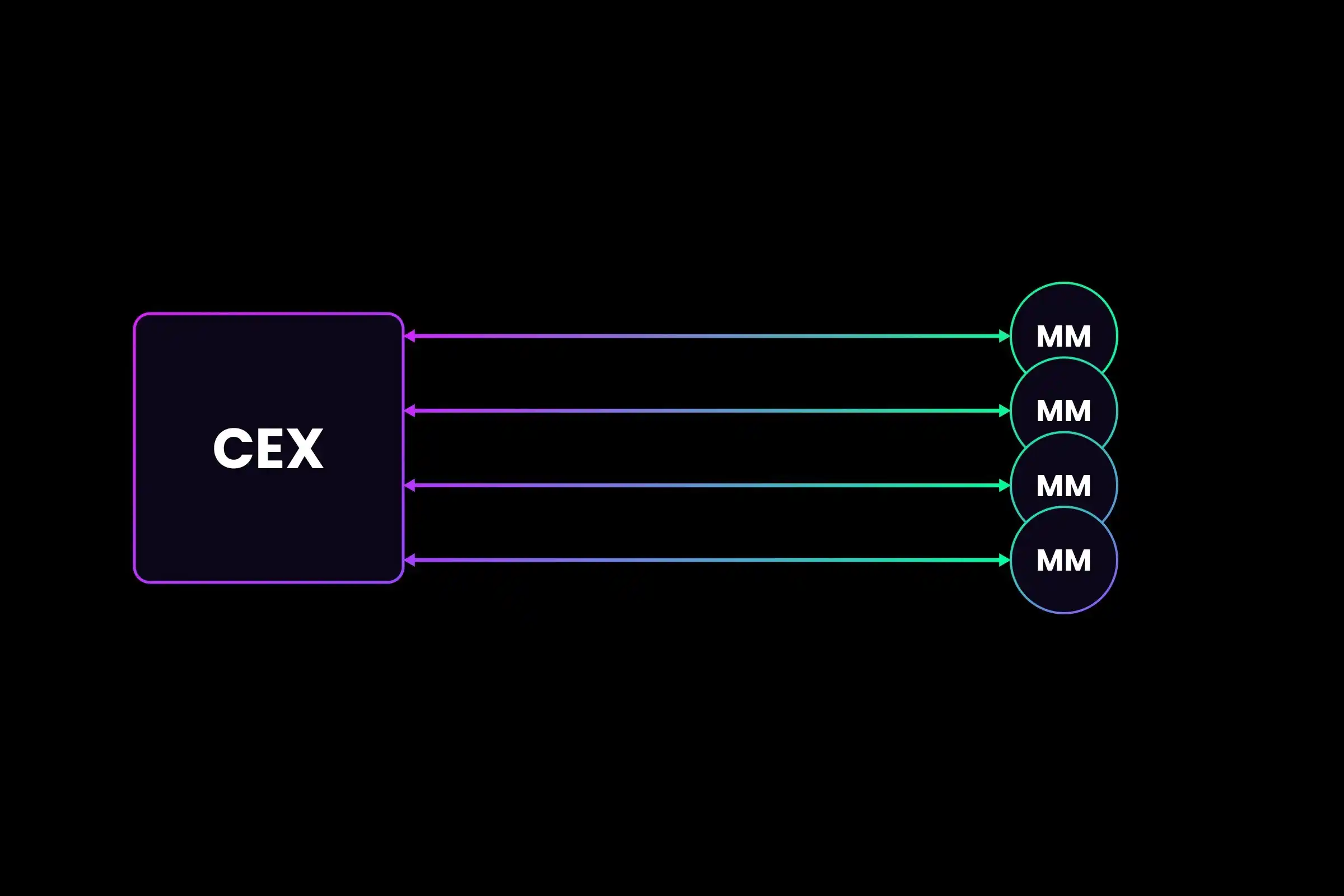
Market makers typically engage in physical co-location with the exchange. Each market maker runs an algorithm on a server and connects to another server running the exchange's system via network cables of uniform length (e.g., 50 meters).

Market makers and exchanges constantly send large data streams back and forth. Whenever a market maker sends an order to the exchange—whether it's a limit order, cancellation, or market order—the exchange needs to broadcast this information to all other market makers; then, other market makers resend their own orders based on the new information; this cycle repeats indefinitely.

Here is a simple diagram.
Now let's look at how PropAMM works on the Solana mainnet.

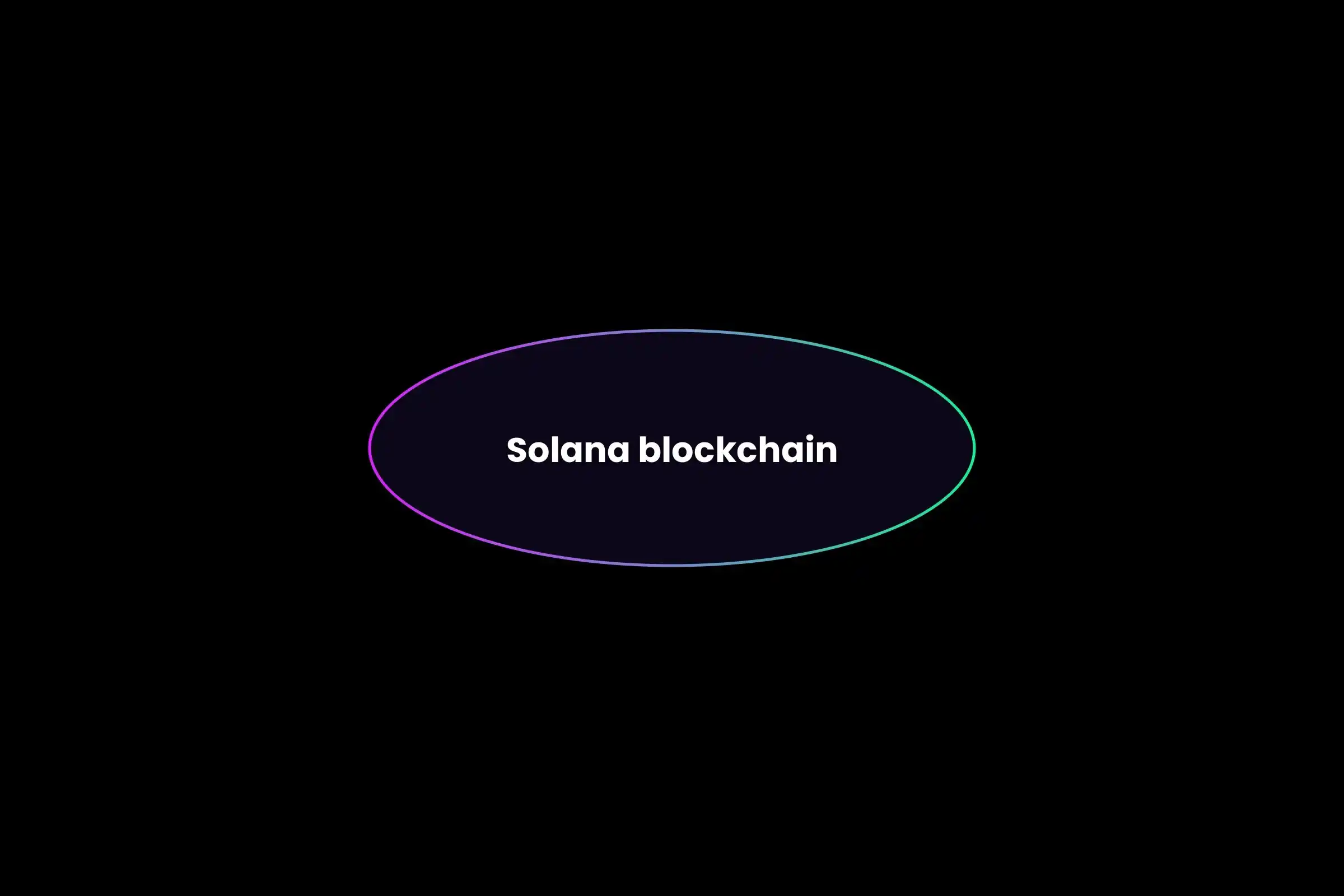
The beauty of PropAMM on Solana is that the blockchain itself directly "hosts" the market maker algorithm. This means the system no longer needs to send billions of messages back and forth between market makers and the exchange; the market-making algorithm will operate directly on the same physical machine as the exchange.

The new diagram is as follows. (That's right, only the Solana blockchain is needed!)
There has long been a common view in the cryptocurrency industry that decentralized systems must be slower (have higher latency) than centralized systems because they require communication between global nodes.

But if you reframe the issue, on-chain hosted algorithms may actually have lower latency than traditional centralized exchanges in finance.

Why is that? The reason is that the latency required for PropAMM to update prices only involves electrons moving within the same physical silicon chip. For example, if the last market order causes a change in the SOL-USD price, this information is immediately visible to all PropAMMs and used for pricing the next market order. Everything happens within the same silicon chip; there is no longer a need for two-way communication between servers.

It is worth noting that PropAMM does require frequent oracle updates, but this is not a problem and does not change the overall fact I mentioned above.

The most critical point remains that when the exchange—in this case, the Solana blockchain—directly hosts the PropAMM algorithm, the market maker's pricing changes in real-time within the same physical silicon chip.

PropAMM has already become the dominant mechanism for SOL-USDC spot quotes on Solana, with narrower spreads than all major CEXs. I expect this market structure to become the dominant model for on-chain trading this year, including spot, perpetual contracts (perps), and even prediction markets.

The biggest challenge for PropAMM is that there is currently no way to ensure that the taker always gets the best execution, because:

· The algorithms of all PropAMMs are not public (which is reasonable, as traditional market-making algorithms are also private);

· When routing trades between multiple PropAMMs, the result is non-deterministic.

However, this problem can be solved. I expect all relevant aggregator teams to launch solutions this year, such as Jupiter and dFlow for spot, and Phoenix for contracts.

Current PropAMM is still not fully optimized and is subject to various limitations of the Solana blockchain itself. This year, Solana will roll out a series of major upgrades that will significantly enhance PropAMM's performance, including:

1. Higher CU (Compute Unit) limits per transaction and larger transaction sizes;

2. Higher CU limits per block;

3. Alpenglow: Reducing slot time from 400ms to 100–150ms;

4. DoubleZero: Reducing global network latency;

5. Application-controlled execution;

6. Multiple concurrent leaders.

If PropAMM on the Solana mainnet can already offer narrower quotes than all CEXs without these upgrades, imagine how powerful their performance will become as these upgrades are gradually implemented.


Twitter:https://twitter.com/BitpushNewsCN

BitPush TG Discussion Group:https://t.me/BitPushCommunity

BitPush TG Subscription: https://t.me/bitpush

Original link:https://www.bitpush.news/articles/7619419

Пов'язані питання

QWhat is PropAMM and why is it considered a major innovation in market microstructure?

APropAMM is a mechanism on the Solana blockchain where the market maker algorithms are directly hosted on the blockchain itself. It is considered a major innovation, potentially one of the most significant in decades, because it eliminates the need for billions of messages to be sent between market makers and a centralized exchange. By running on the same physical machine as the 'exchange' (the blockchain), it can achieve lower latency and tighter spreads than traditional centralized systems.

QHow does PropAMM on Solana achieve lower latency compared to traditional centralized exchanges (CEXs)?

APropAMM achieves lower latency because the market maker algorithms are hosted directly on the Solana blockchain. This means that price updates and order changes happen within the same physical silicon, as electrons move internally on a chip. There is no need for bidirectional communication between separate servers for market makers and the exchange, which is a requirement in the traditional co-location model of CEXs.

QWhat is the current dominant application of PropAMM on Solana and what are its future expected use cases?

ACurrently, PropAMM is the dominant mechanism for SOL-USDC spot quotes on Solana, offering narrower spreads than major CEXs. It is expected to become the dominant model for on-chain trading this year, expanding into spots, perpetual contracts (perps), and even prediction markets.

QWhat is the main challenge currently facing PropAMM, and what are the proposed solutions?

AThe main challenge is ensuring that a taker (the party taking liquidity) gets the best possible trade execution. This is difficult because the PropAMM algorithms are not public (which is standard for proprietary trading algorithms) and because routing trades across multiple PropAMMs is non-deterministic. Solutions are expected from aggregation teams like Jupiter and dFlow for spot trading, and Phoenix for contracts.

QWhat upcoming Solana upgrades are expected to significantly improve PropAMM performance?

ASeveral major Solana upgrades are expected to boost PropAMM performance: 1. Higher CU (Compute Unit) limits per transaction and larger transaction sizes. 2. A higher CU limit per block. 3. Alpenglow, which will reduce slot time from 400ms to 100-150ms. 4. DoubleZero, which will reduce global network latency. 5. Application-controlled execution. 6. Multiple concurrent leaders.

Пов'язані матеріали

In-Depth Report on the On-Chain Lending Market: When Off-Chain Credit Meets On-Chain Liquidation

The on-chain lending market has evolved from a peripheral DeFi niche into core financial infrastructure. As of early 2026, total value locked (TVL) in on-chain lending protocols has reached $64.3 billion, accounting for 53.54% of total DeFi TVL, making it the largest and most mature vertical within decentralized finance. Aave dominates the sector with approximately $32.9 billion in TVL, commanding nearly half of the market—a leadership position that is unlikely to be challenged in the foreseeable future. However, the path of on-chain lending forward is not without risk. Liquidation cascades, credit defaults, and cross-chain vulnerabilities remain systemic threats hanging over the industry. At the same time, a deeper structural transformation is underway: on-chain lending is shifting from a “leverage tool for crypto-native users” to a “compliant gateway for institutional capital”. The scale of RWA (Real World Asset) lending has surpassed $18.5 billion, with U.S. Treasuries and government securities increasingly serving as core collateral. Institutional capital inflows are reshaping both the user base and risk appetite of the sector. This report systematically analyzes the evolution of on-chain lending definitions, competitive dynamics, core risks, and future trends, providing a comprehensive industry outlook for investors and trade practitioners. Key findings suggest that the “one dominant player with several strong challengers” structure will persist in the short term, while fixed-rate lending, compliant collateral, and institutional credit underwriting will define the next phase of competition. For investors focused on DeFi infrastructure, three key opportunity tracks stand out, namely, the Aave ecosystem (Morpho, Spark), RWA lending protocols (Ondo, Maple) and fixed-rate innovation (Notional, Pendle).

HTX Learn32 хв тому

In-Depth Report on the On-Chain Lending Market: When Off-Chain Credit Meets On-Chain Liquidation

HTX Learn32 хв тому

Fu Peng's First Public Speech in 2026: What Exactly Are Crypto Assets? Why Did I Join the Crypto Asset Industry?

Fu Peng, a renowned macroeconomist and now Chief Economist at New火 Group, delivered his first public speech of 2026 at the Hong Kong Web3 Festival. He explained his perspective on crypto assets and why he joined the industry, framing it within the context of macroeconomic trends and financial evolution. Fu emphasized that crypto assets are transitioning from an early, belief-driven phase to a mature, institutionally integrated asset class. He drew parallels to the 1970s-80s, when technological advances (like computing) revolutionized traditional finance, leading to the rise of FICC (Fixed Income, Currencies, and Commodities). Similarly, current advancements in AI, data, and blockchain are reshaping finance, with crypto assets becoming part of a new "FICC + C" (C for Crypto) framework. He noted that institutional capital, including traditional hedge funds, avoided early crypto due to its speculative nature but are now engaging as regulatory clarity emerges (e.g., stablecoin laws, CFTC classifying crypto as a commodity). Fu predicted that 2025-2026 marks a turning point where crypto becomes a standardized, financially viable asset for diversified portfolios, akin to commodities or derivatives in traditional finance. Fu defined Bitcoin not as "digital gold" in a simplistic sense but as a value-preserving, financially tradable asset. He highlighted that crypto's future lies in regulated, institutional adoption, moving away from retail-dominated trading. His entry into crypto signals this maturation, where traditional finance integrates crypto into mainstream asset management.

marsbit1 год тому

Fu Peng's First Public Speech in 2026: What Exactly Are Crypto Assets? Why Did I Join the Crypto Asset Industry?

marsbit1 год тому

Justin Sun Sues Trump Family: What $75 Million Bought Was Only a Blacklist

Justin Sun, founder of Tron, has filed a lawsuit in federal court against World Liberty Financial (WLF), alleging he was made the "primary target of a fraudulent scheme" after investing $75 million. Sun claims the investment secured him an advisor title and WLFI tokens, which were later frozen by WLF, causing "hundreds of millions in losses." The dispute began in late 2024 when Sun's investment helped revive WLF's struggling token sale, which ultimately raised $550 million. Shortly after, the SEC dropped its lawsuit against Sun following Donald Trump's inauguration. However, relations soured when Sun refused WLF's demands for additional funding. In August 2025, WLF added a "blacklist" function to its smart contract, allowing it to unilaterally freeze tokens. Sun's holdings, worth approximately $107 million, were frozen, and he was threatened with token destruction. The lawsuit highlights WLF's structure, which directs 75% of token sale profits to the Trump family, who had earned $1 billion by December 2025. WLF's CEO is Zach Witkoff, son of U.S. Middle East envoy Steve Witkoff. The project faces scrutiny for opaque operations, including a controversial loan arrangement on the Dolomite platform, co-founded by a WLF advisor. Despite Sun's history with the SEC, the case underscores centralization risks within DeFi, as WLF controls governance and holds powers to freeze assets arbitrarily. Sun's tokens remain frozen as legal proceedings begin.

marsbit1 год тому

Justin Sun Sues Trump Family: What $75 Million Bought Was Only a Blacklist

marsbit1 год тому

Торгівля

Спот
Ф'ючерси
活动图片