More Popular Than SpaceX, Oversubscribed Over 6,586 Times, What's the Meme Power Behind Liuliu Mei (06658.HK)?

marsbitОпубліковано о 2026-06-15Востаннє оновлено о 2026-06-15

Анотація

Liumeimei, a popular Chinese snack brand known as "Liuliumei" in China, listed on the Hong Kong Stock Exchange (stock code: 06658.HK). On its debut, the stock price surged dramatically, opening 116% above the issue price and peaking with gains over 190%. This surge is widely attributed not to its traditional consumer goods business, but to a "Meme stock" phenomenon. Its stock ticker abbreviation "LLM" coincidentally matches the acronym for "Large Language Model," the core technology of the ongoing AI boom. This association, coupled with a strong same-day performance by another AI-related stock, triggered a massive wave of speculative retail investment. The IPO itself saw extreme oversubscription in the public offering segment, exceeding 6,586 times, though retail investors were allocated only 10% of shares. Analysts and the article frame this event as part of a broader "stock Meme-ification" trend in global markets, where stocks can experience volatile price movements based on viral narratives, wordplay (like homophones or abbreviations), celebrity mentions, or fleeting social media attention—similar to dynamics seen in the cryptocurrency meme coin sector. Examples cited include the 2021 GameStop saga, stocks linked to political figures like Donald Trump, and other companies benefiting from AI hype or谐音梗 (homophone puns). While such trends can create significant short-term wealth for some, the article notes they also carry risks of market manipulation, "pump and dump" schem...

Original|Odaily Planet Daily(@OdailyChina)

Author|Wenser(@wenser2010 )

"Are you okay? Are you okay? If you're okay, have some Liuliu Mei!"

Once upon a time, a catchy slogan from actress Yang Mi brought Liuliu Mei into countless households. Now, after decades of accumulation, the company behind it has officially listed on the Hong Kong Stock Exchange today, becoming the "first plum snack stock" on the market. It is reported that its issue price was 43.58 HKD, opening at 95 HKD, a surge of about 116% from the offering price of 42 HKD; it reached an intraday high of 127.50 HKD, a gain of over 190%; it has since retreated to 125 HKD, still up over 186%.

Contrary to what many expected, the sharp rise in Liuliu Mei's (06658.HK) stock price is not a revival of "new consumption, new retail, new snacks" concepts. Instead, it's because its initials coincidentally match "LLM" (Large Language Model), riding the wave of today's 45% surge by Zhipu AI (02513.HK).

Many have dubbed it the "authentic AI Large Language Model stock," attracting a flood of hot money and capital. Whether acknowledged or not, perhaps global stock markets are entering the "Stock Meme-fication Era."

A New Era for Global Stock Markets: When Stocks Collide with Memes

First, let's look at the basics of Liuliu Mei's IPO: This marks its fourth attempt to enter the capital market.

In 2019, its attempt to list on the A-share market was unsuccessful; in 2025, its two applications to the Hong Kong Stock Exchange lapsed; it wasn't until May 21 this year, after updating its filing for the third time and changing its entity name from "Liuliu Mei Group Co., Ltd." to "Liuliu Mei Co., Ltd.," that it succeeded in listing in less than a month. It must be said, sometimes a name can indeed seem like a mystical force.

According to the company's allocation results, the public offering portion of this IPO recorded approximately 6,586.73 times oversubscription. The final number of public offering shares was 1.1465 million, accounting for about 10% of the total global offering. It received approximately 180,500 valid applications, with about 11,465 applications accepted. The ratio for allocating one board lot was only 1.5%, meaning the probability of getting one lot was as low as 1.5%, indicating extremely fierce competition. For the international placement, Liuliu Mei received 2.64 times subscription. The final number of international offering shares was 10.3176 million, accounting for 90% of the total offering shares. Comparing this data, the heat of Liuliu Mei's IPO has surpassed that of Mixue Bingcheng, the "first bubble tea store chain stock" listed in Hong Kong last March, whose Hong Kong public offering was oversubscribed 5,258.21 times.

In other words, institutions were not optimistic but held 90% of the shares; retail investors were optimistic but only held 10% of the shares. The main driving force behind the opening surge came more from the open market's "dance between retail investors and market makers." And this is precisely the power of a "Meme stock"—converting the attention attracted by the meme into buying pressure in the capital market.

Some netizens even compared Liuliu Mei's opening performance to SpaceX's, finding its market gains far more dazzling.
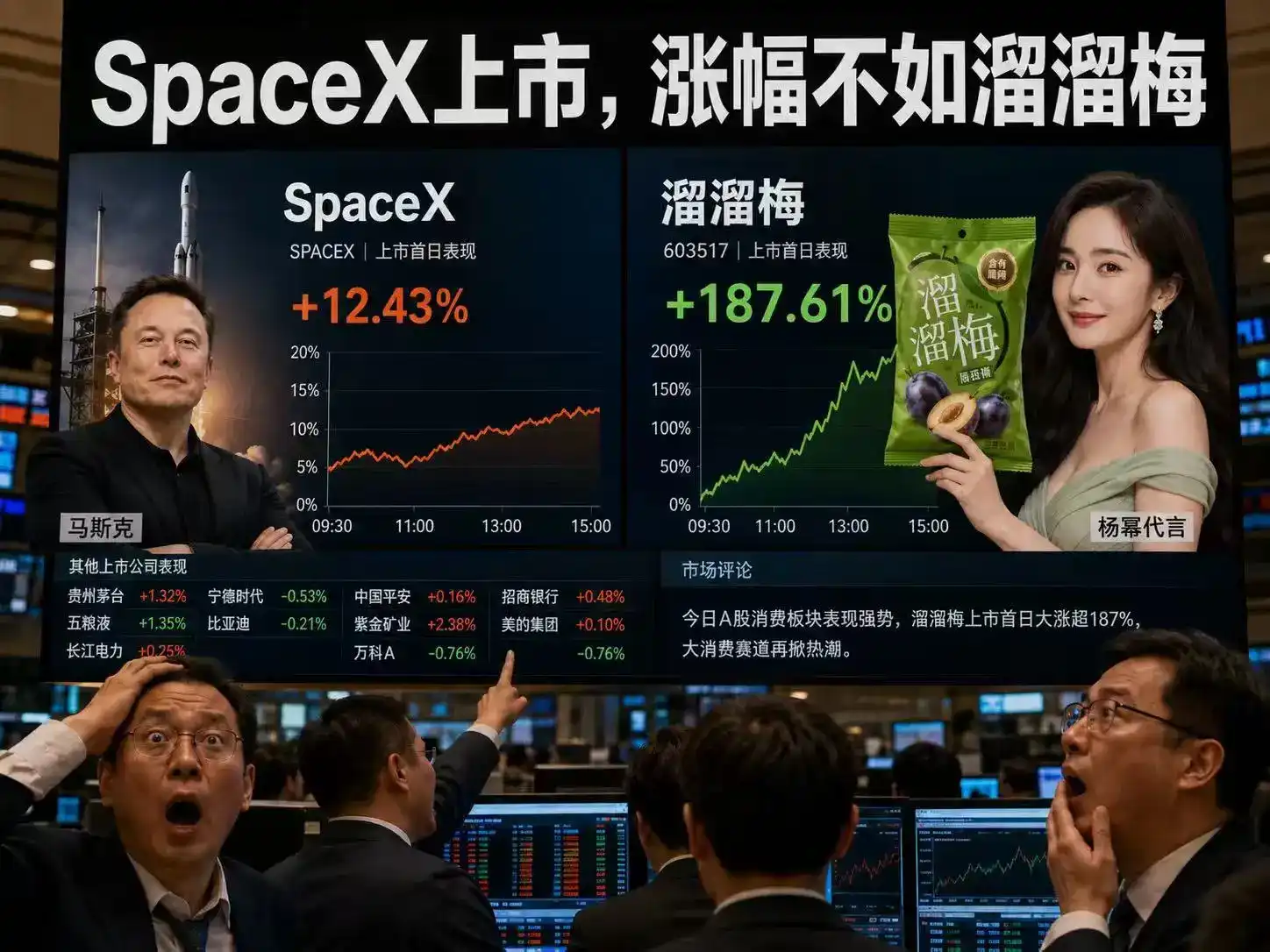
It's worth noting that "Meme stocks" are not a new term but an objectively existing category in major capital markets like the US, Hong Kong, and A-shares. However, the "Stock Meme-fication Era" is undoubtedly the latest trend emerging in the last 1-2 years, driven in part by factors also related to the crypto market.

The earliest Meme stocks are lost to history, so let's discuss some representative individual stocks from recent years.

2021's Gamestop might be the starting point for many people's Meme stock enlightenment in the US market. Led by figures like Roaring Kitty, retail investors worldwide united against Wall Street institutions, forcing a short squeeze that led many brokerages and exchanges to halt trading to avoid the storm. Recently, news of Gamestop's potential acquisition of eBay also caused market fluctuations and a brief price spike.

Tesla and the recently IPOed SpaceX have also been viewed as a type of Meme stock, as these companies and their stocks are deeply tied to the highly topical "world's first trillionaire," Elon Musk. Before their businesses could provide strong performance proof, they were seen as "narrative-driven companies with sky-high price-to-dream ratios."

Before Donald Trump won the US presidential election in 2024, the A-share market showed early anomalies. "Chuanda Zhisheng" frequently topped trending lists, even hitting the daily limit up multiple times. That same year, when Trump was shot during his campaign, with his ear injured by shattered glass from a stray bullet, Goertek (whose Chinese name sounds like "cut ear") also saw its stock price surge during the session.

Last year, when Sino-Japanese relations deteriorated, defense stock Furihong briefly soared due to a patriotic pun where its name sounds like "capture Japan," pulling eight consecutive daily limit-ups and accumulating over 100% gains, becoming one of the short-term "hot stocks" in the A-share market.

Today's capital market, much like the crypto market with its fragmented attention and concentrated emotions, sees individual stocks and sectors that can trigger the widest discussion and attention becoming the "attention focal points" that stir funds and liquidity.
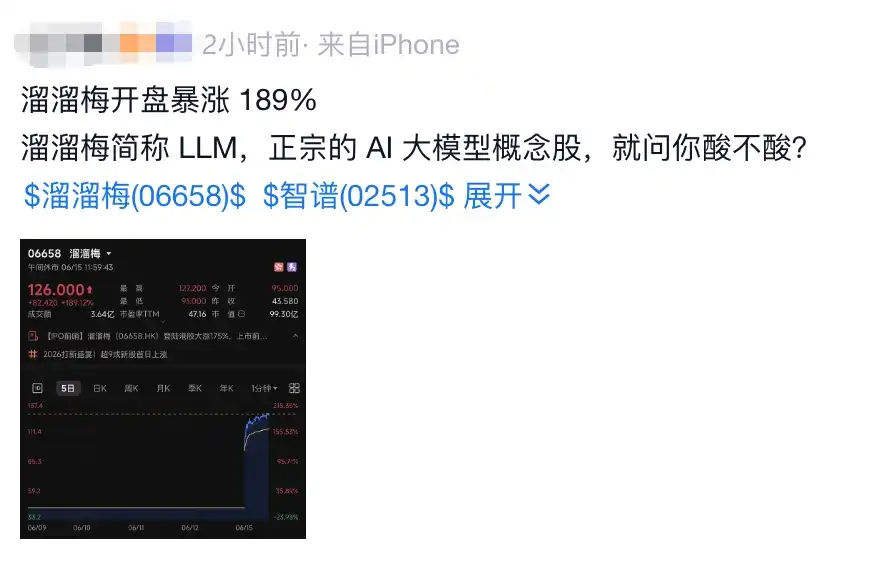
Liuliu Mei's surge is another example of the "Stock Meme-fication" era.

The Dawn of the Stock Meme-fication Era: Puns, Abbreviations, and the AI Era Dividend

With OpenAI and Anthropic's valuations nearing the trillion-dollar mark, companies and stocks closely related to the AI industry chain—including optics, communications, materials, and computing power—have entered an explosive phase:

  • NVIDIA became the first listed company with a market cap exceeding $5 trillion.
  • Micron, SanDisk, etc., saw their stock prices break new highs consecutively, with institutions raising their target prices.
  • SK Hynix and Samsung Electronics' price fluctuations dictate the rise and fall of South Korea's KOSPI index.
  • NVIDIA founder's comment about "seeing Marvell as a future trillion-dollar giant" caused Marvell (MRVL) stock to rise accordingly.
  • Innolight (Zhongji Xuchuang) mentioned by the new stock god Serenity was misread due to translation as Inno Laser, causing the latter's stock price to surge 10% after 300 million in hot money flooded in.

In the great tide of "Stock Meme-fication," being related to AI,蹭上 (riding on) "large language model"热度 (heat), having homophones with popular stocks, or getting mentions from celebrities have all become reasons for market attention and the perfect stage for synchronized attention and capital influx.
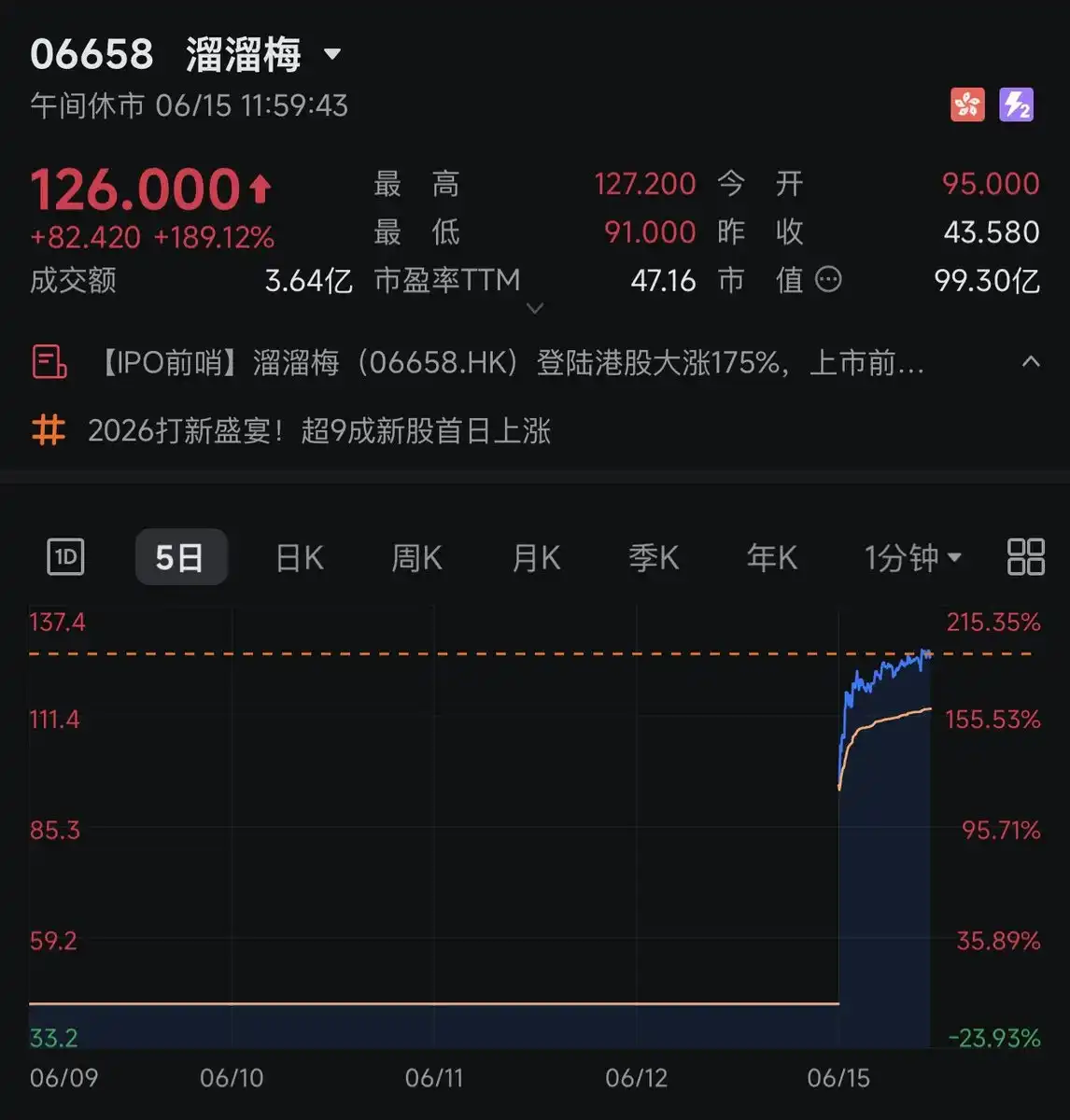
"Trump concept stocks," "U.S. stock government concept stocks," "TACO-style trading beneficiary targets," etc., are also连带表现 (associated manifestations) of this industry trend. And this is precisely the common玩法 (playbook) of the "attention-intensive industry" highly推崇 (advocated) by the crypto market—the Meme coin赛道 (track).

However, the capital markets are different now, the rules are different, and the scale of funds and liquidity is also incomparable to the crypto market. After all, compared to the trading scales of the US, Hong Kong, A-share, Japanese, and Korean markets, the crypto market's overall size of less than $3 trillion seems somewhat pitiful.

SpaceX一跃成为 (leapt to become) a top 10 global asset upon its IPO, while相对地 (in contrast), BTC has fallen to the 17th position on that list. It must be said,数字层面 (on a numerical level)的对比 (comparisons) always look so残酷 (harsh)—over a decade of diligent development in the crypto industry couldn't match the市值体量 (market cap scale) of a single company's IPO.

Now, the emergence and increase of Meme stocks might have become an industry trend. Earlier, when Joyoung Company produced对应产品 (corresponding products) and saw its stock price rise due to the hot梗 (meme) "Hakimi North-South Mung Beans," it说明了一件事 (illustrated one thing): for the young demographic and investor群体 (groups) in today's society, investment targets that can trigger emotional波动 (fluctuations), attract market attention, and stir liquidity are more值得买入 (worth buying) objects.

Even if this短暂追逐情绪 (brief chase of emotions) is only temporary火热 (hot), for most people, "if you can't beat them, join them" is the better choice. Of course, objectively speaking, the emergence of Meme stocks does not mean one-sided benefits, like wealth creation effects or industry booms; sometimes, this process is also accompanied by negative phenomena like pump-and-dumps, one-sided harvesting, and emotional marketing.

Just like Liuliu Mei's opening surge, some angrily accuse it of拉高 (pumping the price) to "harvest韭菜 (retail investors)"; others分析认为 (analyze and believe) it might be because Liuliu Mei joined the "Stock Connect," allowing A-share market funds to buy, which pushed up its stock price. The truth, the reasons, are必定是 (certainly) multidimensional and chaotic. For us, perhaps all we can do is顺应 (go with) this trend of the times and寻找 (seek) our own path to致富 (wealth).


Трендові криптовалюти

Пов'язані питання

QAccording to the article, what is the main reason for the surge in Liuliumei's (06658.HK) stock price on its debut?

AThe article states that the main reason for Liuliumei's stock price surge is not a revival of the 'new consumption, new retail, new snacks' concept, but rather its stock ticker abbreviation 'LLM' coincidentally aligning with the popular 'Large Language Model' (AI) theme, riding on the coattails of the strong performance of AI-related stocks like Zhipu AI (02513.HK).

QWhat was the oversubscription rate for Liuliumei's IPO public offering, and how does it compare to Mixue Ice City?

AThe oversubscription rate for Liuliumei's IPO public offering was approximately 6586.73 times. This surpasses the 5258.21 times oversubscription rate recorded by Mixue Ice City for its Hong Kong listing last year.

QWhat does the article suggest is the primary characteristic defining the emerging 'Stock Meme-ification Era'?

AThe article suggests the primary characteristic of the 'Stock Meme-ification Era' is the ability of stocks to attract significant market attention and capital inflows based on factors like catchy memes, attention-grabbing narratives, name abbreviations, homophones, celebrity mentions, or connections to trending themes (like AI), rather than just fundamental business performance.

QBesides Liuliumei, name two other examples of 'Meme stocks' mentioned in the article and the reasons behind their market movements.

A1. GameStop (GME): Its stock movement in 2021 was driven by coordinated retail investor action, famously led by figures like Roaring Kitty, aiming to squeeze short-selling institutions. 2. Geer Stock (Goertek Inc.): In 2024, its stock price surged due to the homophonic pun 'Ge Er' (meaning 'cut ear'), which was associated with an incident where former U.S. President Donald Trump's ear was injured.

QWhat contrasting view does the article present about the rise of 'Meme stocks'?

AThe article presents a contrasting view that while Meme stocks can create wealth effects and industry hype, their rise is also accompanied by negative phenomena such as 'pump and dump' schemes, one-sided harvesting of retail investors, and emotional marketing. It cautions that the reasons behind stock movements like Liuliumei's are complex and multi-dimensional.

Пов'язані матеріали

As Consensus Accelerates, What Are Young Investors Betting On?

Title: As Consensus Forms Faster, What Are Young Investors Betting On? In the rapid evolution of tech investment, a new generation of young investors is navigating a landscape where AI, robotics, commercial aerospace, and quantum computing are advancing simultaneously. Traditional investment logic based on financial models is giving way to a need for deep technical understanding and the ability to act before industry consensus forms. An analysis of trends from the "WAIC FUTURE TECH" list of young investment leaders reveals key shifts in focus. The first major trend is the movement of AI from the digital screen into the physical world. Investment is shifting from large language models and chatbots towards embodied AI, robotics, AI hardware, and edge computing. While demonstrations generate excitement, the real challenge lies in achieving scalable, reliable, and cost-effective delivery in complex real-world environments like factories and logistics. Success depends not just on algorithms but on the integration of sensors, actuators, and control systems. Second, the competitive focus for large models is moving beyond raw capability toward building an "intelligence flywheel." The goal is to create self-reinforcing systems where user interaction generates data, improving the model, which in turn enhances the user experience and attracts more engagement. Companies that successfully embed AI into workflows to create these closed-loop systems can build lasting value that isn't easily erased by the next model upgrade. Third, facing a potential bottleneck in high-quality human-generated data, investors are looking at new underlying technologies. Reinforcement learning and self-play, as demonstrated by AlphaGo Zero, offer paths for AI to generate its own experience. Scientific foundation models, which aim to build general AI capabilities for fields like life sciences and materials discovery, represent a non-consensus direction that could unlock new frontiers of knowledge and data. Finally, in deep-tech areas like quantum computing, commercial aerospace, and space-based infrastructure, patient capital is essential. These fields have long, uncertain development and validation cycles involving complex engineering, supply chains, and regulations. Investment here requires a long-term view, focusing on foundational team capabilities and the eventual emergence of market demand, even if commercial returns are distant. Collectively, these trends illustrate how young investors are adapting to a new era. They are learning to make earlier, technically-informed judgments, balance hype with real-world viability, and provide the patient capital needed to build the deep-tech foundations of the future.

marsbit5 хв тому

As Consensus Accelerates, What Are Young Investors Betting On?

marsbit5 хв тому

Can Japan Buy Growth with AI? Will the Bond Market Believe It?

Japan's cabinet has introduced the 2026 Basic Policy on Economic and Fiscal Management and Reform, shifting its primary fiscal target. The new framework moves away from the traditional annual primary balance goal and instead prioritizes a stable reduction of the debt-to-GDP ratio. This change is tied to a strategy of increased "responsible proactive fiscal" spending, aiming to boost long-term growth through investments in strategic sectors like AI, semiconductors, energy, and robotics. The government estimates total public and private investment in 62 key technologies could exceed 370 trillion yen by 2040. The market reaction has been mixed and cautious. While equity markets may respond to policy signals, bond markets are focused on fiscal credibility. Concerns center on whether the weakening of the clear primary balance anchor could lead to looser fiscal discipline. If investors doubt that these strategic investments will generate sufficient productivity gains, tax revenue, and nominal growth to outpace rising interest costs, they may demand higher yields on Japanese Government Bonds (JGBs). Recent volatility in the yen and JGB yields, with the 10-year yield briefly reaching 2.9%, reflects this skepticism. The success of this new framework hinges on two factors: whether Japan can achieve a nominal growth rate consistently higher than its long-term interest rates, and whether future budgets demonstrate disciplined control over bond issuance. The government's narrative is that strategic investment is essential to break Japan's cycle of low growth, aging, and labor shortages. However, the bond market will continuously assess the credibility of this plan, pricing the risk that it may represent fiscal expansion rather than a viable growth strategy.

marsbit42 хв тому

Can Japan Buy Growth with AI? Will the Bond Market Believe It?

marsbit42 хв тому

Misjudged A-Shares: Resilience, Expectations, and Confidence

China's A-share market recently faced selling pressure, especially in tech sectors, initially triggered by a global tech sell-off that began in South Korea. However, the article argues this is a case of "mistaken injury" and highlights the market's underlying resilience. This resilience stems from three main pillars: **1) Tech Sector Fundamentals:** Unlike Korea's market dominated by a few memory chip stocks, China's tech sector is diversified across computing, communications, electronics, and semiconductors, supported by dual narratives of global AI supply chains and domestic substitution. Core areas like optical modules and fiber optics continue to show strong earnings growth. **2) "National Team" Support:** State-backed institutions and large corporations have made significant market purchases and announced buybacks, providing liquidity and signaling confidence. This is seen as a stabilizing policy signal, often associated with market bottoms. **3) Broader Market Pillars:** Other major sectors are showing endogenous recovery momentum. Consumer stocks benefit from stabilizing CPI and signs of sector recovery (e.g., liquor price hikes). Cyclical sectors like aluminum have high earnings, potential price increases due to tight supply, and low valuations. The financial sector offers stable dividends and low valuations. The conclusion is that the sell-off was driven by external contagion, not a collapse in fundamentals. With strong policy support and recovering momentum across key sectors, the A-share market possesses the toughness to regain stability.

marsbit1 год тому

Misjudged A-Shares: Resilience, Expectations, and Confidence

marsbit1 год тому

Торгівля

Спот

Популярні статті

Що таке MEME 2.0

Memecoin 2.0: Поява $MEME 2.0 у світі криптовалюти Вступ У постійно змінному ландшафті криптовалюти з'явився новий претендент. Memecoin 2.0, що символізується як $MEME 2.0, підносить концепцію мем-криптовалют на захоплюючий новий рівень. Як побічний продукт оригінального Memecoin, цей проєкт привернув увагу крипто-спільноти, змістивши акцент з типової фінансової вигоди на захоплюючий і розважальний досвід. Працюючи на блокчейні Ethereum, Memecoin 2.0 сміливо переосмислює залучення спільноти у криптосфері. Що таке Memecoin 2.0, $MEME 2.0? У своїй основі, Memecoin 2.0 є криптовалютним проєктом, який надає пріоритет спільнотному духу і розвагам, пов'язаним з мем-культурою. На відміну від звичайних криптовалют, які зосереджені на практичних випадках використання та матеріальних вигодах, Memecoin 2.0 вирізняється тим, що обіймає легшу сторону цифрової валюти. Цей проєкт існує без обіцянок утиліти, структурованої дорожньої карти чи фінансових повернень, зосереджуючи увагу на створенні яскравої спільноти навколо мемів та спільних розваг. Зробивши це, він використовує зростаючу тенденцію мем-культури у онлайн-пробі, що робить його унікальним гравцем у світі цифрових активів. Творець Memecoin 2.0, $MEME 2.0 Не зважаючи на численні дослідження витоків Memecoin 2.0, чітка особистість його творця залишається невідомою. Ця анонімність не є рідкістю у крипто-спільноті, де багато проєктів очолюються особами або групами, які надають перевагу залишатися за лаштунками. Відсутність публічно доступної інформації про творця може розглядатися як стратегічний крок, що ставить в центр уваги залучення спільноти, а не індивідуальної популярності у цій сфері. Інвестори Memecoin 2.0, $MEME 2.0 Інформації щодо інвесторів або фінансової підтримки Memecoin 2.0 замало. Відсутність деталей може свідчити про те, що проєкт є самофінансованим або що його увага до спільноти, а не традиційних інвестиційних структур, привабила інший тип підтримки. Оскільки світ мем-криптовалют зазвичай передбачає більше участі низового рівня, а не інституційних інвестицій, цей підхід узгоджується з етосом проєктів, що управляються спільнотою. Як працює Memecoin 2.0, $MEME 2.0? Memecoin 2.0 повністю працює на блокчейні Ethereum, використовуючи його потужні функції безпеки та масштабованості. Використовуючи сильні сторони Ethereum, Memecoin 2.0 може запропонувати безпечне середовище для взаємодії користувачів, забезпечуючи при цьому, що транзакції є ефективними та економічними. Одна з унікальних характеристик Memecoin 2.0 полягає в його структурі, що керується спільнотою. Цінність та популярність токена $MEME 2.0 походять з активної участі його користувачів, а не з вродженої утиліти. Ця концепція підкреслює акцент проєкту на розважальному аспекті криптовалюти, натякаючи на те, що сміх та залучення спільноти є справжніми валютами, що ведуть до його успіху. Крім того, проєкт вписується в ширшу екосистему мем-криптовалют, де цінність кожної мем-криптовалюти коливається залежно від культури, тенденцій і участі спільноти, а не традиційних економічних принципів. Хронологія Memecoin 2.0, $MEME 2.0 Щоб краще зрозуміти еволюцію та віхи Memecoin 2.0, ось хронологія, що підкреслює значні події в його історії: 2024: Зародження Memecoin 2.0 вважається відгалуженням оригінального Memecoin, яке встановлює себе в процвітаючому контексті мем-криптовалют, працюючи на блокчейні Ethereum. 13 липня 2024: Memecoin 2.0 офіційно позиціонує себе як мем-криптовалюта, орієнтована на спільноту, в мережі Ethereum, підкреслюючи свій підхід, зосереджений на розвагах, який запрошує користувачів брати участь у його розвитку. Ключові моменти про Memecoin 2.0, $MEME 2.0 Кілька критичних характеристик визначають Memecoin 2.0: Спільнотно-центричний підхід: Основною метою Memecoin 2.0 є створення веселого, захоплюючого досвіду для спільноти, використовуючи колективне задоволення, що випливає з меметичної культури. Побудовано на Ethereum: Робота на блокчейні Ethereum надає проєкту важливу інфраструктуру, що забезпечує безпеку та масштабованість. Відсутність утиліти або дорожньої карти: У вражаючому відході від традиційних криптовалют, Memecoin 2.0 не обіцяє жодних утилітарних функцій або фінансових повернень, підтверджуючи свою прихильність до участі спільноти та соціального залучення. Акцент на меметичній культурі: Обіймаючи гумористичні та культурні аспекти мем-періоду, Memecoin 2.0 надає платформу для користувачів для залучення до крипти офлайн та онлайн. Додатковий контекст: Значення мем-криптовалют Мем-криптовалюти з'явилися як окрема класифікація криптовалюти, часто керуючись гумором та легким підходом до торгівлі. Ці валюти, як правило, не мають значної утиліти або розробницьких дорожніх карт, залучаючи користувачів обіцянкою розваг, взаємодії в спільноті та культурної значущості. В рамках ширшої екосистеми криптовалют, мем-криптовалюти відновлюють важливість залучення спільноти, протистоячи лише прибутковим підходам. Проєкти, такі як Memecoin 2.0, відкривають еру, в якій розваги можуть гармонізувати з фінансовими прагненнями, перетворюючи блокчейн на ігровий майданчик для творчості та соціальної взаємодії. Висновок Memecoin 2.0, або $MEME 2.0, втілює нову хвилю криптовалюти, яка надає пріоритет залученню спільноти над жорсткими фінансовими структурами. Зосереджуючись на гуморі та соціальній взаємодії, він використовує захоплення навколо мем-культури. Працюючи на блокчейні Ethereum, Memecoin 2.0 використовує можливості технології, залишаючись непохитним у своїй прихильності до розважальної цінності цифрової валюти. Коли простір навколо криптовалют продовжує еволюціонувати, Memecoin 2.0 служить доказом того, що майбутнє цифрових активів може значною мірою залежати від спільних досвідів, сміху та надійних зв'язків у спільноті. У непередбачуваному світі крипто, можливо, радість може бути такою ж цінною, як і традиційний фінансовий прибуток.

150 переглядів усьогоОпубліковано 2024.04.04Оновлено 2024.12.03

Що таке MEME 2.0

Як купити MEME

Ласкаво просимо до HTX.com! Ми зробили покупку Memeland (MEME) простою та зручною. Дотримуйтесь нашої покрокової інструкції, щоб розпочати свою криптовалютну подорож.Крок 1: Створіть обліковий запис на HTXВикористовуйте свою електронну пошту або номер телефону, щоб зареєструвати обліковий запис на HTX безплатно. Пройдіть безпроблемну реєстрацію й отримайте доступ до всіх функцій.ЗареєструватисьКрок 2: Перейдіть до розділу Купити крипту і виберіть спосіб оплатиКредитна/дебетова картка: використовуйте вашу картку Visa або Mastercard, щоб миттєво купити Memeland (MEME).Баланс: використовуйте кошти з балансу вашого рахунку HTX для безперешкодної торгівлі.Треті особи: ми додали популярні способи оплати, такі як Google Pay та Apple Pay, щоб підвищити зручність.P2P: Торгуйте безпосередньо з іншими користувачами на HTX.Позабіржова торгівля (OTC): ми пропонуємо індивідуальні послуги та конкурентні обмінні курси для трейдерів.Крок 3: Зберігайте свої Memeland (MEME)Після придбання Memeland (MEME) збережіть його у своєму обліковому записі на HTX. Крім того, ви можете відправити його в інше місце за допомогою блокчейн-переказу або використовувати його для торгівлі іншими криптовалютами.Крок 4: Торгівля Memeland (MEME)Легко торгуйте Memeland (MEME) на спотовому ринку HTX. Просто увійдіть до свого облікового запису, виберіть торгову пару, укладайте угоди та спостерігайте за ними в режимі реального часу. Ми пропонуємо зручний досвід як для початківців, так і для досвідчених трейдерів.

365 переглядів усьогоОпубліковано 2024.12.12Оновлено 2026.06.02

Як купити MEME

Обговорення

Ласкаво просимо до спільноти HTX. Тут ви можете бути в курсі останніх подій розвитку платформи та отримати доступ до професійної ринкової інформації. Нижче представлені думки користувачів щодо ціни MEME (MEME).

活动图片













