Missed Out on SpaceX's IPO? Take a Look at SpaceX's Complete Supply Chain

marsbitОпубліковано о 2026-06-16Востаннє оновлено о 2026-06-16

Анотація

SpaceX is now public, but its high valuation and losses may deter some investors. However, the real opportunity, as seen with Apple, Tesla, and Nvidia, may lie in its extensive supply chain. SpaceX, funded primarily by its profitable Starlink service, spends hundreds of billions annually on components for its rockets, satellites, and planned orbital AI data centers, creating significant revenue streams for suppliers. Key suppliers are categorized by their indispensability. The first group includes irreplaceable players like **NVIDIA** (GPUs for AI supercomputers), **Eutelsat (SATS)** (spectrum rights), **Filtronic** (millimeter-wave amplifiers), **Materion (MTRN)** (beryllium alloys), and **STMicroelectronics (STM)** (phased array chips). The second category comprises suppliers costly to replace due to long certification cycles or deep integration, such as **Honeywell (HON)** (flight controls), **Carpenter Technology (CRS)** (specialty steel), **Hexcel (HXL)** (carbon fiber), **Broadcom (AVGO)** (data switching), and **Linde** (industrial gases). The third group involves high-volume, cost-critical manufacturers for mass-produced items like Starlink terminals. Major players here include Taiwanese contract manufacturer **Wistron NeWeb (6285)** and several Chinese-listed firms: **Sunway Communication (300136)**, **Parker Advanced Materials (605123)**, **Western Superconducting (002149)**, and **Yingliu Co., Ltd. (603308)**. Other niche providers include **Tianyin Electromecha...

Author: nini

If you missed the Apple supply chain in 2010, the Tesla supply chain in 2020, or even the Nvidia supply chain that made you regret these past two years...

The SpaceX supply chain is just getting started.

Of course, I think simply chasing SpaceX itself might not be cost-effective. Its IPO first-day pop was 19%, priced at $135, surging to $160, with a price-to-sales ratio approaching 100x, and the company is still heavily loss-making. The pressure is high for retail investors rushing in on the first day.

So what I'm talking about are the companies that supply to it.

History has repeatedly validated the same logic: super terminal products frantically feeding back the supply chains behind them. In 2010, when Apple made the iPhone 4, Luxshare Precision's revenue was 10 billion yuan; ten years later, it reached 92.5 billion yuan, and its stock price increased 30-fold. In 2019, when Tesla's Shanghai Gigafactory started production, CATL's market cap was just over 100 billion yuan; five years later, it broke 1 trillion yuan. With Nvidia exploding over the past two years, InnoLight's market cap went from tens of billions to over a hundred billion.

Apple, Tesla, Nvidia—each time, it's the super terminal product on stage, but the ones who truly let a group of people make big money are the supply chain companies behind them.

SpaceX spends hundreds of billions of dollars annually, buying chips, materials, parts, and industrial gases. These purchase orders gradually become real revenue on the books of certain companies. After the IPO prospectus became public, this supply chain has data that can be checked for the first time.

We can first look at where SpaceX's money comes from and where it goes

Its business is mainly these three parts. The first part, Starlink. Last year's revenue was $11.3 billion, accounting for 60% of the group, with over 10 million global subscribers—this is the only consistently profitable part of SpaceX, even subsidizing all the other cash-burning ventures.

The second part, rockets. Falcon and Starship's annual R&D investment is $3 billion, resulting in the world's lowest commercial launch costs, with a plan for 100 launches in 2026 and a demand for 1500 Raptor engines. The third part, AI. Last year, it lost over $6 billion, with the Colossus supercomputer being built on the ground, stacked with 220,000 GPUs, and orbital data centers planned for space.

So, the flow of money is simple: Starlink earns money → Invests in rockets to drive down launch costs → Low-cost launches send AI hardware into space → AI computing power is rented out to earn money again. That's roughly the cycle.

This cycle scatters hundreds of billions of dollars in purchase orders annually. So whose pockets does this money go into?

Based on replaceability, suppliers can be divided into three categories.

Category 1: No one can replace them in the short term

  1. NVIDIA. The Colossus supercomputer's 220,000 GPUs are all from them. But Nvidia's real moat is not the hardware; it's CUDA. Worldwide AI training basically writes code using this software ecosystem. Hardware can be changed, but the migration cost of a decade's worth of code can't be recouped in a year or two. We can understand it as: as long as SpaceX keeps building supercomputers, Nvidia keeps getting paid.
  2. Eutelsat (Ticker: SATS). It holds the radio frequency spectrum for satellite communications. What is spectrum? Think of it as lanes in the sky. Physical laws determine there are only so many lanes; whoever occupies them first gets them. No matter how strong your technology is, you can't create a new frequency band out of thin air. Musk's Direct-to-Cell phone feature must pass through here; without paying the toll, the signals collide with other satellites. Also, SATS holds about 3% of SpaceX's shares. The day before the IPO, its stock rose 11%, and option trading volume was 11 times the usual.
  3. Filtronic (Ticker: FTC), listed in London (note: it's not searchable on US markets). It makes millimeter-wave signal amplifiers for Starlink satellites, allowing signals to travel farther and clearer. In 2024, it signed a £47.3 million contract, with SpaceX contributing 83% of its revenue. SpaceX also holds a warrant for up to 10% of FTC. This thing looks small, but aerospace-grade certification takes years of repeated testing in vacuum, radiation, and extreme temperature swings. Once certified, SpaceX won't easily switch because the re-certification cycle can't keep up with production rhythms. And Filtronic's stock price has nearly tripled in a year.
  4. Materion (Ticker: MTRN). The world's only fully integrated producer of beryllium metal from mine to finished product, controlling about 56% of global supply. Beryllium is one-third lighter than aluminum, six times stronger than steel, with a melting point near 1300°C. It's light, strong, and heat-resistant—few metals on Earth satisfy all three conditions simultaneously. It's used in the F-35 fighter jet, the James Webb Space Telescope's mirrors, and the load-bearing structure of Starship. The US Department of Defense lists beryllium as a strategic material. Materion is the exclusive certified supplier for the F-35, a certification over a decade old. This illustrates its scarcity.
  5. STMicroelectronics (Ticker: STM). Helps SpaceX make phased array antenna chips, having cumulatively delivered over 5 billion chips, covering over ten thousand satellites. STM itself forecasts its Low Earth Orbit (LEO) satellite business could reach $2 billion by 2028 and $2.9 billion by 2030.

Category 2: Technically replaceable, but the cost of switching once is too high

  1. Honeywell (Ticker: HON). The rocket's flight control and inertial navigation systems—knowing where it is, where it's flying, and what attitude to maintain—are all controlled by them. This is built on decades of certification accumulation from Apollo to the Space Shuttle to commercial spaceflight. Changing suppliers would be like transplanting the rocket's brain; all underlying code would have to be rewritten, and new certification would have to start from scratch. With SpaceX launching hundreds of times a year, it can't halt the launch schedule to save procurement costs.
  2. Carpenter Technology (Ticker: CRS). Used to smelt special steel alloys for Raptor engines. Vacuum melting, repeated purification, controlling impurities to the parts-per-million level. Off by a little, and it's disaster in the combustion chamber. This material process isn't something that can be transferred just by blueprints; building a comparable production line could take decades.
  3. Hexcel (Ticker: HXL). Supplies aerospace-grade carbon fiber. For rockets, every extra kilogram of structure weight is one less kilogram of payload. Carbon fiber skeletons are half as light as metal without losing strength. Having collaborated with SpaceX for over a decade, the material formula and weaving processes are specifically tuned for SpaceX's needs. Switching to another company would require re-verifying the entire material system from the ground up.
  4. Broadcom (AVGO), responsible for terabit-level data exchange between satellites and ground. For high-speed data shunting without congestion, you need it. The Linde Group, in 2025, invested $100 million in Texas near the Starbase to build an air separation plant dedicated to supplying liquid oxygen and nitrogen, because the massive amounts of high-purity industrial gases consumed in rocket launches are cheaper the closer the source. This location itself is a moat.

Category 3: Requiring stable mass production and cost reduction to the minimum

You might not have seen a Starlink dish in person, but think about it: they aim to deploy a whopping 30 million units globally. Each unit contains thousands of components, dozens of processes, must be produced on assembly lines like smartphones, and still withstand aerospace-grade vibration and temperature swings.

At this scale, technology isn't the primary factor anymore. The most important thing is who can deliver stably and who can drive costs to the lowest.

The logic of Foxconn manufacturing for Apple applies here exactly. Wistron NeWeb Corporation (Ticker: 6285), the world's largest contract manufacturer for Starlink terminals and routers. Quality control standards were honed over years of collaboration with SpaceX, so it's not something just any factory can take on.

Moving up are several A-share listed companies. Sunway Communication (300136), the global exclusive supplier of high-frequency connectors inside Starlink terminals, with SpaceX-related orders worth about 1.05 billion yuan in 2025. Parker Advanced Materials (605123), the exclusive Chinese supplier of forged parts for the Starship airframe and engines, with orders about 680 million yuan, accounting for 35% of company revenue. Western Superconducting Technologies (002149), exclusive supplier of niobium alloy for Raptor engines, orders about 1.02 billion yuan. Yingliu Co., Ltd. (603308), core castings for Raptor turbopumps, accounting for 42% of its own revenue—SpaceX's orders are already the largest revenue source for this company.

Going smaller. Tianyin Electromechanical (analogous to the star tracker on Starlink satellites, which satellites use to look at stars to determine their attitude), with a market share exceeding 60%. Tongyu Communication, making Starlink ground antenna modules, with projected orders of 300 million yuan in 2026.

On the US stock side, there are a few others. Trimble (TRMB), it manages time. With tens of thousands of satellites flying in space, each satellite's clock must align to the same beat; a microsecond off and communications fail. Astronics (ATRO), manages rocket power distribution. CTS (CTSH), manages thermal management. These aren't black magic technologies, but they are indispensable screws in the entire system.

You might ask, these companies have always been there. Why now?

Three reasons.

  • First, the purchasing volume is just starting to increase. The plan is for 100 launches in 2026. Starship testing is accelerating. AI data centers are scheduled to start deploying to orbit in 2028. The target is 30 million Starlink terminals, and there are only 10 million subscribers now. SpaceX's pace of spending money is far from its peak.
  • Second, transparency is opening up for the first time. SpaceX was previously a private company, and procurement data was a black box. After the IPO prospectus, quarterly and annual reports will continuously disclose data, allowing the order growth rates of supply chain companies to be tracked and verified.
  • Third, referring to the rhyme of history. The Apple supply chain took a decade from the iPhone 4 to its peak. The Tesla supply chain has been going for seven years from Model 3 mass production to now. The position of the SpaceX supply chain today is more like Tesla in 2018—mass production just starting, suppliers just solidifying, order growth just beginning to steepen. With Starship still in testing, Starlink still expanding, and AI data centers not yet built, this is its equivalent of 2018.

Finally

Buying SpaceX on its IPO first day, in my opinion, is paying for Musk's dream, and at a high price for that space dream. Of course, you could say you simply believe in Musk; that's your dream too.

But perhaps we can look from another angle.

Looking along the supply chain, we are betting on something else. Because no matter how SpaceX's stock price moves, its annual hundreds of billions in purchase orders have to be fulfilled by someone. These orders are unrelated to the stock price; they are simply monthly revenue hitting the account.

This article does not constitute investment advice. There are still issues here, such as the beryllium metal cycle, geopolitical discounts for Taiwan-listed companies, low liquidity for small companies, and certifications possibly being reshuffled due to technological iteration. Each company needs to be judged individually.

But if you didn't get an allocation for SpaceX on its IPO day,

Then you can switch strategies. Don't chase the high; let's look at those quietly supplying.

The giant has ignited. This time, the shovels are within your reach~

Трендові криптовалюти

Пов'язані питання

QBased on the article, what is the core business logic behind SpaceX's three main business segments?

AThe article states SpaceX's core business logic is a cycle: Starlink generates profits (its only profitable segment) → profits are invested into rockets to drastically lower launch costs → low-cost launches deliver AI hardware into space → the leased AI computing power generates further revenue.

QAccording to the article, why is Filtronic (FTC) considered a supplier that is difficult for SpaceX to replace in the short term?

AFiltronic is considered difficult to replace because it produces millimeter-wave signal amplifiers for Starlink satellites requiring years of space-grade certification (testing in vacuum, radiation, extreme temperatures). SpaceX would be reluctant to switch due to the long re-certification cycle, which would not align with its fast production pace. Additionally, SpaceX accounts for 83% of Filtronic's revenue.

QWhat historical examples does the article cite to support the logic of 'super terminal companies massively benefiting their supply chains'?

AThe article cites Apple with Luxshare Precision (revenue grew from 1 billion to 92.5 billion RMB in a decade), Tesla with CATL (market cap grew from ~100 billion to over 1 trillion RMB in five years), and Nvidia with Zhongji Innolight (market cap grew from tens of billions to hundreds of billions RMB).

QThe article divides SpaceX's suppliers into three categories. What is the primary characteristic of companies in the third category ('stable mass production, lowest cost')?

AThe primary characteristic of suppliers in the third category is their ability to provide stable, large-scale mass production at the lowest possible cost. For products like the 30 million planned Starlink terminals, technical sophistication is secondary to manufacturing scale, consistent quality control, and extreme cost efficiency, similar to Foxconn's role for Apple.

QWhat are the three reasons given in the article for why the investment opportunity in SpaceX's supply chain is particularly relevant 'now'?

AThe three reasons are: 1) Procurement volume is just starting to increase (e.g., 100 planned launches in 2026, Starlink user growth, future AI data centers). 2) Transparency has opened up for the first time with SpaceX's IPO, allowing tracking of supplier orders via financial reports. 3) Historical parallels suggest SpaceX's supply chain is currently at a stage similar to Tesla's in 2018, with mass production ramping up and supplier relationships solidifying.

Пов'язані матеріали

Conversation with Co-founder of Hyperdash: Why is Hyperliquid Still Severely Undervalued?

Interview Summary with Hanson Birringer, Co-founder of Hyperdash: Why Hyperliquid Remains Undervalued In an interview on *The Rollup*, Hanson Birringer, Co-founder and Chief Revenue Officer of Hyperdash—a trading data analytics platform for Hyperliquid—shared his investment thesis on the Hyperliquid ecosystem. He described Hyperliquid as a pure play on three key crypto super-trends: perpetual contracts, real-world assets (RWAs), and stablecoins. The platform is an open-source, decentralized, and high-performance financial system uniquely positioned to bridge traditional institutional capital with decentralized finance. Birringer highlighted Hyperliquid's leadership in perpetual DEX trading and its recent innovation of RWA perpetual contracts. He emphasized the significance of USDC becoming a core quoting asset, which, by allocating 90% of its backend yield from assets like US treasuries to a protocol buyback fund, creates substantial, programmatic buy pressure for the Hype token. He addressed regulatory challenges, noting that Hyperliquid's policy team is actively engaging with US regulators like the CFTC to establish clear rules for decentralized venues. Once achieved, regulated brokers could route orders directly to Hyperliquid's backend, tapping into its low-cost liquidity layer. Regarding revenue, Birringer was optimistic, citing the immense size of traditional financial markets. Even capturing a small fraction of global trading volume in products like RWA perpetuals could lead to exponential growth for the protocol. The recently launched Grayscale Hyperliquid ETF, seeded by their SPV (Hyper Holdings Global), provides a compliant on-ramp for institutional investors drawn to the clear "cash flow + token buyback" model. Finally, he discussed Hyperdash's acquisition of Imperator, enhancing its data and node infrastructure to serve both retail traders and traditional asset managers. His bullish case rests on Hyperliquid's potential to provide unprecedented global access to dollar-based capital markets. He struggled to articulate a bear case, seeing the long-term trends of internet adoption and financial inclusion as powerful tailwinds.

marsbit46 хв тому

Conversation with Co-founder of Hyperdash: Why is Hyperliquid Still Severely Undervalued?

marsbit46 хв тому

DeepSeek V4 'Full-Blooded Edition' Leaked, Could Be Released As Early As Tomorrow

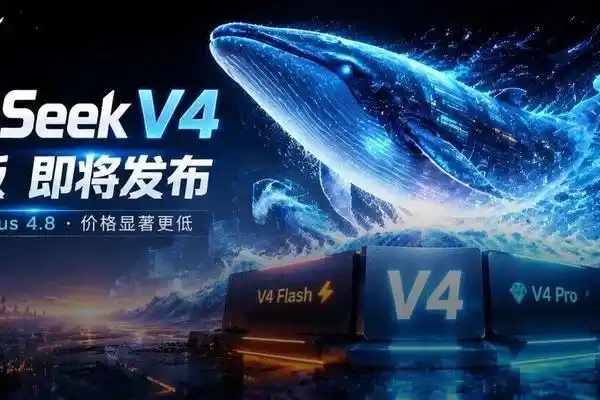
The highly anticipated full release of DeepSeek V4 is imminent, expected to launch as early as tomorrow after nearly three months of waiting. A select group has already received access to the GA (General Availability) beta, which includes two versions: DeepSeek V4 Flash and DeepSeek V4 Pro. Early testers report that V4's overall performance is close to the level of Opus 4.8, with coding capabilities rivaling GPT-5.6 Sol. Its agent abilities are significantly enhanced, and 3D/SVG generation has improved notably. While it may not surpass the recently released Kimi K3 in performance, its expected price point is significantly lower. The official release will introduce a new "peak/off-peak" pricing model for its API. For example, deepseek-v4-pro will cost $0.87 per million output tokens during standard times and $1.74 during peak hours. The flash version is even more aggressive at $0.28/$0.56 per million tokens, with cached input tokens priced extremely low at $0.0028. This makes V4 a strong contender in terms of cost-effectiveness, potentially offering Opus-level capabilities at a fraction of the cost, continuing DeepSeek's reputation as a "price disruptor" in the AI market. Initial demos showcasing V4's capabilities have begun circulating, including generated 3D simulation games, HTML games blending elements of Minecraft and No Man's Sky, and classic games like a "Cut the Rope" clone. The final GA version is set to replace the older deepseek-chat and deepseek-reasoner models, which will be retired on July 24th.

marsbit55 хв тому

DeepSeek V4 'Full-Blooded Edition' Leaked, Could Be Released As Early As Tomorrow

marsbit55 хв тому

WEEX Labs Weekly Observation: The 'Power Restructuring' of AI Infrastructure and the 'Deep Dive Movement' into the Real Economy

WEEX Labs Weekly Review: AI Infrastructure's "Power Restructuring" and the "Deep Dive" into the Real Economy Mid-July 2026 marks a pivotal shift in the global AI industry. The allocation of computing power is transferring from cloud giants to compute resource owners, while the core value of AI is solidifying around its penetration into physical industry, moving beyond the race for model parameters. The era of fragmented model development is over, replaced by a capital-intensive, integrated chain driven by hard tech. Key developments this week include Meta's planned entry into the cloud computing market with "MetaCompute." This move by social media giants with massive GPU clusters challenges traditional cloud providers like AWS, integrating compute, models, and data into one-stop services, which will squeeze smaller rental providers and shift enterprise focus towards underlying model ecosystems. Chinese foundational models like DeepSeek-V4 and Tencent's Hy-3 are pushing towards "utility" status through open-source releases and extreme cost reductions via MoE architectures. This lowers entry barriers for enterprises, allowing them to focus resources on private deployment and deep business integration. Embodied intelligence, particularly humanoid robots, is transitioning from lab demos to real-world factory applications, driven by policies promoting large-scale, practical deployment in logistics and manufacturing. The value focus is shifting from spectacle to stable industrial data and real operational efficiency. Global governance, through forums like WAIC, is evolving from theoretical ethics to practical operational frameworks for "Sovereign AI," raising geopolitical compliance barriers and making auditability and data sovereignty core design requirements from the outset. WEEX Labs Insights: The current transformation shows AI's prosperity is deeply embedding into the fabric of global manufacturing. Strategic recommendations include: 1) leveraging open-source models for private, proprietary knowledge bases; 2) maintaining cloud provider diversity to avoid vendor lock-in from integrated model ecosystems; and 3) seeking opportunities in the "embodied infrastructure" supporting robots, such as data collection, industrial simulation, and factory AI adaptation services.

marsbit1 год тому

WEEX Labs Weekly Observation: The 'Power Restructuring' of AI Infrastructure and the 'Deep Dive Movement' into the Real Economy

marsbit1 год тому

Is WEEX TradFi Reliable? What You Should Know Before Your First Trade of U.S. Stock Tokens

In recent years, cryptocurrency users have expanded their focus beyond Bitcoin and Ethereum to include popular traditional financial (TradFi) assets like Nvidia, Apple, and Tesla stocks. This shift raises key questions: What do these TradFi assets represent on crypto trading platforms? How do they differ from traditional stock ownership? And how can users assess the reliability of platforms offering such products? TradFi products, such as those offered by WEEX TradFi (including NVDA, MSFT, AAPL, TSLA, and QQQ tokens), are blurring the lines between crypto and traditional markets. They allow users to trade based on the price movements of traditional assets within a familiar digital asset trading environment. However, it's crucial to understand that trading a "stock token" is not equivalent to owning the actual stock. Users are participating in price speculation, not gaining shareholder rights like dividends or voting. A key feature of these products is 7x24 trading, offering flexibility beyond traditional market hours. While convenient, this also introduces unique risks, such as potential liquidity gaps and volatility when underlying markets are closed. For users evaluating TradFi products, reliability hinges on transparency and risk management. Critical factors include understanding the product mechanism, how prices track the underlying assets, and the associated risks—especially when using leverage. Popular stocks and indices are still subject to company performance, macroeconomic shifts, and sector trends. Ultimately, TradFi represents a new gateway connecting crypto users to global markets. The future points toward integrated trading environments where the distinction between "crypto investor" and "traditional investor" fades. For newcomers, a platform's reliability stems not from promises, but from a clear understanding of the product, a comprehensive view of risks, and informed judgment of the platform's capabilities.

marsbit1 год тому

Is WEEX TradFi Reliable? What You Should Know Before Your First Trade of U.S. Stock Tokens

marsbit1 год тому

Торгівля

Спот

Популярні статті

Що таке $S$

Розуміння SPERO: Комплексний огляд Вступ до SPERO Оскільки ландшафт інновацій продовжує еволюціонувати, виникнення технологій web3 та криптовалютних проектів відіграє ключову роль у формуванні цифрового майбутнього. Один з проектів, який привернув увагу в цій динамічній сфері, — це SPERO, позначений як SPERO,$$s$. Ця стаття має на меті зібрати та представити детальну інформацію про SPERO, щоб допомогти ентузіастам та інвесторам зрозуміти його основи, цілі та інновації в рамках web3 та крипто-сектору. Що таке SPERO,$$s$? SPERO,$$s$ — це унікальний проект у криптопросторі, який прагне використати принципи децентралізації та технології блокчейн для створення екосистеми, що сприяє залученню, корисності та фінансовій інклюзії. Проект розроблений для полегшення взаємодії між користувачами новими способами, надаючи їм інноваційні фінансові рішення та послуги. У своїй основі SPERO,$$s$ прагне надати можливості індивідам, забезпечуючи інструменти та платформи, які покращують користувацький досвід у криптовалютному просторі. Це включає в себе можливість більш гнучких методів транзакцій, сприяння ініціативам, що підтримуються спільнотою, та створення шляхів для фінансових можливостей через децентралізовані додатки (dApps). Основна концепція SPERO,$$s$ обертається навколо інклюзивності, прагнучи зменшити розриви в традиційній фінансовій системі, використовуючи переваги технології блокчейн. Хто є творцем SPERO,$$s$? Особистість творця SPERO,$$s$ залишається дещо невідомою, оскільки є обмежені публічно доступні ресурси, що надають детальну інформацію про його засновників. Ця відсутність прозорості може бути наслідком зобов'язання проекту до децентралізації — етики, яку багато проектів web3 поділяють, ставлячи колективні внески вище за індивідуальне визнання. Зосереджуючи обговорення навколо спільноти та її колективних цілей, SPERO,$$s$ втілює суть наділення без виділення конкретних осіб. Таким чином, розуміння етики та місії SPERO є більш важливим, ніж ідентифікація єдиного творця. Хто є інвесторами SPERO,$$s$? SPERO,$$s$ підтримується різноманітними інвесторами, починаючи від венчурних капіталістів до ангельських інвесторів, які прагнуть сприяти інноваціям у крипто-секторі. Зосередження цих інвесторів зазвичай узгоджується з місією SPERO — пріоритет надається проектам, які обіцяють технологічний прогрес у суспільстві, фінансову інклюзію та децентралізоване управління. Ці інвесторські фонди зазвичай зацікавлені в проектах, які не лише пропонують інноваційні продукти, але й позитивно впливають на спільноту блокчейн та її екосистеми. Підтримка з боку цих інвесторів підкріплює SPERO,$$s$ як значного конкурента в швидко змінюваній сфері крипто-проектів. Як працює SPERO,$$s$? SPERO,$$s$ використовує багатогранну структуру, яка відрізняє його від традиційних криптовалютних проектів. Ось деякі ключові особливості, які підкреслюють його унікальність та інноваційність: Децентралізоване управління: SPERO,$$s$ інтегрує моделі децентралізованого управління, надаючи користувачам можливість активно брати участь у процесах прийняття рішень щодо майбутнього проекту. Цей підхід сприяє відчуттю власності та відповідальності серед членів спільноти. Корисність токена: SPERO,$$s$ використовує свій власний криптовалютний токен, розроблений для виконання різних функцій в екосистемі. Ці токени дозволяють здійснювати транзакції, отримувати винагороди та полегшувати послуги, що пропонуються на платформі, підвищуючи загальну залученість та корисність. Шарова архітектура: Технічна архітектура SPERO,$$s$ підтримує модульність та масштабованість, що дозволяє безперешкодно інтегрувати додаткові функції та додатки в міру розвитку проекту. Ця адаптивність є надзвичайно важливою для збереження актуальності в постійно змінюваному крипто-ландшафті. Залучення спільноти: Проект підкреслює ініціативи, що підтримуються спільнотою, використовуючи механізми, які стимулюють співпрацю та зворотний зв'язок. Підтримуючи сильну спільноту, SPERO,$$s$ може краще задовольняти потреби користувачів та адаптуватися до ринкових тенденцій. Фокус на інклюзію: Пропонуючи низькі комісії за транзакції та зручні інтерфейси, SPERO,$$s$ прагне залучити різноманітну базу користувачів, включаючи осіб, які раніше не брали участі в крипто-просторі. Це зобов'язання до інклюзії узгоджується з його загальною місією наділення через доступність. Хронологія SPERO,$$s$ Розуміння історії проекту надає важливі уявлення про його розвиток та етапи. Нижче наведено пропоновану хронологію, що відображає значні події в еволюції SPERO,$$s$: Етап концептуалізації та ідеації: Початкові ідеї, що стали основою SPERO,$$s$, були сформовані, тісно пов'язані з принципами децентралізації та фокусом на спільноті в індустрії блокчейн. Запуск білого паперу проекту: Після концептуального етапу був випущений комплексний білий папір, що детально описує бачення, цілі та технологічну інфраструктуру SPERO,$$s$, щоб залучити інтерес та зворотний зв'язок від спільноти. Створення спільноти та ранні залучення: Активні зусилля були спрямовані на створення спільноти ранніх прихильників та потенційних інвесторів, що полегшило обговорення цілей проекту та отримання підтримки. Подія генерації токенів: SPERO,$$s$ провів подію генерації токенів (TGE) для розподілу своїх рідних токенів серед ранніх прихильників та встановлення початкової ліквідності в екосистемі. Запуск початкового dApp: Перший децентралізований додаток (dApp), пов'язаний з SPERO,$$s$, став доступним, дозволяючи користувачам взаємодіяти з основними функціями платформи. Постійний розвиток та партнерства: Безперервні оновлення та вдосконалення пропозицій проекту, включаючи стратегічні партнерства з іншими учасниками блокчейн-простору, сформували SPERO,$$s$ у конкурентоспроможного та еволюціонуючого гравця на крипто-ринку. Висновок SPERO,$$s$ є свідченням потенціалу web3 та криптовалют для революціонізації фінансових систем та наділення індивідів. Завдяки зобов'язанню до децентралізованого управління, залучення спільноти та інноваційно спроектованих функцій, він прокладає шлях до більш інклюзивного фінансового ландшафту. Як і з будь-якими інвестиціями в швидко змінюваному крипто-просторі, потенційним інвесторам та користувачам рекомендується ретельно досліджувати та обдумано взаємодіяти з поточними подіями в SPERO,$$s$. Проект демонструє інноваційний дух крипто-індустрії, запрошуючи до подальшого дослідження його численних можливостей. Хоча подорож SPERO,$$s$ ще триває, його основні принципи можуть справді вплинути на майбутнє того, як ми взаємодіємо з технологією, фінансами та один з одним у взаємопов'язаних цифрових екосистемах.

133 переглядів усьогоОпубліковано 2024.12.17Оновлено 2024.12.17

Що таке $S$

Що таке AGENT S

Агент S: Майбутнє автономної взаємодії в Web3 Вступ У постійно змінюваному ландшафті Web3 та криптовалюти інновації постійно переосмислюють, як люди взаємодіють з цифровими платформами. Один з таких новаторських проектів, Агент S, обіцяє революціонізувати взаємодію людини з комп'ютером через свою відкриту агентну структуру. Прокладаючи шлях для автономних взаємодій, Агент S прагне спростити складні завдання, пропонуючи трансформаційні застосування в штучному інтелекті (ШІ). Це детальне дослідження заглиблюється в складності проекту, його унікальні особливості та наслідки для сфери криптовалюти. Що таке Агент S? Агент S є революційною відкритою агентною структурою, спеціально розробленою для вирішення трьох основних викликів в автоматизації комп'ютерних завдань: Набуття специфічних знань у галузі: Структура інтелектуально навчається з різних зовнішніх джерел знань та внутрішнього досвіду. Цей подвійний підхід дозволяє їй створити багатий репозиторій специфічних знань у галузі, покращуючи її продуктивність у виконанні завдань. Планування на довгих горизонтах завдань: Агент S використовує планування з підкріпленням досвіду, стратегічний підхід, який полегшує ефективний розподіл та виконання складних завдань. Ця функція значно підвищує її здатність ефективно та результативно управляти кількома підзавданнями. Обробка динамічних, неоднорідних інтерфейсів: Проект представляє Інтерфейс Агент-Комп'ютер (ACI), інноваційне рішення, яке покращує взаємодію між агентами та користувачами. Використовуючи багатомодальні великі мовні моделі (MLLMs), Агент S може безперешкодно орієнтуватися та маніпулювати різноманітними графічними інтерфейсами користувача. Завдяки цим новаторським функціям Агент S надає надійну структуру, яка вирішує складнощі, пов'язані з автоматизацією людської взаємодії з машинами, прокладаючи шлях для численних застосувань у ШІ та за його межами. Хто є творцем Агент S? Хоча концепція Агент S є фундаментально новаторською, конкретна інформація про його творця залишається невідомою. Творець наразі невідомий, що підкреслює або початкову стадію проекту, або стратегічний вибір зберегти засновників у таємниці. Незважаючи на анонімність, акцент залишається на можливостях та потенціалі структури. Хто є інвесторами Агент S? Оскільки Агент S є відносно новим у криптографічній екосистемі, детальна інформація про його інвесторів та фінансових спонсорів не задокументована. Відсутність публічно доступних відомостей про інвестиційні фонди або організації, що підтримують проект, викликає питання щодо його фінансової структури та дорожньої карти розвитку. Розуміння підтримки є критично важливим для оцінки стійкості проекту та потенційного впливу на ринок. Як працює Агент S? В основі Агент S лежить передова технологія, яка дозволяє йому ефективно функціонувати в різних умовах. Його операційна модель побудована навколо кількох ключових функцій: Взаємодія з комп'ютером, подібна до людської: Структура пропонує розширене планування ШІ, прагнучи зробити взаємодії з комп'ютерами більш інтуїтивними. Імітуючи людську поведінку при виконанні завдань, вона обіцяє підвищити досвід користувачів. Наративна пам'ять: Використовується для використання високорівневого досвіду, Агент S використовує наративну пам'ять для відстеження історій завдань, тим самим покращуючи свої процеси прийняття рішень. Епізодична пам'ять: Ця функція надає користувачам покрокові інструкції, дозволяючи структурі пропонувати контекстуальну підтримку в міру виконання завдань. Підтримка OpenACI: Завдяки можливості працювати локально, Агент S дозволяє користувачам зберігати контроль над своїми взаємодіями та робочими процесами, узгоджуючи з децентралізованою етикою Web3. Легка інтеграція з зовнішніми API: Його універсальність і сумісність з різними платформами ШІ забезпечують те, що Агент S може безперешкодно вписатися в існуючі технологічні екосистеми, роблячи його привабливим вибором для розробників та організацій. Ці функціональні можливості колективно сприяють унікальному положенню Агент S у крипто-просторі, оскільки він автоматизує складні, багатоступеневі завдання з мінімальним втручанням людини. У міру розвитку проекту його потенційні застосування в Web3 можуть переосмислити, як відбуваються цифрові взаємодії. Хронологія Агент S Розробка та етапи Агент S можуть бути узагальнені в хронології, яка підкреслює його значні події: 27 вересня 2024 року: Концепція Агент S була представлена в комплексній науковій статті під назвою “Відкрита агентна структура, яка використовує комп'ютери як людина”, що демонструє основи проекту. 10 жовтня 2024 року: Наукова стаття була опублікована на arXiv, пропонуючи детальне дослідження структури та її оцінки продуктивності на основі бенчмарку OSWorld. 12 жовтня 2024 року: Було випущено відеопрезентацію, що надає візуальне уявлення про можливості та особливості Агент S, ще більше залучаючи потенційних користувачів та інвесторів. Ці маркери в хронології не лише ілюструють прогрес Агент S, але й вказують на його прихильність до прозорості та залучення громади. Ключові моменти про Агент S У міру розвитку структури Агент S кілька ключових характеристик виділяються, підкреслюючи її новаторський характер та потенціал: Інноваційна структура: Розроблена для забезпечення інтуїтивного використання комп'ютерів, подібного до людської взаємодії, Агент S пропонує новий підхід до автоматизації завдань. Автономна взаємодія: Здатність автономно взаємодіяти з комп'ютерами через GUI означає стрибок до більш інтелектуальних та ефективних обчислювальних рішень. Автоматизація складних завдань: Завдяки своїй надійній методології він може автоматизувати складні, багатоступеневі завдання, роблячи процеси швидшими та менш схильними до помилок. Безперервне вдосконалення: Механізми навчання дозволяють Агенту S покращуватися на основі минулого досвіду, постійно підвищуючи свою продуктивність та ефективність. Універсальність: Його адаптивність до різних операційних середовищ, таких як OSWorld та WindowsAgentArena, забезпечує його здатність служити широкому спектру застосувань. Оскільки Агент S займає своє місце в ландшафті Web3 та криптовалюти, його потенціал покращити можливості взаємодії та автоматизувати процеси означає значний прогрес у технологіях ШІ. Завдяки своїй інноваційній структурі Агент S є прикладом майбутнього цифрових взаємодій, обіцяючи більш безперешкодний та ефективний досвід для користувачів у різних галузях. Висновок Агент S представляє собою сміливий крок вперед у поєднанні ШІ та Web3, з можливістю переосмислити, як ми взаємодіємо з технологією. Хоча проект все ще на ранніх стадіях, можливості для його застосування є величезними та переконливими. Завдяки своїй комплексній структурі, що вирішує критичні виклики, Агент S прагне вивести автономні взаємодії на передній план цифрового досвіду. У міру того, як ми заглиблюємося в сфери криптовалюти та децентралізації, проекти, подібні до Агент S, безсумнівно, відіграватимуть ключову роль у формуванні майбутнього технологій та співпраці людини з комп'ютером.

757 переглядів усьогоОпубліковано 2025.01.14Оновлено 2025.01.14

Що таке AGENT S

Як купити S

Ласкаво просимо до HTX.com! Ми зробили покупку Sonic (S) простою та зручною. Дотримуйтесь нашої покрокової інструкції, щоб розпочати свою криптовалютну подорож.Крок 1: Створіть обліковий запис на HTXВикористовуйте свою електронну пошту або номер телефону, щоб зареєструвати обліковий запис на HTX безплатно. Пройдіть безпроблемну реєстрацію й отримайте доступ до всіх функцій.ЗареєструватисьКрок 2: Перейдіть до розділу Купити крипту і виберіть спосіб оплатиКредитна/дебетова картка: використовуйте вашу картку Visa або Mastercard, щоб миттєво купити Sonic (S).Баланс: використовуйте кошти з балансу вашого рахунку HTX для безперешкодної торгівлі.Треті особи: ми додали популярні способи оплати, такі як Google Pay та Apple Pay, щоб підвищити зручність.P2P: Торгуйте безпосередньо з іншими користувачами на HTX.Позабіржова торгівля (OTC): ми пропонуємо індивідуальні послуги та конкурентні обмінні курси для трейдерів.Крок 3: Зберігайте свої Sonic (S)Після придбання Sonic (S) збережіть його у своєму обліковому записі на HTX. Крім того, ви можете відправити його в інше місце за допомогою блокчейн-переказу або використовувати його для торгівлі іншими криптовалютами.Крок 4: Торгівля Sonic (S)Легко торгуйте Sonic (S) на спотовому ринку HTX. Просто увійдіть до свого облікового запису, виберіть торгову пару, укладайте угоди та спостерігайте за ними в режимі реального часу. Ми пропонуємо зручний досвід як для початківців, так і для досвідчених трейдерів.

1.7k переглядів усьогоОпубліковано 2025.01.15Оновлено 2026.06.02

Як купити S

Обговорення

Ласкаво просимо до спільноти HTX. Тут ви можете бути в курсі останніх подій розвитку платформи та отримати доступ до професійної ринкової інформації. Нижче представлені думки користувачів щодо ціни S (S).

活动图片