Meme Coin Reappears, Does the Bitcoin Ecosystem Really Have Something New?

marsbitОпубліковано о 2026-05-26Востаннє оновлено о 2026-05-26

Анотація

The Bitcoin ecosystem is heating up again with new projects and substantial price surges. Key developments include: **Bound Exchange:** Merging former entities radfi and Bound, this platform has gained attention after its $BOUND token surged ~46x. It simplifies trading by allowing deposits in various cryptocurrencies (SOL, ETH, etc.) for conversion to BTC to trade Runes, avoiding long Bitcoin confirmation waits. It features a 2-of-2 multi-signature wallet with a timelock for user asset security and a price protection mechanism for launchpad tokens to manage sell pressure. **Tacit:** This privacy-focused protocol for Bitcoin assets remains active, with its $TAC token holding a stable ~$5.5M market cap. Developers recently implemented double-blind tokens and are working on a permissionless ETH-BTC bridge using zero-knowledge proofs. **Alkanes & $DIESEL:** While not new, the Alkanes protocol's $DIESEL token has risen ~17x since late April. Its limited circulating supply (under 10% of the total 1.562 million) and a revised mining mechanism—where participants bid for block rewards—contribute to its volatile "meme coin" status. These projects, featuring simplified UX, security innovations, and speculative assets, are driving renewed excitement and questions about substantial new developments in the Bitcoin ecosystem.

The recent emergence of the new Bitcoin asset protocol Tacit has reignited market interest in the Bitcoin ecosystem. And lately, a new 10x "golden dog" has appeared in the Bitcoin ecosystem, making everyone exclaim that the familiar "ordi" flavor is back. Why has the Bitcoin ecosystem been so hot recently? Has something genuinely new emerged?

Bound Exchange

The predecessor of this platform was radfi, which previously gained attention due to the "Node Monkey" strategy coin $NODESTRAT. $NODESTRAT is similar to $PUNKSTR on Ethereum, both utilizing trading fees to repurchase NFTs, then listing them for sale with different profit targets. The profits from selling these NFTs are then partially used to buy back and burn the token, creating a flywheel effect.

Previously, radfi and Bound operated separately. radfi handled Bitcoin/Rune AMM and Launchpad, while Bound focused on stablecoins. Now, the two have merged into Bound. The merged platform offers comprehensive features, including trading, lending, Launchpad, and an NFT marketplace.

Bound recently attracted market attention because its token $BOUND has surged approximately 46 times since May 21st.
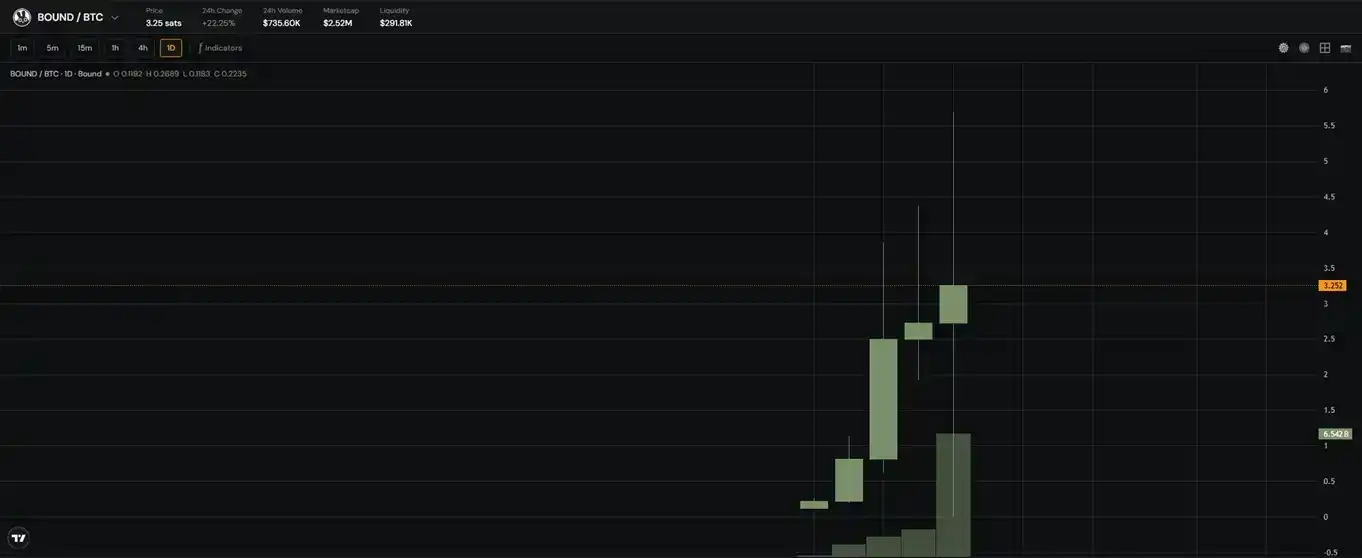
Returning to the project itself, the main points praised by the community about Bound are as follows:

Greatly simplified trading process. Traditional Rune AMMs typically require depositing Bitcoin first, then waiting for several block confirmations. This confirmation time can be as short as half an hour, but longer if block production is slow, potentially taking over an hour. On Bound, besides depositing Bitcoin, users can also deposit SOL, ETH, HYPE, or BNB. These are swapped to BTC via corresponding BTC trading pairs, allowing users to directly trade Rune tokens on the platform. The overall time required is significantly reduced, naturally enhancing the user experience.

Instant trade confirmation. Avoiding long waits for Bitcoin block confirmations has been a goal for platforms dealing with Runes in the Bitcoin ecosystem. This isn't inherently difficult; once funds are deposited and confirmed on the platform, trades can be processed internally/off-chain first, using the Bitcoin mainnet as a confirmation layer. However, the key issue is solving the security problem. Previous platforms like odin.fun also gained popularity but eventually faded after repeated asset theft incidents. Bound's solution is to add a 2-of-2 multisig to user asset deposit addresses. One signature is held by the user (stored as a passkey on the user's device), and the other is held by the platform's backend.

This means even if the Bound platform is hacked, assets cannot be stolen because the hacker can only satisfy one signature layer. There's another question: what if the platform runs away? Therefore, Bound added a timelock. If Bound's signature expires after 3 months, users can directly withdraw their assets using their own passkey.

Price protection mechanism. Bound's official Twitter account retweeted an explanation by @SkyAAmen regarding this mechanism: "For Rune tokens launched via Launchpad, the post-launch token price is calculated based on the average minting price. 75% of the raised liquidity is placed below this price to act as a floor against potential selling pressure, while the remaining 25% is paired above this price."
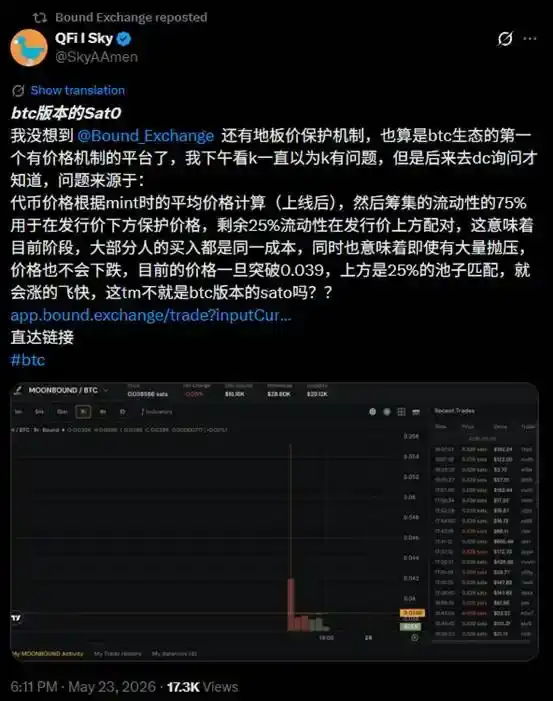
Regarding token issuance, Bound also introduced a virtual mempool, which can be understood as a virtual chain tracking Bitcoin mainnet block production. Users minting new Rune tokens on the Launchpad don't pay fees to miners; the money is instead used for the aforementioned price protection and liquidity provision. Additionally, to reward holders, those who mint 1 million tokens or more and do not sell can share 50% of the trading fees.

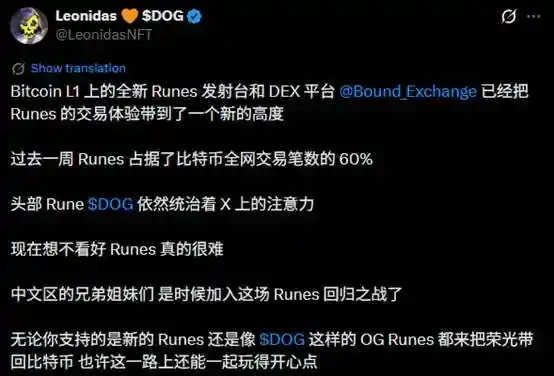
The above three points are the main advantages. Furthermore, Leonidas, a well-known figure in the Bitcoin ecosystem, has also expressed support for Bound:
Tacit

BlockBeats previously published a detailed article introducing Tacit:

New Protocol Tacit: The ZEC of the Bitcoin Ecosystem?

Currently, the price of Tacit's leading token $TAC remains stable, with a corresponding market cap of approximately $5.5 million. The developer @z0r0zzz continues to maintain a high update frequency. On May 23rd, they implemented double-blind tokens on Bitcoin, further strengthening the protocol's privacy features. Additionally, work is ongoing on a permissionless ETH-BTC bridge implemented via SP1 zero-knowledge proofs.

Alkanes

We have also previously introduced Alkanes: Another 10x Runner in Bitcoin Ecosystem, What is the New Asset Protocol Alkanes? This protocol gained attention because $DIESEL has risen approximately 17 times since late April and is still climbing:
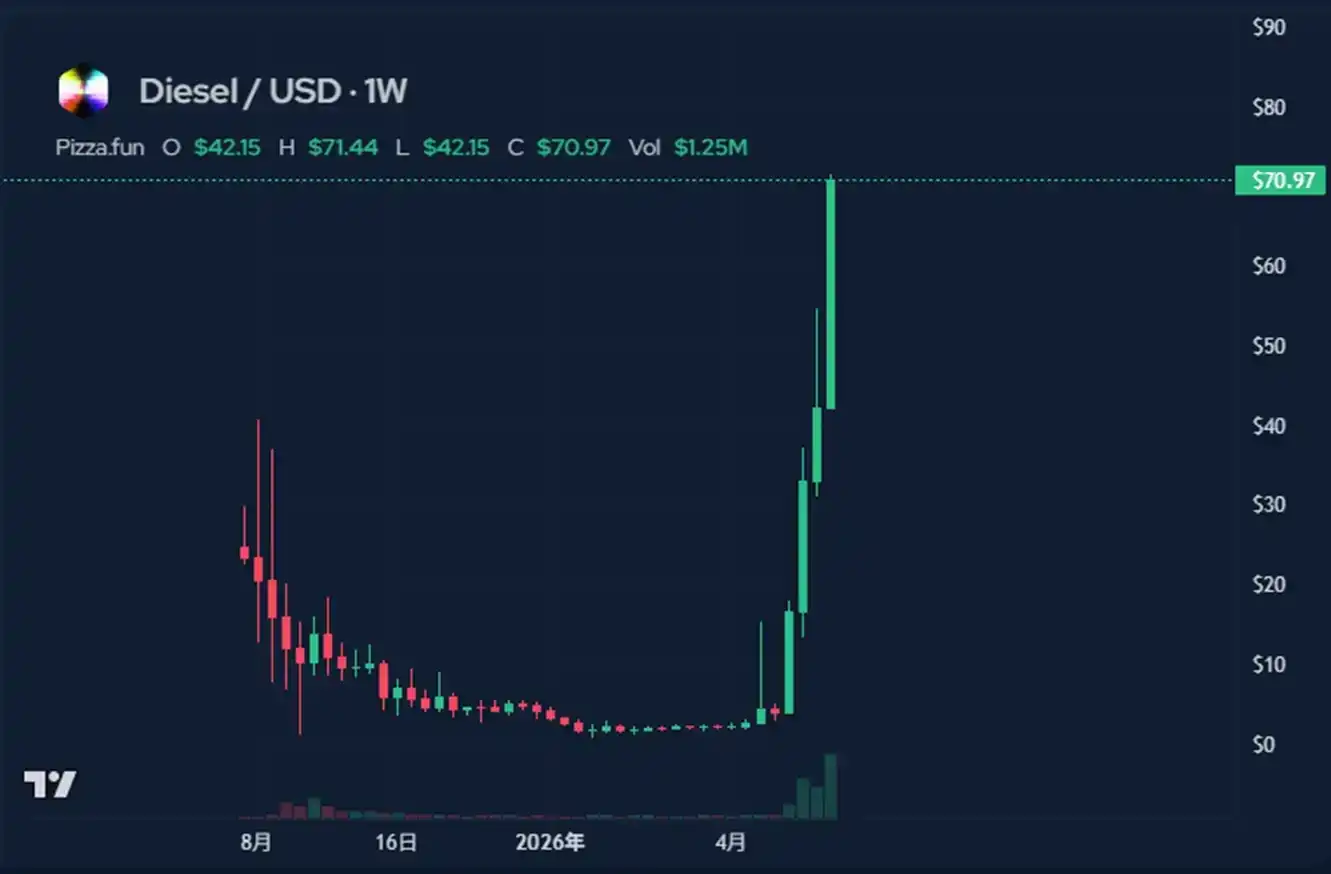
Alkanes isn't a new protocol. In fact, Oyl Wallet, which initially led it, is no longer active. The subfrost team now responsible for protocol updates and maintenance consists of the original technical team from Oyl Wallet that handled Alkanes. Despite Oyl's disbandment, the subfrost team has been consistently updating, implementing significant performance optimizations such as embedding contracts into the indexer.

However, the substantial rise of $DIESEL is likely due to its very small actual circulating supply. The previous mining mechanism for $DIESEL awarded the entire block's $DIESEL reward to the single minting transaction that paid the highest miner fee within that block. This essentially allowed "scientists" (automated traders/bots) to dominate, making it difficult for ordinary users to participate. In August last year, the mining mechanism was updated. Now, all successful minting transactions in a block share the $DIESEL reward proportionally based on their bid amount. This means those who believe in $DIESEL's value can mine more. Mining has become a small "beast" (auction) occurring every block, with a fixed total reward (currently about 3.125 $DIESEL per block, synchronized with Bitcoin's halving cycle), but the bidding situation within each block changes.

Simultaneously, 50% of all funds bid for minting $DIESEL within a block are converted into $DIESEL and directed to the project's treasury for protocol development. Therefore, although the $DIESEL production per block is about 3.125 tokens, the amount users actually receive from minting is less, as a portion goes directly to the project team.

The total supply of $DIESEL is 1,562,000 tokens. Currently, approximately 640,000 tokens have been mined and are potentially circulating, but the actual amount available for trading might be less than 10% of the total supply. Combined with the recent massive price surge, I'd call it the "meme coin" of the Bitcoin ecosystem.


Трендові криптовалюти

Пов'язані питання

QWhat is the Bound platform, and why has it recently gained significant attention in the Bitcoin ecosystem?

ABound is a comprehensive financial platform formed by merging radfi and Bound's previous services. It offers trading, lending, Launchpad, and an NFT marketplace. It gained significant attention because its token $Bound surged approximately 46 times since May 21st. Key praised features include a simplified trading process using multiple cryptocurrencies, instant transaction confirmations via a 2-of-2 multi-sig security model, and a price protection mechanism for new token launches.

QHow does the Bound platform address the security concerns associated with off-chain trading confirmations?

ABound addresses security by implementing a 2-of-2 multi-signature setup for user deposit addresses. One signature key is held by the user (a passkey on their device), and the other is held by the platform's backend. This means even if the platform is hacked, assets cannot be stolen as the hacker only controls one signature. Additionally, a timelock feature is added: if Bound's signature expires after 3 months, users can withdraw their assets directly using their own passkey.

QWhat is the Alkanes protocol, and what is notable about its token $DIESEL?

AAlkanes is a Bitcoin-native asset protocol. Its notable token, $DIESEL, has increased in price by about 17 times since late April and is still rising. It is considered a 'weird coin' or '妖币' in the Bitcoin ecosystem. This dramatic rise is attributed to its very small circulating supply (likely less than 10% of its total 1.562 million supply is tradeable). Its mining mechanism was updated to allow proportional reward distribution based on bidding, making it more accessible than its previous 'scientist-dominated' model.

QWhat recent update did the Tacit protocol implement, and what is its primary focus?

AOn May 23rd, the Tacit protocol implemented dual-blind tokens on Bitcoin, significantly enhancing the protocol's privacy features. Tacit's primary focus is on privacy, aiming to be a privacy-preserving asset protocol within the Bitcoin ecosystem, similar to Zcash (ZEC). The developer is also working on a permissionless ETH-BTC bridge using SP1 zero-knowledge proofs.

QAccording to the article, what is a major user experience improvement offered by the Bound platform for trading Runes?

AA major user experience improvement is the significant simplification and speed-up of the trading process. Instead of only depositing Bitcoin and waiting for multiple block confirmations (which can take 30 minutes to over an hour), users on Bound can deposit various cryptocurrencies like SOL, ETH, HYPE, or BNB. These are converted to BTC via corresponding trading pairs on the platform, allowing users to trade Rune tokens almost immediately without the long Bitcoin network confirmation wait, greatly enhancing the user experience.

Пов'язані матеріали

Agent Race Ends, Super Workbench Takes Over

The era of fragmented AI agents is ending. Over the past month, China's tech giants—Tencent, Alibaba, and ByteDance—have simultaneously shifted strategy: instead of launching new, standalone AI agents, they are consolidating their various agent projects into unified "super workbenches." Tencent integrated its QClaw teams into WorkBuddy, a strategic product hailed as a potential third flagship after QQ and WeChat. Alibaba is merging its QoderWork, Wukong, and MuleRun agents into a new "Qianwen Office" platform under DingTalk's leadership. ByteDance rebranded its TRAE SOLO coding agent to TRAE Work, signaling a broader focus on workflow collaboration. This convergence marks a pivotal industry consensus. The initial exploration phase, where companies rapidly built numerous overlapping agents for different scenarios, proved costly and inefficient. With open-source tools eroding technical barriers, competition has shifted from agent creation to resource consolidation and cost control. Historically, platform wars are won not by creating more products, but by simplifying them—as seen with browsers unifying web access and super-apps consolidating services. Now, the "super workbench" aims to become the unified AI entry point for work. This reflects a deeper market realization: the primary audience for AI is no longer just programmers (a market in the tens of millions) but all knowledge workers (a market of billions). The real opportunity lies in augmenting everyday tasks—managing emails, documents, data, and meetings—across the entire workday. The core battleground is becoming control over the primary AI entry point that employees use daily. Tencent's WorkBuddy leverages WeChat and Tencent Docs; Alibaba's Qianwen Office taps into DingTalk's organizational data; ByteDance's TRAE Work integrates with Feishu's workflows. Whoever owns this "super workbench" gains strategic control over orchestrating enterprise data and APIs. This shift is redefining enterprise software. Traditional SaaS applications, valued for their user interfaces, will recede into the background. Their core functionalities will be exposed as standardized "Skills" or APIs for the super workbench's agents to invoke. Software value will shift from selling user seats to charging based on API calls and outcomes delivered. The evolution of agents is moving through clear stages: first as novel standalone products, then as consolidated primary work entry points, and finally as pervasive, invisible capabilities embedded into the digital fabric. The recent moves by major tech firms signal the transition from the first stage into the second, accelerating toward the third. In the end, the most successful agent technology may become invisible—like electricity or the HTTP protocol—a fundamental, unnamed infrastructure powering work itself.

marsbit6 хв тому

Agent Race Ends, Super Workbench Takes Over

marsbit6 хв тому

Michael Saylor: 110 Reasons to Oppose BIP-110

Michael Saylor presents 110 arguments against Bitcoin Improvement Proposal (BIP) 110, a soft fork aimed at restricting certain non-monetary data storage uses (like inscriptions) on the Bitcoin blockchain. He acknowledges the proponents' valid concerns—such as node costs, fee pressure, and preserving Bitcoin's monetary focus—but fundamentally disagrees with the proposed solution. Saylor argues that BIP 110 represents a dangerous precedent of using consensus rules to enforce value judgments on transaction validity, moving away from Bitcoin's core principles of neutrality and permissionless innovation. His key objections are organized into eleven categories: 1) It violates neutrality and hard consensus by banning currently valid transactions. 2) It fails to meet the high burden of proof required for a consensus change, lacking concrete data on the alleged crisis. 3) Its seven bundled technical restrictions are overly broad, targeting generic script functionalities and blocking future upgrade paths. 4) It sacrifices compatibility and future optionality by closing off designed upgrade hooks. 5) Its temporary rules add significant complexity (grandfathering, expiry states) without sufficient justification. 6) The economic and security impacts, particularly on miner revenue and fee markets, are uncertain and unmodeled. 7) Superior, market-based tools (fee markets, relay/mining policies) already exist to manage blockchain load. 8) It stifles innovation by creating a chilling effect for developers. 9) Its modified activation mechanism (55% threshold, forced signaling) is aggressive and risks network splits. 10) The precedent it sets—using consensus to suppress disliked but legal uses—is more dangerous than the problem it aims to solve. 11) A better path exists: improving measurements, refining resource-based policies, and allowing market forces to work. Saylor concludes that Bitcoin's strength lies in its neutral rules, open markets, and hard consensus. Changing these foundational elements to target specific use cases is an unnecessary and risky "iatrogenic" intervention. He advocates for guarding Bitcoin's neutrality rather than acting as its redeemer.

marsbit21 хв тому

Michael Saylor: 110 Reasons to Oppose BIP-110

marsbit21 хв тому

Торгівля

Спот

Популярні статті

Що таке MEME 2.0

Memecoin 2.0: Поява $MEME 2.0 у світі криптовалюти Вступ У постійно змінному ландшафті криптовалюти з'явився новий претендент. Memecoin 2.0, що символізується як $MEME 2.0, підносить концепцію мем-криптовалют на захоплюючий новий рівень. Як побічний продукт оригінального Memecoin, цей проєкт привернув увагу крипто-спільноти, змістивши акцент з типової фінансової вигоди на захоплюючий і розважальний досвід. Працюючи на блокчейні Ethereum, Memecoin 2.0 сміливо переосмислює залучення спільноти у криптосфері. Що таке Memecoin 2.0, $MEME 2.0? У своїй основі, Memecoin 2.0 є криптовалютним проєктом, який надає пріоритет спільнотному духу і розвагам, пов'язаним з мем-культурою. На відміну від звичайних криптовалют, які зосереджені на практичних випадках використання та матеріальних вигодах, Memecoin 2.0 вирізняється тим, що обіймає легшу сторону цифрової валюти. Цей проєкт існує без обіцянок утиліти, структурованої дорожньої карти чи фінансових повернень, зосереджуючи увагу на створенні яскравої спільноти навколо мемів та спільних розваг. Зробивши це, він використовує зростаючу тенденцію мем-культури у онлайн-пробі, що робить його унікальним гравцем у світі цифрових активів. Творець Memecoin 2.0, $MEME 2.0 Не зважаючи на численні дослідження витоків Memecoin 2.0, чітка особистість його творця залишається невідомою. Ця анонімність не є рідкістю у крипто-спільноті, де багато проєктів очолюються особами або групами, які надають перевагу залишатися за лаштунками. Відсутність публічно доступної інформації про творця може розглядатися як стратегічний крок, що ставить в центр уваги залучення спільноти, а не індивідуальної популярності у цій сфері. Інвестори Memecoin 2.0, $MEME 2.0 Інформації щодо інвесторів або фінансової підтримки Memecoin 2.0 замало. Відсутність деталей може свідчити про те, що проєкт є самофінансованим або що його увага до спільноти, а не традиційних інвестиційних структур, привабила інший тип підтримки. Оскільки світ мем-криптовалют зазвичай передбачає більше участі низового рівня, а не інституційних інвестицій, цей підхід узгоджується з етосом проєктів, що управляються спільнотою. Як працює Memecoin 2.0, $MEME 2.0? Memecoin 2.0 повністю працює на блокчейні Ethereum, використовуючи його потужні функції безпеки та масштабованості. Використовуючи сильні сторони Ethereum, Memecoin 2.0 може запропонувати безпечне середовище для взаємодії користувачів, забезпечуючи при цьому, що транзакції є ефективними та економічними. Одна з унікальних характеристик Memecoin 2.0 полягає в його структурі, що керується спільнотою. Цінність та популярність токена $MEME 2.0 походять з активної участі його користувачів, а не з вродженої утиліти. Ця концепція підкреслює акцент проєкту на розважальному аспекті криптовалюти, натякаючи на те, що сміх та залучення спільноти є справжніми валютами, що ведуть до його успіху. Крім того, проєкт вписується в ширшу екосистему мем-криптовалют, де цінність кожної мем-криптовалюти коливається залежно від культури, тенденцій і участі спільноти, а не традиційних економічних принципів. Хронологія Memecoin 2.0, $MEME 2.0 Щоб краще зрозуміти еволюцію та віхи Memecoin 2.0, ось хронологія, що підкреслює значні події в його історії: 2024: Зародження Memecoin 2.0 вважається відгалуженням оригінального Memecoin, яке встановлює себе в процвітаючому контексті мем-криптовалют, працюючи на блокчейні Ethereum. 13 липня 2024: Memecoin 2.0 офіційно позиціонує себе як мем-криптовалюта, орієнтована на спільноту, в мережі Ethereum, підкреслюючи свій підхід, зосереджений на розвагах, який запрошує користувачів брати участь у його розвитку. Ключові моменти про Memecoin 2.0, $MEME 2.0 Кілька критичних характеристик визначають Memecoin 2.0: Спільнотно-центричний підхід: Основною метою Memecoin 2.0 є створення веселого, захоплюючого досвіду для спільноти, використовуючи колективне задоволення, що випливає з меметичної культури. Побудовано на Ethereum: Робота на блокчейні Ethereum надає проєкту важливу інфраструктуру, що забезпечує безпеку та масштабованість. Відсутність утиліти або дорожньої карти: У вражаючому відході від традиційних криптовалют, Memecoin 2.0 не обіцяє жодних утилітарних функцій або фінансових повернень, підтверджуючи свою прихильність до участі спільноти та соціального залучення. Акцент на меметичній культурі: Обіймаючи гумористичні та культурні аспекти мем-періоду, Memecoin 2.0 надає платформу для користувачів для залучення до крипти офлайн та онлайн. Додатковий контекст: Значення мем-криптовалют Мем-криптовалюти з'явилися як окрема класифікація криптовалюти, часто керуючись гумором та легким підходом до торгівлі. Ці валюти, як правило, не мають значної утиліти або розробницьких дорожніх карт, залучаючи користувачів обіцянкою розваг, взаємодії в спільноті та культурної значущості. В рамках ширшої екосистеми криптовалют, мем-криптовалюти відновлюють важливість залучення спільноти, протистоячи лише прибутковим підходам. Проєкти, такі як Memecoin 2.0, відкривають еру, в якій розваги можуть гармонізувати з фінансовими прагненнями, перетворюючи блокчейн на ігровий майданчик для творчості та соціальної взаємодії. Висновок Memecoin 2.0, або $MEME 2.0, втілює нову хвилю криптовалюти, яка надає пріоритет залученню спільноти над жорсткими фінансовими структурами. Зосереджуючись на гуморі та соціальній взаємодії, він використовує захоплення навколо мем-культури. Працюючи на блокчейні Ethereum, Memecoin 2.0 використовує можливості технології, залишаючись непохитним у своїй прихильності до розважальної цінності цифрової валюти. Коли простір навколо криптовалют продовжує еволюціонувати, Memecoin 2.0 служить доказом того, що майбутнє цифрових активів може значною мірою залежати від спільних досвідів, сміху та надійних зв'язків у спільноті. У непередбачуваному світі крипто, можливо, радість може бути такою ж цінною, як і традиційний фінансовий прибуток.

150 переглядів усьогоОпубліковано 2024.04.04Оновлено 2024.12.03

Що таке MEME 2.0

Як купити MEME

Ласкаво просимо до HTX.com! Ми зробили покупку Memeland (MEME) простою та зручною. Дотримуйтесь нашої покрокової інструкції, щоб розпочати свою криптовалютну подорож.Крок 1: Створіть обліковий запис на HTXВикористовуйте свою електронну пошту або номер телефону, щоб зареєструвати обліковий запис на HTX безплатно. Пройдіть безпроблемну реєстрацію й отримайте доступ до всіх функцій.ЗареєструватисьКрок 2: Перейдіть до розділу Купити крипту і виберіть спосіб оплатиКредитна/дебетова картка: використовуйте вашу картку Visa або Mastercard, щоб миттєво купити Memeland (MEME).Баланс: використовуйте кошти з балансу вашого рахунку HTX для безперешкодної торгівлі.Треті особи: ми додали популярні способи оплати, такі як Google Pay та Apple Pay, щоб підвищити зручність.P2P: Торгуйте безпосередньо з іншими користувачами на HTX.Позабіржова торгівля (OTC): ми пропонуємо індивідуальні послуги та конкурентні обмінні курси для трейдерів.Крок 3: Зберігайте свої Memeland (MEME)Після придбання Memeland (MEME) збережіть його у своєму обліковому записі на HTX. Крім того, ви можете відправити його в інше місце за допомогою блокчейн-переказу або використовувати його для торгівлі іншими криптовалютами.Крок 4: Торгівля Memeland (MEME)Легко торгуйте Memeland (MEME) на спотовому ринку HTX. Просто увійдіть до свого облікового запису, виберіть торгову пару, укладайте угоди та спостерігайте за ними в режимі реального часу. Ми пропонуємо зручний досвід як для початківців, так і для досвідчених трейдерів.

365 переглядів усьогоОпубліковано 2024.12.12Оновлено 2026.06.02

Як купити MEME

Обговорення

Ласкаво просимо до спільноти HTX. Тут ви можете бути в курсі останніх подій розвитку платформи та отримати доступ до професійної ринкової інформації. Нижче представлені думки користувачів щодо ціни MEME (MEME).

活动图片









