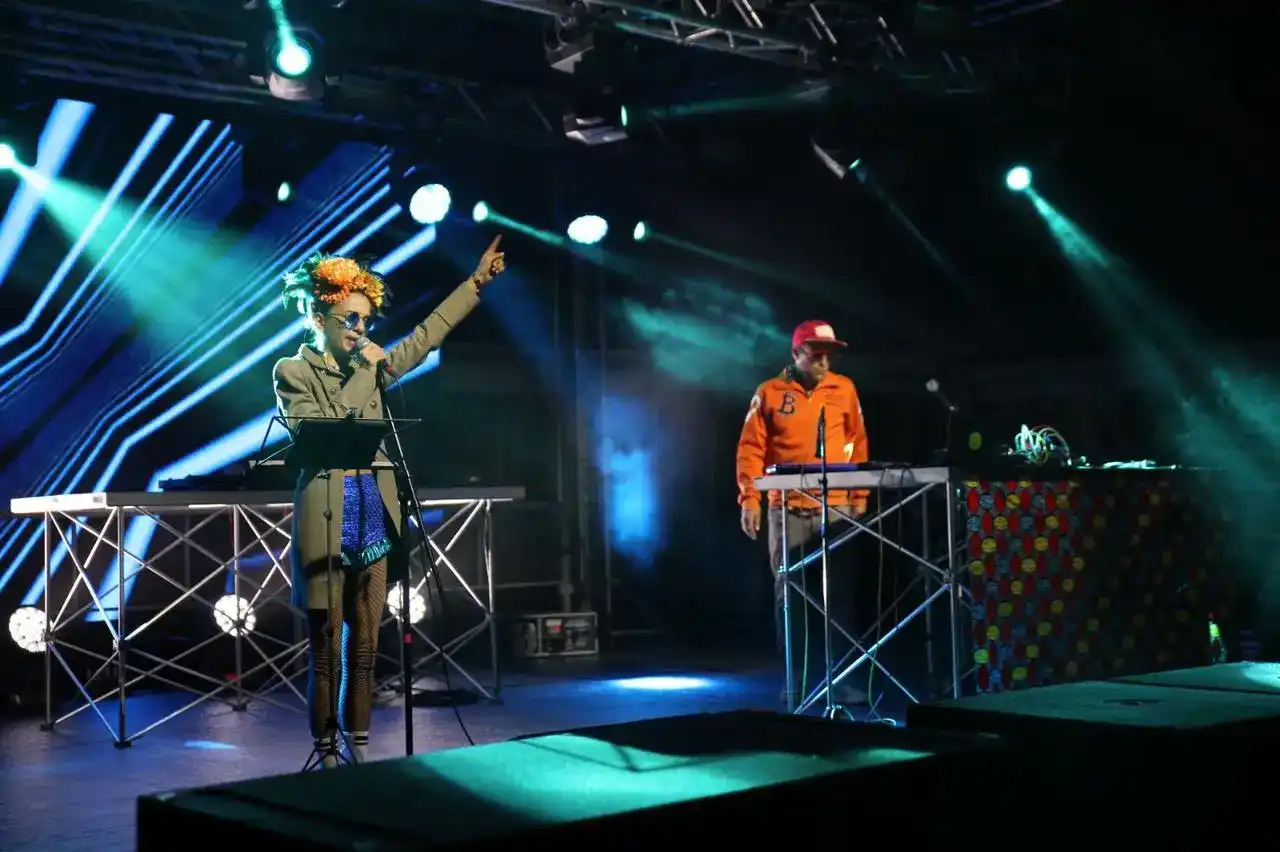
Caption: Orange Pill Jam performing live in Lugano, Switzerland.
Michi has a habit that drives his collaborators crazy.
When he determines there's a problem with a recording—not half a beat off, not a quarter beat off, but off by some time unit that only exists in his nervous system—he insists on re-recording. Again and again. His bandmate, lead vocalist Mermaid, says she couldn't hear the difference for the first six months. Then, gradually, she could.
>It should be noted: it's a crypto bear market. Yet the band Orange Pill Jam is still recording.On the surface, Orange Pill Jam seems an unlikely combination. Their music explores financial sovereignty, privacy rights, and the slow decay of certain modern institutions. Their style is eclectic, spanning from gypsy reggae to Afro-Latin to hip-hop, occasionally venturing into reggaeton. They accept Bitcoin payments.
By traditional music industry standards, this band is not successful. Their YouTube channel has been active for two or three years, and subscribers have just surpassed five hundred. Spotify isn't particularly enthusiastic about them either.
Yet, in the specific circles that truly value what they do, they are indeed beloved. And they are doing something quite difficult: creating music that non-bitcoiners can appreciate without needing to understand Bitcoin, and that bitcoiners can enjoy without feeling pandered to.
I. How Bitcoin Culture Grows Its Own Music
The story begins, as many Bitcoin stories do, at a conference.
It was at the Plan B Forum in Lugano in 2022. Mermaid had written a song called 'Dollar Apocalypse' as a thank-you gift for everyone creating serious Bitcoin content; especially Max Keiser — the broadcaster and advocate whose podcast, 'The Orange Pill Podcast', has long been essential listening in certain corners of the internet.
She wasn't sure she would actually meet him. Then, she did.
A few hours later, someone in the crowd at the Satoshi Gallery said: 'She wrote a song for you, let her sing it.' Keiser turned and announced to the room that there would be an impromptu concert. Behind Mermaid, Valentina Piccozzi's resin orange pill art hung on the wall. No microphone, no sound check, no advance notice.
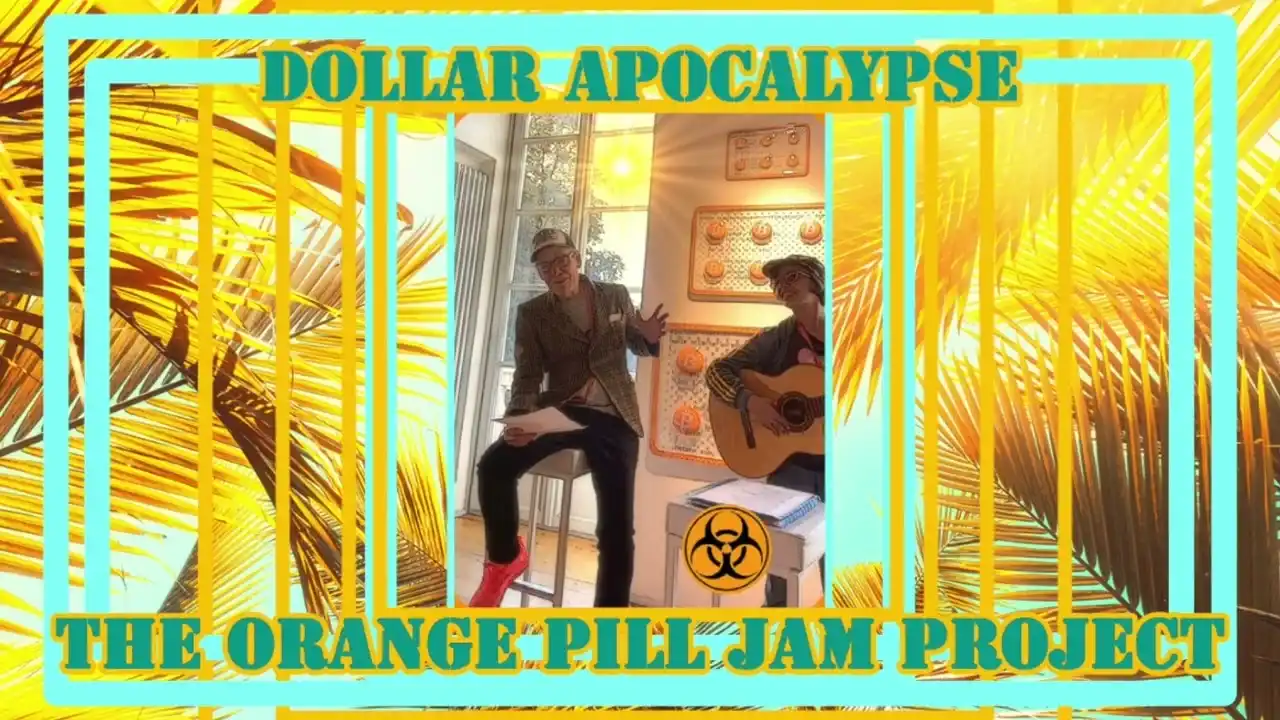
She sang the song. Afterwards, Keiser spoke about the importance of Bitcoin art, which she still remembers. What she gained from it wasn't direction, but a question: Where is the music? Visual art already has its followers—painters, illustrators, a whole world of Bitcoin aesthetics. Music hadn't shown up yet.
Mermaid says that event 'landed' her. But I suspect what truly 'landed' her was the experience of standing in that gallery, unscheduled and unrehearsed, singing simply because the song wanted to come out. It turned out to be a reliable indicator of character. The subject came up again later.
She called Michi and proposed a simple idea: turn those guitar and vocal sketches into real tracks—professional production, proper beats, something you can move to. He agreed. Three songs became seven, seven became thirteen, thirteen became twenty-one, and in their words, many more are simmering.
Here's how a song is made.
Mermaid is the band's lead singer and main lyricist. She writes the lyrics first, then sketches a melody around them—not a full composition, more of an outline that knows what it wants to say but not yet how to say it. She hands this outline to the band's producer and multi-instrumentalist Michi, who shapes everything that follows.
Everything else—show arrangements, logistics, and the paperwork of turning ideas into reality—is handled by co-founder Martino. He's quieter than the other members, slightly camera-shy, and he doesn't play an instrument. He doesn't need to. Someone has to keep the project running, and he seems genuinely glad it's him.
What Michi brings isn't arrangement in the traditional sense, but rhythm as argument. He's trained as a drummer, and carries a drummer's sensibility, so he approaches every instrument with the same attitude—not what the music says, but how it moves your body. Mermaid gives the music meaning; Michi decides when you'll feel it.
This division sounds clean, but it isn't. He often has her re-record the same line, pursuing a precision she can't even hear. Over time, she learned to trust him. Eventually, the band's lyrics and beats didn't just dress each other up; they collided—and that tension is where the music comes alive.
II. Privacy, Sovereignty, and the Trap of 'Free'—All Written Into Songs
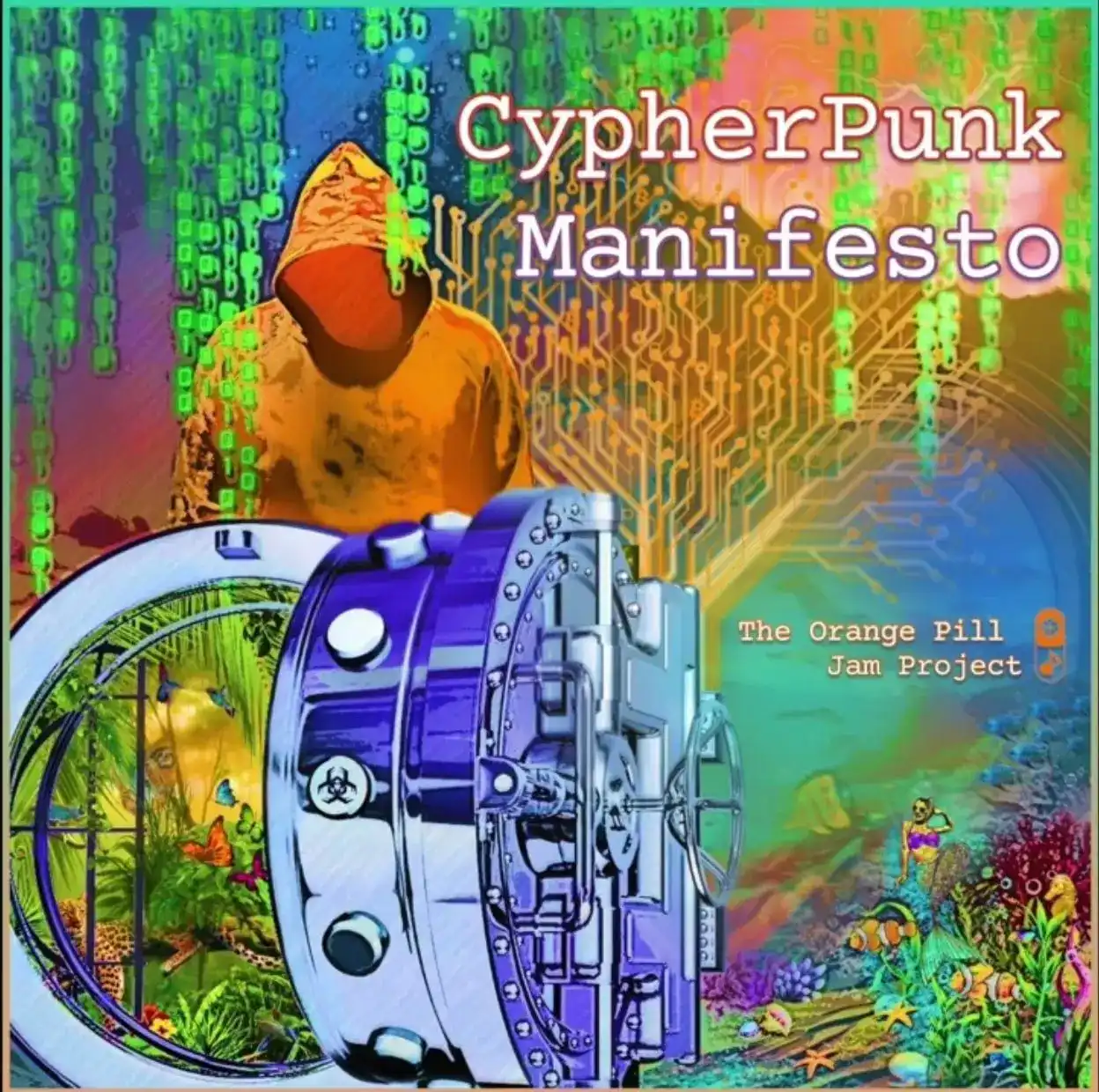
If you want to understand what this band is actually doing, their song 'Cypherpunks' Manifesto' is a great entry point—despite the esoteric-sounding title, it's not a difficult listen. It's uptempo, danceable, heavily influenced by Rosalía, and opens with singing in Spanish.
The first line means: If you want to send me a secret message.
Mermaid explains this isn't just a song about cryptographic protocols. It's a song about a feeling—the feeling of wanting a door you can close. She gives a specific example: your child is just born in the hospital, you want to send a photo to a few friends, but you don't want that photo ending up somewhere you can't control or locate. That should be your choice. Currently, depending on the app you use, maybe it's not.
The song moves from there, through a set of images, almost violently precise within a danceable pop track. There's a line about airplane mode—switching your phone to airplane mode doesn't actually make you invisible, if someone is really looking for you, they'll find a way to establish contact. There's a line about free products: when something is free, you're the product. She says this stems from watching how Google operates—massive free infrastructure, massive data collection, and the feedback loop of your actions funding ads. 'They steal your time, data, and money,' she says, 'and then get the money back with ads, and you don't even realize you're paying.'
Then the song lands on its sharpest line, borrowed from Frédéric Bastiat via Stacy Herbert's podcast: When plunder becomes a way of life for a group of men, they create for themselves a legal system that authorizes plunder and a moral code that glorifies it.
Mermaid doesn't present this like an economist. She says it with the attitude of someone who's thought about it long enough to still get angry. 'The mafia becomes politicians,' she says. 'No one sees because it always happens slowly, always behind the scenes.' This is not detachment. She has no interest in the view from nowhere.
The song ends approaching personal sovereignty—virtual and physical, living with integrity—which is less an ending than a direction. It's an attempt to maintain some coherence on both sides of the screen. She wrote it before going to El Salvador. She didn't change a word after returning.
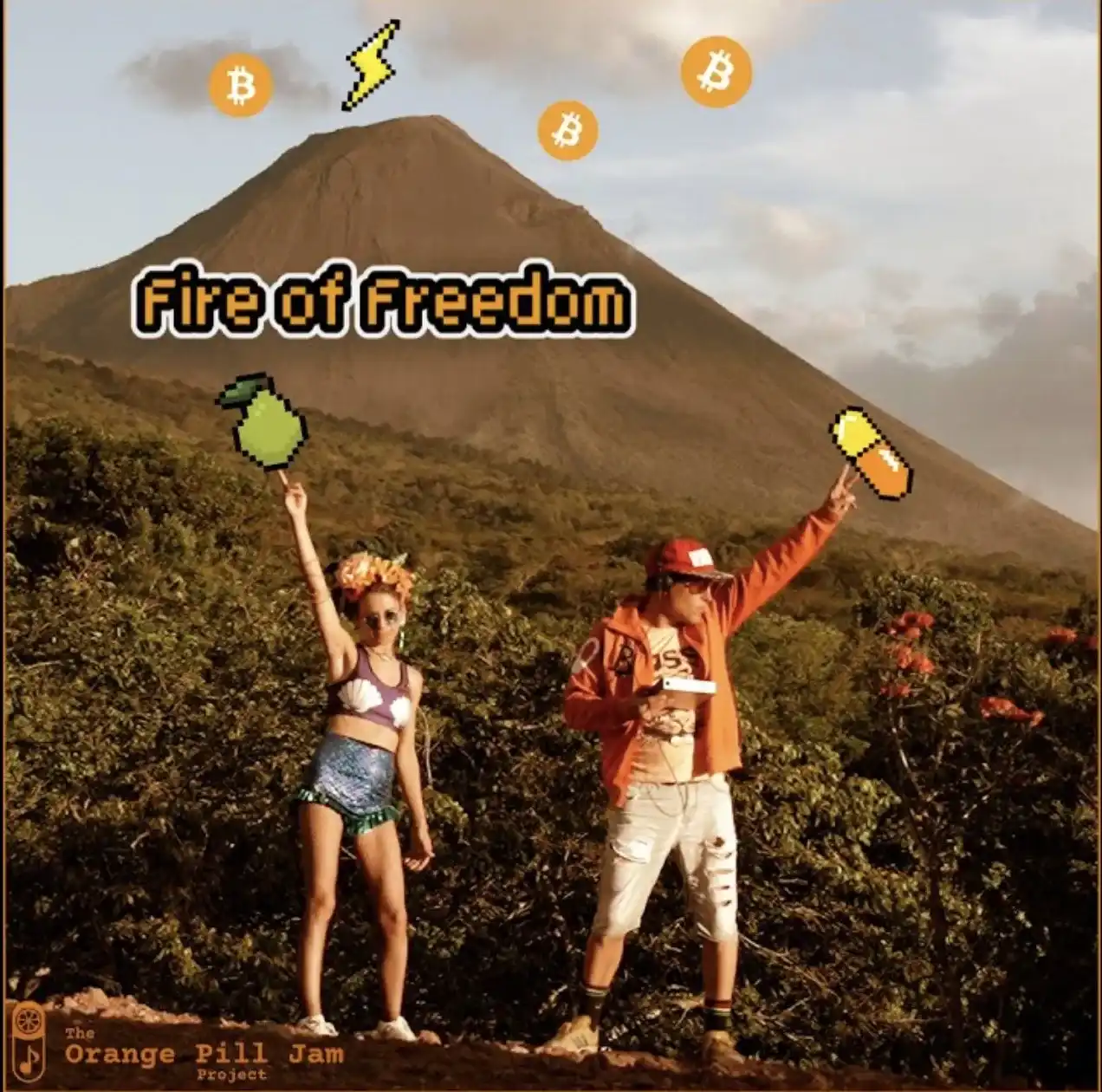
That song is about closing a door. 'Fuego Libre' (Free Fire) is about what happens after you walk through the fire.
The song was written for a conference held in El Salvador—the country that had just made Bitcoin legal tender. Mermaid read the accompanying manifesto repeatedly before writing. The line she's most proud of is: We are adopting Bitcoin, and Bitcoin is adopting us. She describes it as a feeling of being embraced—in a world accelerating toward something no one can name, this thing she found won't let go of her either.
She wrote it before going to El Salvador. She didn't change a word after returning. In the music industry, this is not common.
When the performance came, it felt more like confirmation than a debut. The song had already said everything. The country had just proven it true.
III. When AI Starts Generating Music, What Do They See?
Michi isn't particularly surprised that AI is reshaping, even squeezing, employment spaces. He notices the shift the way a skilled painter might notice new tools arriving: small music jobs are quietly disappearing. Video scores, small tasks—now, with a prompt and ten seconds, they're done.
He has a story about this story, involving 19th-century painters and the invention of photography, which you've almost certainly heard in some form. In short: photography didn't kill painting. It forced painting to become what photography couldn't, which is why we have Impressionism, Surrealism, and much art that simply wouldn't exist if painters had kept trying to copy reality as accurately as possible.
Michi believes the musical version of this story is still being written. AI can generate any existing genre of music in the time it takes to make a cup of coffee, at a quality level sufficient for most needs. It cannot create a genre that doesn't yet exist, nor find the rhythm that lives in the space between intention and instinct.
They'll use AI for other things—business planning, feedback, administrative infrastructure. But not for the music itself.
'Machines should wash dishes,' Mermaid says. 'Fold laundry. Clean the house. I want to sing and dance while the machines clean. Not the other way around.'
The machines have not yet commented.
IV. Making Music in a Bear Market: A Survival Experiment Against Algorithms
The practical challenges of this music project are not philosophical. They're utterly ordinary.
Income is one challenge. They are a Copyleft project—music can be shared, remixed, repurposed by anyone, without permission, while also accepting Bitcoin, dollars, any form of currency as sponsorship. Their Geyser Fund page offers stems for free download, usable by anyone who wants to remix or rework them.
'Any amount, from the heart,' their description reads. In a bear market environment, such openness requires considerable composure and resolve.
Being heard is harder than it sounds. Fourteen thousand songs are uploaded to Spotify daily, most of which are now generated or assisted by tools that didn't exist three years ago. A band singing about monetary sovereignty isn't an algorithm's obvious darling.
Venues don't help. Bitcoin conferences happen in meeting rooms: white walls, overhead fluorescents, attendees wearing lanyards, watching slides all day. 'You want to send energy out,' Mermaid says, 'but the whole room is absorbing it.' Music needs a room that already knows how to move. They don't always find that.
Before this interview, the host, Carine, was setting up equipment and playing one of their songs. She forgot to turn it off. When Mermaid and Michi joined the online call, she looked up and said: Your music changed the whole atmosphere of the room. Warm. Free. Alive.
This is a metric that won't appear on any streaming dashboard.
Ultimately, this is the only argument that matters—and the one that connects all the others. In a bear market, the case for Bitcoin depends on those who believed in it before the price. In the age of AI, the case for human creativity rests on those making things that can't be generated by description. Orange Pill Jam sits at the intersection of these two arguments, an uncomfortable and necessary position.
What they're building doesn't scale. It can't be templated, optimized, or copied by others with similar inputs. It's a product of the unique way Mermaid chases ideas and the unique way Michi grounds ideas in the body—a collaboration that took seven years to find form and is still finding it, one imperfect attempt at a time. In a world where the marginal cost of content nears zero, this irreducible specificity is the only thing that can't be devalued to zero.
The algorithms are getting faster. The Orange Pill Jam Project is on its seventeenth take.