Li Feifei's Latest Article: When Video Generation, Robotics, and NVIDIA All Claim to Have 'World Models,' We Need a Taxonomy

链捕手Опубліковано о 2026-07-05Востаннє оновлено о 2026-07-05

Анотація

"World Model" has become a widely used yet ambiguous term in AI. Drawing from the classic POMDP framework (agent → action → state → observation), this article proposes a functional taxonomy to clarify the concept. It identifies three distinct types, categorized by their output in the perception-action loop: 1. **Renderers**: Output visual observations (pixels). These models, like advanced video generators, prioritize visual fidelity but often lack underlying physical accuracy. 2. **Simulators**: Output the state of the world (geometry, physics, dynamics). They provide a structurally accurate representation for professionals (e.g., architects) and serve as training environments for robots and AI agents. 3. **Planners**: Output actions. Given an observation and a goal, they determine what an agent should do next, closing the perception-action loop (e.g., vision-language-action models). While renderers are currently the most commercially mature and planners are the most aspirational, the article argues that **simulators are the crucial, underappreciated hub**. By working at the level of geometry and physics, a simulator can project upwards to create visuals for humans and downwards to predict action consequences for agents. The future lies in the convergence of these three functions. Emerging research and products, like World Labs' Marble model which outputs both visual splats and physical collision meshes, are beginning to blur these boundaries. The logical endpoint is a ...

Author: Li Feifei

Translation: Jiayang

'World model' is probably the hottest and most confusing concept in the AI field since 2025. When Sora emerged, OpenAI called it a world simulator; Genie lets you walk around in generated scenes and is also called a world model; robotics companies say they're working on world models; NVIDIA says Omniverse is the infrastructure for world models; even game engines have been pulled into this narrative. Everyone is using the same term, but they're talking about completely different things.

Today, Li Feifei published a new article on her personal Substack to clarify this concept. She first returns to the most classic diagram in reinforcement learning textbooks (the POMDP closed loop: agent → action → state → observation → agent), then points out that what are now called 'world models' are actually three different projections of this closed loop. Those outputting pixels (observations) are renderers, those outputting states are simulators, and those outputting actions are planners. The classification criteria are very simple: it depends on which part of the loop you output.
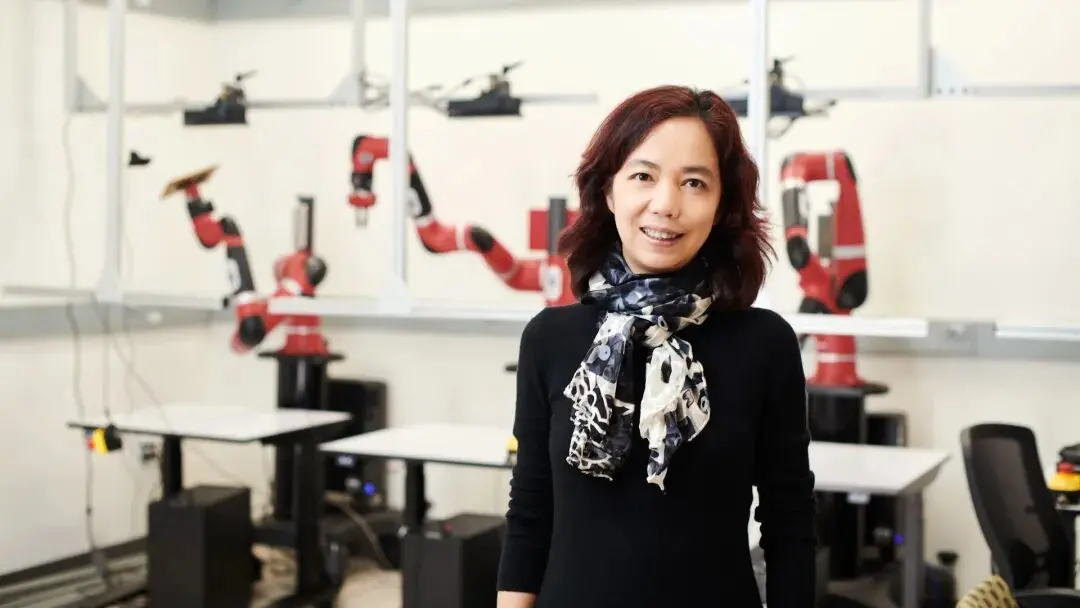
(Source: MIT Technology Review)

She assesses that among the three, renderers are the most commercially mature but have a ceiling (looking good does not equal physical correctness); planners are the most exciting but furthest from real-world deployment (the chasm between lab demos and practical usability remains vast); and simulators are the severely underestimated critical hub. Because simulators operate at the level of geometry, physics, and dynamics, they can project upwards into pixels for human consumption and also derive action consequences downwards for robot use. Mastering simulation simultaneously provides the foundation for rendering and planning; the reverse is not true.

This article is, of course, also a product manifesto for World Labs. Their Marble already outputs both Gaussian splats and collision meshes, attempting to unify renderer and simulator into a single model. The ultimate vision described at the end of the article is a unified world foundation model that can freely switch between rendering, simulation, and planning based on downstream needs. Whether this vision can be realized is another matter, but as an analytical framework, the tripartite classification of renderer/simulator/planner may indeed help cut through some of the noise surrounding the current 'world model' concept.

The full translation follows.

"The world is all that is the case." — Ludwig Wittgenstein, Tractatus Logico-Philosophicus, 1921

The world is not made of words.

In an earlier article, we proposed that spatial intelligence is the next frontier for AI, and world models are the path toward it. Here, the World Labs team and I want to delve one level deeper: among the many things currently labeled as "world models," which functional modules truly constitute this capability, and what are their respective purposes?

Language models have endowed machines with powerful mastery over concepts, vocabulary, and reasoning. But the physical world, whether virtual or real, operates on a completely different substrate. Language models learn the statistical structure of text; world models learn the statistical structure of space and time: how light falls on a surface, what a garden looks like from an angle never captured by a camera, how objects respond to forces and follow physical laws.

This makes "world model" one of the most important and simultaneously most abused terms in today's AI field. Computer vision, robotics, reinforcement learning, and generative AI all claim to be building world models, but each refers to something drastically different. A video model that generates gorgeous but physically impossible flames, a language model that improvises playable games, a physics engine that faithfully simulates a combustion process—they are all called by the same name.

The ancient Greeks could never agree on what the world was made of—be it fire, water, or indivisible atoms—because "the world" has never been a single thing. It has always been a substitute term used by a thinker to reason about a certain totality. AI inherits the same problem, and it happens precisely at the moment when the field needs precision the most.

The Loop Behind the Taxonomy

To clear up this confusion, we can start with a diagram older than all the technologies mentioned above. All reinforcement learning textbooks, including the classic by Sutton and Barto, have used variations of the same diagram for decades to describe how an agent interacts with the world. Its formal name is the Partially Observable Markov Decision Process (POMDP), and the term "world model" was originally defined within this tradition.

An agent (which can be a human, a robot, or a software system) takes an action. These actions change the state of the world. But the agent can never directly see the state itself; what it receives are observations: photons hitting the retina, sensor readings, pixels in a video frame. New observations guide new actions, and the cycle repeats.

The word "state" needs to be unpacked because its meaning shifts across different domains. This is not the chemist's state, not the distinction between solid, liquid, and gas. This is the physicist's and roboticist's state: a complete description of everything happening in the world at a given moment, including every object, every position, every velocity, every property. The state is the underlying reality of the world, in principle complete, but forever unobservable directly by any agent within it. Observations are the agent's partial view of this reality. Actions are the agent's response accordingly.

This closed loop (agent → action → state → observation → agent) is precisely the structure that gives the term "world model" its technical meaning. The phrase itself is even older, traceable to Kenneth Craik's 1943 proposal that the mind reasons by running "small-scale models" of reality, and by the late 1980s and early 1990s, the concept was introduced into neural networks. This loop also explains what people mean when they use the term today. The various things now called world models are actually different projections of the same closed loop, each outputting a different component of the loop.

Three Functions of World Models

The first type of world model is the Renderer. A renderer outputs observations, specifically pixels for the human eye, and the most important quality metric is visual fidelity. A video model that transforms text prompts into cinematic aerial shots is a renderer; interactive systems like Google's Genie 3 or World Labs' own RTFM are also renderers, generating visuals in real-time based on user input. Such models lack an explicit understanding of 3D structure. They generate what a viewer would see, not what things are like in themselves. The building in an aerial shot might look flawless from above, but try navigating the city below, and they will collapse.

The second type is the Simulator. A simulator outputs states: a geometrically, physically, or kinematically faithful representation of the world upon which both humans and computer programs can compute and interact. The renderer's contract is purely visual, while the simulator's contract is structural, demanding geometry that holds up under scrutiny, physics that obey Newton's laws, and dynamics that behave as expected by physical principles. Simulators serve two classes of users. Professionals like architects, designers, filmmakers, and game developers require accuracy beyond visual plausibility. Computer programs like reinforcement learning agents, robot controllers, and autonomous vehicles treat the simulator as a training ground to interact with the world at scale, testing scenarios that are either dangerous, expensive, or simply impossible to execute in reality.

The third type is the Planner. A planner outputs actions. Given an observation and a goal, the planner answers the question: what should the agent do next? In many ways, the planner is the inverse of the renderer. The renderer takes actions as input and produces observations; the planner takes observations as input and produces actions, thereby closing the perception-action loop. Vision-Language-Action models (VLA), model-based systems, and the new wave of World Action Models are all different attempts at planners: enabling systems to decide what a robot should do in an unstructured world.

These three categories cover most of the work currently being implemented, and the distinction is useful in practice. But these categories are not fundamentally separate. They share the same underlying knowledge about how the world works: geometry, physics, dynamics. A model that can render a cup from any angle should, in principle, also be able to simulate what happens if the cup is pushed and plan a hand to pick it up. Increasingly, the most interesting research is deliberately blurring the boundaries between these three.
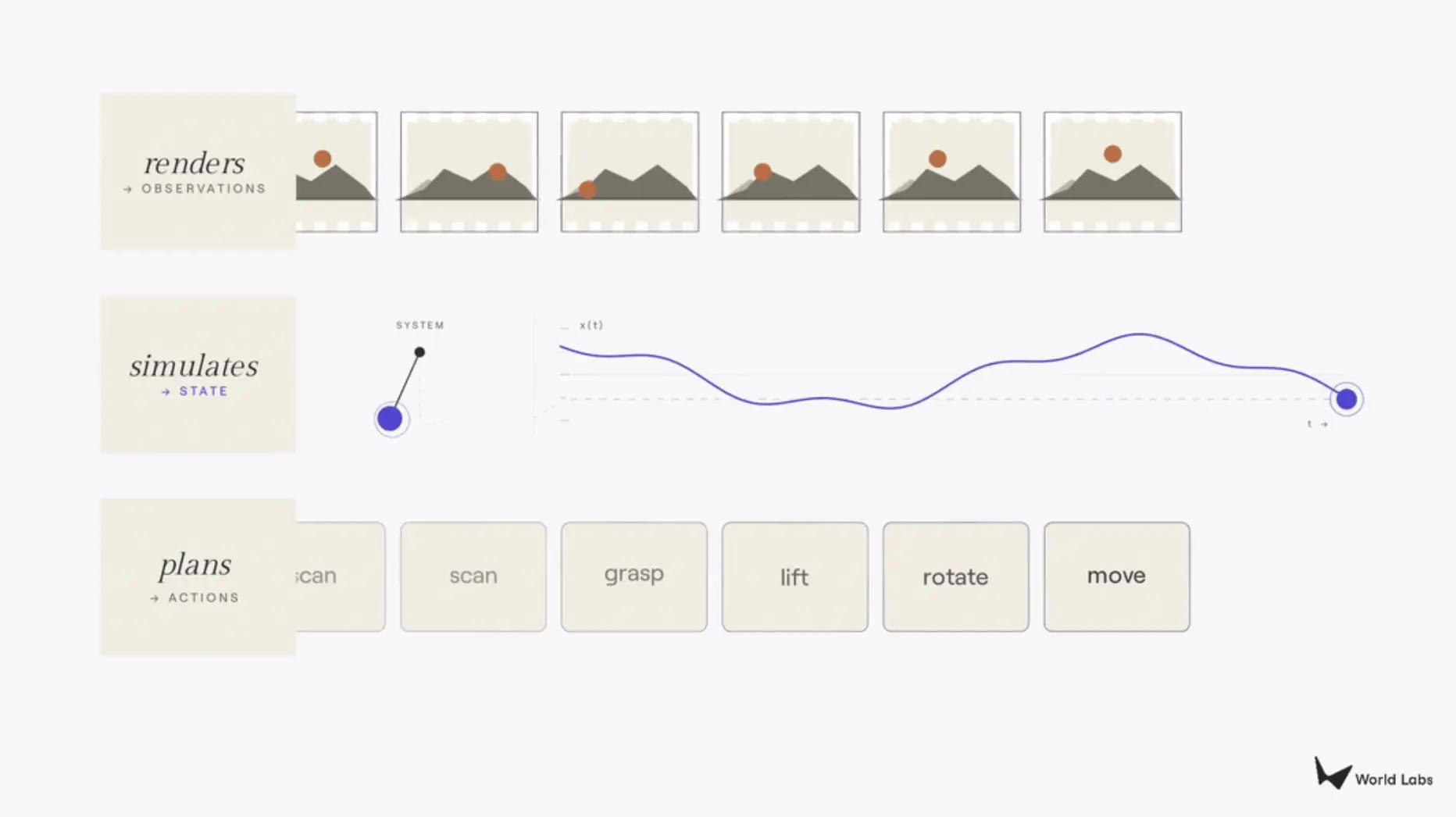
Illustration | Three Types of World Models (Source: Substack)

Why Simulation Is the Key Hub

Among the three categories, simulators receive the least public attention yet are the most important of the three. This article seeks to correct that asymmetry.

Renderers are currently the most commercially mature. Numerous image or text-to-video products are rapidly expanding in consumer and enterprise markets. Google's Nano Banana model has brought renderer-level image generation capabilities to potentially hundreds of millions of users. The technology is real, and the market is real. However, renderers optimize for visual plausibility rather than physical accuracy, and this ceiling is important. Their outputs are beautiful, but you cannot use them to design a building or train a robot.

Planners are the most exciting and least mature, closely tied to the rapidly evolving field of robot learning. The past two years have produced many robot demos that look impressive in videos, but we need to be honest about what these demos actually show. Almost all demos are confined to highly constrained lab environments with limited objects and short task durations. None have been validated against the complexity, diversity, and duration required for real-world deployment. The gap from a stunning demo video to a robot that works reliably in a kitchen, warehouse, or operating room remains vast.

Nevertheless, the scale of commercial bets is substantial. A wave of well-funded new entrants is racing to launch general-purpose planning systems, while large infrastructure players are layering planning capabilities atop broader simulation stacks.

Simulation is the bridge connecting the two. If language is an abstraction of the world and pixels are a projection of the world, then geometry, physics, and dynamics are the world itself. A simulator must operate at this level: it is the structural skeleton from which visual appearances (for renderers) and action consequences (for planners) can both be derived.

A model that masters simulation can project its understanding into pixels for human consumption and into action predictions for embodied agents. A model that masters only rendering or only planning can do neither. The commercial space here is immense. NVIDIA's Omniverse alone, according to the company's estimate, targets a market opportunity exceeding a trillion dollars, covering factories, warehouses, supply chains, and digital twins. Robot training, autonomous vehicle testing, architectural visualization, engineering design, drug discovery—all rely on some form of simulation.

The most difficult open questions in the field are also concentrated here. 3D data with explicit geometry, material properties, and physical annotations is orders of magnitude scarcer than internet videos used for renderer training. The sim-to-real gap (the difference between how objects behave in simulation versus the real world) persists. Generative simulators introduce new risks on top of this: AI-generated geometry might look correct but actually contain self-intersections or incorrect scales, leading to absurd results in physics simulation. The computational cost of large-scale multi-physics simulation (rigid bodies, deformable objects, fluids, cloth all interacting simultaneously) remains orders of magnitude higher than simulation in a single domain.

At World Labs, Marble is our first step in this direction. It takes multimodal input (text, image, video, or spatial sketches) and generates explorable 3D environments, simultaneously outputting Gaussian splats for visual exploration and collision meshes for physics engines. But Marble is only the first chapter of a long arc. As the boundaries between rendering, simulation, and planning begin to dissolve, the entire field is writing this story.

The Boundaries Are Blurring, and What Comes Next

The most important trend in the field right now is that the three categories are beginning to merge. The underlying consensus is that the knowledge required to render a world, simulate it, and act within it is largely the same. Continuing with the previous example, a model that truly understands how a cup sits on a table (its geometry, material properties, response to forces, etc.) should be able to render that cup from any angle, simulate what happens if the cup is pushed, and plan a hand to pick it up. The three categories are three projections of the same underlying understanding.

For instance, a small but growing body of work from various robotics labs has recently shown the possibility, at least conceptually, that a pre-trained video renderer can serve as the backbone for joint world prediction and action prediction, allowing a single model to simultaneously imagine "what will happen" and "what to do," thus bridging renderers and planners. World Labs' Marble can already output both Gaussian splats and collision meshes from a single model, dissolving the boundary between renderer and simulator. At every level, the move is from passive output to interactive systems: renderers become responsive to action conditioning, simulators generate worlds that are more controllable and editable, and planners begin deliberative reasoning rather than merely reacting.

The logical endpoint is a unified world model: a foundation model capable of rendering photorealistic views, generating physically accurate structures, planning action sequences, and switching between different output modalities based on the needs of downstream users. We will still face a series of formidable challenges. The data landscape is extremely uneven, with renderers sitting on vast amounts of internet video, while simulators and planners face severe shortages of 3D assets and robot demonstration data. Optimization for visual beauty may come at the expense of precision needed for robotics or high-fidelity simulation. Reconciling these tensions within a single architecture is the central open problem in world model research today, and what World Labs is committed to solving as Marble continues to evolve.
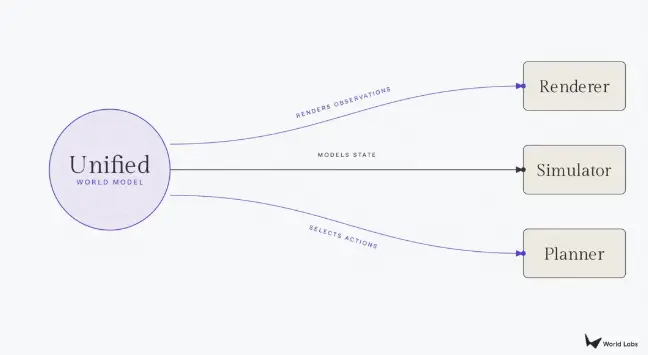
(Source: Substack)

But the overall direction is clear. From the late 1980s to today, the field's bet has always been the same: that if the world model is rich enough, everything an agent needs to see the world, build it, and act within it is contained therein. This bet is now driving a generation of research. And what truly gives it weight is the already-occurring convergence: the three threads of rendering, simulation, and planning, each already supporting industries worth billions, started as independent research directions and are now beginning to merge. When the boundaries disappear, the confluence of the three will redefine something larger: the relationship between machine intelligence and the physical world it inhabits, which is the long-term trajectory of spatial intelligence.

Language has given machines a way to talk about the world. World models are the path by which machines finally come to understand, imagine, reason, and interact with it.

Reference: 1.https://drfeifei.substack.com/p/a-functional-taxonomy-of-world-models

Трендові криптовалюти

Пов'язані питання

QAccording to Fei-Fei Li's article, what are the three main functional categories of 'world models' in AI, and what do they primarily output?

AAccording to Fei-Fei Li, the three functional categories are: 1. Renderers, which output observations (e.g., pixels for human consumption). 2. Simulators, which output the world's state (a geometrically, physically accurate representation). 3. Planners, which output actions (deciding what an agent should do next).

QWhy does the article argue that the simulator is the 'key hub' among the three categories of world models?

AThe article argues the simulator is the key hub because it works at the foundational level of geometry, physics, and dynamics—the 'skeleton' of the world. From an accurate simulation, one can derive visual outputs for renderers and action consequences for planners, but a model that only knows rendering or planning cannot achieve the other.

QWhat is the POMDP loop, and how does it provide the framework for defining the different types of world models?

AThe POMDP (Partially Observable Markov Decision Process) loop describes an agent taking an action, which changes the world's state. The agent then receives an observation (a partial view of the state), which informs its next action. World models are different projections of this loop: renderers output observations, simulators output states, and planners output actions.

QWhat is the main limitation of current renderer-type world models, despite their commercial maturity?

AThe main limitation is that they optimize for visual fidelity, not physical accuracy. Their output can look beautiful but may not be physically correct, making them unsuitable for tasks like architectural design or training robots, which require structural and physical correctness.

QWhat is the 'logical end point' or ultimate vision for world models described in the article, and what is a key challenge in achieving it?

AThe ultimate vision is a unified world foundation model capable of rendering photorealistic views, generating physically accurate structures, and planning action sequences, switching between these outputs based on downstream needs. A key challenge is the extremely uneven data landscape, with abundant internet video for renderers but severe scarcity of high-quality 3D and robotics demonstration data for simulators and planners.

Пов'язані матеріали

Li Fei-Fei's Latest Long-Form Article: When Video Generation, Robotics, and NVIDIA All Call Themselves World Models, We Need a Taxonomy

In a new article, Dr. Fei-Fei Li addresses the widespread and often inconsistent use of the term "world model" in AI. She proposes a clear, functional taxonomy rooted in the classic Partially Observable Markov Decision Process (POMDP) loop (agent → action → state → observation → agent). According to this framework, current systems called "world models" are different projections of this loop, categorized by their primary output: 1. **Renderers**: Output observations (pixels). Their goal is visual fidelity for human consumption (e.g., video generation models like Sora). They are the most commercially mature but are limited by a focus on appearance over physical accuracy. 2. **Simulators**: Output states (geometric, physical, dynamic representations). They provide a structurally accurate world for both human professionals (e.g., architects) and computational agents (e.g., robots for training). Li argues simulators are the crucial, underappreciated bridge, as they can underpin both rendering and planning. 3. **Planners**: Output actions. Given an observation and a goal, they decide what an agent should do next (e.g., robotic action models). This area is highly promising but remains the least mature for real-world deployment. Li highlights a key trend: the boundaries between these three categories are beginning to blur, as they all rely on a shared underlying understanding of geometry, physics, and dynamics. The logical endpoint is a unified world foundation model capable of switching between rendering, simulation, and planning based on downstream needs. This convergence, she concludes, is central to advancing spatial intelligence—enabling machines not just to talk about the world, but to truly understand, imagine, and interact with it.

marsbit1 год тому

Li Fei-Fei's Latest Long-Form Article: When Video Generation, Robotics, and NVIDIA All Call Themselves World Models, We Need a Taxonomy

marsbit1 год тому

Forbes Feature: Stablecoin Cross-Border Payments Are Faster, But Not Yet Cheaper

A Forbes feature delves into the state of stablecoin-based cross-border payments, noting rapid growth but a key shortfall: while faster and more accessible, they are not yet cheaper. At a recent industry conference in Mexico City, optimism about technology, regulation, and volume was tempered by discussions with practitioners. The core issue is liquidity. Traditional FX brokers charge 60-70 basis points, and stablecoins promise to slash this to 2-5 basis points. However, this theoretical cost advantage cannot be realized until deep liquidity pools are established at scale, requiring significant institutional capital inflow. A major adoption barrier is trust. Businesses often rely on long-standing relationships with traditional brokers, valuing reliability over marginal cost savings. This shift will be gradual. Furthermore, successful companies in the space are not positioning themselves as replacements for legacy systems like SWIFT, but as complements. They leverage stablecoins for speed while using traditional rails for their standardization and reliability in ensuring accurate payment details—a critical factor for supplier payments to avoid customs issues. Companies like Caliza, experiencing high monthly growth, exemplify this hybrid approach. The industry anticipates consolidation, as long-term viability will depend on securing the essential trifecta: proper licensing, robust fiat on/off-ramps, and deep liquidity. Without these, firms risk being mere intermediaries rather than building sustainable businesses.

marsbit1 год тому

Forbes Feature: Stablecoin Cross-Border Payments Are Faster, But Not Yet Cheaper

marsbit1 год тому

Торгівля

Спот

Популярні статті

Що таке $S$

Розуміння SPERO: Комплексний огляд Вступ до SPERO Оскільки ландшафт інновацій продовжує еволюціонувати, виникнення технологій web3 та криптовалютних проектів відіграє ключову роль у формуванні цифрового майбутнього. Один з проектів, який привернув увагу в цій динамічній сфері, — це SPERO, позначений як SPERO,$$s$. Ця стаття має на меті зібрати та представити детальну інформацію про SPERO, щоб допомогти ентузіастам та інвесторам зрозуміти його основи, цілі та інновації в рамках web3 та крипто-сектору. Що таке SPERO,$$s$? SPERO,$$s$ — це унікальний проект у криптопросторі, який прагне використати принципи децентралізації та технології блокчейн для створення екосистеми, що сприяє залученню, корисності та фінансовій інклюзії. Проект розроблений для полегшення взаємодії між користувачами новими способами, надаючи їм інноваційні фінансові рішення та послуги. У своїй основі SPERO,$$s$ прагне надати можливості індивідам, забезпечуючи інструменти та платформи, які покращують користувацький досвід у криптовалютному просторі. Це включає в себе можливість більш гнучких методів транзакцій, сприяння ініціативам, що підтримуються спільнотою, та створення шляхів для фінансових можливостей через децентралізовані додатки (dApps). Основна концепція SPERO,$$s$ обертається навколо інклюзивності, прагнучи зменшити розриви в традиційній фінансовій системі, використовуючи переваги технології блокчейн. Хто є творцем SPERO,$$s$? Особистість творця SPERO,$$s$ залишається дещо невідомою, оскільки є обмежені публічно доступні ресурси, що надають детальну інформацію про його засновників. Ця відсутність прозорості може бути наслідком зобов'язання проекту до децентралізації — етики, яку багато проектів web3 поділяють, ставлячи колективні внески вище за індивідуальне визнання. Зосереджуючи обговорення навколо спільноти та її колективних цілей, SPERO,$$s$ втілює суть наділення без виділення конкретних осіб. Таким чином, розуміння етики та місії SPERO є більш важливим, ніж ідентифікація єдиного творця. Хто є інвесторами SPERO,$$s$? SPERO,$$s$ підтримується різноманітними інвесторами, починаючи від венчурних капіталістів до ангельських інвесторів, які прагнуть сприяти інноваціям у крипто-секторі. Зосередження цих інвесторів зазвичай узгоджується з місією SPERO — пріоритет надається проектам, які обіцяють технологічний прогрес у суспільстві, фінансову інклюзію та децентралізоване управління. Ці інвесторські фонди зазвичай зацікавлені в проектах, які не лише пропонують інноваційні продукти, але й позитивно впливають на спільноту блокчейн та її екосистеми. Підтримка з боку цих інвесторів підкріплює SPERO,$$s$ як значного конкурента в швидко змінюваній сфері крипто-проектів. Як працює SPERO,$$s$? SPERO,$$s$ використовує багатогранну структуру, яка відрізняє його від традиційних криптовалютних проектів. Ось деякі ключові особливості, які підкреслюють його унікальність та інноваційність: Децентралізоване управління: SPERO,$$s$ інтегрує моделі децентралізованого управління, надаючи користувачам можливість активно брати участь у процесах прийняття рішень щодо майбутнього проекту. Цей підхід сприяє відчуттю власності та відповідальності серед членів спільноти. Корисність токена: SPERO,$$s$ використовує свій власний криптовалютний токен, розроблений для виконання різних функцій в екосистемі. Ці токени дозволяють здійснювати транзакції, отримувати винагороди та полегшувати послуги, що пропонуються на платформі, підвищуючи загальну залученість та корисність. Шарова архітектура: Технічна архітектура SPERO,$$s$ підтримує модульність та масштабованість, що дозволяє безперешкодно інтегрувати додаткові функції та додатки в міру розвитку проекту. Ця адаптивність є надзвичайно важливою для збереження актуальності в постійно змінюваному крипто-ландшафті. Залучення спільноти: Проект підкреслює ініціативи, що підтримуються спільнотою, використовуючи механізми, які стимулюють співпрацю та зворотний зв'язок. Підтримуючи сильну спільноту, SPERO,$$s$ може краще задовольняти потреби користувачів та адаптуватися до ринкових тенденцій. Фокус на інклюзію: Пропонуючи низькі комісії за транзакції та зручні інтерфейси, SPERO,$$s$ прагне залучити різноманітну базу користувачів, включаючи осіб, які раніше не брали участі в крипто-просторі. Це зобов'язання до інклюзії узгоджується з його загальною місією наділення через доступність. Хронологія SPERO,$$s$ Розуміння історії проекту надає важливі уявлення про його розвиток та етапи. Нижче наведено пропоновану хронологію, що відображає значні події в еволюції SPERO,$$s$: Етап концептуалізації та ідеації: Початкові ідеї, що стали основою SPERO,$$s$, були сформовані, тісно пов'язані з принципами децентралізації та фокусом на спільноті в індустрії блокчейн. Запуск білого паперу проекту: Після концептуального етапу був випущений комплексний білий папір, що детально описує бачення, цілі та технологічну інфраструктуру SPERO,$$s$, щоб залучити інтерес та зворотний зв'язок від спільноти. Створення спільноти та ранні залучення: Активні зусилля були спрямовані на створення спільноти ранніх прихильників та потенційних інвесторів, що полегшило обговорення цілей проекту та отримання підтримки. Подія генерації токенів: SPERO,$$s$ провів подію генерації токенів (TGE) для розподілу своїх рідних токенів серед ранніх прихильників та встановлення початкової ліквідності в екосистемі. Запуск початкового dApp: Перший децентралізований додаток (dApp), пов'язаний з SPERO,$$s$, став доступним, дозволяючи користувачам взаємодіяти з основними функціями платформи. Постійний розвиток та партнерства: Безперервні оновлення та вдосконалення пропозицій проекту, включаючи стратегічні партнерства з іншими учасниками блокчейн-простору, сформували SPERO,$$s$ у конкурентоспроможного та еволюціонуючого гравця на крипто-ринку. Висновок SPERO,$$s$ є свідченням потенціалу web3 та криптовалют для революціонізації фінансових систем та наділення індивідів. Завдяки зобов'язанню до децентралізованого управління, залучення спільноти та інноваційно спроектованих функцій, він прокладає шлях до більш інклюзивного фінансового ландшафту. Як і з будь-якими інвестиціями в швидко змінюваному крипто-просторі, потенційним інвесторам та користувачам рекомендується ретельно досліджувати та обдумано взаємодіяти з поточними подіями в SPERO,$$s$. Проект демонструє інноваційний дух крипто-індустрії, запрошуючи до подальшого дослідження його численних можливостей. Хоча подорож SPERO,$$s$ ще триває, його основні принципи можуть справді вплинути на майбутнє того, як ми взаємодіємо з технологією, фінансами та один з одним у взаємопов'язаних цифрових екосистемах.

118 переглядів усьогоОпубліковано 2024.12.17Оновлено 2024.12.17

Що таке $S$

Що таке AGENT S

Агент S: Майбутнє автономної взаємодії в Web3 Вступ У постійно змінюваному ландшафті Web3 та криптовалюти інновації постійно переосмислюють, як люди взаємодіють з цифровими платформами. Один з таких новаторських проектів, Агент S, обіцяє революціонізувати взаємодію людини з комп'ютером через свою відкриту агентну структуру. Прокладаючи шлях для автономних взаємодій, Агент S прагне спростити складні завдання, пропонуючи трансформаційні застосування в штучному інтелекті (ШІ). Це детальне дослідження заглиблюється в складності проекту, його унікальні особливості та наслідки для сфери криптовалюти. Що таке Агент S? Агент S є революційною відкритою агентною структурою, спеціально розробленою для вирішення трьох основних викликів в автоматизації комп'ютерних завдань: Набуття специфічних знань у галузі: Структура інтелектуально навчається з різних зовнішніх джерел знань та внутрішнього досвіду. Цей подвійний підхід дозволяє їй створити багатий репозиторій специфічних знань у галузі, покращуючи її продуктивність у виконанні завдань. Планування на довгих горизонтах завдань: Агент S використовує планування з підкріпленням досвіду, стратегічний підхід, який полегшує ефективний розподіл та виконання складних завдань. Ця функція значно підвищує її здатність ефективно та результативно управляти кількома підзавданнями. Обробка динамічних, неоднорідних інтерфейсів: Проект представляє Інтерфейс Агент-Комп'ютер (ACI), інноваційне рішення, яке покращує взаємодію між агентами та користувачами. Використовуючи багатомодальні великі мовні моделі (MLLMs), Агент S може безперешкодно орієнтуватися та маніпулювати різноманітними графічними інтерфейсами користувача. Завдяки цим новаторським функціям Агент S надає надійну структуру, яка вирішує складнощі, пов'язані з автоматизацією людської взаємодії з машинами, прокладаючи шлях для численних застосувань у ШІ та за його межами. Хто є творцем Агент S? Хоча концепція Агент S є фундаментально новаторською, конкретна інформація про його творця залишається невідомою. Творець наразі невідомий, що підкреслює або початкову стадію проекту, або стратегічний вибір зберегти засновників у таємниці. Незважаючи на анонімність, акцент залишається на можливостях та потенціалі структури. Хто є інвесторами Агент S? Оскільки Агент S є відносно новим у криптографічній екосистемі, детальна інформація про його інвесторів та фінансових спонсорів не задокументована. Відсутність публічно доступних відомостей про інвестиційні фонди або організації, що підтримують проект, викликає питання щодо його фінансової структури та дорожньої карти розвитку. Розуміння підтримки є критично важливим для оцінки стійкості проекту та потенційного впливу на ринок. Як працює Агент S? В основі Агент S лежить передова технологія, яка дозволяє йому ефективно функціонувати в різних умовах. Його операційна модель побудована навколо кількох ключових функцій: Взаємодія з комп'ютером, подібна до людської: Структура пропонує розширене планування ШІ, прагнучи зробити взаємодії з комп'ютерами більш інтуїтивними. Імітуючи людську поведінку при виконанні завдань, вона обіцяє підвищити досвід користувачів. Наративна пам'ять: Використовується для використання високорівневого досвіду, Агент S використовує наративну пам'ять для відстеження історій завдань, тим самим покращуючи свої процеси прийняття рішень. Епізодична пам'ять: Ця функція надає користувачам покрокові інструкції, дозволяючи структурі пропонувати контекстуальну підтримку в міру виконання завдань. Підтримка OpenACI: Завдяки можливості працювати локально, Агент S дозволяє користувачам зберігати контроль над своїми взаємодіями та робочими процесами, узгоджуючи з децентралізованою етикою Web3. Легка інтеграція з зовнішніми API: Його універсальність і сумісність з різними платформами ШІ забезпечують те, що Агент S може безперешкодно вписатися в існуючі технологічні екосистеми, роблячи його привабливим вибором для розробників та організацій. Ці функціональні можливості колективно сприяють унікальному положенню Агент S у крипто-просторі, оскільки він автоматизує складні, багатоступеневі завдання з мінімальним втручанням людини. У міру розвитку проекту його потенційні застосування в Web3 можуть переосмислити, як відбуваються цифрові взаємодії. Хронологія Агент S Розробка та етапи Агент S можуть бути узагальнені в хронології, яка підкреслює його значні події: 27 вересня 2024 року: Концепція Агент S була представлена в комплексній науковій статті під назвою “Відкрита агентна структура, яка використовує комп'ютери як людина”, що демонструє основи проекту. 10 жовтня 2024 року: Наукова стаття була опублікована на arXiv, пропонуючи детальне дослідження структури та її оцінки продуктивності на основі бенчмарку OSWorld. 12 жовтня 2024 року: Було випущено відеопрезентацію, що надає візуальне уявлення про можливості та особливості Агент S, ще більше залучаючи потенційних користувачів та інвесторів. Ці маркери в хронології не лише ілюструють прогрес Агент S, але й вказують на його прихильність до прозорості та залучення громади. Ключові моменти про Агент S У міру розвитку структури Агент S кілька ключових характеристик виділяються, підкреслюючи її новаторський характер та потенціал: Інноваційна структура: Розроблена для забезпечення інтуїтивного використання комп'ютерів, подібного до людської взаємодії, Агент S пропонує новий підхід до автоматизації завдань. Автономна взаємодія: Здатність автономно взаємодіяти з комп'ютерами через GUI означає стрибок до більш інтелектуальних та ефективних обчислювальних рішень. Автоматизація складних завдань: Завдяки своїй надійній методології він може автоматизувати складні, багатоступеневі завдання, роблячи процеси швидшими та менш схильними до помилок. Безперервне вдосконалення: Механізми навчання дозволяють Агенту S покращуватися на основі минулого досвіду, постійно підвищуючи свою продуктивність та ефективність. Універсальність: Його адаптивність до різних операційних середовищ, таких як OSWorld та WindowsAgentArena, забезпечує його здатність служити широкому спектру застосувань. Оскільки Агент S займає своє місце в ландшафті Web3 та криптовалюти, його потенціал покращити можливості взаємодії та автоматизувати процеси означає значний прогрес у технологіях ШІ. Завдяки своїй інноваційній структурі Агент S є прикладом майбутнього цифрових взаємодій, обіцяючи більш безперешкодний та ефективний досвід для користувачів у різних галузях. Висновок Агент S представляє собою сміливий крок вперед у поєднанні ШІ та Web3, з можливістю переосмислити, як ми взаємодіємо з технологією. Хоча проект все ще на ранніх стадіях, можливості для його застосування є величезними та переконливими. Завдяки своїй комплексній структурі, що вирішує критичні виклики, Агент S прагне вивести автономні взаємодії на передній план цифрового досвіду. У міру того, як ми заглиблюємося в сфери криптовалюти та децентралізації, проекти, подібні до Агент S, безсумнівно, відіграватимуть ключову роль у формуванні майбутнього технологій та співпраці людини з комп'ютером.

747 переглядів усьогоОпубліковано 2025.01.14Оновлено 2025.01.14

Що таке AGENT S

Як купити S

Ласкаво просимо до HTX.com! Ми зробили покупку Sonic (S) простою та зручною. Дотримуйтесь нашої покрокової інструкції, щоб розпочати свою криптовалютну подорож.Крок 1: Створіть обліковий запис на HTXВикористовуйте свою електронну пошту або номер телефону, щоб зареєструвати обліковий запис на HTX безплатно. Пройдіть безпроблемну реєстрацію й отримайте доступ до всіх функцій.ЗареєструватисьКрок 2: Перейдіть до розділу Купити крипту і виберіть спосіб оплатиКредитна/дебетова картка: використовуйте вашу картку Visa або Mastercard, щоб миттєво купити Sonic (S).Баланс: використовуйте кошти з балансу вашого рахунку HTX для безперешкодної торгівлі.Треті особи: ми додали популярні способи оплати, такі як Google Pay та Apple Pay, щоб підвищити зручність.P2P: Торгуйте безпосередньо з іншими користувачами на HTX.Позабіржова торгівля (OTC): ми пропонуємо індивідуальні послуги та конкурентні обмінні курси для трейдерів.Крок 3: Зберігайте свої Sonic (S)Після придбання Sonic (S) збережіть його у своєму обліковому записі на HTX. Крім того, ви можете відправити його в інше місце за допомогою блокчейн-переказу або використовувати його для торгівлі іншими криптовалютами.Крок 4: Торгівля Sonic (S)Легко торгуйте Sonic (S) на спотовому ринку HTX. Просто увійдіть до свого облікового запису, виберіть торгову пару, укладайте угоди та спостерігайте за ними в режимі реального часу. Ми пропонуємо зручний досвід як для початківців, так і для досвідчених трейдерів.

1.6k переглядів усьогоОпубліковано 2025.01.15Оновлено 2026.06.02

Як купити S

Обговорення

Ласкаво просимо до спільноти HTX. Тут ви можете бути в курсі останніх подій розвитку платформи та отримати доступ до професійної ринкової інформації. Нижче представлені думки користувачів щодо ціни S (S).

活动图片