Forbes Feature: Cross-Border Payments with Stablecoins are Faster, But Not Yet Cheaper

链捕手Опубліковано о 2026-07-05Востаннє оновлено о 2026-07-05

Анотація

A Forbes feature on stablecoin cross-border payments highlights rapid industry growth but notes the cost advantage remains theoretical. While stablecoins offer faster, 24/7, and more accessible international transfers compared to traditional forex brokers (charging 60-70 bps), they have not yet achieved their promised lower costs of 2-5 bps. The primary hurdle is a lack of deep, scaled liquidity pools, according to Imran Ahmad of Bitso Business. He states costs will only drop significantly with large-scale institutional and banking participation. Adoption faces a deeper challenge: trust. Businesses often stick with traditional brokers based on long-standing personal relationships, not just fees. Ezra Kebrab of cross-border payment firm Caliza emphasizes that reliability in handling complex details like tax codes is as critical as speed and cost. Contrary to some narratives, successful companies like Caliza see stablecoins as complementing, not replacing, existing infrastructure like SWIFT, which excels at payment standardization. Caliza itself uses SWIFT for many transactions and has seen monthly growth exceeding 40%. Ahmad predicts a future industry consolidation, where success will hinge on three pillars: proper licensing, reliable fiat on/off-ramps, and robust liquidity.

Author: Aaron Stanley

Compiled by: Jiahuan, ChainCatcher

The stablecoin cross-border payment industry is experiencing rapid growth.

Earlier this month, hundreds of companies gathered at the Bitso Business stablecoin conference in Mexico City. Ask any attendee, and you'll hear the same answer: the technology is mature and available, the regulatory environment is improving, and transaction volumes are climbing.
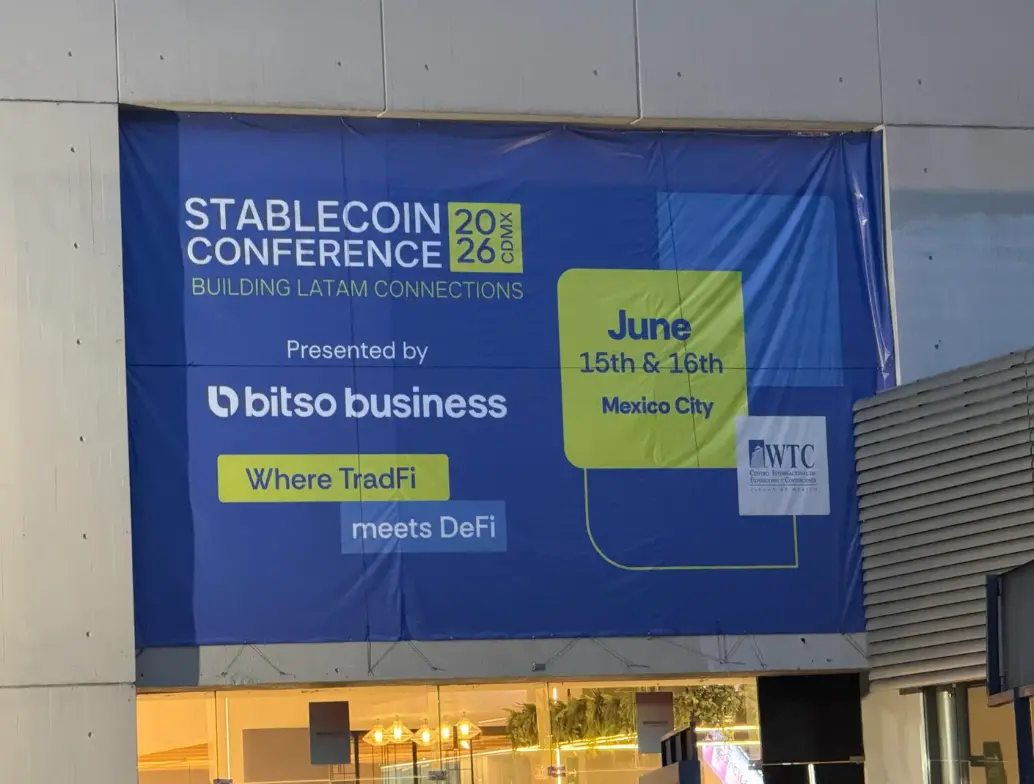
However, spend some time talking to those who actually move money across borders, and a more nuanced picture emerges: cross-border payments based on stablecoins are faster, more accessible, and increasingly reliable. But in terms of price, the industry has yet to deliver on its promise.

Where does the gap come from? Foreign exchange brokers typically charge 60 to 70 basis points for cross-border supplier payments. Stablecoins promise to compress this cost to 2 to 5 basis points. The direction is clear.

It's just that the deep liquidity pools needed to make this cost compression a reality have not yet been built at scale.

Imran Ahmad, head of Bitso Business, the B2B division of one of Latin America's largest crypto exchanges, puts it bluntly: Before significant institutional liquidity flows into these channels, the cost advantage of stablecoins remains theoretical.

Once banks start connecting directly, pricing will be forced down, and the equation will change accordingly.

Ahmad explained in an interview during the conference: "They are faster, better, that's unquestionable; they operate 24/7, that's also unquestionable. But are they cheaper? Not yet. The liquidity pools need to be built first."

Addressing the Trust Problem

Bringing this liquidity online requires some behavioral change.

Imagine a medium-sized importer based in Santos, Brazil (Latin America's largest port), who has been using the same local FX broker for years to handle payments.

That broker charges 60 to 70 basis points. In theory, a stablecoin solution could complete the same payment for a fraction of that cost.

But the importer might not think of the transaction in basis points. He thinks of the reliable agent who has handled his forex for a decade: the person who always answers the phone, who always gets things done.

This relationship, built on trust, is the real barrier to stablecoin adoption in B2B payments. It will only erode slowly: when the price gap becomes too large to ignore, when a new generation of operators no longer takes personal relationships for granted.

"Ultimately, it all comes down to trust," said Ezra Kebrab, CEO of Caliza, a cross-border payments company handling supplier payments and treasury management transactions between Latin America, North America, and Asia.

"It's not as simple as 'I'm the cheapest, fastest solution,'" Kebrab added. "Do you know the consequences if this payment doesn't meet the counterparty's requirements?"

Complementing Swift, Not Replacing It

Contrary to some narratives in the stablecoin payments space, the companies truly gaining market traction are those that have stopped treating existing infrastructure as the enemy.

Caliza's clients range from customs brokers in Santos to global payment processors like Flutterwave and India's Skydo; the company also partners with payment partner LianLian for flows from Latin America to China.

Despite running on stablecoin rails, Caliza still completes many transactions via Swift. The reason is: in supplier payments, paying correctly is as important as paying quickly. A remittance with an incorrect tax ID or missing payment field can cause goods to be held at customs indefinitely.

"Some of my peers might call themselves 'Swift killers,'" Kebrab said. "But I think Swift has done an excellent job in establishing the standardization needed for supplier payments."

This willingness to work alongside, rather than against, traditional systems has translated into sustained growth. Since its inception, Caliza has seen month-over-month growth exceeding 40%, reaching 60% last month.

To avoid reliance on intermediaries, the company built its licensing and banking partnerships from scratch. A decision that seemed costly early on now looks more and more like a competitive advantage.

Bitso's Ahmad believes the growth momentum of stablecoin companies operating in these cross-border corridors over the past year has been staggering. But given the business structure and highly regulated nature, he expects a natural shakeout will eventually occur.

"The growth trajectories of these companies are fascinating," he said. "There hasn't been a 'graveyard' of stablecoin companies yet. But I think one day there will be."

In his view, who ultimately stands firm depends on three things: licenses, fiat channels, and liquidity. Build these, and you have a real business. "Otherwise, you're just a middleman."


Пов'язані питання

QWhat is the main obstacle preventing stablecoins from achieving their promised cost savings in cross-border B2B payments?

AThe main obstacle is not technology, but the lack of deep, institutional-scale liquidity pools. Additionally, the established trust-based relationships that businesses have with traditional foreign exchange brokers present a significant barrier to adoption, as companies value reliability over potential cost savings.

QAccording to Bitso Business's Imran Ahmad, what are the three key elements needed for a stablecoin cross-border payment company to establish a sustainable business?

AAccording to Imran Ahmad, the three key elements are licenses, fiat currency on/off-ramps, and liquidity. Without building these, a company remains merely a middleman.

QHow does Caliza's CEO, Ezra Kebrab, view the role of traditional systems like SWIFT in relation to stablecoin-based payments?

AEzra Kebrab views stablecoin solutions as complementing, not replacing, traditional systems like SWIFT. He acknowledges SWIFT's excellence in establishing the standardization necessary for reliable supplier payments, where accuracy in details like tax IDs is as critical as speed.

QWhat is the reported current fee range for traditional forex brokers in supplier payments, and what is the potential fee range promised by stablecoin solutions?

ATraditional forex brokers typically charge between 60 to 70 basis points for supplier payments. Stablecoin solutions promise to compress these fees to a range of 2 to 5 basis points.

QWhat growth trend is mentioned for the company Caliza, and what strategic decision is cited as a key competitive advantage?

ACaliza has maintained month-over-month growth exceeding 40% since its founding, reaching 60% recently. A key competitive advantage cited is its early decision to build its own licenses and banking partnerships from scratch, avoiding dependency on intermediaries, which was initially costly but is now paying off.

Пов'язані матеріали

Li Fei-Fei's Latest Long-Form Article: When Video Generation, Robotics, and NVIDIA All Call Themselves World Models, We Need a Taxonomy

In a new article, Dr. Fei-Fei Li addresses the widespread and often inconsistent use of the term "world model" in AI. She proposes a clear, functional taxonomy rooted in the classic Partially Observable Markov Decision Process (POMDP) loop (agent → action → state → observation → agent). According to this framework, current systems called "world models" are different projections of this loop, categorized by their primary output: 1. **Renderers**: Output observations (pixels). Their goal is visual fidelity for human consumption (e.g., video generation models like Sora). They are the most commercially mature but are limited by a focus on appearance over physical accuracy. 2. **Simulators**: Output states (geometric, physical, dynamic representations). They provide a structurally accurate world for both human professionals (e.g., architects) and computational agents (e.g., robots for training). Li argues simulators are the crucial, underappreciated bridge, as they can underpin both rendering and planning. 3. **Planners**: Output actions. Given an observation and a goal, they decide what an agent should do next (e.g., robotic action models). This area is highly promising but remains the least mature for real-world deployment. Li highlights a key trend: the boundaries between these three categories are beginning to blur, as they all rely on a shared underlying understanding of geometry, physics, and dynamics. The logical endpoint is a unified world foundation model capable of switching between rendering, simulation, and planning based on downstream needs. This convergence, she concludes, is central to advancing spatial intelligence—enabling machines not just to talk about the world, but to truly understand, imagine, and interact with it.

marsbit1 год тому

Li Fei-Fei's Latest Long-Form Article: When Video Generation, Robotics, and NVIDIA All Call Themselves World Models, We Need a Taxonomy

marsbit1 год тому

Forbes Feature: Stablecoin Cross-Border Payments Are Faster, But Not Yet Cheaper

A Forbes feature delves into the state of stablecoin-based cross-border payments, noting rapid growth but a key shortfall: while faster and more accessible, they are not yet cheaper. At a recent industry conference in Mexico City, optimism about technology, regulation, and volume was tempered by discussions with practitioners. The core issue is liquidity. Traditional FX brokers charge 60-70 basis points, and stablecoins promise to slash this to 2-5 basis points. However, this theoretical cost advantage cannot be realized until deep liquidity pools are established at scale, requiring significant institutional capital inflow. A major adoption barrier is trust. Businesses often rely on long-standing relationships with traditional brokers, valuing reliability over marginal cost savings. This shift will be gradual. Furthermore, successful companies in the space are not positioning themselves as replacements for legacy systems like SWIFT, but as complements. They leverage stablecoins for speed while using traditional rails for their standardization and reliability in ensuring accurate payment details—a critical factor for supplier payments to avoid customs issues. Companies like Caliza, experiencing high monthly growth, exemplify this hybrid approach. The industry anticipates consolidation, as long-term viability will depend on securing the essential trifecta: proper licensing, robust fiat on/off-ramps, and deep liquidity. Without these, firms risk being mere intermediaries rather than building sustainable businesses.

marsbit1 год тому

Forbes Feature: Stablecoin Cross-Border Payments Are Faster, But Not Yet Cheaper

marsbit1 год тому

Li Feifei's Latest Article: When Video Generation, Robotics, and NVIDIA All Claim to Have 'World Models,' We Need a Taxonomy

"World Model" has become a widely used yet ambiguous term in AI. Drawing from the classic POMDP framework (agent → action → state → observation), this article proposes a functional taxonomy to clarify the concept. It identifies three distinct types, categorized by their output in the perception-action loop: 1. **Renderers**: Output visual observations (pixels). These models, like advanced video generators, prioritize visual fidelity but often lack underlying physical accuracy. 2. **Simulators**: Output the state of the world (geometry, physics, dynamics). They provide a structurally accurate representation for professionals (e.g., architects) and serve as training environments for robots and AI agents. 3. **Planners**: Output actions. Given an observation and a goal, they determine what an agent should do next, closing the perception-action loop (e.g., vision-language-action models). While renderers are currently the most commercially mature and planners are the most aspirational, the article argues that **simulators are the crucial, underappreciated hub**. By working at the level of geometry and physics, a simulator can project upwards to create visuals for humans and downwards to predict action consequences for agents. The future lies in the convergence of these three functions. Emerging research and products, like World Labs' Marble model which outputs both visual splats and physical collision meshes, are beginning to blur these boundaries. The logical endpoint is a unified world foundation model capable of rendering, simulating, and planning based on a shared understanding of spatial and temporal structures—ultimately enabling machines to understand, imagine, and interact with the physical world.

链捕手1 год тому

Li Feifei's Latest Article: When Video Generation, Robotics, and NVIDIA All Claim to Have 'World Models,' We Need a Taxonomy

链捕手1 год тому

Торгівля

Спот
活动图片