Just Spent 250 Million to Buy Companies, Then Laid Off 30%: Polygon Is Changing Its Way of Survival

marsbitОпубліковано о 2026-01-16Востаннє оновлено о 2026-01-16

Анотація

Polygon, a major blockchain scaling solution, has laid off approximately 30% of its workforce while simultaneously spending $250 million to acquire two companies: Coinme, a licensed crypto-fiat exchange with an extensive US ATM network, and Sequence, a wallet infrastructure and cross-chain routing provider. This strategic pivot signals a shift away from its core Layer-2 (L2) business, where it faces intense competition from dominant players like Base, and toward building a comprehensive stablecoin payment infrastructure called the "Open Money Stack." The acquisitions provide critical pieces for this new direction: Coinme offers regulatory licenses and on-ramps/off-ramps, while Sequence provides the technical backend for seamless cross-chain transactions. The goal is to target B2B clients like banks and payment providers. This move is seen as a necessary "blood change." Polygon's previous strategy, focused on enterprise adoption and NFTs, yielded limited long-term results. In the crowded L2 space, it struggled against competitors with superior user distribution, such as Base, which is integrated with Coinbase's massive user base. The new focus on stablecoin payments is a promising but highly competitive market, with giants like Stripe, PayPal also making significant investments. While Polygon CEO claims this puts them in competition with Stripe, the company is betting on an open infrastructure model versus Stripe's more closed ecosystem. The strategy carries risks. Coinme ...

Author: David, Deep Tide TechFlow

Today, I saw a piece of news: Polygon has laid off about 30% of its employees.

Although Polygon has not officially announced or responded, CEO Marc Boiron admitted to the layoffs in an interview, while stating that the total headcount would remain stable due to the addition of newly acquired teams.

On social media, some laid-off employees also posted, indirectly confirming the fact.
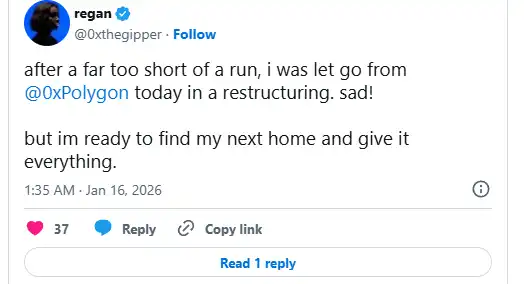
But just this same week, Polygon announced it spent $250 million to acquire two companies. Laying off people while spending big money—doesn't that seem a bit strange?

If it were purely a contraction, they wouldn't simultaneously spend $250 million on acquisitions. If it were an expansion, they wouldn't cut 30% of the staff. Looking at both events together, it seems more like a blood change.

They laid off people from the original business lines, freeing up positions for the teams brought in through acquisitions.

The $250 Million Purchase Was for Licenses and Payment Channels

The two acquired companies are Coinme and Sequence.

Coinme is an old company founded in 2014, providing channels for converting between fiat and cryptocurrencies, operating crypto ATMs at over 50,000 retail points in the U.S. Its most valuable asset is its licenses—it holds money transmitter licenses in 48 states. These are very hard to obtain in the U.S.; companies like PayPal and Stripe spent many years to gather them.

Sequence builds wallet infrastructure and cross-chain routing. Simply put, it allows users to avoid handling bridging, gas swapping, and other hassles themselves, enabling one-click cross-chain transfers. Its clients include Polygon, Immutable, Arbitrum, and it has a distribution partnership with Google Cloud.
The two acquisitions total $250 million. Polygon has named this suite the "Open Money Stack," positioning it as middleware for stablecoin payments, aiming to sell to B2B clients like banks, payment companies, and remittance providers.

My understanding of the logic is this:

Coinme provides compliant fiat on- and off-ramps, Sequence provides user-friendly wallets and cross-chain capabilities, and Polygon's own chain provides the settlement layer. Put together, these three pieces create a complete stablecoin payment infrastructure.

The question is, why is Polygon doing this?

On the L2 Path, Polygon Is Already Struggling

The situation in 2025 is clear: Base has won.

Coinbase's L2 grew from $3.1 billion TVL at the beginning of last year to $5.6 billion, capturing 50% of the entire L2赛道 (L2 track/race). Arbitrum held onto 30% but basically saw no growth. The remaining dozens of L2s mostly became unused after their airdrops ended.
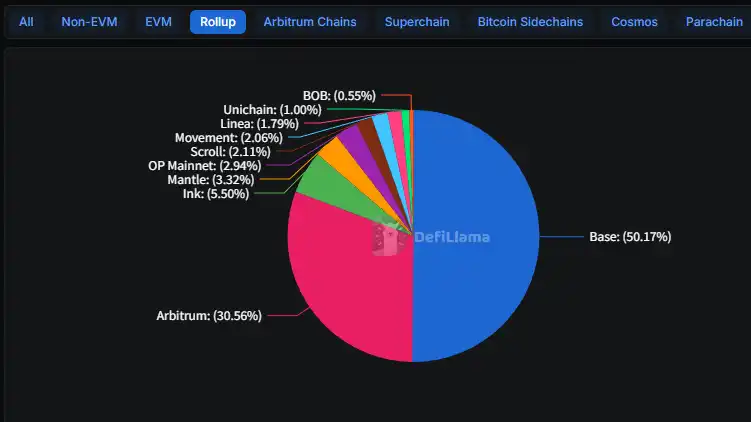
Where did Base win? Coinbase has hundreds of millions of registered users; any product feature launched naturally attracts users.

For example, deposits in the lending protocol Morpho on Base grew from $354 million at the beginning of last year to $2 billion now, primarily because it was integrated into Coinbase's App. Users can use it just by opening the App, without needing to know what an L2 or Morpho is.

Polygon doesn't have that kind of entry point. It also had layoffs in 2024, cutting 20% at that time, which was a bear market contraction—everyone was cutting staff.

This time is different; they have money on the books but still choose to lay off, indicating an active choice to change direction.

Remember before, Polygon's story was about enterprise adoption, like the Disney accelerator program, the Starbucks NFT membership plan, Meta's Instagram minting, Reddit avatars, etc.

Four years later, most of those collaborations have gone quiet. Starbucks' Odyssey program also shut down last year.

Continuing to fight Base head-on in the L2赛道 (L2 track/race), Polygon has almost no chance of winning. The technology gap can be closed, but the user entry point cannot. Rather than lingering on an unwinnable battlefield, it's better to seek new opportunities.

Stablecoin Payments Is a Good Direction, But It's Crowded

Stablecoin payments is indeed a growing market.

In 2025, the total market cap of stablecoins passed $300 billion, up 45% from the previous year. Their use is also changing, expanding from mainly moving funds between exchanges to cross-border payments, corporate treasury, payroll, and other scenarios.

But this market is already very crowded.

Stripe spent $1.1 billion last year to buy the stablecoin infrastructure company Bridge, and recently secured the issuance rights for the USDH stablecoin on Hyperliquid. PayPal's PYUSD already accounts for 7% of the stablecoin share on Solana.

Circle itself is pushing its Payments Network. JPMorgan, Wells Fargo, Bank of America, and other major banks are forming alliances to issue their own stablecoins.

Polygon founder Sandeep Nailwal said in an interview with Fortune that these acquisitions put Polygon in competition with Stripe.

Frankly, that's a bit of an overstatement.

Stripe's acquisition cost $1.1 billion; Polygon spent $250 million. Stripe has millions of merchants; Polygon's clients are mainly developers. Most importantly, Stripe has over a decade of accumulated payment licenses and banking relationships.

In a head-to-head fight, they are not opponents of the same caliber.

But Polygon might be betting on a different approach. Stripe wants to incorporate stablecoins into its closed loop, letting merchants still use Stripe, but with the settlement layer switched to stablecoins for faster and cheaper transactions.

Polygon wants to build open infrastructure, allowing any bank or payment company to build their own business on top of it.

One is vertical integration, the other is a horizontal切入 (cut-in/approach). These two models may not directly clash, but they are competing for the attention of the same group of customers.

Changing Its Way of Survival, the Road Ahead Is Uncertain

Finally, coming back to the point, layoffs in the crypto industry these past two years are not unusual.

OpenSea cut 50%, Yuga Labs, Chainalysis are all contracting. ConsenSys laid off 20% last year and again this year. Most are passive contractions; they are out of money and just trying to survive.

Polygon is different. They have money on the books, can still拿出 (take out/spend) $250 million for acquisitions, but still choose to lay off 30% of their people.

Changing blood to change its way of survival, but there are risks.

The core business of the acquired Coinme is crypto ATMs, with machines deployed at over 50,000 retail points across the U.S., allowing users to buy crypto with cash and cash out crypto.
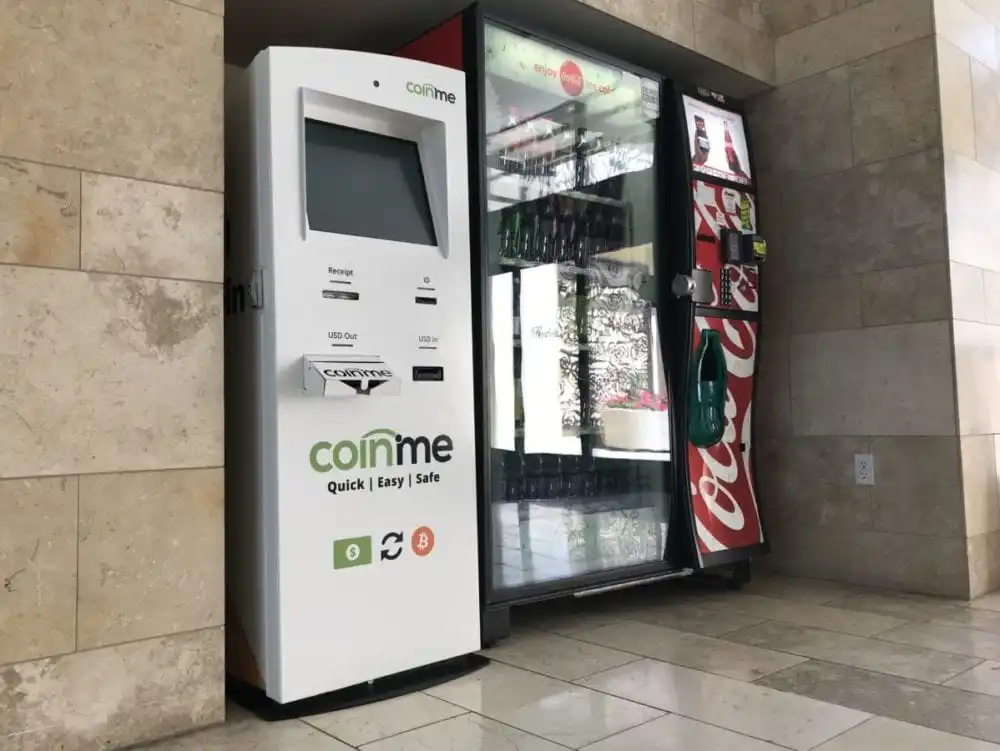
The trouble is, this business ran into trouble last year.

California regulators fined Coinme $300,000 because its ATMs allowed users to withdraw over the limit, violating the $1,000 daily cap. Washington State was harsher, issuing a direct ban that was only lifted last December.

Polygon's CEO said Coinme's compliance situation "exceeds requirements." But regulatory penalties are black and white; pretty words don't change that.

Mapping these events back to the token, the narrative for the $POL token has also changed.

Previously, the more the chain was used, the more valuable POL became. After the acquisition, Coinme takes a commission on each transaction—this is real revenue, not token narrative. The official said they expect to achieve over $100 million annually.

If they can truly achieve this, Polygon could transform from a "protocol" into a "company," with revenue, profits, and a valuation anchor. This is a rare species in the crypto industry.

However, the speed at which traditional finance is entering is clearly accelerating, and the window for crypto-native companies is narrowing.

There's a saying in the industry: build in the bear market, harvest in the bull market.

Polygon's problem now is that it's still building, but the harvester in the bull market might no longer be it.


Пов'язані питання

QWhy did Polygon lay off 30% of its employees while simultaneously spending $250 million on acquisitions?

APolygon is restructuring its workforce by cutting employees from its existing business lines to make room for new teams from the acquired companies, Coinme and Sequence, indicating a strategic shift rather than simple expansion or contraction.

QWhat are the key assets and roles of the two companies, Coinme and Sequence, that Polygon acquired?

ACoinme provides a fiat-to-crypto exchange channel with valuable money transmitter licenses in 48 U.S. states, while Sequence offers wallet infrastructure and cross-chain routing capabilities, together forming a complete stablecoin payment infrastructure for Polygon's new 'Open Money Stack'.

QWhat challenges is Polygon facing in the L2 (Layer 2) space that prompted this strategic shift?

APolygon is struggling to compete with dominant players like Base, which benefits from Coinbase's massive user base and integrated app features, making it difficult for Polygon to gain traction in the L2 market despite previous enterprise partnerships.

QHow does Polygon's approach to stablecoin payments differ from competitors like Stripe?

APolygon aims to provide open infrastructure for banks and payment companies to build their own services, whereas Stripe focuses on vertical integration by incorporating stablecoins into its existing closed-loop system for merchants.

QWhat risks does Polygon face with its acquisition of Coinme, and how might this affect its business model?

ACoinme has faced regulatory issues, including fines and bans for violating transaction limits, which could pose compliance risks. However, if successful, the acquisition could transition Polygon from a protocol to a company with real revenue streams, such as transaction fees from Coinme's operations.

Пов'язані матеріали

AAVE Rallies 30% in a Week, Is It Back on Track?

Over the past week, the price of AAVE surged from around $70 to nearly $100, a rebound exceeding 30%. This occurred despite Aave's TVL continuing to decline following the Kelp DAO security incident. The price movement was partly driven by market rumors, first reported by CoinDesk, that Kraken was negotiating to acquire a stake in Aave. While Aave founder Stani Kulechov denied the specific terms, he confirmed discussions with multiple parties about purchasing Aave Labs' AAVE tokens. He also revealed ongoing work on Tokenomics 3.0, featuring an automated buyback mechanism, and plans to expand into securities-backed lending. Analysts remain optimistic about Aave's long-term prospects. Standard Chartered gave an extremely bullish $3,500 price target for 2030, citing DeFi revival and RWA tokenization. Grayscale offered a more conservative one-year target of $175. However, competitors like Morpho are gaining traction, with recent reports highlighting its advantages in capital efficiency and customization. Morpho also secured a massive $175 million funding round. Fundamentally, Aave maintains its dominance as the leading DeFi lending protocol. Its TVL is nearly double that of second-place Morpho and rivals the combined total of the next several competitors. Key metrics like active borrowing, total supply, and revenue significantly outpace rivals. While Aave faces challenges from newer, more flexible protocols, its deep liquidity and established position make it a preferred choice for large, yield-seeking users. The article concludes that despite setbacks, Aave's long-tested protocol merits ongoing attention in a market with increasingly scarce quality projects.

Foresight News36 хв тому

AAVE Rallies 30% in a Week, Is It Back on Track?

Foresight News36 хв тому

Real-life 'Black Mirror' Pumpfun Go: 40 Yuan to Lick Toilets, 14,000 USD for a Logo Tattoo on the Forehead

The article discusses the controversial new platform "Pumpfun Go," a bounty task platform launched by the meme coin platform Pump.fun. Its slogan is "Pay anyone to do anything." The platform allows users to anonymously post tasks with cryptocurrency rewards, which are held in escrow until completion and verification. The piece highlights extreme and disturbing tasks that have gained notoriety, such as licking a gas station toilet floor for roughly $5.63, eating live insects, getting a company logo tattooed on one's forehead for $14,000, and even a now-removed $700,000 bounty for suicide. These tasks are often linked to promoting specific meme coins by generating shocking, attention-grabbing content. While some tasks involve community-building or charity, critics, including New York Governor Kathy Hochul, condemn the platform for exploiting economic desperation and encouraging humiliating or dangerous behavior. They argue it mirrors dystopian narratives from shows like "Black Mirror" and movies like "Nerve," where online dares escalate for viewers' entertainment. Supporters and some participants counter that the platform provides much-needed income opportunities for the financially struggling. One user claimed the bounty money far exceeded his monthly salary. The article concludes by questioning the morality of a system where the wealthy pay for spectacle and the poor trade dignity for survival, reflecting a long history of public consumption of others' suffering. It suggests hope may lie in future technological abundance freeing people from such desperate choices.

marsbit1 год тому

Real-life 'Black Mirror' Pumpfun Go: 40 Yuan to Lick Toilets, 14,000 USD for a Logo Tattoo on the Forehead

marsbit1 год тому

Faked Trades, Clone Websites, 1105 Videos: Polymarket Under CFTC Scrutiny

The U.S. Commodity Futures Trading Commission (CFTC) has launched a wide-ranging investigation into prediction market platform Polymarket. The probe, triggered by a Wall Street Journal report, focuses on allegations of systematic marketing fraud. The report revealed Polymarket allegedly hired dozens of student content creators to post over 1,100 videos showing fake, profitable trades on cloned websites, without disclosing the paid relationships. These videos, with over 140 million views, were pivotal to user growth. Simultaneously, the National Association of Consumer Advocates (NACA) filed a lawsuit in Washington D.C., accusing Polymarket and its executives of deceptive advertising targeting college students. The suit details off-campus promotions and payments made through the CMO's personal PayPal account to influencers who failed to disclose sponsorships. The investigation places CFTC Chairman Michael Selig in a difficult position, as he has been a vocal advocate for prediction markets and is currently suing multiple states to assert federal jurisdiction over them. This case tests the CFTC's dual role as both promoter and enforcer. This marks Polymarket's second major clash with the CFTC. After a 2022 settlement and U.S. ban, it regained approval to operate in September 2025, secured a $20 billion investment, and saw its valuation soar. The current crisis, compounded by a recent $3.1 million front-end supply chain attack, represents the platform's most severe multi-front challenge since its founding.

Foresight News1 год тому

Faked Trades, Clone Websites, 1105 Videos: Polymarket Under CFTC Scrutiny

Foresight News1 год тому

Торгівля

Спот
活动图片