Just Now, Overnight Change of the 'AI Lifeline' for Tens of Millions of Developers Worldwide

marsbitОпубліковано о 2026-08-20Востаннє оновлено о 2026-08-20

Анотація

A landmark acquisition reshapes the AI landscape. Stripe, the online payment giant, has officially announced its agreement to acquire OpenRouter for a reported value exceeding $8 billion. This move grants Stripe control over what is described as the world's largest "token entrance." OpenRouter, hailed as the "Stripe for LLMs," acts as a unified API gateway, connecting developers to over 400 AI models from more than 80 providers. It handles dynamic routing, failover, and optimization for AI inference requests, processing over 10 trillion tokens daily for more than 10 million developers globally. Stripe's CEO, Patrick Collison, framed the acquisition around managing two future flows: revenue and tokens. While Stripe streamlined internet money flow, OpenRouter manages the burgeoning flow of AI "tokens"—the units of computational intelligence. The deal positions Stripe at the nexus of this new "intelligence network," where AI capabilities become a standardized, tradeable commodity. The acquisition underscores a strategic bet on a fragmented AI model market. OpenRouter's founder, Alex Atallah, was inspired by the low-cost emergence of capable open-source models like LLaMA and Alpaca in 2023, predicting a future of multiple models rather than a single winner. In a related disclosure, Stripe informed investors that January 1st marked the "beginning of the singularity" for AI—a fundamental inflection point. Citing this transformative period, Stripe indicated it would remain priva...

An era-defining acquisition is finally settled!

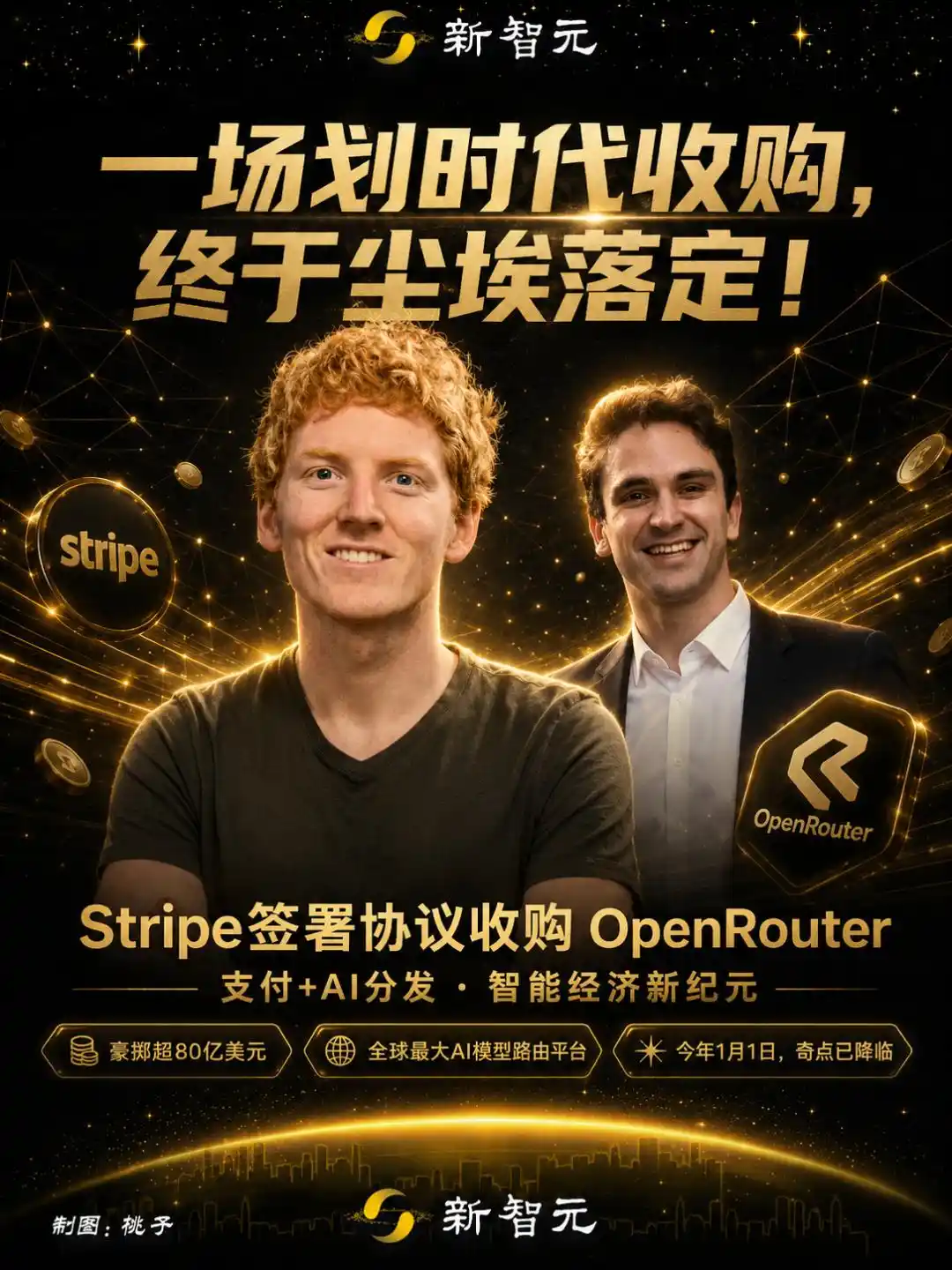
Today, Stripe's CEO officially announced: an agreement has been signed to acquire OpenRouter.
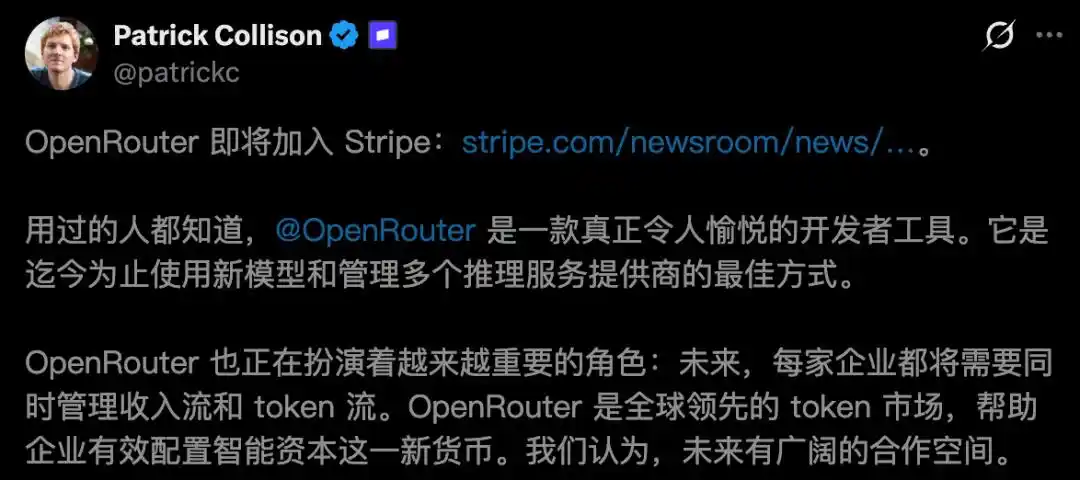
This "alliance" is rumored to be valued at over $8 billion.

On the same day, an internal letter from Stripe to its investors revealed a critical detail—

The singularity arrived on January 1st of this year.

A payments giant has acquired the world's largest AI model distribution gateway.

From now on, the "AI lifeline" for over 10 million developers worldwide changed hands overnight.

Planning to Splash Over $8 Billion, Buying the World's Largest "Token Gateway"

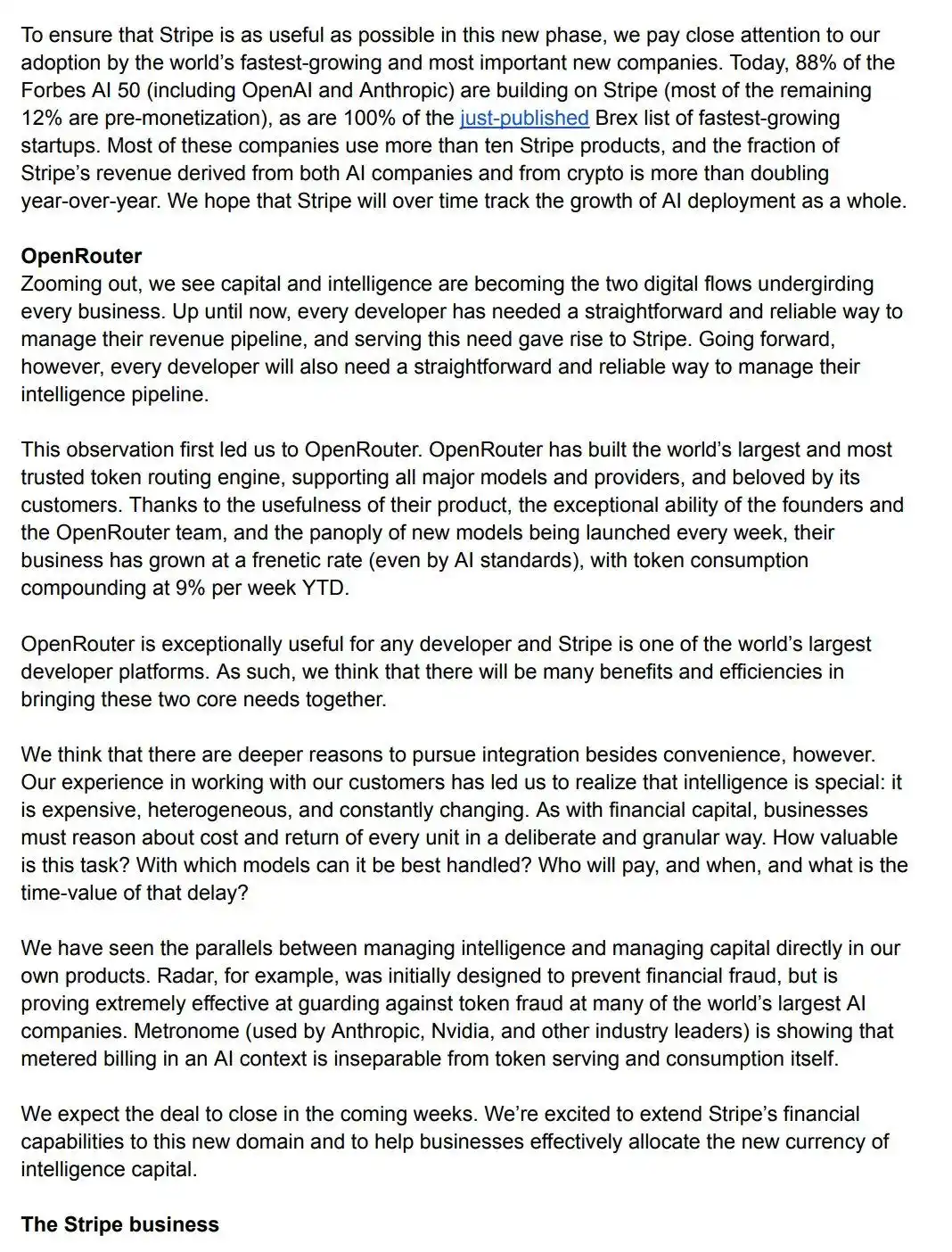
In the official blog, CEO Patrick articulated the truth about the future business landscape—

In the future, every enterprise will need to manage two things simultaneously: revenue flow + token flow.

The internet solved the problem of "how money flows." Stripe rose by turning complex financial networks into a few lines of minimalist APIs.

Now, the AI era is giving rise to an increasingly massive "token flow."

Developers face daily choices between different models and different inference providers—

Which is cheaper, which is faster, which is more stable at this moment, which is most suitable for this task.
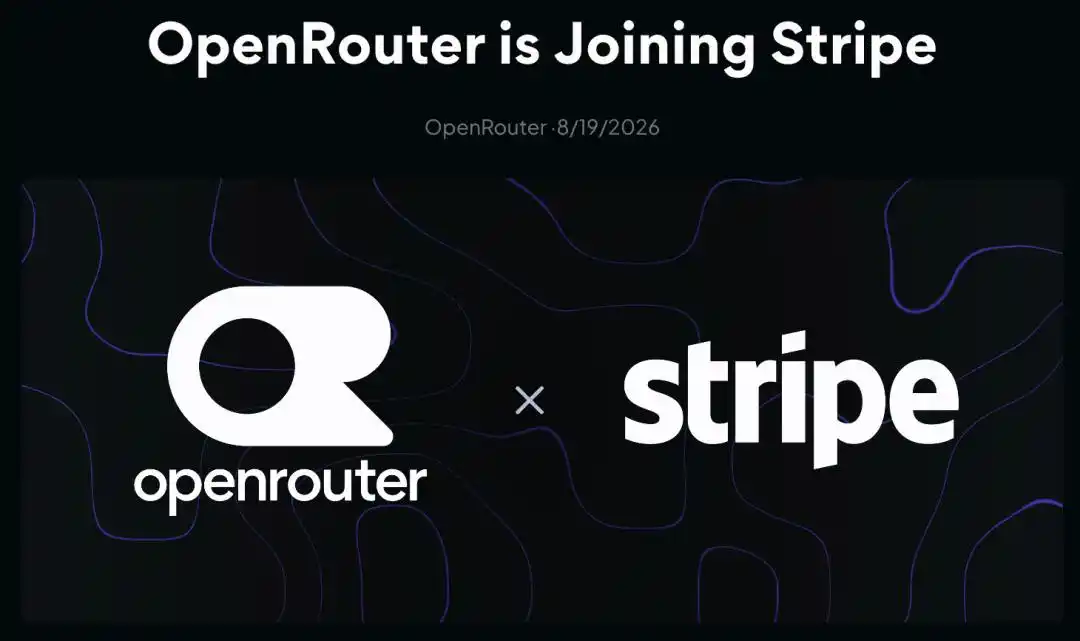
This is where OpenRouter emerged, already revered in the industry as the "Stripe for LLMs."

It completely ended the nightmare for coders, freeing them from the grueling task of studying OpenAI, Anthropic, and Google's documentation one by one.

With one line of API integration, it directly connects over 400 models and 80+ inference providers.

Every task request enables millisecond-level dynamic routing: precisely matching the optimal solution, automatically switching away from failed providers, ensuring always-on availability.

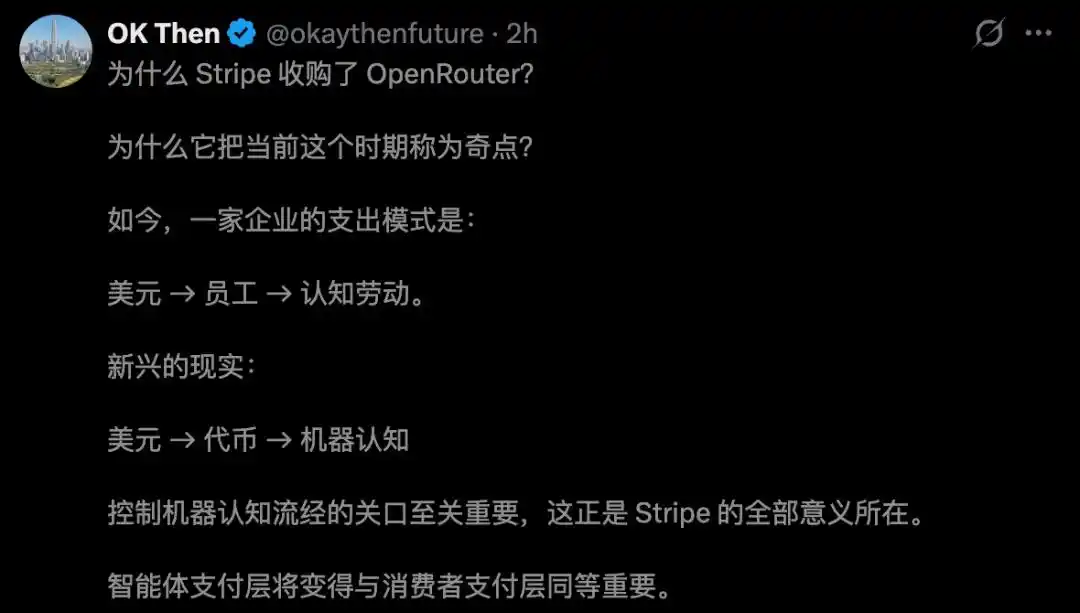
OpenRouter doesn't produce intelligence, but it decides where intelligence flows.

It's not hard to see that Stripe's heavy investment has essentially bought a counter that exchanges "money for intelligence."

400 Large Models, 10 Trillion Tokens Per Day

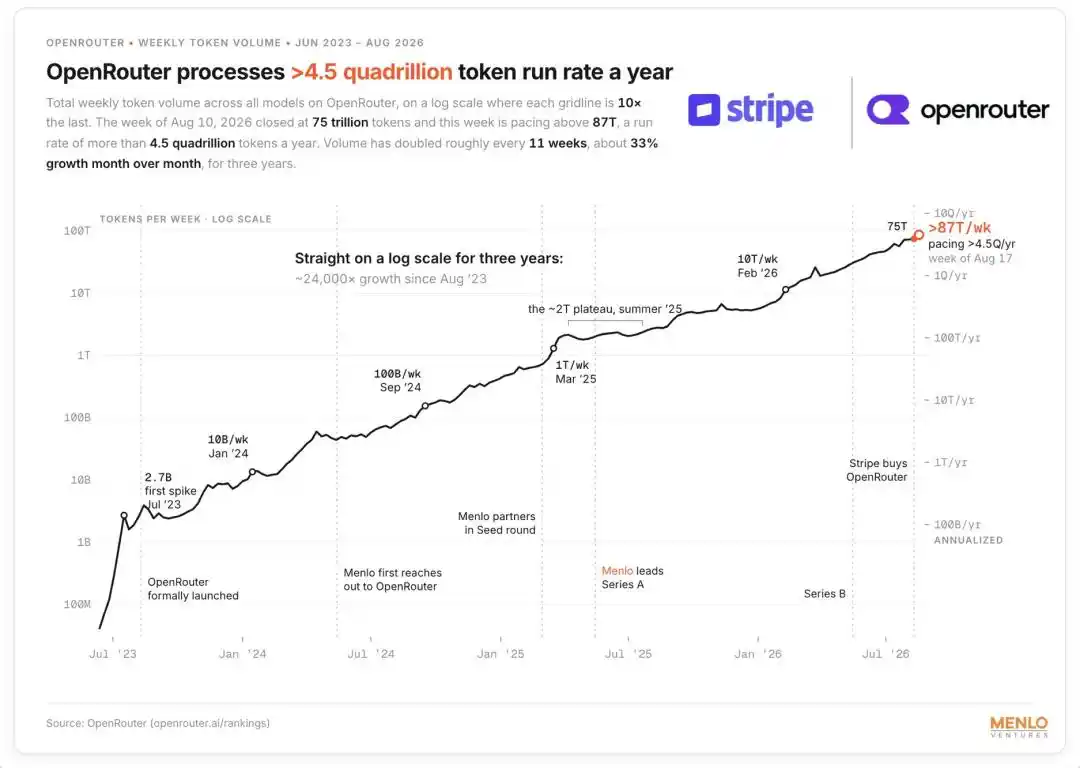
As the world's largest token marketplace, OpenRouter's growth curve is astonishing.

Today, it processes over 10 trillion tokens daily, used by more than 10 million developers worldwide.
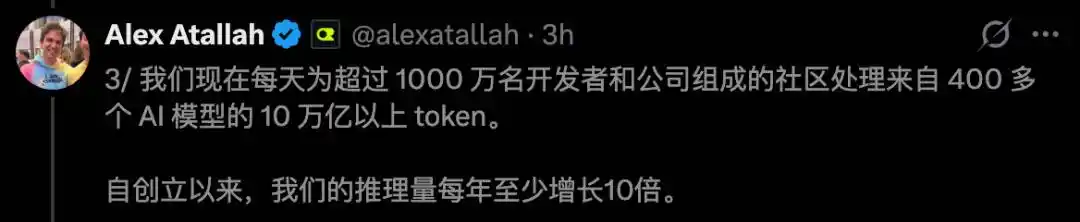
Since its founding, its inference volume has increased at least tenfold annually. Statistics show it exceeds 4.5 quadrillion tokens per year.
An Experiment Three Years Ago, Deciding to Start a Company

However, rewinding the clock three years, all this was just a negligible sprout.

Founder Alex Atallah was born into a multicultural family in Colorado, with his father a Colombian immigrant and his mother American.

He earned a Bachelor's in Computer Science from Stanford. His first job after graduation was as a programmer at Palantir.

What truly prompted his decisive move were two major open-source releases in the spring of 2023.

In February of that year, Meta open-sourced LLaMA.

Atallah recalled that the initial LLaMA couldn't hold a conversation at all, yet it defeated GPT-3 on multiple benchmarks, despite being only one-tenth the size of GPT-3.

Just a month later, Stanford University released Alpaca: researchers fine-tuned LLaMA using synthetic data generated by ChatGPT.

The result was that LLaMA, which originally only performed text continuation, began answering questions like ChatGPT.
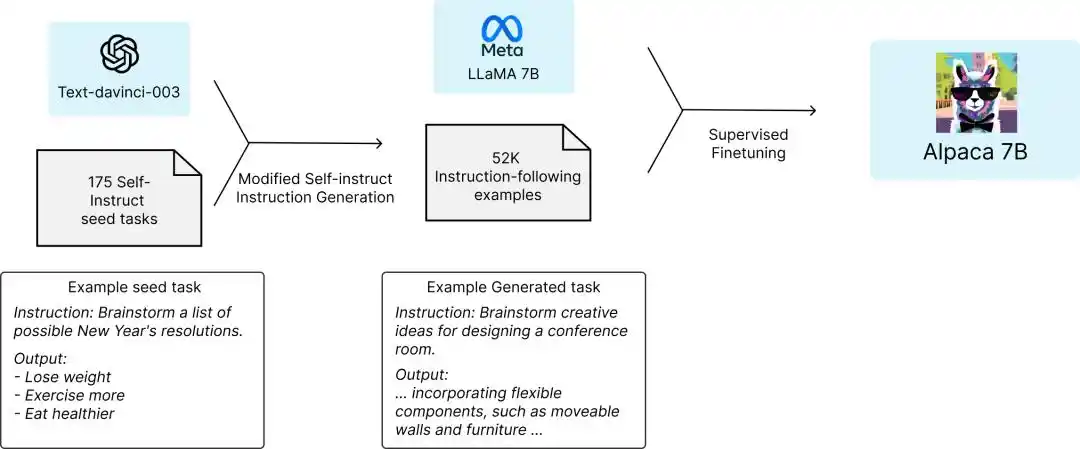
The total cost to achieve all this was less than $600.

Atallah admitted that the Alpaca project was the catalyst for his decisive step.

His reasoning was crystal clear: If $600 could create a competitive model, the future would inevitably be an era of myriad models. And behind that, there would definitely be a need for a super marketplace.

While the entire industry was frantically betting on "who will win": OpenAI, Google, or other giants, Atallah was betting on something else—

No one can win everything, and the large model market would ultimately become fragmented.

Three years later, the $8+ billion Stripe paid essentially validates this divine prediction.

The Singularity is Here, No Rush to IPO

This deal also has an interesting background.

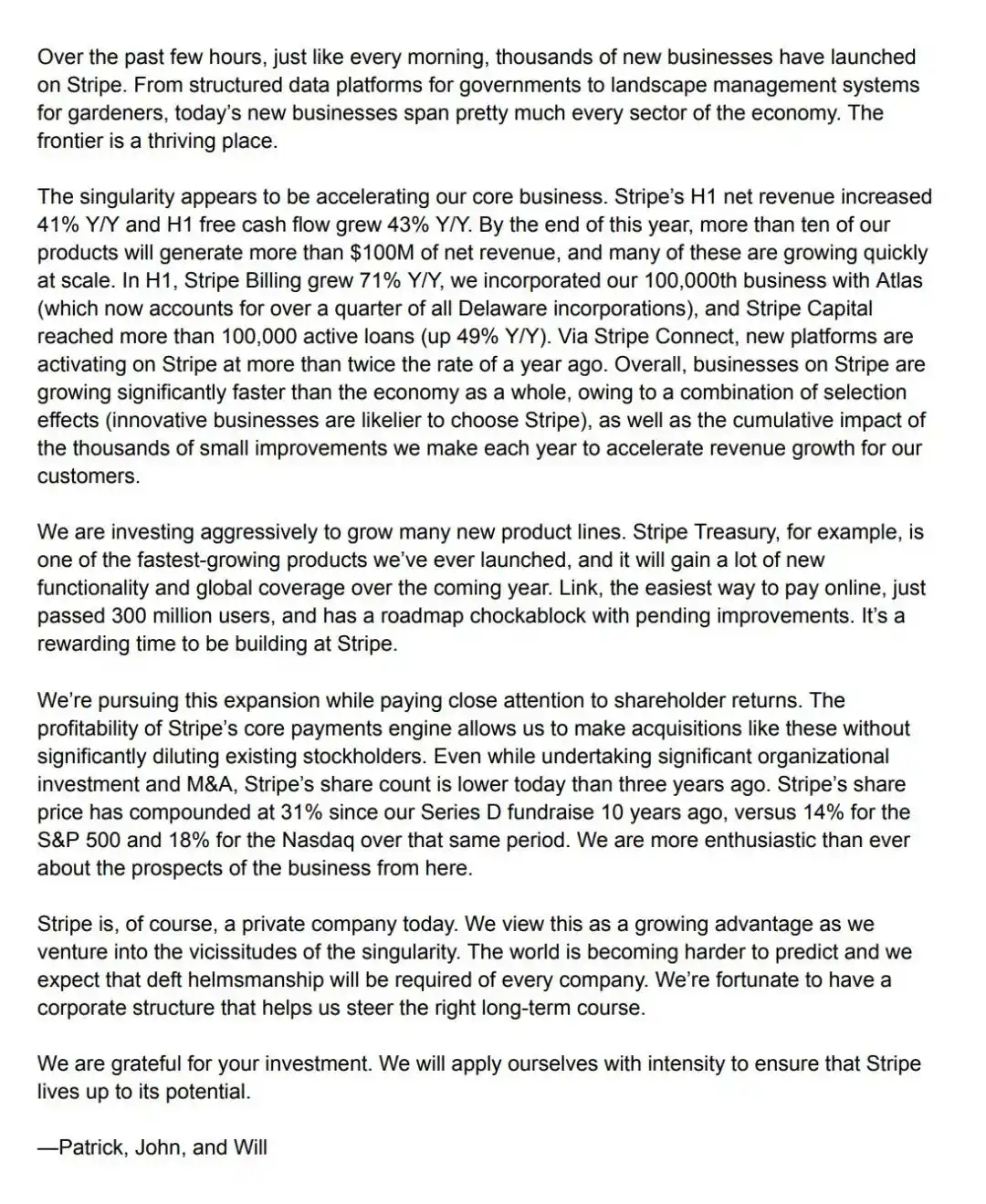
Stripe's letter to investors contained a rather bold statement—January 1st of this year marks the "beginning of the singularity."

The founder's "singularity" refers to a moment when a long-term trend undergoes a fundamental inflection point.

It was also in this letter that they told investors: At such a critical juncture, remaining privately held is actually a more advantageous corporate structure.

In other words, the long-awaited Stripe IPO will likely have to wait a while longer.

This isn't because Stripe lacks the credentials to go public.

Simultaneously, they disclosed that revenue grew 41% year-over-year in the first half of this year, and free cash flow grew 43%.
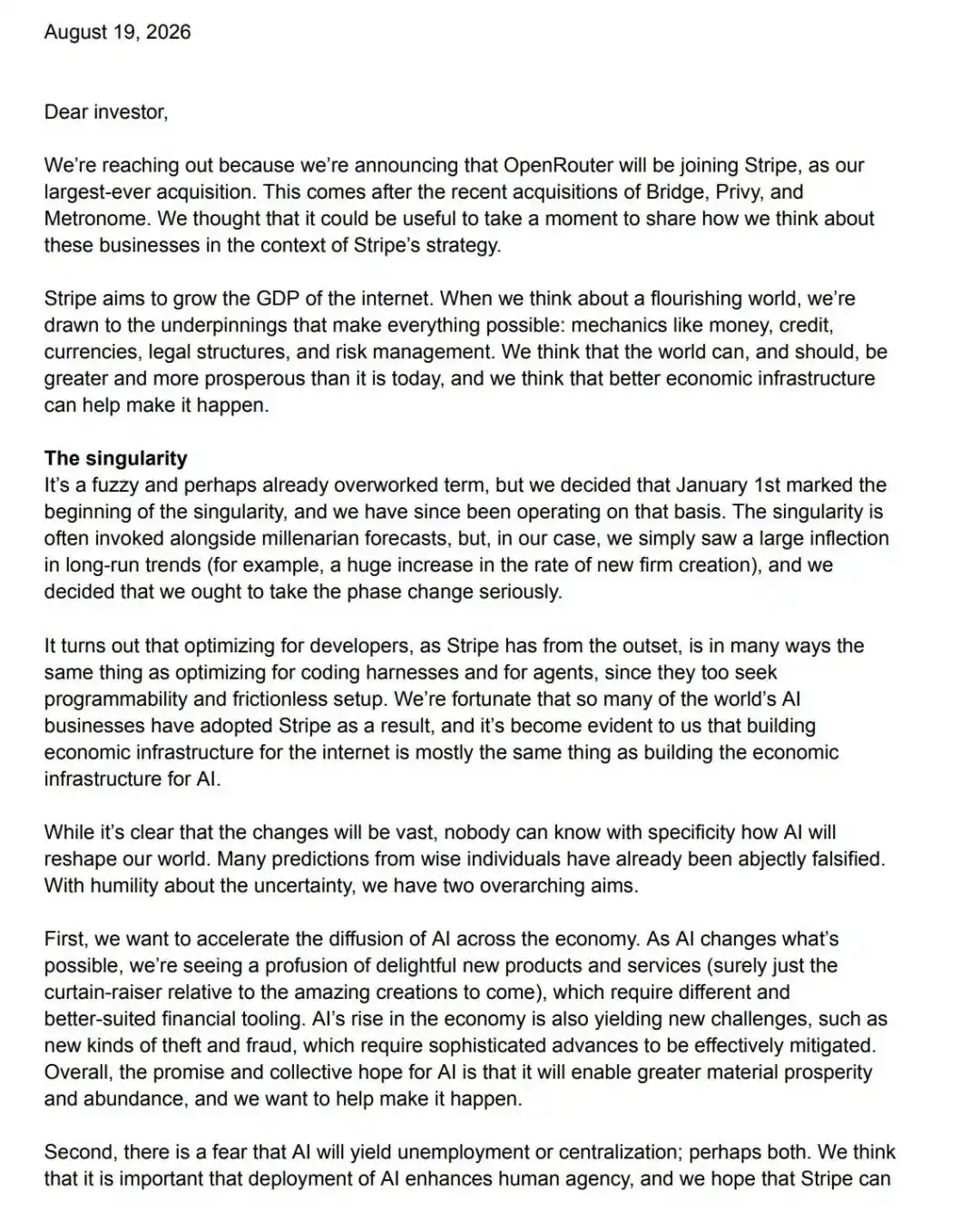
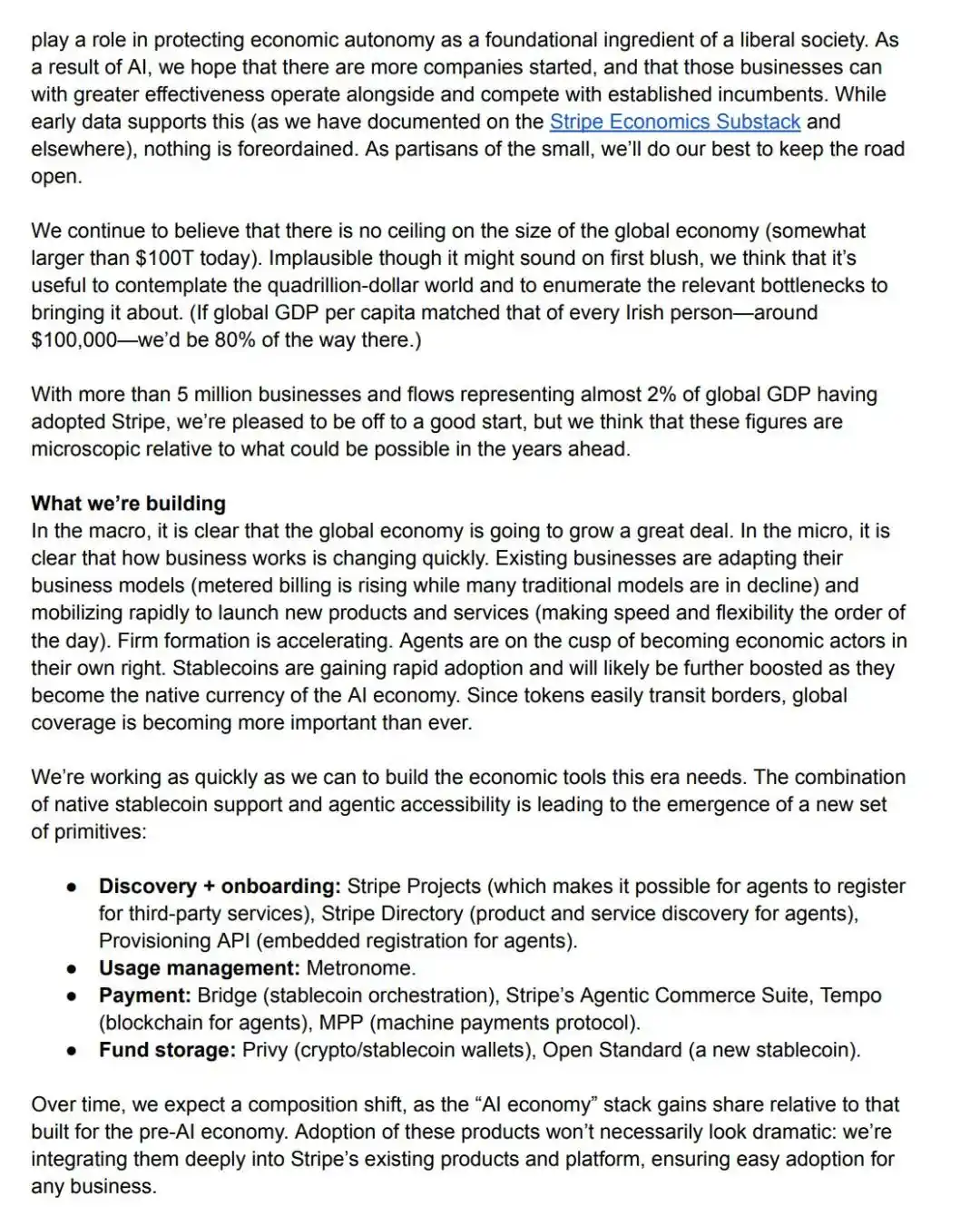
Stripe's consideration is that if AI is rewriting the entire infrastructure of the internet economy, going public now would actually limit the speed at which they can place bets.

What they're betting on is much bigger than one IPO.

Tokens, Becoming Another Kind of "Currency"

a16z partner Martin Casado used a very radical statement when discussing this deal:

Tokens are the new dollars.
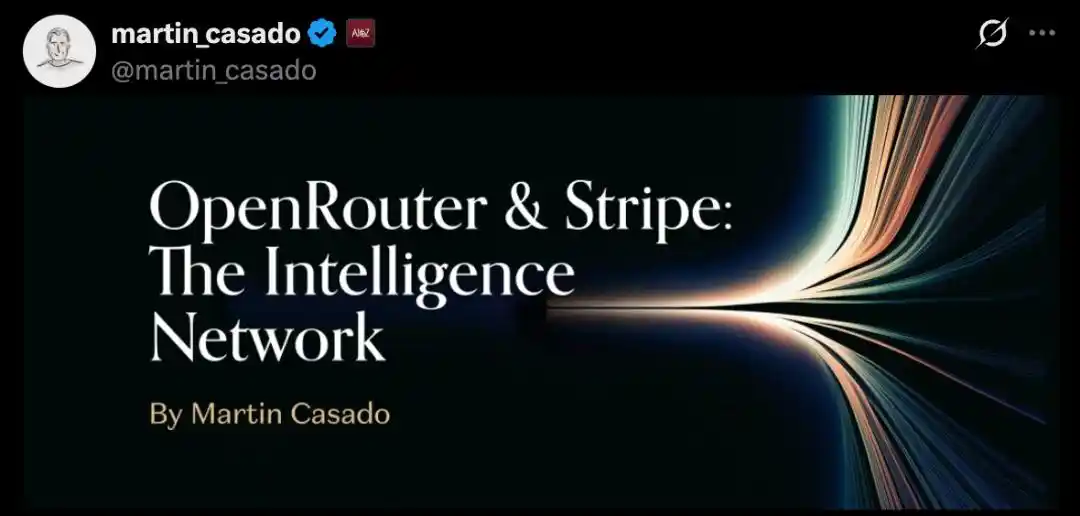
What this phrase truly aims to express is: AI is making "intelligence" a factor of production that can, for the first time, be standardized, measured, invoked, exchanged, and settled.

In the past, if a company wanted more "intelligence," it could only hire more people.

Now, it can buy tokens.

Need to write code? Call a coding model. Need reasoning? Call a reasoning model. Need search? Call a search model.

Electricity enters data centers, transformed into tokens; tokens then enter enterprises, transformed into code, customer service, design, research, sales, and even decision-making.

Thus, a new economic network begins to emerge.

Model companies produce intelligence, application companies purchase intelligence, and intermediaries are needed to handle pricing, routing, risk control, scheduling, and settlement.
This payment infrastructure allows "intelligence" to flow freely between companies.

Therefore, Martin calls the merger of OpenRouter and Stripe an "Intelligence Network"—

A network for global AI companies to exchange intelligence.

No single model can dominate forever, but there will always be a need for a "dispatcher" standing above all models.

The scepter of the new world will belong to those who determine the flow of "intelligence."

References:

https://stripe.com/zh-sg/newsroom/news/stripe-agrees-to-acquire-openrouter

This article is from the WeChat public account "New Zhiyuan" (新智元), author: Peach (桃子)

Трендові криптовалюти

Пов'язані питання

QWhat was the key reason Stripe's CEO gave for acquiring OpenRouter, and what future business landscape does it anticipate?

AStripe's CEO Patrick stated that the acquisition was driven by the vision that every business in the future will need to manage two key flows: revenue flow and token flow. He sees AI as creating a massive, new 'token flow' economy for intelligence, and acquiring OpenRouter allows Stripe to become the essential infrastructure for routing, pricing, and settling this new form of value exchange.

QAccording to the article, what is the strategic significance of the 'singularity' date mentioned by Stripe (January 1st), and how does it impact their IPO plans?

AStripe told investors that January 1st marked the 'beginning of the singularity,' meaning a fundamental inflection point where AI begins to rewrite the entire internet economic infrastructure. Because of this pivotal moment, Stripe believes remaining a private company is more advantageous, as it allows them greater speed and flexibility to invest and adapt without the short-term pressures of the public market, delaying their long-anticipated IPO.

QHow does a16z partner Martin Casado characterize the role of tokens in the new AI economy, and what is the resulting 'network' he describes?

AMartin Casado stated that 'Tokens are the new dollars,' meaning intelligence is becoming a standardized, measurable, and tradable commodity. He describes the merger of Stripe and OpenRouter as creating an 'Intelligence Network'—a foundational payment and routing infrastructure that allows AI companies and applications to exchange intelligence seamlessly, similar to how financial networks move money.

QWhat was the pivotal insight and catalyst that led OpenRouter founder Alex Atallah to start the company?

AThe key catalyst was the 2023 release of Stanford's Alpaca model, which showed that a capable AI model could be created for less than $600 by fine-tuning Meta's open-source LLaMA. This convinced Atallah that the future would be one of 'model fragmentation' with thousands of models, not a winner-take-all market. He foresaw the critical need for a centralized 'supermarket' or router to manage this complexity, which became the foundation for OpenRouter.

QWhat are the core functional benefits OpenRouter provides to developers, and what scale of operation does it currently handle?

AOpenRouter acts as a unified API gateway, allowing developers to access over 400 AI models from more than 80 inference providers with a single integration. It provides毫秒级 dynamic routing to find the optimal model for cost, speed, and stability, with automatic failover. It currently processes over 10 trillion tokens per day and is used by more than 10 million developers worldwide.

Пов'язані матеріали

BTC Sees Largest Single-Day Short Liquidation in History: Overnight $1.1 Billion Short Positions Evaporate, But Calling a Bull Return is Premature

Bitcoin experienced its largest single-day short liquidation in history, with approximately $1.191 billion in short positions being forcibly closed within 24 hours as the price surged nearly 7% to approach $70,000. This event, occurring on the evening of August 19, resulted in total liquidations of about $1.345 billion across the network. The massive short squeeze was attributed to a combination of catalysts: a White House meeting between former President Trump and crypto industry executives fueling regulatory optimism, and a more substantial signal from the U.S. Treasury doubling its liquidity support for long-term bond repurchases, hinting at looser macro liquidity for risk assets. Data showed strong institutional buying, with U.S. spot Bitcoin ETFs seeing significant inflows. The liquidation process itself created a feedback loop, accelerating the price rise as forced buy-backs pushed prices higher. This event surpassed the previous record for BTC perpetual short liquidations set during the volatile "5.19" period in 2021. While such extreme short liquidations have historically signaled a potential medium-term bottom formation, analysts caution that the market often undergoes weeks of consolidation and "cooling off" afterward. Current sentiment remains mixed, with the Fear & Greed Index still in "Fear" territory, and the key test for the rally being whether it can sustain momentum to challenge higher resistance levels like $75,000. The article concludes by warning against immediate "bull market is back" assumptions, emphasizing that history provides context but not guaranteed outcomes.

marsbit12 хв тому

BTC Sees Largest Single-Day Short Liquidation in History: Overnight $1.1 Billion Short Positions Evaporate, But Calling a Bull Return is Premature

marsbit12 хв тому

Websea Global RWA Summit Successfully Held: Focusing on New Opportunities in China-Kazakhstan Digital Economy, Releasing Signals of Cross-border Collaboration

Websea Global RWA Summit Successfully Held: Focusing on China-Kazakhstan Digital Economy Opportunities, Releasing Signals for Cross-Border Synergy When traditional industries seek new channels for globalization and digital technologies reshape capital, assets, and collaboration methods, an industrial dialogue connecting China, Kazakhstan, and global markets took place in Almaty. On August 18, 2026, the "2026 Global RWA Real-World Asset Tokenization Enterprise Globalization Resource Matching & China-Kazakhstan Industrial Investment Conference," co-hosted by Websea, concluded successfully in Almaty, Kazakhstan. Centered on RWA digitization, cross-border industrial synergy, and investment promotion, the summit gathered industry representatives, investors, digital economy practitioners, creators, and media from China and Kazakhstan to explore the future of a digital economy community. The event shifted focus from mere "project showcases" to fostering deeper "industrial synergy." It featured project roadshows and panel discussions on topics like "Mining Future·Digital Empowerment," "Real Estate Renewal·Urban Evolution," "Green Energy·RWA Opportunities," and "The Globalization Logic of Real Economy." Mr. Yerbol Kharbayev, Chairman of the Kazakhstan Association of Special Economic Zones, emphasized that RWA's significance lies not only in technology but in enhancing asset transparency, collaboration efficiency, and cross-border connectivity through digitization. The discussions highlighted a move towards a deeper "Digital Economy Community" between China and Kazakhstan. Key points included the need for an open, transparent, and stable business environment to attract long-term investment and the crucial role of synergy between governments, enterprises, platforms, and communities. The summit facilitated strategic cooperation signings and targeted B2G/B2B matching, providing a direct channel for Chinese enterprises exploring the Central Asian market. As an invited digital asset platform, Websea participated in brand presentations and the launch of initiatives like a Creator Alliance and a Web3 MCN agency. Herbert Sim, Global CMO of Websea, stated that platform development is fundamentally rooted in user trust and real experience. He expressed gratitude for user and partner trust, underscoring Websea's commitment to asset security, transaction experience, risk awareness, and user rights protection. Websea aims to contribute to the global digital economy through optimized services and open collaboration. The summit also launched the Web3 Beauty Alliance - Central Asia Chapter, a China-Kazakhstan Quality Creator Alliance, and Web3 MCN agencies, expanding the dialogue beyond industry and capital to include technology, content, community, and brand building. The event concluded by signaling that the future of the digital economy will be co-created by a broad range of participants. It requires institutional and infrastructural support, long-term commitment from enterprises, and the sustained trust of users, partners, and communities. With the summit's conclusion, a new chapter in China-Kazakhstan industrial synergy and digital economy cooperation has begun. Websea will use this as a starting point to continue exploring a secure, open, and sustainable digital future alongside global users and partners.

marsbit21 хв тому

Websea Global RWA Summit Successfully Held: Focusing on New Opportunities in China-Kazakhstan Digital Economy, Releasing Signals of Cross-border Collaboration

marsbit21 хв тому

Russia's Banking Bleed and the Crypto Hunt: Citizens Have Withdrawn 24 Billion Euros from Banks This Year; Bill Limiting Total Crypto Purchases Set to Take Effect

**Title: Russia's Banking System Bleeds Cash as Citizens Turn to Crypto, But New Law Imposes Strict Limits** **Summary:** Russia is witnessing a significant outflow of cash from its banking system, with citizens withdrawing approximately €24.4 billion in the first seven months of 2026. This trend accelerated in July, marking the highest monthly increase for the year. Major banks like Gazprombank and Sberbank have reported substantial deposit losses. Simultaneously, cryptocurrency transaction volumes have surged, with an estimated daily trading volume of around $650 million. Officials note that annual crypto transactions exceed 10 trillion rubles, largely occurring outside regulated channels. Citizens are increasingly using crypto as a tool to hedge against currency depreciation and financial uncertainty. In response, President Putin signed the "Digital Currency and Digital Rights Law," with key provisions taking effect on September 1, 2026. This law severely restricts access for ordinary citizens. Non-qualified retail investors will be limited to purchasing only about $3,600 worth of cryptocurrency (initially Bitcoin, Ethereum, and USDT) per year through any single licensed intermediary. Qualified investors and businesses face no such limits for cross-border settlements. Official explanations for the cash exodus cite technical factors like tax changes and digital payment disruptions. However, analysts and media point to deeper public concerns over potential asset freezes, economic instability related to the war, and a lack of trust in the financial system. Notably, September 1 also marks the public launch of the Digital Ruble, Russia's central bank digital currency (CBDC). This creates a dual dynamic: tightening control over decentralized crypto assets while introducing a state-controlled digital currency for payments. For ordinary Russians, traditional banking is losing appeal, crypto access is being capped, and the new Digital Ruble offers a third, fully state-managed pathway.

marsbit45 хв тому

Russia's Banking Bleed and the Crypto Hunt: Citizens Have Withdrawn 24 Billion Euros from Banks This Year; Bill Limiting Total Crypto Purchases Set to Take Effect

marsbit45 хв тому

Household & Personal Care Giant Quietly Becomes the Champion in 'Chip Cleaning'

Kao, the renowned Japanese consumer goods giant known for laundry detergent and facial cleansers, has quietly become a leader in the semiconductor precision cleaning agent market, as revealed in its recent financial report. The company's chemical business, which includes semiconductor precision cleaning agents, achieved net sales of 2472 billion yen (approx. RMB 104.4 billion) in the first half of fiscal 2026, growing 9.4% year-on-year and becoming its fastest-growing segment. Notably, Kao holds about a 60% market share in cleaning agents for package substrates and is also a leader in specific chemicals for NAND flash manufacturing processes. Its products have entered the supply chains of major chipmakers like TSMC, Samsung, and Kioxia. Kao's journey into semiconductors began with its core expertise in surface science, developed from its origins in soap and detergent manufacturing. The 1987 Montreal Protocol, which phased out ozone-depleting solvents like Freon, created a demand for alternative cleaning solutions. Leveraging its deep knowledge of surfactants and purification, Kao launched its "CLEANTHROUGH" aqueous cleaning agent in 1991, entering the precision cleaning market. Over the past three decades, Kao has expanded its product line to cover both front-end (wafer fabrication) and back-end (packaging) semiconductor processes. Its "precision interface control technology" addresses key challenges like particle removal, photoresist stripping, and cleaning complex structures in advanced packaging without damaging delicate materials. Beyond cleaning, Kao's portfolio extends to adjacent processes like dry film photoresist stripping. A key to Kao's success is its customer-centric business model. The company operates "Fine Cleaning Centers" in Japan and Taiwan, where it collaborates directly with clients on process development. This deep integration, coupled with the high cost and risk of switching validated materials in semiconductor production, creates strong customer loyalty. As the AI boom drives demand for complex chip packaging like CoWoS, which requires more numerous and difficult cleaning steps, Kao is strategically positioned. The company plans to defend its back-end dominance while expanding into DRAM and logic semiconductor markets. Kao's story mirrors that of other Japanese firms like Ajinomoto (ABF film) and TOTO (electrostatic chucks), which leveraged deep-rooted core technologies from seemingly unrelated industries to achieve leadership in critical, niche segments of the semiconductor supply chain.

marsbit46 хв тому

Household & Personal Care Giant Quietly Becomes the Champion in 'Chip Cleaning'

marsbit46 хв тому

Торгівля

Спот

Популярні статті

Що таке $S$

Розуміння SPERO: Комплексний огляд Вступ до SPERO Оскільки ландшафт інновацій продовжує еволюціонувати, виникнення технологій web3 та криптовалютних проектів відіграє ключову роль у формуванні цифрового майбутнього. Один з проектів, який привернув увагу в цій динамічній сфері, — це SPERO, позначений як SPERO,$$s$. Ця стаття має на меті зібрати та представити детальну інформацію про SPERO, щоб допомогти ентузіастам та інвесторам зрозуміти його основи, цілі та інновації в рамках web3 та крипто-сектору. Що таке SPERO,$$s$? SPERO,$$s$ — це унікальний проект у криптопросторі, який прагне використати принципи децентралізації та технології блокчейн для створення екосистеми, що сприяє залученню, корисності та фінансовій інклюзії. Проект розроблений для полегшення взаємодії між користувачами новими способами, надаючи їм інноваційні фінансові рішення та послуги. У своїй основі SPERO,$$s$ прагне надати можливості індивідам, забезпечуючи інструменти та платформи, які покращують користувацький досвід у криптовалютному просторі. Це включає в себе можливість більш гнучких методів транзакцій, сприяння ініціативам, що підтримуються спільнотою, та створення шляхів для фінансових можливостей через децентралізовані додатки (dApps). Основна концепція SPERO,$$s$ обертається навколо інклюзивності, прагнучи зменшити розриви в традиційній фінансовій системі, використовуючи переваги технології блокчейн. Хто є творцем SPERO,$$s$? Особистість творця SPERO,$$s$ залишається дещо невідомою, оскільки є обмежені публічно доступні ресурси, що надають детальну інформацію про його засновників. Ця відсутність прозорості може бути наслідком зобов'язання проекту до децентралізації — етики, яку багато проектів web3 поділяють, ставлячи колективні внески вище за індивідуальне визнання. Зосереджуючи обговорення навколо спільноти та її колективних цілей, SPERO,$$s$ втілює суть наділення без виділення конкретних осіб. Таким чином, розуміння етики та місії SPERO є більш важливим, ніж ідентифікація єдиного творця. Хто є інвесторами SPERO,$$s$? SPERO,$$s$ підтримується різноманітними інвесторами, починаючи від венчурних капіталістів до ангельських інвесторів, які прагнуть сприяти інноваціям у крипто-секторі. Зосередження цих інвесторів зазвичай узгоджується з місією SPERO — пріоритет надається проектам, які обіцяють технологічний прогрес у суспільстві, фінансову інклюзію та децентралізоване управління. Ці інвесторські фонди зазвичай зацікавлені в проектах, які не лише пропонують інноваційні продукти, але й позитивно впливають на спільноту блокчейн та її екосистеми. Підтримка з боку цих інвесторів підкріплює SPERO,$$s$ як значного конкурента в швидко змінюваній сфері крипто-проектів. Як працює SPERO,$$s$? SPERO,$$s$ використовує багатогранну структуру, яка відрізняє його від традиційних криптовалютних проектів. Ось деякі ключові особливості, які підкреслюють його унікальність та інноваційність: Децентралізоване управління: SPERO,$$s$ інтегрує моделі децентралізованого управління, надаючи користувачам можливість активно брати участь у процесах прийняття рішень щодо майбутнього проекту. Цей підхід сприяє відчуттю власності та відповідальності серед членів спільноти. Корисність токена: SPERO,$$s$ використовує свій власний криптовалютний токен, розроблений для виконання різних функцій в екосистемі. Ці токени дозволяють здійснювати транзакції, отримувати винагороди та полегшувати послуги, що пропонуються на платформі, підвищуючи загальну залученість та корисність. Шарова архітектура: Технічна архітектура SPERO,$$s$ підтримує модульність та масштабованість, що дозволяє безперешкодно інтегрувати додаткові функції та додатки в міру розвитку проекту. Ця адаптивність є надзвичайно важливою для збереження актуальності в постійно змінюваному крипто-ландшафті. Залучення спільноти: Проект підкреслює ініціативи, що підтримуються спільнотою, використовуючи механізми, які стимулюють співпрацю та зворотний зв'язок. Підтримуючи сильну спільноту, SPERO,$$s$ може краще задовольняти потреби користувачів та адаптуватися до ринкових тенденцій. Фокус на інклюзію: Пропонуючи низькі комісії за транзакції та зручні інтерфейси, SPERO,$$s$ прагне залучити різноманітну базу користувачів, включаючи осіб, які раніше не брали участі в крипто-просторі. Це зобов'язання до інклюзії узгоджується з його загальною місією наділення через доступність. Хронологія SPERO,$$s$ Розуміння історії проекту надає важливі уявлення про його розвиток та етапи. Нижче наведено пропоновану хронологію, що відображає значні події в еволюції SPERO,$$s$: Етап концептуалізації та ідеації: Початкові ідеї, що стали основою SPERO,$$s$, були сформовані, тісно пов'язані з принципами децентралізації та фокусом на спільноті в індустрії блокчейн. Запуск білого паперу проекту: Після концептуального етапу був випущений комплексний білий папір, що детально описує бачення, цілі та технологічну інфраструктуру SPERO,$$s$, щоб залучити інтерес та зворотний зв'язок від спільноти. Створення спільноти та ранні залучення: Активні зусилля були спрямовані на створення спільноти ранніх прихильників та потенційних інвесторів, що полегшило обговорення цілей проекту та отримання підтримки. Подія генерації токенів: SPERO,$$s$ провів подію генерації токенів (TGE) для розподілу своїх рідних токенів серед ранніх прихильників та встановлення початкової ліквідності в екосистемі. Запуск початкового dApp: Перший децентралізований додаток (dApp), пов'язаний з SPERO,$$s$, став доступним, дозволяючи користувачам взаємодіяти з основними функціями платформи. Постійний розвиток та партнерства: Безперервні оновлення та вдосконалення пропозицій проекту, включаючи стратегічні партнерства з іншими учасниками блокчейн-простору, сформували SPERO,$$s$ у конкурентоспроможного та еволюціонуючого гравця на крипто-ринку. Висновок SPERO,$$s$ є свідченням потенціалу web3 та криптовалют для революціонізації фінансових систем та наділення індивідів. Завдяки зобов'язанню до децентралізованого управління, залучення спільноти та інноваційно спроектованих функцій, він прокладає шлях до більш інклюзивного фінансового ландшафту. Як і з будь-якими інвестиціями в швидко змінюваному крипто-просторі, потенційним інвесторам та користувачам рекомендується ретельно досліджувати та обдумано взаємодіяти з поточними подіями в SPERO,$$s$. Проект демонструє інноваційний дух крипто-індустрії, запрошуючи до подальшого дослідження його численних можливостей. Хоча подорож SPERO,$$s$ ще триває, його основні принципи можуть справді вплинути на майбутнє того, як ми взаємодіємо з технологією, фінансами та один з одним у взаємопов'язаних цифрових екосистемах.

366 переглядів усьогоОпубліковано 2024.12.17Оновлено 2024.12.17

Що таке $S$

Що таке AGENT S

Агент S: Майбутнє автономної взаємодії в Web3 Вступ У постійно змінюваному ландшафті Web3 та криптовалюти інновації постійно переосмислюють, як люди взаємодіють з цифровими платформами. Один з таких новаторських проектів, Агент S, обіцяє революціонізувати взаємодію людини з комп'ютером через свою відкриту агентну структуру. Прокладаючи шлях для автономних взаємодій, Агент S прагне спростити складні завдання, пропонуючи трансформаційні застосування в штучному інтелекті (ШІ). Це детальне дослідження заглиблюється в складності проекту, його унікальні особливості та наслідки для сфери криптовалюти. Що таке Агент S? Агент S є революційною відкритою агентною структурою, спеціально розробленою для вирішення трьох основних викликів в автоматизації комп'ютерних завдань: Набуття специфічних знань у галузі: Структура інтелектуально навчається з різних зовнішніх джерел знань та внутрішнього досвіду. Цей подвійний підхід дозволяє їй створити багатий репозиторій специфічних знань у галузі, покращуючи її продуктивність у виконанні завдань. Планування на довгих горизонтах завдань: Агент S використовує планування з підкріпленням досвіду, стратегічний підхід, який полегшує ефективний розподіл та виконання складних завдань. Ця функція значно підвищує її здатність ефективно та результативно управляти кількома підзавданнями. Обробка динамічних, неоднорідних інтерфейсів: Проект представляє Інтерфейс Агент-Комп'ютер (ACI), інноваційне рішення, яке покращує взаємодію між агентами та користувачами. Використовуючи багатомодальні великі мовні моделі (MLLMs), Агент S може безперешкодно орієнтуватися та маніпулювати різноманітними графічними інтерфейсами користувача. Завдяки цим новаторським функціям Агент S надає надійну структуру, яка вирішує складнощі, пов'язані з автоматизацією людської взаємодії з машинами, прокладаючи шлях для численних застосувань у ШІ та за його межами. Хто є творцем Агент S? Хоча концепція Агент S є фундаментально новаторською, конкретна інформація про його творця залишається невідомою. Творець наразі невідомий, що підкреслює або початкову стадію проекту, або стратегічний вибір зберегти засновників у таємниці. Незважаючи на анонімність, акцент залишається на можливостях та потенціалі структури. Хто є інвесторами Агент S? Оскільки Агент S є відносно новим у криптографічній екосистемі, детальна інформація про його інвесторів та фінансових спонсорів не задокументована. Відсутність публічно доступних відомостей про інвестиційні фонди або організації, що підтримують проект, викликає питання щодо його фінансової структури та дорожньої карти розвитку. Розуміння підтримки є критично важливим для оцінки стійкості проекту та потенційного впливу на ринок. Як працює Агент S? В основі Агент S лежить передова технологія, яка дозволяє йому ефективно функціонувати в різних умовах. Його операційна модель побудована навколо кількох ключових функцій: Взаємодія з комп'ютером, подібна до людської: Структура пропонує розширене планування ШІ, прагнучи зробити взаємодії з комп'ютерами більш інтуїтивними. Імітуючи людську поведінку при виконанні завдань, вона обіцяє підвищити досвід користувачів. Наративна пам'ять: Використовується для використання високорівневого досвіду, Агент S використовує наративну пам'ять для відстеження історій завдань, тим самим покращуючи свої процеси прийняття рішень. Епізодична пам'ять: Ця функція надає користувачам покрокові інструкції, дозволяючи структурі пропонувати контекстуальну підтримку в міру виконання завдань. Підтримка OpenACI: Завдяки можливості працювати локально, Агент S дозволяє користувачам зберігати контроль над своїми взаємодіями та робочими процесами, узгоджуючи з децентралізованою етикою Web3. Легка інтеграція з зовнішніми API: Його універсальність і сумісність з різними платформами ШІ забезпечують те, що Агент S може безперешкодно вписатися в існуючі технологічні екосистеми, роблячи його привабливим вибором для розробників та організацій. Ці функціональні можливості колективно сприяють унікальному положенню Агент S у крипто-просторі, оскільки він автоматизує складні, багатоступеневі завдання з мінімальним втручанням людини. У міру розвитку проекту його потенційні застосування в Web3 можуть переосмислити, як відбуваються цифрові взаємодії. Хронологія Агент S Розробка та етапи Агент S можуть бути узагальнені в хронології, яка підкреслює його значні події: 27 вересня 2024 року: Концепція Агент S була представлена в комплексній науковій статті під назвою “Відкрита агентна структура, яка використовує комп'ютери як людина”, що демонструє основи проекту. 10 жовтня 2024 року: Наукова стаття була опублікована на arXiv, пропонуючи детальне дослідження структури та її оцінки продуктивності на основі бенчмарку OSWorld. 12 жовтня 2024 року: Було випущено відеопрезентацію, що надає візуальне уявлення про можливості та особливості Агент S, ще більше залучаючи потенційних користувачів та інвесторів. Ці маркери в хронології не лише ілюструють прогрес Агент S, але й вказують на його прихильність до прозорості та залучення громади. Ключові моменти про Агент S У міру розвитку структури Агент S кілька ключових характеристик виділяються, підкреслюючи її новаторський характер та потенціал: Інноваційна структура: Розроблена для забезпечення інтуїтивного використання комп'ютерів, подібного до людської взаємодії, Агент S пропонує новий підхід до автоматизації завдань. Автономна взаємодія: Здатність автономно взаємодіяти з комп'ютерами через GUI означає стрибок до більш інтелектуальних та ефективних обчислювальних рішень. Автоматизація складних завдань: Завдяки своїй надійній методології він може автоматизувати складні, багатоступеневі завдання, роблячи процеси швидшими та менш схильними до помилок. Безперервне вдосконалення: Механізми навчання дозволяють Агенту S покращуватися на основі минулого досвіду, постійно підвищуючи свою продуктивність та ефективність. Універсальність: Його адаптивність до різних операційних середовищ, таких як OSWorld та WindowsAgentArena, забезпечує його здатність служити широкому спектру застосувань. Оскільки Агент S займає своє місце в ландшафті Web3 та криптовалюти, його потенціал покращити можливості взаємодії та автоматизувати процеси означає значний прогрес у технологіях ШІ. Завдяки своїй інноваційній структурі Агент S є прикладом майбутнього цифрових взаємодій, обіцяючи більш безперешкодний та ефективний досвід для користувачів у різних галузях. Висновок Агент S представляє собою сміливий крок вперед у поєднанні ШІ та Web3, з можливістю переосмислити, як ми взаємодіємо з технологією. Хоча проект все ще на ранніх стадіях, можливості для його застосування є величезними та переконливими. Завдяки своїй комплексній структурі, що вирішує критичні виклики, Агент S прагне вивести автономні взаємодії на передній план цифрового досвіду. У міру того, як ми заглиблюємося в сфери криптовалюти та децентралізації, проекти, подібні до Агент S, безсумнівно, відіграватимуть ключову роль у формуванні майбутнього технологій та співпраці людини з комп'ютером.

980 переглядів усьогоОпубліковано 2025.01.14Оновлено 2025.01.14

Що таке AGENT S

Як купити S

Ласкаво просимо до HTX.com! Ми зробили покупку Sonic (S) простою та зручною. Дотримуйтесь нашої покрокової інструкції, щоб розпочати свою криптовалютну подорож.Крок 1: Створіть обліковий запис на HTXВикористовуйте свою електронну пошту або номер телефону, щоб зареєструвати обліковий запис на HTX безплатно. Пройдіть безпроблемну реєстрацію й отримайте доступ до всіх функцій.ЗареєструватисьКрок 2: Перейдіть до розділу Купити крипту і виберіть спосіб оплатиКредитна/дебетова картка: використовуйте вашу картку Visa або Mastercard, щоб миттєво купити Sonic (S).Баланс: використовуйте кошти з балансу вашого рахунку HTX для безперешкодної торгівлі.Треті особи: ми додали популярні способи оплати, такі як Google Pay та Apple Pay, щоб підвищити зручність.P2P: Торгуйте безпосередньо з іншими користувачами на HTX.Позабіржова торгівля (OTC): ми пропонуємо індивідуальні послуги та конкурентні обмінні курси для трейдерів.Крок 3: Зберігайте свої Sonic (S)Після придбання Sonic (S) збережіть його у своєму обліковому записі на HTX. Крім того, ви можете відправити його в інше місце за допомогою блокчейн-переказу або використовувати його для торгівлі іншими криптовалютами.Крок 4: Торгівля Sonic (S)Легко торгуйте Sonic (S) на спотовому ринку HTX. Просто увійдіть до свого облікового запису, виберіть торгову пару, укладайте угоди та спостерігайте за ними в режимі реального часу. Ми пропонуємо зручний досвід як для початківців, так і для досвідчених трейдерів.

2.1k переглядів усьогоОпубліковано 2025.01.15Оновлено 2026.06.02

Як купити S

Обговорення

Ласкаво просимо до спільноти HTX. Тут ви можете бути в курсі останніх подій розвитку платформи та отримати доступ до професійної ринкової інформації. Нижче представлені думки користувачів щодо ціни S (S).

活动图片