How to Do Research Well: Deliberately Practice the Real Skills That Matter

marsbitОпубліковано о 2026-06-15Востаннє оновлено о 2026-06-15

Анотація

No one truly teaches you how to do research. You're often given a desk, a pre-selected problem, and vague instructions to "create something new." Consequently, many people reverse-engineer the job based on visible outputs—papers, posts, announcements—learning only how to *appear* like a researcher rather than how to *become* one. True research capability is built from stacking small, trainable skills, nearly all of which can be developed through deliberate practice. **Pick Your Own Problem:** Most researchers absorb problems from advisors or trends, lacking the underlying reasoning. Choosing a problem you genuinely care about, as John Schulman advises, leads to original work. Develop "taste" like a muscle: predict experiment outcomes, guess paper results from methods, and track which findings remain important over time. **Upgrade Your Inputs:** Relying on shared reading lists (arXiv hot lists, filtered group chats) leads to unoriginal conclusions. Undervalued old literature often holds crucial insights (e.g., MoE, LSTM, backpropagation). Richard Sutton's "The Bitter Lesson" or Claude Shannon's 1952 talk on creative thinking are more predictive than lengthy modern surveys. Breadth matters as much as depth: draw from neuroscience, mechanism design, hardware knowledge, and honest statistics. Read papers directly, especially appendices and limitations sections. **Write Everything Down:** As Paul Graham noted, writing exposes flaws in seemingly mature ideas. Writing is the chea...

No one ever really taught you how to do research. You get a desk, a problem someone else picked out, and a vague instruction to "make something new."

So most people reverse-engineer the job from what they can see—papers, posts, and announcements—and end up learning how to look like a researcher rather than how to be one. Real research ability is a stack of small skills, and almost every one of them can be cultivated through deliberate practice.

Choose Your Own Problems

Richard Hamming had a habit at Bell Labs that made him unwelcome at lunch. He would ask the person next to him what the important problems in their field were, and then ask them why they weren't working on those. People would switch tables.

The question stings because most of us don't have a good answer. We aren't choosing problems; we're absorbing them—from advisors, from last quarter's announcements by a big lab, from papers everyone is citing and sharing this week.

The trouble with absorbed problems is that you hold the conclusion but not the reasoning behind it. You know some famous lab cares about a direction, but you don't know why, what they expect to find, or what would make them abandon it.

You'll notice their pivot a year later. And on a problem that's already trending, you're racing against 1,000 people who started earlier and have more compute than you.

John Schulman's guide to ML research splits the work into two modes. In the first, you read the literature and look for things to improve. In the second, you choose an outcome you genuinely want to achieve and work backwards to design experiments.

He argues for the latter, the subtle reason being that it manufactures originality. A goal you actually care about will drag you into territory no review paper has ever covered.

As for "taste," people often discuss it as a talent. But it behaves more like a muscle.

Before running each experiment, predict its outcome; cover up a paper's results section and guess the data from its methods; note which results announced this month will still matter in two years, and later check your hit rate. One prediction plus one correction, repeated hundreds of times—every good model is trained that way, including the one in your head.

Upgrade Your Inputs

Shared reading lists produce shared ideas. If your information diet is just the arXiv trending list plus whatever filters through group chats, you'll inevitably reach the same conclusions as everyone else at the same time, making those conclusions nearly worthless.

Old material is severely undervalued. The field keeps replaying its own past with a delay: Mixture of Experts (MoE) traces back to 1991, LSTMs to 1997, backpropagation went mainstream in 1986.

Richard Sutton wrote The Bitter Lesson in 2019 in just over a thousand words, and it predicted the field's trajectory more accurately than reviews ten times its length. Claude Shannon gave a talk on creative thinking in 1952; his first move was to shrink the problem until it was almost trivial, solve the small version, then add the difficulty back bit by bit.

That single move will help you break through more walls than any modern productivity advice.

Breadth is as important as depth. Interpretability research unapologetically borrows from neuroscience; evaluation design is mechanism design in a lab coat; a practical awareness of how GPUs actually move memory lets you judge which architecture papers will fail before benchmarks are even run; and honest statistics is arguably the rarest skill in machine learning, where much published "rigor" is just "vibes with error bars."

One more thing. Read the papers themselves, not the posts that summarize them. The appendix is where secrets are buried, and the "Limitations" section is often the most honest part of the entire document.

Write Everything Down

Paul Graham observed that an idea always feels fully formed until you try to write it down. But words on a page expose the varnished-over holes in your brain: the untested assumptions, the steps that don't actually connect, the two claims that quietly contradict each other.

Feynman's rule was that the first person you must avoid fooling is yourself, because you're the easiest person to fool. Writing is the cheapest defense mechanism ever invented.

Darwin took it further and systematized it: any fact contrary to his theory was written down immediately, because he found his memory deleted inconvenient evidence far faster than favorable evidence. Your memory does the same with your failed runs.

Keep a log: hypotheses, setup, expectations, results, updated understanding. Rereading last month's entries will humble you like no reviewer ever could.


Трендові криптовалюти

Пов'язані питання

QWhat is the key difference between learning to 'look like' a researcher and learning to 'be' a researcher, according to the article?

ALearning to 'look like' a researcher involves reverse-engineering the work through visible outputs like papers and announcements, mimicking the surface actions. Learning to 'be' a researcher involves cultivating a stack of small, foundational skills through deliberate practice, focusing on genuine problem-solving and critical thinking rather than appearances.

QWhy does John Schulman advocate for choosing a result you truly want and working backwards, as opposed to finding gaps in the literature?

AJohn Schulman advocates for this approach because it fosters originality. A goal you genuinely care about will pull you into territory not covered by any review paper, leading to unique exploration and preventing you from merely running a crowded race against others on popular, pre-defined problems.

QAccording to the article, how can one practically develop 'taste' in research?

ATaste is developed like a muscle through deliberate, iterative practice. This includes predicting an experiment's outcome before running it, guessing a paper's results based only on its methods, noting which recent results will still be important in two years, and then verifying the accuracy of these predictions to continuously train and correct one's internal mental model.

QWhat are two specific strategies the article recommends for 'upgrading your input' as a researcher?

ATwo strategies are: 1) Valuing old literature, as the field often re-runs its past, and foundational ideas from papers, speeches, or lessons from decades ago can provide timeless insights and predictions. 2) Reading primary sources (the papers themselves, especially appendices and limitations sections) instead of relying solely on summaries or posts, and cultivating breadth in knowledge across adjacent fields.

QWhat defensive function does writing serve in the research process, as illustrated by the examples of Paul Graham and Darwin?

AWriting serves as a crucial, low-cost defense mechanism against self-deception. Paul Graham notes that writing exposes logical flaws and untested assumptions that feel complete in one's mind. Darwin programmatically wrote down facts contradicting his theory to prevent his memory from conveniently forgetting unfavorable evidence, a practice that applies equally to documenting experimental failures and flawed hypotheses.

Пов'язані матеріали

Conversation with Co-founder of Hyperdash: Why is Hyperliquid Still Severely Undervalued?

Interview Summary with Hanson Birringer, Co-founder of Hyperdash: Why Hyperliquid Remains Undervalued In an interview on *The Rollup*, Hanson Birringer, Co-founder and Chief Revenue Officer of Hyperdash—a trading data analytics platform for Hyperliquid—shared his investment thesis on the Hyperliquid ecosystem. He described Hyperliquid as a pure play on three key crypto super-trends: perpetual contracts, real-world assets (RWAs), and stablecoins. The platform is an open-source, decentralized, and high-performance financial system uniquely positioned to bridge traditional institutional capital with decentralized finance. Birringer highlighted Hyperliquid's leadership in perpetual DEX trading and its recent innovation of RWA perpetual contracts. He emphasized the significance of USDC becoming a core quoting asset, which, by allocating 90% of its backend yield from assets like US treasuries to a protocol buyback fund, creates substantial, programmatic buy pressure for the Hype token. He addressed regulatory challenges, noting that Hyperliquid's policy team is actively engaging with US regulators like the CFTC to establish clear rules for decentralized venues. Once achieved, regulated brokers could route orders directly to Hyperliquid's backend, tapping into its low-cost liquidity layer. Regarding revenue, Birringer was optimistic, citing the immense size of traditional financial markets. Even capturing a small fraction of global trading volume in products like RWA perpetuals could lead to exponential growth for the protocol. The recently launched Grayscale Hyperliquid ETF, seeded by their SPV (Hyper Holdings Global), provides a compliant on-ramp for institutional investors drawn to the clear "cash flow + token buyback" model. Finally, he discussed Hyperdash's acquisition of Imperator, enhancing its data and node infrastructure to serve both retail traders and traditional asset managers. His bullish case rests on Hyperliquid's potential to provide unprecedented global access to dollar-based capital markets. He struggled to articulate a bear case, seeing the long-term trends of internet adoption and financial inclusion as powerful tailwinds.

marsbit39 хв тому

Conversation with Co-founder of Hyperdash: Why is Hyperliquid Still Severely Undervalued?

marsbit39 хв тому

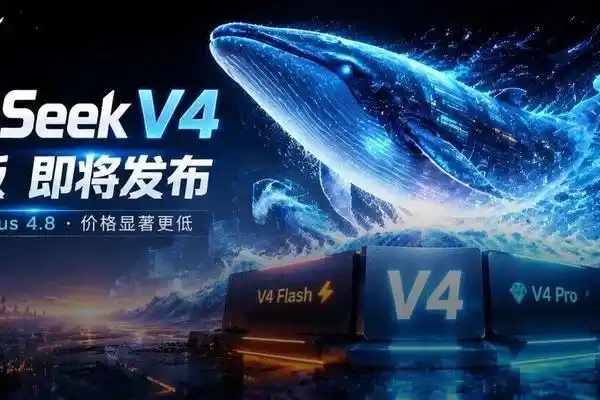
DeepSeek V4 'Full-Blooded Edition' Leaked, Could Be Released As Early As Tomorrow

The highly anticipated full release of DeepSeek V4 is imminent, expected to launch as early as tomorrow after nearly three months of waiting. A select group has already received access to the GA (General Availability) beta, which includes two versions: DeepSeek V4 Flash and DeepSeek V4 Pro. Early testers report that V4's overall performance is close to the level of Opus 4.8, with coding capabilities rivaling GPT-5.6 Sol. Its agent abilities are significantly enhanced, and 3D/SVG generation has improved notably. While it may not surpass the recently released Kimi K3 in performance, its expected price point is significantly lower. The official release will introduce a new "peak/off-peak" pricing model for its API. For example, deepseek-v4-pro will cost $0.87 per million output tokens during standard times and $1.74 during peak hours. The flash version is even more aggressive at $0.28/$0.56 per million tokens, with cached input tokens priced extremely low at $0.0028. This makes V4 a strong contender in terms of cost-effectiveness, potentially offering Opus-level capabilities at a fraction of the cost, continuing DeepSeek's reputation as a "price disruptor" in the AI market. Initial demos showcasing V4's capabilities have begun circulating, including generated 3D simulation games, HTML games blending elements of Minecraft and No Man's Sky, and classic games like a "Cut the Rope" clone. The final GA version is set to replace the older deepseek-chat and deepseek-reasoner models, which will be retired on July 24th.

marsbit48 хв тому

DeepSeek V4 'Full-Blooded Edition' Leaked, Could Be Released As Early As Tomorrow

marsbit48 хв тому

WEEX Labs Weekly Observation: The 'Power Restructuring' of AI Infrastructure and the 'Deep Dive Movement' into the Real Economy

WEEX Labs Weekly Review: AI Infrastructure's "Power Restructuring" and the "Deep Dive" into the Real Economy Mid-July 2026 marks a pivotal shift in the global AI industry. The allocation of computing power is transferring from cloud giants to compute resource owners, while the core value of AI is solidifying around its penetration into physical industry, moving beyond the race for model parameters. The era of fragmented model development is over, replaced by a capital-intensive, integrated chain driven by hard tech. Key developments this week include Meta's planned entry into the cloud computing market with "MetaCompute." This move by social media giants with massive GPU clusters challenges traditional cloud providers like AWS, integrating compute, models, and data into one-stop services, which will squeeze smaller rental providers and shift enterprise focus towards underlying model ecosystems. Chinese foundational models like DeepSeek-V4 and Tencent's Hy-3 are pushing towards "utility" status through open-source releases and extreme cost reductions via MoE architectures. This lowers entry barriers for enterprises, allowing them to focus resources on private deployment and deep business integration. Embodied intelligence, particularly humanoid robots, is transitioning from lab demos to real-world factory applications, driven by policies promoting large-scale, practical deployment in logistics and manufacturing. The value focus is shifting from spectacle to stable industrial data and real operational efficiency. Global governance, through forums like WAIC, is evolving from theoretical ethics to practical operational frameworks for "Sovereign AI," raising geopolitical compliance barriers and making auditability and data sovereignty core design requirements from the outset. WEEX Labs Insights: The current transformation shows AI's prosperity is deeply embedding into the fabric of global manufacturing. Strategic recommendations include: 1) leveraging open-source models for private, proprietary knowledge bases; 2) maintaining cloud provider diversity to avoid vendor lock-in from integrated model ecosystems; and 3) seeking opportunities in the "embodied infrastructure" supporting robots, such as data collection, industrial simulation, and factory AI adaptation services.

marsbit1 год тому

WEEX Labs Weekly Observation: The 'Power Restructuring' of AI Infrastructure and the 'Deep Dive Movement' into the Real Economy

marsbit1 год тому

Is WEEX TradFi Reliable? What You Should Know Before Your First Trade of U.S. Stock Tokens

In recent years, cryptocurrency users have expanded their focus beyond Bitcoin and Ethereum to include popular traditional financial (TradFi) assets like Nvidia, Apple, and Tesla stocks. This shift raises key questions: What do these TradFi assets represent on crypto trading platforms? How do they differ from traditional stock ownership? And how can users assess the reliability of platforms offering such products? TradFi products, such as those offered by WEEX TradFi (including NVDA, MSFT, AAPL, TSLA, and QQQ tokens), are blurring the lines between crypto and traditional markets. They allow users to trade based on the price movements of traditional assets within a familiar digital asset trading environment. However, it's crucial to understand that trading a "stock token" is not equivalent to owning the actual stock. Users are participating in price speculation, not gaining shareholder rights like dividends or voting. A key feature of these products is 7x24 trading, offering flexibility beyond traditional market hours. While convenient, this also introduces unique risks, such as potential liquidity gaps and volatility when underlying markets are closed. For users evaluating TradFi products, reliability hinges on transparency and risk management. Critical factors include understanding the product mechanism, how prices track the underlying assets, and the associated risks—especially when using leverage. Popular stocks and indices are still subject to company performance, macroeconomic shifts, and sector trends. Ultimately, TradFi represents a new gateway connecting crypto users to global markets. The future points toward integrated trading environments where the distinction between "crypto investor" and "traditional investor" fades. For newcomers, a platform's reliability stems not from promises, but from a clear understanding of the product, a comprehensive view of risks, and informed judgment of the platform's capabilities.

marsbit1 год тому

Is WEEX TradFi Reliable? What You Should Know Before Your First Trade of U.S. Stock Tokens

marsbit1 год тому

Торгівля

Спот

Популярні статті

Що таке $WELL

WELL3, $$WELL: Революція в Здоров'ї та Добробуті з DePIN та AI Вступ У швидко змінюваному світі цифрових технологій сектор здоров'я та добробуту займає передову позицію в інноваціях, прагнучи покращити догляд за пацієнтами та пропагувати здоровіші способи життя. У цьому домені визначним гравцем є WELL3, інноваційний проект Web3, що прагне революціонізувати те, як люди взаємодіють зі своїм здоров'ям. Використовуючи такі технології, як Децентралізована Фізична Інфраструктурна Мережа (DePIN), Децентралізована Ідентичність (DID) та Штучний Інтелект (AI), WELL3 має на меті сприяти безпечним, даними підкріпленим шляхам до здоров'я. Ця всеосяжна стаття глибоко аналізує основні аспекти WELL3, $$WELL, досліджуючи його функціональні можливості, творців, інвесторів та унікальні характеристики. Що таке WELL3, $$WELL? WELL3 слугує інноваційною платформою, яка має на меті переосмислити підхід до здоров'я та добробуту. Сфокусований на інтеграції DePIN і DID поряд із AI-системами, проект створений для надання персоналізованого досвіду для користувачів, забезпечуючи при цьому безпеку та конфіденційність медичних даних. З вражаючою цифрою понад мільйон попередньо зареєстрованих користувачів, основна місія WELL3 полягає в покращенні добробуту через безпечні, орієнтовані на дані шляхи до здоров'я. В основі WELL3 лежать передові блокчейн-технології, які забезпечують повний контроль користувачів над своїми особистими даними. Цей проект не тільки вирішує проблеми безпеки даних і доступності, але також прагне створити активну спільноту, пов'язану спільним прагненням до кращого здоров'я. Основні риси WELL3: DePIN і DID: Ці технології забезпечують безпечну власність та аутентифікацію даних, надаючи користувачам повний контроль над їхньою інформацією. Інтеграція AI: Використовуючи аналітику AI, WELL3 пропонує персоналізовані поради та рішення, адаптовані до індивідуальних потреб здоров'я. Залучення спільноти: Сприяє підтримуючому середовищу, в якому користувачі можуть спілкуватися, ділитися досвідом та надихати один одного на здоровіше життя. Творець WELL3, $$WELL Ідентичність творця WELL3 не уточнюється в доступній інформації. У міру просування проекту можуть з'явитися нові деталі, що проллють світло на творчі уми, які стоять за цією трансформаційною ініціативою. Інвестори WELL3, $$WELL WELL3 здобув підтримку від безлічі впливових інвестиційних структур, що підкреслює його надійність і потенціал у галузі здоров'я та добробуту. Серед відомих інвесторів: Animoca Brands AWS Samsung The Spartan Group Blocore Fenbushi Capital Newman Group Soul Capital XY Finance Lumoz Підтримка з боку цих визнаних організацій свідчить про сильну віру в місію WELL3, забезпечуючи йому необхідні ресурси для інновацій та розширення своїх пропозицій. Як працює WELL3, $$WELL? WELL3 функціонує, поєднуючи передові технології в мультичейн-рамках, забезпечуючи безперебійну та інноваційну взаємодію користувачів. Нижче наведено деякі фактори, які унікально позиціонують WELL3 на ринку добробуту: 1. Безпечна власність на дані З інтеграцією DePIN і DID користувачі можуть зберігати повний контроль над своїми особистими медичними даними. Цей рівень безпеки є надзвичайно важливим в сучасну епоху цифрових технологій, де порушення безпеки та несанкціонований доступ є поширеними. Через WELL3, власність на дані декентралізована, що дозволяє користувачам проактивно управляти своєю інформацією. 2. Персоналізація через AI WELL3 впроваджує аналітику на базі AI для надання користувачам персоналізованих медичних порад. Використовуючи силу AI, платформа може пропонувати індивідуалізовані рекомендації та рішення, заохочуючи користувачів досягати своїх цілей у здоров'ї більш ефективно. 3. Мультичейн-рамки Проект WELL3 розроблений для роботи на кількох платформах блокчейну, таких як Bitcoin, Ethereum, Polygon, Solana, Blast і TON. Ця мультичейн-можливість забезпечує безперебійну взаємодію користувачів з платформою через різні мережі, підвищуючи доступність та зручність. 4. Токен WELL Центральним елементом екосистеми WELL3 є токен WELL, який виконує кілька функцій, включаючи утиліту, управління та винагороди. Токен дозволяє брати участь в екосистемі, підтримує обмін медичними даними та мотивує користувачів на основі їхньої активності на платформі. Хронологія WELL3, $$WELL Шлях WELL3 демонструє значні віхи у її розвитку, кожна з яких реалізує загальний успіх проекту. Ось коротка хронологія ключових подій в історії WELL3: 10 лютого 2024: WELL3 запустив свій NFT проект, швидко ставши найбільшою колекцією NFT на ланцюзі opBNB з понад 324,000 власниками та досягнувши 8 мільйонів NFT, створених до 27 квітня 2024 року. Публічний продаж: Проект досяг вражаючої загальної заблокованої вартості (TVL) близько 15,237.2 ETH всього за сім днів, що свідчить про robust цікавості на ринку та підтримку. Запуск WELL ID: Платформа зареєструвала понад 900,000 користувачів для WELL ID та відповідного білого списку NFT Ring, відзначаючи значну фазу прийняття в екосистемі. Розвиток партнерства: WELL3 встановила партнерства з провідними організаціями, включаючи Animoca Brands, AWS, Samsung та іншими, щоб поліпшити свою екосистему та розширити свою присутність. Обсяг транзакцій: WELL3 здійснив транзакції на загальну суму понад 17 мільйонів доларів, що відображає зростаючу утиліту та залученість у спільноті здоров'я та добробуту. Ключові моменти про WELL3, $$WELL Як прогресивна ініціатива, що переорієнтовується на ринок добробуту, WELL3 визначила кілька важливих елементів, які сприятимуть її триваючому успіху. Ось кілька основних моментів, на які варто звернути увагу: Токеноміка Токен $$WELL має максимальну пропозицію 42 мільярдів, з значним 71% відведеним для ініціатив спільноти. Ця стратегія розподілу підкреслює зобов'язання проекту перед його базою користувачів та довгостроковою стійкістю. Період блокування Щоб забезпечити стабільність у екосистемі, токени випускаються партіями протягом 24-місячного періоду блокування, що сприяє довірі та впевненості серед користувачів. Розвиток екосистеми Бачення WELL3 поширюється на створення комплексної та стійкої екосистеми для сприяння успішному залученню спільноти, поведінці, що покращує здоров'я, та цифровим рішенням, що вирішують нагальні потреби сфери добробуту. Відповідність ринку Індустрія добробуту, оцінювана в 5.6 трильйонів доларів, пропонує вигідну можливість, яку WELL3 прагне використати. З очікуваним щорічним темпом зростання 5-10%, проект ідеально позиціонується на тлі зростаючої тенденції до здорового способу життя. Носимі пристрої Введення кільця WELL3, носимого пристрою з крипто-інцентуванням, відповідає зростаючому попиту на персоналізовані дані про здоров'я. Цей пристрій не лише підвищує досвід користувача, але й переосмислює те, що означає бути залученим до власного здоров'я в контексті Web3. Висновок WELL3 представляє собою значний прогрес у інтеграції блокчейн-технологій у сектор здоров'я та добробуту. Вирішуючи критично важливі питання щодо володіння даними, персоналізації та залучення спільноти, ця інноваційна платформа пропонує прогресивне рішення для покращення індивідуального добробуту. З потужною підтримкою від відомих інвесторів та зобов'язанням до передових технологій, WELL3 готовий зробити відчутний вплив у сфері добробуту. Для тих, хто прагне орієнтуватися в складнощах здоров'я в цифрову епоху, WELL3 безумовно варто стежити за його еволюцією та зростанням.

61 переглядів усьогоОпубліковано 2024.07.14Оновлено 2024.12.03

Що таке $WELL

Як купити WELL

Ласкаво просимо до HTX.com! Ми зробили покупку Moonwell Artemis (WELL) простою та зручною. Дотримуйтесь нашої покрокової інструкції, щоб розпочати свою криптовалютну подорож.Крок 1: Створіть обліковий запис на HTXВикористовуйте свою електронну пошту або номер телефону, щоб зареєструвати обліковий запис на HTX безплатно. Пройдіть безпроблемну реєстрацію й отримайте доступ до всіх функцій.ЗареєструватисьКрок 2: Перейдіть до розділу Купити крипту і виберіть спосіб оплатиКредитна/дебетова картка: використовуйте вашу картку Visa або Mastercard, щоб миттєво купити Moonwell Artemis (WELL).Баланс: використовуйте кошти з балансу вашого рахунку HTX для безперешкодної торгівлі.Треті особи: ми додали популярні способи оплати, такі як Google Pay та Apple Pay, щоб підвищити зручність.P2P: Торгуйте безпосередньо з іншими користувачами на HTX.Позабіржова торгівля (OTC): ми пропонуємо індивідуальні послуги та конкурентні обмінні курси для трейдерів.Крок 3: Зберігайте свої Moonwell Artemis (WELL)Після придбання Moonwell Artemis (WELL) збережіть його у своєму обліковому записі на HTX. Крім того, ви можете відправити його в інше місце за допомогою блокчейн-переказу або використовувати його для торгівлі іншими криптовалютами.Крок 4: Торгівля Moonwell Artemis (WELL)Легко торгуйте Moonwell Artemis (WELL) на спотовому ринку HTX. Просто увійдіть до свого облікового запису, виберіть торгову пару, укладайте угоди та спостерігайте за ними в режимі реального часу. Ми пропонуємо зручний досвід як для початківців, так і для досвідчених трейдерів.

137 переглядів усьогоОпубліковано 2024.12.10Оновлено 2026.06.02

Як купити WELL

Обговорення

Ласкаво просимо до спільноти HTX. Тут ви можете бути в курсі останніх подій розвитку платформи та отримати доступ до професійної ринкової інформації. Нижче представлені думки користувачів щодо ціни WELL (WELL).

活动图片