How Hinkal protocol’s smart contract flaw sparked $820K USDC exploit

ambcryptoОпубліковано о 2026-07-04Востаннє оновлено о 2026-07-04

Анотація

The Hinkal stablecoin privacy protocol suffered an exploit resulting in the loss of approximately $820,000 worth of USDC. The attack was enabled by a flaw in one of the protocol's smart contracts. The attacker manipulated the `prooflessDeposit()` function and executed a series of `transact()` calls, allowing them to withdraw funds that should not have been accessible. While the exact technical vulnerability remains unclear, it points to a failure in deposit validation or proof verification within Hinkal's privacy architecture. This incident highlights the persistent risk of smart contract bugs in DeFi, even as overall losses in the first half of 2026 are reported to be less than half of those from the same period in 2025.

Another day, yet another exploit.

News has been circulating that the Hinkal stablecoin privacy protocol may have been compromised. It appears that the suspected exploit was caused by a flaw in one of its smart contracts.

Reportedly, the flaw allowed an attacker to take about $820,000 worth of USDC out of the system.

Initial reports suggest the attacker extracted funds that should not have been accessible. The attacker was able to do this by manipulating Hinkal’s prooflessDeposit() function and then making a string of transact() calls.
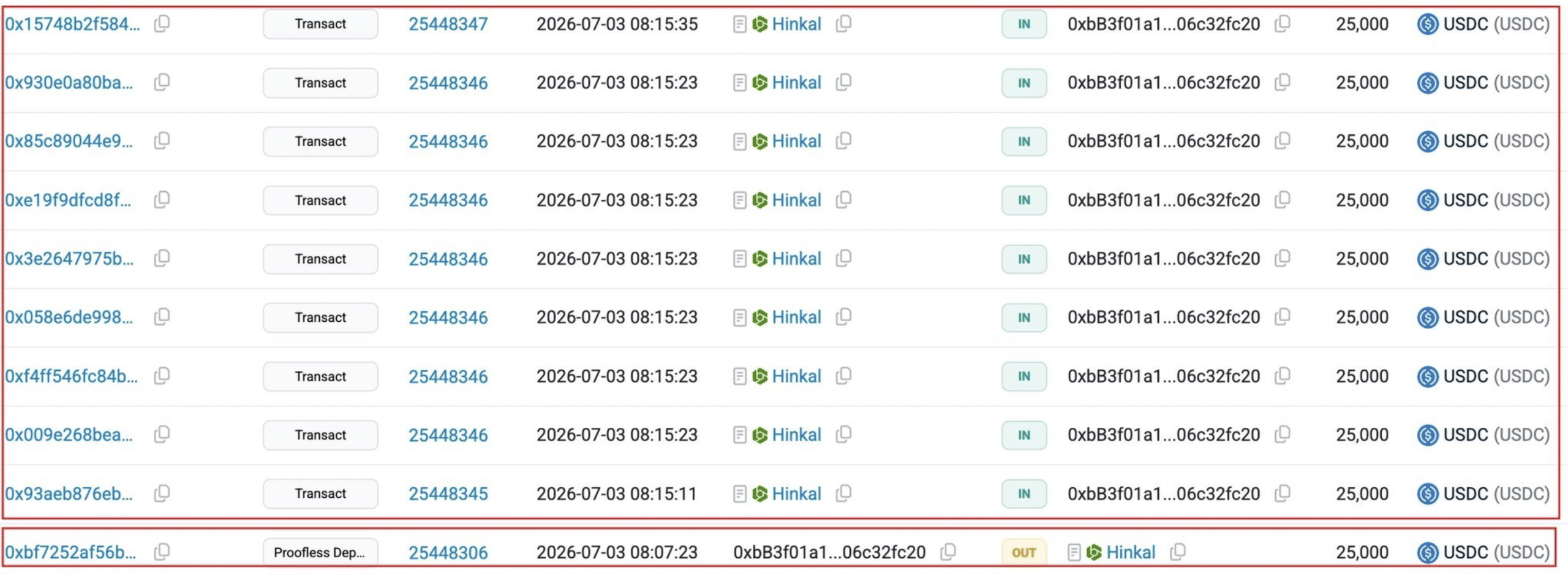
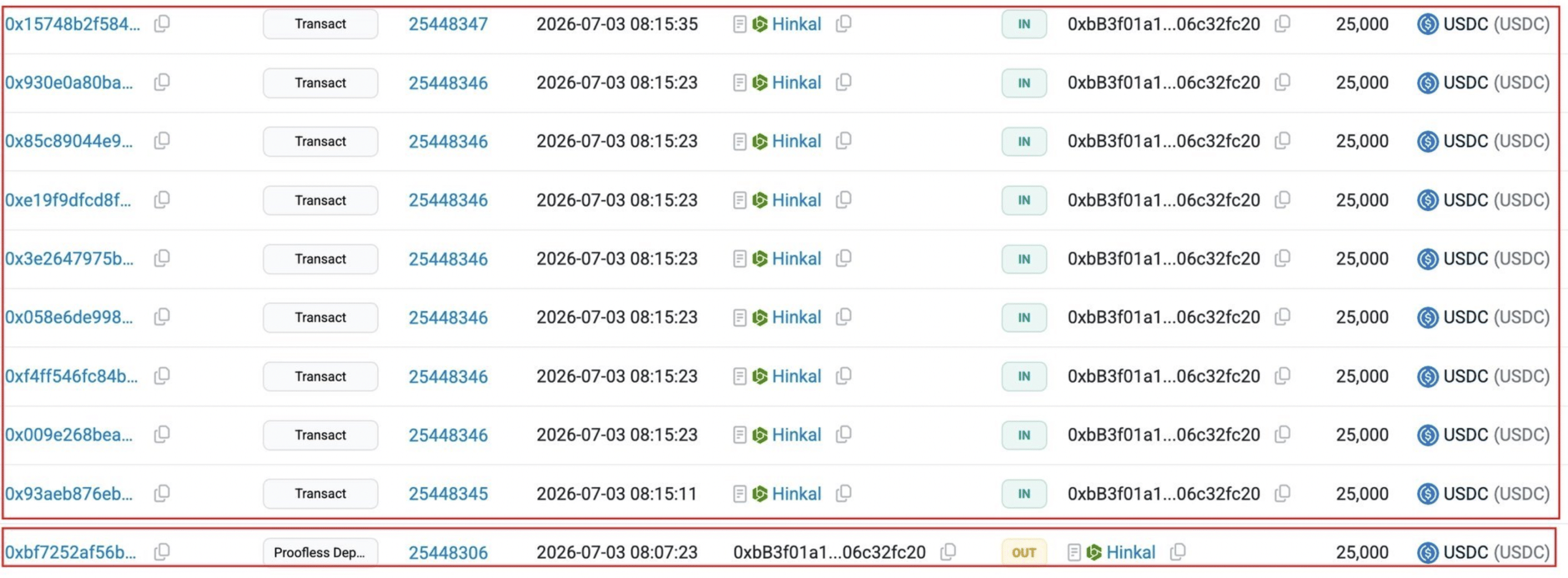
Source: GoPlus Security/X

Technique used to carry out the attack

Although the precise technical defect remains unknown, the attack suggests the protocol may have failed to validate deposits or verify the cryptographic proofs underpinning Hinkal’s privacy architecture.

This may have allowed the attacker to repeatedly call transact() and withdraw USDC held by the smart contract. As a result, a coding error led to a real financial loss.

That said, the suspected Hinkal exploit hints at a smart contract code vulnerability, which is one of the most enduring threats in decentralized finance (DeFi). While the incident does not point to a flaw in DeFi itself, it shows how implementation bugs can lead to significant financial losses.

Rise in exploits in 2026

This comes at a time when there have been other recent exploits. On the 20th of June, the Jaredfromsubway.eth Maximal Extractable Value (MEV) bot was exploited, which resulted in $7.5 million in losses.

In another instance, a hacker used a flash loan to manipulate the wrapped xStocks exchange rate, resulting in an approximately $403,000 exploit for Edel Finance.

Taking all these together, it’s evident that scams have increased significantly in 2026. In fact, in the past six months, there have been 207 distinct hacks, according to TRM Labs.

Yet, despite the rise in incidents, DeFiLlama data showed that total losses came to $948.13 million, which is less than half of the $2.3 billion that was stolen in the first half of 2025.
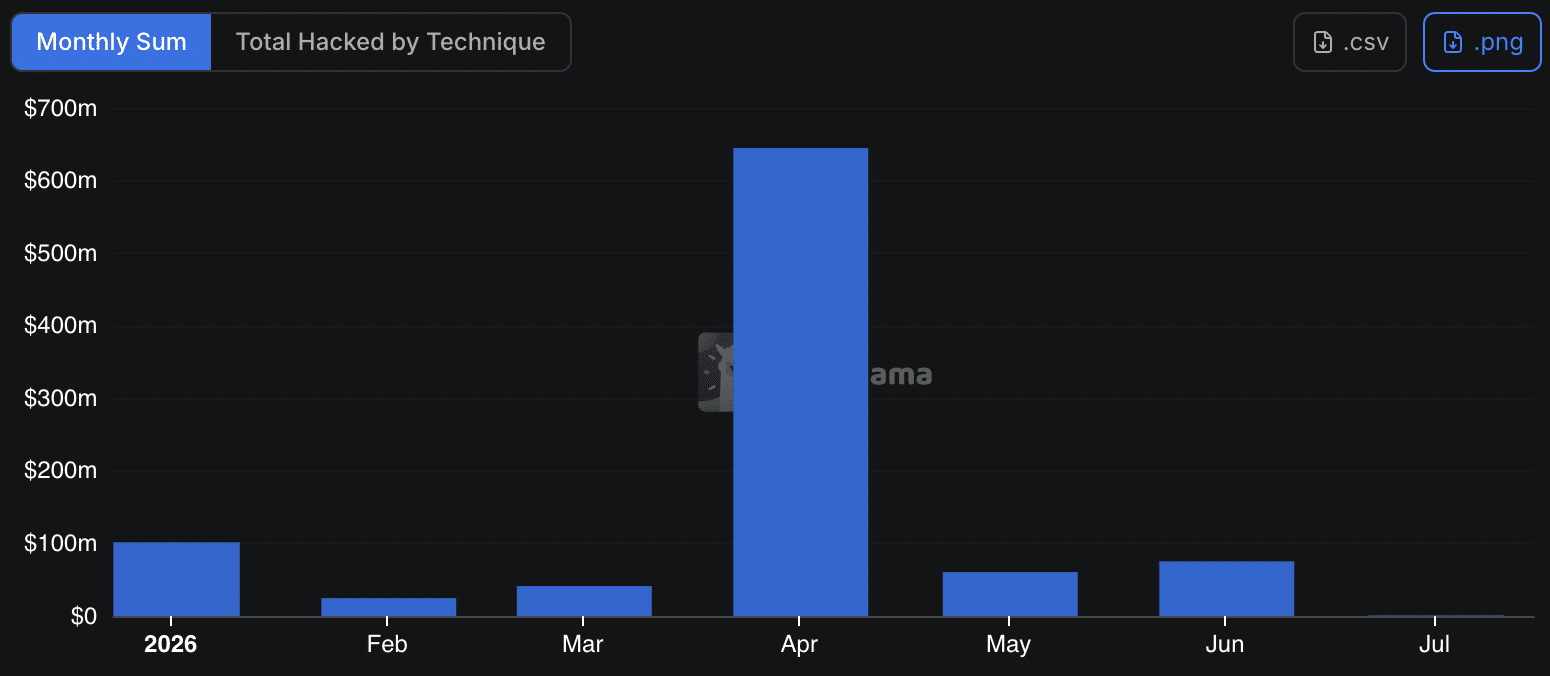
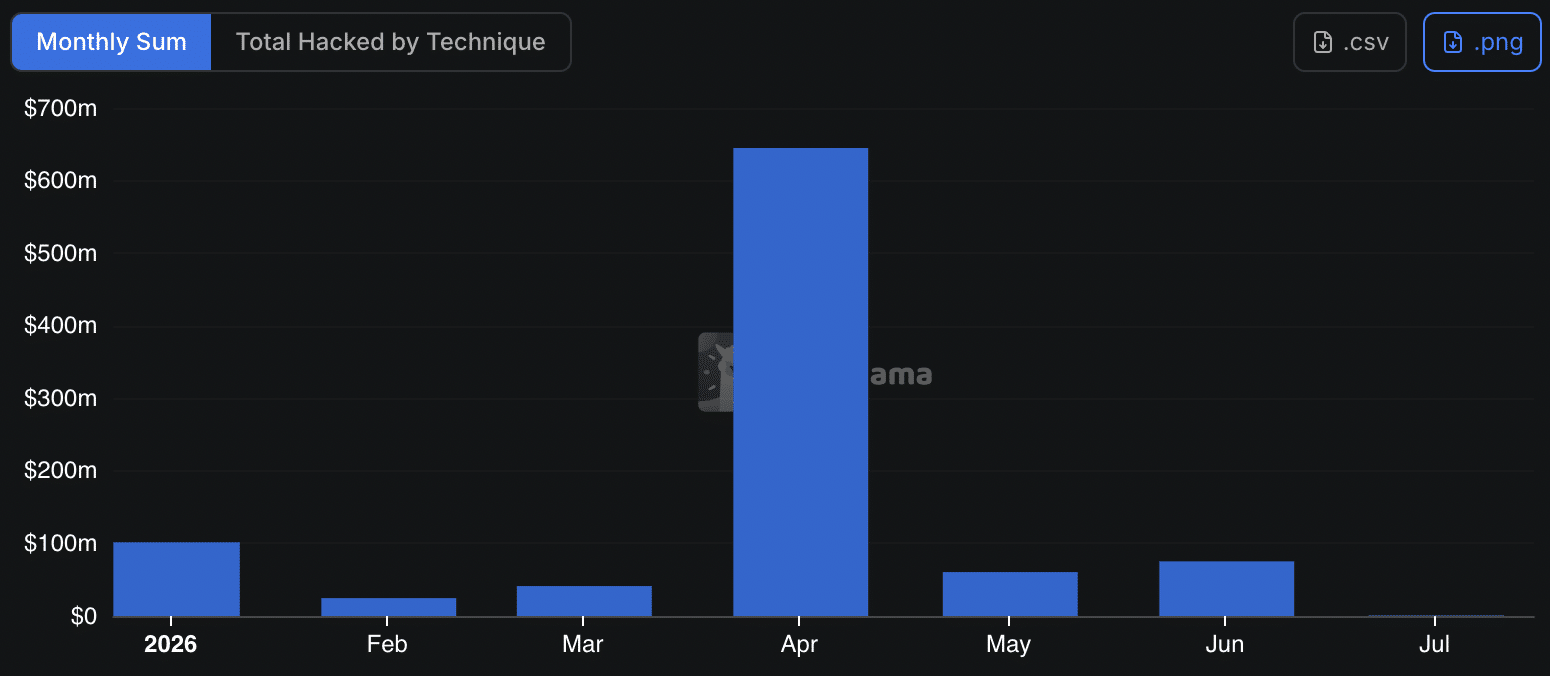
Source: DeFiLlama

Final Summary

  • The Hinkal stablecoin privacy protocol exploit resulted in the compromise of $820,000 worth of USDC.
  • The attacker misused Hinkal’s prooflessDeposit() function and then made a string of transact() calls to carry out this attack.


Пов'язані питання

QWhat was the financial impact of the exploit on the Hinkal protocol?

AThe exploit resulted in the loss of approximately $820,000 worth of USDC.

QWhich specific smart contract functions did the attacker manipulate to carry out the Hinkal exploit?

AThe attacker manipulated the `prooflessDeposit()` function and then made a series of `transact()` calls.

QAccording to the article, what is one of the most enduring threats in decentralized finance (DeFi) highlighted by this incident?

ASmart contract code vulnerability is highlighted as one of the most enduring threats in DeFi.

QHow does the total value lost to hacks in the first half of 2026 compare to the first half of 2025, based on DeFiLlama data?

ATotal losses in the first half of 2026 were $948.13 million, which is less than half of the $2.3 billion stolen in the first half of 2025.

QWhat does the attack on Hinkal's protocol suggest about its validation or verification processes?

AThe attack suggests the protocol may have failed to properly validate deposits or verify the cryptographic proofs underpinning its privacy architecture.

Пов'язані матеріали

G7 Warning on Quantum Attacks Accelerates Transition to New Cryptographic Security System

The G7 cybersecurity working group urges countries and businesses to immediately begin transitioning to post-quantum cryptography, a warning directly relevant to crypto networks, exchanges, and custodians who must undertake costly system upgrades before quantum computers threaten modern encryption. Their report, while not mentioning cryptocurrencies specifically, highlights the risk quantum computing poses to public-key cryptography, which underpins crypto transactions. A key concern is the "harvest now, decrypt later" strategy, where encrypted data is collected for future decryption, a threat also applicable to blockchain's publicly visible keys. Europe has set concrete deadlines, mandating that all EU member states begin their transition by the end of 2026, with high-risk systems completing it by 2030. This shifts quantum readiness from a technical issue to a regulatory and competitive necessity. Bitcoin and Ethereum are pursuing different upgrade paths. Bitcoin's BIP-360 proposal aims to mitigate long-term quantum vulnerabilities, while Ethereum's broader roadmap targets upgrades to validator signatures, commitments, and zero-knowledge proofs by 2029. A major challenge is the increased data size of post-quantum signatures, which could raise storage, bandwidth, and transaction costs. The immediate market risk is not a quantum attack itself, but the complex preparation for it: governance debates, protocol development, infrastructure changes, and the vulnerability of old wallets with exposed keys. With entities like Google accelerating their migration timelines and NIST proposing phase-out dates for current standards, having a migration plan is becoming a competitive advantage.

cryptonews.ru8 год тому

G7 Warning on Quantum Attacks Accelerates Transition to New Cryptographic Security System

cryptonews.ru8 год тому

Торгівля

Спот
活动图片