Original Author:Thejaswini M A
Original Compilation:Luffy,Foresight News
Goldman Sachs has agreed to acquire NEOS Investments for up to $2.25 billion. This institution manages 19 options-based income ETFs, with total assets under management reaching $30 billion.
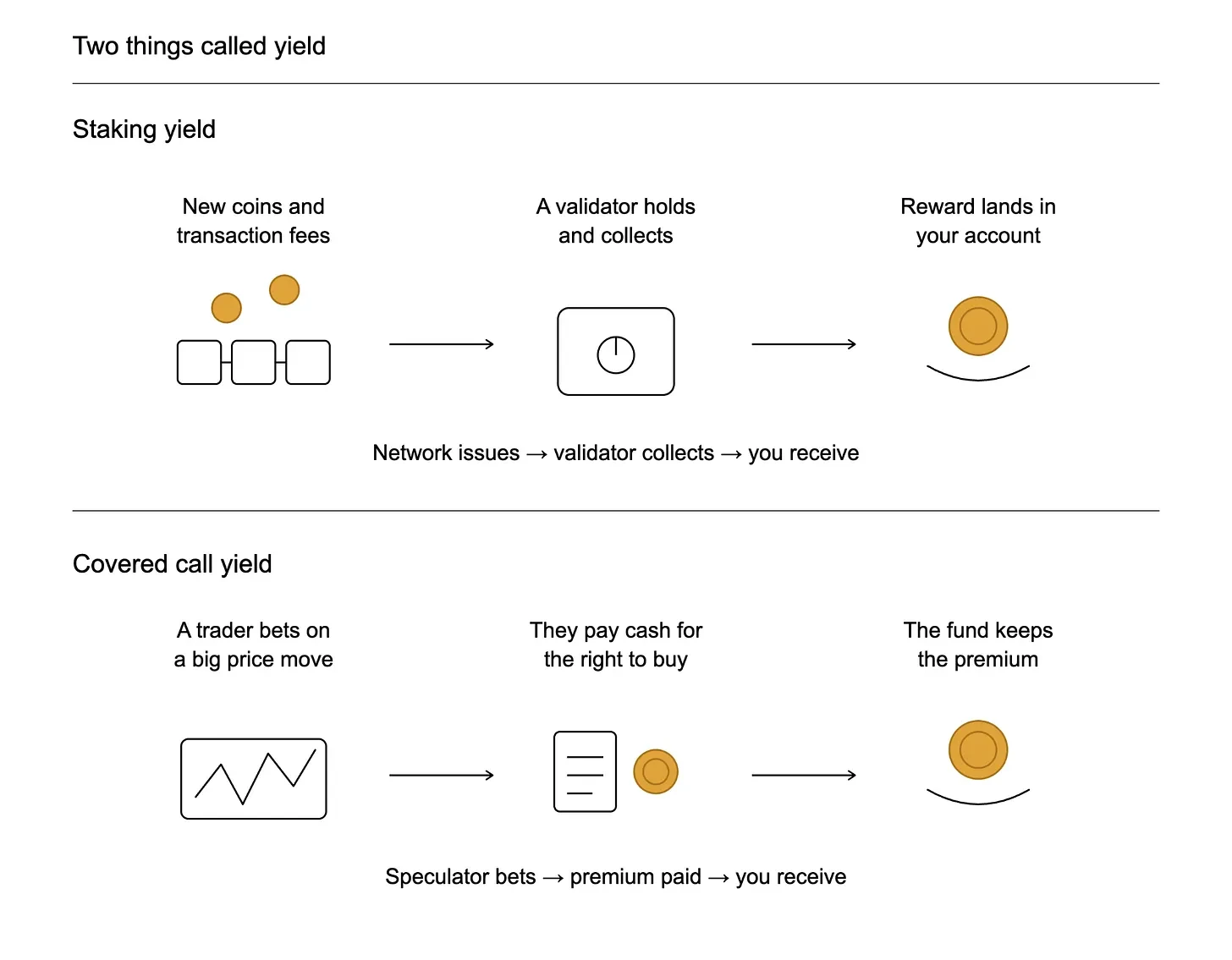
There is a trading strategy that has existed in traditional finance since the birth of options: the covered call. An investor holding an asset, rather than waiting for uncertain future upside, prefers to receive cash immediately. So, they sell a right, allowing someone else to buy that asset at an agreed price in the future, and collect an upfront premium. If the asset price soars past the strike price, the asset will be delivered according to the agreed cap; if the price remains flat, the entire upfront premium goes to the option seller, who can repeat the process of selling options the next month. The yield depends entirely on the market's implied volatility.
This explains why utility stocks using this strategy can only generate meager returns, while Bitcoin can bring high yields.
Can we once again blame "big money" for trying to squeeze the last bit of yield from the market? Let's take a look.
Volatility is a Business
BTCI is one of the many options income ETFs under NEOS. The fund holds Bitcoin spot products and sells call options against its holdings. Currently, BTCI has assets under management of $1.11 billion and an expense ratio of 0.98%, which covers the fund manager's operating costs.
This is precisely the product Goldman Sachs originally intended to build from scratch, having submitted a related application four months ago. But in the end, it didn't build from the ground up; instead, it directly acquired a mature, ready-made target.
BTCI does not custody Bitcoin directly but buys shares in Bitcoin spot ETFs like BlackRock's IBIT and Fidelity's FBTC. It allocates capital across 11 different Bitcoin ETFs and then sells call options against this exposure. Buyers, being bullish on Bitcoin's rise, are willing to pay premiums for these options. If Bitcoin rises, BTCI must sell shares at the agreed cap, foregoing any gains beyond that limit; if the Bitcoin price remains flat, the shares are still held by the fund. In either case, the fund pockets the upfront option premium.
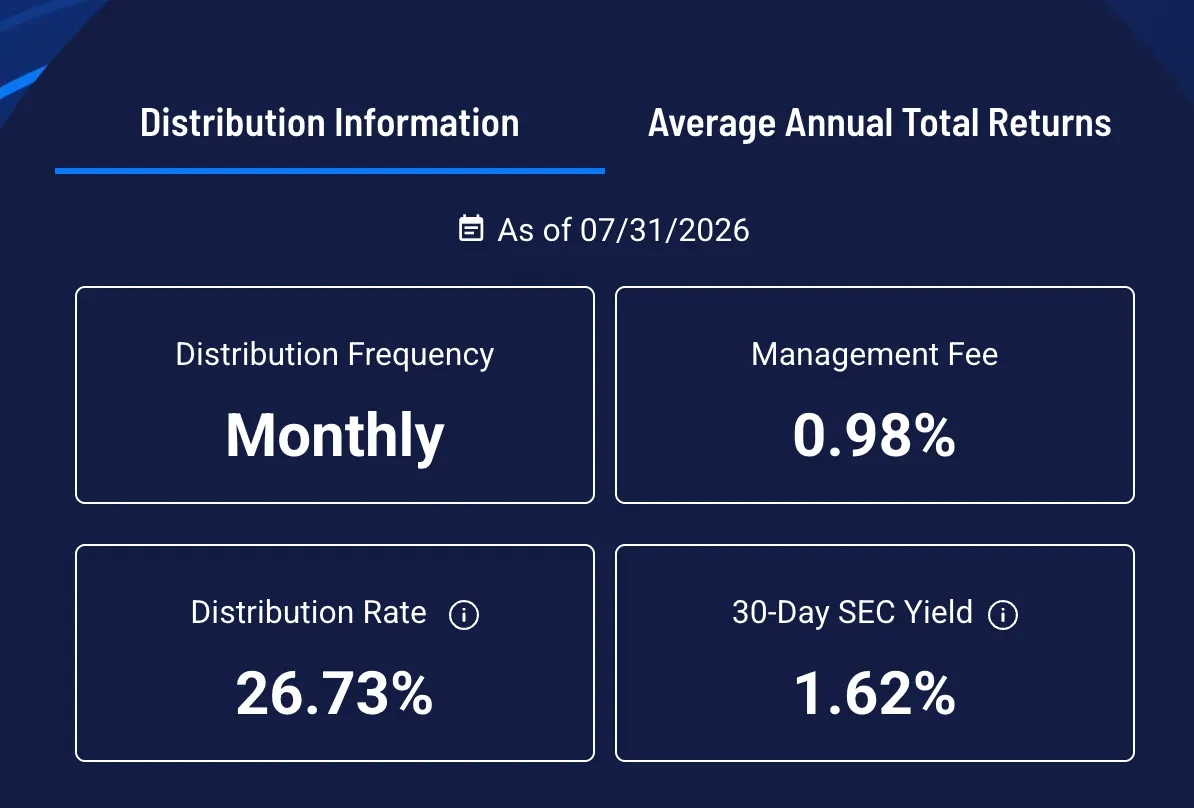
BTCI distributes income to fund holders every month. Because Bitcoin's volatility is high enough to generate substantial premiums, the current monthly dividend per share is $7.75, translating to an annualized yield of 27%.
However, holding BTCI, you still bear the losses from a price crash and miss out on the top portion of gains during a bull market. It is not insurance against a price drop. In exchange, you receive this steady 27% yield.
NEOS states that the fund's distributions are classified as return of capital, which may include option premiums, dividends, capital gains, and interest. A return of capital can have the effect of deferring taxes and lowering the cost basis of the holding. Simply put, not all of this income is net trading profit; part of it comes from your principal itself.
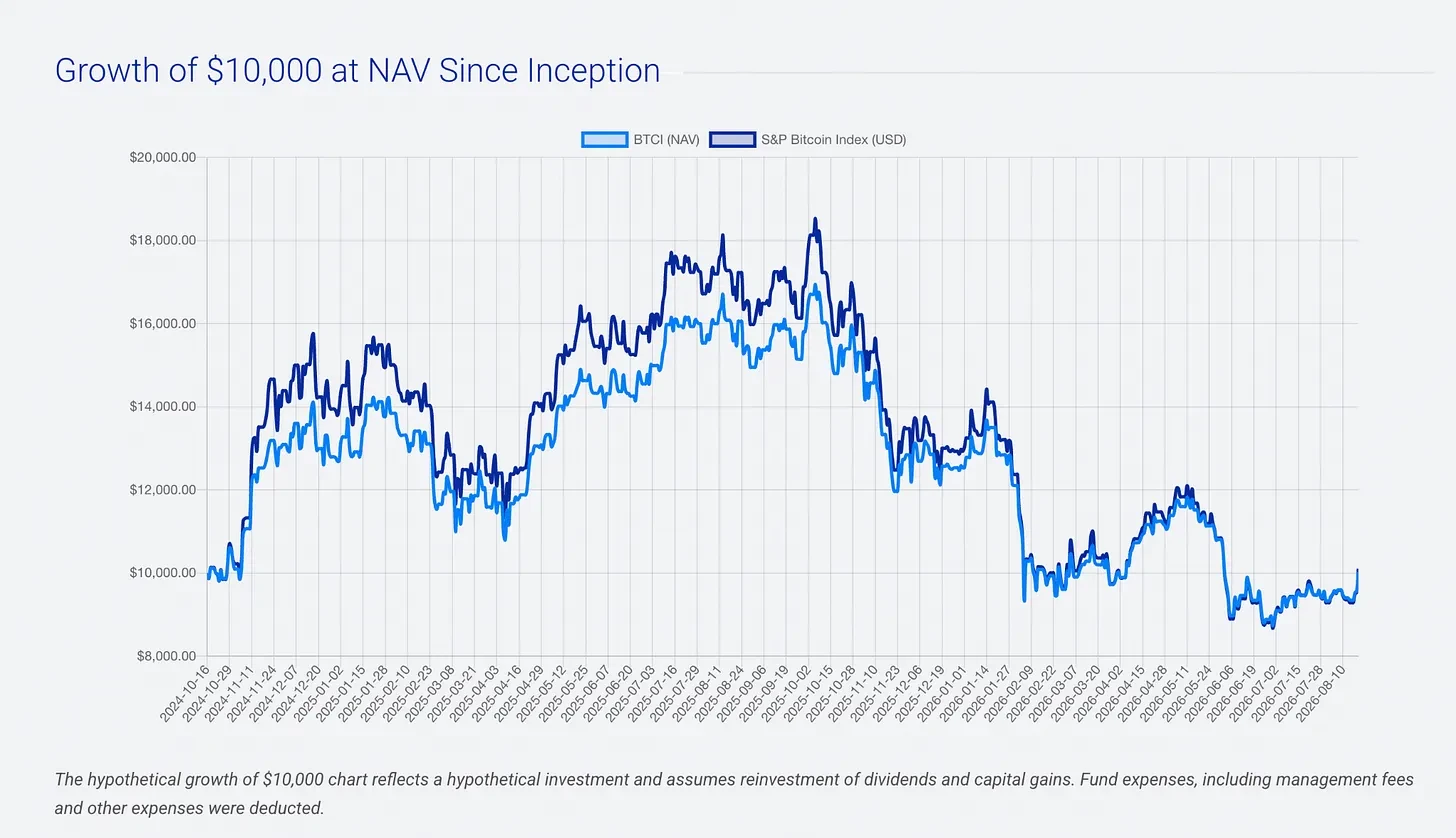
BTCI's net asset value has fallen 25.4% year-to-date, with a drawdown of 40.9% over the past 12 months. The fund's trading logic is: give up excess returns during bull markets in exchange for upfront cash flow to weather bear markets.
Goldman Sachs acquired NEOS for approximately $2.25 billion in cash and stock. Prior to this, Goldman Sachs' option-based ETF business already managed $40 billion; after this acquisition, the scale will reach $80 billion, making it the eighth-largest institution globally in this field.
As early as April this year, Goldman Sachs had already spent $2 billion to acquire Innovator Capital Management. Innovator manages buffer ETFs, products with a fixed one-year cycle that simultaneously limit both upside and downside during the period. Even if the market surges, you cannot get returns beyond the cap; but on the other hand, the fund can absorb a portion of initial losses, typically 9% or 30%. In essence, it trades the opportunity for huge upside in exchange for protection against significant losses. At the time of acquisition, the firm managed over $31 billion. With this, the investment bank's assets generating income from selling volatility reached $61 billion.
The total size of derivative income ETFs is about $180 billion, growing over 70% annually since 2021. In July alone, $7 billion flowed in, with net inflows for 2026 reaching $40 billion.
It's not just options; Wall Street is actively packaging all crypto-native yields, stripping cash flow from the price risk of the underlying asset.
On July 24, Fidelity filed an amended document allowing its $900 million Ethereum ETF (FETH) to stake 100% of its ETH. Validator nodes are operated by Blockdaemon, Figment, and Galaxy Digital, with private keys still held by Fidelity's custody. Of the total staking rewards generated, Fidelity, its partners, and node operators collectively take 15%, with the remaining 85% distributed quarterly to fund holders.
Grayscale was the first U.S. institution to distribute staking rewards to crypto spot fund investors, paying $0.083178 per share in January 2026, totaling about $9.4 million. 21Shares enabled staking for its Ethereum fund in October 2025, taking 25% of total rewards while waiving the 0.21% management fee for one year. BlackRock established a separate product, the iShares Staked Ethereum Trust, listed on Nasdaq.
Morgan Stanley's Ethereum and Solana trust products listed on NYSE Arca on July 28, with a management fee of 0.14%. Approximately 95% of the income is distributed to investors monthly in cash. MSSE stakes 50-80% of its ETH, with an 80% staking cap; MSOL plans to stake all SOL.
In March 2026, JPMorgan Chase's Kinexys platform opened services to institutions, allowing the use of Bitcoin and Ethereum as collateral for USD loans. Due to high asset volatility, collateral discounts range from 30% to 50%. That means pledging $100,000 in crypto assets can only borrow up to $50,000-$70,000 in cash. (The collateral discount for U.S. Treasury bonds is only 1%-5%).
JPMorgan also filed for Bitcoin-linked structured notes tied to BlackRock's IBIT, offering up to 1.5x leveraged returns, but with a cap of approximately 16% if certain conditions are met before December 2026. Traditional giants steadily pocket fixed fees and structural protection; but when the market turns downward, who exactly bears the losses?
Bitwise's client assets under management were $15 billion in February this year, dropping to $11 billion by April 1st, and by August, over 70 products combined had only $9 billion left. Its flagship index fund BITW saw a 31% outflow in net assets over seven months. The company announced layoffs last week, reducing its workforce from 180 in February to 155.
When asset prices fall, management fees calculated as a percentage of assets under management also shrink. Morgan Stanley has 16,000 financial advisors managing $9.3 trillion in client assets, enabling it to directly push new funds into client portfolios.
Bitwise's reaction wasn't slow, but agility cannot offset structural disadvantages. It was the first to try adding staking functionality to its Ethereum fund but failed in September 2025; Grayscale succeeded a month later. BlackRock didn't start related work until March, and Fidelity waited until July. Bitwise even acquired Chorus One in February, gaining $2.2 billion in staked assets covering validators on about 30 Proof-of-Stake networks; in April, it launched an Avalanche spot product with built-in staking. Despite this, it still faced shrinking scale and layoffs.
In early June 2026, U.S. Bitcoin spot ETFs saw their largest outflow since listing. Strong employment data at the end of May pushed back market expectations for interest rate cuts, keeping the 10-year Treasury yield high, leading to massive investor inflows into bonds. When traditional assets can provide attractive yields, assets like Bitcoin that inherently generate no income become less appealing. Bitcoin's profits rely entirely on price appreciation.
Overlaying yields onto crypto assets through staking and covered call options is changing this landscape.
Financial advisors prioritize stable income as the primary goal when allocating products for clients. On March 30, the U.S. Department of Labor proposed new regulations establishing a safe harbor for fiduciaries allocating alternative assets (including crypto assets) within 401(k) retirement plans. Due to liability risks, such plans have historically avoided alternative assets. If the new rules take effect, crypto products that can generate yield might even enter retirement accounts earlier than plain crypto spot ETFs, as 401(k) product pools prioritize predictable cash income.
Sharmin Mossavar‐Rahmani, Chief Investment Officer for Goldman Sachs Wealth Management, said in January last year, "We have always considered it not a qualified investment asset. Think about it: it doesn't generate cash flow, has no earnings, doesn't achieve portfolio diversification, and doesn't reduce volatility. You can list a whole bunch of reasons. So it's still not an investment asset; it's just a speculative trading vehicle. If people want to speculate, that's up to them. But we don't recommend it because you cannot judge if the current price is reasonable, nor can you truly value it."
You Don't Need to Believe in Crypto to Make Money from It
Since then, Bitcoin hasn't fundamentally changed: it still doesn't generate cash flow or profits, its price is down 49% from the highs, and it hasn't helped smooth volatility. Sharmin's argument still holds today and will likely continue to do so for some time.
Goldman Sachs' 2020 client presentation also stated: Due to high volatility, Bitcoin "does not constitute a viable investment thesis." Now, however, it profits from the persistent volatility of Bitcoin.
But major institutions' reversals in stance are already common. JPMorgan Chase CEO Dimon once called Bitcoin a "pet rock," now accepts it as collateral; Vanguard once warned it was toxic, then launched its own ETF; BlackRock CEO Fink once linked it to money laundering, now operates the world's largest Bitcoin fund. And of course, let's not forget that figure who overnight called for making crypto great again.
The times evolve, clients have demands, so philosophical debates are set aside entirely. But the key is, their business doesn't require the coin price to rise. They are betting on trading activity in the crypto market, not the price direction of the asset itself. Without direction-neutral market makers and structured lending institutions providing liquidity, the entire market would collapse. They provide crucial services while extracting toll fees; believers bear the price risk, while institutions take the certain profits via fee structures.
Loan conditions for crypto assets are very stringent. When using Bitcoin as collateral, JPMorgan directly slashes 30%-50% of the credit line, requiring over-collateralization to ensure the bank never bears a loss. The loan only faces default risk if the Bitcoin price halves. Automated price data feeds continuously monitor the market, triggering margin calls as prices fall. Throughout this bear market, banks remain fully protected, collecting interest all the way.
Traditional investment funds charge a fixed annual management fee. Morgan Stanley's 0.14% fee is assessed annually based on the asset value under management. Option-based funds make money by selling contracts: even if the underlying crypto asset price falls, cash flow from fees and option contracts keeps flowing.
Native crypto institutions, however, are completely tied to market sentiment. If Bitcoin or other tokens crash, investors panic and redeem funds to cut losses. Since crypto institutions charge management fees as a percentage of assets under management, redemptions directly compress fund size, immediately cutting into corporate revenue. Wall Street institutions, on the other hand, manage trillions in bonds, cash, stocks, commodities, allowing full risk diversification.
There is a key logical flaw here: Wall Street doesn't even need to believe in the future of this industry to conquer it. If you believe in the industry's prospects, you have to bet on direction, and betting on direction means taking risks. But they have built a mechanism where retail investors bear all directional price risk, and institutions take the certain profits via fee structures.