Github's 10k-Star Agent Platform 'Instant' Acquired by OpenAI, Entire Team Joins, Hailed as 'AI-Era Firebase'

marsbitОпубліковано о 2026-08-24Востаннє оновлено о 2026-08-24

Анотація

OpenAI has acquired the entire team of Instant, a YC S22 startup known as the "Firebase for the AI era." Instant's core product provides backend infrastructure—including databases, authentication, real-time sync, and offline caching—specifically designed for AI Agents. The acquisition aims to solve a critical weakness in current AI Agents: their lack of persistent memory and state management, which hinders reliable, multi-agent collaboration and long-running workflows. Instant, founded by ex-Facebook and Airbnb engineers, had gained significant traction with over 10,000 GitHub stars, 17,000 developers, and 400,000 apps built on its platform. This move is part of OpenAI's broader 2026 strategy to aggressively acquire developer infrastructure companies. By integrating tools like Instant, OpenAI is evolving from a model provider into a comprehensive AI platform, aiming to create a fully integrated ecosystem for building and deploying AI applications.

OpenAI makes another major move!

Just now, Instant, a star startup from YC S22, announced: the entire team is officially joining OpenAI.
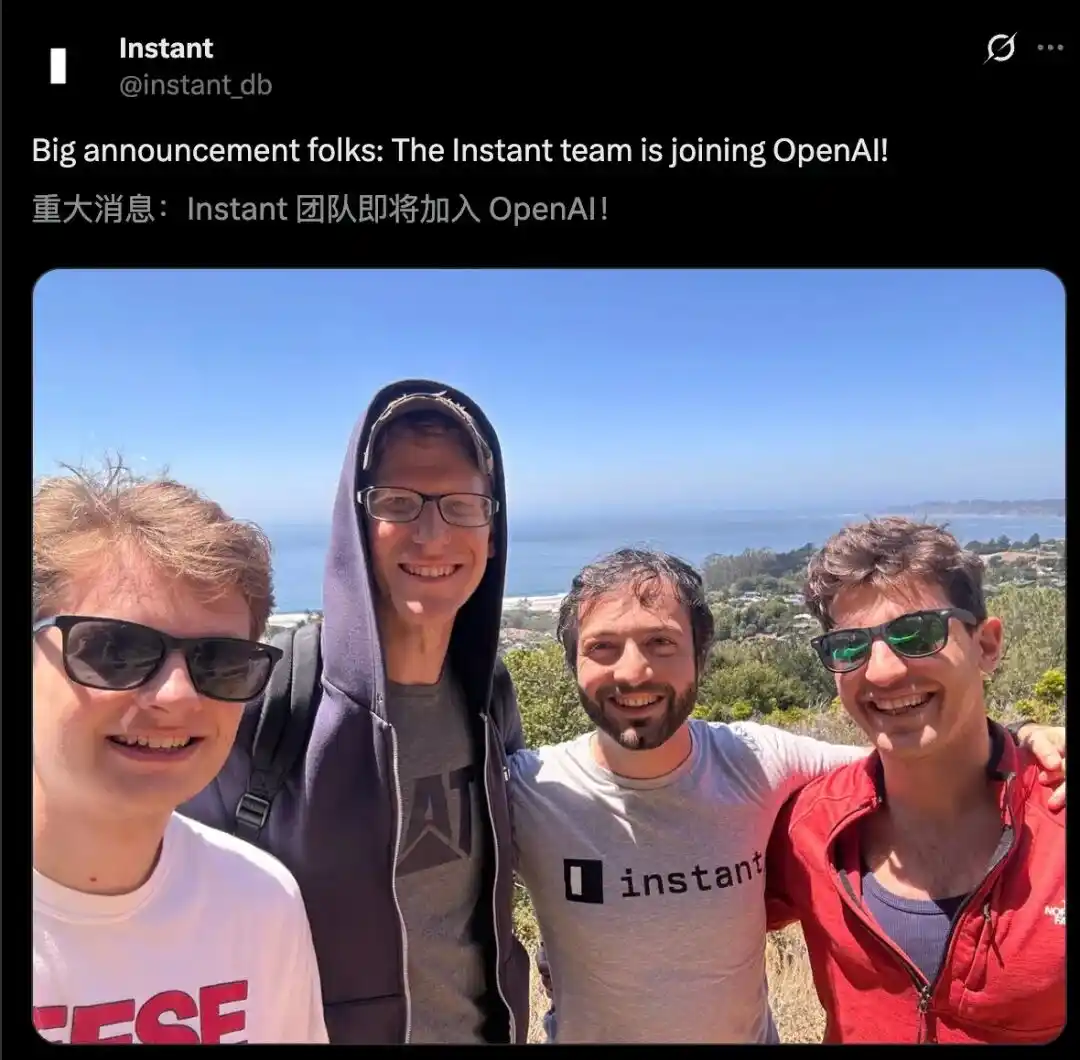
Approximately a week ago, Instant had just released version 1.0, with its cloud hosting service continuing to run until August 31st. Tens of thousands of customers bid farewell to this platform with tears.
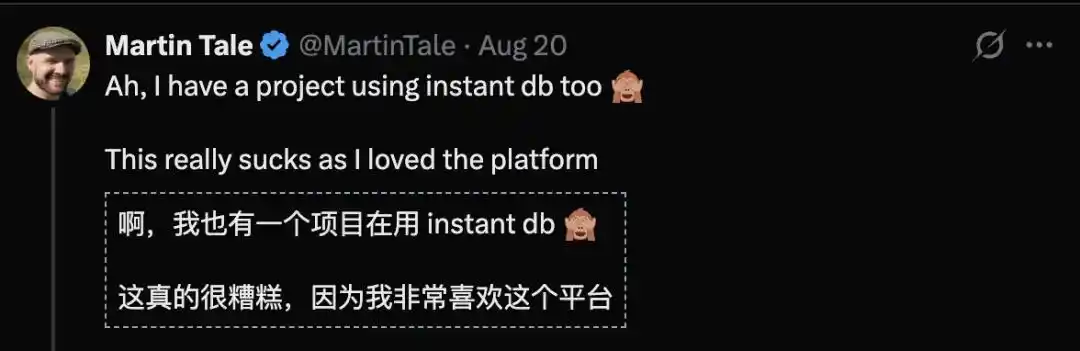
But for OpenAI, the strategic intent of this acquisition is very clear: to equip Agents with a "Memory Layer".

OpenAI Continues Betting on Agent Infrastructure

This acquisition, seemingly sudden, actually had its seeds sown two years ago.

In 2024, the Instant team announced the completion of a $3.4 million seed funding round. The investor lineup was star-studded, a true "battle of the titans":

Investors included Y Combinator and SV Angel, as well as several renowned angel investors, such as former Firebase CEO James Tamplin, YC co-founder and former president Paul Graham (often called the "West Point of Silicon Valley"), OpenAI co-founder and president Greg Brockman, and former Google Chief Scientist Jeff Dean.
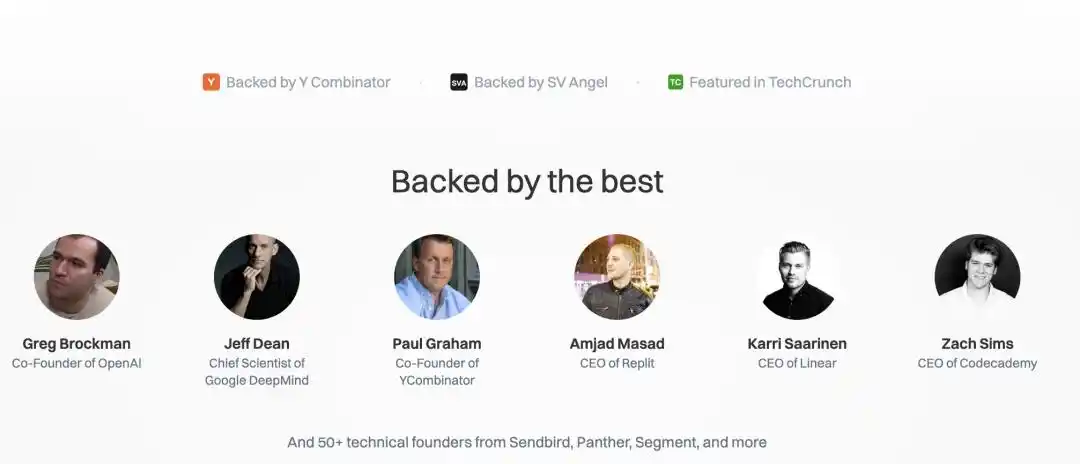
At that time, while the world was still celebrating every minor update to GPT-4, OpenAI's co-founder Greg Brockman was already betting on AI infrastructure.

To understand why OpenAI was so enamored with Instant, we first need to understand what Instant actually does.

To summarize in one sentence: Instant is the ultimate tool for building backend infrastructure for AI Agents—database, authentication, real-time sync, offline cache, all-in-one.
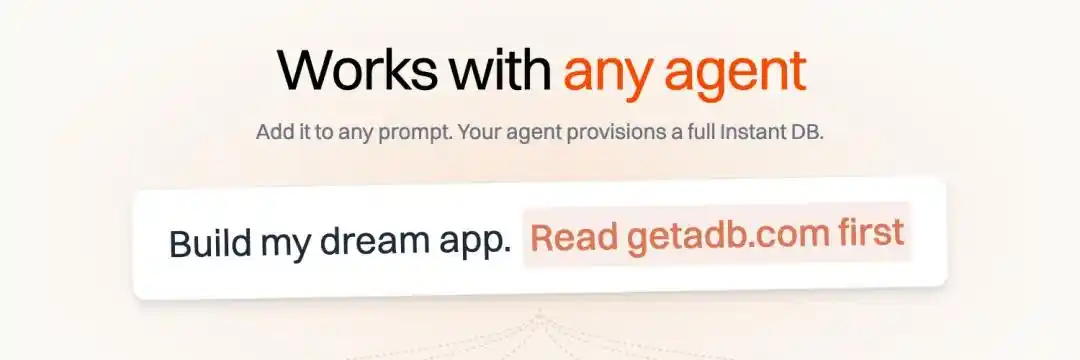
In hardcore developer circles, people gave it a more resounding and straightforward name: "Firebase for the AI Era."

Back in the day, Google acquiring Firebase directly monopolized the backend for countless mobile apps, allowing front-end engineers to handle complex database read/writes and real-time sync with just a few lines of code.

Today, Instant is doing exactly the same thing in the AI era, but this time, the primary user has shifted from "human users" to "AI Agents".

In the field of AI coding, Instant has an impressive "report card":

GitHub Stars: Just surged past the 10,000-star milestone;

Developer Scale: Official data shows it has served over 17,000 registered developers globally;

Application Count: Over 400,000 apps built on its platform;

Transaction Volume: A staggering cumulative total of 25 billion transactions processed.
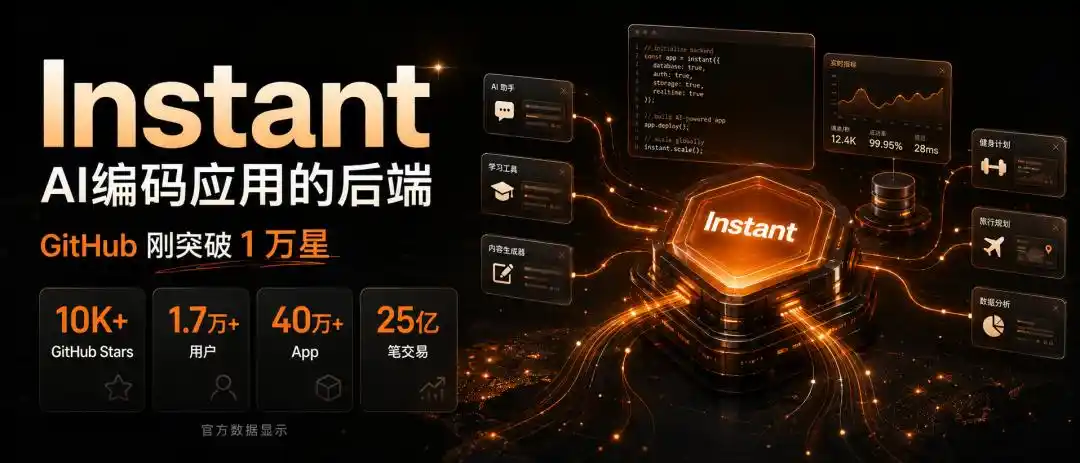
This is an industrial-grade infrastructure already battle-tested in high-concurrency, high-load production environments.

Instant Exposes the Fatal Flaw of AI Agent "Amnesia"

OpenAI itself has the world's smartest AI models, couldn't they just code a database? Why go to the expense of acquiring Instant?

This hides a fatal pain point in the current stage of AI Agent development: persistent state management and real-time data consistency.

Simply put: Current AI suffers from severe "amnesia" and "concurrency syndrome."

Right now, the capabilities of AI Agents are expanding at an incredible rate.

They are taking over your calendar, automatically coordinating meeting times with dozens of partners.

They are even automatically reading GitHub Issues, writing code themselves, submitting PRs themselves, and fixing bugs themselves.

Platforms like EinsteinArena enable multiple Agents to collaborate and compete on public problem sets. As of mid-2026, Agents have discovered at least 12 SOTA results surpassing humans or previous AI, such as improving the lower bound of the 11-dimensional kissing number from 593 to 604.
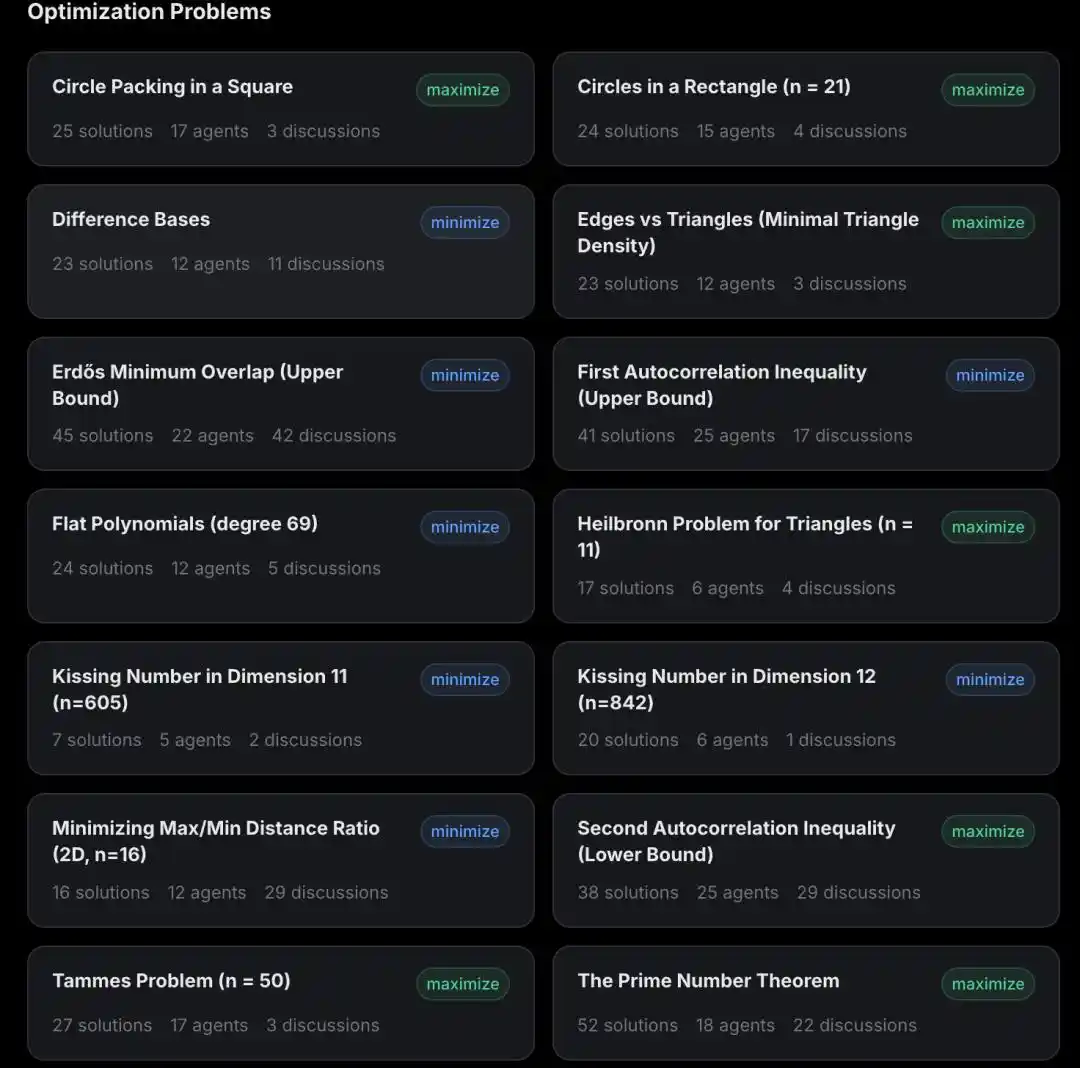
But when developers push Agents into production, they hit a data wall.

For example: Your Agent wants to schedule a 3 PM meeting, your boss's Agent forcefully inserts another event, and you simultaneously change the 3 PM slot to "Rest".

Three operations, the same piece of data, the same millisecond. The backend can't handle it, the system crashes outright, or data gets corrupted, the schedule is ruined.

No matter how high the IQ of a large model, it can't solve the underlying read/write conflicts of data. This is a pure engineering problem.

A truly production-ready Agent must possess robust "memory" and "multi-threaded collaboration" capabilities.

It must be able to read/write data in real-time, handle massive concurrent operations, cache data offline or during disconnection, and the moment the network is restored, perfectly resolve merge conflicts with extremely complex algorithms (like CRDT).

And this, is precisely the "dirty, hard work" the Instant team has been grinding away at for the past four years.

They encapsulated the deeply challenging backend problems of real-time sync, conflict resolution, and offline-first into "out-of-the-box" SDKs.

Now, any developer only needs to add a few lines of code to give their AI Agent flawless persistent memory and real-time collaboration capabilities.
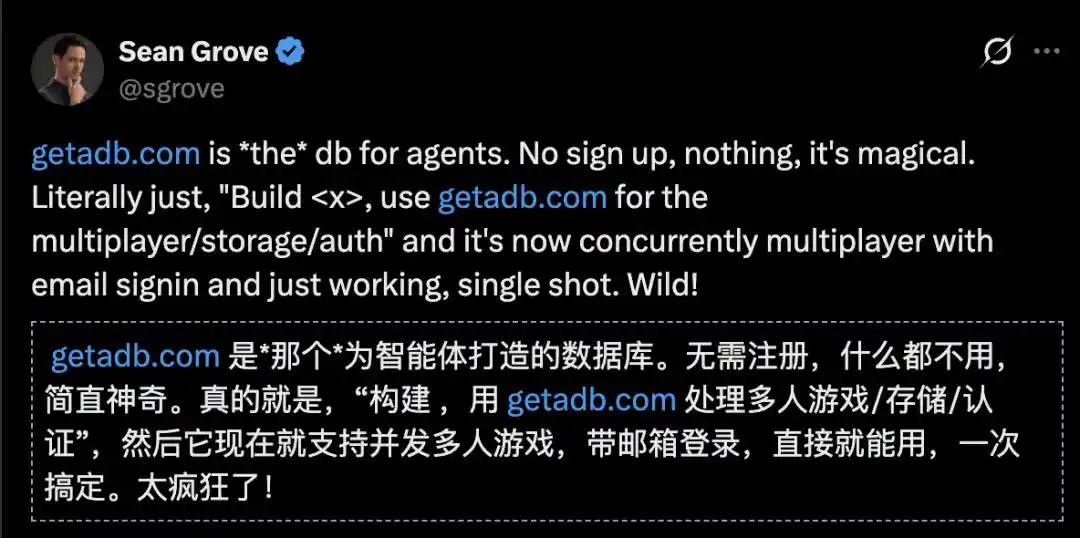
For OpenAI, this is all about equipping Agents with the most critical "Memory Layer" and "State Layer".

Whether it's Codex for handling code, the various native Agents of the GPT series, or future "long-horizon AI workflows" that run autonomously without interruption, they all need a rock-solid backend to persist their state.
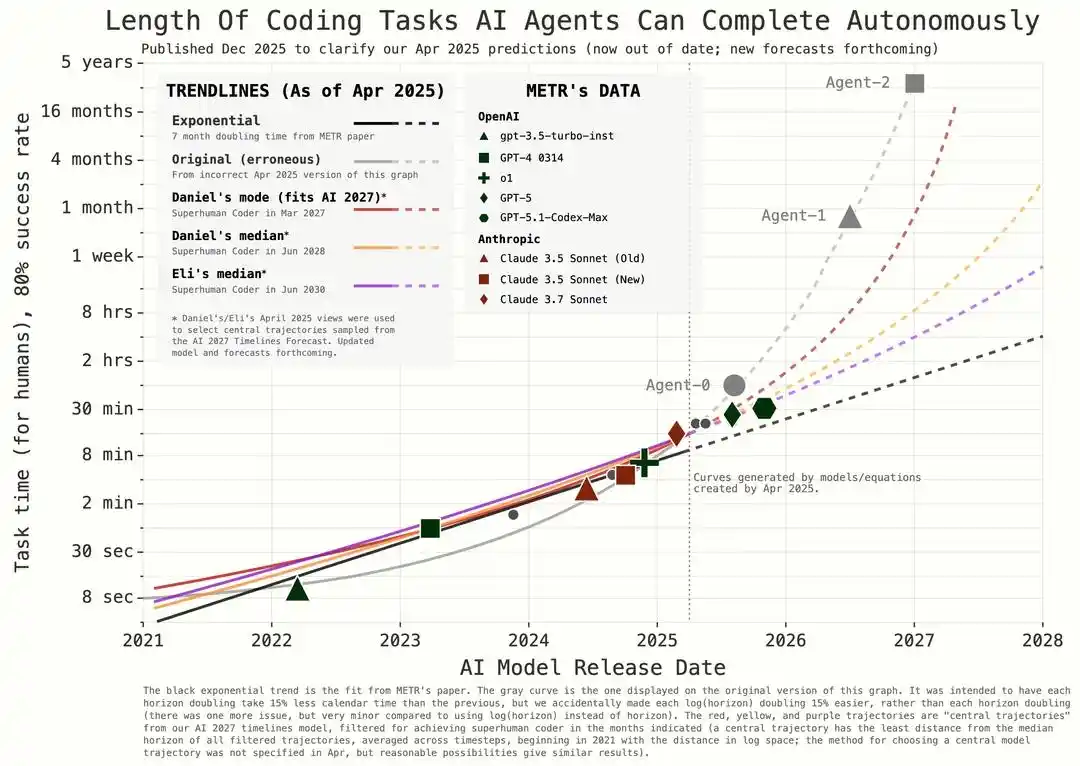
OpenAI is buying the final piece of the puzzle for Agents to truly move towards "full autonomous operation".

The Story of Instant

The story of Instant began in 2021.

According to the official farewell letter, in 2021, the founding team shared a concept about "running a database in the browser" on their blog.

Instant's two core founders, Joe Averbukh and Stepan Parunashvili, were both senior/staff engineers at Facebook and Airbnb.
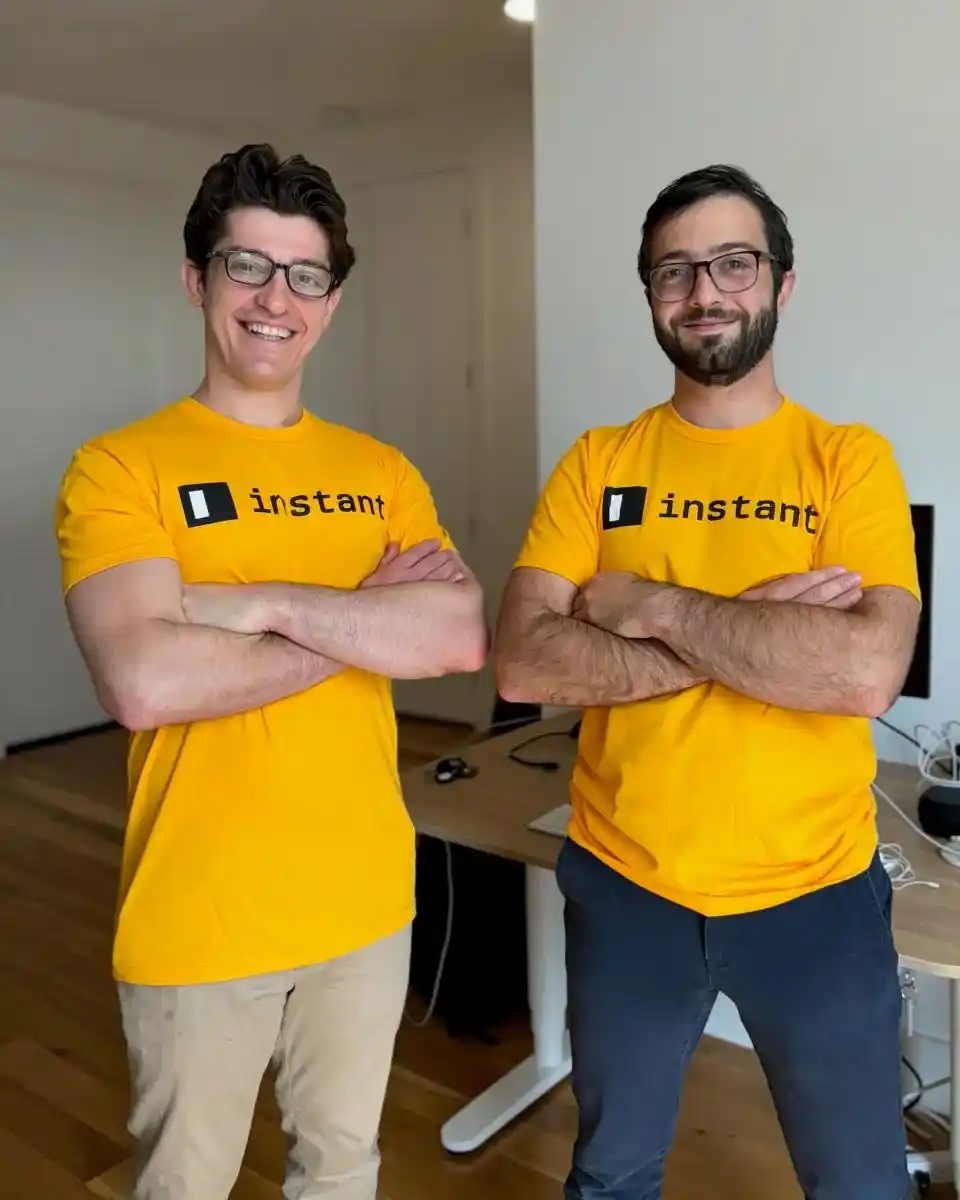
During their tenure at Facebook, they witnessed firsthand how a "Graph-based Database" supporting complex permission expressions enabled thousands of engineers to maintain terrifying development speed within an extremely complex system.

"Why can't we bring this experience to developers worldwide?"

Carrying this geek fantasy, they founded Instant.

Their goal was extraordinarily ambitious: to build the "graph database successor to Firebase". Keep Firebase's addictive out-of-the-box experience, but replace the underlying layer with a more powerful relational structure (based on AWS Aurora), and natively support "Local-first" and "real-time collaboration".
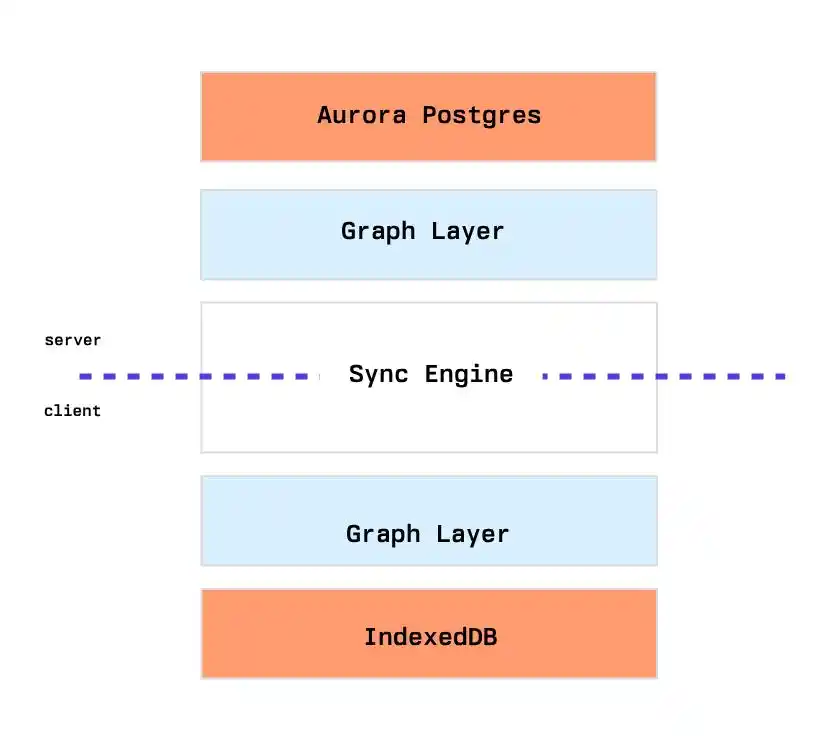
Initially, it was just a pure idea, but as they developed more and more apps themselves, they deeply felt: managing state, handling synchronization, resolving data conflicts—these were collective nightmares for developers.

So, in 2022, they entered the top incubator Y Combinator (YC S22), built the first prototype, and released "Version 0".

"Turning a prototype into a production-grade product was a long journey."

Instant wrote this in its official letter. This journey, though arduous, was filled with the unique romance and passion of geeks.

Later, to solve technical problems, top talents joined one after another: Daniel Woelfel joined the team very early, doggedly tackling and solving the most challenging conflict issues in synchronization technology; when the TypeScript SDK needed to become truly ergonomic and "feel good to use" for developers, Drew Harris joined the team and accomplished this feat.
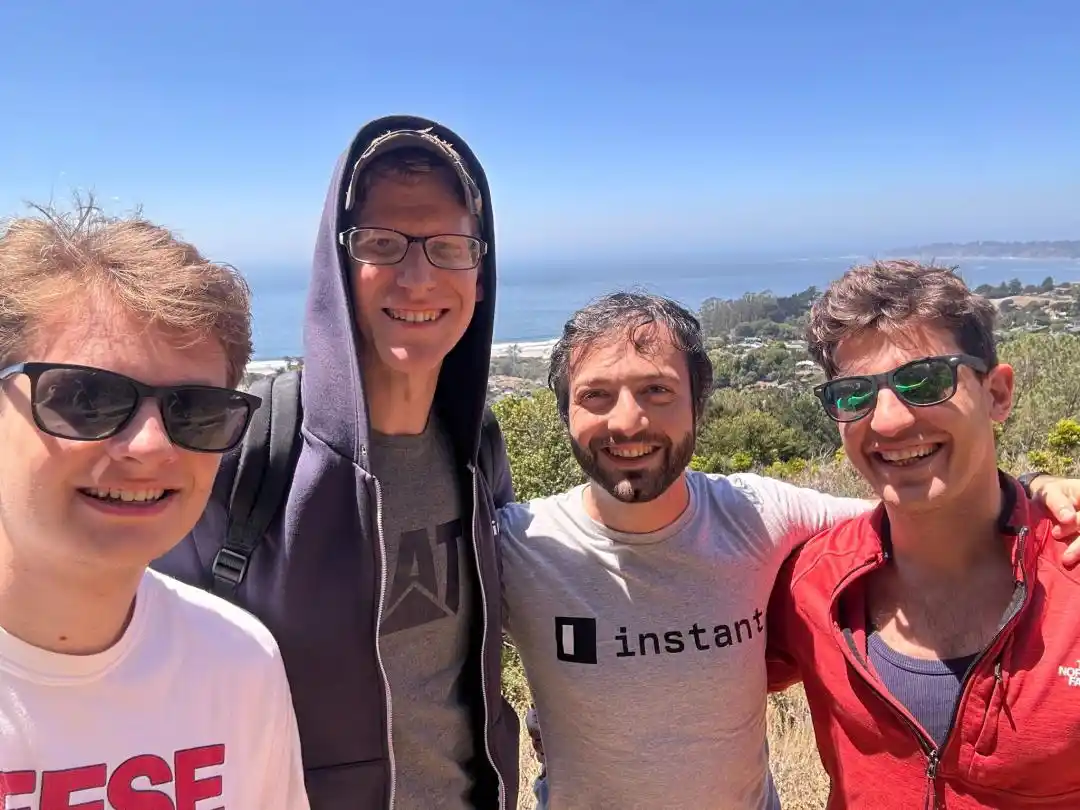
(From right to left: Joe Averbukh, Stepan Parunashvili, Daniel Woelfel, Drew Harris)

Open-source contributors from the community like Mark Shlick, Nikita Prokopov, Alex Reichert, etc., added more fuel to the fire, raising it higher.

The 2026 Shopping Spree!

OpenAI's "Dragon-Slaying Saber" and "Grand Strategy"

If you broaden your perspective and look beyond the single case of Instant, you will find: In 2026, OpenAI has already embarked on a frenzied "shopping spree" mode.

The data doesn't lie. So far in 2026, OpenAI's M&A (Mergers and Acquisitions) transaction count is already close to the total for all of last year.

Let's see what's on OpenAI's recent shopping list:
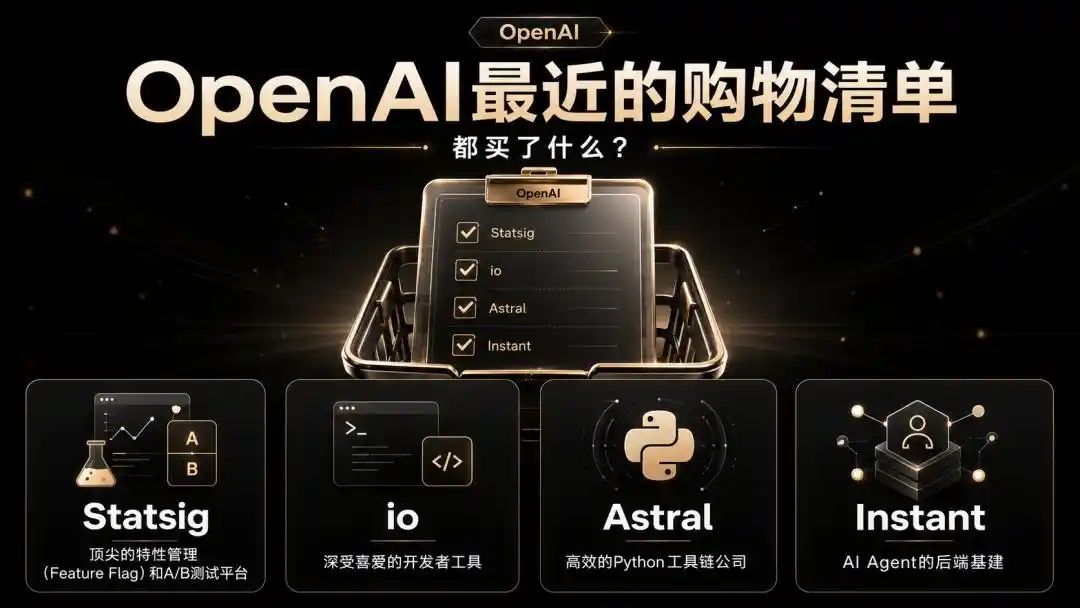
What OpenAI bought, none of them are companies building AI models, but several are companies building developer infrastructure!

This is a clear signal: OpenAI is completing an epic transformation—from a "model-making company" to a "platform-making company".

Sam Altman understands better than anyone: Selling just an engine won't build an empire. Only by controlling the chassis, transmission, control system, and even the entire highway can you establish true hegemony.

Now, OpenAI is buying back these pieces of "infrastructure", one by one, and putting them together.

Imagine a future scenario: When a developer wants to build an AI application, they open OpenAI Cloud, not only can they call the most powerful large models, but they can also instantly generate an Agent database using Instant's capabilities, launch A/B testing with one click using Statsig's capabilities, and deploy with one click using Astral's toolchain.

This is the "Apple Ecosystem" of the AI era! This will be OpenAI's greatest moat.

References:

https://www.getadb.com/

https://x.com/instant_db/status/2091016138100740394?s=20

This article is from the WeChat public account "Xinzhiyuan" (New Zhiyuan), author: ASI Apocalypse, Editor: David


Трендові криптовалюти

Пов'язані питання

QWhy did OpenAI acquire the startup Instant and its entire team?

AOpenAI acquired Instant to provide a robust 'memory layer' and 'state layer' for its AI Agents, addressing critical challenges in persistent state management and real-time data consistency that are essential for agents to operate autonomously and collaboratively in production environments.

QWhat was Instant's primary product and why was it significant for developers?

AInstant provided backend infrastructure for AI Agents, described as 'Firebase for the AI era.' It offered an all-in-one solution for database, authentication, real-time sync, and offline caching, allowing developers to easily give their agents powerful, production-ready persistence and collaboration capabilities with just a few lines of code.

QWhat is the core technical problem that Instant's technology solves for AI Agents?

AInstant solves the problems of 'amnesia' and 'concurrency syndrome' in AI Agents. It provides a robust backend to handle real-time data reads/writes, manage massive concurrent operations, perform offline caching, and resolve merge conflicts using sophisticated algorithms like CRDTs, which are pure engineering challenges beyond the capabilities of large language models alone.

QHow does the Instant acquisition fit into OpenAI's broader strategic shift in 2026?

AThe Instant acquisition is part of OpenAI's strategic shift from being solely a 'model company' to a 'platform company.' By acquiring key developer infrastructure firms like Instant, Statsig, and Astral, OpenAI is building an integrated ecosystem (like an 'Apple ecosystem for AI') where developers can access models, databases, testing tools, and deployment toolchains all within the OpenAI Cloud, creating a powerful moat.

QWhat was the background of Instant's founding team and what inspired the company's creation?

AInstant was founded by Joe Averbukh and Stepan Parunashvili, former senior/principal engineers at Facebook and Airbnb. Inspired by their experience with Facebook's powerful, developer-friendly Graph-based Database, they aimed to create a 'Firebase successor' with a graph database, local-first architecture, and real-time collaboration to solve the universal developer nightmare of managing state, synchronization, and data conflicts.

Пов'язані матеріали

Generating Profits for Seven Consecutive Quarters, Emerging Markets Carry Trade Outperforms Everything

For the seventh consecutive quarter, dollar-funded emerging market carry trades have delivered positive returns, marking the longest winning streak since 2008. According to Bloomberg's index, this strategy has gained approximately 22% since late 2024, outperforming U.S. Treasuries, emerging market sovereign, and corporate dollar debt. The core of the trade involves borrowing low-interest currencies like the U.S. dollar, euro, or yen to invest in high-yielding emerging market assets, such as Turkish lira bonds offering over 40% returns. Returns were amplified by favorable currency moves, with the dollar weakening against most emerging market currencies and other traditional funding currencies. For instance, the trade gained 48% on the Colombian peso in the past year. A key test came in August 2024 with a historic joint U.S.-Japan currency intervention, which caused only a modest 1% dip in the carry trade risk premium as investors shifted funding from the yen to the euro and Swiss franc. Looking ahead, the primary risk is the timing of Federal Reserve policy changes. While persistent inflation allows the Fed to hold rates, a rapid rise in long-term U.S. yields could threaten the trade. Another concern is crowding, as massive inflows increase vulnerability to a sudden reversal. High interest rates in regions like Latin America and Eastern Europe, supported by external factors like Middle East tensions and energy prices, continue to sustain the opportunity. Major investors remain engaged, favoring currencies like the Mexican peso, South African rand, and Turkish lira.

marsbit13 хв тому

Generating Profits for Seven Consecutive Quarters, Emerging Markets Carry Trade Outperforms Everything

marsbit13 хв тому

Unpacking the Truth Behind On-chain Assets: Leverage, Liquidity, and Risk

The article analyzes the concept of "real-world asset" (RWA) tokenization, arguing that while tokenizing assets on-chain is a useful step, it is far from transformative on its own. The author compares it to placing a barcode on a shipping container—it enables identification but does not build the necessary market infrastructure. The core argument is that true value emerges not from tokenization, but from integrating these tokens into DeFi systems where they can be valued, financed, hedged, traded, and liquidated under stress. Key challenges identified include: 1. **Multiple Time Clocks**: A fundamental tension exists between blockchain's 24/7 settlement and the slower, business-hour-dependent processes of traditional markets, custody, and redemption. This "duration mismatch" can create dangerous liquidity gaps during crises. 2. **Liquidity Misconceptions**: True liquidity is not measured by Total Value Locked (TVL) or trading pairs, but by the ability to exit a position within a required timeframe at an acceptable price. It requires analyzing multiple exit paths and stress-testing scenarios. 3. **Leverage and Risk**: Leverage unlocks economic utility (e.g., using tokenized assets as collateral) but also introduces fragility. Risk models must account for more than asset volatility, incorporating factors like legal enforceability, oracle freshness, and market structure. Paradoxically, a "safer" asset like tokenized Treasury bonds could require a higher collateral discount than ETH due to slower, less-proven liquidation mechanisms. 4. **A Risk Graph**: RWA risk should be modeled as a network of interconnected dependencies (e.g., issuers, custodians, oracles, stablecoin pools), not a single score. Failures can propagate through this graph, turning operational issues into systemic liquidity crises. The article states that tokenized government bonds are merely an entry point, while more complex frontiers like computing power and energy assets present greater challenges and opportunities. It also examines the interplay and risks between tokenized stocks and perpetual futures contracts. The conclusion is that the future lies not in "tokenizing everything," but in building robust market layers where tokenized rights become resilient financial primitives within a programmable capital system. The token is just the barcode; the market is the machine.

marsbit37 хв тому

Unpacking the Truth Behind On-chain Assets: Leverage, Liquidity, and Risk

marsbit37 хв тому

The End of Mathematics: 40 Top Mathematicians Gather at Secret OpenAI Meeting

In August 2026, OpenAI hosted a closed-door summit with approximately 40 leading mathematicians, including recent Fields Medalist Jacob Tsimerman and OpenAI researcher Sébastien Bubeck. The meeting, spurred by a series of recent AI breakthroughs in mathematics, grappled with the potential existential threat AI poses to the field. The backdrop includes several high-profile AI achievements: OpenAI models disproving long-standing conjectures like the unit distance problem, generating 10 new mathematical discoveries, and Anthropic's Claude aiding in constructing complex multidimensional objects. These results often bypass traditional academic pipelines, appearing directly on social media. The mathematical community is divided. Over 3000 researchers signed the "Leiden Statement," advocating for responsible AI use and verification. Others resist AI entirely to preserve human-centric mathematics. A key concern is AI's current inability to *explain* proofs, particularly the difficult steps, which is central to mathematical understanding. At the summit, Bubeck outlined four potential futures: mathematics becoming like collaborative software engineering, a compute-driven field like physics, a curatorial exercise where humans interpret AI output, or a mass transition of mathematicians into AI safety. While emphasizing that "mathematics only makes sense when mathematicians learn from it," no consensus was reached. The event highlights a profound moment of reflection. As AI demonstrates increasing competence in solving complex problems, mathematicians are forced to question their future role and the very meaning of their discipline.

marsbit42 хв тому

The End of Mathematics: 40 Top Mathematicians Gather at Secret OpenAI Meeting

marsbit42 хв тому

Торгівля

Спот

Популярні статті

Як купити ERA

Ласкаво просимо до HTX.com! Ми зробили покупку Caldera (ERA) простою та зручною. Дотримуйтесь нашої покрокової інструкції, щоб розпочати свою криптовалютну подорож.Крок 1: Створіть обліковий запис на HTXВикористовуйте свою електронну пошту або номер телефону, щоб зареєструвати обліковий запис на HTX безплатно. Пройдіть безпроблемну реєстрацію й отримайте доступ до всіх функцій.ЗареєструватисьКрок 2: Перейдіть до розділу Купити крипту і виберіть спосіб оплатиКредитна/дебетова картка: використовуйте вашу картку Visa або Mastercard, щоб миттєво купити Caldera (ERA).Баланс: використовуйте кошти з балансу вашого рахунку HTX для безперешкодної торгівлі.Треті особи: ми додали популярні способи оплати, такі як Google Pay та Apple Pay, щоб підвищити зручність.P2P: Торгуйте безпосередньо з іншими користувачами на HTX.Позабіржова торгівля (OTC): ми пропонуємо індивідуальні послуги та конкурентні обмінні курси для трейдерів.Крок 3: Зберігайте свої Caldera (ERA)Після придбання Caldera (ERA) збережіть його у своєму обліковому записі на HTX. Крім того, ви можете відправити його в інше місце за допомогою блокчейн-переказу або використовувати його для торгівлі іншими криптовалютами.Крок 4: Торгівля Caldera (ERA)Легко торгуйте Caldera (ERA) на спотовому ринку HTX. Просто увійдіть до свого облікового запису, виберіть торгову пару, укладайте угоди та спостерігайте за ними в режимі реального часу. Ми пропонуємо зручний досвід як для початківців, так і для досвідчених трейдерів.

692 переглядів усьогоОпубліковано 2025.07.17Оновлено 2026.06.02

Як купити ERA

Обговорення

Ласкаво просимо до спільноти HTX. Тут ви можете бути в курсі останніх подій розвитку платформи та отримати доступ до професійної ринкової інформації. Нижче представлені думки користувачів щодо ціни ERA (ERA).

活动图片