Germany’s banking giants bring crypto to 80M customers – Why it matters

ambcryptoОпубліковано о 2026-07-05Востаннє оновлено о 2026-07-05

Анотація

Germany's two largest banking networks, Sparkassen and Volksbanken Raiffeisenbanken, are integrating cryptocurrency trading directly into their banking apps, potentially reaching around 80 million customers. This marks a major shift as these groups previously deemed crypto too risky. They are building their own regulated infrastructure, such as the BaFin-approved "meinKrypto" platform, rather than partnering with external exchanges. While this integration brings crypto to a vast retail audience within a trusted framework, critics warn it could lead inexperienced investors to underestimate the high volatility and risks. Despite a recent decline in retail crypto trading volume, Germany remains a top-ten market. The move signifies a significant step in merging traditional banking with digital assets in Europe.

Germany’s two largest banking networks are undergoing a major shift by integrating cryptocurrency trading directly into their banking apps. This includes Sparkassen savings banks and the cooperative Volksbanken Raiffeisenbanken.

Through this initiative, the banking network will enable millions of regular retail customers to purchase and sell digital assets without the need for third-party cryptocurrency exchanges.

Good news for Germany’s crypto ecosystem?

These organizations collectively cater to about 80 million clients across Germany, making it one of Europe’s largest integrations of crypto into traditional banking.

For its part, this shift is noteworthy because, only four years ago, both banking groups had written off cryptocurrencies as being too risky. Now, they are creating their own regulated cryptocurrency infrastructure rather than collaborating with outside exchanges.

However, through DZ Bank, the cooperative banks have already introduced the meinKrypto platform. For those unaware, “meinKrypto” is a platform that allows local Volksbanken and Raiffeisenbanken to deliver Bitcoin [BTC] and Ethereum [ETH] directly to millions of retail savers.

Approved by BaFin, Germany’s financial regulator, in December 2025, the platform runs under the European Union’s Markets in Crypto-Assets (MiCA) framework. Following the approval announcement on the 14th of January, ‘meinKrypto’ officially went live.

At the same time, Boerse Stuttgart Digital offers crypto custody, guaranteeing that asset storage and trading continue to be governed by German regulations. Meanwhile, DekaBank is getting ready to launch a comparable service for the nation’s savings banks.

Challenges remain!

Needless to say, the initiative has drawn criticism. This is because only a few percent of Germans who own cryptocurrency trust their main banks far more than independent cryptocurrency platforms.

According to Co-Pierre Georg, professor at the Frankfurt School of Finance & Management, novice clients may underestimate the high volatility and potential for total losses linked to cryptocurrencies due to the legitimacy of well-known banks.

Georg added,

It is concerning that the floodgates to the cryptocurrency market are now being opened by savings and cooperative banks.

Yet despite this, Germany remains one of the top ten countries in terms of retail volume in Q1 2026. The year-over-year comparison shows a 20% decline from Q1 2025, when it was $31.7 billion, to Q1 2026, when it was $25.3 billion.
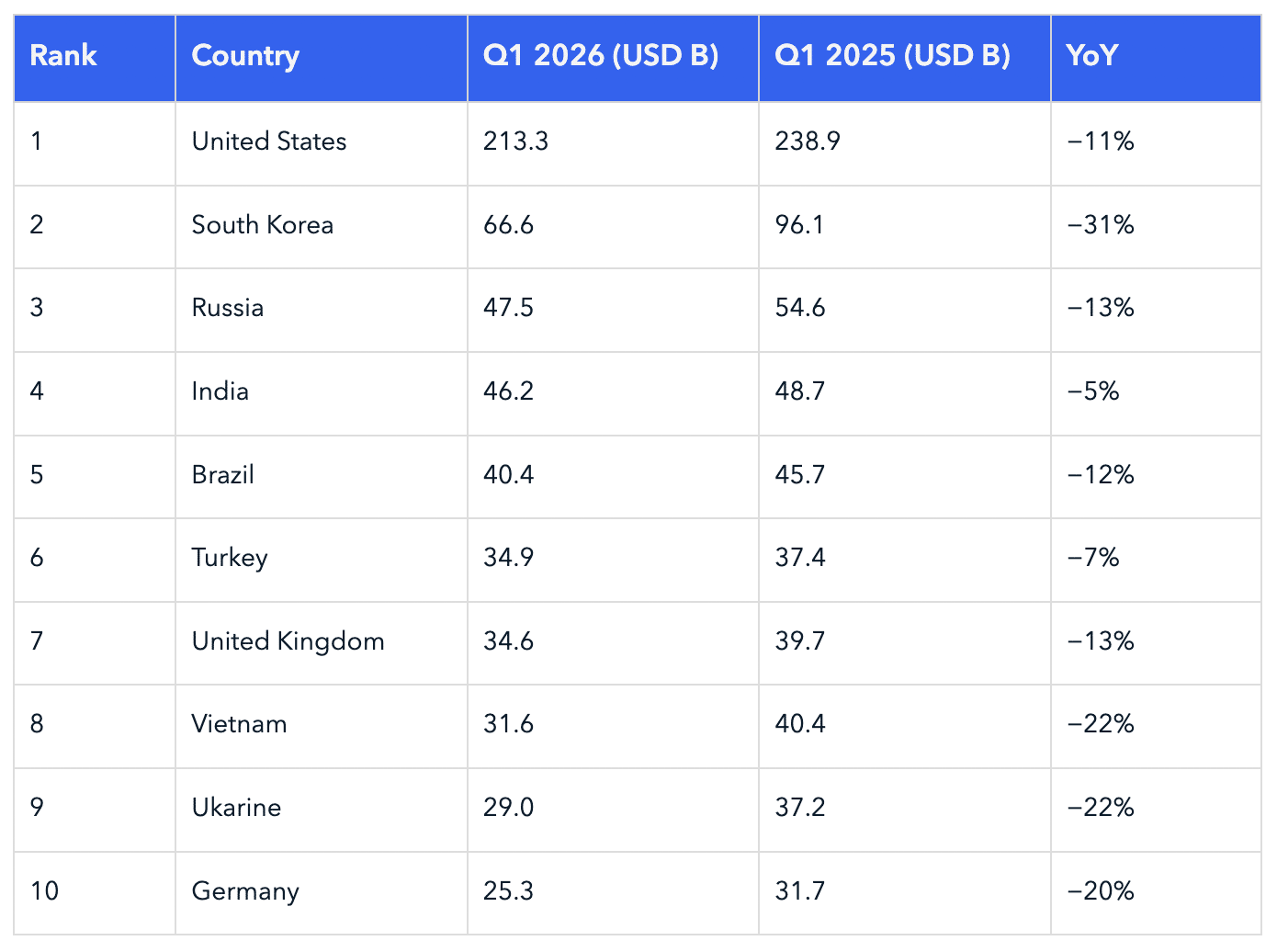
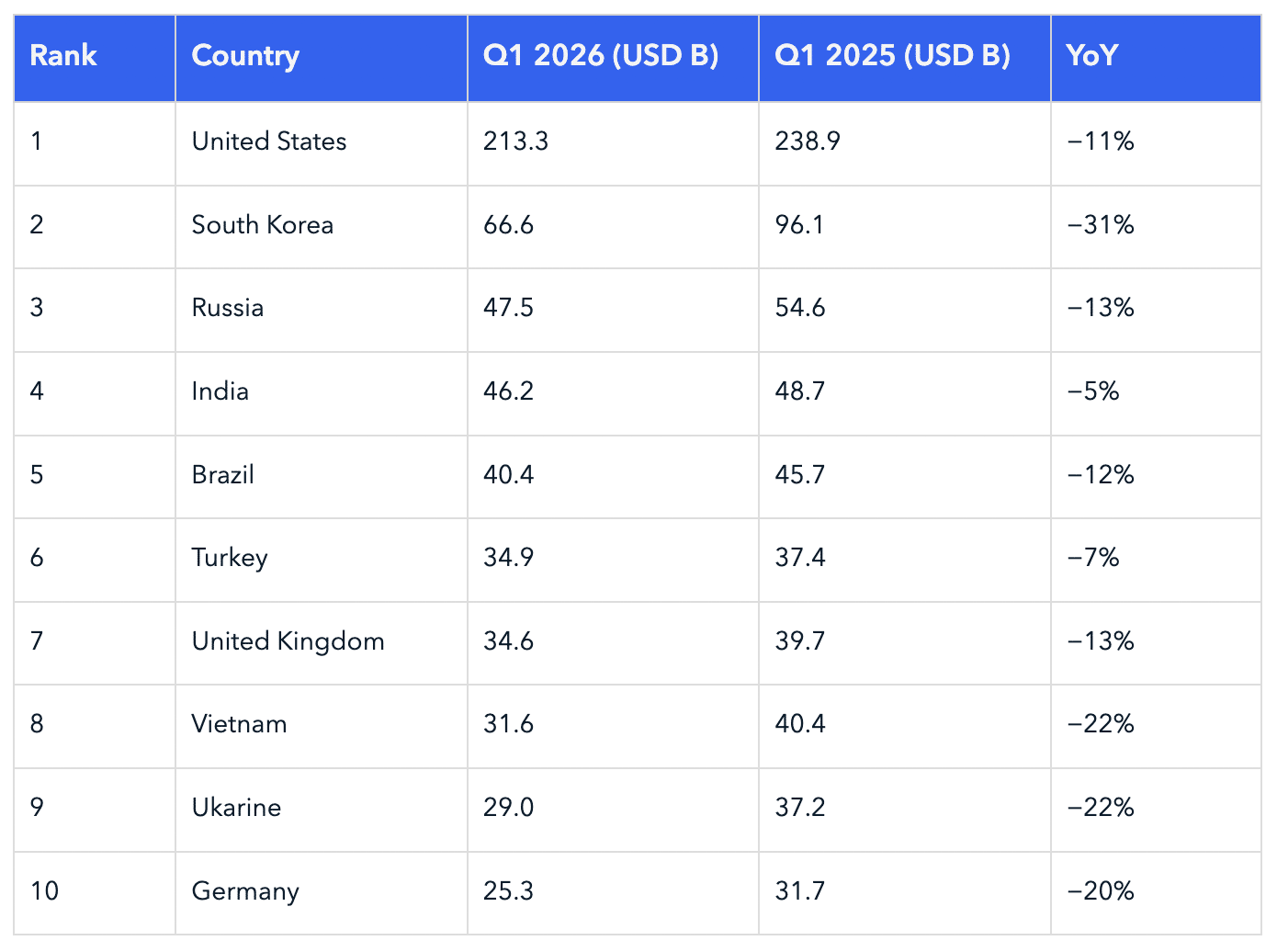
Source: TRM Labs

Final Summary

  • Germany’s two biggest banking networks are integrating cryptocurrency trading directly into their banking apps.
  • Roughly 25% of Germans who currently own cryptocurrency trust their main banks more than independent cryptocurrency platforms.

Пов'язані питання

QWhich two major German banking networks are integrating cryptocurrency trading into their apps?

AGermany's two largest banking networks, the Sparkassen savings banks and the cooperative Volksbanken Raiffeisenbanken, are integrating cryptocurrency trading directly into their banking apps.

QWhat is the name of the cryptocurrency platform introduced by the cooperative banks through DZ Bank?

AThe cooperative banks have introduced the 'meinKrypto' platform through DZ Bank, which allows local banks to deliver Bitcoin (BTC) and Ethereum (ETH) directly to retail savers.

QUnder which regulatory framework does the 'meinKrypto' platform operate?

AThe 'meinKrypto' platform operates under the European Union's Markets in Crypto-Assets (MiCA) framework and was approved by Germany's financial regulator, BaFin, in December 2025.

QAccording to Professor Co-Pierre Georg, what is a potential risk for novice clients using bank-integrated crypto services?

AProfessor Co-Pierre Georg suggests that novice clients may underestimate the high volatility and potential for total losses linked to cryptocurrencies due to the perceived legitimacy of well-known banks.

QWhat was the reported year-over-year change in Germany's retail cryptocurrency volume from Q1 2025 to Q1 2026?

AGermany's retail cryptocurrency volume declined by 20% year-over-year, from $31.7 billion in Q1 2025 to $25.3 billion in Q1 2026.

Пов'язані матеріали

Li Fei-Fei's Latest Long-Form Article: When Video Generation, Robotics, and NVIDIA All Call Themselves World Models, We Need a Taxonomy

In a new article, Dr. Fei-Fei Li addresses the widespread and often inconsistent use of the term "world model" in AI. She proposes a clear, functional taxonomy rooted in the classic Partially Observable Markov Decision Process (POMDP) loop (agent → action → state → observation → agent). According to this framework, current systems called "world models" are different projections of this loop, categorized by their primary output: 1. **Renderers**: Output observations (pixels). Their goal is visual fidelity for human consumption (e.g., video generation models like Sora). They are the most commercially mature but are limited by a focus on appearance over physical accuracy. 2. **Simulators**: Output states (geometric, physical, dynamic representations). They provide a structurally accurate world for both human professionals (e.g., architects) and computational agents (e.g., robots for training). Li argues simulators are the crucial, underappreciated bridge, as they can underpin both rendering and planning. 3. **Planners**: Output actions. Given an observation and a goal, they decide what an agent should do next (e.g., robotic action models). This area is highly promising but remains the least mature for real-world deployment. Li highlights a key trend: the boundaries between these three categories are beginning to blur, as they all rely on a shared underlying understanding of geometry, physics, and dynamics. The logical endpoint is a unified world foundation model capable of switching between rendering, simulation, and planning based on downstream needs. This convergence, she concludes, is central to advancing spatial intelligence—enabling machines not just to talk about the world, but to truly understand, imagine, and interact with it.

marsbit4 год тому

Li Fei-Fei's Latest Long-Form Article: When Video Generation, Robotics, and NVIDIA All Call Themselves World Models, We Need a Taxonomy

marsbit4 год тому

Forbes Feature: Stablecoin Cross-Border Payments Are Faster, But Not Yet Cheaper

A Forbes feature delves into the state of stablecoin-based cross-border payments, noting rapid growth but a key shortfall: while faster and more accessible, they are not yet cheaper. At a recent industry conference in Mexico City, optimism about technology, regulation, and volume was tempered by discussions with practitioners. The core issue is liquidity. Traditional FX brokers charge 60-70 basis points, and stablecoins promise to slash this to 2-5 basis points. However, this theoretical cost advantage cannot be realized until deep liquidity pools are established at scale, requiring significant institutional capital inflow. A major adoption barrier is trust. Businesses often rely on long-standing relationships with traditional brokers, valuing reliability over marginal cost savings. This shift will be gradual. Furthermore, successful companies in the space are not positioning themselves as replacements for legacy systems like SWIFT, but as complements. They leverage stablecoins for speed while using traditional rails for their standardization and reliability in ensuring accurate payment details—a critical factor for supplier payments to avoid customs issues. Companies like Caliza, experiencing high monthly growth, exemplify this hybrid approach. The industry anticipates consolidation, as long-term viability will depend on securing the essential trifecta: proper licensing, robust fiat on/off-ramps, and deep liquidity. Without these, firms risk being mere intermediaries rather than building sustainable businesses.

marsbit4 год тому

Forbes Feature: Stablecoin Cross-Border Payments Are Faster, But Not Yet Cheaper

marsbit4 год тому

Торгівля

Спот
活动图片