GenZVerse Unveils a Utility-First Web3 Platform That Prioritises Real Impact Over Speculation

TheNewsCryptoОпубліковано о 2026-04-13Востаннє оновлено о 2026-04-13

Анотація

GenZVerse introduces a utility-first Web3 platform built on Polygon’s Layer 2 blockchain, designed to prioritize tangible value over speculation. The platform integrates its native token into four core utility domains: governance voting, access to services, community rewards, and staking incentives—each tied to verifiable user actions rather than market speculation. It features fully open-source code, auditable smart contracts, and a transparent DAO structure to ensure accountability. The five-year roadmap focuses on phased development toward full decentralization by 2029, aiming to support millions of users with sustainable, community-driven growth.

In a market defined by speculative token launches and unfulfilled governance promises, GenZVerse enters with a platform built on demonstrable utility — where every token function maps to a concrete community action.

GenZVerse has unveiled a utility-first Web3 platform that makes a direct and deliberate argument: decentralised technology is capable of delivering tangible, measurable value — and it is the industry’s preoccupation with speculation, not any inherent limitation of blockchain infrastructure, that has prevented it from doing so at scale. Built on Polygon’s Layer 2 blockchain and governed by a fully transparent DAO framework, the GenZVerse platform is structured so that every feature, every token function, and every governance mechanism serves a verifiable, functional purpose.

The announcement is framed against a tension that sits at the heart of the current Web3 market. Over the past several years, the dominant pattern in blockchain-based platforms has been the reverse of what GenZVerse proposes: tokens launched first, utility constructed — or promised — second. Communities form around price action rather than platform value. Governance frameworks are added as credibility signals rather than operational necessities. The result has been a sustained erosion of trust in Web3 as a category, and a widening chasm between what decentralised technology could deliver and what it has actually produced.

“We exist because that gap is real, and because we believe it is closeable,” said Morten Lindberg Rothausen spokesperson at GenZVerse. “The problem is not the technology. Polygon’s Layer 2 infrastructure is capable, mature, and designed for exactly the kind of scalable, accessible community platform we are building. The problem has been a set of incentive structures that reward hype over substance. GenZVerse is built on a different set of incentives entirely.”

On the GenZVerse platform, the native token operates across four clearly defined utility domains. It grants governance voting rights, enabling token holders to participate directly in all material decisions affecting the platform. It provides access to platform features and services, ensuring that token utility is tied to actual usage rather than passive holding. It funds community reward distribution — recognising and compensating contribution, development, and engagement within the ecosystem. And it supports staking and participation incentives that reward long-term alignment with the platform’s mission.

No element of the token’s design is speculative by construction. Each use case reflects an activity that a community member can perform on the platform: voting on a governance proposal, accessing a platform service, contributing to ecosystem development, or staking in support of network stability. The token’s value, in GenZVerse’s model, is a function of the platform’s demonstrated utility — not of market sentiment, promotional activity, or artificial scarcity.

The platform launches with a fully open-source codebase and publicly auditable smart contracts, ensuring that GenZVerse’s utility-first claims are not simply asserted but are structurally verifiable. Any community member, developer, or independent auditor can examine the platform’s code, review its governance mechanisms, and confirm that its operations align with its stated principles. This level of technical transparency is, by design, a form of accountability.

GenZVerse’s five-year roadmap — available in the platform’s public whitepaper — further underscores the project’s long-term orientation. The roadmap does not promise speculative returns. It commits to phased, verifiable milestones: governance framework operationalisation in years one and two; scalable infrastructure and expanded utility in years three and four; and full decentralisation, with autonomous community governance, by year five. By 2029, the platform’s stated ambition is to support millions of users building decentralised applications and communities — a target that is achievable only if the platform delivers on its utility commitments at every preceding stage.

📈 Live Chart:

https://dexscreener.com/polygon/0xb071d691f2b6687ef15af992364d6aefa490ce5a

🔄 Trade Now:

https://dapp.quickswap.exchange/swap?type=best&from=0xc2132D05D31c914a87C6611C10748AEb04B58e8F&to=0x778575DDA30c784678c5972Ff41F75671415CdDc

📜 Contract Address: 0x778575DDA30c784678c5972Ff41F75671415CdDc

The platform is live. The whitepaper is publicly available. And the community portal is open for participation at GenZVerse.ai.

ABOUT GenZVerse

GenZVerse is a Polygon-based, fully decentralised Web3 platform built to deliver sustainable community governance and demonstrable, real-world utility. Grounded in the principles of radical transparency, open-source development, and genuine community ownership, GenZVerse is engineering a self-sustaining digital ecosystem in which token holders exercise direct democratic control over the platform’s evolution — from governance proposals to treasury allocation and product roadmap. GenZVerse operates without central points of failure. Its codebase is fully open-source, its smart contracts are publicly auditable, and its governance is entirely on-chain. The platform is built on Polygon’s Layer 2 infrastructure — providing fast, low-cost transactions that make participation accessible to communities worldwide, not merely to institutional actors. GenZVerse’s founding philosophy is captured in a single commitment: no hype, no promises — only transparent, community-driven development.

For further information, whitepaper access, and community onboarding, visit: https://GenZVerse.ai

Contact Details:

  • Organisation: GenZVerse
  • Email: info@GenZVerse.ai
  • Website: https://GenZVerse.ai

    Social Media Details:
  • Telegram Group :- https://t.me/+OlVZ2lq7IS9lNTU0
  • Telegram Channel :- https://t.me/GenZVerseai
  • YouTube
  • FaceBook
  • Whatsapp Channel
  • Discord :- https://discord.com/invite/YKhfTpza

Disclaimer: TheNewsCrypto does not endorse any content on this page. The content depicted in this Press Release does not represent any investment advice. TheNewsCrypto recommends our readers to make decisions based on their own research. TheNewsCrypto is not accountable for any damage or loss related to content, products, or services stated in this Press Release.


TagsGenZVersePress Release

Пов'язані питання

QWhat is the core argument that GenZVerse makes with its new Web3 platform?

AGenZVerse argues that decentralized technology is capable of delivering tangible, measurable value, and that it is the industry's preoccupation with speculation—not a limitation of the blockchain itself—that has prevented it from doing so at scale.

QOn which blockchain is the GenZVerse platform built and what is its governance model?

AThe GenZVerse platform is built on Polygon's Layer 2 blockchain and is governed by a fully transparent DAO (Decentralized Autonomous Organization) framework.

QWhat are the four defined utility domains of the platform's native token?

AThe four utility domains are: 1) Granting governance voting rights, 2) Providing access to platform features and services, 3) Funding community reward distribution, and 4) Supporting staking and participation incentives.

QHow does GenZVerse ensure accountability and transparency for its utility-first claims?

AGenZVerse ensures accountability by launching with a fully open-source codebase and publicly auditable smart contracts, allowing any community member or auditor to examine the code and verify that its operations align with its stated principles.

QWhat is the platform's long-term goal as outlined in its five-year roadmap?

AThe platform's ambition by 2029 (year five) is to achieve full decentralization with autonomous community governance and to support millions of users building decentralized applications and communities, contingent on delivering its utility commitments at every stage.

Пов'язані матеріали

OpenClaw and Cursor Just Invaded Phones! Agents Are Now in Your Pocket

AI Agents have officially arrived on mobile. In a landmark move, both OpenClaw and Cursor launched native mobile apps on the same day, fundamentally shifting how AI assistants are accessed and controlled. OpenClaw has released full-featured native apps for iOS and Android. Its "local-first" architecture, developed by the OpenClaw Foundation, keeps user data private by running the agent on a user's private Gateway. The mobile app now allows seamless remote control and approval of the agent's actions directly from a smartphone, with access to device capabilities like the camera, GPS, and contacts. Simultaneously, Cursor, the AI-powered coding tool, launched a public beta of its native iOS app. It enables developers to start and manage cloud-based AI coding agents from their phones. These agents can work asynchronously for extended periods—debugging, writing code, and creating pull requests—while developers are away from their computers. The app sends notifications for key decisions, allowing users to review and merge PRs from anywhere. Together, these releases signal a major shift: AI agents are no longer confined to desktop browsers or terminals. They are becoming persistent, autonomous assistants that work independently in the cloud, with humans transitioning from constant operators to mobile supervisors who approve key steps. The era of pocket-sized, on-demand AI is now here.

marsbit3 хв тому

OpenClaw and Cursor Just Invaded Phones! Agents Are Now in Your Pocket

marsbit3 хв тому

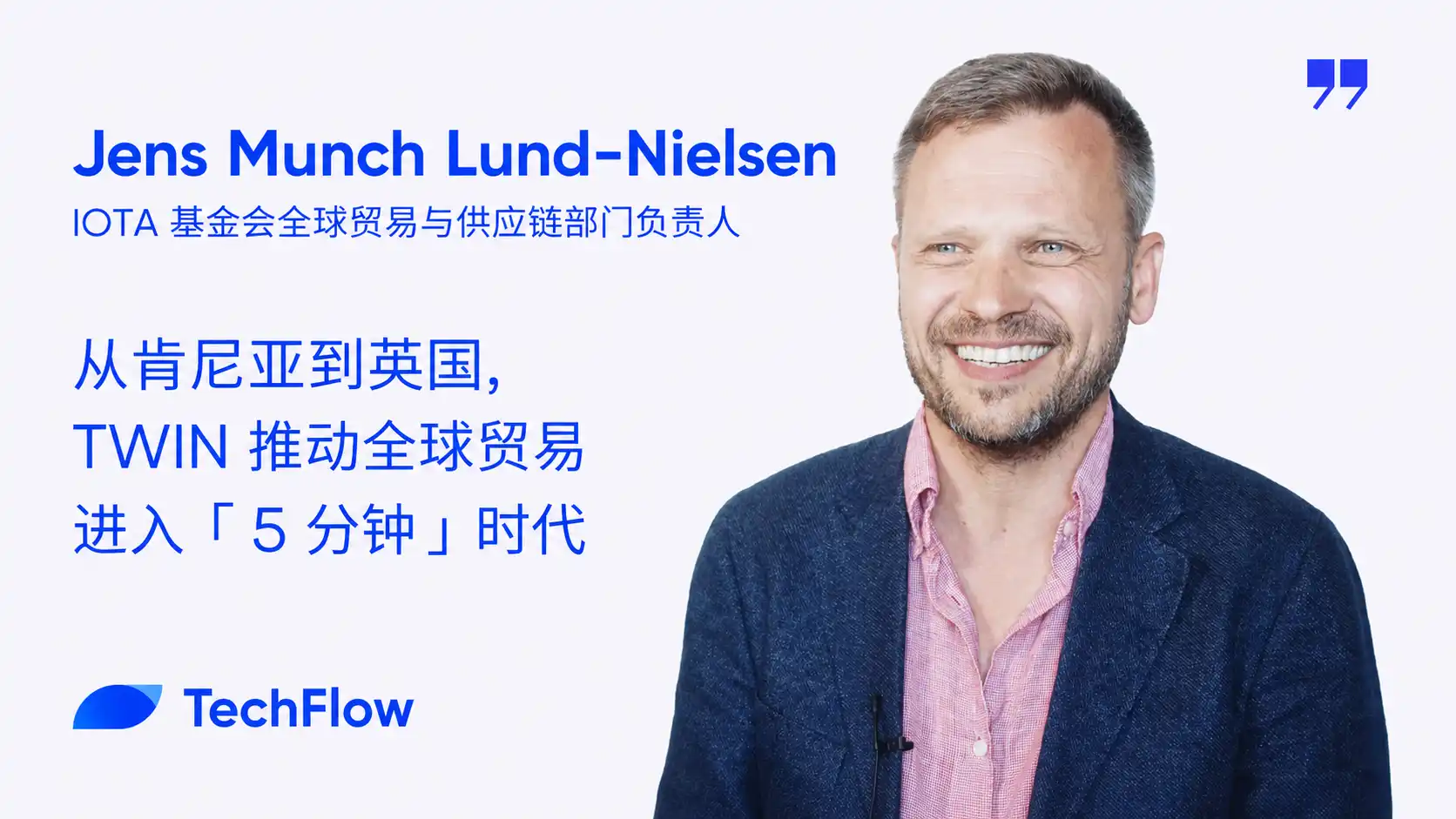
Dialogue with IOTA Foundation's Jens: From Kenya to the UK, TWIN Propels Global Trade into the '5-Minute' Era

**Summary: IOTA's TWIN Project is Speeding Up Global Trade** Jens Munch Lund-Nielsen, Head of Global Trade & Supply Chain at the IOTA Foundation, discusses how the TWIN (Trade and Logistics Information Network) project is addressing long-standing inefficiencies in global trade. Traditionally, cross-border trade involves numerous parties, extensive paperwork, and delays spanning weeks. TWIN, built on IOTA's decentralized, scalable, and low-cost infrastructure, aims to replace this fragmented, paper-based system with a real-time, trusted, and interconnected digital collaboration layer. As a neutral digital public infrastructure, TWIN allows governments, businesses, and ports to exchange verifiable data and documents without ceding control to a single entity. This solves a core coordination problem that previous, proprietary platforms failed to address due to a lack of trust and neutrality. Key real-world implementations include: * **TLIP in East Africa:** Reduced document retrieval times for flower, coffee, and tea exports from 6-7 hours to ~30 minutes, cutting administrative work by 50-60%. * **UK Ecosystem of Trust Trials:** Provided border agencies with much earlier visibility (up to 20+ hours) of incoming chilled poultry shipments from Poland, enabling better resource planning. * Other pilots focus on supply chain traceability for fruits/vegetables, port efficiency, and critical mineral sourcing. TWIN ensures interoperability across jurisdictions by adopting global standards (e.g., UN/CEFACT data models), leveraging decentralized identity systems (DIDs), and supporting legal frameworks like MLETR. Looking ahead, Jens is optimistic that a trusted "connective layer" like TWIN will scale in the coming years. Its success could fundamentally transform global trade, most notably by helping to close the current $2.5 trillion trade finance gap. By providing lenders with access to verifiable, real-time supply chain data, TWIN could unlock capital and reshape how businesses discover partners and secure financing.

marsbit27 хв тому

Dialogue with IOTA Foundation's Jens: From Kenya to the UK, TWIN Propels Global Trade into the '5-Minute' Era

marsbit27 хв тому

Торгівля

Спот
活动图片