From Libya to Iran: Nations in Blackout, Bitcoin Miners Uninterrupted

marsbitОпубліковано о 2026-02-02Востаннє оновлено о 2026-02-02

Анотація

From Libya to Iran: Nations in Darkness, Bitcoin Miners That Never Stop In the summer of 2025, Tehran and other parts of Iran faced extreme heat and severe power outages, forcing government offices and schools to shut down. Hospitals relied on diesel generators to keep life-saving equipment running. Yet, behind city walls, rows of Bitcoin mining machines continued operating at full capacity, almost never losing power. Similarly, in Libya, residents endure daily blackouts of 6 to 8 hours, while unauthorized mining farms in abandoned industrial sites run non-stop, using some of the world’s cheapest electricity—subsidized as low as $0.004 per kWh—to mine Bitcoin, often with outdated equipment smuggled into the country. This reflects one of the 21st century’s starkest energy paradoxes: in nations crippled by sanctions and civil conflict, electricity is no longer just a public service but a form of “exportable” hard currency. In Iran, mining was legalized in 2019 as a state strategy to bypass international financial sanctions. Miners were required to sell mined Bitcoin to the central bank. However, an estimated 85% of mining occurred illegally or semi-legally, often with ties to powerful entities. Despite temporary bans and crackdowns, mining rebounded quickly, draining the national grid and worsening public power shortages. Libya, fragmented since the fall of Gaddafi, lacks coherent regulation. Although cryptocurrency transactions and mining imports are officially banned, en...

On a summer night in Tehran, the heatwave felt like an airtight net, making it hard to breathe.

Amid the recurring power crises of recent years, the summer of 2025 became the most unbearable moment for this Iranian capital; that year, the city experienced one of the most extreme high temperatures in nearly half a century, with the mercury repeatedly breaking 40 degrees Celsius. Power rationing was enforced in 27 provinces, and numerous government offices and schools were shut down. In local hospitals, doctors had to rely on diesel generators to maintain power—if the blackout lasted too long, ventilators in the ICU could stop working.

But on the city's outskirts, behind walls, another sound was sharper: the deafening roar of industrial fans, rows of Bitcoin miners running at full capacity; large and small LED indicators twinkled like a sea of stars in the dark, and here, the power almost never went out.

On the other side of the Mediterranean, in the North African nation of Libya, the same scene plays out daily. Residents in the eastern region have long grown accustomed to daily rotating blackouts of 6 to 8 hours; food in refrigerators often spoils, children do homework by candlelight. But in abandoned steel mills outside the city, smuggled-in old mining rigs run nonstop, converting the country's nearly free electricity into Bitcoin, which is then exchanged for dollars through cryptocurrency exchanges.

This is one of the most absurd energy stories of the 21st century: in two nations battered by sanctions and civil war, electricity is no longer just a public service but is treated as a form of "exportable" hard currency.
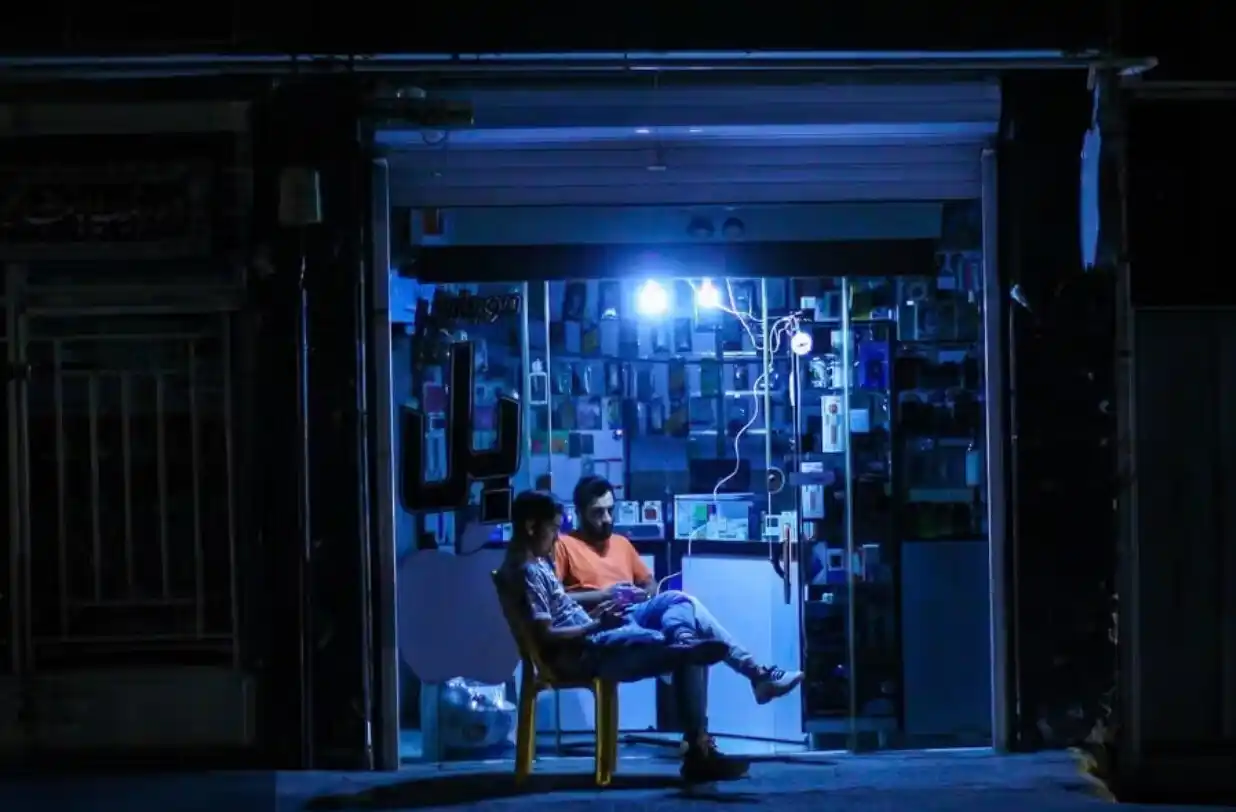
Image description: Two Iranian men sit outside their mobile phone shop, with only emergency lights on inside, as a power cut leaves the street in darkness.

Chapter One: Power Run: When Energy Becomes a Financial Tool
Bitcoin mining is, at its core, an energy arbitrage game. Anywhere in the world, if the electricity price is low enough, mining can be profitable. In Texas or Iceland, mine operators meticulously calculate the cost per kilowatt-hour; only the latest generation of efficient miners can survive the competition. But in Iran and Libya, the rules of the game are entirely different.

Iran's industrial electricity price is as low as $0.01 per kWh, Libya's is even more extreme—at approximately $0.004 per kWh, it is one of the lowest electricity prices in the world. Such low prices are possible due to massive government subsidies on fuel and artificially suppressed electricity tariffs. In a normal market, these prices wouldn't even cover the cost of generation.

But for miners, this is paradise. Even old mining rigs淘汰 from China or Kazakhstan—equipment long considered electronic waste in developed countries—can still turn an easy profit here. According to official data, in 2021, Libya's Bitcoin hash rate一度 accounted for about 0.6% of the global total, surpassing all other Arab and African countries and even some European economies.

This figure might seem small, but in Libya's context, it is absurd. This is a country of only 7 million people, with a grid loss rate as high as 40%, where daily rotating blackouts are the norm. At its peak, Bitcoin mining consumed about 2% of the country's total electricity generation, equivalent to 0.855 terawatt-hours (TWh) annually.

In Iran, the situation is even more extreme. The country possesses the world's fourth-largest oil reserves and second-largest natural gas reserves; theoretically, it should not lack power. But U.S. sanctions have cut off its access to advanced power generation equipment and technology, coupled with an aging grid and chaotic management, leaving Iran's power supply perpetually strained. The explosive growth of Bitcoin mining is pulling this taut string to its limit.

This is not ordinary industrial expansion. It is a run on a public resource—when electricity is treated as "hard currency" that can bypass the financial system, it no longer优先 flows to hospitals, schools, and residents, but to the mining rigs that can convert it into dollars.

Chapter Two: Two Countries, A Tale of Dual Mining

Iran: From "Exporting Energy" to "Exporting Hash Rate"
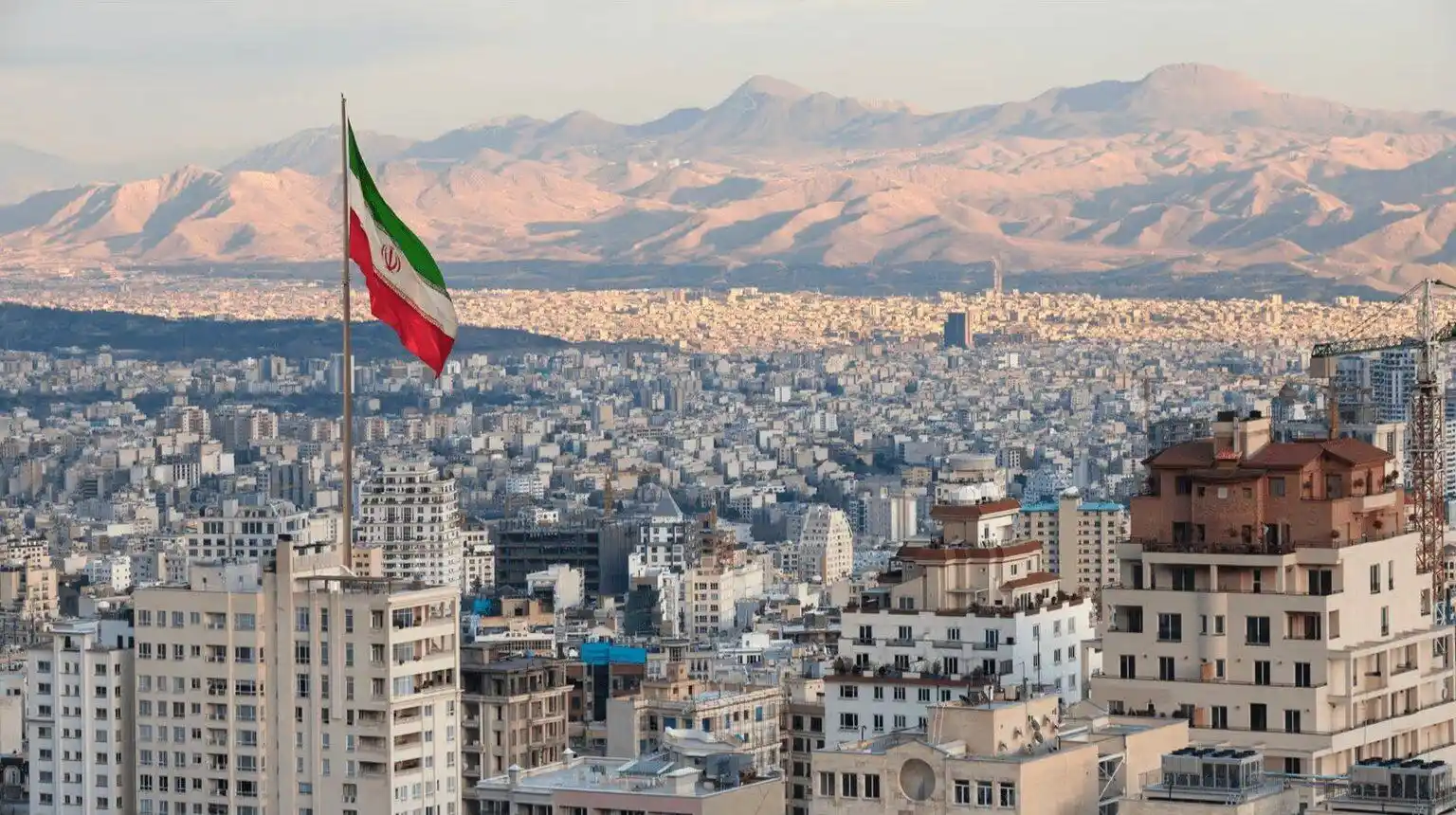
Under extreme sanction pressure, Iran chose to legalize Bitcoin mining, converting its cheap domestic electricity into globally tradable digital assets.

In 2018, the Trump administration withdrew from the Iran nuclear deal and reimposed "maximum pressure" sanctions. Iran was kicked out of the SWIFT international settlement system, unable to use dollars for international trade. Oil exports plummeted, foreign exchange dried up. In this context, Bitcoin mining恰好 provided a "energy monetization" side door: no need for SWIFT, no correspondent banks, just electricity, mining rigs, and a pipeline to sell the coins.

In 2019, the Iranian government formally recognized cryptocurrency mining as a legal industry and established a licensing system. The policy design seemed "modern": miners could apply for licenses, operate mines at preferential electricity rates, but had to sell the mined Bitcoin to the Central Bank of Iran.

In theory, this was a triple-win solution—the state exchanges cheap electricity for Bitcoin, then uses Bitcoin for foreign exchange or imports; miners get stable profits; grid load can be planned and regulated.

However, reality soon veered off course: Licenses existed, but the gray area was vast.

By 2021, then-President Rouhani publicly admitted that about 85% of Iran's mining activity was unlicensed; underground mines sprang up like mushrooms, from abandoned factories to mosque basements, from government office buildings to ordinary homes, mining rigs were everywhere. The deeper the electricity subsidy, the stronger the arbitrage motive; the looser the regulation, the more stealing electricity resembled a "default benefit."

Facing worsening power crises and illegal mining consuming over 2 gigawatts, the Iranian government announced a temporary ban on all cryptocurrency mining activities from May to September that year, for 4 months. This was the toughest nationwide ban since legalization in 2019.

During this period, the government organized large-scale raids: the Ministry of Energy, police, and local authorities stormed thousands of illegal mines, confiscating tens of thousands of mining machines in the second half of 2021 alone.

Yet after the ban ended, mining activity quickly rebounded. Many confiscated miners were put back into use, the scale of underground mines不减反增. This "crackdown" was seen by the public as a brief performance:表面上 cracking down on illegality, but in reality failing to address the deep-seated problems, instead allowing some well-connected mines to expand趁机.

More critically, multiple investigations and reports pointed out that entities closely linked to power structures had大规模介入 this industry, forming "privileged mines" enjoying independent power supply and law enforcement immunity.

When mines are backed by "untouchable hands," so-called crackdowns become political theater; and the public narrative is sharper: "We endure the darkness, just to keep the Bitcoin machines running."

Source: Financial Times

Libya: Cheap Power, Shadow Mining
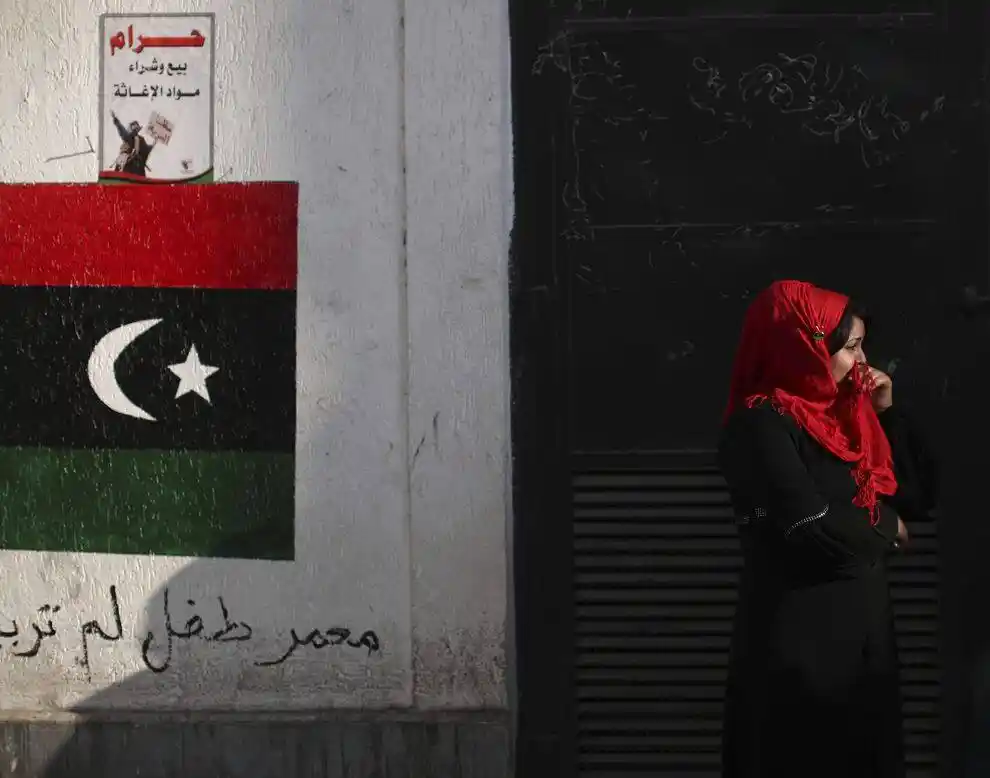
A wall graffiti in Libya condemns "buying and selling relief materials is illegal," reflecting public moral anger over unfair resource distribution—similar sentiments simmer quietly in the context of electricity subsidies being diverted for mining.

Libya's mining script is more like "wild growth in the absence of institutions."

Libya, this North African country (population approx. 7.3-7.5 million, area nearly 1.76 million sq km, the fourth largest country in Africa by area) on the southern Mediterranean coast, borders Egypt, Tunisia, Algeria, and others. Since the fall of Gaddafi's regime in 2011, the country has been mired in prolonged turmoil: recurring civil war, myriad armed factions, severely分裂 state institutions, creating a state of "managed fragmentation" (where violence levels are relatively controlled, but unified governance is absent).

What truly propelled Libya into a mining hotspot is its absurd electricity price structure. As one of Africa's largest oil producers, the Libyan government has long provided massive subsidies on electricity, keeping it at around $0.0040 per kWh—a price even lower than the fuel cost of generation. In a normal country, such subsidies are meant to safeguard people's livelihoods. But in Libya, it became a huge arbitrage opportunity.

Thus, a classic arbitrage model emerged:

  • Old mining rigs淘汰 in Europe and America can still be profitable in Libya;
  • Industrial zones, abandoned factories, warehouses are naturally suited to hide high electricity loads;
  • Equipment imports are restricted, but gray channels and smuggling keep machines coming in;

Although the Central Bank of Libya (CBL) declared virtual currency transactions illegal in 2018, and the Ministry of Economy banned the import of mining equipment in 2022, mining itself has not been explicitly prohibited by national law. Enforcement often relies on peripheral charges like "illegal electricity use" or "smuggling," and is ineffective in the reality of fragmented power, allowing the gray zone to persist and expand.

This state of "banned but not eradicated" is a typical manifestation of power fragmentation—decrees from the Central Bank and Ministry of Economy are often难以执行 in eastern Benghazi or southern regions. Local militias or armed groups sometimes even tacitly allow or protect mines, leading to wild growth in the gray zone.
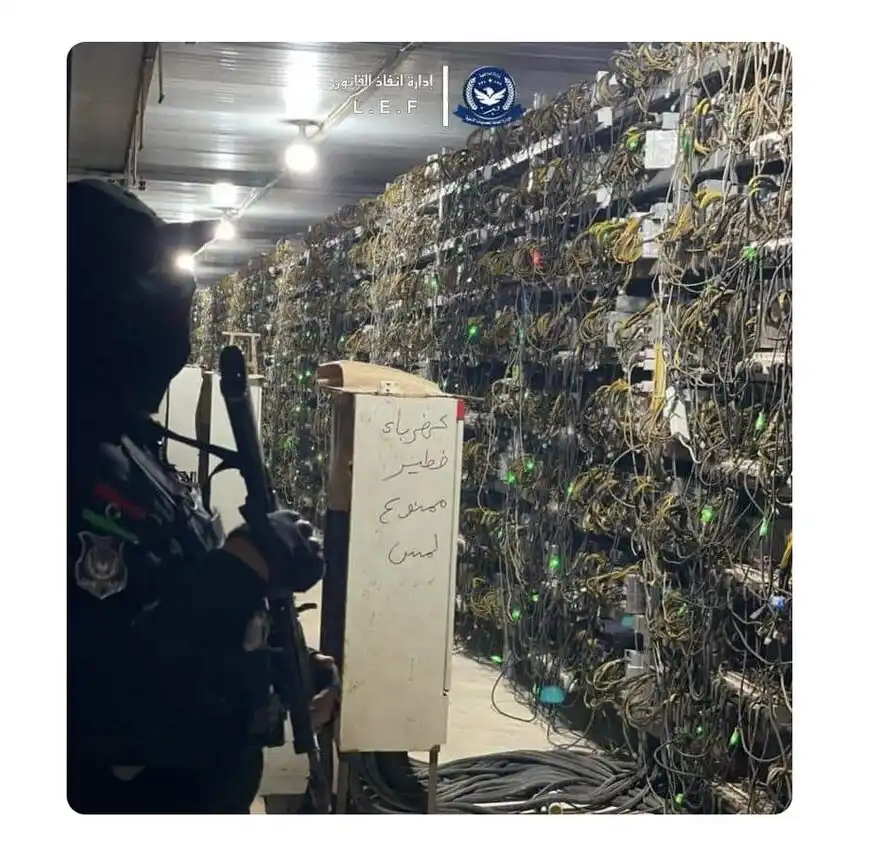
Source: @emad_badi

Even more absurd is that a significant portion of these mines are operated by foreigners. In November 2025, a Libyan prosecutor sentenced 9 people operating a mine inside the Zliten steel mill to three years in prison, confiscated equipment, and追缴 illegal proceeds. In previous raids, dozens of Asian nationals were arrested operating industrial-scale mines using old rigs淘汰 from China or Kazakhstan.

This old equipment早已无利可图 in developed countries, but in Libya, it's still a money printer. Because electricity is so cheap, even the least efficient miners can be profitable. This is why Libya has become the resurrection ground for the global "miner graveyard"—electronic waste淘汰 in Texas or Iceland finds a second life here.

Chapter Three: Collapsing Grids and Energy Privatization

Iran and Libya took two different paths: one tried to incorporate Bitcoin mining into the state apparatus, the other long let it drift in the shadows of the system. But the destination is the same—widening grid deficits, and the political consequences of resource allocation are beginning to show.

This is not merely a technical failure, but a result of political economy. Subsidized electricity creates the illusion that "electricity is cheap"; mining provides the temptation that "electricity can be monetized"; and the power structure determines who can cash in on this temptation.

When mining rigs share the same grid as hospitals, factories, and residents, the conflict is no longer abstract. Blackouts damage not just refrigerators and air conditioners, but also operating lights, blood bank refrigerators, and industrial production lines. Every blackout is a silent scrutiny of how public resources are allocated.

The problem is that the profits from mining are highly "portable." Electricity is local, its cost borne by society; Bitcoin is global, its value can be transferred instantly. The result is an extremely asymmetric structure: society bears the power consumption and blackouts, a few reap the cross-border mobile profits.

In countries with sound institutions and abundant energy, Bitcoin mining is usually discussed as an industrial activity; but in countries like Iran and Libya, the nature of the question itself changes.

Emerging Industry, or Resource Plunder?

Globally, Bitcoin mining is seen as an emerging industry, even a symbol of the "digital economy." But in the cases of Iran and Libya, it more closely resembles an experiment in the privatization of public resources.

If it were an industry, it should at least create jobs, pay taxes, accept regulation, and bring net benefits to society. But in these two countries, mining is highly automated, creating almost no jobs; a large number of mines are illegal or semi-legal, their tax contributions are limited, and even licensed mines lack transparency in where their profits flow.

Cheap electricity originally existed to safeguard people's livelihoods. In Iran, energy subsidies have been part of the "social contract" since the Islamic Revolution—the government uses oil revenues to subsidize electricity, and the people accept authoritarian rule. In Libya, electricity subsidies are also core to the welfare system inherited from the Gaddafi era.

But when these subsidies are used for Bitcoin mining, their nature fundamentally changes. Electricity is no longer a public service, but a means of production used by a few to create private wealth. Ordinary citizens not only do not benefit from it, but actually pay the price—more frequent blackouts, higher costs for diesel generators, and more fragile medical and educational services.

More importantly, mining does not bring real foreign exchange income to these countries. In theory, the Iranian government requires miners to sell Bitcoin to the central bank, but the actual implementation is questionable. In Libya, there is no such mechanism. Most Bitcoin is exchanged for dollars or other currencies on foreign exchanges, then流出 through underground banks or cryptocurrency channels. These funds neither enter the state treasury nor flow back into the real economy; they become the wealth of a few individuals.

In this sense, Bitcoin mining更像 a new form of "resource curse." It does not create wealth through production and innovation, but rather extracts public resources by leveraging price distortions and institutional loopholes. And those who pay the price are often the most vulnerable groups.

Conclusion: The True Cost of One Bitcoin

In a world of increasingly scarce resources, electricity is no longer just a tool to illuminate darkness, but a commodity that can be transformed, traded, and even plundered. When a nation "exports" electricity as "hard currency," it is essentially consuming the future meant for people's livelihoods and development.

The issue is not Bitcoin itself, but who controls the allocation of public resources. When this power lacks constraints, the so-called "industry" becomes just another form of plunder.

And those sitting in the darkness are still waiting for the lights to come back on.

"Not everything that is faced can be changed, but nothing can be changed until it is faced."

Пов'язані питання

QWhat is the core paradox highlighted in the article regarding electricity and Bitcoin mining in Iran and Libya?

AThe core paradox is that while the general population in Iran and Libya suffers from frequent and severe power outages, affecting hospitals, schools, and daily life, Bitcoin mining operations continue to run almost uninterrupted, consuming significant portions of the national power supply to generate a privately held, exportable digital asset.

QHow did the government of Iran attempt to regulate and benefit from Bitcoin mining, and what was the outcome?

AIn 2019, the Iranian government legalized cryptocurrency mining, established a licensing system, and required miners to sell their mined Bitcoin to the central bank. The intended outcome was a 'win-win' where the state could monetize its cheap electricity for foreign exchange. However, the reality was that an estimated 85% of mining remained unlicensed and illegal. A temporary ban and crackdowns failed to stop the activity, which rebounded afterward, with well-connected entities often operating with impunity.

QWhy is Libya, a country with a fragmented government and daily power cuts, an attractive location for Bitcoin mining?

ALibya is attractive due to its extremely low, heavily subsidized electricity price (approximately $0.004 per kWh), which is among the cheapest in the world. This makes it profitable to run even old, inefficient mining rigs that are obsolete in other countries. The lack of unified national governance and enforcement of bans allows mining to persist in a legal gray area, often protected by local militias.

QWhat is the fundamental economic and social problem created by Bitcoin mining in the context of these two nations?

AThe fundamental problem is the asymmetric distribution of costs and benefits. The cost of electricity (heavily subsidized by the state) and the social cost of frequent blackouts are borne by the public, affecting essential services like healthcare and education. Meanwhile, the profits from converting that electricity into Bitcoin are highly portable and are largely captured by a few private actors, often flowing out of the country without contributing to the national economy or tax base, resembling a form of resource掠夺 (plunder).

QAccording to the article, how does Bitcoin mining in Iran and Libya differ from how it is perceived in countries with robust institutions and ample energy?

AIn countries with robust institutions and ample energy, Bitcoin mining is typically discussed as an industrial activity or part of the digital economy. In Iran and Libya, however, it is less an industry and more a mechanism for the privatization and exploitation of a public resource. It creates few jobs, contributes little in taxes, operates largely outside of effective regulation, and ultimately functions as a form of resource extraction that benefits a privileged few at the expense of the broader population's well-being.

Пов'язані матеріали

Торгівля

Спот
Ф'ючерси

Популярні статті

Що таке BITCOIN

Розуміння HarryPotterObamaSonic10Inu (ERC-20) та його позиції у крипто-просторі Останніми роками ринок криптовалют спостерігав за зростанням популярності мем-коінів, які привертають інтерес не тільки трейдерів, але й тих, хто шукає спілкування та розважальну цінність. Серед цих унікальних токенів є HarryPotterObamaSonic10Inu (ERC-20), інтригуючий проект, що поєднує культурні посилання з тканинами криптовалюти. Ця стаття досліджує ключові аспекти HarryPotterObamaSonic10Inu, вивчаючи його механізми, спільноту та його взаємодію з ширшим крипто-ландшафтом. Що таке HarryPotterObamaSonic10Inu (ERC-20)? Як випливає з його назви, HarryPotterObamaSonic10Inu є мем-коіном, побудованим на блокчейні Ethereum, класифікованим за стандартом ERC-20. На відміну від традиційних криптовалют, які можуть підкреслювати практичну корисність або інвестиційний потенціал, цей токен процвітає завдяки розважальній цінності та силі своєї спільноти. Проект спрямований на створення середовища, де зацікавлені користувачі можуть об'єднуватися, ділитися ідеями та брати участь у заходах, натхненних різноманітними культурними явищами. Однією з примітних особливостей HarryPotterObamaSonic10Inu є нульовий податок на транзакції. Цей привабливий елемент має на меті заохочувати торгівлю та участь у спільноті, позбавлену додаткових витрат, які можуть відлякувати дрібних трейдерів. Загальна пропозиція монет становить один мільярд токенів, що позначає намір підтримувати суттєву циркуляцію в межах спільноти. Творець HarryPotterObamaSonic10Inu (ERC-20) Походження HarryPotterObamaSonic10Inu дещо окутане таємницею; деталі про творця залишаються невідомими. Розвиток цього токена позбавлений впізнаваної команди або чіткої стратегії, що не є рідкістю в секторі мем-коінів. Натомість проект виник органічно, а його розвиток значною мірою залежить від ентузіазму та участі його спільноти. Інвестори HarryPotterObamaSonic10Inu (ERC-20) Щодо зовнішніх інвестицій та підтримки, HarryPotterObamaSonic10Inu також залишається невизначеним. Токен не зазначає жодних відомих інвестиційних фондів або значної організаційної підтримки. Натомість життєва сила проекту полягає в його базовій спільноті, яка інформує про його зростання та стійкість через колективні дії та залученість у крипто-просторі. Як працює HarryPotterObamaSonic10Inu (ERC-20)? Як мем-коін, HarryPotterObamaSonic10Inu функціонує передусім поза традиційними рамками, що часто регулюють вартість активів. Є кілька відмінних аспектів, що визначають, як працює проект: Транзакції без податку: Завдяки відсутності податкових зборів на транзакції, користувачі можуть вільно купувати та продавати токен, не турбуючись про приховані витрати. Залучення спільноти: Проект процвітає завдяки взаємодії спільноти, використовуючи соціальні медіа для створення шуму та сприяння залученню. Обговорення, обмін контентом та залученість є ключовими елементами, що допомагають розширити його охоплення та зміцнити лояльність серед прихильників. Відсутність практичної корисності: Слід зазначити, що HarryPotterObamaSonic10Inu не пропонує конкретної корисності в рамках фінансової екосистеми. Натомість він класифікується як токен, що призначений в основному для розваги та спільнотних активностей. Культурне посилання: Токен кмітливо вплітає елементи популярної культури, щоб привернути інтерес, зв'язуючи з ентузіастами мемів та крипто-стежками. HarryPotterObamaSonic10Inu ілюструє, як мем-коіни функціонують інакше, ніж традиційні криптовалютні проекти, увійшовши на ринок як інноваційні соціальні конструкти, а не утилітарні активи. Хронологія HarryPotterObamaSonic10Inu (ERC-20) Історія HarryPotterObamaSonic10Inu відзначена кількома значними етапами: Створення: Токен виник з вірусного мему, захопивши уяву багатьох крипто-ентузіастів. Конкретні дати створення недоступні, що підкреслює його органічний розвиток. Лістинг на біржах: HarryPotterObamaSonic10Inu з'явився на різних біржах, дозволяючи зручніший доступ і торгівлю спільноти. Ініціативи залучення спільноти: Ведення діяльності, спрямованої на покращення взаємодії спільноти, включаючи конкурси, кампанії в соціальних мережах та створення контенту від фанатів та прихильників. Плани на майбутнє: Дорожня карта проекту включає запуск колекції NFT, мерчандайзинг та електронну комерцію, пов'язану з його культурними темами, що далі залучає спільноту та намагається додати більше вимірів до його екосистеми. Ключові моменти про HarryPotterObamaSonic10Inu (ERC-20) Спільнотний підхід: Проект надає пріоритет колективному внеску та креативності, забезпечуючи, щоб участь користувачів була в центрі його розвитку. Класифікація як мем-коін: Це є його епігенез розважальної криптовалюти, що відрізняється від традиційних інвестиційних інструментів. Жодного прямого відношення до Bitcoin: Незважаючи на схожість у назві, HarryPotterObamaSonic10Inu є відмінним і не має жодного зв’язку з Bitcoin або іншими усталеними криптовалютами. Зосередженість на співпраці: HarryPotterObamaSonic10Inu створено для того, щоб надати простір для співпраці та обміну історіями серед його власників, забезпечуючи шлях для творчості та спільного зв'язку. Перспективи на майбутнє: Амбіція розширитися за межі початкової концепції в NFT та мерчандайз відкриває шлях для проекту потенційно потрапити в більш мейнстрімні сфери цифрової культури. Оскільки мем-коіни продовжують захоплювати уяву спільноти криптовалют, HarryPotterObamaSonic10Inu (ERC-20) вирізняється своїми культурними зв'язками та орієнтованим на спільноту підходом. Хоча він може не відповідати типовій моделі утилітарного токена, його суть полягає в радощах і товариськості, що підтримуються серед його прихильників, підкреслюючи еволюційну природу криптовалют в усе більш цифрову епоху. Оскільки проект продовжує розвиватися, важливо спостерігати за тим, як динаміка спільноти вплине на його траєкторію в постійно змінюваному ландшафті технології блокчейн.

1.7k переглядів усьогоОпубліковано 2024.04.01Оновлено 2024.12.03

Що таке BITCOIN

Як купити BTC

Ласкаво просимо до HTX.com! Ми зробили покупку Bitcoin (BTC) простою та зручною. Дотримуйтесь нашої покрокової інструкції, щоб розпочати свою криптовалютну подорож.Крок 1: Створіть обліковий запис на HTXВикористовуйте свою електронну пошту або номер телефону, щоб зареєструвати обліковий запис на HTX безплатно. Пройдіть безпроблемну реєстрацію й отримайте доступ до всіх функцій.ЗареєструватисьКрок 2: Перейдіть до розділу Купити крипту і виберіть спосіб оплатиКредитна/дебетова картка: використовуйте вашу картку Visa або Mastercard, щоб миттєво купити Bitcoin (BTC).Баланс: використовуйте кошти з балансу вашого рахунку HTX для безперешкодної торгівлі.Треті особи: ми додали популярні способи оплати, такі як Google Pay та Apple Pay, щоб підвищити зручність.P2P: Торгуйте безпосередньо з іншими користувачами на HTX.Позабіржова торгівля (OTC): ми пропонуємо індивідуальні послуги та конкурентні обмінні курси для трейдерів.Крок 3: Зберігайте свої Bitcoin (BTC)Після придбання Bitcoin (BTC) збережіть його у своєму обліковому записі на HTX. Крім того, ви можете відправити його в інше місце за допомогою блокчейн-переказу або використовувати його для торгівлі іншими криптовалютами.Крок 4: Торгівля Bitcoin (BTC)Легко торгуйте Bitcoin (BTC) на спотовому ринку HTX. Просто увійдіть до свого облікового запису, виберіть торгову пару, укладайте угоди та спостерігайте за ними в режимі реального часу. Ми пропонуємо зручний досвід як для початківців, так і для досвідчених трейдерів.

4.3k переглядів усьогоОпубліковано 2024.12.12Оновлено 2025.03.21

Як купити BTC

Що таке $BITCOIN

ЦИФРОВЕ ЗОЛОТО ($BITCOIN): Комплексний аналіз Вступ до ЦИФРОВОГО ЗОЛОТА ($BITCOIN) ЦИФРОВЕ ЗОЛОТО ($BITCOIN) — це проект на основі блокчейну, що працює в мережі Solana, який має на меті поєднати характеристики традиційних дорогоцінних металів з інноваціями децентралізованих технологій. Хоча він має таку ж назву, як і Bitcoin, який часто називають “цифровим золотом” через його сприйняття як засобу збереження вартості, ЦИФРОВЕ ЗОЛОТО є окремим токеном, розробленим для створення унікальної екосистеми в ландшафті Web3. Його мета — позиціонувати себе як життєздатний альтернативний цифровий актив, хоча деталі щодо його застосувань і функціональностей все ще розробляються. Що таке ЦИФРОВЕ ЗОЛОТО ($BITCOIN)? ЦИФРОВЕ ЗОЛОТО ($BITCOIN) — це токен криптовалюти, спеціально розроблений для використання в блокчейні Solana. На відміну від Bitcoin, який виконує широко визнану роль зберігання вартості, цей токен, здається, зосереджується на більш широких застосуваннях і характеристиках. Помітні аспекти включають: Інфраструктура блокчейну: Токен побудований на блокчейні Solana, відомому своєю здатністю обробляти швидкі та низьковартісні транзакції. Динаміка постачання: ЦИФРОВЕ ЗОЛОТО має максимальне постачання, обмежене 100 квадрильйонами токенів (100P $BITCOIN), хоча деталі щодо його обігового постачання наразі не розголошуються. Утиліта: Хоча точні функціональності не викладені, є вказівки на те, що токен може бути використаний для різних застосувань, потенційно пов'язаних з децентралізованими додатками (dApps) або стратегіями токенізації активів. Хто є творцем ЦИФРОВОГО ЗОЛОТА ($BITCOIN)? На даний момент особа творців і команди розробників, що стоять за ЦИФРОВИМ ЗОЛОТОМ ($BITCOIN), залишається невідомою. Ця ситуація є типовою для багатьох інноваційних проектів у сфері блокчейну, особливо тих, що пов'язані з децентралізованими фінансами та феноменом мем-коінів. Хоча така анонімність може сприяти культурі, орієнтованій на спільноту, вона посилює занепокоєння щодо управління та підзвітності. Хто є інвесторами ЦИФРОВОГО ЗОЛОТА ($BITCOIN)? Доступна інформація вказує на те, що ЦИФРОВЕ ЗОЛОТО ($BITCOIN) не має жодних відомих інституційних спонсорів або помітних венчурних капіталовкладень. Проект, здається, працює за моделлю “рівний до рівного”, зосереджуючись на підтримці та прийнятті спільноти, а не на традиційних шляхах фінансування. Його активність і ліквідність переважно розташовані на децентралізованих біржах (DEX), таких як PumpSwap, а не на встановлених централізованих торгових платформах, що ще більше підкреслює його підхід знизу вгору. Як працює ЦИФРОВЕ ЗОЛОТО ($BITCOIN) Операційні механізми ЦИФРОВОГО ЗОЛОТА ($BITCOIN) можна детальніше розглянути на основі його дизайну блокчейну та характеристик мережі: Механізм консенсусу: Використовуючи унікальний proof-of-history (PoH) Solana в поєднанні з моделлю proof-of-stake (PoS), проект забезпечує ефективну валідацію транзакцій, що сприяє високій продуктивності мережі. Токеноміка: Хоча конкретні дефляційні механізми не були детально описані, велике максимальне постачання токенів вказує на те, що воно може задовольняти мікротранзакції або нішеві випадки використання, які ще потрібно визначити. Інтероперабельність: Існує потенціал для інтеграції з більш широкою екосистемою Solana, включаючи різні платформи децентралізованих фінансів (DeFi). Однак деталі щодо конкретних інтеграцій залишаються невизначеними. Хронологія ключових подій Ось хронологія, яка підкреслює значні віхи, пов'язані з ЦИФРОВИМ ЗОЛОТОМ ($BITCOIN): 2023: Початкове розгортання токена відбувається на блокчейні Solana, позначене його адресою контракту. 2024: ЦИФРОВЕ ЗОЛОТО набуває видимості, оскільки стає доступним для торгівлі на децентралізованих біржах, таких як PumpSwap, що дозволяє користувачам торгувати ним проти SOL. 2025: Проект спостерігає спорадичну торгову активність і потенційний інтерес до ініціатив, очолюваних спільнотою, хоча на даний момент не зафіксовано жодних значних партнерств або технічних досягнень. Критичний аналіз Сильні сторони Масштабованість: Основна інфраструктура Solana підтримує високі обсяги транзакцій, що може підвищити утиліту $BITCOIN у різних сценаріях транзакцій. Доступність: Потенційно низька торгова ціна за токен може привабити роздрібних інвесторів, сприяючи більш широкій участі завдяки можливостям дробового володіння. Ризики Відсутність прозорості: Відсутність публічно відомих спонсорів, розробників або процесу аудиту може викликати скептицизм щодо стійкості та надійності проекту. Волатильність ринку: Торгова активність сильно залежить від спекулятивної поведінки, що може призвести до значної волатильності цін і невизначеності для інвесторів. Висновок ЦИФРОВЕ ЗОЛОТО ($BITCOIN) постає як цікавій, але неоднозначний проект у швидко розвиваючійся екосистемі Solana. Хоча він намагається використати наратив “цифрового золота”, його відхід від встановленої ролі Bitcoin як засобу збереження вартості підкреслює необхідність чіткішого розмежування його передбачуваної утиліти та структури управління. Майбутнє прийняття та адаптація, ймовірно, залежатиме від вирішення поточної непрозорості та більш чіткого визначення його операційних та економічних стратегій. Примітка: Цей звіт охоплює синтезовану інформацію, доступну станом на жовтень 2023 року, і можуть відбутися події, що виходять за межі дослідницького періоду.

75 переглядів усьогоОпубліковано 2025.05.13Оновлено 2025.05.13

Що таке $BITCOIN

Обговорення

Ласкаво просимо до спільноти HTX. Тут ви можете бути в курсі останніх подій розвитку платформи та отримати доступ до професійної ринкової інформації. Нижче представлені думки користувачів щодо ціни BTC (BTC).

活动图片














