Author: Eric, Foresight News
In the early morning of July 10th, Beijing time, a Bitcoin miner plugged a $150 Bitaxe Gamma into a socket, connected it to their home WiFi, and ran it on Public Pool for 8 hours, miraculously mining Bitcoin block 957382 and receiving 3.1382 BTC, worth approximately $200,000 at the time.
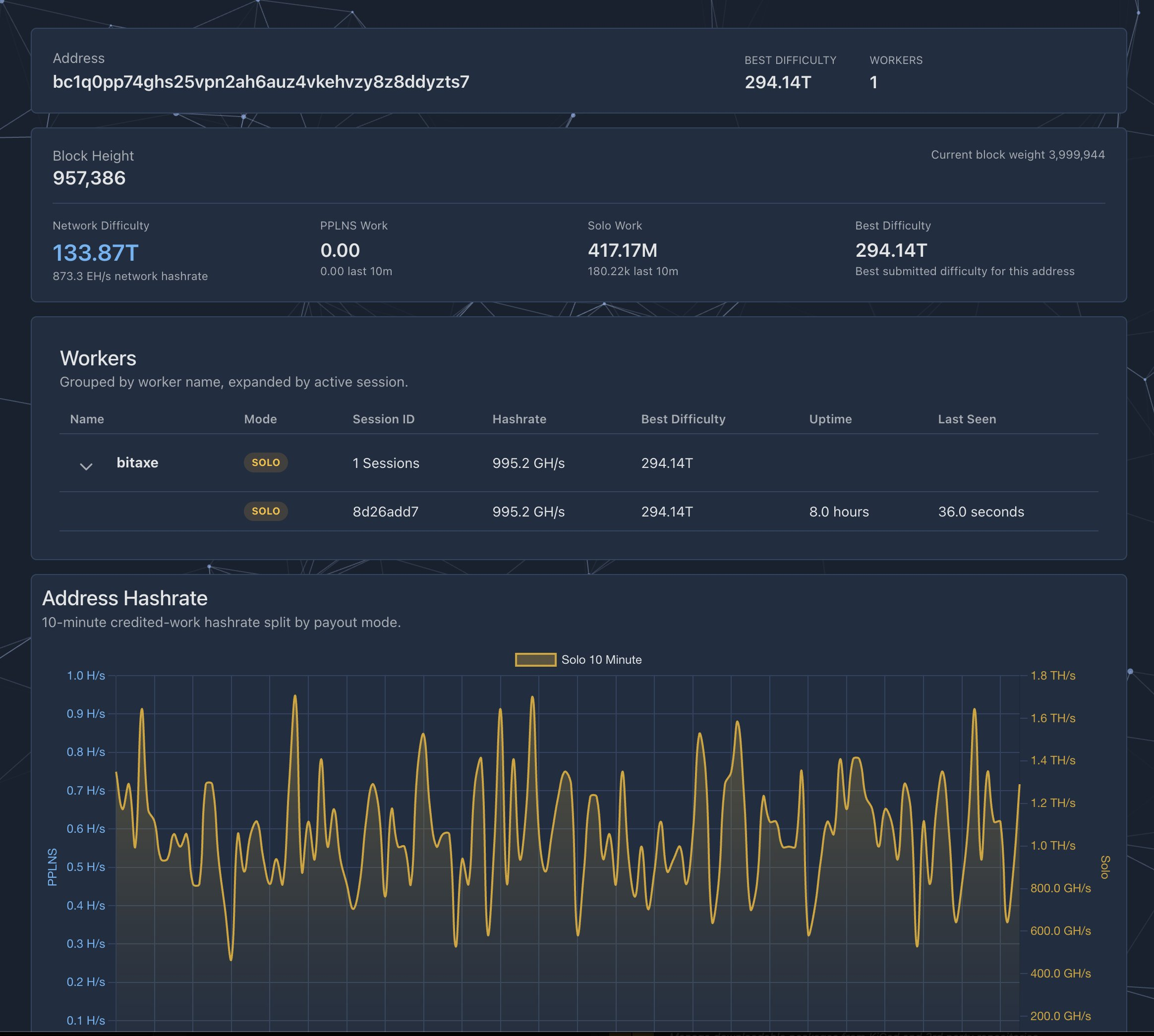
This so-called 'miner' is only the size of a router: equipped with a BM1370 chip, a power consumption of 15 to 21 watts, and a hash rate of less than 1 TH/s. During its mining period, the total Bitcoin network hash rate was about 874 EH/s, meaning this little device's share was less than one nine-hundred-millionth of the network.
At that rate, this small machine would theoretically need to wait 16,701 years to mine a single block—roughly from the Late Paleolithic period around 14,000 BC to today. Back then, Homo sapiens hadn't yet mastered agriculture and animal husbandry, surviving solely by hunting.
But this "chosen one" did it in just 8 hours. During that time, Bitcoin went through 48 block periods, making his winning odds about 1 in 18.3 million.
What does that number mean? The probability of winning the top prize in the Chinese welfare lottery "Double Color Ball" is about 1 in 17.72 million. In other words, with a device smaller than a set-top box, in less than one night, he accomplished a feat equivalent to hitting the Double Color Ball jackpot, with a return of about 1,330 times his investment.
This kind of "absurd" event isn't the first to happen this year.
Back in February, another miner didn't even buy hardware; they spent $75 renting 1 PH/s of hash rate on a hash power leasing platform and tried their luck on CKPool. Based on the Bitcoin network's hash rate at the time, this miner's probability of mining a single block was about 1 in 800,000, theoretically requiring a 15-year wait. Yet, before the $75 was even spent, block 938092 was theirs, netting them 3.125 BTC.
On March 10th, a 480 GH/s Bitaxe Pocket Rig also struck gold. With a hash rate half that of the device mentioned earlier, calculations based on data from the time suggested an expected block discovery time exceeding 25,000 years for this miner. But it just so happened to find block 887212 on a day in March, taking home a reward worth about $258,000. CKPool's operator, Con Kolivas, later remarked on social media that such hash power had only tens of millions-to-one odds of winning daily, calling it "pure, outrageous luck."
There have been several such examples this year. On April 9th, a miner using approximately 70 TH/s (equivalent to an older Antminer S17+) mined block 944306 via CKPool, receiving about 3.128 BTC (worth around $222,000), with daily winning odds of about 1 in 100,000. In late May, a miner using a small cluster of 14 Canaan Nano devices (total hash rate 157 TH/s) mined block 951771 via Braiins Solo, earning a reward worth about $232,000.
According to CoinDesk statistics, individual miners have mined a total of 24 blocks in the past 12 months, with 12 of those blocks in 2026 alone being claimed by individual miners using mining rigs as "lottery tickets." Compared to the total number of Bitcoin blocks in those 12 months, these lucky individuals account for less than five ten-thousandths.
Excluding these extremely lucky outliers, over 99.9% of blocks are still firmly controlled by industrial-scale mining pools like Foundry USA and AntPool. These lucky winners are more akin to ordinary people winning the lottery jackpot than representatives of any industry trend. But precisely because the odds are absurdly low, these stories become interesting. When someone spends $150 on a small device that looks like an electronic toy, places it on a desk, and 8 hours later finds $200,000 in their account—even if it only happens once, it's enough bragging rights for a lifetime.
Of course, behind all these low-probability events are countless unlucky souls who have run their rigs for months or even years without mining anything, quietly paying electricity bills all the while. Bitcoin mining has always been like this: the sudden wealth stories of a few make the news headlines, while the majority's equipment heats up quietly in the corner. It's just that every once in a while, someone with luck so good it induces jealousy comes along, reminding us that this endeavor is, at its core, still a mathematical lottery. And this year's lottery seems to be particularly favoring those trying their luck with small stakes.