Farewell to 'Super Connector': Hong Kong's 'Global Hub' Ambition, What Is It Competing with Singapore and New York For?

marsbitОпубліковано о 2025-12-19Востаннє оновлено о 2025-12-19

Анотація

Hong Kong is re-evaluating its role as a "super-connector" between China and global markets, facing intense competition from rivals like Singapore and New York. Despite strong market data—including a 120% surge in average daily turnover and a 709% jump in IPO fundraising in early 2025—a strategic shift is underway. The Hong Kong Financial Development Council’s report advocates transitioning from a passive gateway to an active "global capital hub," emphasizing a new "4Is" framework: Issuers, Investors, Intermediaries, and Instruments. Key challenges include diversifying issuers beyond China, attracting long-term "patient capital," deepening bond and derivatives markets, and accelerating digital infrastructure upgrades like T+1 settlement and tokenization. The report highlights the need for regulatory reforms, such as easing dual-class share rules, to compete for next-gen tech listings. However, Hong Kong must navigate geopolitical tensions, market liquidity issues, and balancing innovation with stability to succeed in this transformation.

In early 2025, the global capital market witnessed a dramatic 'choice'. Southeast Asian tech giant Grab ultimately chose to conduct its primary listing in its home base, Singapore, rather than in nearby Hong Kong. Almost simultaneously, the market buzzed with news that Saudi Aramco was actively considering spinning off its massive trading business, potentially establishing an international energy trading center in Hong Kong or Singapore. These developments served as a mirror, reflecting the subtle yet real competitive pressures facing Hong Kong as an Asian financial center—it not only needs to accommodate the return of China-concept stocks but must also proactively compete for the next generation of 'anchor' assets from around the world, particularly emerging markets.

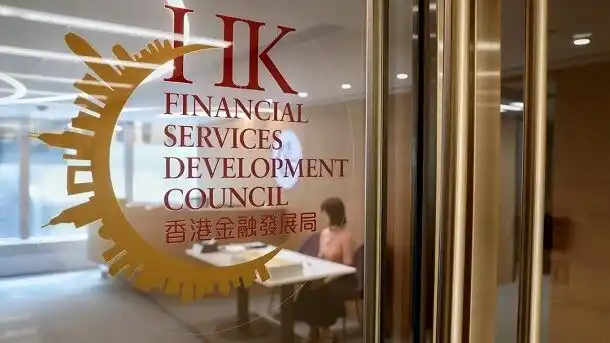
Surface data remains impressive. According to market data released by HKEX, in the first five months of 2025, the average daily turnover of Hong Kong stocks surged by 120% year-on-year, and IPO fundraising skyrocketed by 709%. The Global Financial Centres Index from the UK's Z/Yen Group shows Hong Kong firmly maintaining its position among the top three globally. Yet, beneath this prosperity, a deep strategic anxiety permeates Hong Kong's financial policymakers. In December 2025, the Hong Kong Financial Services Development Council (FSDC) released its Concept Paper No. 72, "The Way Forward for Hong Kong’s Capital Markets: The Super Connector – A Global Capital Hub in the Digital Age." This report is a concentrated manifestation of this anxiety and resolve. Its value far exceeds that of an ordinary industry plan; it is essentially a public act of strategic "self-diagnosis" and "route reconstruction." Its core proposition is: Can Hong Kong, and how can it, transcend its traditional role as a "super connector" and transform into an autonomous "global capital hub"?
I. Strategic Upgrade: The Inevitable Shift from 'Conduit' Logic to a 'Hub' Ecosystem

The report's vision is stated upfront: building a digital global capital ecosystem with near-seamless flows of funds, assets, and information. This is not a description of the status quo but a fundamental reshaping of the development paradigm. For decades, Hong Kong's success was built on a unique "conduit" logic: backed by Mainland China, facing the global market, acting as a "super connector" for capital flowing in and out of the mainland. This model achieved its glory, with global IPO fundraising often ranking at the top.

However, the FSDC report soberly points out that the world has changed. Geopolitics has led to a "systemic restructuring and rerouting" of capital flows. The core of global financial center competition has shifted to "the level of digitalization and technological benchmarks, the degree of trust in market institutions, and the ability to practically meet the actual needs of the new generation of issuers and investors." The "conduit" model, which relies solely on geographical advantages, is increasingly revealing its fragility—flow can plummet due to policy or external environmental changes, and its functions can be partially replaced by other emerging connectivity mechanisms.

Therefore, the new positioning of a "global capital hub" proposed in the report represents a profound strategic upgrade. Its connotation is reflected in three dimensions: Functionally, shifting from a passive "fund transmission pipeline" to an active "capital formation, pricing, and allocation platform"; Geographically, expanding from focusing on "north-south" (connecting China and the West) to building "east-west capital channels" spanning Asia, the Middle East, and Europe; In terms of development drivers, moving from relying on "location红利 (dividends)" to building core competitiveness through "institutional innovation" and "technological infrastructure."

To support this shift, the report systematically proposes a "4Is" strategic framework, aiming to comprehensively upgrade four key pillars: Issuers, Investors, Intermediaries, and Instruments. These four pillars are interconnected, designed to form a positive feedback loop ecosystem: attracting diversified, high-quality issuers brings rich financial instruments; rich instruments and active trading attract global, diversified long-term investors; the deep participation and complex needs of investors, in turn, drive intermediaries to enhance service capabilities and financial innovation. The operating efficiency of this loop ultimately depends on the support of digitalization and market infrastructure. This is fundamentally different from the past emphasis on the single function of financing through IPOs, marking a systematic, ecological turn in Hong Kong's capital market development strategy.

II. Tackling the '4Is': Upgrade Paths, Challenges, and Digital Enablement for the Four Pillars

The "4Is" framework in the report is the core of strategy implementation, but upgrading each pillar faces specific and profound challenges, requiring dual enablement from both systems and technology.

Issuers: The Challenge of Expanding from 'Gateway to China' to 'Global Stage'

The report's goal is to enrich the issuer structure, moving beyond reliance on Mainland Chinese companies. The short-term strategy is to optimize the listing system (e.g., relaxing rules on weighted voting rights) to attract more international companies for primary or secondary listings. The medium-term hope is to expand the "Connect" schemes to derivative instruments and alternative assets.

The core challenge lies in persuading international companies. For mature欧美 (European and American) companies, the valuation and liquidity of the Hong Kong market may not match their home markets; for Southeast Asian and Middle Eastern companies, barriers exist in Hong Kong's legal and accounting environments and investor recognition. The "phased access" model proposed in the report—starting with a secondary listing, then transitioning to a dual primary listing and inclusion in Stock Connect upon meeting criteria—is a pragmatic design, but its attractiveness depends on the pace of Mainland capital account liberalization and the determination to expand Stock Connect. Furthermore, traditional investment banks and law firms face tests in their pricing power, sales networks, and compliance experience when serving these new, diverse types of issuers.

Investors: The Product and Channel Dilemma in Attracting 'Patient Capital'

Attracting long-term capital like pension and insurance funds is a top priority of the report. This requires Hong Kong to provide assets that match their long-term liabilities, seek stable returns, and can hedge risks.

The core challenge is that Hong Kong lacks sufficient long-term, high-rated, HKD-denominated fixed-income products. The report proposes developing green bonds, infrastructure bonds, and private credit. However, the green bond market is still dominated by issuance rather than active secondary trading; infrastructure project investment is complex and long-cycle; private credit lacks standardization and transparency, making it difficult to include in the常规 (regular) allocation range of large institutions. Technological enablement is particularly crucial here. For example, through asset tokenization, large infrastructure projects or private credit assets can be "sliced," lowering investment thresholds, enhancing liquidity, and enabling near-real-time收益分配 (income distribution), thereby increasing their appeal to "patient capital." The HKMA's digital bond and the EvergreenHub knowledge platform mentioned in the report are attempts in this direction.

Intermediaries: Pressure for Capability Reshaping and Ecosystem Synergy

Intermediaries are the blood vessels connecting issuers and investors. The report calls on banks, brokerages, and market makers to enhance their capabilities to support complex markets like fixed income, derivatives, and digital assets.

The core challenge is capability mismatch and lack of incentives. Hong Kong's investment banking ecosystem has long served equity IPOs; its professional depth and talent pool in areas like complex debt structuring, interest rate derivatives market making, and digital asset custody lag behind New York and London. Simultaneously, in thin bond markets, market makers lack sufficient incentive to maintain two-way quotes. The report implicitly calls for regulatory reform and incentives, such as optimizing trading systems, providing liquidity support for market-making activities, or tax benefits. Digitization reshapes intermediaries from another dimension: smart contracts can automatically execute corporate actions like bond coupon payments, reducing manual errors and operational risks; blockchain platforms can improve the transparency and efficiency of post-trade processes, lowering the operational costs for intermediaries.

Instruments: The Difficult Leap from 'Equity-Dominated' to 'Multi-Asset Driven'

Enriching financial instruments is the foundation for increasing market depth and attracting diverse investors. The report lists developing derivatives, commodities, sustainable finance products, and alternative investment tools.

The core challenge is the liquidity dilemma and regulatory complexity. The success of a new financial product market requires network effects formed jointly by issuers, market makers, and investors. Examples of Hong Kong launching new products that subsequently suffered from thin trading are not uncommon. For instance, while it has one of Asia's most active equity derivatives markets, it still lags far behind in complex derivatives like interest rate and credit. Developing these products requires a highly mature institutional investor base, sophisticated risk management systems, and a matching regulatory framework. The report's proposed "pilot innovative products" approach is cautious but requires a precise balance between the scale, speed, and risk tolerance of the pilots. Digitization offers new possibilities: blockchain-based derivative contracts can enable automated collateral management and settlement, reducing counterparty risk and thus encouraging more participants to enter.

III. The Key Battle: Reshaping the Listing Regime, Competing for the Pricing Power of 'Future Assets'

Within the "4Is" framework, attracting quality issuers is the logical starting point, and the competitiveness of the listing regime is the primary battlefield. The report spares nearly ten pages to deeply analyze and recommend optimizations for the Weighted Voting Rights (WVR) structure, hitting the nail on the head.

From its introduction in 2018 to mid-2025, over seven years, only 31 companies listed in Hong Kong using this structure, accounting for about 4% of total IPOs in the same period. This number stands in stark contrast to the Silicon Valley and global tech startup wave. For example, research by University of Florida finance professor Jay Ritter shows that since 2020, over 40% of tech IPOs in the US have used dual-class share structures. Hong Kong's caution and the widespread acceptance in the US form a clear gap.

Appendix IV of the report provides a detailed comparison of regimes in major global jurisdictions, revealing Hong Kong's "conservatism." Compared to the US, which has no hard cap on voting rights ratios, and the UK, which post-2024 reform removed the market capitalization threshold retaining only a "three-year operational track record" requirement, Hong Kong's framework sets a double high bar: Qualitatively, the issuer must be an "Innovative Company" as recognized by HKEX; Quantitatively, the market cap must reach HK$40 billion, or "HK$10 billion market cap + HK$1 billion revenue." These two thresholds may shut out a large number of "hard tech" companies in high-growth phases that are not yet profitable or haven't reached giant规模 (scale).

A deeper constraint lies in the limitations of the "Qualifying Exchange" list. Currently, only companies primarily listed on the New York Stock Exchange, Nasdaq, or London (Premium Listing) can retain their WVR structure when conducting a secondary listing in Hong Kong. This means that a large number of excellent companies listed on Euronext, the SIX Exchange, or other quality markets in Asia cannot easily use Hong Kong as their Asian financing and liquidity management platform. This无形中 (invisibly) limits the international diversification of Hong Kong's listing resources.

The FSDC report essentially sends a clear signal: in the fierce global competition to attract listings from the next generation of tech companies (e.g., AI, biotech, clean energy), Hong Kong's current institutional flexibility is insufficient. If it cannot provide founders with control guarantees like New York or reduce listing costs and complexity like London, Hong Kong will face continued passivity in attracting "future assets." This is not just about modifying a few rules; it is a battle for "pricing power" concerning the future vitality and valuation benchmarks of Hong Kong's capital market.

IV. The Infrastructure Battle: The 'Race Against Time' of Digitalization and the Efficiency Revolution

The implementation of all strategies relies on efficient, robust, and future-oriented market infrastructure. The report warns at great length that this is an "efficiency revolution" concerning survival, and Hong Kong can no longer afford to lose.

Global post-trade systems are iterating at an astonishing speed. The US fully transitioned to T+1 settlement in May 2024, Europe plans to follow in 2027, and India has even begun T+0 pilots. Although HKEX has initiated a T+1 consultation, the report clearly states that the transition involves complex upgrades across the entire value chain of brokers, custodians, and settlement, and is "a multi-year transition project." Efficiency is competitiveness;滞后 (lag) in clearing and settlement directly means higher capital occupancy costs and counterparty risk. In the eyes of institutional investors, this is a hard indicator for assessing market attractiveness.

Simultaneously, digital financial infrastructure represented by blockchain and tokenization is reshaping the market形态 (landscape). Hong Kong shows前瞻性 (forward-looking)布局 (positioning) in this race. From the HKMA leading the issuance of the world's first tokenized green bond in 2023, to the CMU system supporting multi-currency digital bond issuance, to continued participation in the BIS "mBridge" cross-border CBDC project, Hong Kong is attempting to integrate Distributed Ledger Technology (DLT) into the mainstream financial system. The goal of these explorations is not to replace traditional finance but to significantly enhance market efficiency and create new product forms (e.g., tokenized real estate, private fund shares) by achieving near-real-time asset settlement, programmable financial contracts, and broader asset accessibility. This requires regulation and innovation to proceed in parallel, clarifying virtual asset licensing and stablecoin regulatory frameworks while encouraging fintech innovation that meets regulatory requirements.

V. Challenges and Games: Three Deep-Seated Contradictions in the Transformation

This ambitious report does not shy away from the difficulties ahead. It actually reveals three deep-seated contradictions that Hong Kong must directly face and resolve on its path to becoming a "global capital hub."

First Contradiction: Mismatch between short-term market structure and long-term strategic goals. Although the report outlines a blueprint for a multi-asset hub, the现状 (status quo) of Hong Kong's "strong equities, weak bonds" and lack of liquidity in small and mid-cap stocks is deeply entrenched. The report even discusses the feasibility of providing "stamp duty宽减 (concessions)" for stocks with chronically low liquidity, which反而衬托出 (instead highlights) the棘手性 (intractability) of the problem. Attracting long-term capital requires a deep bond market, and the deepening of the bond market requires the participation of more long-term capital—this is a "chicken and egg" cycle. Breaking it requires the government to持续 (continuously) issue long-term bonds to build the yield curve and design incentives to guide private sector issuance.

Second Contradiction: The 'Double-Edged Sword' effect of geopolitics and path dependency risk. The report views the return of China-concept stocks as an important opportunity, which is indeed Hong Kong's unique advantage. However, over-reliance on a single source of issuers may bind the market cycle more deeply to the policy risks of a specific region. At the same time, attracting mature欧美 (European and American) companies to list in Hong Kong faces substantive obstacles: for example, the EU's MiFID II requires traders to prioritize routing EU equity orders to "equivalent" third-country markets, and Hong Kong has not yet obtained this recognition. This limits the benefit to本土 (home market) liquidity for European companies listing in Hong Kong. Turning to Middle Eastern and Southeast Asian markets requires overcoming a series of non-institutional barriers such as legal, accounting, and cultural认知 (perception).

Third, and most core, Contradiction: The inherent tension in regulatory philosophy. Reading through the report, phrases like "worthy of further study" and "subject to further study by regulators and the market" appear frequently. This accurately reflects the eternal trade-off Hong Kong regulators face between "enhancing market competitiveness" and "maintaining market stability and investor protection." Any major institutional breakthrough, such as relaxing WVR thresholds or introducing new digital asset products, requires regulators to make precise and timely judgments in a rapidly changing market. Being too conservative may miss opportunities; being too aggressive may引发 (trigger) risks. This report points the direction, but how to grasp this "度" (degree) will be the biggest test for the SFC and HKMA in the coming years.

A Self-Revolution Concerning the Future

The FSDC's Concept Paper No. 72 is less of a development plan and more of a manifesto of strategic awakening. It marks a fundamental shift in the mainstream narrative of Hong Kong's capital market: from enjoying the conduit红利 (dividends) of the "super connector" to致力于 (committing to) building an autonomous "global capital hub" with its own ecological capabilities. This shift is an active response to the new form of globalization and the new landscape of capital competition.

The success of the report lies in its systematic diagnosis and coherent logic. It outlines a clear upgrade path by协同发力 (coordinated efforts) across four dimensions: institutions, products, capital, and infrastructure. However, the true value of the report will depend on its "execution conversion rate."

Hong Kong's competitive landscape has quietly changed. It is no longer just a ranking competition within Asia, but a top-tier race to participate in defining the rules of the future financial system against the backdrop of the dual revolutions of global capital and technology. Hong Kong needs to prove that it can become a "trusted neutral platform" that transcends geopolitical fluctuations and exists based on institutional credibility, market efficiency, and technological enablement.

The road ahead is注定 (destined) to be uneven, filled with the博弈 (games) and compromise of the aforementioned three contradictions. But this report at least clearly points the direction: The future of Hong Kong's capital market does not depend on past glory, but on the courage, wisdom, and execution power of its self-revolution. This profound restructuring has already begun. Its success or failure will determine Hong Kong's place on the global financial map for the next decade.

Partial source materials:

· "HKEX Disclosure: Average Daily Turnover in First Five Months of Year Up 120% YoY"

· "The Way Forward for Hong Kong’s Capital Markets: The Super Connector – A Global Capital Hub in the Digital Age"

· "HKEX Releases H1 2025 Market Highlights Data, Strong Secondary Market Performance"

Author: Liang Yu Edited and Reviewed by: Zhao Yidan

Пов'язані питання

QWhat is the core strategic shift proposed for Hong Kong's financial market in the HKFSD Concept Paper No. 72?

AThe core strategic shift is to transform Hong Kong from a traditional 'super-connector' or gateway role into an autonomous 'global capital hub'. This involves moving from a passive 'conduit' logic for capital flow to actively building a digital global capital ecosystem with seamless movement of funds, assets, and information.

QWhat are the '4Is' strategic framework pillars outlined in the report to support Hong Kong's new positioning?

AThe '4Is' strategic framework consists of upgrading four key pillars: Issuers (diversifying beyond mainland Chinese companies), Investors (attracting long-term 'patient capital'), Intermediaries (enhancing capabilities of banks and market makers), and Instruments (developing a wider range of financial products beyond equities).

QWhat specific challenge does Hong Kong face in attracting international companies to list, particularly regarding its 'Weighted Voting Rights' (WVR) regime?

AHong Kong's WVR regime is considered conservative with high barriers. It requires companies to be 'innovative' and meet high market capitalization thresholds (HKD 40 billion, or HKD 10 billion + HKD 1 billion revenue), potentially excluding many high-growth tech firms. Furthermore, its 'Qualifying Exchange' list for secondary listings is limited, hindering diversification.

QHow is digital infrastructure and technology, like blockchain, seen as crucial for Hong Kong's competitiveness according to the report?

ADigital infrastructure is vital for an 'efficiency revolution'. It's key for implementing T+1 settlement to keep pace with global markets (like the US) and for leveraging technologies like blockchain and tokenization. This can enhance market efficiency, create new products (e.g., tokenized assets), and make the market more attractive to long-term investors by improving liquidity and transparency.

QWhat are the three deep-seated challenges or contradictions Hong Kong must resolve in its transformation into a global capital hub?

AThe three core challenges are: 1) The mismatch between its short-term market structure (equity-heavy, illiquid small-cap stocks) and long-term strategic goals (a deep, multi-asset hub). 2) The double-edged sword of geopolitics and path dependency (balancing reliance on Chinese listings with attracting truly global issuers facing regulatory hurdles). 3) The inherent tension in regulatory philosophy between enhancing market competitiveness and maintaining market stability and investor protection.

Пов'язані матеріали

IREN's Insanity: Selling Miners, Buying GPUs, Stock Price Up 16%

IREN, a Bitcoin mining company, saw its stock price surge 16% after releasing its quarterly earnings on May 8th. The surge was not driven by Bitcoin's price, but by the company's radical strategic shift away from cryptocurrency mining and towards AI infrastructure. The company reported a $140 million impairment charge after decommissioning and listing for sale 5,800 of its Bitmain S21 Pro mining rigs. It also maintains a policy of selling all mined Bitcoin daily, holding zero crypto assets. Despite this dismantling of its core business, investor sentiment was positive due to IREN's aggressive pivot into AI. This shift is backed by massive, long-term contracts. IREN announced a new 5-year, $3.4 billion collaboration with NVIDIA, which includes an equity investment commitment. This follows a previously secured 5-year, $9.7 billion GPU cloud services agreement with Microsoft. To support these deals, IREN acquired European data center capacity and cloud software capabilities. Management targets 480 megawatts of AI capacity, 150,000 GPUs, and $3.7 billion in annual recurring revenue by late 2026. While other North American miners are exploring hybrid "mining + AI" models, IREN is making a clean break, betting entirely on the booming demand for AI compute power. The move highlights a broader industry trend where the value of mining hardware is declining while GPU-based AI infrastructure is in critically short supply.

marsbit2 год тому

IREN's Insanity: Selling Miners, Buying GPUs, Stock Price Up 16%

marsbit2 год тому

Торгівля

Спот
Ф'ючерси

Популярні статті

Що таке $S$

Розуміння SPERO: Комплексний огляд Вступ до SPERO Оскільки ландшафт інновацій продовжує еволюціонувати, виникнення технологій web3 та криптовалютних проектів відіграє ключову роль у формуванні цифрового майбутнього. Один з проектів, який привернув увагу в цій динамічній сфері, — це SPERO, позначений як SPERO,$$s$. Ця стаття має на меті зібрати та представити детальну інформацію про SPERO, щоб допомогти ентузіастам та інвесторам зрозуміти його основи, цілі та інновації в рамках web3 та крипто-сектору. Що таке SPERO,$$s$? SPERO,$$s$ — це унікальний проект у криптопросторі, який прагне використати принципи децентралізації та технології блокчейн для створення екосистеми, що сприяє залученню, корисності та фінансовій інклюзії. Проект розроблений для полегшення взаємодії між користувачами новими способами, надаючи їм інноваційні фінансові рішення та послуги. У своїй основі SPERO,$$s$ прагне надати можливості індивідам, забезпечуючи інструменти та платформи, які покращують користувацький досвід у криптовалютному просторі. Це включає в себе можливість більш гнучких методів транзакцій, сприяння ініціативам, що підтримуються спільнотою, та створення шляхів для фінансових можливостей через децентралізовані додатки (dApps). Основна концепція SPERO,$$s$ обертається навколо інклюзивності, прагнучи зменшити розриви в традиційній фінансовій системі, використовуючи переваги технології блокчейн. Хто є творцем SPERO,$$s$? Особистість творця SPERO,$$s$ залишається дещо невідомою, оскільки є обмежені публічно доступні ресурси, що надають детальну інформацію про його засновників. Ця відсутність прозорості може бути наслідком зобов'язання проекту до децентралізації — етики, яку багато проектів web3 поділяють, ставлячи колективні внески вище за індивідуальне визнання. Зосереджуючи обговорення навколо спільноти та її колективних цілей, SPERO,$$s$ втілює суть наділення без виділення конкретних осіб. Таким чином, розуміння етики та місії SPERO є більш важливим, ніж ідентифікація єдиного творця. Хто є інвесторами SPERO,$$s$? SPERO,$$s$ підтримується різноманітними інвесторами, починаючи від венчурних капіталістів до ангельських інвесторів, які прагнуть сприяти інноваціям у крипто-секторі. Зосередження цих інвесторів зазвичай узгоджується з місією SPERO — пріоритет надається проектам, які обіцяють технологічний прогрес у суспільстві, фінансову інклюзію та децентралізоване управління. Ці інвесторські фонди зазвичай зацікавлені в проектах, які не лише пропонують інноваційні продукти, але й позитивно впливають на спільноту блокчейн та її екосистеми. Підтримка з боку цих інвесторів підкріплює SPERO,$$s$ як значного конкурента в швидко змінюваній сфері крипто-проектів. Як працює SPERO,$$s$? SPERO,$$s$ використовує багатогранну структуру, яка відрізняє його від традиційних криптовалютних проектів. Ось деякі ключові особливості, які підкреслюють його унікальність та інноваційність: Децентралізоване управління: SPERO,$$s$ інтегрує моделі децентралізованого управління, надаючи користувачам можливість активно брати участь у процесах прийняття рішень щодо майбутнього проекту. Цей підхід сприяє відчуттю власності та відповідальності серед членів спільноти. Корисність токена: SPERO,$$s$ використовує свій власний криптовалютний токен, розроблений для виконання різних функцій в екосистемі. Ці токени дозволяють здійснювати транзакції, отримувати винагороди та полегшувати послуги, що пропонуються на платформі, підвищуючи загальну залученість та корисність. Шарова архітектура: Технічна архітектура SPERO,$$s$ підтримує модульність та масштабованість, що дозволяє безперешкодно інтегрувати додаткові функції та додатки в міру розвитку проекту. Ця адаптивність є надзвичайно важливою для збереження актуальності в постійно змінюваному крипто-ландшафті. Залучення спільноти: Проект підкреслює ініціативи, що підтримуються спільнотою, використовуючи механізми, які стимулюють співпрацю та зворотний зв'язок. Підтримуючи сильну спільноту, SPERO,$$s$ може краще задовольняти потреби користувачів та адаптуватися до ринкових тенденцій. Фокус на інклюзію: Пропонуючи низькі комісії за транзакції та зручні інтерфейси, SPERO,$$s$ прагне залучити різноманітну базу користувачів, включаючи осіб, які раніше не брали участі в крипто-просторі. Це зобов'язання до інклюзії узгоджується з його загальною місією наділення через доступність. Хронологія SPERO,$$s$ Розуміння історії проекту надає важливі уявлення про його розвиток та етапи. Нижче наведено пропоновану хронологію, що відображає значні події в еволюції SPERO,$$s$: Етап концептуалізації та ідеації: Початкові ідеї, що стали основою SPERO,$$s$, були сформовані, тісно пов'язані з принципами децентралізації та фокусом на спільноті в індустрії блокчейн. Запуск білого паперу проекту: Після концептуального етапу був випущений комплексний білий папір, що детально описує бачення, цілі та технологічну інфраструктуру SPERO,$$s$, щоб залучити інтерес та зворотний зв'язок від спільноти. Створення спільноти та ранні залучення: Активні зусилля були спрямовані на створення спільноти ранніх прихильників та потенційних інвесторів, що полегшило обговорення цілей проекту та отримання підтримки. Подія генерації токенів: SPERO,$$s$ провів подію генерації токенів (TGE) для розподілу своїх рідних токенів серед ранніх прихильників та встановлення початкової ліквідності в екосистемі. Запуск початкового dApp: Перший децентралізований додаток (dApp), пов'язаний з SPERO,$$s$, став доступним, дозволяючи користувачам взаємодіяти з основними функціями платформи. Постійний розвиток та партнерства: Безперервні оновлення та вдосконалення пропозицій проекту, включаючи стратегічні партнерства з іншими учасниками блокчейн-простору, сформували SPERO,$$s$ у конкурентоспроможного та еволюціонуючого гравця на крипто-ринку. Висновок SPERO,$$s$ є свідченням потенціалу web3 та криптовалют для революціонізації фінансових систем та наділення індивідів. Завдяки зобов'язанню до децентралізованого управління, залучення спільноти та інноваційно спроектованих функцій, він прокладає шлях до більш інклюзивного фінансового ландшафту. Як і з будь-якими інвестиціями в швидко змінюваному крипто-просторі, потенційним інвесторам та користувачам рекомендується ретельно досліджувати та обдумано взаємодіяти з поточними подіями в SPERO,$$s$. Проект демонструє інноваційний дух крипто-індустрії, запрошуючи до подальшого дослідження його численних можливостей. Хоча подорож SPERO,$$s$ ще триває, його основні принципи можуть справді вплинути на майбутнє того, як ми взаємодіємо з технологією, фінансами та один з одним у взаємопов'язаних цифрових екосистемах.

73 переглядів усьогоОпубліковано 2024.12.17Оновлено 2024.12.17

Що таке $S$

Що таке AGENT S

Агент S: Майбутнє автономної взаємодії в Web3 Вступ У постійно змінюваному ландшафті Web3 та криптовалюти інновації постійно переосмислюють, як люди взаємодіють з цифровими платформами. Один з таких новаторських проектів, Агент S, обіцяє революціонізувати взаємодію людини з комп'ютером через свою відкриту агентну структуру. Прокладаючи шлях для автономних взаємодій, Агент S прагне спростити складні завдання, пропонуючи трансформаційні застосування в штучному інтелекті (ШІ). Це детальне дослідження заглиблюється в складності проекту, його унікальні особливості та наслідки для сфери криптовалюти. Що таке Агент S? Агент S є революційною відкритою агентною структурою, спеціально розробленою для вирішення трьох основних викликів в автоматизації комп'ютерних завдань: Набуття специфічних знань у галузі: Структура інтелектуально навчається з різних зовнішніх джерел знань та внутрішнього досвіду. Цей подвійний підхід дозволяє їй створити багатий репозиторій специфічних знань у галузі, покращуючи її продуктивність у виконанні завдань. Планування на довгих горизонтах завдань: Агент S використовує планування з підкріпленням досвіду, стратегічний підхід, який полегшує ефективний розподіл та виконання складних завдань. Ця функція значно підвищує її здатність ефективно та результативно управляти кількома підзавданнями. Обробка динамічних, неоднорідних інтерфейсів: Проект представляє Інтерфейс Агент-Комп'ютер (ACI), інноваційне рішення, яке покращує взаємодію між агентами та користувачами. Використовуючи багатомодальні великі мовні моделі (MLLMs), Агент S може безперешкодно орієнтуватися та маніпулювати різноманітними графічними інтерфейсами користувача. Завдяки цим новаторським функціям Агент S надає надійну структуру, яка вирішує складнощі, пов'язані з автоматизацією людської взаємодії з машинами, прокладаючи шлях для численних застосувань у ШІ та за його межами. Хто є творцем Агент S? Хоча концепція Агент S є фундаментально новаторською, конкретна інформація про його творця залишається невідомою. Творець наразі невідомий, що підкреслює або початкову стадію проекту, або стратегічний вибір зберегти засновників у таємниці. Незважаючи на анонімність, акцент залишається на можливостях та потенціалі структури. Хто є інвесторами Агент S? Оскільки Агент S є відносно новим у криптографічній екосистемі, детальна інформація про його інвесторів та фінансових спонсорів не задокументована. Відсутність публічно доступних відомостей про інвестиційні фонди або організації, що підтримують проект, викликає питання щодо його фінансової структури та дорожньої карти розвитку. Розуміння підтримки є критично важливим для оцінки стійкості проекту та потенційного впливу на ринок. Як працює Агент S? В основі Агент S лежить передова технологія, яка дозволяє йому ефективно функціонувати в різних умовах. Його операційна модель побудована навколо кількох ключових функцій: Взаємодія з комп'ютером, подібна до людської: Структура пропонує розширене планування ШІ, прагнучи зробити взаємодії з комп'ютерами більш інтуїтивними. Імітуючи людську поведінку при виконанні завдань, вона обіцяє підвищити досвід користувачів. Наративна пам'ять: Використовується для використання високорівневого досвіду, Агент S використовує наративну пам'ять для відстеження історій завдань, тим самим покращуючи свої процеси прийняття рішень. Епізодична пам'ять: Ця функція надає користувачам покрокові інструкції, дозволяючи структурі пропонувати контекстуальну підтримку в міру виконання завдань. Підтримка OpenACI: Завдяки можливості працювати локально, Агент S дозволяє користувачам зберігати контроль над своїми взаємодіями та робочими процесами, узгоджуючи з децентралізованою етикою Web3. Легка інтеграція з зовнішніми API: Його універсальність і сумісність з різними платформами ШІ забезпечують те, що Агент S може безперешкодно вписатися в існуючі технологічні екосистеми, роблячи його привабливим вибором для розробників та організацій. Ці функціональні можливості колективно сприяють унікальному положенню Агент S у крипто-просторі, оскільки він автоматизує складні, багатоступеневі завдання з мінімальним втручанням людини. У міру розвитку проекту його потенційні застосування в Web3 можуть переосмислити, як відбуваються цифрові взаємодії. Хронологія Агент S Розробка та етапи Агент S можуть бути узагальнені в хронології, яка підкреслює його значні події: 27 вересня 2024 року: Концепція Агент S була представлена в комплексній науковій статті під назвою “Відкрита агентна структура, яка використовує комп'ютери як людина”, що демонструє основи проекту. 10 жовтня 2024 року: Наукова стаття була опублікована на arXiv, пропонуючи детальне дослідження структури та її оцінки продуктивності на основі бенчмарку OSWorld. 12 жовтня 2024 року: Було випущено відеопрезентацію, що надає візуальне уявлення про можливості та особливості Агент S, ще більше залучаючи потенційних користувачів та інвесторів. Ці маркери в хронології не лише ілюструють прогрес Агент S, але й вказують на його прихильність до прозорості та залучення громади. Ключові моменти про Агент S У міру розвитку структури Агент S кілька ключових характеристик виділяються, підкреслюючи її новаторський характер та потенціал: Інноваційна структура: Розроблена для забезпечення інтуїтивного використання комп'ютерів, подібного до людської взаємодії, Агент S пропонує новий підхід до автоматизації завдань. Автономна взаємодія: Здатність автономно взаємодіяти з комп'ютерами через GUI означає стрибок до більш інтелектуальних та ефективних обчислювальних рішень. Автоматизація складних завдань: Завдяки своїй надійній методології він може автоматизувати складні, багатоступеневі завдання, роблячи процеси швидшими та менш схильними до помилок. Безперервне вдосконалення: Механізми навчання дозволяють Агенту S покращуватися на основі минулого досвіду, постійно підвищуючи свою продуктивність та ефективність. Універсальність: Його адаптивність до різних операційних середовищ, таких як OSWorld та WindowsAgentArena, забезпечує його здатність служити широкому спектру застосувань. Оскільки Агент S займає своє місце в ландшафті Web3 та криптовалюти, його потенціал покращити можливості взаємодії та автоматизувати процеси означає значний прогрес у технологіях ШІ. Завдяки своїй інноваційній структурі Агент S є прикладом майбутнього цифрових взаємодій, обіцяючи більш безперешкодний та ефективний досвід для користувачів у різних галузях. Висновок Агент S представляє собою сміливий крок вперед у поєднанні ШІ та Web3, з можливістю переосмислити, як ми взаємодіємо з технологією. Хоча проект все ще на ранніх стадіях, можливості для його застосування є величезними та переконливими. Завдяки своїй комплексній структурі, що вирішує критичні виклики, Агент S прагне вивести автономні взаємодії на передній план цифрового досвіду. У міру того, як ми заглиблюємося в сфери криптовалюти та децентралізації, проекти, подібні до Агент S, безсумнівно, відіграватимуть ключову роль у формуванні майбутнього технологій та співпраці людини з комп'ютером.

619 переглядів усьогоОпубліковано 2025.01.14Оновлено 2025.01.14

Що таке AGENT S

Як купити S

Ласкаво просимо до HTX.com! Ми зробили покупку Sonic (S) простою та зручною. Дотримуйтесь нашої покрокової інструкції, щоб розпочати свою криптовалютну подорож.Крок 1: Створіть обліковий запис на HTXВикористовуйте свою електронну пошту або номер телефону, щоб зареєструвати обліковий запис на HTX безплатно. Пройдіть безпроблемну реєстрацію й отримайте доступ до всіх функцій.ЗареєструватисьКрок 2: Перейдіть до розділу Купити крипту і виберіть спосіб оплатиКредитна/дебетова картка: використовуйте вашу картку Visa або Mastercard, щоб миттєво купити Sonic (S).Баланс: використовуйте кошти з балансу вашого рахунку HTX для безперешкодної торгівлі.Треті особи: ми додали популярні способи оплати, такі як Google Pay та Apple Pay, щоб підвищити зручність.P2P: Торгуйте безпосередньо з іншими користувачами на HTX.Позабіржова торгівля (OTC): ми пропонуємо індивідуальні послуги та конкурентні обмінні курси для трейдерів.Крок 3: Зберігайте свої Sonic (S)Після придбання Sonic (S) збережіть його у своєму обліковому записі на HTX. Крім того, ви можете відправити його в інше місце за допомогою блокчейн-переказу або використовувати його для торгівлі іншими криптовалютами.Крок 4: Торгівля Sonic (S)Легко торгуйте Sonic (S) на спотовому ринку HTX. Просто увійдіть до свого облікового запису, виберіть торгову пару, укладайте угоди та спостерігайте за ними в режимі реального часу. Ми пропонуємо зручний досвід як для початківців, так і для досвідчених трейдерів.

1.4k переглядів усьогоОпубліковано 2025.01.15Оновлено 2025.03.21

Як купити S

Обговорення

Ласкаво просимо до спільноти HTX. Тут ви можете бути в курсі останніх подій розвитку платформи та отримати доступ до професійної ринкової інформації. Нижче представлені думки користувачів щодо ціни S (S).

活动图片