Facepalm! A Roundup of "Flipped" Institutional Crypto Predictions for 2025

比推Опубліковано о 2025-12-27Востаннє оновлено о 2025-12-27

Анотація

As 2025 year-end approaches, the cryptocurrency market has failed to deliver the spectacular rallies many institutions had forecasted, instead exposing the inaccuracy of numerous high-profile price predictions. Bitcoin is trading around $87,423 and Ethereum near $2,926, far below the ambitious targets set during the 2023-2024 bull market. Major institutions and analysts, including Michael Saylor (predicting $100,000), Mark Yusko ($150,000), Tom Lee ($250,000), and Tim Draper ($250,000), collectively anticipated Bitcoin reaching six figures, driven by ETF approvals, macro liquidity, and political shifts. Standard Chartered and AllianceBernstein projected $200,000, with the latter even specifying a September 2025 target. However, these forecasts largely underestimated market complexities, such as structural changes from ETFs—which provided a higher floor rather than exponential peaks—and persistent volatility from policy and geopolitical uncertainty. Ethereum predictions also fell short. Deltec Bank expected prices between $9,000-$10,000, while Standard Chartered initially targeted $14,000 before revising down to $7,500. Analysts’ average prediction was $6,105, yet ETH remained below $3,000. The consensus was that upgrades and ETF inflows would propel prices, but the market refused to align with these narratives. The 2025 outcome underscores the declining relevance of historical models, like the four-year cycle thesis, in a new era of institutional involvement and macro pr...

As 2025 draws to a close, the crypto market hasn't produced any miraculous rallies; instead, it has brought the exaggerated price predictions from the past couple of years back down to earth.

First, let's look at the current prices: As of 8:00 AM Beijing Time on December 27th, Bitcoin ≈ $87,423, Ethereum ≈ $2,926.

With the numbers right before our eyes, those earlier predictions of "Bitcoin hitting $200,000" and "Ethereum breaking $10,000" seem a bit awkward now. Market volatility, policy swings, international situations... each one reminds us: predictions are predictions, but the market moves on its own.

Below, let's review those "expert predictions" we once追捧ed (chased after/admired) that have already been "slapped in the face" by reality.

BTC: Mainstream Institutions Bullish En Masse

In 2023–2024, following ETF approvals, a shift in US political winds, and improved macro liquidity, almost all heavyweight institutions and opinion leaders publicly offered specific BTC price targets for 2025.

In hindsight, these targets formed a highly concentrated "prediction cluster."

Michael Saylor (MicroStrategy): Reach Six Figures by 2025, Eventually Reach $1 Million

  • Prediction:

    • BTC $100,000 (2025)

    • Long-term target: $1,000,000

Saylor's judgment wasn't merely a price prediction but an entire long-term narrative of "Bitcoin as a digital capital network." Before 2025, he repeatedly emphasized that BTC would not fall back below sixty thousand.

BTC did indeed maintain a high range for most of 2025, but the $100k mark as a "certain outcome" did not materialize as expected.

Mark Yusko (Morgan Creek CEO): 2025 $150k

  • Prediction: BTC $150,000 (2025)

  • Rationale: Network effects / FOMO driving / New capital inflows
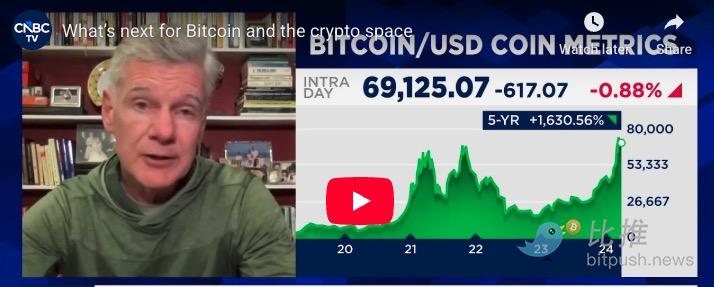
This is a typical "cycle top pricing model", assuming this bull run would completely replicate historical amplitudes.

However, the problem is that ETFs brought about a "structural change," not simply a "leveraged amplification of the cycle."

Tom Lee (Fundstrat Co-founder): $250,000

  • Prediction: BTC $250,000 (2025)

  • Key Catalyst: He believed changes in the US political landscape and potential government Bitcoin holdings were key catalysts. He stated these developments indicate Bitcoin is becoming a legitimate alternative to traditional stores of value like gold.

Tom Lee's prediction was highly influential in 2024 but also heavily reliant on the premise of "policy + sentiment + capital moving in sync."

It's worth noting that Tom Lee revised his prediction downward multiple times in 2025 but still emphasized near-term potential for new highs as the year ended. Just last week, Sean Farrell, Head of Digital Asset Strategy at his firm Fundstrat, predicted in an internal report that BTC could fall to $60,000-65,000 in the first half of 2026 (under a base case). This contrasts with Tom Lee's public optimism, with the company explaining it as a difference in time frames.

Standard Chartered: Close to $200,000

  • Prediction: BTC $200,000 (2025)

  • Rationale/Comparison: Historical price increases following Gold ETF listings. The bank expected significant inflows into Bitcoin spot ETFs to drive this growth, similar to gold's 4x price increase after its first ETF launched.

But unlike gold, Bitcoin did not enter a one-way trend post-ETF; instead, it experienced more frequent pullbacks and repricing.

AllianceBernstein: $200,000

  • Prediction Timeline: September 2025

  • Additional Forecasts:

    • $500k by 2029

    • $1M+ by 2033

This was one of the few institutional predictions offering a specific monthly target. Reality shows: timing targets are the easiest part of any prediction to get wrong.

InvestingHaven: $115,200 (Bull) / $75,000 (Bear)

  • Method: Scenario analysis

This was one of the few models that provided both bull and bear case ranges.

Even so, its bull target was not fully realized in 2025, while the bear case range was validated by the market multiple times.

Tim Draper (VC): $250,000 (Revised)
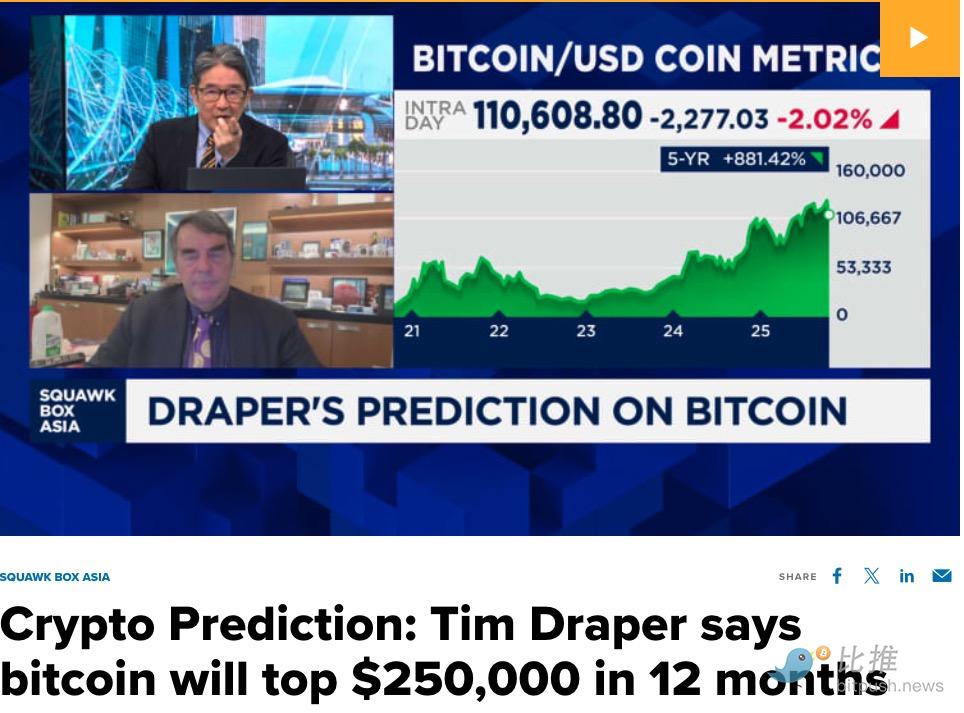
An early investor in Tesla, Skype, Baidu, and Twitch, among others. Draper previously predicted Bitcoin would reach this price in 2022, later revising the timeline to 2025.

Matthew Sigel (VanEck Head of Research): $180,000

  • Prediction: BTC $180,000+ in 2025

  • Rationale:

    • ETF inflows

    • US political cycle changes

But the reality is: ETFs provided more of a floor lift than a ceiling explosion.

Sminston With (Crypto Researcher, PhD): $275,000
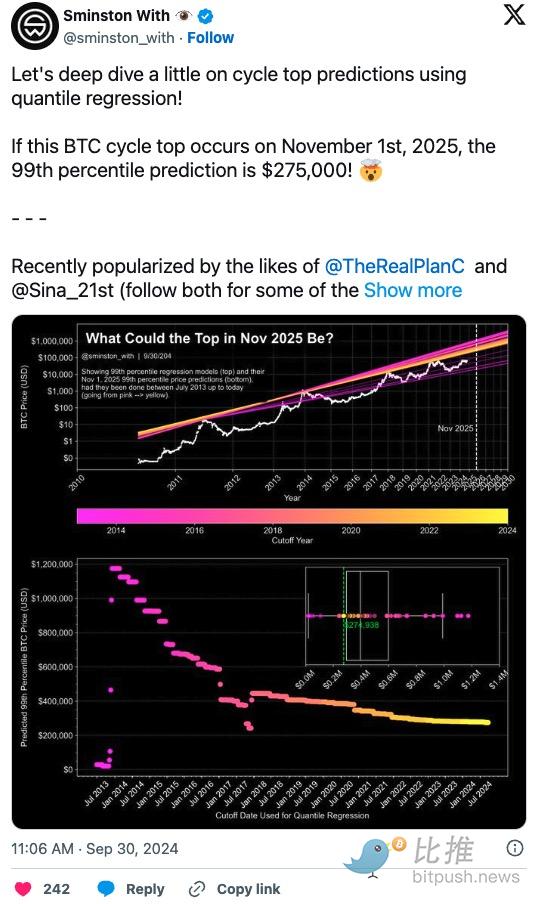
Bitcoin researcher Sminston With used quantile regression to predict the cycle top, estimating it would arrive on November 1, 2025, with Bitcoin reaching $275,000.

By the end of 2025, this prediction was clearly off the mark (had clearly failed).

Cathie Wood (ARK Invest): $1,000,000

  • Prediction:

    • Base case: $650,000 (2030)

    • Optimistic: $1,000,000+

Strictly speaking, this prediction hasn't been "slapped" yet, but it represents the long-term version of the same logic.

ETH: Predictors Bet on "Upgrade Delivery"

In 2025, ETH's fundamental narrative didn't fail, but the price refused to pay for the narrative.

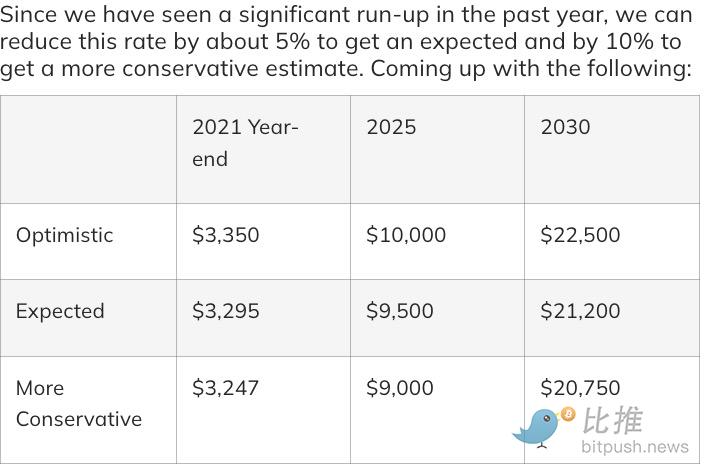
Deltec Bank:

    • 2025: Optimistic $10,000 / Expected $9,500 / Conservative $9,000.
Standard Chartered: The "ETF+Upgrade" Path to $14,000

  • Standard Chartered suggested in 2024 that ETH could reach $14,000 (2025), with ETFs being a core catalyst. But by 2025, Standard Chartered revised its year-end ETH prediction up to $7,500.
Finder Analysts: In February 2024, the average prediction from 50 analysts was ETH $6,105 (2025).

VanEck predicted Ethereum would reach $11,800 by 2030, citing network growth and adoption.

Bitwise: Predicted end-2024 that Ethereum would reach $7,000 in 2025, alongside new highs for BTC and SOL.

Bankless: Believed that after Ethereum realizes its potential in 2025, the pessimistic price would be $10,000, and the reasonable price would be $15,000.

Summary

The 2025 market cycle has given us pause for reflection – trying to predict the future based solely on past experience is becoming less effective in the crypto market. The once-popular "four-year cycle theory" has lost much of its explanatory power under the impact of massive ETF fund flows and a complex macro environment.

Market predictions are essentially about finding anchors amidst uncertainty. But when the anchors themselves are drifting, who can guarantee accuracy every time? Facing 2026, perhaps what we need is not to rush to find the next "prophet," but to maintain patience and flexibility – the market will always chart its own course, and our job is to prepare to respond, not stubbornly guess.

It should be noted that this article is not meant to negate the value of professional institutional analysis. Rigorous research remains precious in an information-cluttered market. But ultimately, the market always provides the answer, and what we need to do is learn to coexist with predictions while maintaining independent thinking. After all, in this field, there can be many opinions, but the true answer is always only one – the market itself.

Author: Seed.eth


Twitter:https://twitter.com/BitpushNewsCN

Bitpush TG Discussion Group:https://t.me/BitPushCommunity

Bitpush TG Subscription: https://t.me/bitpush

Original link:https://www.bitpush.news/articles/7598563

Трендові криптовалюти

Пов'язані питання

QWhat was the actual price of Bitcoin and Ethereum at the end of 2025, according to the article?

AAs of 8:00 AM Beijing Time on December 27th, 2025, Bitcoin was approximately $87,423 and Ethereum was approximately $2,926.

QWhich CEO predicted Bitcoin price would reach $150,000 in 2025, and what was their reasoning?

AMark Yusko, CEO of Morgan Creek, predicted Bitcoin would reach $150,000 in 2025. His logical basis was network effects, FOMO (Fear Of Missing Out) driving the market, and new capital entering.

QWhat was the key difference between the actual market effect of Bitcoin ETFs and the predictions, as highlighted in the article?

AThe article states that unlike predictions which expected a massive price surge, ETFs brought about a 'structural change' that resulted in more frequent market retracements and repricing, leading to a 'bottom lift' rather than a 'top explosion' in price.

QWhich institution gave a specific month for its Bitcoin price prediction, and what was that prediction?

AAllianceBernstein predicted that Bitcoin would reach $200,000 by September 2025.

QWhat is the article's overall conclusion about the reliability of price predictions in the crypto market?

AThe article concludes that predicting the future based on past experience is increasingly unreliable in the crypto market. It suggests that instead of seeking the next 'prophet,' investors should maintain patience and flexibility, preparing to respond to the market's actual movements rather than being fixated on predictions.

Пов'язані матеріали

Two Legends Lost in Three Days: Is Google's AI Talent Dam Cracking?

In three days, Google lost two AI legends. On June 18, Noam Shazeer, co-author of the seminal "Attention is All You Need" paper and Gemini co-lead, left for OpenAI. Just 48 hours later, John Jumper, 2024 Nobel laureate and AlphaFold lead, departed DeepMind for Anthropic. This follows Andrej Karpathy joining Anthropic in May. These moves highlight a structural trend: top AI talent is concentrating at mission-driven, pre-IPO firms like OpenAI and Anthropic, while Google becomes a primary source. The exodus stems from a core mission mismatch. Google's ad-centric model often subordinates AI research to product and revenue goals, creating friction for pioneers like Shazeer, who returned in 2024 only to leave again. In contrast, OpenAI and Anthropic offer singular focus on pushing AI boundaries, whether towards AGI or safety-aligned models, which deeply appeals to top researchers like Jumper. Financial incentives amplify the pull. With both OpenAI and Anthropic nearing IPO, employees stand to gain immensely from equity, an upside Google's mature stock cannot match. Furthermore, the 2023 merger of Google Brain and DeepMind, intended to consolidate strength, has instead created cultural tension and slowed the path from research to product, as evidenced by Gemini's pace. This talent redistribution is reshaping the AI landscape. While Google retains vast data and compute resources, its true crisis is the quiet, continuous loss of the people who define the field's future. The real moat in AI is not infrastructure, but the concentration of brilliant minds—a battle Google is currently losing.

marsbit2 год тому

Two Legends Lost in Three Days: Is Google's AI Talent Dam Cracking?

marsbit2 год тому

Behind the AI Report Card, Lies a Chinese 'Exam Setter'

Beyond the familiar performance charts like MMLU-Pro and MMMU, which major AI models strive to ace, stands a key "examiner": Chinese-Canadian researcher Wenhu Chen. An assistant professor at the University of Waterloo and founder of TIGERLab, Chen addresses the crucial need for more rigorous AI evaluation. As models like GPT-4 began scoring near-perfect results on older benchmarks like MMLU, it became difficult to distinguish their true capabilities. In response, Chen introduced MMLU-Pro in 2024, featuring harder, more reasoning-focused questions with more answer choices, successfully reintroducing meaningful performance gaps. His work extends to multi-modal evaluation with MMMU and its enhanced version, MMMU-Pro. These benchmarks test a model's ability to understand and reason with complex information from images, charts, and text across diverse academic subjects, exposing the significant challenges even top models face in genuine comprehension. Chen's background in complex QA, table reasoning, and his experience at Google DeepMind on projects like Gemini inform his approach. He understands that effective benchmarks must anticipate how models might "cheat" by memorizing data or avoiding visual analysis. His lab also actively researches video understanding and generation models (e.g., UniVideo, Vamba), ensuring his evaluation work is grounded in practical model-building challenges. Now at Meta's Super Intelligence Lab, Chen continues his focus on multi-modal data and evaluation, representing the deep yet often unseen contributions of Chinese talent in shaping the fundamental tools of the AI industry.

marsbit2 год тому

Behind the AI Report Card, Lies a Chinese 'Exam Setter'

marsbit2 год тому

Alliance Co-founder's Letter to Entrepreneurs: Written at the Moment Cursor Sold for $600 Billion

Alliance Co-founder's Letter to Entrepreneurs: On Cursor's $60 Billion Sale Many aspiring founders see massive exits like Cursor's $60B sale and wonder why they can't achieve the same, often concluding opportunities are exhausted. But great companies aren't built in obvious, crowded spaces. Cursor, like Stripe, Figma, and Shopify before it, started with a non-consensus belief about the future. Before ChatGPT, they believed AI would transform knowledge work. They focused on a genuinely exciting domain, became their own customer, and obsessed over power users. Their journey involved years of "glass-chewing" effort before the market was ready. The pattern is consistent: identify a long-term technological shift, find a missed entry point, and execute for years before the trend becomes obvious. First-generation products (PayPal, Adobe, Amazon) prove a market exists. Second-generation winners (Stripe, Figma, Shopify) rebuild that market around new insights, technology, or changing customer behaviors. Founders must identify their phase in the cycle. Early entrants like Coinbase or Cursor focus on making new technology usable for power users. Later entrants find the "yin" to the established "yang"—the blind spots incumbents miss as they grow distant from individual users. The key is deep market immersion. Use every product in your space. Talk to users. Build an audience. Stop looking for ideas and start *seeing* them everywhere. Then, choose one. The idea must offer a 10x improvement or solve a "hair-on-fire" pain point—something severe enough that users are already crafting workarounds. When building, avoid feature bloat. Ask: why would someone switch? Great startups rarely force new behaviors; they improve familiar workflows with drastically lower friction (e.g., Cursor forked VS Code instead of creating a new editor). Distribution is the underestimated moat. Before product-market fit, achieve distribution-market fit. How do customers discover new tools? Founders like those at Airbnb, Stripe, and Cursor did unscalable, manual work to recruit early users. The final, unteachable ingredient is resilience. Cursor built for years pre-market, faced rejection, and persisted. So did Airbnb, Nvidia, and Rain (which launched post-FTX collapse). The lesson isn't that these founders were smarter, but that they stayed in the game long enough for their insights to compound. Framework: Spot technological cycles. Cultivate unique insight. Obsess over your market. Talk to customers. Find a hair-on-fire problem. Build the simplest wedge. Win your distribution channel. Above all, don't quit when it gets hard. Most people won't do these things consistently. The few who do build the next generation of great companies. Go build.

marsbit2 год тому

Alliance Co-founder's Letter to Entrepreneurs: Written at the Moment Cursor Sold for $600 Billion

marsbit2 год тому

Weekly Editor's Picks (0613-0619)

Weekly Editor's Picks (0613-0619): Market Insights & Analysis This weekly digest curates in-depth analysis often lost in the information flow, focusing on key insights across macro trends, investment, and technology. **Macro & Geopolitics:** With the Strait of Hormuz reopening and military conflict shifting to negotiation, markets are pivoting from "war shock" to "supply restoration." Trades include shorting crude risk premiums, longing airlines/tourism, Asian energy importers, and bond duration, while shorting inflation expectations. LNG, fertilizer, and chemical chains are also being repriced. **Investment & VC:** Ray Dalio advises against betting on concentrated AI giants dominating indices, advocating for diversified portfolios of high-quality, low-correlation assets instead. Analysis covers the 4-year crypto cycle, predicting the core surviving product by 2029 will be asset trading markets. Current BTC metrics suggest a potential bottoming zone, presenting a patient accumulation window. SpaceX's high-profile IPO at a $2.1T valuation faces scrutiny over fundamentals, with key watchpoints being its likely inclusion in the Nasdaq index and Q2 earnings. Concerns are raised about potential "gamma squeeze" and systemic risks if its narrative-driven valuation gets amplified by passive index funds. Robinhood (HOOD) is noted for breaking its high correlation with crypto, bolstered by its stock trading and new underwriting business. **Web3 & AI:** A warning highlights ~$1.8T in off-balance-sheet AI infrastructure commitments (purchase commitments, leases) as a potential systemic risk if AI monetization lags. AI models are being used for World Cup predictions, adding a new layer for betting markets. A cost breakdown of a $20 AI subscription reveals the supply chain from model companies to cloud, GPUs, and power. **Prediction Markets:** The emergence of prediction market "concept stocks" is noted, with Robinhood developing its own platform, Rothera, signaling a shift from market competition to a "channel war" for user access. **CeFi & DeFi:** The SpaceX IPO tested perpetual contract mechanisms for pre-IPO assets, highlighting challenges in handling corporate actions like stock splits on-chain. The de-pegging of STRC (Strategy's preferred share) to ~$89 reflects market concerns over MicroStrategy's capital structure and BTC-backed leverage model. BlackRock's covered-call Bitcoin ETF (BITA) offers yield but caps upside, appealing to yield-seeking institutions. **Ethereum:** An opinion piece argues Ethereum's core strength is its vast developer community and composability, solidifying its role as the default operating system for the financial internet. **Weekly Hot Topics:** Include the US-Iran deal reopening the Strait of Hormuz, Fed's hawkish hold, Anthropic restricting model access, SpaceX acquiring Cursor, and a humorous stock surge for "Liuliumei" due to its "LLM" ticker.

marsbit2 год тому

Weekly Editor's Picks (0613-0619)

marsbit2 год тому

Alliance's Co-Founder's Letter to Entrepreneurs: Written on the Occasion of Cursor's $60 Billion Sale

In this letter to entrepreneurs, Alliance reflects on the success of Cursor's $60 billion sale to Elon Musk, using it as a case study to counter the misconception that opportunities in crowded fields like AI or crypto are exhausted. The piece argues that great companies like Cursor, Stripe, Figma, and Shopify are not built by geniuses with perfect ideas, but by founders who start with a non-consensus belief about the future and build for years before that future becomes obvious to everyone. They identify long-term shifts, find overlooked entry points, and execute relentlessly. The framework for success involves: 1. **Identifying your place in the technology cycle**: Early-stage opportunities focus on making new tech usable for power users (e.g., Coinbase, Cursor). Later-stage opportunities involve finding the "yin" to an existing "yang"—the blind spots of first-generation players (e.g., Stripe vs. PayPal, Figma vs. Adobe). 2. **Cultivating unique insights**: Immerse yourself deeply in the market. Use every product, talk to users, and build an audience. Insights will emerge naturally from deep engagement. 3. **Finding a "hair-on-fire" problem**: Look for a 10x improvement or a severe, urgent pain point. The strongest signal is people already building clumsy workarounds. 4. **Building a focused MVP**: Don't just add features because you can. Ask why users would abandon their current tool for yours. The best startups rarely force new behaviors; they improve familiar workflows with drastically lower friction. 5. **Winning a distribution channel**: Distribution is often the moat. Before product-market fit, achieve channel-market fit. Find where your customers are and build an engine to reach them, even through unscalable, manual efforts initially. 6. **Persistence**: The final, unteachable ingredient is resilience. Success stories like Cursor, Airbnb, and Nvidia involved years of grinding, rejection, and perseverance when the path forward seemed unclear. The conclusion is that there is no secret. Most people fail to consistently execute these steps over the long term. The few who do build the companies that define the next era. The world is yours to create.

链捕手2 год тому

Alliance's Co-Founder's Letter to Entrepreneurs: Written on the Occasion of Cursor's $60 Billion Sale

链捕手2 год тому

Торгівля

Спот
Ф'ючерси

Популярні статті

Що таке XAG

XAGUSDT Перпетуальний контракт - це торговий символ для срібла, ціна якого вказана в доларах США, що представляє 1 тройську унцію срібла.

5 переглядів усьогоОпубліковано 2026.06.18Оновлено 2026.06.18

Що таке XAG

Як купити XAG

Ласкаво просимо до HTX.com! Ми зробили покупку Silver (XAG) простою та зручною. Дотримуйтесь нашої покрокової інструкції, щоб розпочати свою криптовалютну подорож.Крок 1: Створіть обліковий запис на HTXВикористовуйте свою електронну пошту або номер телефону, щоб зареєструвати обліковий запис на HTX безплатно. Пройдіть безпроблемну реєстрацію й отримайте доступ до всіх функцій.ЗареєструватисьКрок 2: Перейдіть до розділу Купити крипту і виберіть спосіб оплатиКредитна/дебетова картка: використовуйте вашу картку Visa або Mastercard, щоб миттєво купити Silver (XAG).Баланс: використовуйте кошти з балансу вашого рахунку HTX для безперешкодної торгівлі.Треті особи: ми додали популярні способи оплати, такі як Google Pay та Apple Pay, щоб підвищити зручність.P2P: Торгуйте безпосередньо з іншими користувачами на HTX.Позабіржова торгівля (OTC): ми пропонуємо індивідуальні послуги та конкурентні обмінні курси для трейдерів.Крок 3: Зберігайте свої Silver (XAG)Після придбання Silver (XAG) збережіть його у своєму обліковому записі на HTX. Крім того, ви можете відправити його в інше місце за допомогою блокчейн-переказу або використовувати його для торгівлі іншими криптовалютами.Крок 4: Торгівля Silver (XAG)Легко торгуйте Silver (XAG) на спотовому ринку HTX. Просто увійдіть до свого облікового запису, виберіть торгову пару, укладайте угоди та спостерігайте за ними в режимі реального часу. Ми пропонуємо зручний досвід як для початківців, так і для досвідчених трейдерів.

6 переглядів усьогоОпубліковано 2026.06.18Оновлено 2026.06.18

Як купити XAG

Як купити XAU

Ласкаво просимо до HTX.com! Ми зробили покупку Gold (XAU) простою та зручною. Дотримуйтесь нашої покрокової інструкції, щоб розпочати свою криптовалютну подорож.Крок 1: Створіть обліковий запис на HTXВикористовуйте свою електронну пошту або номер телефону, щоб зареєструвати обліковий запис на HTX безплатно. Пройдіть безпроблемну реєстрацію й отримайте доступ до всіх функцій.ЗареєструватисьКрок 2: Перейдіть до розділу Купити крипту і виберіть спосіб оплатиКредитна/дебетова картка: використовуйте вашу картку Visa або Mastercard, щоб миттєво купити Gold (XAU).Баланс: використовуйте кошти з балансу вашого рахунку HTX для безперешкодної торгівлі.Треті особи: ми додали популярні способи оплати, такі як Google Pay та Apple Pay, щоб підвищити зручність.P2P: Торгуйте безпосередньо з іншими користувачами на HTX.Позабіржова торгівля (OTC): ми пропонуємо індивідуальні послуги та конкурентні обмінні курси для трейдерів.Крок 3: Зберігайте свої Gold (XAU)Після придбання Gold (XAU) збережіть його у своєму обліковому записі на HTX. Крім того, ви можете відправити його в інше місце за допомогою блокчейн-переказу або використовувати його для торгівлі іншими криптовалютами.Крок 4: Торгівля Gold (XAU)Легко торгуйте Gold (XAU) на спотовому ринку HTX. Просто увійдіть до свого облікового запису, виберіть торгову пару, укладайте угоди та спостерігайте за ними в режимі реального часу. Ми пропонуємо зручний досвід як для початківців, так і для досвідчених трейдерів.

4 переглядів усьогоОпубліковано 2026.06.18Оновлено 2026.06.18

Як купити XAU

Обговорення

Ласкаво просимо до спільноти HTX. Тут ви можете бути в курсі останніх подій розвитку платформи та отримати доступ до професійної ринкової інформації. Нижче представлені думки користувачів щодо ціни A (A).

活动图片