Ether Faces Key Hurdles as Three Indicators Hold Back Break Above $2,400

TheNewsCryptoОпубліковано о 2026-03-27Востаннє оновлено о 2026-03-27

Анотація

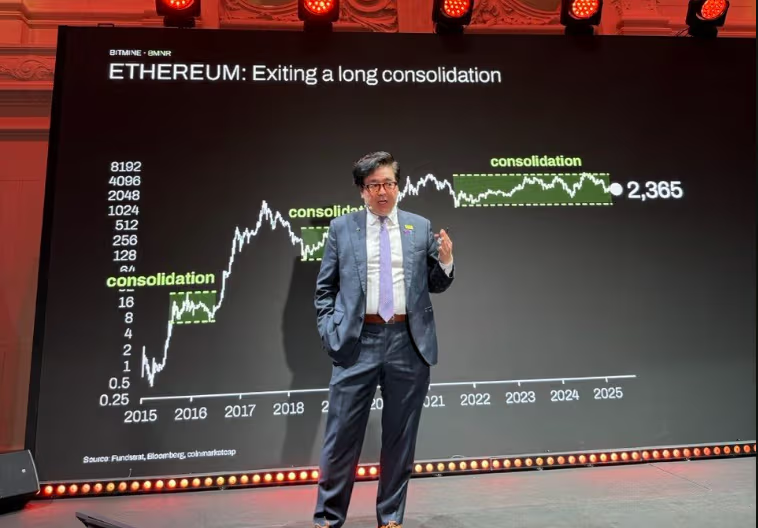
Ether is struggling to break above $2,400 due to three key bearish indicators. Persistent outflows from U.S. spot Ether ETFs reflect weak institutional sentiment and regulatory uncertainty. On-chain activity shows declining DEX volumes, signaling reduced demand and engagement in Ethereum’s ecosystem. ETH futures premiums remain below neutral, indicating a lack of conviction among leveraged traders. Broader macro risks, including geopolitical tensions and U.S. regulatory concerns, add further pressure. Sustained recovery will require improved ETF inflows, stronger on-chain activity, and a healthier futures market, alongside more favorable macro conditions.

Ether maintains war in a risk-off environment, with price action reflecting susceptible demand and broader macro uncertainty. Despite attempts to stabilize near key stages, the asset has lagged behind the wider crypto market, leaving buyers targeted on precise indicators that might decide whether or not ETH can reclaim momentum and push in the direction of the $2,400 mark.

ETF Outflows Weigh on Confidence

Institutional sentiment stays a main situation for Ethereum. US-listed spot Ether ETFs have recorded steady net outflows in latest sessions, highlighting a decline in large-scale investor participation. These outflows recommend that establishments are either decreasing publicity or waiting for a clearer market course earlier than committing additional capital.

Even though newer ETF structures include staking features, the relatively modest yield has n’t enticed sustained inflows. Regulatory uncertainty in the United States has in addition complex the outlook, making institutions cautious. Until ETF flows turn positive again, Ether is likely to stand problems constructing robust upward momentum.

DEX Activity Signals Weak Demand

On-chain information exhibits a noticeable slowdown in decentralized exchange activity across Ethereum’s ecosystem. Weekly DEX volumes have dropped considerably as compared to past due 2025 stages, reflecting reduced engagement from traders and decentralized finance users. This decline factors to weaker demand for ETH, as the token is heavily used for transaction expenses and DeFi interactions.

Lower pastime also indicates that fewer customers are collaborating in key blockchain programs, which directly impacts network price. Without a restoration in DEX volumes, Ether may additionally struggle to maintain better price ranges. A revival in decentralized trading interest could be a critical signal of renewed demand and ecosystem strength.

Futures Premium Highlights Lack of Conviction

The ETH futures market is presently displaying limited bullish sentiment, with premiums sitting below the impartial range. Under normal market situations, futures contracts exchange at a top rate of 4% to 8%, reflecting confidence in future price appreciation. However, the cutting-edge decrease in top rate suggests that traders are reluctant to take on leveraged long positions.

This loss of conviction shows that market individuals are uncertain about short-term price routes. Until futures rates go back to more healthy levels, bearish stress might also persist. An upward push in this metric could sign developing self assurance among professional traders and will act as a catalyst for price recovery.

Macro Uncertainty Adds Pressure

Global macroeconomic conditions continue to weigh heavily on crypto markets, with geopolitical tensions playing a key role. The ongoing conflict involving Iran has contributed to volatility across financial markets, pushing investors toward safer assets and reducing appetite for riskier investments like cryptocurrencies.

Additionally, regulatory developments in the United States have added another layer of uncertainty. Concerns over stablecoin regulations and tighter oversight have kept sentiment cautious. For Ether to break above $2,400, improvements in macro conditions alongside stronger on-chain and institutional signals will be essential to support a sustained bullish move.


TagsETHEthereum (ETH)

Пов'язані питання

QWhat are the three main indicators currently holding back Ether's price from breaking above $2,400?

AThe three main indicators are persistent outflows from US-listed spot Ether ETFs, a significant slowdown in decentralized exchange (DEX) activity, and a lack of bullish conviction in the ETH futures market with premiums below the neutral range.

QHow have the US-listed spot Ether ETFs performed recently and what does this indicate?

AUS-listed spot Ether ETFs have recorded steady net outflows in recent sessions. This indicates a decline in large-scale institutional investor participation and suggests that institutions are either reducing their exposure or waiting for a clearer market direction before committing more capital.

QWhat does the decline in DEX activity on Ethereum's ecosystem signal?

AThe decline in weekly DEX volumes signals weaker demand for ETH, as the token is heavily used for transaction fees and DeFi interactions. It also indicates reduced engagement from traders and DeFi users, which directly impacts the network's value.

QWhat does the current state of the ETH futures market premium reveal about trader sentiment?

AThe ETH futures market premium is currently sitting below the neutral range (normally 4% to 8%), which reveals a lack of bullish conviction. It shows that traders are reluctant to take on leveraged long positions and are uncertain about short-term price directions.

QBesides on-chain and institutional factors, what other type of pressure is contributing to Ether's struggle?

AGlobal macroeconomic uncertainty and geopolitical tensions, particularly the ongoing conflict involving Iran, are adding pressure. This pushes investors toward safer assets and reduces appetite for riskier investments like cryptocurrencies. Regulatory uncertainty in the US also contributes to cautious sentiment.

Пов'язані матеріали

Huawei Cloud Rejects Token Price War, Zhou Yuefeng Seeks a New Winning Formula for AI Cloud

At the 2026 Huawei Cloud INSPIRE Creator Conference, CEO Zhou Yuefeng outlined Huawei Cloud's distinct strategy in the competitive AI cloud market. Instead of engaging in price wars based on token volume or Maas revenue—a common focus for rivals like Alibaba Cloud and ByteDance's Volcano Engine—Huawei Cloud is shifting the competition towards real-world productivity gains. Zhou highlighted three core differentiators: a fully domestic computing stack (Ascend, Kunpeng), a focus on government and enterprise clients rather than consumer internet, and a deep commitment to open-source ecosystems. To this end, Huawei Cloud launched a suite of new products under the "Agentic Infra" paradigm, including the AICS Lingqu computing cluster, AMS memory storage, and the ModelArts Next platform. These aim to solve enterprise challenges in deploying AI agents, such as latency, memory, scheduling, and security. The strategy further involves creating specialized industry zones ("AI Dream Factories") for sectors like healthcare and embodied intelligence. For example, a smart medical zone developed with Shanghai Ruijin Hospital aims to democratize expert-level diagnostic capabilities. In essence, Huawei Cloud is positioning itself not as a commodity token provider, but as the foundational infrastructure for industrial AI, leveraging its domestic supply chain and hybrid cloud solutions to serve sectors where productivity, not just scale, is the ultimate measure of value.

marsbit9 хв тому

Huawei Cloud Rejects Token Price War, Zhou Yuefeng Seeks a New Winning Formula for AI Cloud

marsbit9 хв тому

70% of the Public Opposes AI, Americans Hope the U.S. Loses the AI War

70% of Americans believe AI development is moving too fast, with growing public resistance evolving from online criticism to real-world protests and violence. This widespread anti-AI sentiment stems from fears of job losses, rising utility costs, environmental damage, threats to democracy, and financial instability. Key incidents illustrate the backlash: Google's former CEO Eric Schmidt was loudly booed at a graduation for promoting AI; AI company ads are vandalized; protests and even violent attacks target AI firms and data centers. Polls show deep public pessimism and strong local opposition to data center construction, often surpassing resistance to nuclear power plants. The core grievances are economic and practical: AI is seen as automating jobs, concentrating wealth, and increasing household electricity and water bills due to massive data center resource demands. Environmentalists also oppose AI's high energy use and carbon emissions. This opposition has turned AI into a major political issue in the US. While the Trump administration prioritizes AI innovation for global competition, bipartisan pushback is growing. Democrats and factions within the MAGA movement are forming temporary alliances to support stricter regulations and local bans on new data centers, pressuring the administration to choose between its tech industry backers and its voter base. The situation highlights a profound national divide over AI's future.

marsbit42 хв тому

70% of the Public Opposes AI, Americans Hope the U.S. Loses the AI War

marsbit42 хв тому

Agents Take Over Traffic Distribution Power: What Are Tencent, ByteDance, and Alibaba Competing For?

In the race to dominate the AI era's entry point, China's tech giants—Tencent, ByteDance, and Alibaba—are aggressively deploying AI Agents to control the future of traffic distribution. Alibaba is pursuing a dual-track "closed loop + openness" strategy. Its Qianwen app is evolving into a super-Agent integrated across its ecosystem (Taobao, Alipay, etc.) to handle complex tasks like travel planning. Concurrently, it is opening its platform to external brands (Luckin Coffee, KFC) and has launched a B2B Agent platform, "Wukong," targeting enterprise automation. Its other flagship, Quark, aims to be an "AI super search box" for information and tasks. ByteDance is executing an omnipresent "sprawl strategy." Its Doubao app boasts over 300 million monthly active users and is evolving into a default AI entry point for daily life, with plans for paid versions and e-commerce integration. Its core weapon is the Kouzi platform, a visual "AI assembly factory" for developers to build custom Agents. ByteDance is also pushing hardware integration, collaborating on AI phones and developing smart glasses to embed Doubao everywhere. Tencent is playing its long-held "ultimate card" by quietly embedding an AI Agent directly into WeChat. This Agent, accessible via a swipe, can understand user commands and automatically execute tasks by calling upon WeChat's millions of mini-programs (e.g., finding and ordering coffee). This leverages WeChat's unparalleled 1.4-billion-user ecosystem to position the app as an AI-powered "service operating system," a move that could dramatically reshape the competitive landscape. The core battleground is shifting from competing for "user screen time" to competing to be the "default execution layer" for user intent. The business model is evolving from an "attention economy" to an "intent economy," where the Agent that can most efficiently fulfill a user's need gains control over service access and token flow. This represents a fundamental change in how users connect with digital services, making the fight for the Agent入口 (entry point) a pivotal moment for redefining industry leadership in the AI age.

marsbit2 год тому

Agents Take Over Traffic Distribution Power: What Are Tencent, ByteDance, and Alibaba Competing For?

marsbit2 год тому

Торгівля

Спот
Ф'ючерси

Популярні статті

Як купити WAR

Ласкаво просимо до HTX.com! Ми зробили покупку WAR (WAR) простою та зручною. Дотримуйтесь нашої покрокової інструкції, щоб розпочати свою криптовалютну подорож.Крок 1: Створіть обліковий запис на HTXВикористовуйте свою електронну пошту або номер телефону, щоб зареєструвати обліковий запис на HTX безплатно. Пройдіть безпроблемну реєстрацію й отримайте доступ до всіх функцій.ЗареєструватисьКрок 2: Перейдіть до розділу Купити крипту і виберіть спосіб оплатиКредитна/дебетова картка: використовуйте вашу картку Visa або Mastercard, щоб миттєво купити WAR (WAR).Баланс: використовуйте кошти з балансу вашого рахунку HTX для безперешкодної торгівлі.Треті особи: ми додали популярні способи оплати, такі як Google Pay та Apple Pay, щоб підвищити зручність.P2P: Торгуйте безпосередньо з іншими користувачами на HTX.Позабіржова торгівля (OTC): ми пропонуємо індивідуальні послуги та конкурентні обмінні курси для трейдерів.Крок 3: Зберігайте свої WAR (WAR)Після придбання WAR (WAR) збережіть його у своєму обліковому записі на HTX. Крім того, ви можете відправити його в інше місце за допомогою блокчейн-переказу або використовувати його для торгівлі іншими криптовалютами.Крок 4: Торгівля WAR (WAR)Легко торгуйте WAR (WAR) на спотовому ринку HTX. Просто увійдіть до свого облікового запису, виберіть торгову пару, укладайте угоди та спостерігайте за ними в режимі реального часу. Ми пропонуємо зручний досвід як для початківців, так і для досвідчених трейдерів.

259 переглядів усьогоОпубліковано 2024.12.11Оновлено 2026.06.02

Як купити WAR

Обговорення

Ласкаво просимо до спільноти HTX. Тут ви можете бути в курсі останніх подій розвитку платформи та отримати доступ до професійної ринкової інформації. Нижче представлені думки користувачів щодо ціни WAR (WAR).

活动图片