Encrypted Workplace Survey: Low Salaries Widespread and Layoffs Without Compensation, How Should Practitioners Respond?

比推Опубліковано о 2025-12-26Востаннє оновлено о 2025-12-26

Анотація

Based on a survey of 506 professionals, the crypto industry's workplace reality is revealed to be starkly different from its "get-rich-quick" myth. Key findings show over 70% of respondents earn a monthly salary below $4,000, with compensation and benefits lagging behind traditional tech sectors. Nearly half have experienced layoffs, and 40% of those received no severance pay. Furthermore, 70% reported never receiving token-based incentives, and a quarter are in a "pay-to-work" situation, having lost money overall in the sector. Despite these challenges, factors like remote work flexibility (available to 70%), manageable working hours, and the freedom to take on side jobs contribute to a moderate job satisfaction score of 3.51/5. Over 80% of respondents plan to remain in the industry, driven by the long-term goal of accumulating $1-5 million for retirement, though most are pessimistic about the 2026 job market outlook.

Author: Deep Tide TechFlow

Original Title: 2025 Crypto Industry Workplace Survey: 70% Earn Less Than $4,000 Monthly, N+1 Severance Becomes a Distant Hope


While Xiaohongshu still glorifies the "get-rich-quick myths" and "six-figure salaries" of Web3, what is the true state of the crypto industry?

Through 506 survey questionnaires, we engaged in a candid conversation with practitioners, and the results were surprising, even harsh: there is no gold rush here. Over 70% of people earn less than $4,000 per month, which is generally lower than in developed regions like Europe and the United States. Even a quarter of respondents are in a "pay-to-work" loss-making state; there is also no comprehensive protection, with nearly half having experienced layoffs, and most not receiving N+1 compensation.

Yet, despite this, over 80% choose to stay. Is it because of the 70% remote work freedom? Or is it because of the shared dream of "retiring with $5 million"?

In this report, we attempt to use cold, hard data to reveal the most genuine anxieties, desires, and survival strategies of Web3 workers.

This content is the questionnaire results section of the "Web3 Recruitment and Job Hunting 2025 Year-End Review: Who's Making Money, Who's Paying to Work?" Full report available at:

https://www.techflowpost.com/article/detail_29702.html

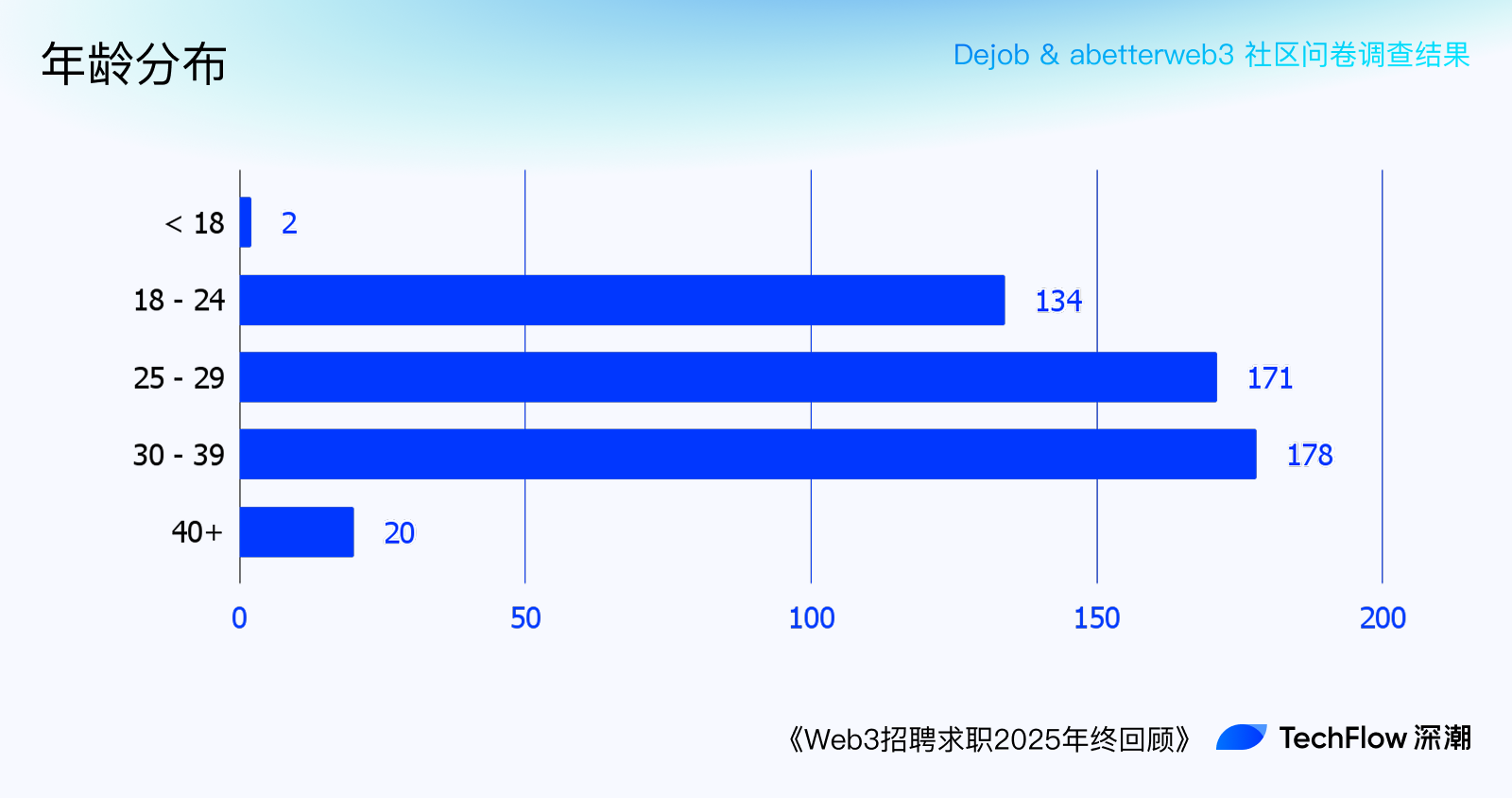
Regarding age distribution, the main workforce aged 18-29 is indeed the majority, but middle-aged practitioners (>30 years old) are also quite numerous. This might be related to the less severe "age 35 ceiling" in the Web3 industry. Compared to internet companies, Web3 companies value experience, ability, and efficiency more, with many hoping that seasoned professionals can quickly build products "plug-and-play".
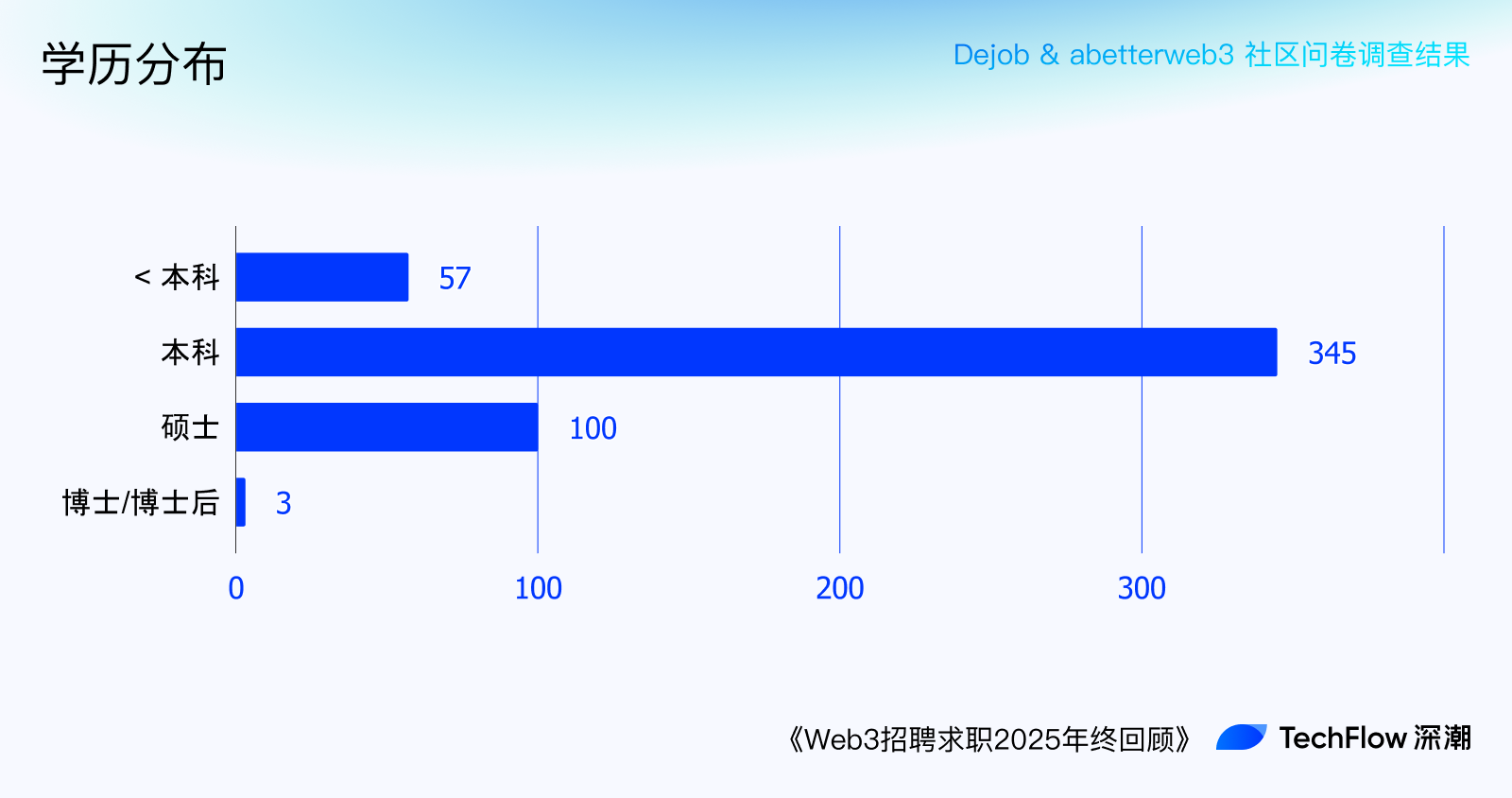
The distribution of educational background is largely consistent with the earlier talent data statistics, predominantly undergraduate degrees, with some having less than a bachelor's and others holding master's or doctoral degrees, though the proportion of postgraduates is not high.
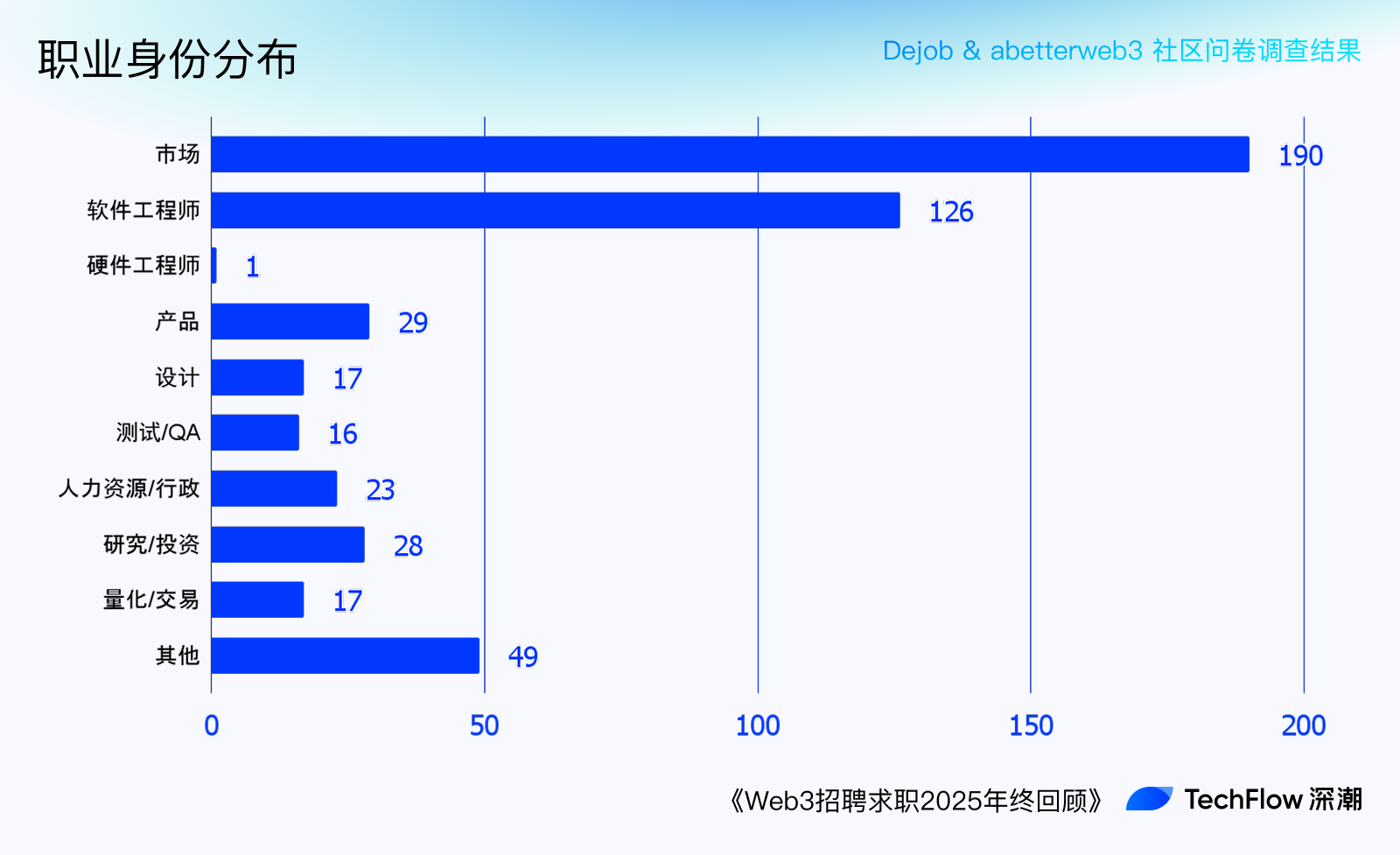
In terms of professional roles, the largest group is in market-related roles (operations/BD/customer service, etc.), followed by developers (front-end/back-end/smart contracts/blockchain, etc.). Then come product, human resources, investment research, design, trading, etc. Among the "other" submissions, common roles included risk control & security, KOLs, etc.
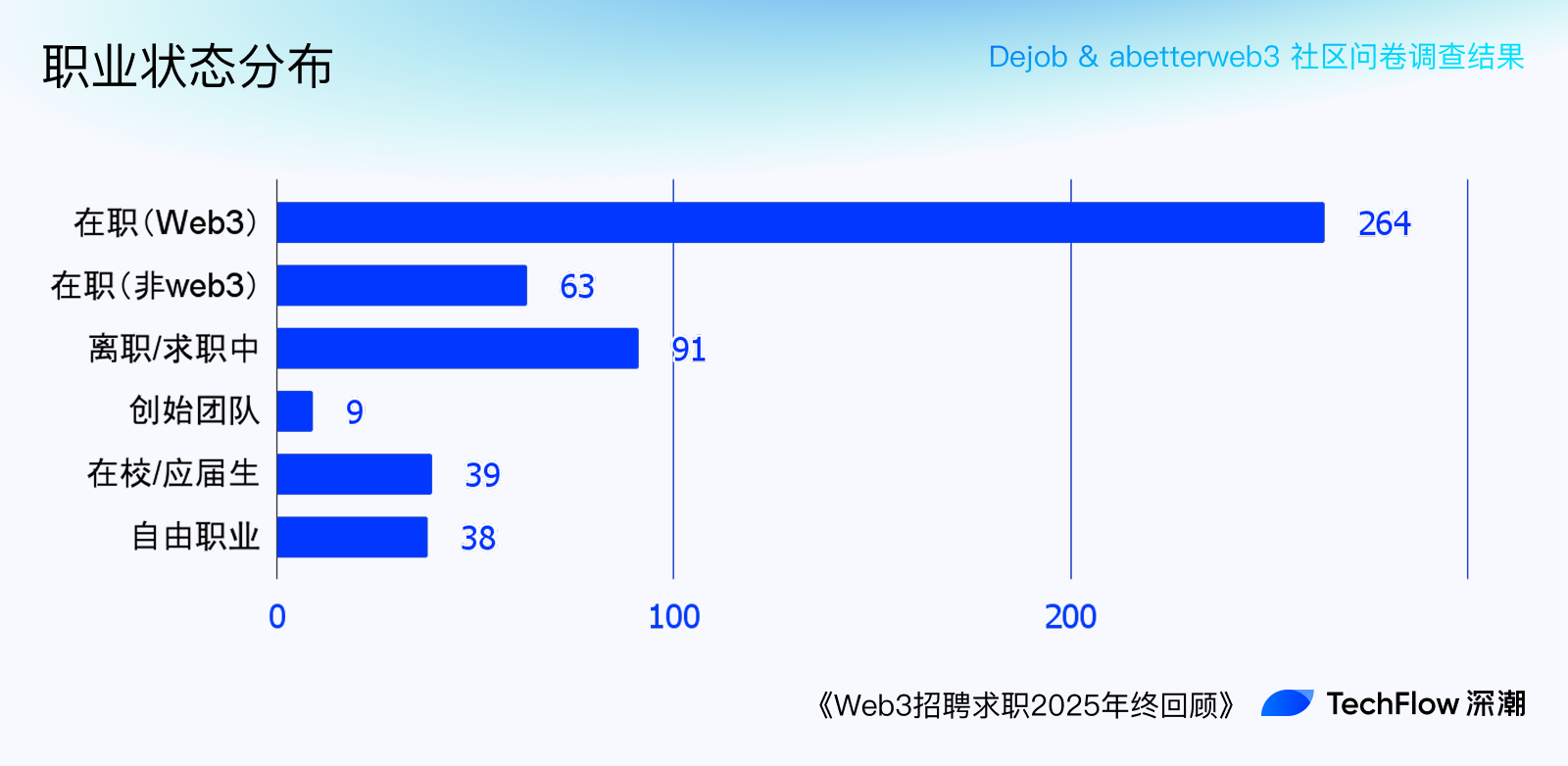
Regarding employment/attrition status, only 52% of respondents are currently employed in Web3. Over 30% are in a more flexible life situation. This indicates, on one hand, that market conditions affecting company headcount have impacted many; on the other hand, it might be because certain unique Web3 business models have made some people less reliant on traditional employment for cash flow, such as KOLs and traders.
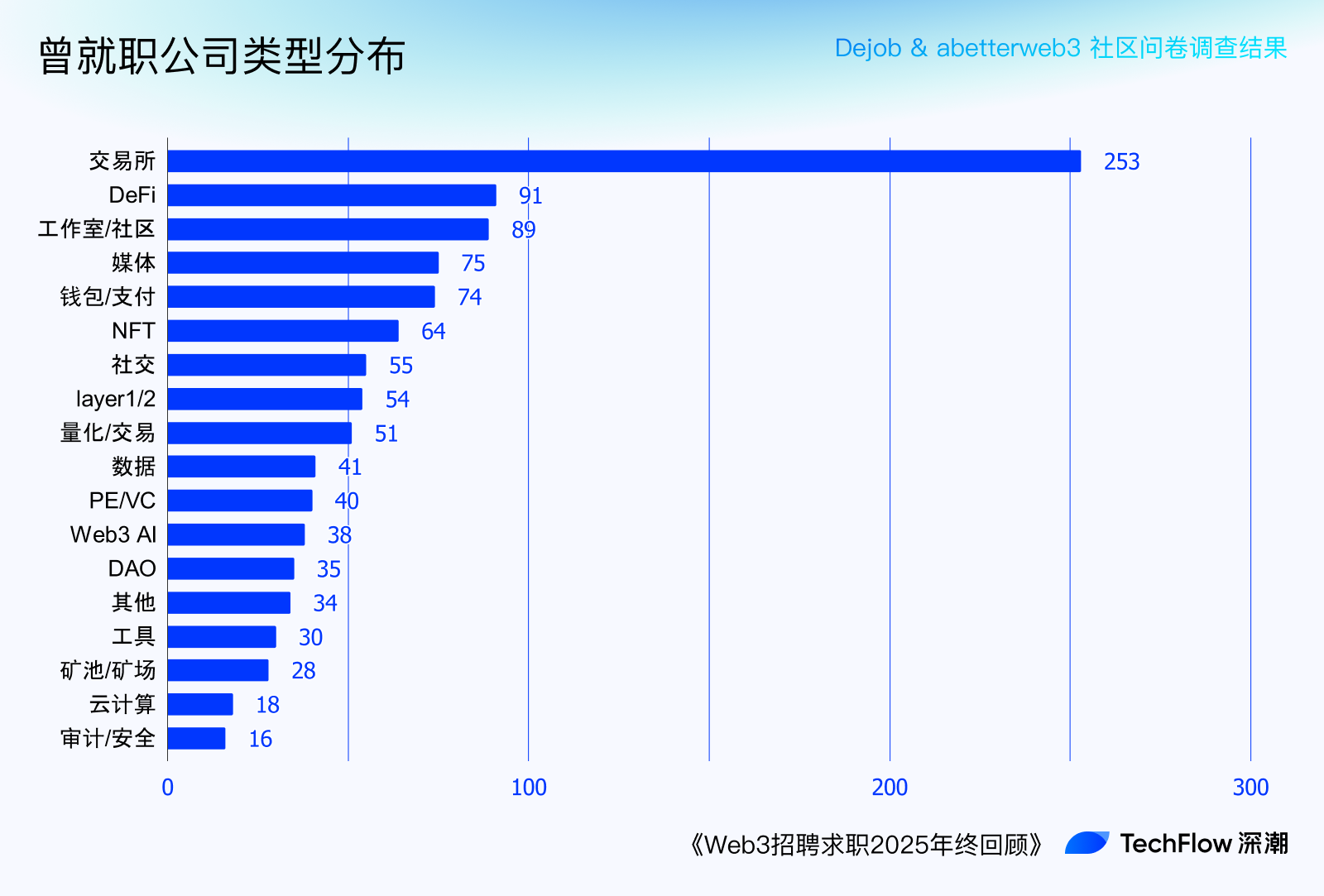
Over half of the submissions indicated having worked at exchanges, followed by studios/communities, DeFi, media, wallets, and other common business types. Both talent and job providers are heavily concentrated in exchanges due to the Matthew Effect. This also reflects, to some extent, the current industry dilemma: apart from exchanges, the revenue-generating capabilities of other business models mostly decrease from C-end — tools — underlying layers.
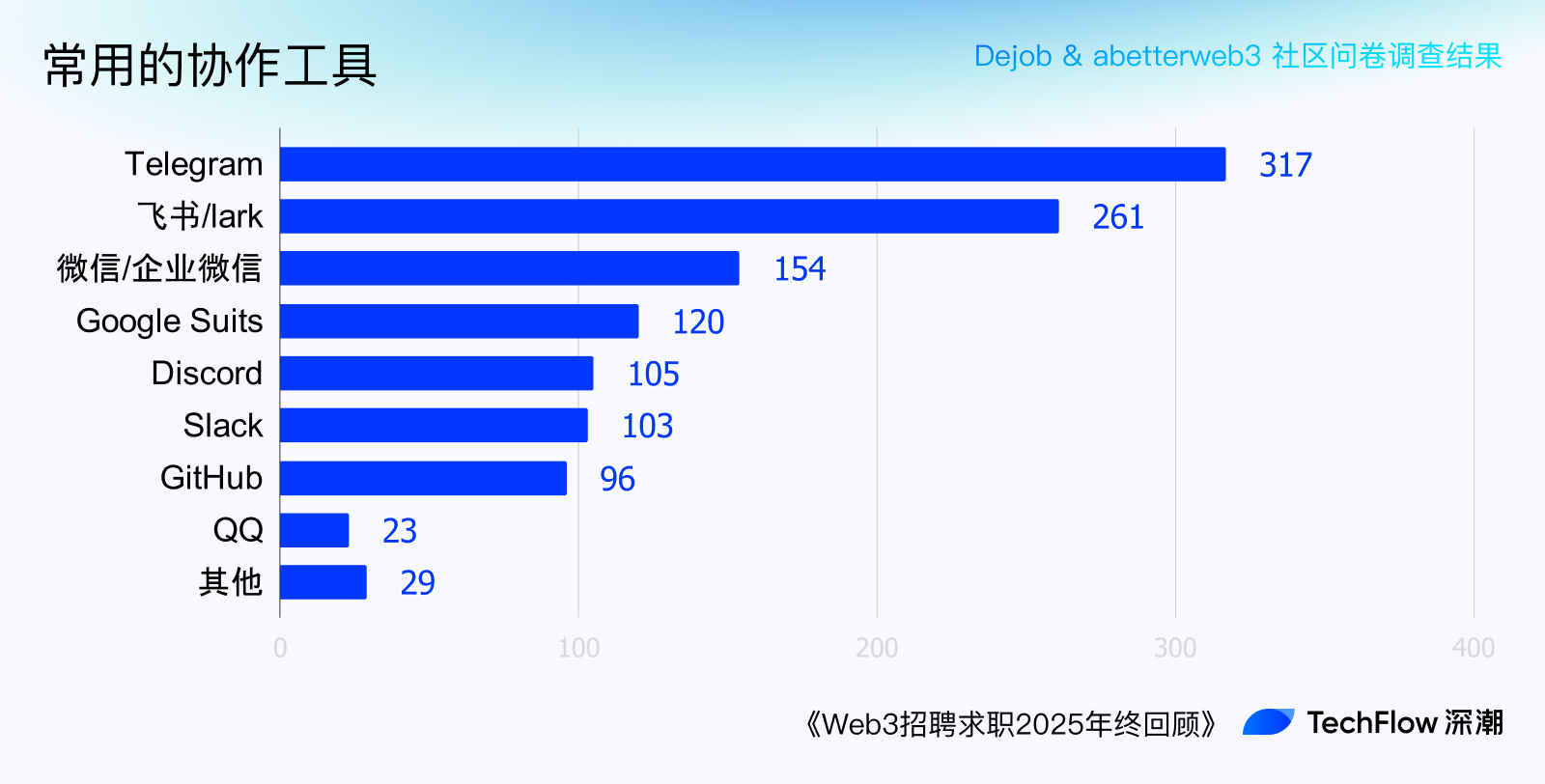
Regarding remote collaboration tools, as this survey took place in a Chinese-language vertical Web3 recruitment community, Telegram is favored by most companies for its confidentiality and usability, followed by mainstream Chinese tools like Feishu and WeChat, and finally tools commonly used by foreign companies like Google Suite, Discord, Slack, etc.
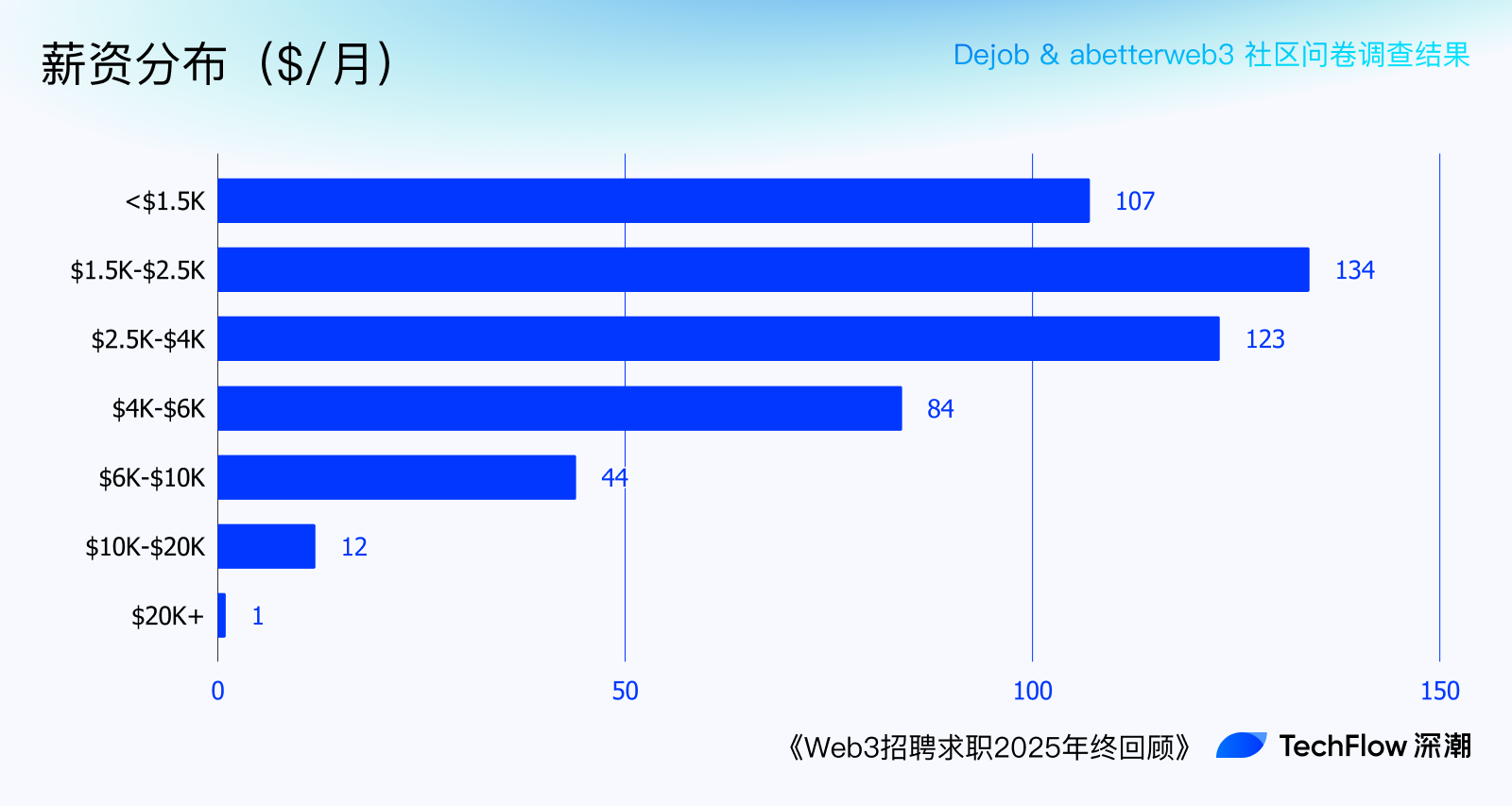
In terms of income levels, contrary to the external myths of immense wealth, most Web3 workers' incomes are not only lower than those in many top internet companies but also severely lacking in long-term incentives (tokens/equity), year-end bonuses, and layoff compensation.

Over 70% of people have a monthly salary income of less than $4,000 (approximately RMB 28,000), and the frequently mentioned monthly salary of $10,000 on Xiaohongshu is a rarity.
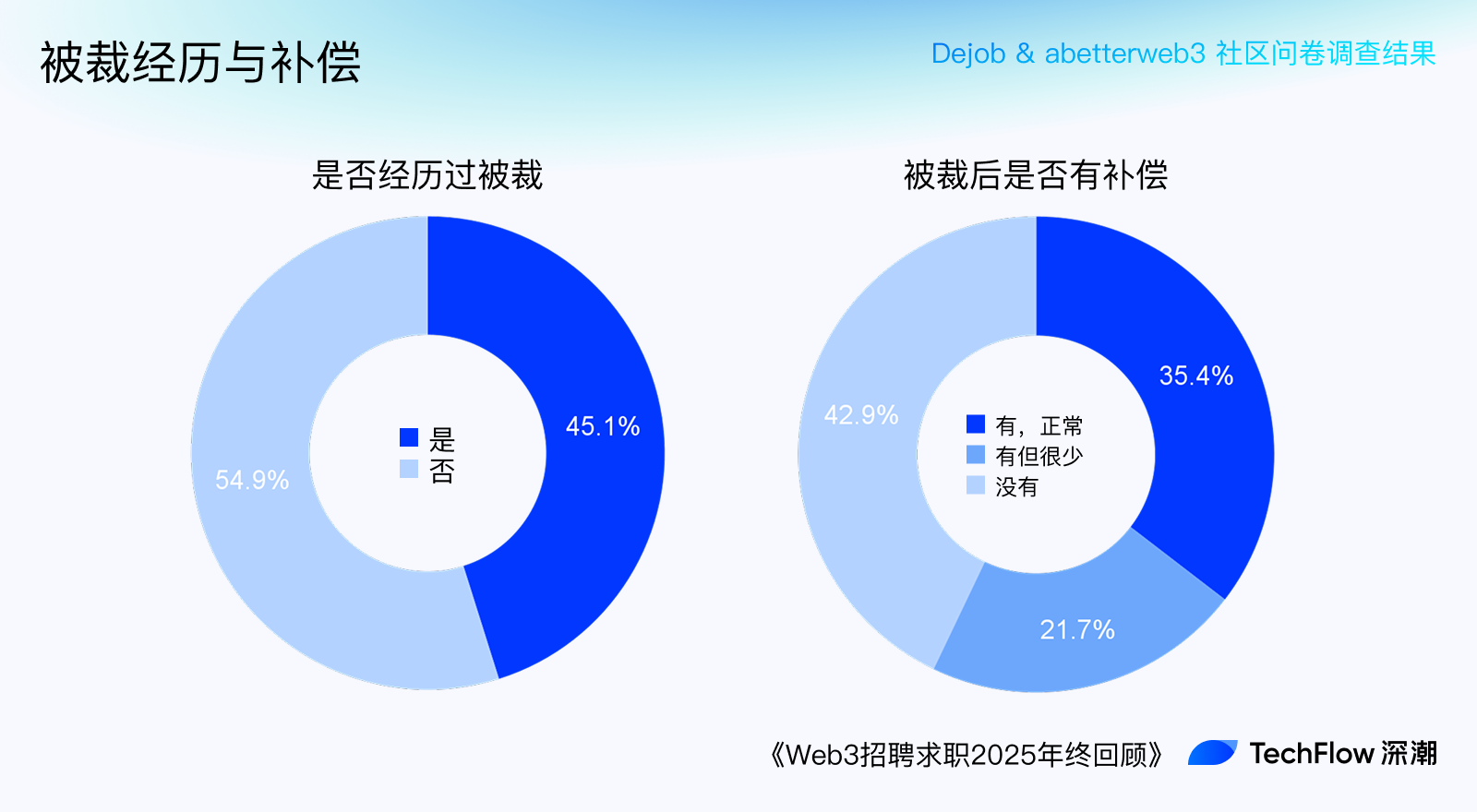
Close to half of the people have experienced layoffs, and 40% of those laid off reported no compensation, while 21% said that even if there was compensation, it fell far short of legal standards (e.g., n+1).
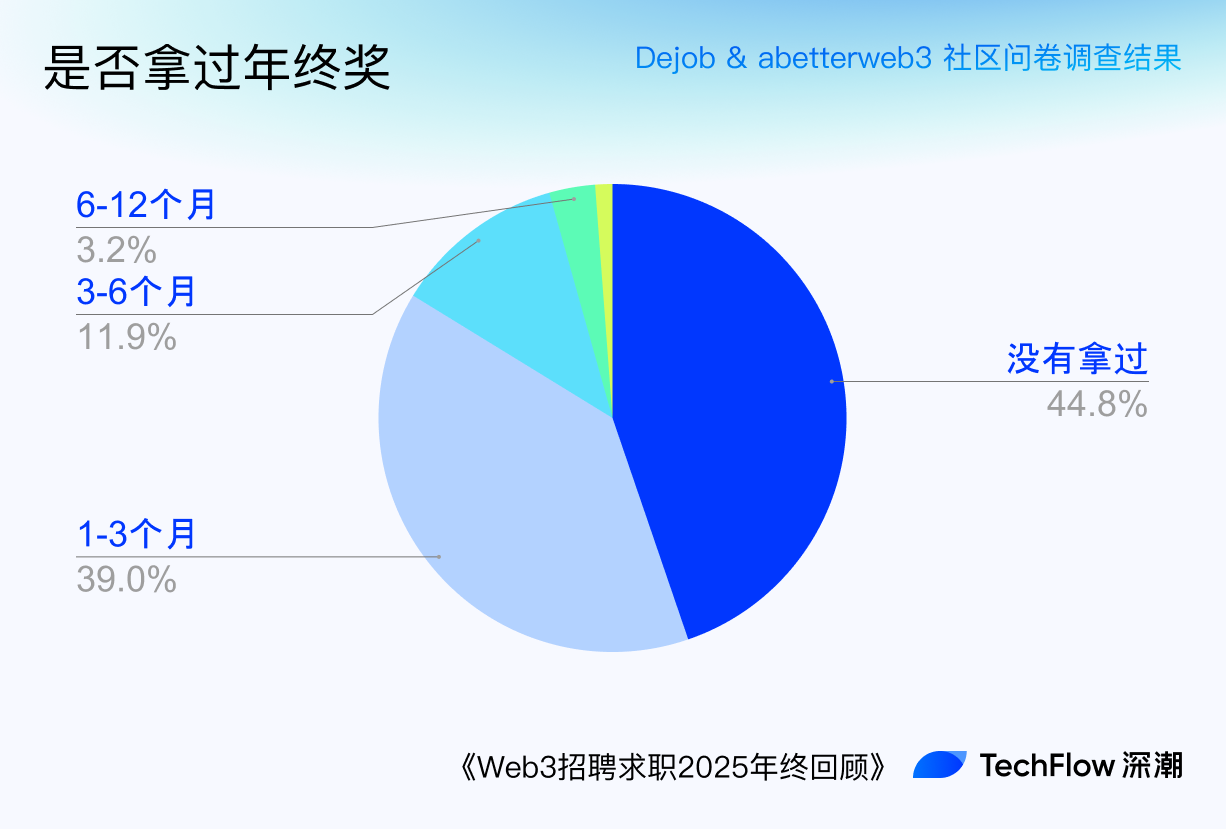
Nearly half reported not having received a year-end bonus; even among those who did, it was generally 1-3 months' salary, on par with most internet companies outside the Web3 industry.
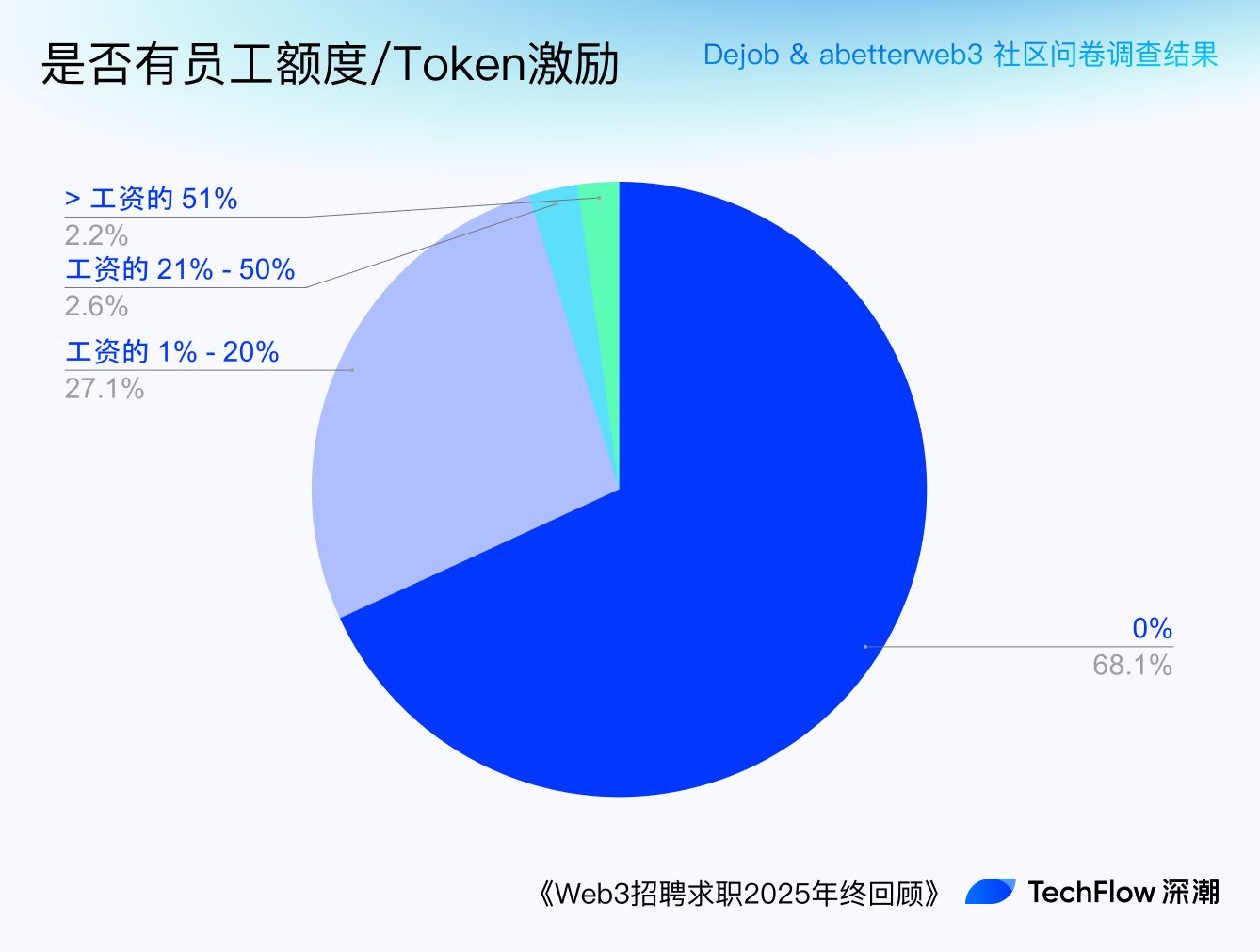
Regarding the well-known "upward channel" of token equity incentives, nearly 70% of practitioners reported not having received any. Even among those who did, very few received more than 20% of their salary's value.
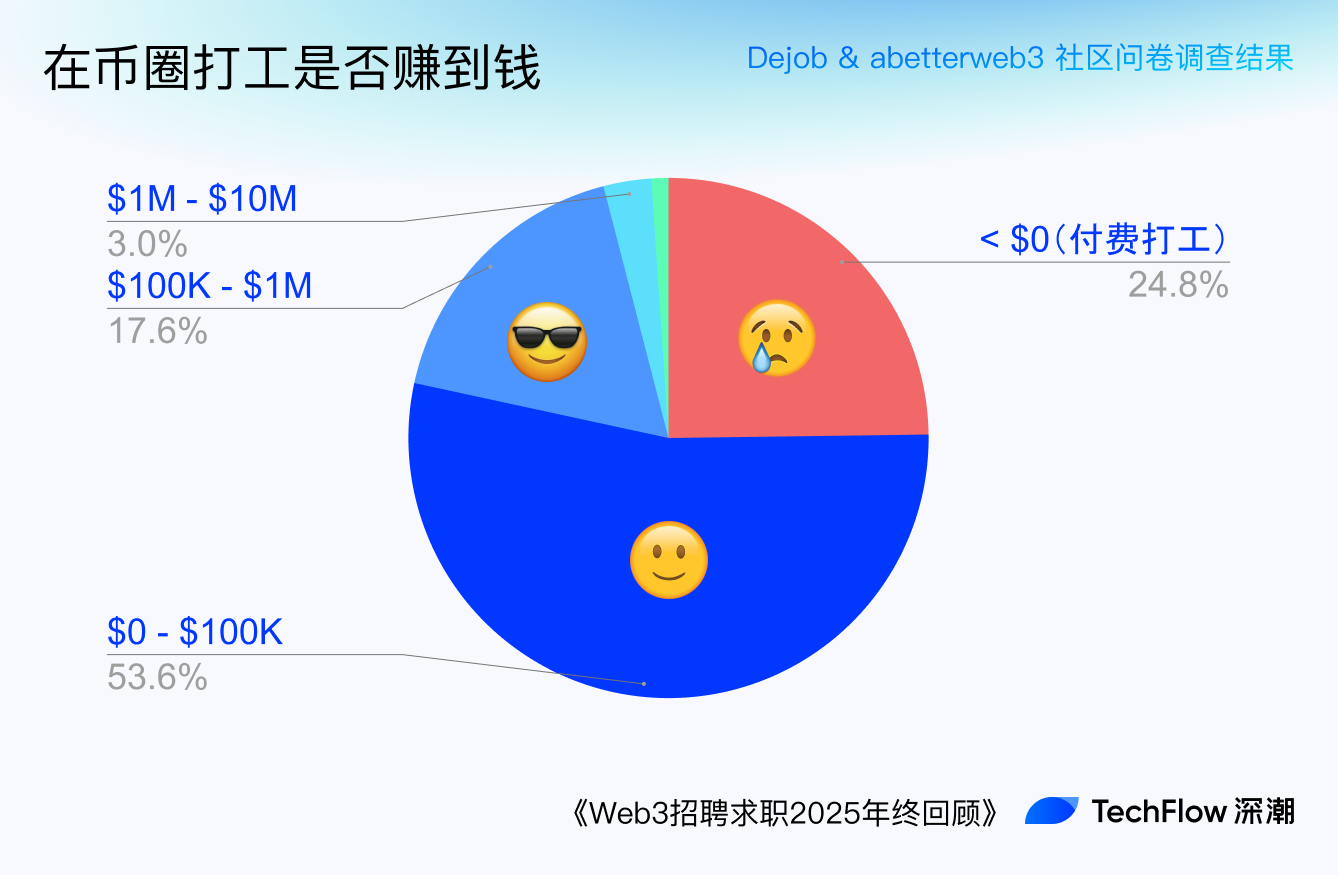
Even a quarter of people have accumulated an overall wealth "loss" since entering the crypto space, in a "pay-to-work" state; other respondents mostly accumulated wealth around $100K (approximately RMB 700,000).
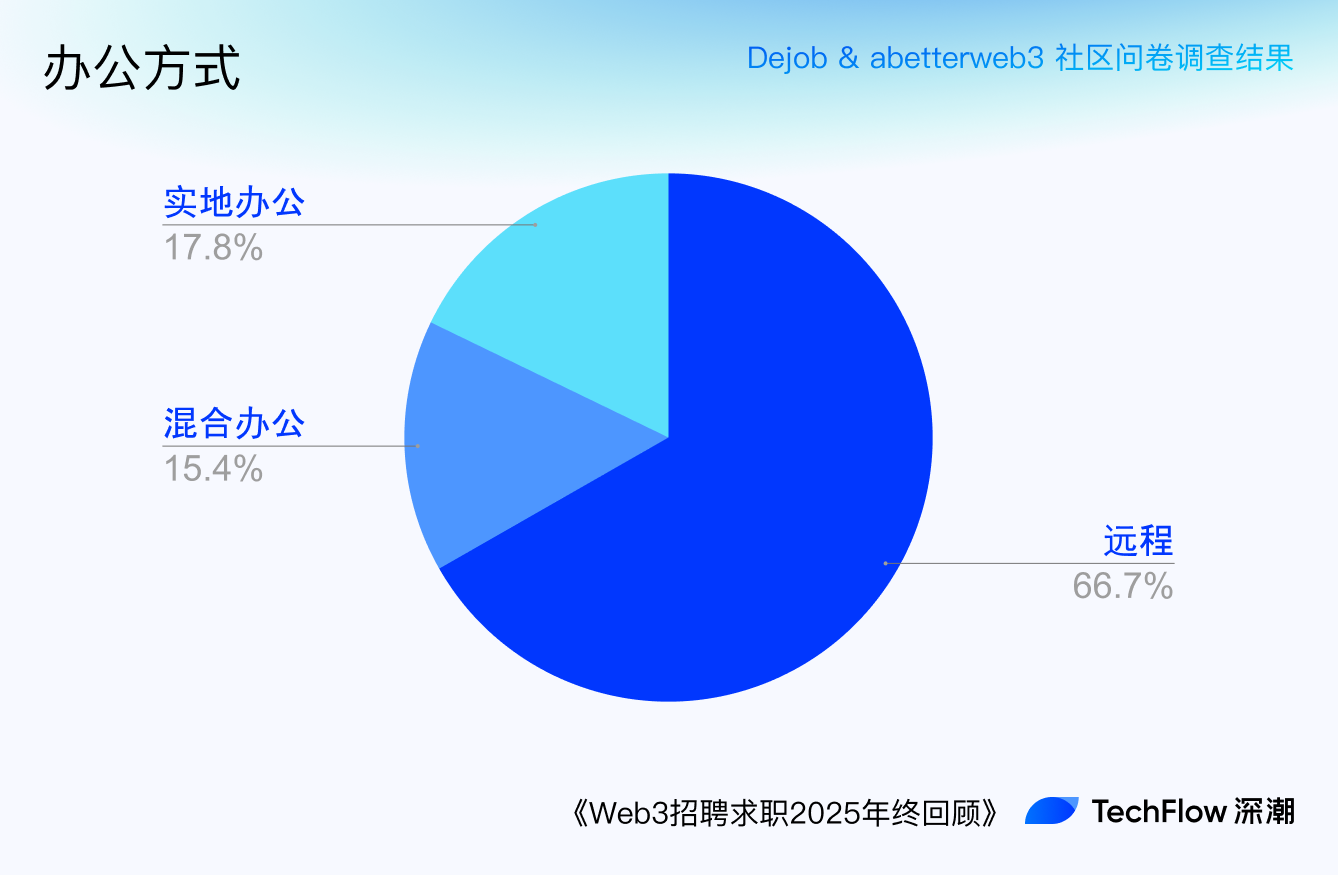
However, on the flip side of this seemingly hopeless income level, Web3's strong remote work culture offers some relief. Nearly 70% of respondents indicated their companies support remote work, and another 15% reported support for hybrid work, meaning虽然有办公室 but attendance is not mandatory, or working from home is allowed a few days a week.
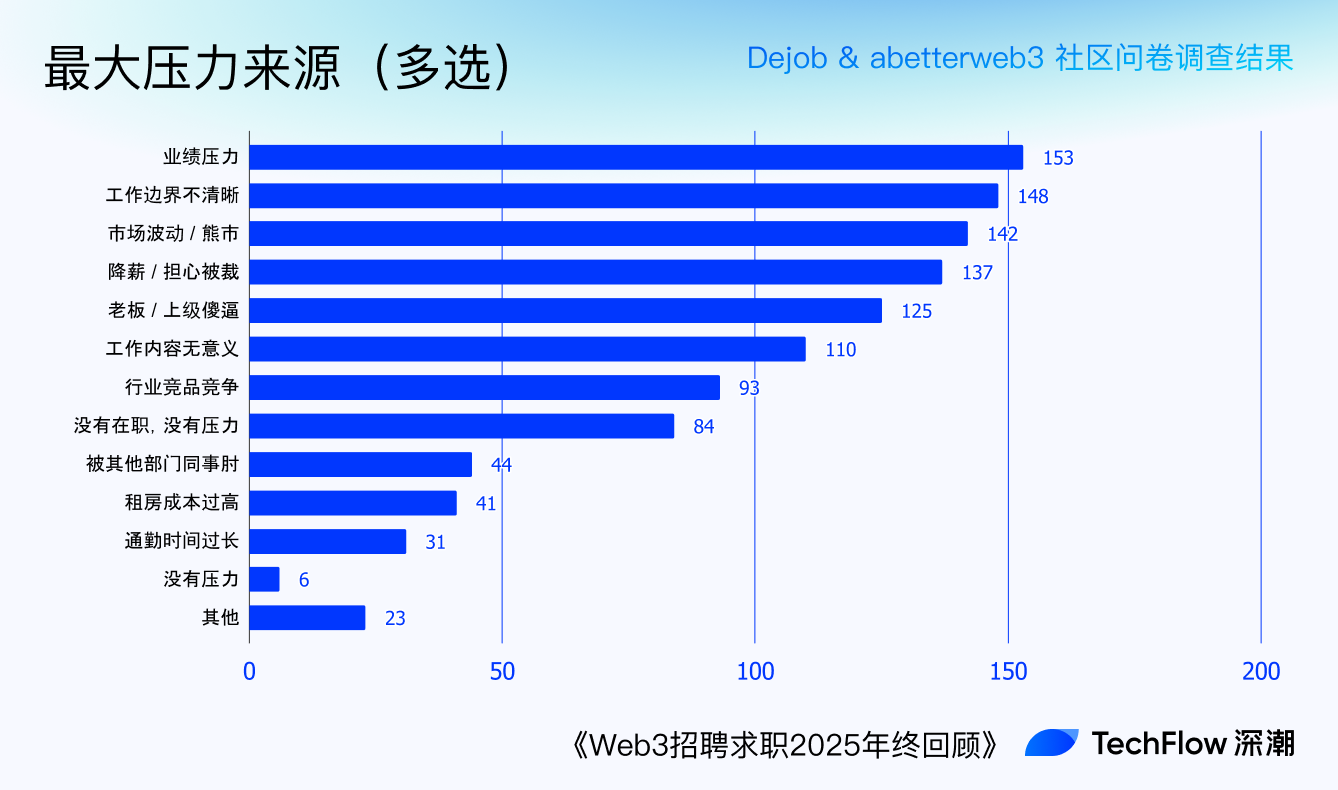
Remote work does alleviate some of the pain of being a worker. In the "biggest source of stress" question, 31 respondents selected "excessively long commute." Other top sources of stress included product growth, work boundaries, market volatility, fear of being laid off, and having a foolish boss.
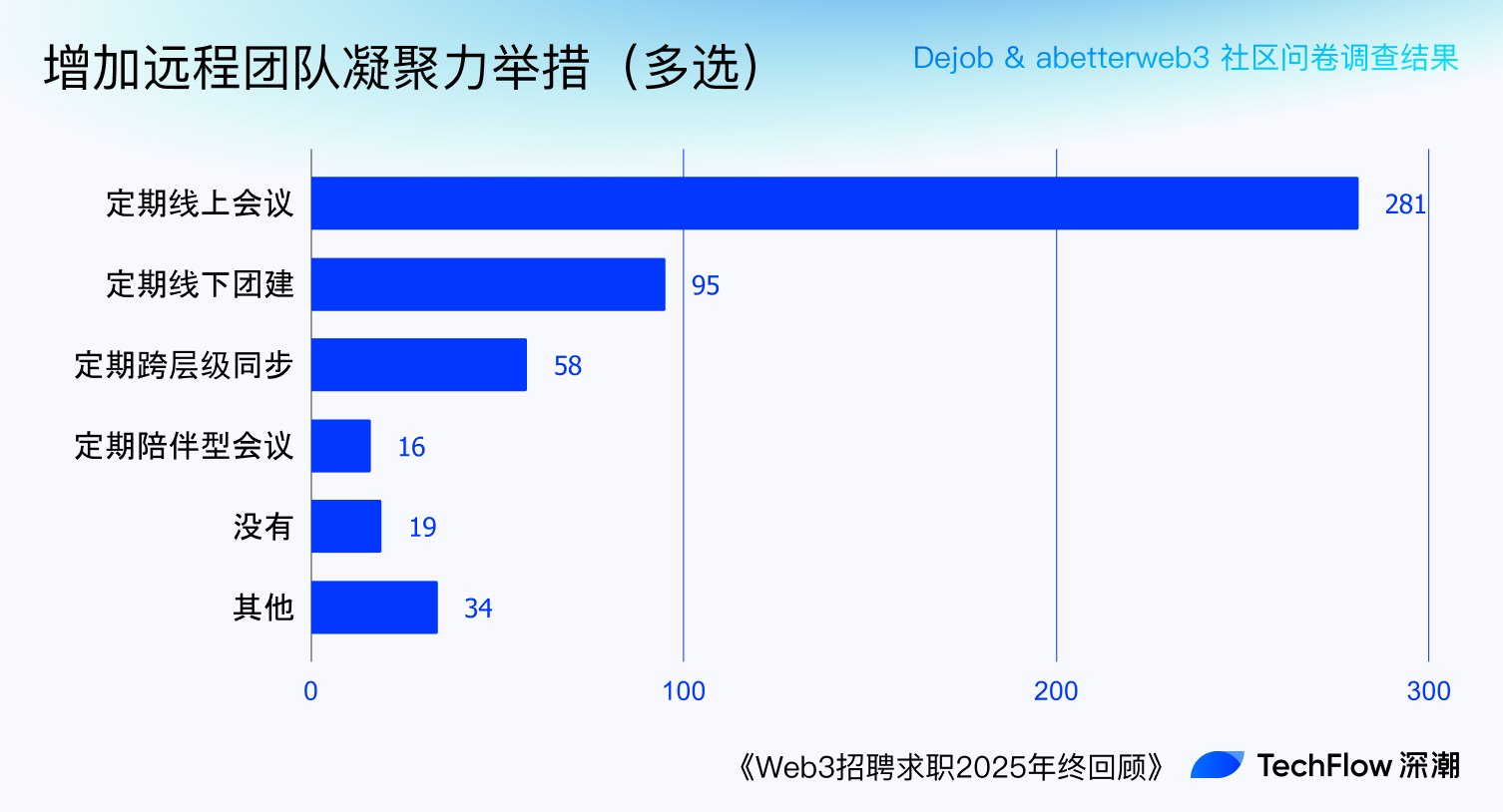
To maintain employees' mental health as social beings, many companies have taken measures to sustain team cohesion.
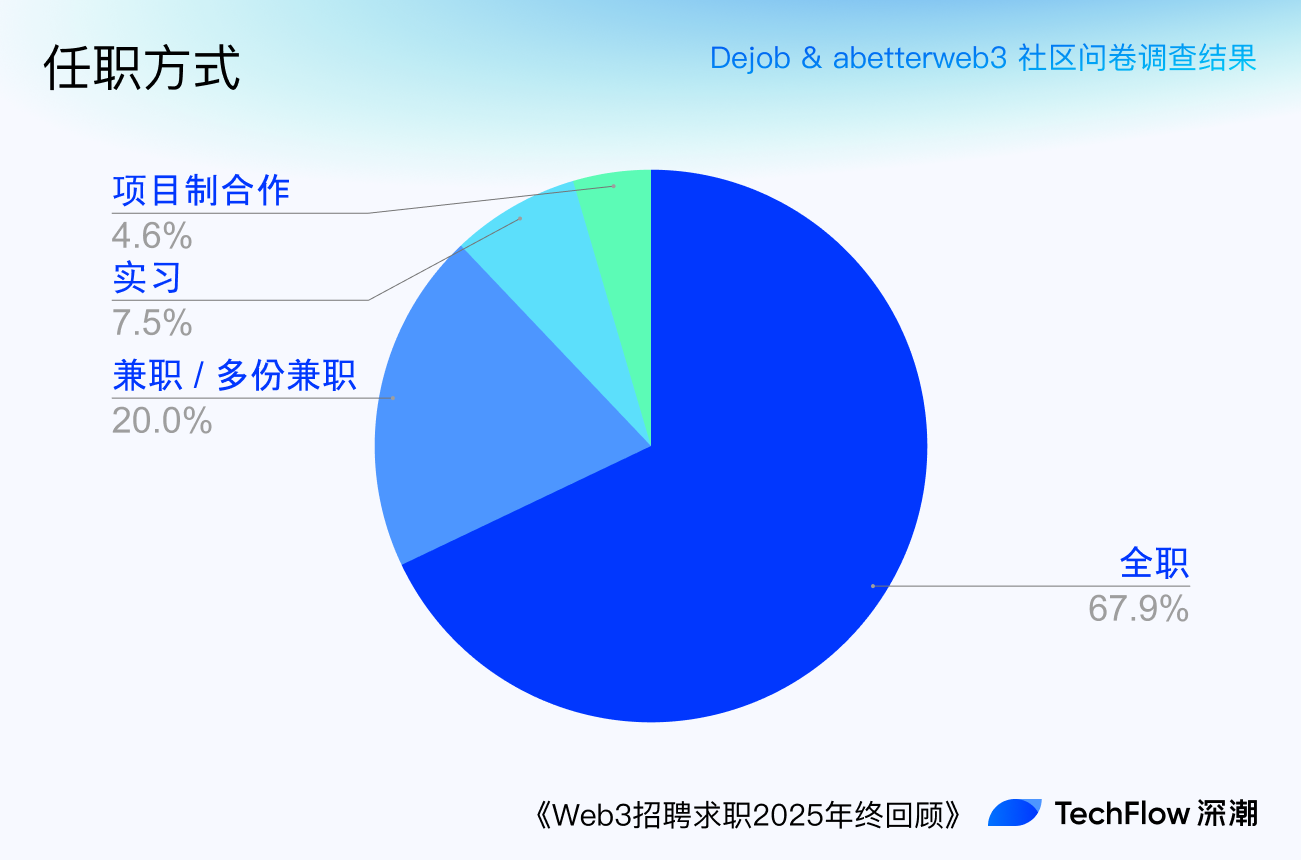
Under the combined effect of low income and instability, many choose to hold multiple jobs. 20% of respondents indicated having side jobs. This also reflects the tech-oriented culture of most Web3 companies: as long as problems are solved and competence is demonstrated, they don't interfere with employees' lifestyles and income methods.
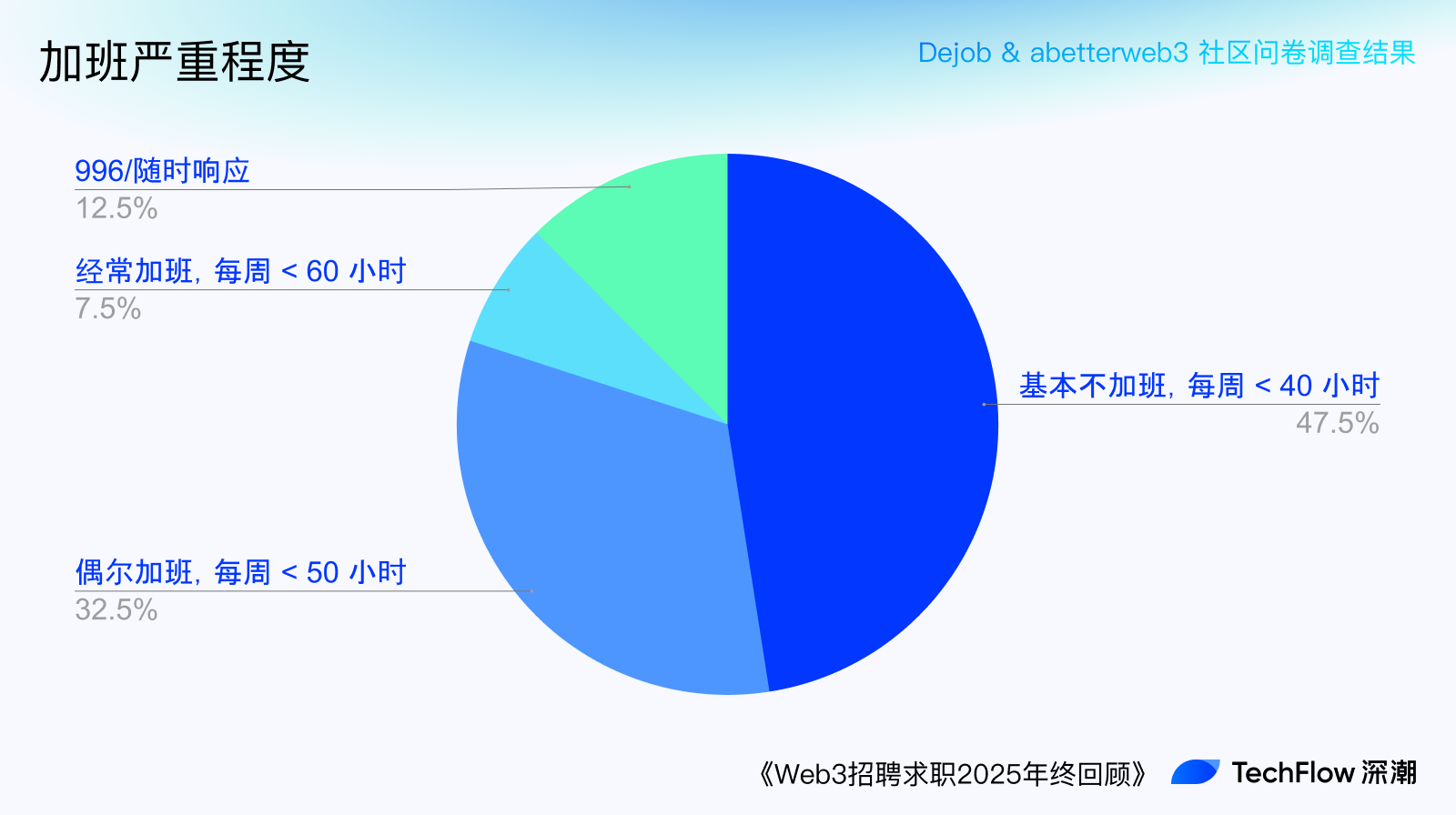
Regarding overtime intensity, 80% of people work approximately 40-50 hours per week. Thus, Web3 overtime seems less intense than many 996/007 sweatshops in web2.
Regarding job hopping, over half want to change companies, with 30% planning to do so within 3-6 months. But about a quarter are satisfied with their current situation, and 8 respondents even found "companies they hope to work for for a lifetime".

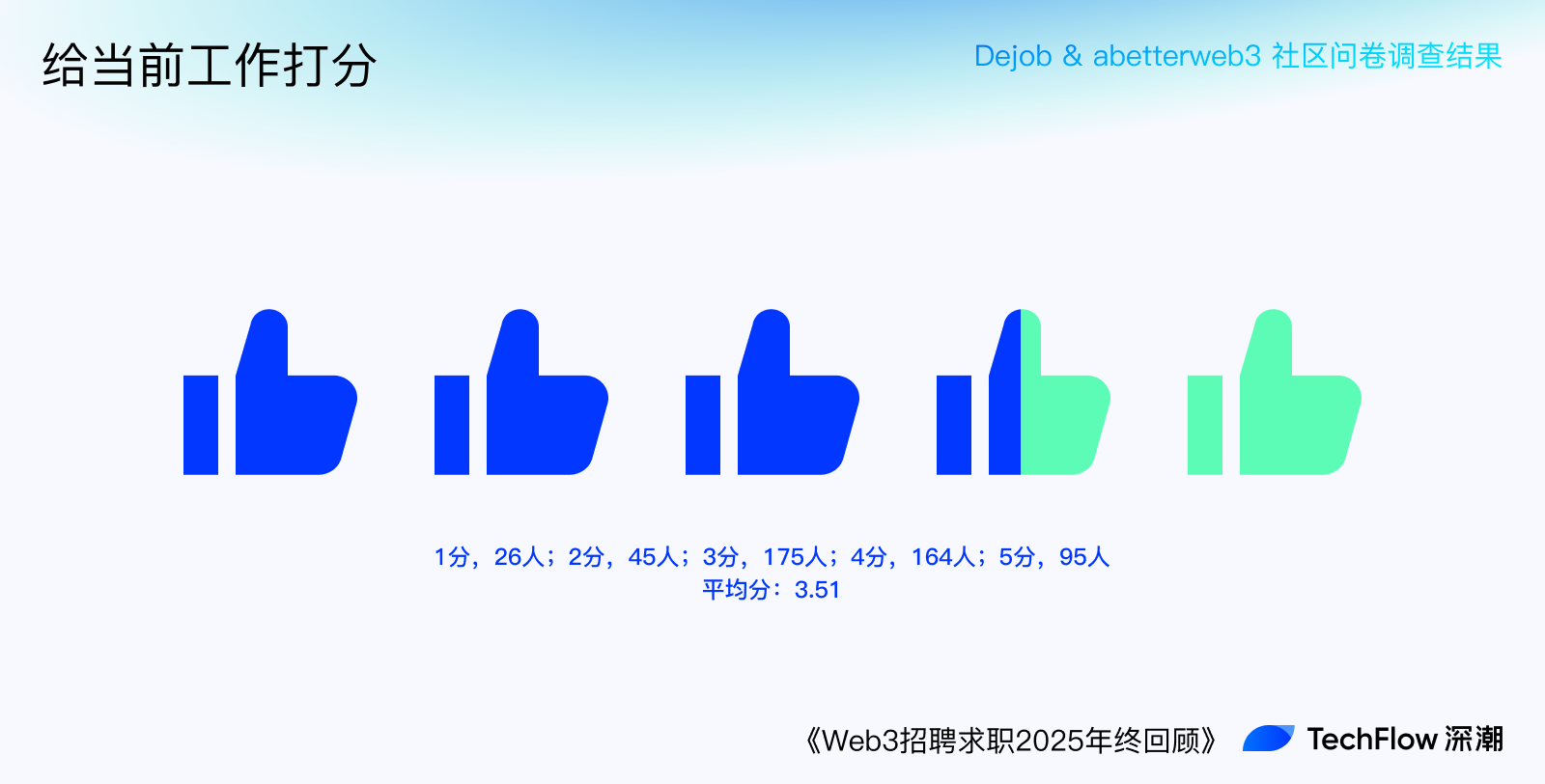
Considering factors like minimal overtime, remote work options, and side jobs allowed, many rate their current job positively. In the rating section for their current job, the average score was 3.51.
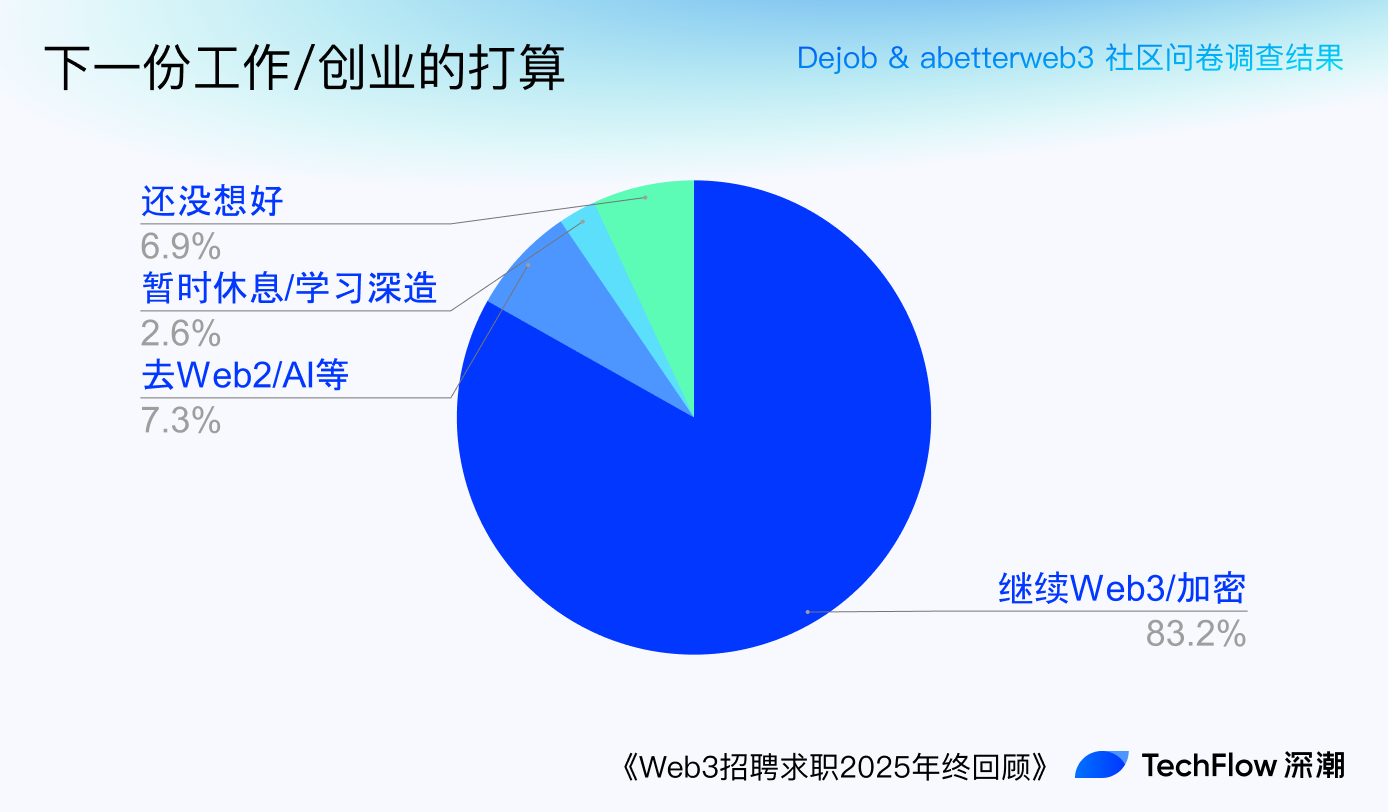
Regarding whether their next job will still be in the crypto space, over 80% choose to stay, while 7% choose to leave.
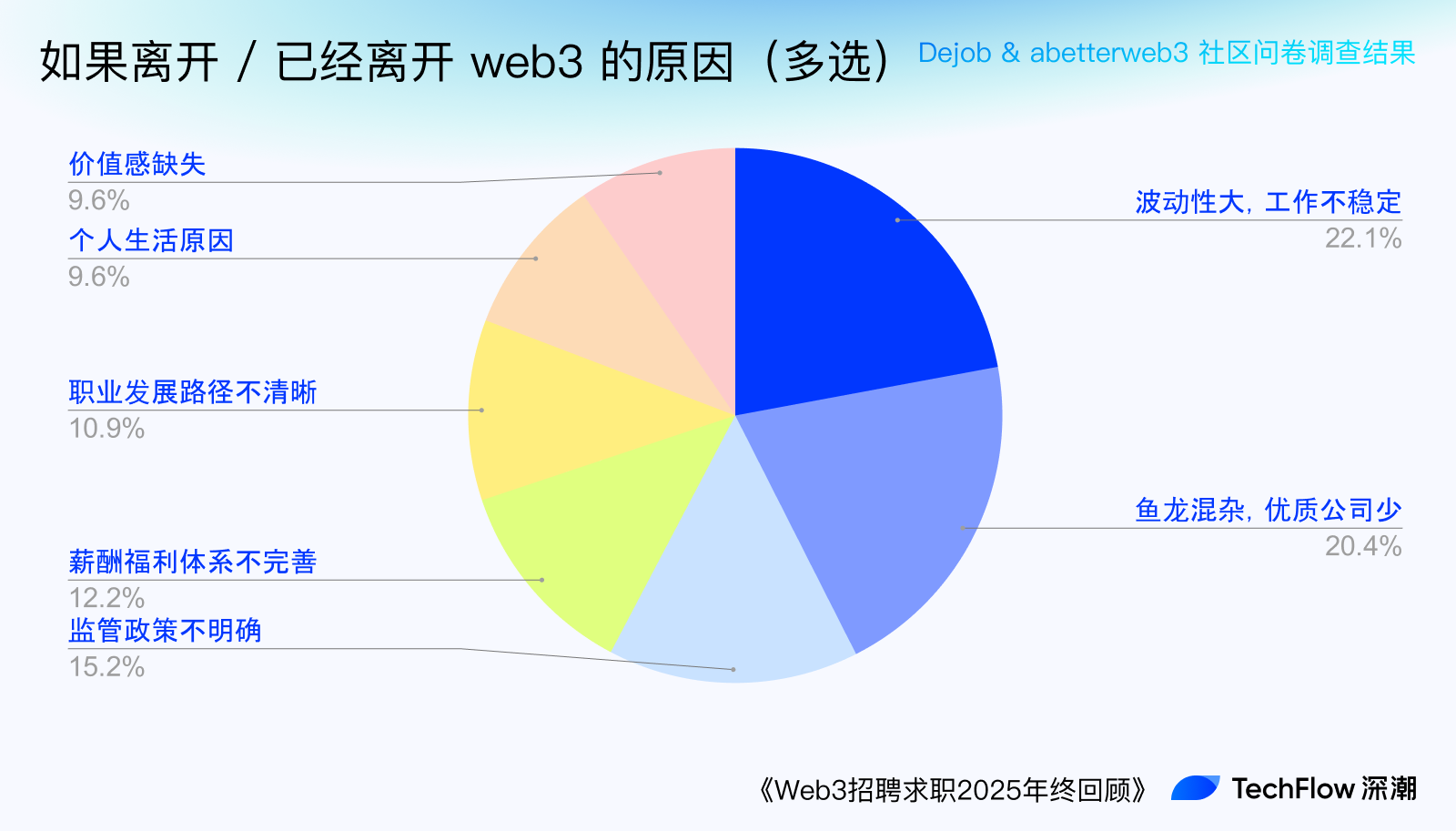
In the reasons for leaving section, the choices reflect the industry's most genuine, cold inner reality.
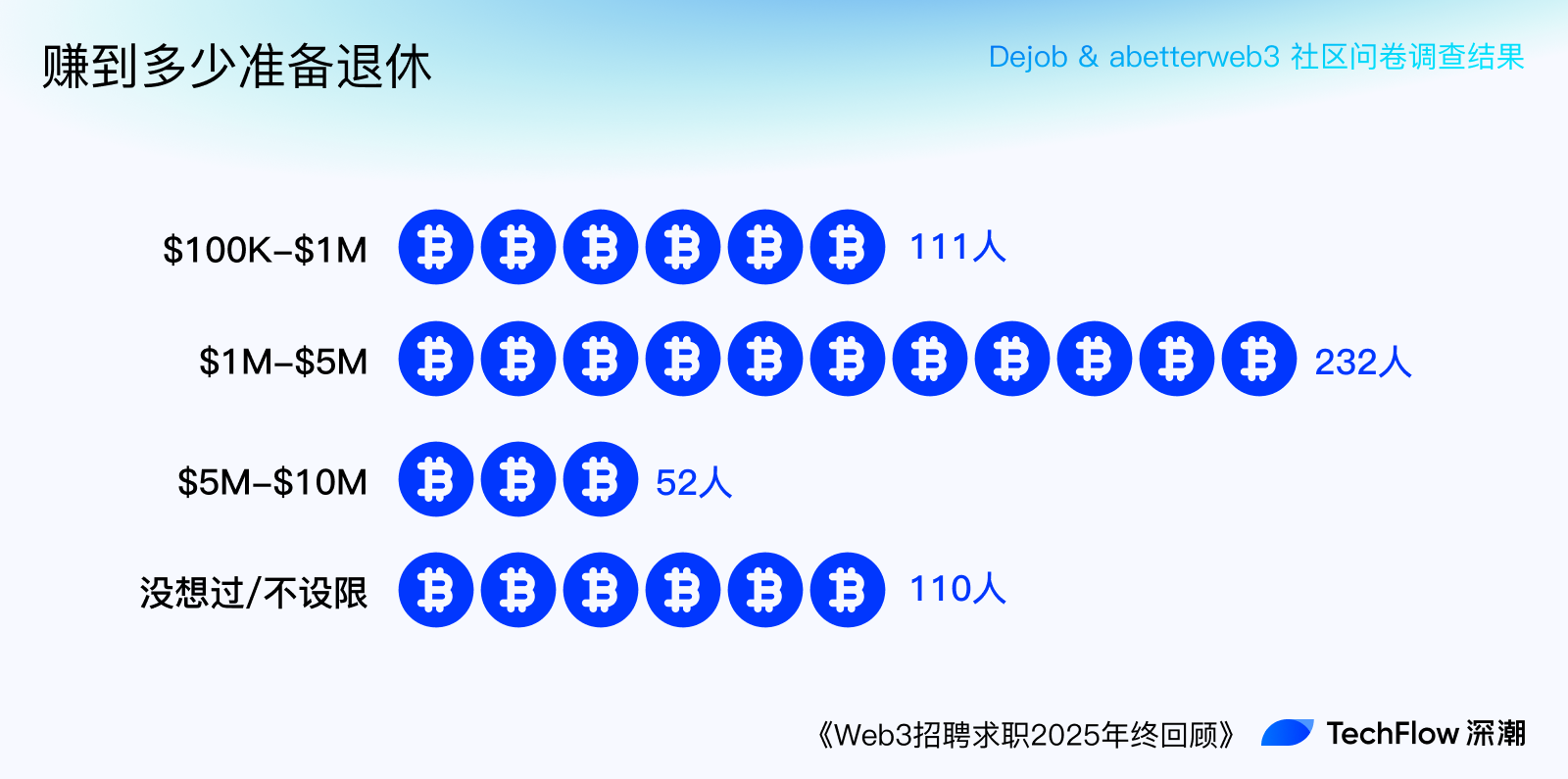
But all this preparation is for early retirement. For "how much wealth would make you consider resigning", the vast majority chose $1M – $5M (approximately RMB 7 million ~ 35 million). This might indeed be the wealth limit one can achieve through salaried work. But 20% chose "no limit", reflecting confidence in their abilities.
Regarding optimism about the 2026 job market, only 28% believe it will improve, with most being pessimistic or taking a wait-and-see attitude.

Truth Session


Original link:https://www.bitpush.news/articles/7598504

Пов'язані питання

QWhat percentage of crypto industry workers earn less than $4000 per month according to the survey?

AOver 70% of crypto industry workers earn less than $4000 per month.

QHow many respondents reported experiencing layoffs in the crypto industry, and what portion received no compensation?

ANearly half of the respondents experienced layoffs, and 40% of those laid off received no compensation.

QWhat is the primary reason most workers choose to stay in the crypto industry despite low pay and instability?

AOver 80% of workers choose to stay, largely due to factors like remote work flexibility (70% support remote work) and the dream of achieving financial freedom (e.g., retiring with $1-5 million).

QWhich type of company employs the most people in the crypto industry based on the survey?

AExchanges employ the most people, with over half of the respondents having worked at an exchange.

QWhat percentage of crypto workers have not received any token-based incentives (币权激励)?

ANearly 70% of crypto industry workers have not received any token-based incentives.

Пов'язані матеріали

The Value Distribution of Stablecoins

**Summary: The Value Distribution of Stablecoins** The article argues that stablecoins are evolving from mere trading tools into broader channels for dollar access. It divides the stablecoin ecosystem into four layers to analyze how value is distributed: 1. **Issuance Layer:** Mints stablecoins, holds reserve assets, and captures the spread between reserve yield and user costs (e.g., Tether, Circle). This layer currently earns the largest profit margin. 2. **Infrastructure Layer:** Connects stablecoins to the traditional financial system, handling fiat on/off-ramps, banking integration, compliance (KYC/AML), and asset management (e.g., Bridge, BVNK). This is the "unglamorous" but critical work, building the essential bridges between crypto and real-world finance. 3. **Acquiring/Distribution Layer:** Integrates stablecoins into merchant systems, manages payment flows, and provides enterprise financial software (e.g., Stripe, Coinbase). They act as the access point for businesses. 4. **Application Layer:** The end-users and businesses that ultimately use stablecoins for payments, settlements, or as a store of value. They benefit from convenience but have little pricing power. The core thesis is that while the issuance layer currently dominates profits, the often-overlooked **infrastructure layer holds significant long-term potential**. The real challenge and barrier to mass adoption is not the on-chain transfer of stablecoins (which is simple), but the complex "last mile" integration into existing business workflows, banking systems, and regulatory frameworks across different countries. Companies in this layer are currently in a "land grab" phase, investing heavily to build networks, secure bank partnerships, and establish compliance pathways. While their position is currently pressured by the profitable issuers above and distribution platforms below, the article suggests that if stablecoins become a default financial rail for businesses, the infrastructure providers who have done the hard work of integration will ultimately gain strong pricing power and become entrenched, essential players.

marsbit4 год тому

The Value Distribution of Stablecoins

marsbit4 год тому

The Value Distribution of Stablecoins

The Value Distribution of Stablecoins The article argues that stablecoins are evolving from a mere trading tool into a broad "dollar channel." It analyzes the industry's value chain through four layers: 1. **Issuance Layer (e.g., Tether, Circle):** The top layer that mints stablecoins, holds reserve assets, and captures the thickest interest rate spread. 2. **Infrastructure Layer (e.g., Bridge, BVNK):** Connects stablecoins to the traditional financial system, handling critical but complex "dirty work" like fiat on/off-ramps, banking integration, compliance (KYC/AML), and cross-border settlement. 3. **Acquiring/Distribution Layer (e.g., Stripe, Coinbase):** Embeds stablecoins into merchant systems, manages payment flows, and integrates with enterprise software. 4. **Application Layer:** End-users and businesses that ultimately use stablecoins for payments, settlement, or storing value. The author posits that while the issuance layer currently captures the most profit, the most overlooked and potentially critical layer is infrastructure. The core challenge for stablecoin adoption isn't the on-chain transfer (which is simple), but bridging the gap between blockchain and the real-world financial system. This involves solving practical problems for businesses: fiat conversion, reconciliation, tax handling, and user onboarding. Infrastructure companies are currently in a difficult "land-grab" phase—building networks, securing banking relationships, and achieving compliance country-by-country. They face pressure from both the profitable issuance layer above and distribution platforms below. However, the author suggests this layer is building a crucial moat. Once stablecoins become a default business rail, the infrastructure players who have done the hard work of integration may gain significant, durable value and pricing power.

链捕手5 год тому

The Value Distribution of Stablecoins

链捕手5 год тому

How to Do Research Well: Deliberately Practice the Real Skills That Matter

No one truly teaches you how to do research. You're often given a desk, a pre-selected problem, and vague instructions to "create something new." Consequently, many people reverse-engineer the job based on visible outputs—papers, posts, announcements—learning only how to *appear* like a researcher rather than how to *become* one. True research capability is built from stacking small, trainable skills, nearly all of which can be developed through deliberate practice. **Pick Your Own Problem:** Most researchers absorb problems from advisors or trends, lacking the underlying reasoning. Choosing a problem you genuinely care about, as John Schulman advises, leads to original work. Develop "taste" like a muscle: predict experiment outcomes, guess paper results from methods, and track which findings remain important over time. **Upgrade Your Inputs:** Relying on shared reading lists (arXiv hot lists, filtered group chats) leads to unoriginal conclusions. Undervalued old literature often holds crucial insights (e.g., MoE, LSTM, backpropagation). Richard Sutton's "The Bitter Lesson" or Claude Shannon's 1952 talk on creative thinking are more predictive than lengthy modern surveys. Breadth matters as much as depth: draw from neuroscience, mechanism design, hardware knowledge, and honest statistics. Read papers directly, especially appendices and limitations sections. **Write Everything Down:** As Paul Graham noted, writing exposes flaws in seemingly mature ideas. Writing is the cheapest defense against self-deception. Following Feynman's principle, Darwin programmatically wrote down facts contradicting his theory to combat memory bias. Maintain a detailed log of hypotheses, setups, predictions, results, and updated understandings. Reviewing past logs fosters essential humility.

marsbit7 год тому

How to Do Research Well: Deliberately Practice the Real Skills That Matter

marsbit7 год тому

Торгівля

Спот
Ф'ючерси
活动图片