Data: 75% of Traders on Hyperliquid Are Losing Money. What Are the Profitable Ones Using?

marsbitОпубліковано о 2026-05-20Востаннє оновлено о 2026-05-20

Анотація

On Hyperliquid, approximately 75% of addresses are losing money, indicating that manual traders are increasingly competing against automated systems. Profitable traders primarily employ one of three approaches: 1) Running systematic, high-frequency strategies (e.g., one address executed 261k trades with a 64.75% win rate), 2) Placing high-conviction, asymmetric bets with large positions (e.g., 50 trades yielding $4.48M at a 28% win rate), or 3) Using algorithms for execution while making manual macro judgments. The article argues that traditional methods like chart patterns or reacting to social media news are often already priced in by bots, making such traders the "exit liquidity" for systematic players. Success now depends on unique narrative timing, structural insights, or conviction during market capitulation.

Author: Stacy Muur

Compiled by: Deep Tide TechFlow

Deep Tide Guide: Three-quarters of addresses on Hyperliquid are losing money. It's not bad luck; the rules of the game have changed. While you're still looking at candlestick patterns for formations, arbitrage bots have already made their profit. Data shows that truly profitable traders either use algorithmic systematic execution or place large bets on asymmetric opportunities with high conviction. Manual retail traders watching screens are becoming the exit liquidity for others.
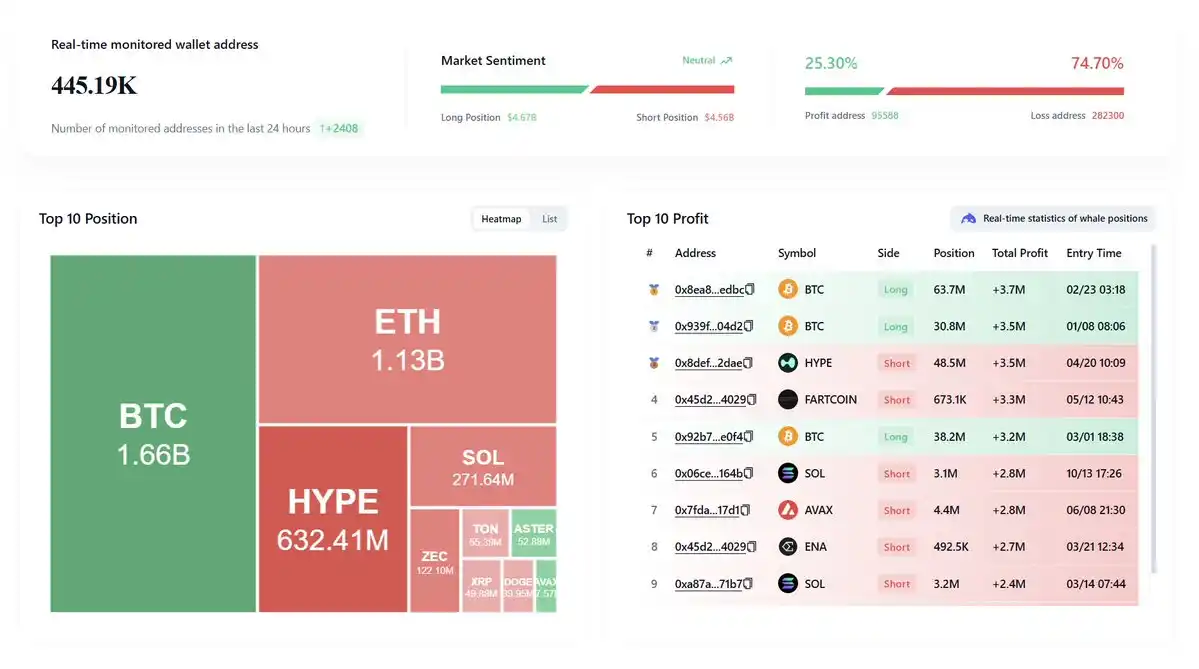
About 75% of addresses on Hyperliquid are in a loss-making position.

The reality is that people trading manually on Hyperliquid are competing against systems that never rest. The trading opportunity you just discovered has likely already been priced in by the system.

When you see a certain pattern, chances are it has already been arbitraged.

Extreme funding rates are balanced in an instant.

Technical patterns have already appeared across more than 50 order books.

News headlines are priced in as soon as they appear.

What the most profitable traders are doing:

→1. Running systematic strategies (the second most profitable address executed 261,000 trades this month with a 64.75% win rate)

→ 2. Holding high-conviction positions, betting on asymmetric returns (a wallet made $4.48 million with just 50 trades and a 28% win rate)

→ 3. Using algorithms as execution tools while making macro judgments manually

If you have timing in narratives, structural insight, or conviction when everyone else capitulates, you can still make profitable trades.

But if your trades are based on chart patterns or news you saw on X, you are likely just exit liquidity.


Пов'язані питання

QAccording to the article, what percentage of addresses on Hyperliquid are losing money, and what is presented as the primary reason?

AApproximately 75% of addresses on Hyperliquid are losing money. The primary reason is that manual traders are competing against automated, systemized strategies that execute trades faster and more efficiently, often pricing in opportunities before a human trader can act.

QWhat are the two main strategies used by the most profitable traders on Hyperliquid, as described in the article?

AThe two main strategies are: 1. Running systematic, automated strategies (one example executed 261,000 trades with a 64.75% win rate). 2. Holding high-conviction positions to bet on asymmetric opportunities (one wallet made $4.48M with only 50 trades, despite a 28% win rate).

QThe article suggests that several common trading signals are often ineffective. Name at least three of these signals.

AThree common but often ineffective signals mentioned are: 1. Technical chart patterns (which appear across many order books). 2. Extreme funding rates (which get arbitraged instantly). 3. News headlines (which are priced in immediately upon release).

QWhat role does the article suggest algorithms can play for a trader who still wants to make manual, high-level decisions?

AThe article suggests using algorithms as an execution tool. A trader can make macro or high-level directional judgments manually, and then use an algorithm to handle the rapid, systematic execution of trades based on that judgment.

QAccording to the article's conclusion, what kind of manual trader is most likely to succeed, and what kind is most likely to fail?

AA manual trader who succeeds is likely one acting on deep narrative timing, unique structural insights, or having strong conviction when others are capitulating. A manual trader who fails is likely one whose decisions are based on commonly seen chart patterns or news headlines found on social media (like X), as they become 'exit liquidity' for others.

Пов'язані матеріали

Bitcoin Boom in Full Swing: Saylor's Latest Statement Fuels Buying Speculation

MicroStrategy's Executive Chairman Michael Saylor has fueled speculation about a new Bitcoin purchase by posting "Bitcoin Drive engaged" on August 2, accompanied by the company's customary purchase tracker. This aligns with his pattern of hinting at treasury changes ahead of weekly reports. The accompanying report showed MicroStrategy's Bitcoin holdings at 843,775 BTC, with an average cost of $75,653 per coin and an unrealized loss of -$10.58B. A similar signal preceded the company's July 27 announcement, strengthening expectations for a treasury update on Monday. However, MicroStrategy's real-time ledger reflects two recent Bitcoin sales totaling 3,588 BTC, reducing holdings from 847,363 BTC to the current 843,775 BTC. The company stated these sales funded preferred stock dividends and replenished its U.S. dollar reserve. Recent reports indicate the company made no Bitcoin purchases the week ending July 26 while increasing its dollar reserve to approximately $3.75B. The company faces financial headwinds after reporting an $8.33B operating loss for Q2 2026, including an $8.32B unrealized loss on its digital assets. Management may sell up to $1.25B more in Bitcoin to meet cash obligations. The expected Monday update will reveal if the "Bitcoin Drive" signal marks a return to accumulation as MicroStrategy balances its massive Bitcoin stash against growing cash commitments.

cryptonews.ru1 год тому

Bitcoin Boom in Full Swing: Saylor's Latest Statement Fuels Buying Speculation

cryptonews.ru1 год тому

Торгівля

Спот
活动图片




