Crypto Morning Brief: SEC Ends Multi-Year Investigation into Zcash Foundation, Solana Mobile Opens SKR Airdrop Inquiry

marsbitОпубліковано о 2026-01-15Востаннє оновлено о 2026-01-15

Анотація

Crypto Morning Brief: Key updates include the U.S. SEC closing its multi-year investigation into the Zcash Foundation with no enforcement action. The U.S. November PPI met expectations at 0.2% monthly. Over 130 crypto-related amendments were submitted by U.S. senators ahead of a market structure hearing, covering areas like stablecoin yields. In China, a former central bank digital currency official was reported to have received ETH for assisting an ICO. Solana Mobile opened eligibility checks for its upcoming SKR airdrop, distributing nearly 2 billion tokens. OpenSea is developing a new mobile app and Hyperliquid Perps product. FTX announced its next distribution round is scheduled for March 31, 2026, with a $2.2B reduction in disputed claim reserves. Investment firm TD Cowen lowered MicroStrategy’s price target but remains bullish on Bitcoin, forecasting prices up to $226K by 2027. Strive acquired Semler Scientific, becoming the 11th largest corporate Bitcoin holder. A lawsuit was refiled against Pump.fun and Solana executives, alleging market manipulation.

Author: Deep Tide TechFlow

Yesterday's Market Dynamics

US November PPI MoM 0.2%, Expected 0.2%

According to Jinshi data, the US November PPI MoM was 0.2%, meeting the expectation of 0.2%. The US November PPI YoY was 3%, compared to an expectation of 2.7%.

US Senators Submit Over 130 Crypto Bill Amendments, Covering Stablecoin Yields and More

According to CoinDesk, US senators have submitted over 130 amendments ahead of an upcoming hearing on crypto market structure legislation. These amendments cover a wide range of topics, including banning stablecoin yields, restricting public officials from profiting from crypto assets, and redefining digital asset mixers. The base text of the Banking Committee's bill was released at midnight on Monday and will be discussed and voted on this Thursday. Some amendments have received bipartisan support, such as a modification to the stablecoin yield section jointly proposed by Senators Tillis and Alsobrooks.

SEC Ends Multi-Year Investigation into Zcash Foundation, Will Not Take Enforcement Action

According to The Block, the US Securities and Exchange Commission (SEC) has ended its multi-year investigation into the Zcash Foundation. The non-profit organization announced in a blog post on Wednesday that the SEC will not take any enforcement action against it. The Zcash Foundation stated that it received a subpoena from the SEC in August 2023 related to an investigation into "certain crypto asset issuance matters (SF-04569)".

CCTV: Former Digital Currency Research Institute Director Yao Qian Received 2,000 ETH Reward for Assisting ICO

According to a CCTV report, former Digital Currency Research Institute Director Yao Qian, at the request of businessman Zhang Mou who was conducting an ICO in 2018, asked an exchange to assist with listing. The ICO successfully raised 20,000 Ether (ETH), and Zhang Mou subsequently transferred 2,000 ETH to Yao Qian as a reward. Investigators found a hardware wallet in Yao Qian's office drawer.

The task force also discovered multiple bank accounts opened under other people's identities by Yao Qian as "shell accounts." One sum of 10 million yuan, after approximately four layers of fund transfers, originated from a virtual currency trader's fund account and was ultimately used to purchase a villa in Beijing.

Solana Mobile Opens SKR Airdrop Eligibility Query, Claiming Starts January 21

Solana Mobile officially announced that the SKR token allocation query tool is now live in the Seed Vault wallet. Users can open the Seed Vault wallet and click the "Activity Tracking" tab to check their allocation tier. Based on user interactions with the Seeker device, the Solana dApp store, and on-chain activities during Season 1, SKR tokens are divided into five allocation tiers: Sovereign (750,000 SKR), Luminary (125,000 SKR), Vanguard (40,000 SKR), Prospector (10,000 SKR), and Scout (5,000 SKR).

This airdrop will distribute nearly 2 billion SKR tokens to the community in total, with approximately 1.82 billion allocated to 100,908 users and about 141 million allocated to 188 developers, covering both user and developer groups.

SKR claiming will officially open on January 21 at 02:00 (UTC). Eligible participants can check their personal allocation amount and corresponding tier in advance and should prepare a small amount of SOL to pay for on-chain gas fees incurred during claiming.

Fogo: Airdrop Query Page is Live, Claiming Officially Starts on January 15

SVM L1 blockchain project Fogo announced that its airdrop query page is now live, and claiming will officially start on January 15.

OpenSea to Soon Launch New Mobile App and Hyperliquid Perps Product

OpenSea CMO Adam Hollander recently revealed that the team is actively developing a mobile app and a Hyperliquid Perps product, to be launched soon. The new app will offer the functional experience of 'all assets, all positions, all wallets, all chains, all integrated in one place.' Meanwhile, preparations for the OpenSea Foundation TGE (Token Generation Event) are underway, with historical trading volume being a key consideration factor. The reward program will continue until after the TGE, with half of the fees from each round going into the reward pool.

Investment Bank TD Cowen Lowers Strategy Target Price to $440

According to The Block, investment bank TD Cowen has lowered its one-year target price for bitcoin reserve company Strategy (formerly MicroStrategy) from $500 to $440, citing declining bitcoin yield due to ongoing equity and preferred stock issuance.

Analysts expect Strategy to acquire approximately 155,000 bitcoin in fiscal year 2026, a significant increase from the previous expectation of 90,000, but these acquisitions will be primarily financed through common and preferred stock offerings, diluting the bitcoin yield.

Despite the target price cut, analysts remain optimistic about Strategy's value as a bitcoin investment vehicle and predict the bitcoin price will reach approximately $177,000 by December 2026 and $226,000 by December 2027.

FTX: Next Distribution Round Expected to Begin March 31, Disputed Claim Reserve Reduced by $2.2 Billion for Distribution

FTX announced today that the record date for the next distribution for allowed claim holders is set for February 14, 2026, with distribution expected to begin on March 31, 2026. Simultaneously, FTX has filed a amended notice planning to reduce the $2.2 billion reserve for disputed claims. Subject to court approval, these funds will be released for distribution to allowed claim holders.

Burwick Law Firm Refiles Lawsuit Against Pump.fun and Solana Executives

According to DLNews, the Burwick Law firm has refiled a lawsuit against Pump.fun and Solana executives, accusing them of creating a "manipulated illegal gambling platform." Internal messages cited in the lawsuit show that Pump.fun co-founder Alon Cohen admitted that "most people lose money." The plaintiffs claim the platform's priority fee mechanism allows specific users to get a head start at token launch and allege that certain crypto influencers promoted tokens without disclosing compensation. Although the allegations are serious, the lawsuit lacks conclusive evidence proving the executives directly profited. The judge has allowed the plaintiffs to file an amended complaint containing 5,000 private messages.

Strive Acquires Semler Scientific, to Become World's 11th Largest Corporate Bitcoin Holder

Strive, Inc. (Nasdaq: ASST) announced it has received shareholder approval from Semler Scientific (Nasdaq: SMLR) to acquire the latter in an all-stock transaction. Upon completion of the transaction, Strive will acquire Semler Scientific's holding of 5,048.1 bitcoin, bringing the company's total holdings to 12,797.9 bitcoin, surpassing Tesla and Trump Media & Technology Group to become the world's 11th largest corporate bitcoin holder. Strive plans to divest Semler Scientific's medical device business within 12 months after the transaction and repay its $100 million convertible bond and $20 million Coinbase loan.

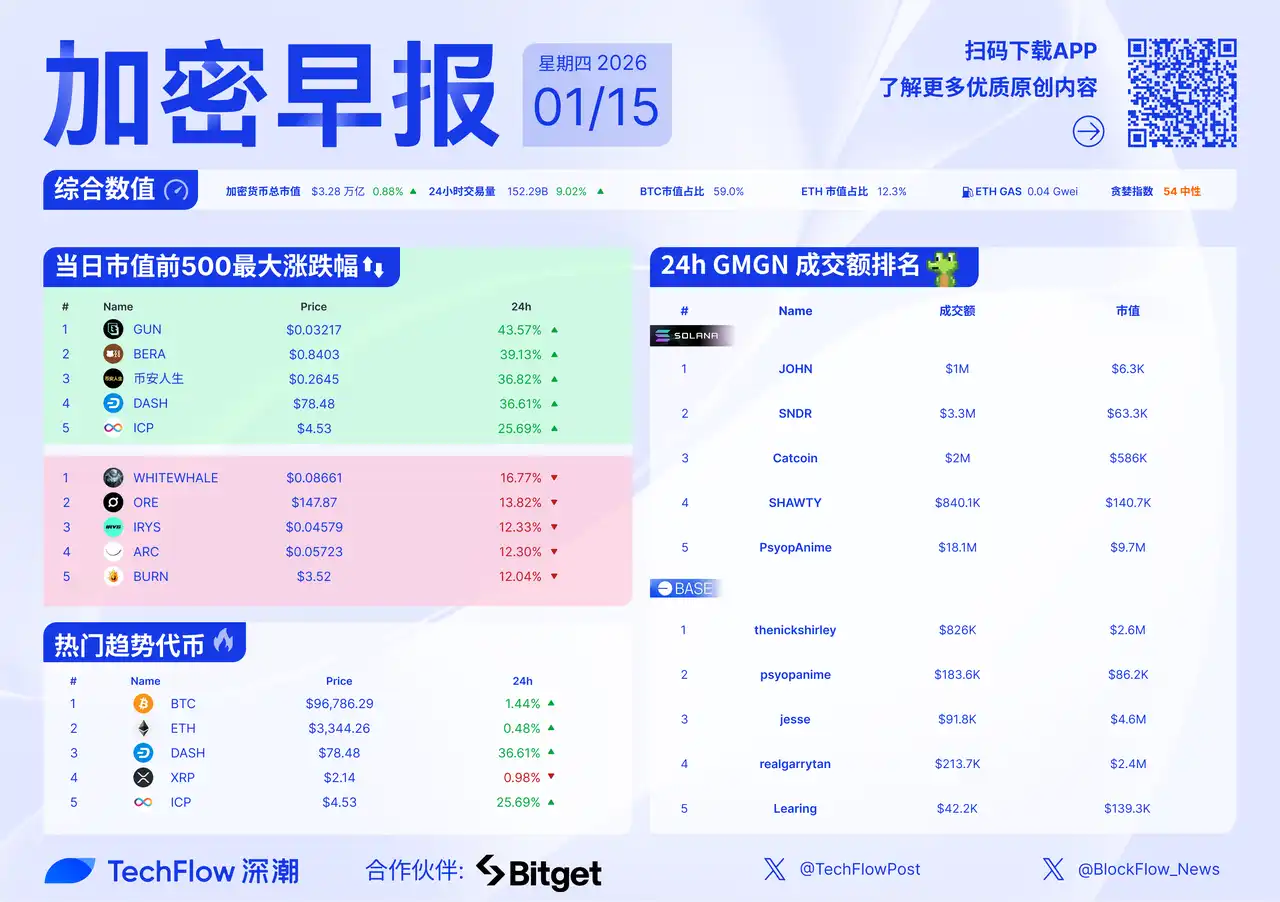
Market Trends
Recommended Reading

2025 Epic Showdown: Did DEXs Really Overtake CEXs This Time?

This article explores the rapid growth of Decentralized Exchanges (DEXs) in 2025 and their relationship with Centralized Exchanges (CEXs). 2025 is considered a year of significant growth in DEX liquidity and trading volume, especially in the perpetual contracts space, where DEXs saw substantial increases in market share and capital turnover efficiency. However, the article points out that DEXs will not completely replace CEXs; instead, the two will complement each other's strengths to jointly build the future trading and clearing infrastructure for crypto finance.

The Ghost of X.com, Musk's 25-Year Revenge

This article reviews Elon Musk's journey from founding X.com in 1999 to gradually transforming Twitter into the super app "X" by 2026. It describes Musk's early entrepreneurial hardships, his conflicts with PayPal, and his plans to reshape the vision of X.com. By integrating social, information, and transactions, Musk aims to achieve his unfinished financialization goals from 25 years ago and ultimately build a super platform controlling global capital flows.

Nvidia and YC Back a Company Aiming to Build a Hotel on the Moon by 2032

This article tells the story of 22-year-old Skyler Chan founding GRU Space, which plans to build a hotel on the moon by 2032, offering high booking fees and deposits targeting the high-end market. The project is seen as a high-stakes gamble, betting that the US lunar base plan might rely on commercial companies, with Chan hoping to play a key role. GRU Space's whitepaper cites relevant US space policy, emphasizing the urgency and importance of commercial company participation.

Coingecko Data: 11.5 Million Projects Died in 2025, the Most Devastating Year in Crypto History

This article discusses how the cryptocurrency market experienced its most severe turbulence in history in 2025, with 86.3% of crypto projects failing that year, especially in the meme coin sector which was hit hard. The "liquidation chain reaction" in Q4 2025 led to a record single-day deleveraging of $19 billion. Meanwhile, the total number of cryptocurrency projects grew from 428,000 in 2021 to nearly 20.2 million in 2025, mainly due to a surge in low-quality projects. Despite the high number of failures, the overall market size continues to expand.

Goldman Sachs Predicts: Global Equities Expected to Deliver 11% Return Over Next 12 Months

This article predicts an 11% return for global equities over the next 12 months. Despite valuations being at historical highs, corporate earnings and economic growth are expected to continue supporting the market. Diversification is emphasized as key to enhancing returns, particularly through balanced allocation across geography, sectors, and investment factors. Simultaneously, the potential impact of the rise of artificial intelligence on non-tech sectors is drawing attention.


Пов'язані питання

QWhat was the outcome of the SEC's investigation into the Zcash Foundation?

AThe SEC ended its multi-year investigation into the Zcash Foundation and will not be taking any enforcement action against the non-profit organization.

QWhat are the details of the SKR airdrop by Solana Mobile?

ASolana Mobile is distributing nearly 2 billion SKR tokens. The airdrop is divided into five allocation levels (Sovereign, Luminary, Vanguard, Prospector, Scout) based on user activity. It will be claimable starting January 21 at 02:00 UTC, and users need a small amount of SOL to pay for gas fees.

QWhat did the US November PPI data show?

AThe US November PPI (Producer Price Index) month-over-month was 0.2%, meeting expectations. The year-over-year PPI was 3%, which was higher than the expected 2.7%.

QWhat significant acquisition did Strive, Inc. complete, and what was the result for its Bitcoin holdings?

AStrive, Inc. acquired Semler Scientific in an all-stock transaction. This acquisition added Semler's 5,048.1 Bitcoin to Strive's holdings, bringing its total to 12,797.9 BTC and making it the 11th largest corporate Bitcoin holder globally, surpassing Tesla and Trump Media & Technology Group.

QWhat allegation was made in the lawsuit re-filed against Pump.fun and Solana executives?

AThe lawsuit, re-filed by Burwick Law, alleges that Pump.fun is a 'manipulated illegal gambling platform.' It claims the platform's priority fee mechanism gave certain users an advantage at token launch and that crypto influencers promoted tokens without disclosing compensation. Internal messages where a co-founder allegedly admitted 'most people lose money' were cited.

Пов'язані матеріали

7 Months After the Collapse of Huiwang, Southeast Asia's Escrow Platforms Undergo a Major Reshuffle

Following the collapse of Huione Pay—dubbed the "Alipay of Southeast Asia"—seven months ago, the region's underground financial guarantee platform sector is undergoing a significant reshuffle. This power vacuum has been swiftly filled by emerging platforms such as XinBi, Tiger/Navigator, JinBei (renamed JinBo), Dali/Tiancheng, and FullyLight. These platforms, operating largely via Telegram and offering services like escrow for illicit transactions, have absorbed the vast user base and markets left behind by Huione. While positioning themselves as "trust intermediaries," their primary clientele consists of networks involved in online scams, money laundering, illegal gambling, and even human trafficking. For instance, the Tiger/Navigator platform explicitly provides "escrow" services for kidnapping-for-ransom operations ("强押车交易"). Data underscores the immense scale: Huione alone processed over $103 billion in cryptocurrency payments and facilitated over $31 billion through its escrow market before its downfall, linking it to Cambodia's notorious Prince Group. Since its collapse, competitors have seen explosive growth. For example, the XinBi platform has accumulated over $1.6 billion in total USDT revenue, while platforms like NewPay, OkPay (under Dali), and FullyLight Wallet collectively processed over $4.8 billion in USDT in a single year. This ecosystem thrives in regions like Cambodia and Myanmar, where regulatory gaps allow these platforms to act as critical financial infrastructure for sprawling cybercrime industries, from scam compounds to online casinos. The article concludes that the moniker "Southeast Asian Alipay" is a misnomer, obscuring the platforms' fundamental role in enabling serious criminal enterprises rather than representing legitimate financial innovation.

Odaily星球日报3 хв тому

7 Months After the Collapse of Huiwang, Southeast Asia's Escrow Platforms Undergo a Major Reshuffle

Odaily星球日报3 хв тому

The Changing Landscape: What Are Crypto VCs Experiencing?

Title: The Shifting Landscape of Crypto Venture Capital The era of dedicated crypto venture capital funds is undergoing a significant transformation. Once essential for navigating the sector's complexity and high risk, these specialized funds are now facing an identity crisis as the market matures. This shift mirrors historical patterns in other specialized investment classes like cleantech and SPACs, where initial information advantages dissipate as technologies become mainstream and integrated into existing industry frameworks. The article argues that crypto is reaching a critical inflection point, transitioning from a "building phase" to an "integration phase." Major players like Stripe, BlackRock, and Visa now engage with crypto not for its novel mechanics but as a foundational financial infrastructure. Their needs—regulatory compliance, banking partnerships, distribution channels—align with traditional fintech, a domain easily understood by large, generalist funds like Sequoia and Founders Fund. This evolution creates a "barbell effect" within the VC landscape. On one end are massive, diversified platforms that can incorporate crypto as one vertical among many. On the other are small, nimble funds focused on niche, experimental projects. The middle ground—medium-sized dedicated crypto funds—is being squeezed out. Their typical fund size makes it impossible to generate sufficient returns solely from early-stage crypto bets, yet they cannot compete with giants for later-stage deals. Consequently, leading crypto-native firms like Paradigm and Framework Ventures are expanding into AI, robotics, and other sectors, driven partly by LP pressure for better returns amid a broader VC DPI crisis. Others, like Dragonfly and a16z, have narrowed their crypto focus predominantly to financial infrastructure like stablecoins, reframing the sector's core narrative. For crypto entrepreneurs, this consolidation presents challenges. While generalist funds offer larger checks and broader resources, crypto projects now compete fiercely with AI for attention and capital within these firms. Furthermore, the long-term, non-commercial foundational work that built the ecosystem—funded by dedicated crypto VCs—is less likely to attract generalist capital focused on direct returns. The conclusion is that "crypto investor" as a standalone category is becoming obsolete, akin to "internet investor." Crypto is becoming a baseline infrastructure layer. The future will see a barbell structure: large-scale growth financing handled by generalist funds, while pioneering, speculative projects are funded by small, specialized vehicles. The dedicated crypto funds of the 2017-2021 boom, which incubated core infrastructure, are giving way to this new, bifurcated reality.

Foresight News21 хв тому

The Changing Landscape: What Are Crypto VCs Experiencing?

Foresight News21 хв тому

As Consensus Accelerates, What Are Young Investors Betting On?

Title: As Consensus Forms Faster, What Are Young Investors Betting On? In the rapid evolution of tech investment, a new generation of young investors is navigating a landscape where AI, robotics, commercial aerospace, and quantum computing are advancing simultaneously. Traditional investment logic based on financial models is giving way to a need for deep technical understanding and the ability to act before industry consensus forms. An analysis of trends from the "WAIC FUTURE TECH" list of young investment leaders reveals key shifts in focus. The first major trend is the movement of AI from the digital screen into the physical world. Investment is shifting from large language models and chatbots towards embodied AI, robotics, AI hardware, and edge computing. While demonstrations generate excitement, the real challenge lies in achieving scalable, reliable, and cost-effective delivery in complex real-world environments like factories and logistics. Success depends not just on algorithms but on the integration of sensors, actuators, and control systems. Second, the competitive focus for large models is moving beyond raw capability toward building an "intelligence flywheel." The goal is to create self-reinforcing systems where user interaction generates data, improving the model, which in turn enhances the user experience and attracts more engagement. Companies that successfully embed AI into workflows to create these closed-loop systems can build lasting value that isn't easily erased by the next model upgrade. Third, facing a potential bottleneck in high-quality human-generated data, investors are looking at new underlying technologies. Reinforcement learning and self-play, as demonstrated by AlphaGo Zero, offer paths for AI to generate its own experience. Scientific foundation models, which aim to build general AI capabilities for fields like life sciences and materials discovery, represent a non-consensus direction that could unlock new frontiers of knowledge and data. Finally, in deep-tech areas like quantum computing, commercial aerospace, and space-based infrastructure, patient capital is essential. These fields have long, uncertain development and validation cycles involving complex engineering, supply chains, and regulations. Investment here requires a long-term view, focusing on foundational team capabilities and the eventual emergence of market demand, even if commercial returns are distant. Collectively, these trends illustrate how young investors are adapting to a new era. They are learning to make earlier, technically-informed judgments, balance hype with real-world viability, and provide the patient capital needed to build the deep-tech foundations of the future.

marsbit49 хв тому

As Consensus Accelerates, What Are Young Investors Betting On?

marsbit49 хв тому

Торгівля

Спот
活动图片




