Crypto Biz: Bank stablecoins get a rulebook; Bitcoin gets a land grab

cointelegraphОпубліковано о 2025-12-19Востаннє оновлено о 2025-12-19

Анотація

Washington is advancing regulatory clarity for bank-issued stablecoins, with the FDIC proposing a framework under the GENIUS Act. This outlines how insured banks can seek approval to issue payment stablecoins via subsidiaries, subject to public consultation. Meanwhile, corporate Bitcoin accumulation continues, as American Bitcoin surpasses ProCap, now holding over 5,000 BTC. Anchorage Digital expands its institutional services by acquiring Securitize’s advisory platform. Bhutan, a major national Bitcoin holder, plans to use part of its 11,000 BTC reserves to fund the Gelephu Mindfulness City project, balancing economic development with long-term capital preservation.

Washington is inching closer to putting bank-issued stablecoins on a clearer regulatory track.

This week, the Federal Deposit Insurance Corp. (FDIC), the US agency that oversees bank safety and insures deposits, laid out a proposed framework for how insured banks, via subsidiaries, could seek approval to issue payment stablecoins under the GENIUS Act, a move that could reshape who gets to mint digital dollars and under what rules.

That same push toward institutionalization is also evident elsewhere in the crypto business landscape. Despite Bitcoin’s (BTC) lackluster performance, corporate treasuries are still in accumulation mode, with American Bitcoin vaulting past ProCap in the race to stack BTC.

On Wall Street’s doorstep, Anchorage Digital is tightening its grip on the adviser channel by acquiring Securitize’s RIA platform, bringing custody and advisory tools under one roof.

On the sovereign end of the spectrum, Bhutan says it will tap a portion of its sizable Bitcoin holdings to help finance Gelephu Mindfulness City, an ambitious bid to build a new economic hub without compromising long-term capital preservation.

This week’s Crypto Biz dives into regulatory, corporate and economic developments shaping the global crypto industry.

FDIC proposes framework for bank-issued payment stablecoins

The FDIC is moving forward with proposed rulemaking in the wake of the landmark GENIUS Act, signaling that the agency is preparing to offer clear guidance to banking institutions seeking to issue payment stablecoins.

In a 38-page document published on the FDIC’s website, the agency outlined proposed approval requirements governing how bank subsidiaries could issue payment stablecoins in accordance with the GENIUS Act. The proposal is subject to a public consultation process before any rules are finalized.

Under the proposed framework, financial institutions would be required to apply to issue a stablecoin through a subsidiary, with the FDIC evaluating both the parent company and the issuing entity. Applicants would also need to comply with the GENIUS Act’s provisions related to issuance standards, reserve backing and redemption policies.
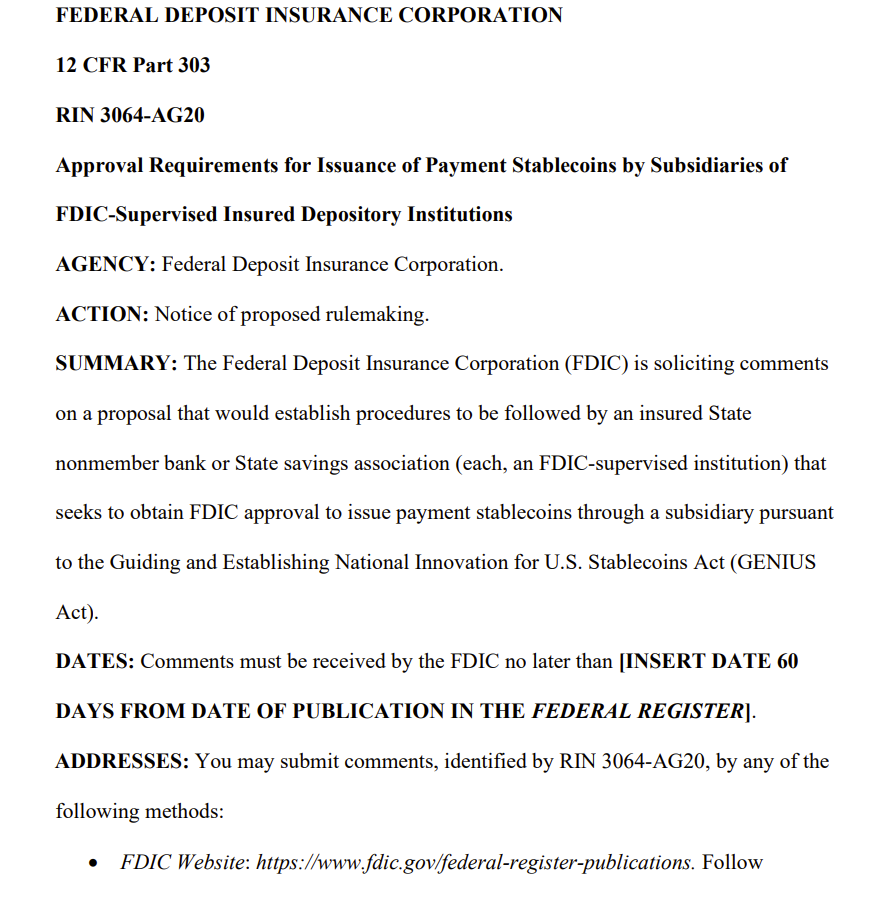
Excerpts from the FDIC’s proposal detailing the approval process for bank-issued payment stablecoins. Source: FDIC

American Bitcoin overtakes ProCap in corporate Bitcoin treasury race

American Bitcoin, the digital asset mining and holding company associated with the Trump family, entered the ranks of the top 20 corporate Bitcoin holders this week, surpassing ProCap Financial, a company founded by entrepreneur Anthony Pompliano. The shift highlights the growing competition among companies to accumulate Bitcoin.

American Bitcoin has added more than 1,000 BTC to its reserves since the beginning of December. Its total Bitcoin holdings now stand at 5,098 BTC, valued at approximately $452 million, according to industry data.

The company trades on the Nasdaq, having gone public through a reverse merger with Gryphon Digital Mining. Its shares, however, have experienced sharp volatility, reflecting the broader price swings typical of Bitcoin proxy stocks tied to the performance of Bitcoin.
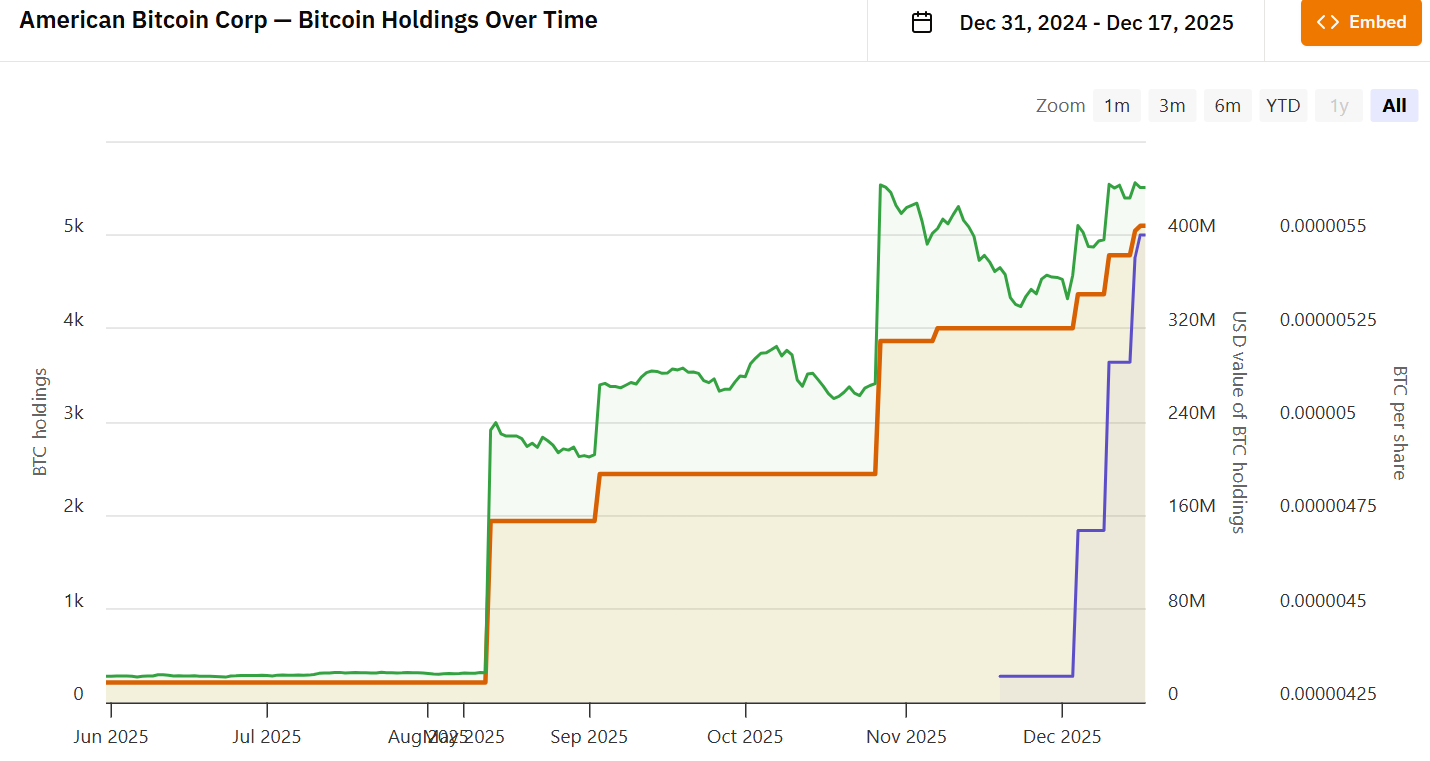
American Bitcoin’s BTC acquisitions over time. Source: BitcoinTreasuries.NET

Anchorage Digital acquires Securitize advisory unit to expand institutional offerings

Anchorage Digital has acquired Securitize’s investment adviser platform as part of a strategy to consolidate and expand its institutional investment services for registered investment advisers (RIAs).

Anchorage announced that it acquired Securitize For Advisors (SFA) for an undisclosed amount. The platform is designed to serve RIAs and had already been using Anchorage for digital asset custody. By bringing SFA in-house, Anchorage aims to integrate custody services with adviser-facing tools under a single platform.

Anchorage Digital provides institutional digital asset services and operates a federally chartered bank in the United States. In March, the company selected Cantor Fitzgerald to custody clients’ Bitcoin.

Bhutan to tap Bitcoin holdings to finance special administrative region

The Kingdom of Bhutan, one of the world’s largest state holders of Bitcoin, said it will use a portion of its digital asset reserves to help finance the Gelephu Mindfulness City (GMC), a planned special administrative region aimed at driving long-term economic growth.

The project is designed to serve as a new economic hub, focusing on sustainability and innovation, to curb Bhutan’s brain drain while creating high-quality local jobs and attracting international investment.

Bhutan currently holds more than 11,000 BTC, and officials have indicated that multiple strategies are being considered for deploying the reserves. Any use of the country’s Bitcoin, however, will be balanced against the objective of preserving its long-term value.

“Any use of Bitcoin will be guided by strong governance and prudence, with an emphasis on capital preservation, appropriate oversight, and transparency,” the government said.
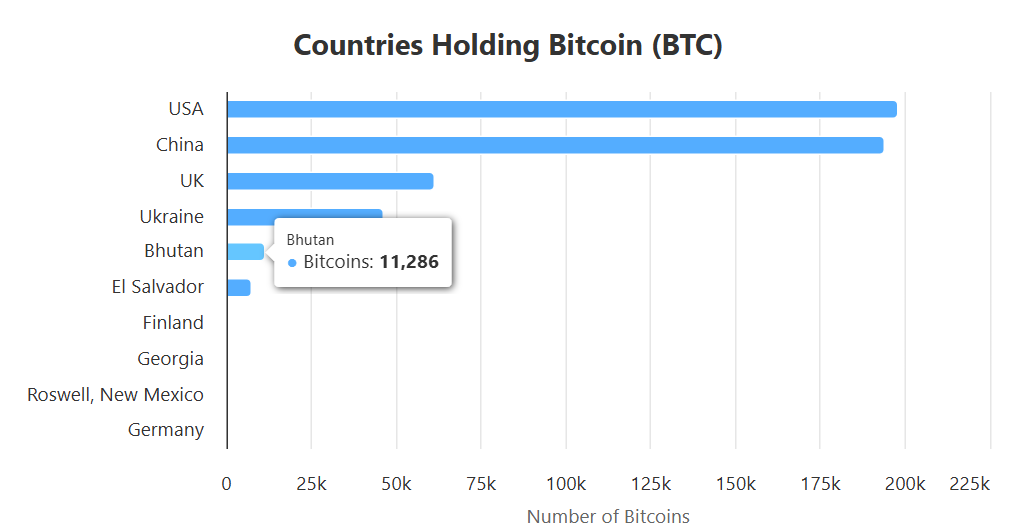
Bhutan’s ranking among countries that hold Bitcoin. Source: Bitbo

Crypto Biz is your weekly pulse on the business behind blockchain and crypto, delivered directly to your inbox every Thursday.


Пов'язані питання

QWhat is the FDIC's proposed framework for bank-issued stablecoins and what act does it relate to?

AThe FDIC has proposed a framework outlining approval requirements for how bank subsidiaries can issue payment stablecoins in accordance with the GENIUS Act. This framework requires financial institutions to apply through a subsidiary, with the FDIC evaluating both the parent company and the issuing entity, and mandates compliance with the act's provisions on issuance standards, reserve backing, and redemption policies.

QWhich company surpassed ProCap Financial in corporate Bitcoin holdings this week, and what is its current BTC reserve?

AAmerican Bitcoin surpassed ProCap Financial in corporate Bitcoin holdings. It has added over 1,000 BTC since the beginning of December, bringing its total holdings to 5,098 BTC, valued at approximately $452 million.

QWhat strategic move did Anchorage Digital make to expand its institutional offerings for registered investment advisers (RIAs)?

AAnchorage Digital acquired Securitize's investment adviser platform, Securitize For Advisors (SFA), to consolidate and expand its institutional investment services. This move integrates custody services with adviser-facing tools under a single platform.

QHow does the Kingdom of Bhutan plan to use a portion of its Bitcoin reserves, and what is the project called?

AThe Kingdom of Bhutan plans to use a portion of its Bitcoin reserves to help finance the Gelephu Mindfulness City (GMC), a special administrative region project aimed at driving long-term economic growth, focusing on sustainability and innovation.

QWhat is the primary regulatory focus of the FDIC's new proposal for stablecoins issued by banks?

AThe primary regulatory focus of the FDIC's proposal is to provide clear guidance and establish a framework for insured banks to issue payment stablecoins through subsidiaries, ensuring compliance with the GENIUS Act's standards for issuance, redemption, and reserve backing.

Пов'язані матеріали

Sequoia Dialogue with Jensen Huang: Computing Model Undergoes a 60-Year Transformation; You Won't Be Replaced by AI, But You Will Be Dimensionality-Reduced by 'Those Who Master AI'

NVIDIA founder and CEO Jensen Huang, in a conversation with Sequoia Capital's Konstantine Buhler, argues that we are witnessing the most significant computing shift in 60 years—from retrieval-based to generative computing. Instead of just storing and retrieving data, future systems will generate highly personalized content (text, images, video) on demand, powered by massive "AI factories." Huang envisions a global "intelligence network" that will envelop the planet, following the historical patterns of energy and communication grids. He outlines a five-layer investment framework: 1) Energy, 2) Chips/Computers, 3) Infrastructure (data centers), 4) AI Models, and 5) Applications. He predicts this ecosystem will reach a scale of $20 trillion annually. Crucially, Huang pushes back against fears of AI-driven job loss. He distinguishes between specific "tasks" (e.g., typing, analyzing images) and overall "jobs" (e.g., CEO, radiologist). While AI automates tasks, it increases efficiency and demand for the higher-value problem-solving aspects of professions, thus creating more jobs and "up-leveling" careers. The real risk, he asserts, is not being replaced by AI, but being outperformed by someone who effectively leverages it. He urges everyone to embrace AI as a tool for augmented capability and innovation.

marsbit7 хв тому

Sequoia Dialogue with Jensen Huang: Computing Model Undergoes a 60-Year Transformation; You Won't Be Replaced by AI, But You Will Be Dimensionality-Reduced by 'Those Who Master AI'

marsbit7 хв тому

"I Don't Need a Better Model Anymore": A Panorama of AI Users Under a Reddit Hot Post

Titled "I Don't Need a Better Model Anymore": AI User Reactions on Reddit Anthropic recently released Claude Fable 5, its first publicly available 'Mythos'-tier model, achieving 80.3% on the SWE-Bench Pro benchmark and significantly outperforming its predecessor and competitors. However, a viral Reddit post titled "Claude Fable made me realize I don't need better models anymore" highlighted a growing user sentiment of "good enough." Top comments expressed "model fatigue," with users stating that earlier models like Opus 4.5/4.8 already sufficed for their workflows. High cost was a key concern, as Fable 5's API is nearly twice the price of Opus 4.8, with users questioning the return on investment and suggesting the field has hit a plateau. The most frequent complaint targeted Fable 5's stringent safety filters. Designed to intercept high-risk requests (e.g., cybersecurity), the system was perceived as overly conservative. Users reported frequent rejections for routine security-related tasks, leading to automatic fallbacks to the older Opus model. Paying users were particularly frustrated, feeling they paid a premium for a less usable product. Dissenting voices came from users with heavy, complex tasks. For workloads like high-energy physics simulations with thousands of code lines, Fable 5's improved long-context understanding and error detection represented a significant, worthwhile leap—described as moving from a "college player to an NBA starter." The debate underscores a divergence between benchmark performance and practical utility. For most users, current models meet their needs, making further advances relevant only for extreme use-cases. The discussion also raised concerns about a potential "Public AI Freeze," where the most powerful models (like the restricted Mythos 5) remain exclusive to enterprises and governments, while public offerings stagnate. The launch presents two report cards: one of technical excellence and another of user skepticism. Fable 5's ultimate reception may depend on Anthropic's ability to refine its safety filters and justify its cost for specialized, high-demand users.

marsbit15 хв тому

"I Don't Need a Better Model Anymore": A Panorama of AI Users Under a Reddit Hot Post

marsbit15 хв тому

When AI Traffic Surpasses Humans, How Do You Prove You're Human?

With AI-generated web traffic surpassing human activity, websites face a crisis as AI agents bypass ads, avoid clicks, and scrape data without generating revenue. This disrupts the ad-based internet economy, diverting traffic and reducing site visits. In response, sites are blocking AI crawlers and deploying traps like Cloudflare's "honeypot" pages. Traditional CAPTCHAs are now ineffective against advanced AI. The focus has shifted to behavioral biometrics—analyzing unique human patterns such as cursor movement, typing rhythm, and keystroke dynamics. Companies like IBM and BioCatch use this data to distinguish humans from bots, even detecting fraud through behavioral inconsistencies. Two competing approaches aim to verify human identity centrally. Sam Altman’s World (formerly Worldcoin) uses iris scanning to create unique credentials, though it faces privacy concerns and regulatory bans. Alternatively, cryptographic zero-knowledge proofs offer anonymous verification without revealing personal data, championed by Vitalik Buterin to avoid centralized surveillance. However, both systems have flaws. Centralized solutions risk biometric data misuse, while decentralized models may be exploited through identity rental markets in economically unequal regions. Despite challenges, the author favors cryptographic methods for preserving privacy over pervasive behavioral monitoring that permanently captures and controls personal biometric data.

marsbit23 хв тому

When AI Traffic Surpasses Humans, How Do You Prove You're Human?

marsbit23 хв тому

2026 Landscape of Decentralized AI: Why is Blockchain the Inevitable "Antidote" for AI?

**The 2026 Landscape of Decentralized AI: Why Blockchain is the "Cure" AI Cannot Ignore** Decentralized AI addresses fundamental bottlenecks of centralized AI: scarce and expensive computational resources, excessive control concentration, unverifiable model outputs, and increasing difficulty in acquiring training data due to privacy and regulation. Blockchain offers a path to make intelligence open, verifiable, and economically accessible. The technical stack comprises three layers: 1. **Applications & Services**: The main crypto use cases are "Agentic Finance" (converting natural language into on-chain actions) and "Agentic Payments" for machine-to-machine commerce. Projects like Giza, Infinity Labs, Coinvest AI, and x402 (handling 173M+ transactions) are key players. 2. **Middleware**: This coordination layer enables agents to discover, identify, and transact. Notable projects include Gokite AI (specialized L1), Virtuals (an OS for the agent economy), and especially Bittensor—a network of specialized subnets forming competitive AI micro-economies. 3. **Infrastructure**: The capital-intensive layer providing raw resources. It includes decentralized compute (Akash, Render, Aethir), verifiable inference (Venice AI, OpenGradient), distributed training (Prime Intellect, Templar AI), decentralized storage (Filecoin, Walrus), and privacy/verification layers (Nillion, Arcium, Phala Network) using technologies like ZKPs, MPC, and TEEs. The outlook for 2026-2027 indicates AI demand outpacing infrastructure, with AI agents as a primary growth engine. Computation is becoming an asset class, with on-chain markets as its financial layer. Tokenomics is emerging as a structural advantage for coordinating capital, compute, and data in decentralized AI networks. While still early—with adoption uneven and revenue often trailing token incentives—projects like Bittensor, NEAR, and Virtuals demonstrate a shift from speculative narrative to a new model for coordinating intelligence.

marsbit26 хв тому

2026 Landscape of Decentralized AI: Why is Blockchain the Inevitable "Antidote" for AI?

marsbit26 хв тому

a16z Crypto Partner: Cash Flow is the Moat

Cash Flow as the Moat: A Playbook for Crypto Founders Historically, the most enduring businesses have been built by positioning themselves within the "flow of funds"—facilitating the creation and transfer of value in a network and extracting a portion of it. Cryptocurrency is the first modern technology natively built for this purpose. For startups, failing to architect products and businesses to leverage these principles means missing a major opportunity. Blockchains are inherently network businesses. Each transaction settles on a shared ledger, and every new participant strengthens the underlying network for all. Well-designed network tokens amplify this by aligning users, developers, and validators around growing the network, with value flowing back to contributors in a transparent feedback loop. This model is not new; companies from railroads and Standard Oil to Google, Meta, and AWS have thrived by inserting themselves into critical flows of value (goods, attention, compute). Financial markets make it even clearer: firms like Visa and major market makers generate immense revenue not by predicting markets but by being in the path of transactions. The combination of fund flow and network effects creates one of the most durable business structures. The high margins in traditional finance (payments, custody, lending, FX) represent prime targets. Crypto founders have the opportunity to build the next version—programmable, instant, global, and natively in the flow of funds. The frontier extends beyond finance to areas like computing/GPUs, AI training data, energy, robotics, and space—markets without entrenched intermediaries, ripe for building new, efficient value rails on programmable infrastructure. Founders should ask: Are you in the flow of funds today? Does your revenue scale 10x with the value of activity on your platform? Where in your target market are profit margins highest relative to value created? The opportunity is clear: embed your startup into the new flows of value and let the network effects accumulate.

marsbit28 хв тому

a16z Crypto Partner: Cash Flow is the Moat

marsbit28 хв тому

Торгівля

Спот
Ф'ючерси

Популярні статті

Як купити BILL

Ласкаво просимо до HTX.com! Ми зробили покупку Billions Network (BILL) простою та зручною. Дотримуйтесь нашої покрокової інструкції, щоб розпочати свою криптовалютну подорож.Крок 1: Створіть обліковий запис на HTXВикористовуйте свою електронну пошту або номер телефону, щоб зареєструвати обліковий запис на HTX безплатно. Пройдіть безпроблемну реєстрацію й отримайте доступ до всіх функцій.ЗареєструватисьКрок 2: Перейдіть до розділу Купити крипту і виберіть спосіб оплатиКредитна/дебетова картка: використовуйте вашу картку Visa або Mastercard, щоб миттєво купити Billions Network (BILL).Баланс: використовуйте кошти з балансу вашого рахунку HTX для безперешкодної торгівлі.Треті особи: ми додали популярні способи оплати, такі як Google Pay та Apple Pay, щоб підвищити зручність.P2P: Торгуйте безпосередньо з іншими користувачами на HTX.Позабіржова торгівля (OTC): ми пропонуємо індивідуальні послуги та конкурентні обмінні курси для трейдерів.Крок 3: Зберігайте свої Billions Network (BILL)Після придбання Billions Network (BILL) збережіть його у своєму обліковому записі на HTX. Крім того, ви можете відправити його в інше місце за допомогою блокчейн-переказу або використовувати його для торгівлі іншими криптовалютами.Крок 4: Торгівля Billions Network (BILL)Легко торгуйте Billions Network (BILL) на спотовому ринку HTX. Просто увійдіть до свого облікового запису, виберіть торгову пару, укладайте угоди та спостерігайте за ними в режимі реального часу. Ми пропонуємо зручний досвід як для початківців, так і для досвідчених трейдерів.

360 переглядів усьогоОпубліковано 2026.05.07Оновлено 2026.06.02

Як купити BILL

Що таке ATWO

I. Вступ до проектуArena Two - це децентралізована інтерактивна платформа, яка дозволяє фанатам грати активну, токенізовану роль у результатах подій в реальному часі. На відміну від традиційних моделей трансляції, які зменшують фанатів до пасивних глядачів, Arena Two використовує технологію блокчейн, щоб дозволити фанатам безпосередньо голосувати в реальному часі та впливати на результати на полі.II. Інформація про токенНазва токена: ATWO(Arena Two)III. Пов'язані посиланняВебсайт:https://arenatwo.com/Експлорери:https://basescan.org/token/0x499D35eBE6cEe9B2Ac35Fd003fcBbeeB9CFc7B32Twitter:https://x.com/arenatwoXПримітка: Вступ до проекту взято з матеріалів, опублікованих або наданих офіційною командою проекту, які є лише для довідки і не є інвестиційною порадою. HTX не несе відповідальності за будь-які прямі або непрямі збитки, що виникають внаслідок цього.

312 переглядів усьогоОпубліковано 2026.05.18Оновлено 2026.06.02

Що таке ATWO

Як купити ATWO

Ласкаво просимо до HTX.com! Ми зробили покупку Arena Two (ATWO) простою та зручною. Дотримуйтесь нашої покрокової інструкції, щоб розпочати свою криптовалютну подорож.Крок 1: Створіть обліковий запис на HTXВикористовуйте свою електронну пошту або номер телефону, щоб зареєструвати обліковий запис на HTX безплатно. Пройдіть безпроблемну реєстрацію й отримайте доступ до всіх функцій.ЗареєструватисьКрок 2: Перейдіть до розділу Купити крипту і виберіть спосіб оплатиКредитна/дебетова картка: використовуйте вашу картку Visa або Mastercard, щоб миттєво купити Arena Two (ATWO).Баланс: використовуйте кошти з балансу вашого рахунку HTX для безперешкодної торгівлі.Треті особи: ми додали популярні способи оплати, такі як Google Pay та Apple Pay, щоб підвищити зручність.P2P: Торгуйте безпосередньо з іншими користувачами на HTX.Позабіржова торгівля (OTC): ми пропонуємо індивідуальні послуги та конкурентні обмінні курси для трейдерів.Крок 3: Зберігайте свої Arena Two (ATWO)Після придбання Arena Two (ATWO) збережіть його у своєму обліковому записі на HTX. Крім того, ви можете відправити його в інше місце за допомогою блокчейн-переказу або використовувати його для торгівлі іншими криптовалютами.Крок 4: Торгівля Arena Two (ATWO)Легко торгуйте Arena Two (ATWO) на спотовому ринку HTX. Просто увійдіть до свого облікового запису, виберіть торгову пару, укладайте угоди та спостерігайте за ними в режимі реального часу. Ми пропонуємо зручний досвід як для початківців, так і для досвідчених трейдерів.

232 переглядів усьогоОпубліковано 2026.05.18Оновлено 2026.06.02

Як купити ATWO

Обговорення

Ласкаво просимо до спільноти HTX. Тут ви можете бути в курсі останніх подій розвитку платформи та отримати доступ до професійної ринкової інформації. Нижче представлені думки користувачів щодо ціни A (A).

活动图片













