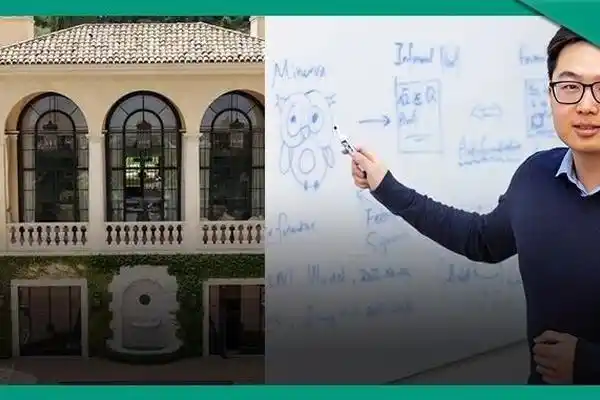
Conversation with Polygon Founder: Escaping Poverty and Building a $30 Billion Crypto Company

marsbitОпубліковано о 2025-12-14Востаннє оновлено о 2025-12-14

Анотація

Sandeep Nailwal, co-founder of Polygon, discusses his journey from a challenging childhood in India to building a $30 billion blockchain company. Growing up in poverty, he developed a strong drive for success. Nailwal works long hours, often sleeping only 4-5 hours a night, to advance Polygon’s mission of enabling sovereign individuals through decentralized systems. He believes blockchain and AI are critical for creating a borderless world with decentralized governance and financial freedom. While blockchain supports decentralization, AI represents a centralizing force, making their intersection vital for future societal structures. Nailwal also emphasizes the importance of philanthropy, aiming to reduce suffering for others based on his own experiences. Polygon faced significant challenges, including financial struggles and market volatility, but has grown into a leading platform. Projects like Polymarket choose Polygon for its scalability and network effects. Looking ahead, Nailwal plans to focus on AI and decentralized governance long-term, aiming to contribute to a freer, more equitable global system.

Source: "When Shift Happens", Youtube

Compiled by: Felix, PANews

From the storeroom where his ancestors worked as servants, Polygon founder Sandeep Nailwal struggled his way to build a blockchain company with a market cap of $30 billion. Sandeep Nailwal works 18 hours a day, dedicated to making Polygon a global payment platform for companies like Stripe. Below are the highlights of the interview from the "When Shift Happens" podcast, compiled by PANews.

Host: Your team says you always reply instantly, no matter the time of day. Do you sleep very little?

Sandeep: Yeah, I mean, I do sleep, but my mind is always on Polygon, online 24/7.

Host: What's your usual daily routine like?

Sandeep: My schedule is a bit reversed. I have a three-and-a-half-year-old son, and I work on US time, so I only really start getting busy after 2 PM, working until 11-12 midnight, and going to sleep around 2 to 2:30 AM. Sometimes my son wakes up at 7 or 7:30 AM, so I get up to play with him. So I often only get 4 or 5 hours of sleep.

Host: I previously interviewed Tether CEO Paolo, who said he has slept only 5 hours a night for 11 years and wakes up every hour to check notifications.

Sandeep: Paolo is steering a much bigger "ship." I have a good relationship with him; he's an amazing, and also super crazy, person. He is completely immersed in his vision. I've never seen a team as small as Tether's where everyone is so deeply committed to the blockchain spirit. They genuinely want a personal, sovereign monetary system. So I'm not at all surprised by their huge success now.

Host: What do you believe is your mission?

Sandeep: My mission is what I always say: sovereign individuals. Many people in the crypto space want to build monetary systems. It should be a free, individual monetary system where people can manage their wealth as they wish. What I truly want is complete individual sovereignty: not just money. Money is actually a product of civilization, and civilization is built on the layer of "controlled violence," meaning law and order. Now we're working on global currency, Bitcoin... but to achieve a truly borderless world, money alone is not enough; you need to decentralize this "controlled violence" layer as well.

This sounds sci-fi, but it's actually starting to become feasible. In the future, there could be drone and robot police forces, controlled by a completely decentralized AI, not by any single company or government. Imagine a 'super brain' controlled collectively by all people, with its own constitution dedicated to protecting everyone's safety. This would truly break down borders, and individuals would achieve real freedom. That's why I co-founded Sentient AI; the other three co-founders are working on it full-time. I'm too busy with Polygon, but this is my deepest goal: to align AI with human interests and ultimately achieve external governance and control.

It sounds like science fiction, but once Polygon and the entire crypto industry become more stable, I will invest more time. Crypto is just now entering its truly practical stage. DeFi is a practical track, but 70-80% of lending is leveraged speculation. Now stablecoins and cross-border payments are starting to rise. I've been in this career for 8 years and want to do it for another 10-15 years, see it become completely mainstream, and then see what to do next.

Host: So who are you, really?

Sandeep: I am a global citizen who wants complete sovereignty. I am very law-abiding and hope everyone else is too, but everyone should have the right to "exit." I can even imagine 20, 30, 40 years from now, you could have your own small space pod, take off to脱离 all systems, and wander alone in the solar system. Then you would need a monetary system not controlled by any single government and a neutral police system, guarded collectively by humanity and awakened AI at that time (including AI itself), allowing everyone to live by their own rules. So I'm very serious about freedom, perhaps also related to me being from India—many people don't know that the core value of Indian civilization for thousands of years has been freedom.

Host: What exactly happened in your life that made you so hungry for success?

Sandeep: I've been thinking about this question a lot. I had a really tough childhood, as I've said on many podcasts. The India of my childhood was almost a third-world country. My maternal and paternal grandfathers were both servants for wealthy families; that's how they met, and later decided to have their children marry, which led to my parents. I was always among the top students in school, respected everywhere, but coming home was a completely different world.

I didn't dare bring friends home until I was 21 or 22, not wanting them to see what my home was really like. Five people crammed into one room, plus a small kitchen. No living room, no bedroom, just one room. We lived in a temporary storage room built on the roof of someone else's two-story house; the owner rented it to us to earn some extra money. Summers were like a steamer. When I was five or six, my grandfather was still alive. The master he served passed away, leaving a large hotel, and my grandfather became the caretaker. Sometimes when the master's family wasn't around, grandfather would take me to play, and I naively thought this big house was my home. I came back and boasted to my little friends, saying this was my house. Maybe from then on, I had this 'never give up' drive. I always said from a young age: I must become a big shot, never settle for small things, and never accept failure. But I had no idea how to succeed, and everyone laughed at me.

Host: How did you get involved in blockchain and cryptocurrency?

Sandeep: As I've said before, I didn't start because of Bitcoin. I saw Bitcoin several times and thought it looked like a pyramid scheme, so I ignored it. It wasn't backed by anything, how could it have value?

But around late 2016 or early 2017, when I first read the Ethereum whitepaper and Vitalik's blog, I was deeply moved. They had created a computer run collectively by countless people, owned by no one, and always online. My immediate second thought was, what if you could write complex business logic on this computer, and no matter what happens, it executes exactly as written? I thought then that this was something that would truly change the world. So I started getting seriously involved, and here I am now.

Host: In the 8 years since Polygon launched, what was the most difficult moment?

Sandeep: Several times in the first year and a half, we almost couldn't make payroll. December 2019 was the worst. Woke up to find someone had shorted MATIC (it was called MATIC then) massively, the price dropped 70% in a day, and the whole internet was calling me a scammer. But those were just single events. The hardest period is always now—for Polygon, it's always now that is the most difficult.

Host: Why did Polymarket need to be built on blockchain?

Sandeep: This is a very good question. Many of its competitors don't put market data on-chain. If two platforms have similar user experiences, one is blockchain-based: you own your content, funds, followers; the other is centralized, then the answer is obvious, people will definitely choose the more open one. Now, Polymarket has achieved network effects. It has verifiability, transparency, and credibility. No matter who competes, Polymarket can maintain its dominant position long-term.

Host: But why specifically the Polygon chain?

Sandeep: In 2020, Polygon was the fastest-growing blockchain at the time, and Ethereum was extremely expensive. Choosing Polygon was related to the network effects of blockchain.

Host: Why is the intersection of AI and blockchain so important for humanity's future?

Sandeep: Blockchain is a payment platform, AI is an intelligence platform; technically, they have no direct relation. But the key point is: AI is the greatest centralizing force in human history, and the only technology currently pushing for decentralization of power is cryptocurrency.

Host: Why are you so invested in charity?

Sandeep: Everyone experiences pain in life. After that, there are two choices: first, I suffered, so you all should suffer too; second, I suffered, so I want others to suffer less. I choose the second, purely for my own happiness.

Related reading: Polygon Latches Onto a New Big Player, Neo-bank Revolut Chooses Its Tech Stack to Drive Crypto Payments


Пов'язані питання

QWhat is Sandeep Nailwal's daily work schedule and how much sleep does he typically get?

ASandeep Nailwal follows a schedule aligned with US time, starting work around 2 PM and working until 11-12 PM, then going to bed around 2-2:30 AM. He often wakes up at 7-7:30 AM to spend time with his son, resulting in about 4-5 hours of sleep per night.

QWhat is Sandeep Nailwal's ultimate mission and vision for the future?

ASandeep Nailwal's mission is to achieve complete sovereignty for individuals, not just in money but in all aspects of life. He envisions a future with a decentralized global monetary system and a neutral, decentralized law enforcement system, potentially involving AI and robotics, to create a borderless world where individuals have true freedom and the right to exit any system.

QHow did Sandeep Nailwal's childhood experiences influence his drive for success?

ASandeep Nailwal grew up in poverty in India, living in a small storage room on a rooftop with his family members. He felt ashamed to bring friends home and developed a strong determination to become 'a big person' and not accept failure, driven by the contrast between his humble surroundings and the wealthy environments he occasionally visited.

QWhy did Sandeep Nailwal initially dismiss Bitcoin but later become involved in blockchain through Ethereum?

ASandeep initially dismissed Bitcoin as a Ponzi scheme because it seemed to have no backing. However, he was deeply moved after reading the Ethereum whitepaper and Vitalik Buterin's blog, realizing that a globally distributed computer run by many but owned by none, executing complex business logic reliably, could truly change the world.

QAccording to Sandeep, why is the intersection of AI and blockchain crucial for humanity's future?

ASandeep believes that while AI is the greatest centralizing force in human history, cryptocurrency is the only technology actively pushing for decentralization of power. The intersection is crucial because blockchain can provide a decentralized framework to counterbalance the centralizing tendencies, ensuring a more equitable and sovereign future for individuals.

Пов'язані матеріали

Standard Chartered Bank Places a 40x 'Bet', Calls for UNI to Rise to $100

Standard Chartered Bank’s digital asset research head, Geoff Kendrick, initiated coverage on Uniswap with a highly bullish long-term price target of $100 for its UNI token by 2030—a roughly 40-fold increase from its ~$2.60 trading price at the time of the report. The bank’s thesis hinges on the exponential growth of tokenized real-world assets (RWA), projected to surge from ~$340 billion to $4 trillion by 2028. It expects the share of these assets deployed in DeFi to rise from 3.5% to 30%, driving total DeFi TVL to around $2.7 trillion. As the leading decentralized exchange (DEX), Uniswap is positioned to capture a significant portion of this liquidity influx. A key catalyst is Uniswap’s “fee switch,” activated in late 2024, which directs a portion of protocol fees to UNI token buybacks and burns. This transforms UNI from a pure governance token into a yield-generating, deflationary asset, narrowing its valuation gap with centralized exchanges like Coinbase. The report draws an analogy: Coinbase operates like Netflix (centralized, high-cost), while Uniswap functions like YouTube (open, user-generated, network-effect driven). Despite its dominant market share and recent institutional adoption—such as BlackRock’s BUIDL fund and Fidelity’s stablecoin using Uniswap for liquidity—the path faces challenges. Competition from Solana-based DEXs and aggregators threatens user mindshare, while regulatory delays or setbacks in RWA adoption could slow the projected growth. Furthermore, UNI remains down over 92% from its 2021 peak, reflecting persistent market skepticism. Ultimately, Standard Chartered’s report signals a shift in traditional finance’s perception of DeFi, valuing network effects and cash flow potential. However, realizing the $100 target depends on Uniswap successfully navigating intense competition, regulatory hurdles, and the multi-year timeline for massive tokenized asset adoption.

marsbit25 хв тому

Standard Chartered Bank Places a 40x 'Bet', Calls for UNI to Rise to $100

marsbit25 хв тому

For Those Still Obsessed with Altcoins, Just Go All-in on HOOD

Title: "For Those Still Fixated on Altcoins, Just Bet on HOOD" The article argues that Robinhood (HOOD) stock is a compelling alternative for investors still holding onto hopes for altcoin rallies. It highlights HOOD's recent strong performance, briefly touching $100, and expresses continued optimism. The bullish thesis is multi-faceted: HOOD's operational data for May showed record highs in key metrics like total assets and funded customers, though crypto volume was weaker. Positive catalysts include Robinhood launching its own prediction market (Rothera) to capture more revenue, gaining approval to act as an IPO underwriter for major upcoming listings, and being selected to manage the new "Trump Account" government savings program for millions of future US newborns. Insider and institutional buying, along with raised price targets, provide further confidence. The core argument is that HOOD is successfully decoupling from the crypto market's fortunes. While crypto-related revenue was once a major contributor, its share of total revenue has been declining, hitting 13% in Q1 2026. Although HOOD's price historically moved with Bitcoin, a recent divergence is noted. The author posits that Robinhood's growing equity trading, prediction markets, and IPO-related businesses can drive growth independently of a crypto bull market. Thus, HOOD offers asymmetric exposure: it stands to benefit if the crypto market recovers but is no longer wholly dependent on it. For those disillusioned with altcoins' risks, HOOD presents a potentially safer way to maintain exposure to the fintech and speculative trading space.

marsbit33 хв тому

For Those Still Obsessed with Altcoins, Just Go All-in on HOOD

marsbit33 хв тому

For Those Still Obsessed with Altcoins, Just Buy HOOD

The author expresses bullish sentiment on Robinhood (HOOD) stock, citing multiple positive catalysts. Recent monthly operational data shows record highs in key metrics like total assets, funded customers, and margin balances. On the news front, Robinhood launched its own prediction market (Rothera), received approval to act as an IPO underwriter, and was selected to manage the new "Trump Accounts" for U.S. newborns, ensuring a long-term user base. Insiders and institutions are also buying or raising price targets. The core investment thesis, however, focuses on HOOD's evolving valuation narrative. Historically viewed as a "crypto proxy," its stock price was highly correlated with Bitcoin and its revenue heavily dependent on cryptocurrency trading fees. Recent data indicates this dependence is waning: crypto-related revenue hit a multi-quarter low of 13% of total revenue in Q1 2026, and the stock price has recently decoupled from BTC's trend. The author argues HOOD is transforming into a more diversified platform. Its growth is now driven by equities, options, prediction markets, and IPO-related services. This reduces its cyclical vulnerability to crypto bear markets. Crucially, if the crypto market recovers, HOOD would still benefit from increased trading activity. Therefore, for investors still hoping for gains from altcoins but concerned about their risks and liquidity, the author suggests HOOD offers a compelling alternative with higher safety margins—it can rise with a crypto bull run but isn't reliant on one.

Odaily星球日报38 хв тому

For Those Still Obsessed with Altcoins, Just Buy HOOD

Odaily星球日报38 хв тому

Торгівля

Спот
Ф'ючерси

Популярні статті

Що таке ATWO

I. Вступ до проектуArena Two - це децентралізована інтерактивна платформа, яка дозволяє фанатам грати активну, токенізовану роль у результатах подій в реальному часі. На відміну від традиційних моделей трансляції, які зменшують фанатів до пасивних глядачів, Arena Two використовує технологію блокчейн, щоб дозволити фанатам безпосередньо голосувати в реальному часі та впливати на результати на полі.II. Інформація про токенНазва токена: ATWO(Arena Two)III. Пов'язані посиланняВебсайт:https://arenatwo.com/Експлорери:https://basescan.org/token/0x499D35eBE6cEe9B2Ac35Fd003fcBbeeB9CFc7B32Twitter:https://x.com/arenatwoXПримітка: Вступ до проекту взято з матеріалів, опублікованих або наданих офіційною командою проекту, які є лише для довідки і не є інвестиційною порадою. HTX не несе відповідальності за будь-які прямі або непрямі збитки, що виникають внаслідок цього.

340 переглядів усьогоОпубліковано 2026.05.18Оновлено 2026.06.02

Що таке ATWO

Як купити ATWO

Ласкаво просимо до HTX.com! Ми зробили покупку Arena Two (ATWO) простою та зручною. Дотримуйтесь нашої покрокової інструкції, щоб розпочати свою криптовалютну подорож.Крок 1: Створіть обліковий запис на HTXВикористовуйте свою електронну пошту або номер телефону, щоб зареєструвати обліковий запис на HTX безплатно. Пройдіть безпроблемну реєстрацію й отримайте доступ до всіх функцій.ЗареєструватисьКрок 2: Перейдіть до розділу Купити крипту і виберіть спосіб оплатиКредитна/дебетова картка: використовуйте вашу картку Visa або Mastercard, щоб миттєво купити Arena Two (ATWO).Баланс: використовуйте кошти з балансу вашого рахунку HTX для безперешкодної торгівлі.Треті особи: ми додали популярні способи оплати, такі як Google Pay та Apple Pay, щоб підвищити зручність.P2P: Торгуйте безпосередньо з іншими користувачами на HTX.Позабіржова торгівля (OTC): ми пропонуємо індивідуальні послуги та конкурентні обмінні курси для трейдерів.Крок 3: Зберігайте свої Arena Two (ATWO)Після придбання Arena Two (ATWO) збережіть його у своєму обліковому записі на HTX. Крім того, ви можете відправити його в інше місце за допомогою блокчейн-переказу або використовувати його для торгівлі іншими криптовалютами.Крок 4: Торгівля Arena Two (ATWO)Легко торгуйте Arena Two (ATWO) на спотовому ринку HTX. Просто увійдіть до свого облікового запису, виберіть торгову пару, укладайте угоди та спостерігайте за ними в режимі реального часу. Ми пропонуємо зручний досвід як для початківців, так і для досвідчених трейдерів.

235 переглядів усьогоОпубліковано 2026.05.18Оновлено 2026.06.02

Як купити ATWO

Що таке ZEST

I. Вступ до проектуПротокол Zest - це протокол кредитування Bitcoin, який дозволяє постачальникам ліквідності Bitcoin отримувати дохід у Bitcoin через професійно керовані кредитні пулли.II. Інформація про токенНазва токена: ZEST (Протокол Zest)III. Пов'язані посиланняВебсайт:https://www.zestprotocol.com/Експлорери:https://bscscan.com/token/0x5506599c722389a60580b5213ea1da60d64754a1Twitter:https://twitter.com/ZestProtocolПримітка: Вступ до проекту взято з матеріалів, опублікованих або наданих офіційною командою проекту, які є лише для довідки і не є інвестиційною порадою. HTX не несе відповідальності за будь-які прямі або непрямі збитки, що виникають внаслідок цього.

196 переглядів усьогоОпубліковано 2026.05.19Оновлено 2026.06.02

Що таке ZEST

Обговорення

Ласкаво просимо до спільноти HTX. Тут ви можете бути в курсі останніх подій розвитку платформи та отримати доступ до професійної ринкової інформації. Нижче представлені думки користувачів щодо ціни A (A).

活动图片