A Hong Kong startup team unexpectedly came into our view.
Not long ago, a paper on AI-assisted decision-making for kidney cancer surgery was published in Nature Communications (https://www.nature.com/articles/s41467-026-73813-7). With this paper, Weina AI became the first Chinese and the fourth global data generation technology company to publish in a main Nature journal (with an Impact Factor >10 in the past three years)—prior Chinese large model companies to publish were DeepSeek and FaceWall AI.
Behind it is founder Professor Liu Qifeng, who previously built the world's first thousand-card H800 SuperPod cluster at the Hong Kong University of Science and Technology (HKUST), pre-trained China's third large model with hundred-billion parameters, and managed R&D project funds exceeding 100 million USD. Subsequently, he focused on improving AI's 'questioning' ability to generate high-quality reasoning Q&A data, which is one of the keys to the imminent explosion of AI autonomous learning. Thus, he founded Weina AI in Hong Kong.
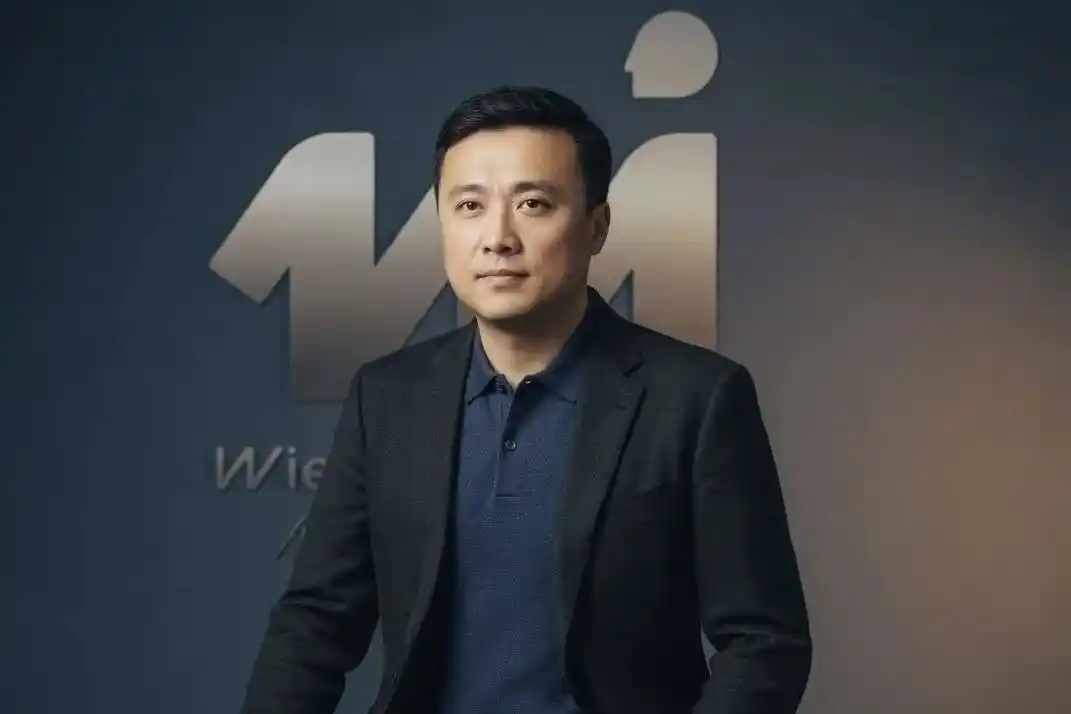
Out of curiosity, Investment Community engaged in a nearly three-hour in-depth conversation with Liu Qifeng. The discussion started from this paper, extending to large models and embodied AI, as well as his understanding of the next phase of AI.
Starting from a Nature Communications Paper
While others go 'from papers, to papers,' Liu Qifeng goes 'from problems, to problems.'
In early 2025, a relative of Liu Qifeng suffered from kidney cancer, with the attending physician being Director Zhang Zhiling from Sun Yat-sen University Cancer Center. Like all other kidney cancer surgeries, doctors have long faced a clinical dilemma—can there be more quantified and intelligent judgment criteria between partial nephrectomy and radical nephrectomy?
The essence of this challenge is: Can AI predict complex choices in the real world?
Thus, right in the hospital ward, a collaboration spanning medicine and AI commenced: Zhang Zhiling was responsible for medical work and jointly completed data collection with multiple hospitals, while Weina AI handled AI and data processing. The co-first author of the paper, Wang Yatian, is a Ph.D. student at HKUST and an intern at Weina AI, jointly supervised by Liu Qifeng and Professor Luo Wenhan.
Addressing the challenge of multi-source heterogeneous sparse data, the team proposed the RDPM model, incorporating 3D imaging and clinical variables/indicators into the same prediction framework. It was trained and validated on a cohort of 1621 patients, achieving an AUC of 0.788 to 0.873 in external multi-center testing. The paper predicts patients' long-term kidney function decline risk, providing quantifiable support for surgery decisions highly reliant on experience.
Weina AI underwent a public test of AI prediction in a highly fault-intolerant scenario like healthcare. This also points to the other side of AI prediction that Liu Qifeng would discuss next—prediction is the underlying mechanism of large models, generating answers by predicting the next token, naturally 'skilled at answering.' However, Weina AI's focus goes a step further—making AI not only skilled at answering but also 'skilled at questioning.' To give AI 'knowledge and inquiry,' it must both 'learn' effectively and 'question' proactively.
HKUST Professor Turns Entrepreneur
Lenovo Capital Leads the First Round
'While others chase trends, he creates them.' This is how friends describe their impression of Liu Qifeng's past.
This is not an exaggeration. As early as 2001, Liu Qifeng entered the National Laboratory of Pattern Recognition at the Institute of Automation, Chinese Academy of Sciences, studying under Academician Tan Tieniu—the 2022 recipient of the King-Sun Fu Prize, the highest international award in pattern recognition. He subsequently served as a researcher at Samsung Lab, a data scientist at Yahoo! Lab, Director of the Gamma AI Lab at Ping An Group, and AI Director at the Hong Kong Institute of Innovation, CAS. In 2018, he co-founded the Hong Kong Society of Artificial Intelligence and Robotics with Academician Yang Qiang. In 2021, he foresightedly drafted the 'Hong Kong Cloud Brain' and 'Hong Kong Foundation Model' proposals for the Hong Kong government, becoming an early promoter of Hong Kong's AI supercomputing construction and large model training.
These seemingly diverse experiences all point to the same goal: enabling machines to find patterns from complex information and make judgments.
The real turning point occurred in 2023 when ChatGPT became popular. At that time, with strong support from the SAR government and university leadership, Liu Qifeng, in collaboration with six universities at HKUST, co-initiated the Hong Kong Generative AI R&D Centre with Academician Guo Yike, leading the team to build the world's first thousand-card H800 SuperPod AI supercomputing cluster. In 2024, he completed the pre-training/fine-tuning of China's third hundred-billion-parameter Mixture of Experts (MoE) large model. For Hong Kong's AI development, this was a critical juncture.
It was also during this experience that he identified the next gap: the deeper large models go, the more they rely on high-quality data—it's always 'data is king,' especially reasoning Q&A data across various industries. Therefore, enabling large models to 'question' with high quality became the primary key.
Liu Qifeng breaks down large model development into three stages: first, 'from data to model,' using massive internet data for pre-training; second, 'from model to Token,' where large models start outputting tokens to generate content or perform tasks; next is 'from Token to data'—enabling large model systems to actively ask questions, reason step-by-step, and verify answers, i.e., generating reasoning Q&A data. This forms a large feedback loop of 'data → model → Token → data,' thereby enabling AI to possess autonomous learning capabilities.
The purpose of AI autonomous learning is to acquire 'knowledge and inquiry,' and 'knowledge and inquiry' consists of 'learning' from training + 'questioning' and answering. Qing Dynasty scholar Liu Kai wrote in On Inquiry: 'The learning of a superior man necessarily involves a love for inquiry. Inquiry and learning support each other. Without learning, there is nothing to raise doubts; without inquiry, there is nothing to broaden knowledge.'
In July 2024, Hong Kong Weina AI was officially established. The company name is derived from Norbert Wiener—the founder of Cybernetics. What Liu Qifeng values is precisely the feedback loop in cybernetics. Weina AI's mission is to make AI 'question' accurately and 'answer' correctly, thereby realizing the large loop of 'data → model → Token → data,' enabling Agentic AI to autonomously evolve in professional domains.
Weina AI's task is to solve a counterintuitive problem: on one hand, large model development is advancing rapidly; on the other, large model deployment in enterprises remains very difficult. The reason is simple: low accuracy. Using student exam preparation as an analogy—having only textbooks (professional documents) but lacking exercise books (reasoning Q&A data) makes it impossible to achieve high scores (low system accuracy). Memorizing textbooks provides dead knowledge, while doing exercises practices live problem-solving abilities. What Weina AI does is help various industries supplement this 'exercise book,' enabling AI not only to 'study textbooks' but also to 'do exercises,' thereby addressing the bottlenecks of inaccuracy, difficulty in optimization, and incorrect answers currently faced by the proliferation of Agents.
There is a popular saying: large model Q&A is outdated; task execution is key. This is somewhat superficial. Execution capability depends on two pillars: the accuracy of a single agent in a professional domain and the collaborative capability among multiple agents. The reality is that current execution capabilities are far from reliable. One of the root causes is that single-agent Q&A accuracy often falls below 70%—not even crossing the threshold of 'trustworthiness,' let alone 'collaboration.'
The specific definition of an 'exercise' is cQrA: context, Question, reasoning, Answer. Context is the task scenario, Question is the generated question, reasoning is the reasoning process, and Answer is the verified answer. In other words, Weina AI enables the model to simultaneously generate questions, answers, and reasoning processes within a specific industry context.
This also distinguishes it from traditional data annotation. Traditional data annotation heavily relies on manual labor, even experts, with high costs, difficulty in scaling, providing only answers without reasoning, consuming expert experience in repetitive tasks. In contrast, Weina AI enables Agentic AI to become tireless intelligent expert teams, automatically generating cQrA data with complete chains of thought, completely breaking through the human resource bottleneck. More critical than cost-saving is that the closed-loop mechanism allows data generated in each round to feed back into the generation and evaluation models, driving continuous leaps in precision and logic for the next iteration—thus achieving a qualitative change from a 'manual workshop' to a 'self-evolving knowledge factory.'
Weina AI quickly caught the attention of the industry and investors. Shortly after its establishment, the company completed a 50 million HKD seed round of financing, led by Lenovo Capital. Lenovo Capital has consistently invested along the three key elements of AI: computing power invested in companies like MetaX and Cambricon, models invested in companies like Zhipu and StepFun, and the data element landed on Weina AI. Simultaneously, MetaX and Weina AI have deepened cooperation. In the upcoming era of the large loop 'data → model → Token → data,' one has designed the computing platform in advance for the future paradigm, while the other has defined the workload for the future paradigm in advance.
The Next Phase of AI
'Let Us Generate This World!'
Commercial validation starts with two soul-searching questions.
Question One: Will generated data be purchased by professional institutions without large-scale expert annotation?
Question Two: Can it be cross-industry and replicable?
To answer these, Weina AI, resisting pressure, broke from the traditional 'depth-first' principle of B2B tech companies—which insists on 'penetrating a specific industry' first—and instead adopted a 'breadth-first' approach. They deliberately chose four seemingly unrelated industries with high accuracy requirements: value & safety, government affairs, insurance, and horse racing, and have secured leading clients in each.
'We proved that we can achieve cross-industry replication with a small team, no industry experts, and low cost,' Liu Qifeng stated. Having now achieved validation from '0 to 4,' the next step is scaling from '1 to M x N' (M industries, each with N leading clients).
Behind this lies a long-term judgment on the value of data.
In Liu Qifeng's view, the gap between Chinese and American AI is largely due to differences in the perception of data—data has long been seen as 'dirty and tiring work,' and data engineers' salaries are generally lower than those of algorithm and model engineers.
However, the landscape is shifting. As data production moves from manual annotation to reasoning, interaction, and closed-loop feedback, large model companies are continuously increasing investment in the data side. It is now a consensus within the industry that reasoning and interactive data generation determines the upper limit of large model capabilities.
In the future, the most core element is not the model, nor even the data itself, but that 'large loop.' Just as the key to evolution is neither men nor women, but mating and natural selection—the mechanisms of chromosome replication, crossover, mutation, and survival of the fittest. Data distillation is merely one path leveraging external forces. The real moat lies in establishing an autonomous learning loop where model training and data generation drive each other, using model collaboration and feedback mechanisms to continuously generate high-quality data.
This judgment also extends to the currently hottest topic: embodied AI.
The traditional way of training embodied AI is based on imitation of humans. True intelligence should be like a baby learning to walk 'through trial and error': autonomously generating motion data through continuous falling and attempts, then iteratively optimizing decision-making models through closed-loop feedback.
Liu Qifeng says the logic of closed-loop training in the digital world has already extended to the physical world. Whether it's Agents entering industries or robots going into the field, they all rely on massive, high-quality reasoning and interactive data generated autonomously in advance. Correspondingly, cQrA evolves into cTrA—context, Task, reasoning, Action. This serves as both new fuel for training and a new benchmark for evaluation.
The journey has just begun. The answer Liu Qifeng points to leads to the not-so-distant future: 'Let us generate this world!'
This article is from the WeChat public account 'Investment Community' (ID: pedaily2012), by Wang Lu.