Casper Launches AI Toolkit for Autonomous Agents and Builders

TheNewsCryptoОпубліковано о 2026-06-04Востаннє оновлено о 2026-06-04

Анотація

The Casper Association has launched the Casper AI Toolkit, described as the most extensive AI offering on any Layer 1 blockchain. This toolkit enables AI agents to function as both autonomous economic actors and independent builders. As economic actors, agents can conduct micropayments in seconds via the x402 protocol, allowing them to pay for API calls and services directly without human intervention or traditional billing systems. They can also interact with the Casper network using the Model Context Protocol (MCP) for tasks like querying balances and executing DeFi transactions through natural language. As builders, AI agents can use the Odra Framework and CSPR.build Agent Skills to autonomously design, test, and deploy smart contracts from concept to mainnet, without human assistance. This creates a closed-loop "machine economy" where AI agents can both build services and pay to use services built by other agents. The release is the first major project from the Casper Manifest, a multi-year technological plan. The Casper Association is supporting adoption with a $150,000 "Agentic Buildathon" for developers, featuring sponsored transaction fees. Future development includes account abstraction to give agents their own on-chain identities and spending rights.

The Casper AI Toolkit, the most extensive AI offering of any Layer 1 blockchain, was introduced today by the Casper Association. It allows AI agents to do two tasks that no other L1 stack now fully supports in production: writing, testing, and deploying new apps without human assistance, as well as conducting autonomous transactions as economic actors. Now that these features are operational on the mainnet, Casper is the first WebAssembly-native Layer 1 with live HTTP-based micropayment infrastructure for AI agents thanks to a production x402 Facilitator.

The network’s multi-year technological plan, the Casper Manifest, was released in May 2026, and this is the first project to be deployed. The AI Toolkit is the initial component of Casper that developers have access to, where the Manifest outlined its direction.

AI Agents as Economic Actors

As a participant in the economy, begin with the agent. Thousands of times a day, AI agents purchase data, pay for computation, perform trades, and settle transactions without the need for human intervention. They are unable to bargain with a salesman, sign a subscription, or make a purchase order. They must pay for each request: make a call to an API, pay three-tenths of a penny, get the answer, and proceed.

Casper opens the door for them. The x402 protocol integrates payment into the request itself; an agent hits a paid endpoint, gets a price and an HTTP 402 response, signs an authorization, and gets its data back in a matter of seconds. No billing accounts, no API credentials, and no human intervention. The Casper Association is a member of the X402 Foundation, and the Casper x402 Facilitator resolves everything on-chain and is now operational on the mainnet.

Acting is more than just paying. Agents access the chain directly using the Model Context Protocol (MCP), which is the standard by which AI models find and use external tools. They may query balances, submit transactions, read contract states, and track transfers using real-time event streams. This is furthered by the CSPR.trade MCP Server, which transforms agents into sophisticated DeFi users on Casper that manage portfolios, swap, and provide liquidity using just natural language.

However, an economy requires more than just individuals; it also need the services they use for transactions. That is the second function of the agent.

AI Agents as Builders and Developers

An agent may build on Casper using the same toolbox that allows it to spend on Casper. An AI coding agent can design, test, and implement smart contracts completely on its own using the Odra Framework, Casper’s developer-friendly smart contract toolkit. Simply point it at Odra, and it will proceed from concept to production-ready, deployed contract without human intervention.

The remainder of the integration, including wallet connections, transaction signing, event handling, and CSPR.cloud API access, is provided by the CSPR.build Agent Skills in a single installable package. This is supported by enterprise-grade middleware across the REST, Streaming, and Node API layers of CSPR.cloud, providing agents with all they require to read from and write to Casper at scale.

As a consequence, a loop is closed: one agent creates services that another agent pays to use. Building and transacting are two ends of the same machine economy, not two distinct things.

Built to Work as a System

The components of the AI Toolkit are intended to compound into a single, cohesive stack. An agent utilizes the CSPR.trade MCP server to act in DeFi, Odra in conjunction with the CSPR, x402 to pay for the services it uses, and MCP to learn what it can do on Casper and develop skills to provide the next application that will be used by other agents.

Account abstraction, a proposed protocol improvement where user accounts and smart contracts share a single on-chain data format, is the next step outlined in the Manifest. Once provided, it will complete the image of agents as fully native participants on Casper by providing them with their own on-chain identities, scoped spending rights, and predictable fixed-cost transactions without the need for a human wallet.

This is the machine economy thesis that the Casper Manifest outlined, and the first of them may now be built using the AI Toolkit.

$150,000 Agentic Buildathon

The Casper Association has started the Casper Agentic Buildathon with $150,000 in prizes to support developers using the AI Toolkit. Participating teams may develop and test micropayment-powered products without incurring any upfront fees because to sponsored x402 Facilitator usage, which offers free on-chain transactions.

“No other Layer 1 gives AI agents both the ability to transact as economic actors and to autonomously build new applications — in production, on mainnet, today,” said Michael Steuer, President and CTO of the Casper Association. “Billions of AI agents are operating right now with no native way to pay for services — every transaction still runs through infrastructure built for humans, not machines. The Casper AI Toolkit changes that: agents can pay per request in seconds with cryptographic proof, and they can write and deploy smart contracts without any human in the loop. That is what the machine economy actually looks like. And with $150,000 in prizes and sponsored x402 usage for winning teams, we are putting our resources directly behind the developers building it.”

Teams created their first x402-powered agents live on the Casper Network at a hands-on developer training at Istanbul Blockchain Week on June 2, which marked the beginning of the buildathon. Agentic AI, DeFi and Payments, Cross-Chain, and RWA Tokenization are among the competition tracks.


TagsAltcoinBlockchain

Пов'язані питання

QWhat are the two key capabilities that the Casper AI Toolkit enables for AI agents, according to the article?

AThe Casper AI Toolkit allows AI agents to autonomously write, test, and deploy new applications, and to conduct autonomous transactions as economic actors.

QHow does the x402 protocol facilitate payments for AI agents on the Casper network?

AThe x402 protocol integrates payment directly into the HTTP request; an agent hits a paid endpoint, receives a price and an HTTP 402 response, signs an authorization, and gets its data back in seconds—requiring no billing accounts, API credentials, or human intervention.

QWhat role does the Model Context Protocol (MCP) play for AI agents on Casper?

AThe Model Context Protocol (MCP) is the standard by which AI models find and use external tools. It allows agents to directly access the chain to query balances, submit transactions, read contract states, and track transfers using real-time event streams.

QWhat tool does an AI agent use to autonomously develop and deploy smart contracts on Casper?

AAn AI agent uses the Odra Framework, Casper's developer-friendly smart contract toolkit, to design, test, and implement smart contracts completely on its own.

QWhat is the purpose of the $150,000 Casper Agentic Buildathon announced by the Casper Association?

AThe $150,000 Casper Agentic Buildathon is a competition with prizes to support developers using the AI Toolkit. It provides sponsored x402 Facilitator usage for free on-chain transactions, allowing teams to develop and test micropayment-powered products without upfront fees.

Пов'язані матеріали

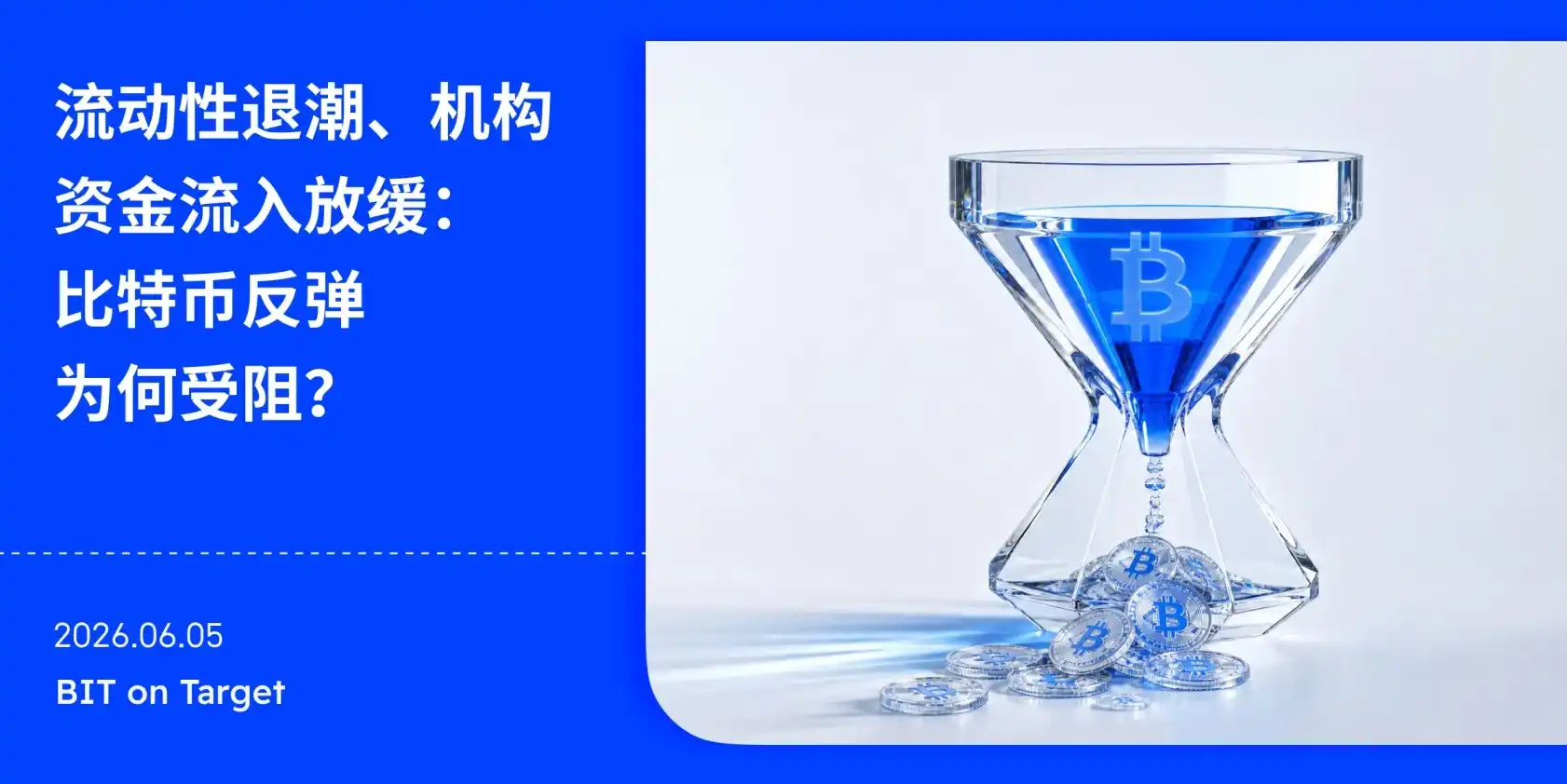
BIT Research: ETF Purchases Have Slowed, Strategy (MicroStrategy) Has Slowed, What Else Can Drive Bitcoin's Rise?

Market Refocus on Inflation and Rate Expectations Weighs on Bitcoin Currently, the market is in a phase of macro-repricing dominated by inflation and interest rate expectations. Bitcoin, which previously benefited from easy liquidity and low inflation, is seeing its core bullish drivers weaken. These drivers were market expectations for interest rate cuts and strong inflows from Bitcoin ETFs and institutions like MicroStrategy (referred to as "Strategy" in the text). The logic has shifted. Recent high inflation data (e.g., CPI hitting 3.8% in a May 2026 report) has caused the market to sharply reduce its rate cut expectations for 2025 and even price in potential hikes. This is a key constraint for Bitcoin, as it lacks cash flows and is highly sensitive to rate expectations. Concurrently, institutional capital flows have slowed significantly. Following the hot CPI data, Bitcoin ETFs saw accelerated outflows, with around $4.3 billion leaving over a period. MicroStrategy's ability to keep adding substantial Bitcoin to its balance sheet is also diminishing. Together, ETF and MicroStrategy holdings total roughly $110 billion, but their momentum as growth engines is cooling. In summary, Bitcoin's current pressure stems not from its own fundamentals but from a changing macro environment. As long as inflation stays elevated, Bitcoin is likely to remain in a consolidating phase. However, historically, inflation eventually peaks. Once it recedes and rate cut expectations rebuild, institutional capital could return, potentially fueling a new and more robust recovery phase for Bitcoin.

marsbit7 хв тому

BIT Research: ETF Purchases Have Slowed, Strategy (MicroStrategy) Has Slowed, What Else Can Drive Bitcoin's Rise?

marsbit7 хв тому

Earning 1000 Trillion in Half a Year, 'Pocketing' 20 Million per Capita: This Round of Wealth Creation in the Korean Stock Market is Unprecedented in Scale

The South Korean stock market is experiencing an unprecedented wealth surge in 2026, with household equity and fund asset values soaring by over 1,000 trillion KRW (~$730bn) year-to-date. This translates to an average per capita wealth increase of roughly 20 million KRW, fueled by a historic 109% rally in the KOSPI index. The boom is driven by three converging forces: an AI-driven semiconductor supercycle boosting giants like Samsung and SK Hynix; the government's "Value-Up" market reforms addressing long-standing corporate governance issues; and aggressive real estate regulations that have locked capital within financial markets, preventing profits from flowing back into property. This has triggered a wealth effect, boosting high-end consumption significantly. However, the gains are highly concentrated. The two semiconductor behemoths account for over half the index's value, but retail investors own relatively low stakes in them, systematically missing the biggest rallies. Wealth and consumption benefits are skewed towards luxury goods and imported cars, bypassing mainstream retail. Further risks stem from excessive leverage, with high trading volume in leveraged ETFs, and a market sentiment heavily reliant on the AI sector's fortunes and speculative rumors. While this cycle marks a potential shift from real estate to equities as a primary wealth generator for Koreans, its sustainability, amid structural imbalances and leverage, remains a critical test.

marsbit12 хв тому

Earning 1000 Trillion in Half a Year, 'Pocketing' 20 Million per Capita: This Round of Wealth Creation in the Korean Stock Market is Unprecedented in Scale

marsbit12 хв тому

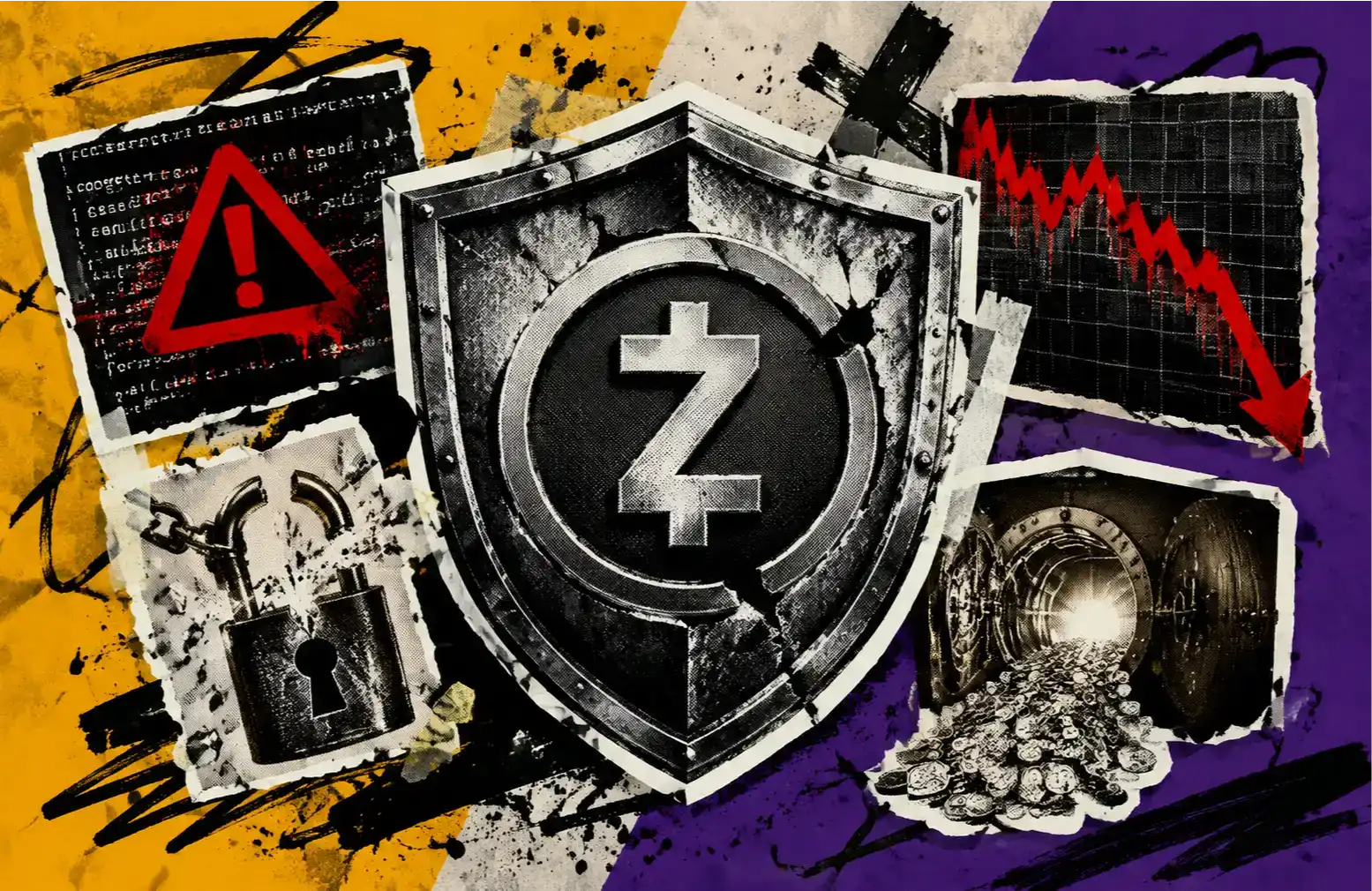
Behind ZEC's Over 30% Plunge: An 'Unlimited Minting' Vulnerability with No Way to Prove if It Was Ever Exploited

A critical vulnerability was discovered in Zcash's Orchard privacy pool, allowing for the theoretical creation of undetectable counterfeit ZEC. Researcher Taylor Hornby found the flaw on May 29th, 2024, within the Orchard circuit's cryptographic constraints, which could let an attacker bypass asset conservation rules. Although a rapid emergency fix was deployed within days via a coordinated soft and hard fork, a core uncertainty remains: due to Orchard's privacy features, it is impossible to cryptographically prove whether this "unlimited mint" flaw was exploited in the nearly four years since the pool's 2022 launch. This uncertainty, rather than the patched flaw itself, triggered a market panic, causing ZEC's price to drop over 30%. While the Zcash Foundation stated no evidence of exploitation was found, independent entity Shielded Labs emphasized the impossibility of definitively proving no counterfeit ZEC was ever created. The incident highlights the unique trust challenge in privacy systems. To address this, developers are proposing a new network upgrade with enhanced auditing to allow verifiable proof of supply integrity. Notably, the researcher utilized the newly released AI model Claude Opus 4.8 as a tool during the security review, signaling the growing role of advanced AI in uncovering complex cryptographic vulnerabilities.

marsbit15 хв тому

Behind ZEC's Over 30% Plunge: An 'Unlimited Minting' Vulnerability with No Way to Prove if It Was Ever Exploited

marsbit15 хв тому

imToken's 10th Anniversary Unveils Strategic Direction for the Next Decade: Evolving from a Trusted Main Wallet to a Personal Digital Hub

On its tenth anniversary, decentralized wallet imToken announced its strategic vision for the next decade: evolving from a "trusted main wallet" into a "personal control interface." This new direction aims to help users manage not only digital assets but also identity, permissions, and AI agent actions in an increasingly open and intelligent internet. imToken outlined that while the past decade focused on Store, Send, and Stake—securing assets, enabling transfers, and facilitating network participation—the future introduces a fourth core proposition: Sign. This expanded concept goes beyond transaction signing to encompass expressing intent, granting permissions, setting rules, delegating actions, and revoking authorizations. As AI agents gain autonomy, imToken emphasizes the need for clear, verifiable, and revocable user control over their actions. CEO Ben He stated that imToken's mission is shifting from enabling ownership of digital assets to ensuring user sovereignty over their entire digital world in the AI era. The company's core principle has been upgraded from "Digital Assets, Under Your Control" to "Your Digital World, Under Your Control." Future development will focus on three areas: upholding self-custody principles, extending security from transactions to authorizations and automated actions, and building product capabilities for managing permissions, delegations, policies, and revocations. imToken views the wallet's role as expanding into a trusted control interface for human-AI collaboration, where managing keys, signatures, and permissions forms the infrastructure for personal digital sovereignty. Founded in 2016, imToken serves millions of users across 150+ countries, providing non-custodial wallet services supporting over 50 blockchain networks.

marsbit16 хв тому

imToken's 10th Anniversary Unveils Strategic Direction for the Next Decade: Evolving from a Trusted Main Wallet to a Personal Digital Hub

marsbit16 хв тому

Торгівля

Спот
Ф'ючерси

Популярні статті

Як купити LAYER

Ласкаво просимо до HTX.com! Ми зробили покупку Solayer (LAYER) простою та зручною. Дотримуйтесь нашої покрокової інструкції, щоб розпочати свою криптовалютну подорож.Крок 1: Створіть обліковий запис на HTXВикористовуйте свою електронну пошту або номер телефону, щоб зареєструвати обліковий запис на HTX безплатно. Пройдіть безпроблемну реєстрацію й отримайте доступ до всіх функцій.ЗареєструватисьКрок 2: Перейдіть до розділу Купити крипту і виберіть спосіб оплатиКредитна/дебетова картка: використовуйте вашу картку Visa або Mastercard, щоб миттєво купити Solayer (LAYER).Баланс: використовуйте кошти з балансу вашого рахунку HTX для безперешкодної торгівлі.Треті особи: ми додали популярні способи оплати, такі як Google Pay та Apple Pay, щоб підвищити зручність.P2P: Торгуйте безпосередньо з іншими користувачами на HTX.Позабіржова торгівля (OTC): ми пропонуємо індивідуальні послуги та конкурентні обмінні курси для трейдерів.Крок 3: Зберігайте свої Solayer (LAYER)Після придбання Solayer (LAYER) збережіть його у своєму обліковому записі на HTX. Крім того, ви можете відправити його в інше місце за допомогою блокчейн-переказу або використовувати його для торгівлі іншими криптовалютами.Крок 4: Торгівля Solayer (LAYER)Легко торгуйте Solayer (LAYER) на спотовому ринку HTX. Просто увійдіть до свого облікового запису, виберіть торгову пару, укладайте угоди та спостерігайте за ними в режимі реального часу. Ми пропонуємо зручний досвід як для початківців, так і для досвідчених трейдерів.

316 переглядів усьогоОпубліковано 2025.02.11Оновлено 2026.06.02

Як купити LAYER

Обговорення

Ласкаво просимо до спільноти HTX. Тут ви можете бути в курсі останніх подій розвитку платформи та отримати доступ до професійної ринкової інформації. Нижче представлені думки користувачів щодо ціни LAYER (LAYER).

活动图片