Cardano Founder To Leave X Permanently, Details Next Steps

bitcoinistОпубліковано о 2025-12-29Востаннє оновлено о 2025-12-29

Анотація

Cardano founder Charles Hoskinson has announced he will permanently leave X (formerly Twitter) by the end of December, with a "digital twin" set to take over his account in January. He plans to shift his communication to platforms like Discord for weekly AMAs, YouTube for livestreams, and long-form writing on his personal blog. Hoskinson cited X's tendency to "reward outrage" as a key reason for leaving, emphasizing that his focus will remain on building meaningful projects like Cardano's development, Africa initiatives, and Midnight. He also hinted at past conflicts on the platform, thanking supportive followers while dismissing critics. Further details about the digital twin will be explained in his first YouTube stream of the new year. At the time of writing, ADA was trading at $0.3779.

Cardano founder Charles Hoskinson says he will stop using X at the end of December, with a “digital twin” set to take over his account in January, an unusual handoff that reshapes how one of crypto’s most visible founders communicates with the Cardano community. “Five more days on X,” Hoskinson wrote in a Dec. 27 post. “Come January, a digital twin takes over this account—I’ll explain what that means on the first YouTube stream of the new year.”

Here’s Why The Cardano Founder Will Leave X

Hoskinson pointed followers to where he intends to be active next. “Where to find me: Midnight Discord for weekly AMAs, YouTube for livestreams, and the long-form writing I’ve owed myself for a decade,” he wrote, tying the shift to Midnight and to a renewed emphasis on longer-form communication.

The motivation, he said, is incentive design. “Why leave? X rewards outrage,” Hoskinson wrote, adding that “the work that matters—Africa, Basho, Midnight 1.0, Cardano governance—rewards building.” He framed it as a conclusion drawn from a full decade on the platform: “Ten years taught me which game is worth playing.”

The farewell also carried a sharper edge that nodded to the disputes he has been drawn into on X. “To everyone who made this decade worthwhile: thank you. To the rest: I won’t miss you,” he wrote. Hoskinson has been a prolific and often combative presence on the platform, frequently engaging critics directly and weighing in on Cardano’s technical direction, governance arguments, and broader industry controversies.

Hoskinson’s writing pivot is already underway. On Dec. 25, he published a long post titled “What the Horizon Kept” on his personal Blogger site, opening with a vignette in which “The old fisherman said, ‘The ocean’s too quiet,’” before moving into a surreal narrative about instruments failing, maps not matching reality, and an island appearing where none was marked. The site’s profile bio describes him, bluntly, as a “Guy who writes stuff that makes people angry.”

He also continued posting in a more typically terse mode in recent days. In one message, Hoskinson wrote: “Before Crypto and After Crypto. Friends don’t let friends do crypto.”

Hoskinson has not provided details about the “digital twin” beyond promising an explanation in his first YouTube livestream of the year. For Cardano and Midnight followers, the near-term question is how that handoff works in practice, and whether the conversation he has historically driven on X consolidates on Discord, YouTube, and whatever long-form writing comes next.

At press time, ADA traded at $0.3779.
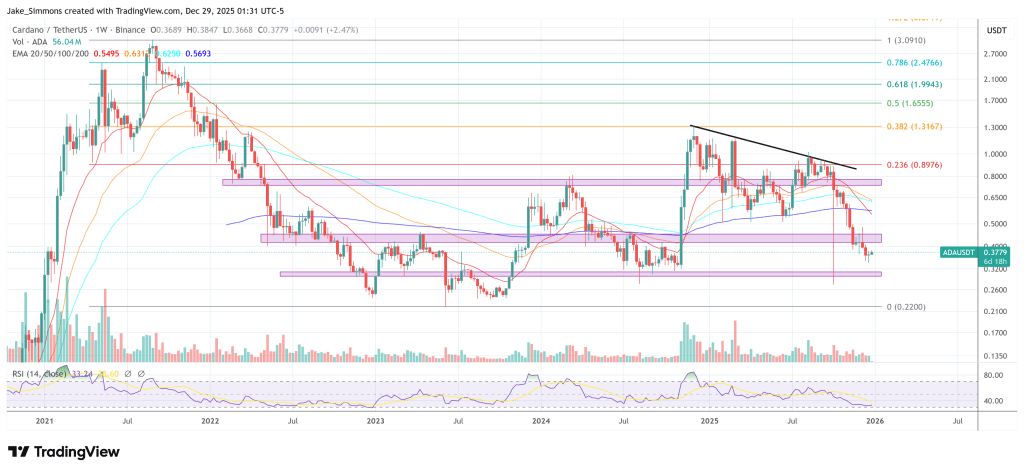
ADA falls below key support, 1-week chart | Source: ADAUSDT on TradingView.com

Трендові криптовалюти

Пов'язані питання

QWhy is Cardano founder Charles Hoskinson leaving X (formerly Twitter)?

ACharles Hoskinson is leaving X because he believes the platform rewards outrage, while the work that matters, such as the development of Africa, Basho, Midnight 1.0, and Cardano governance, rewards building. He concluded from his ten years on the platform that building is the game worth playing.

QWhat is the 'digital twin' that Charles Hoskinson mentioned?

AHoskinson has not provided specific details about the 'digital twin' yet. He has only promised to explain what it means during his first YouTube livestream of the new year in January.

QWhere does Charles Hoskinson plan to be active after leaving X?

AAfter leaving X, Hoskinson plans to be active on the Midnight Discord for weekly AMAs, on YouTube for livestreams, and he will focus on long-form writing that he has wanted to do for a decade.

QWhat was the tone of Hoskinson's farewell message on X?

AHis farewell message had a sharp edge. He thanked those who made his decade on the platform worthwhile but also stated, 'To the rest: I won’t miss you,' nodding to the many disputes he has been involved in on the platform.

QWhat is the trading price of ADA (Cardano's token) mentioned at the end of the article?

AAt the time the article was written, ADA was trading at $0.3779.

Пов'язані матеріали

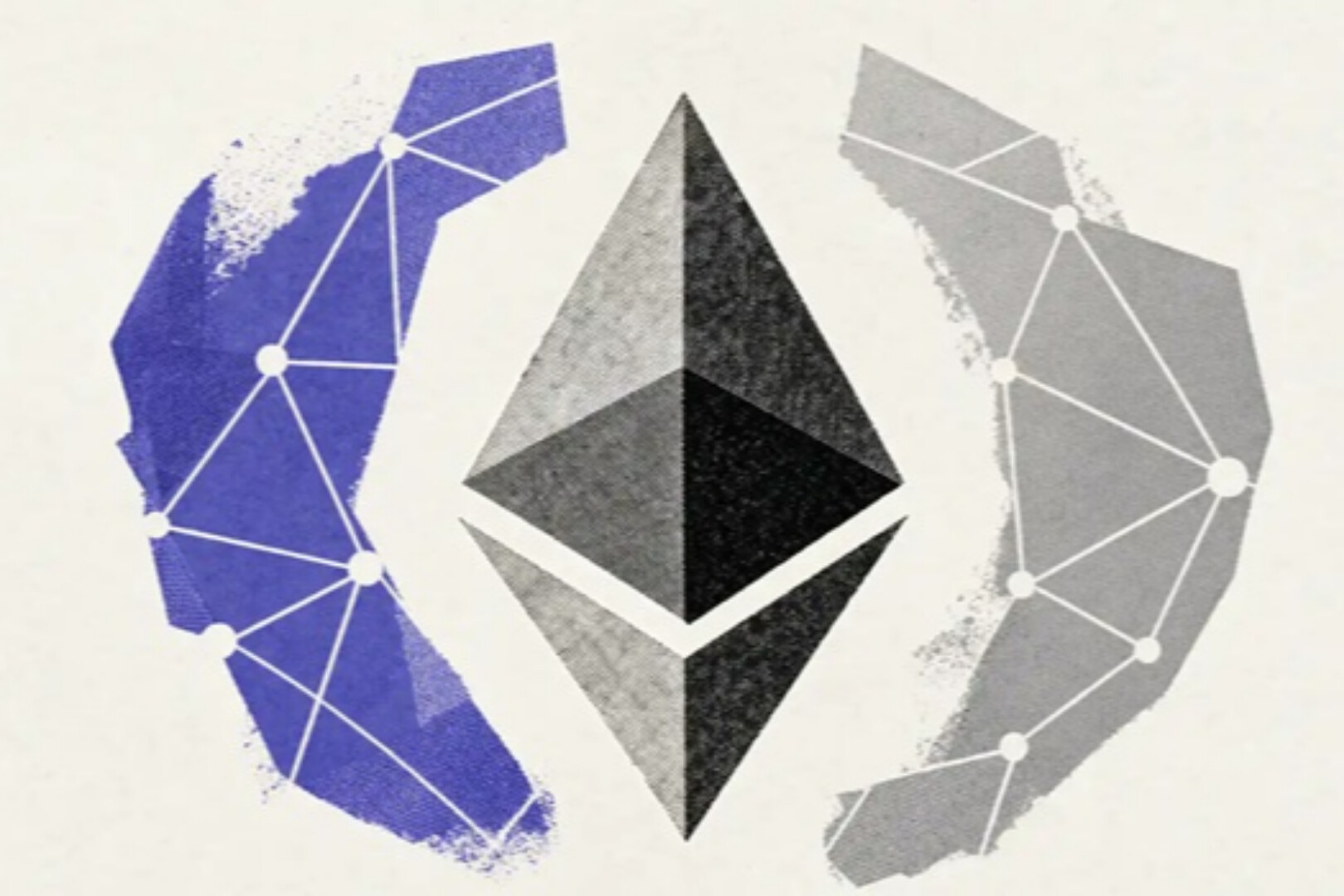
Ethereum's Next Stop Glamsterdam: The Core Upgrades You Must Know

The Glamsterdam upgrade, scheduled for late 2026, is a major Ethereum hard fork combining the Amsterdam execution layer and Glasgow consensus layer updates. Its primary goal is not simply increasing throughput but restructuring Ethereum's block production, validation, and resource pricing to enable future scaling. Key technical changes include **EIP-7732 (ePBS)**, which formally enshrines proposer-builder separation into the protocol. This decouples consensus and execution tasks, extending the execution payload propagation window to ~9 seconds. This provides more time for node verification, allowing for safer increases in block capacity (Gas limit) in the future. Another core component is **EIP-7928 (Block-Level Access Lists - BAL)**. It mandates a list of all state accessed within a block, moving this feature from an optional transaction-level (EIP-2930) to a mandatory block-level requirement. This explicit access list enables client optimizations like parallel disk reads and state root computations, paving the way for parallel execution. To manage long-term state growth, **EIP-8037** increases the cost of creating new state (e.g., accounts, storage slots), separating the pricing of permanent database bloat from temporary computation. This allows execution capacity to scale more aggressively without causing state size to explode proportionally. The planned upgrade bundle includes around 10 EIPs categorized into: 1) Core protocol restructuring (ePBS, BAL), 2) Resource pricing adjustments (state costs, calldata costs), and 3) EVM/developer improvements. Several other EIPs, including those potentially improving staker exit liquidity (EIP-8061, EIP-8080), are under consideration. The technical development coincides with significant personnel changes within the Ethereum Foundation's Protocol team. The Foundation's official communications frame this as part of a broader shift towards a "coalition of organizations" working on the Ethereum roadmap, citing new entities like ethlabs and the Ethereum Economic Zone. In summary, Glamsterdam represents a foundational re-engineering of Ethereum's block pipeline and economic model—focusing on ePBS, BAL, and multi-dimensional resource pricing—to prepare the network for sustainable, high-throughput scaling in the years ahead.

Foresight News7 хв тому

Ethereum's Next Stop Glamsterdam: The Core Upgrades You Must Know

Foresight News7 хв тому

The Ethereum Foundation Has Split?! An In-depth Look at Ethlabs' "Bright Future"

"Ethereum Foundation Splits? Understanding Ethlabs and Its 'Bright Future'" Former Ethereum Foundation members Ansgar Dietrichs, Barnabé Monnot, Caspar Schwarz-Schilling, Josh Rudolf, and Julian Ma have announced the launch of Ethlabs, an independent non-profit research and development lab. Announced on June 22nd, the initiative comes amidst discussions about the need for new organizational structures within the Ethereum ecosystem, a point highlighted by Bankless founder David Hoffman. Ethlabs' mission is to establish Ethereum as the foundational settlement layer for the global economy. The organization positions itself as a bridge connecting frontline developers, applications, and user needs with the core protocol. It aims to translate real-world demands into protocol improvements, industry standards, and deployable products. The founding team brings significant expertise: Dietrichs and Monnot are highly cited researchers in areas like Proposer-Builder Separation (PBS) and MEV, while Schwarz-Schilling, Rudolf, and Ma contribute backgrounds in economic modeling, consensus research, and applied cryptography. Initial supporters include BitMine, a major corporate ETH treasury; Sharplink, another treasury firm; and Consensys founder Joe Lubin in a personal capacity. Community backers include figures like Uniswap's Hayden Adams and Base's Jesse Pollak. The timing coincides with internal Ethereum Foundation discussions about "spinout" projects. While Ethlabs and the Foundation share research interests like MEV mitigation, Ethlabs frames its role not as a competitor but as part of a shift from a "single-core coordination model" to a "multi-R&D entity collaboration model." It views Ethereum as a public project belonging to all builders, with Ethlabs as one node in a broader governance network. Ultimately, Ethlabs represents an organizational evolution within the maturing Ethereum ecosystem. The key question is whether multiple research bodies can collaborate effectively to advance Ethereum as a competitive global settlement infrastructure.

Odaily星球日报11 хв тому

The Ethereum Foundation Has Split?! An In-depth Look at Ethlabs' "Bright Future"

Odaily星球日报11 хв тому

'Bear' Doomsday Prophecy: AI 'Reaching Its Peak', U.S. Stocks to Top Out Fastest in Q3, Down 30-50%

"A Short Seller's Dire Prediction: AI Boom Fading, US Stocks to Peak by Q3 with 30-50% Decline" Prominent macro investors Jeffrey Gundlach and Felix Zulauf warn that the AI-driven market rally is nearing its end, forecasting a major US stock market correction of 30-50%, potentially beginning as early as Q3. Their analysis points to alarming parallels with historical market tops, citing extreme concentration in the top AI-related stocks within the S&P 500. Zulauf's bearish thesis hinges on unsustainable capital expenditure trends among major cloud companies, negative free cash flow emergence, and soaring semiconductor prices. Gundlach highlights dangerous parallels to the 1999 tech bubble peak. A key divergence from conventional wisdom is Gundlach's view that long-term Treasury yields will not fall meaningfully even during a recession, due to America's structurally out-of-control fiscal deficits and soaring interest costs. He warns this could force the government into yield curve control or even a sovereign debt restructuring. Both investors express severe concerns about the opaque private credit market, drawing parallels to the pre-2008 financial crisis environment. They allege widespread rating inflation, misrepresented credit quality, liquidity illusions, and fraudulent asset valuations within this sector. The analysis links the AI boom and private credit crisis through financing costs. They argue that as AI companies' cash flows weaken and they seek funding, a high and sticky long-term interest rate environment will severely stress lower-rated corporate borrowers, exposing cracks in credit markets. Finally, they predict a regime shift where the US dollar weakens and US equities underperform global markets, marking the end of their long dominance. The stage is set for a significant market reversal.

marsbit19 хв тому

'Bear' Doomsday Prophecy: AI 'Reaching Its Peak', U.S. Stocks to Top Out Fastest in Q3, Down 30-50%

marsbit19 хв тому

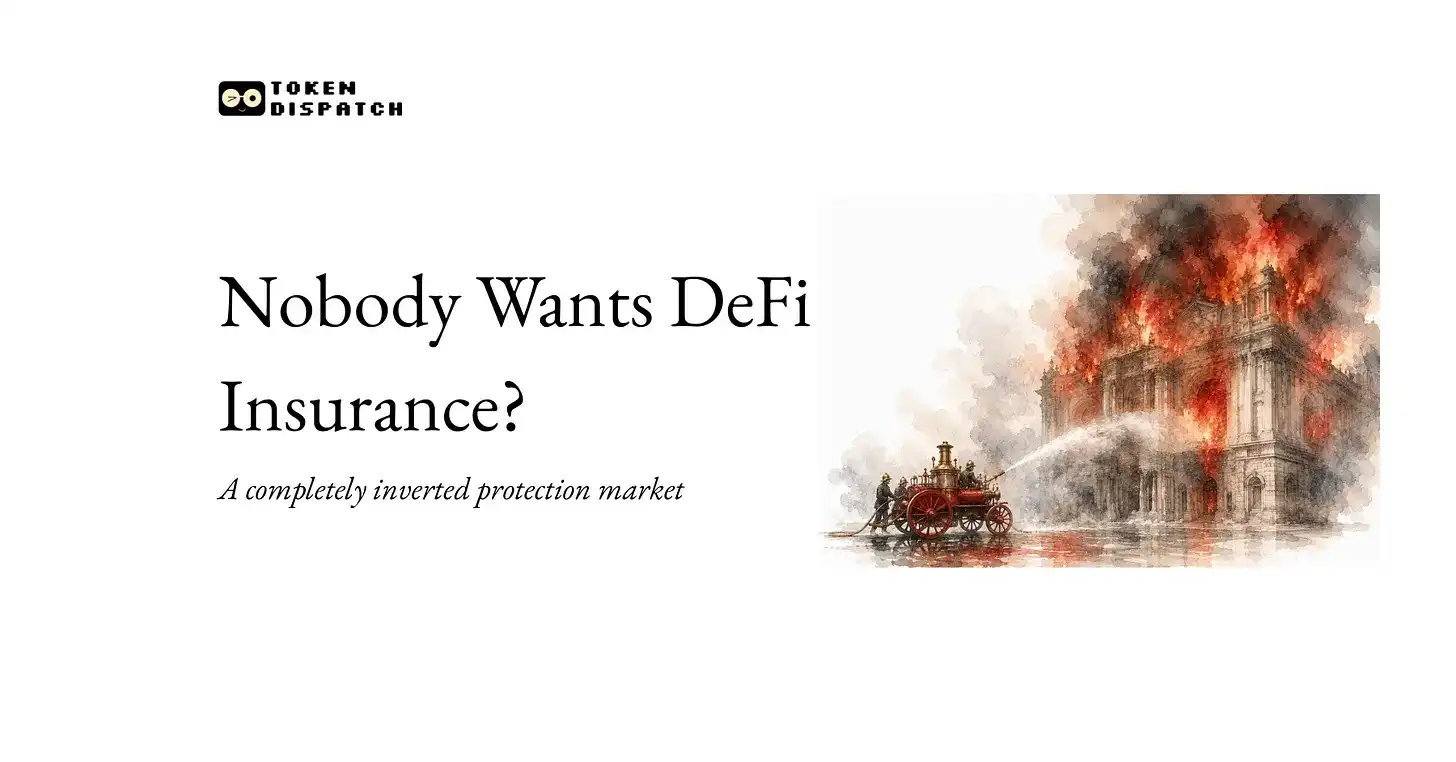
Why Does No One Buy DeFi Insurance?

**Title: Why Isn't DeFi Insurance Being Bought?** DeFi insurance, which promised automated, unbiased payouts via smart contracts, has failed to gain traction. The core issue is economic: high premiums severely erode the yields that attract users to DeFi in the first place. For example, insuring a USDC deposit on Aave V3 could cost 1.5–2.5% of the annual yield, leaving a net return barely above a savings account. For riskier platforms like Maple Finance or Ethena, premiums can even turn net yields negative. Consequently, users often forgo insurance, as it nullifies their profit motive. The market also suffers from structural flaws. First, DeFi risks are highly correlated (e.g., an oracle failure can impact multiple protocols simultaneously), unlike the independent risks in traditional insurance. This makes large-scale events potentially catastrophic for insurers. Second, the total capital in DeFi insurance pools (e.g., Nexus Mutual's ~$81.5M) is minuscule compared to the hundreds of billions in total value locked (TVL), creating a massive capacity gap. A single major hack could drain the entire industry's reserves. Furthermore, the governance model where tokenholders vote on claims creates a conflict of interest, incentivizing them to deny payouts to protect their own funds. As a result, the sector is shrinking. While pioneers like Nexus Mutual are pivoting to preventative measures (bug bounties) and seeking external capital via reinsurance, the fundamental problems remain. DeFi insurance represents a public good—its stability benefits the entire ecosystem—but without a mechanism to share costs, a "tragedy of the commons" ensues where no one is willing to pay, leaving the system vulnerable.

marsbit33 хв тому

Why Does No One Buy DeFi Insurance?

marsbit33 хв тому

Торгівля

Спот
Ф'ючерси

Популярні статті

Як купити ADA

Ласкаво просимо до HTX.com! Ми зробили покупку Cardano (ADA) простою та зручною. Дотримуйтесь нашої покрокової інструкції, щоб розпочати свою криптовалютну подорож.Крок 1: Створіть обліковий запис на HTXВикористовуйте свою електронну пошту або номер телефону, щоб зареєструвати обліковий запис на HTX безплатно. Пройдіть безпроблемну реєстрацію й отримайте доступ до всіх функцій.ЗареєструватисьКрок 2: Перейдіть до розділу Купити крипту і виберіть спосіб оплатиКредитна/дебетова картка: використовуйте вашу картку Visa або Mastercard, щоб миттєво купити Cardano (ADA).Баланс: використовуйте кошти з балансу вашого рахунку HTX для безперешкодної торгівлі.Треті особи: ми додали популярні способи оплати, такі як Google Pay та Apple Pay, щоб підвищити зручність.P2P: Торгуйте безпосередньо з іншими користувачами на HTX.Позабіржова торгівля (OTC): ми пропонуємо індивідуальні послуги та конкурентні обмінні курси для трейдерів.Крок 3: Зберігайте свої Cardano (ADA)Після придбання Cardano (ADA) збережіть його у своєму обліковому записі на HTX. Крім того, ви можете відправити його в інше місце за допомогою блокчейн-переказу або використовувати його для торгівлі іншими криптовалютами.Крок 4: Торгівля Cardano (ADA)Легко торгуйте Cardano (ADA) на спотовому ринку HTX. Просто увійдіть до свого облікового запису, виберіть торгову пару, укладайте угоди та спостерігайте за ними в режимі реального часу. Ми пропонуємо зручний досвід як для початківців, так і для досвідчених трейдерів.

998 переглядів усьогоОпубліковано 2024.12.10Оновлено 2026.06.02

Як купити ADA

Обговорення

Ласкаво просимо до спільноти HTX. Тут ви можете бути в курсі останніх подій розвитку платформи та отримати доступ до професійної ринкової інформації. Нижче представлені думки користувачів щодо ціни ADA (ADA).

活动图片