BTC Halved, DAT Companies Face Billions in Paper Losses: Who is 'Selling to Stop the Bleeding'?

Odaily星球日报Опубліковано о 2026-02-11Востаннє оновлено о 2026-02-11

Анотація

BTC's sharp decline from its $120,000 peak in late 2025 to around $60,000 has triggered significant unrealized losses for several Digital Asset Treasury (DAT) companies, forcing some to sell off crypto holdings to manage financial strain. Cango Inc. sold 4,451 BTC (nearly half its holdings) to repay a BTC-collateralized loan, as mining costs exceeded Bitcoin's current price. Empery Digital, which bought BTC near the peak at around $117,000, sold portions of its holdings to fund share buybacks and debt repayment amid a 57% unrealized loss. Bitdeer shifted from a “HODL” strategy to regularly selling mined BTC to prioritize cash flow. Sequans Communications became the first DAT company to sell Bitcoin (970 BTC) to redeem convertible bonds, highlighting debt-driven sell-offs. ETHZilla, an Ethereum-focused DAT, sold over 32,000 ETH to manage leverage and transition toward real-world asset (RWA) tokenization. These moves underscore the vulnerability of highly leveraged DAT firms in a bear market. While large players may hold on, mid-tier and smaller companies face pressure to deleverage, signaling a market shift from narrative-driven expansion to financial survival and operational sustainability.

Original | Odaily Planet Daily (@OdailyChina)

Author | Ding Dang (@XiaMiPP)
The beginning of 2026 delivered a heavy blow to DAT (Digital Asset Treasury) companies.

BTC retreated from the阶段性高点 (stage high) of $120,000 in December 2025 to around $60,000, a drop of nearly 50%. ETH was not spared either, falling below the $2,000 mark, almost erasing all gains since May 2025. That was precisely the time when a group of DAT companies, represented by SharpLink and Bitmine,高调宣布 (loudly announced) their strategic transformations and made large-scale allocations to加密资产 (crypto assets).

What does this mean? It means that those listed companies or institutions that once regarded BTC and ETH as "corporate strategic reserves" are now collectively mired in浮亏 (paper losses), with账面亏损 (book losses) ranging from hundreds of millions to billions of dollars. Top players like Strategy and Bitmine are still gritting their teeth and increasing their holdings, trying to maintain the narrative stability of "long-term believers"; but more small and medium-sized or highly leveraged DAT companies have already begun substantial reductions or even阶段性清仓 (phased liquidation).

Crypto is never short of stories. If 2025 was the year of "writing faith into financial reports," then 2026 is the test of "how faith survives a bear market." When prices retreat, leverage tightens, and the financing environment reverses, can these DAT companies still支撑住 (hold up) their balance sheets?

Odaily Planet Daily will拆解 (break down) several representative cases that have already started "selling to stop the bleeding," looking at how much they sold, why they sold, and what they will do next.

Cango Inc. (NYSE: CANG): The Leverage Limit of the Mining Model

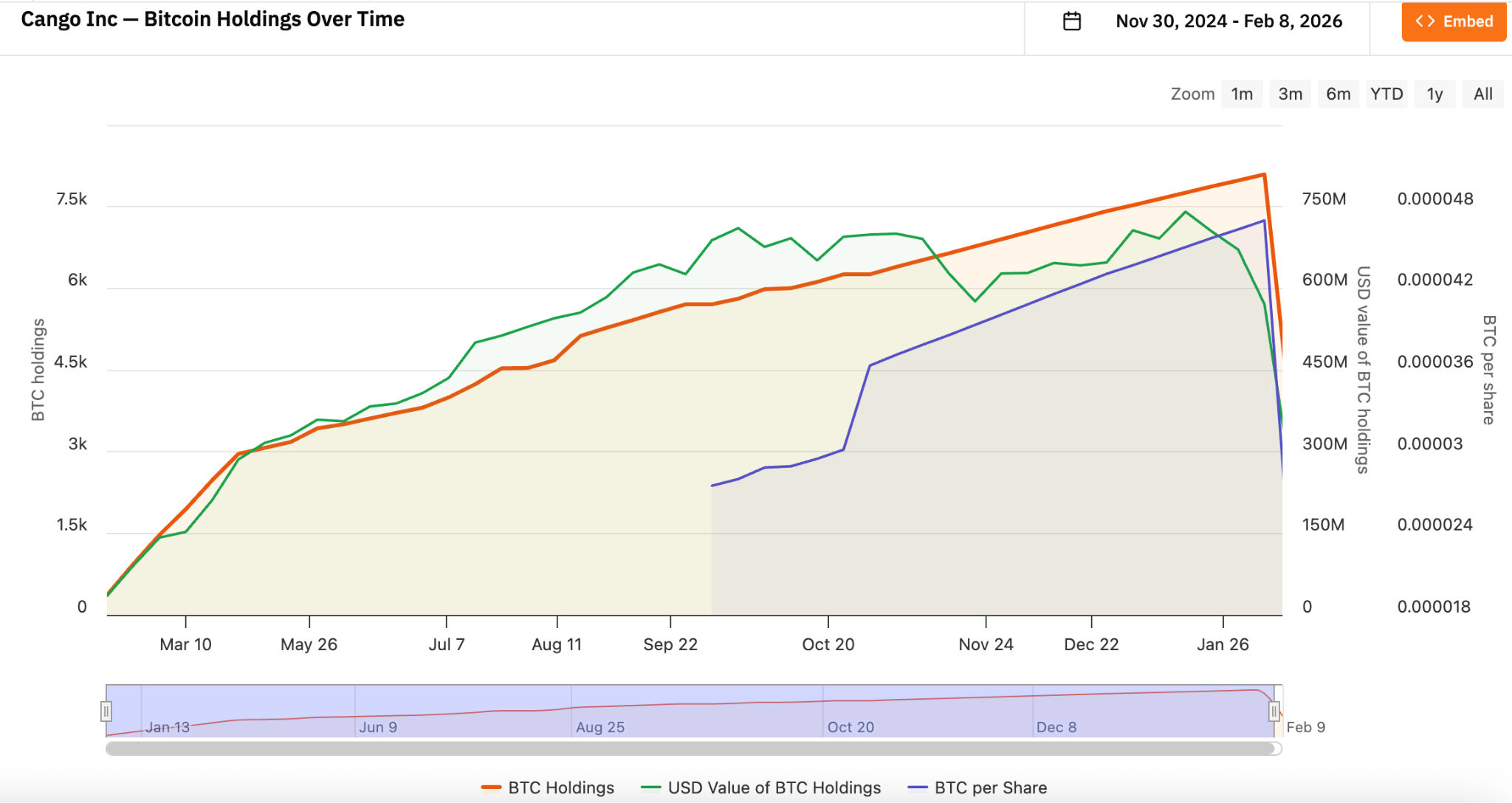
On February 9th, Cango disclosed that it had sold 4,451 bitcoins on the open market, with net proceeds of approximately $305 million, and used all the funds to repay a loan collateralized by BTC. This transaction size was close to half of its previous holdings, leaving only 3,645 BTC on its books after the sale.

Cango was founded in 2010 and is headquartered in China. It was initially a well-known automotive transaction service platform. Starting from November 2024, Cango officially entered the digital asset field, transforming into a Bitcoin mining enterprise through business restructuring and strategic pivoting, and regarding BTC as the core reserve asset of the enterprise. Cango's Bitcoin strategy initially leaned towards HODL + mining accumulation, meaning not selling coins and relying on hash rate to continuously accumulate. This model can be self-reinforcing in a rising price cycle: rising coin prices increase net asset value, increased net asset value enhances financing capability, and financing capability in turn supports hash rate expansion.

Cango began continuously accumulating Bitcoin starting November 2024, and its Bitcoin holdings once ranked as the world's second-largest mining enterprise after MARA Holdings.

Related reading: 《寻找潜力加密美股:灿谷如何从车企一跃成全球第二大比特币矿企?》 (Looking for Potential Crypto Stocks: How Did Cango Leap from an Auto Company to the World's Second Largest Bitcoin Miner?)

But mining is inherently a leveraged industry. Miner purchases, mining farm construction, and power contracts all require upfront capital expenditure, and mining companies often use self-held BTC as collateral to obtain equipment from miner manufacturers with delayed payment, or borrow USD/stablecoins from institutions/platforms to expand mining farms, purchase equipment, and maintain operations. The drawback of this model is that when the BTC price大幅回调 (significantly corrects), the collateral ratio deteriorates rapidly, leverage risk is amplified, and fixed costs like electricity, maintenance, and equipment depreciation do not decrease accordingly, putting extreme pressure on cash flow.

According to Q3 2025 data released in December 2025, Cango's average all-in mining cost (including depreciation) was approximately $99,000 per coin, and the cash cost excluding depreciation was about $81,000 per coin. The Bitcoin price is now far below its shutdown price, forcing it to reduce BTC holdings to "stop the bleeding," improve the balance sheet, and reduce financial leverage.

It is worth noting that Cango has announced it will shift部分资源 (some resources) to artificial intelligence computing infrastructure, seeking business diversification to reduce reliance on a single asset price.
Empery Digital Inc.(NASDAQ: EMPD): The Reverse Pressure of Bull Market Financing Logic

Empery Digital was founded in February 2020 (originally named Frog ePowersports Inc., later renamed Volcon Inc.), headquartered in Texas, USA. It was originally a company focused on all-electric off-road powersports vehicles.

In July 2025, the company announced a Bitcoin treasury strategy. Looking back, this timing恰是 (was exactly) near the high point of this Bitcoin price cycle. The company raised approximately $450-500 million through private placements and credit financing, and陆续增持 (progressively increased holdings of) about 4,000 bitcoins between July and August 2025, with an average cost of approximately $117,000 per coin. Calculated at the current price, the paper loss is close to 57%.

On February 6th, Empery Digital announced the sale of 357.7 BTC at an average price of about $68,000 per coin, obtaining about $24 million, to fund share repurchases and repay部分债务 (part of the debt). It has repurchased over 15.4 million shares so far, at an average price of $6.71, aiming to narrow the NAV discount. Empery now holds approximately 3,724 bitcoins remaining.

The case of Empery Digital actually reflects the typical dilemma of small and medium-sized DATs. They transformed aggressively, their financing relied on the bull market, but when prices corrected, they were forced to "sell coins for buybacks + deleverage." Compared to Cango's mining background, Empery is more like a "pure financial play." Its original main business was unsustainable, so it borrowed heavily to buy BTC at bull market highs, trying to replicate Strategy's path, but the significant correction in BTC exposed its leverage risk and it lacked the space for long-term issuance and capital market operations. If prices continue to fall,持续减持 (continuous reduction) becomes almost inevitable.

Bitdeer Technologies Group(NASDAQ: BTDR): From Price Betting to Cash Flow Priority

Bitdeer was founded in December 2021 by crypto OG Jihan Wu (co-founder of Bitmain), and is one of the world's major Bitcoin mining enterprises alongside MARA and Riot.

Bitdeer provides a full-chain solution through a vertical integration model, from equipment procurement, logistics, data center design/construction, equipment management to daily operations, while expanding into cloud hash rate, hosting services, and proprietary ASIC miner R&D. This has shifted Bitdeer's business from pure mining to diversified high-performance computing, buffering the impact of Bitcoin price fluctuations to some extent.

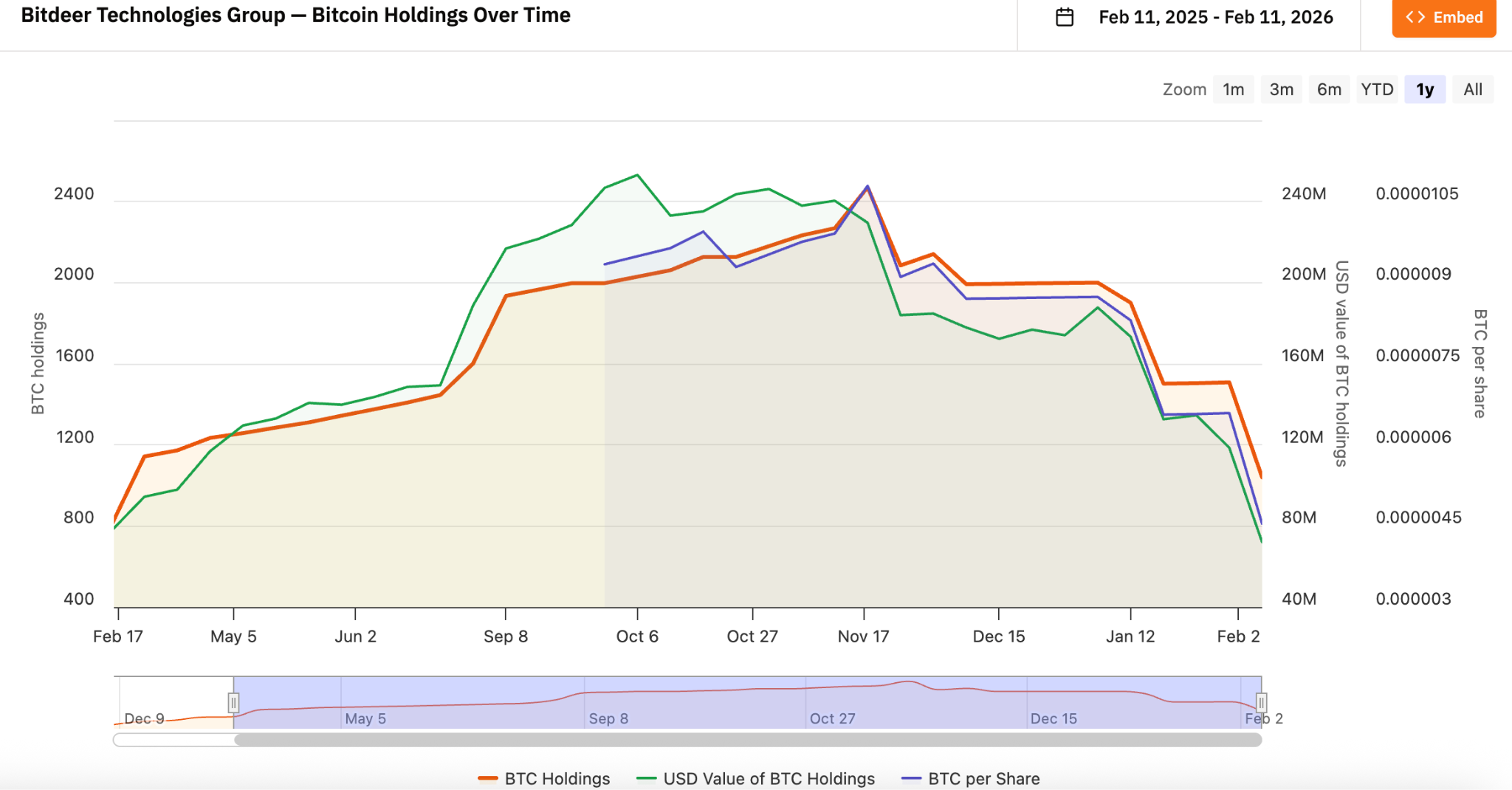
Data from bitcointreasuries.net shows that since November 2025, Bitdeer's BTC strategy has shifted to "mine and sell simultaneously", no longer holding fully (HODL), but maintaining cash flow and operational stability by partially realizing gains. Preserving cash flow takes priority over long-term holding. Is this the industry sensitivity of an OG who has experienced multiple bull and bear cycles?
Sequans Communications S.A.(NYSE: SQNS): Selling Coins to Repay Debt Becomes an Industry Turning Point

Sequans was founded in October 2003 and was originally a semiconductor company focused on wireless cellular technology chips and modules. In June 2025, the company raised approximately $380 million through private equity and convertible bonds to accumulate Bitcoin, transforming itself from a pure IoT chipmaker into an "IoT + BTC DAT" hybrid.

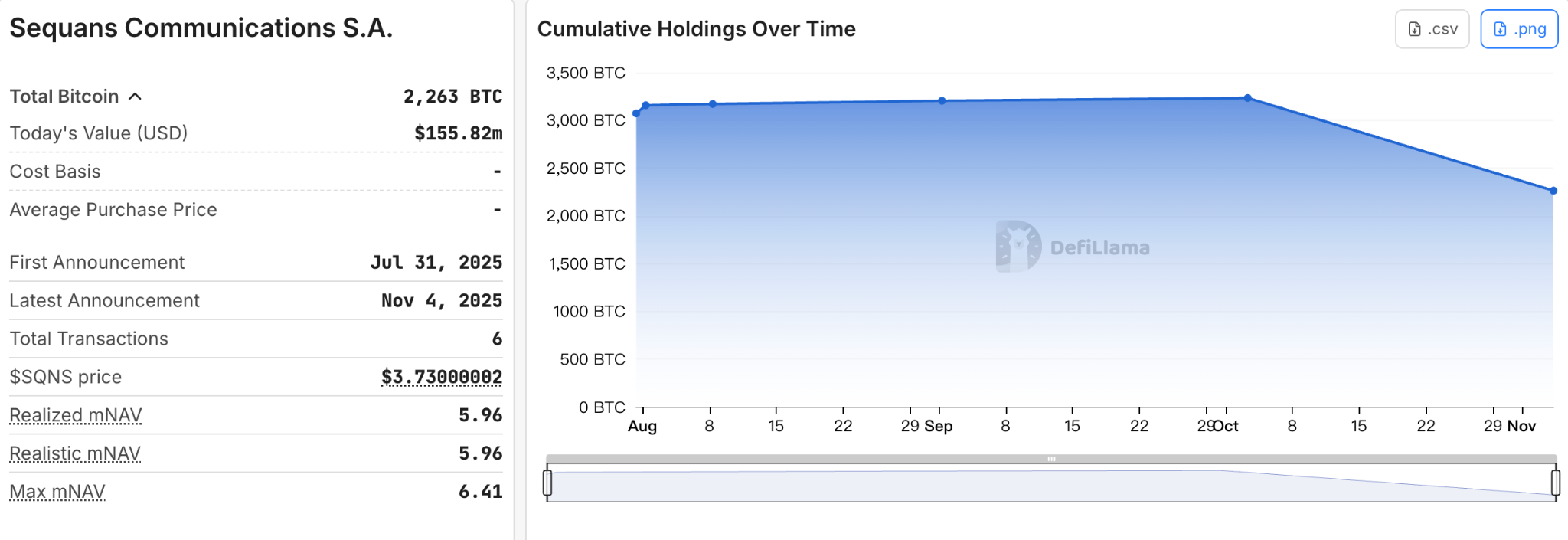
Between July and October 2025, Sequans累计增持 (cumulatively increased holdings of) 3,233 bitcoins. Roughly estimated, the average cost was around $116,000.

In November 2025, it executed its first large-scale reduction of 970 BTC, used to redeem about 50% of its convertible bonds, reducing the company's total debt from $189 million to $94.5 million. The company called this a "strategic asset reallocation," not an abandonment of the strategy. But in the market's view, Sequans was the starting point of the "bubble burst" for BTC treasuries—the first DAT company to publicly admit the need to sell coins to repay debt.
ETHZilla Corporation(NASDAQ: ETHZ): A Deleveraging Sample of an ETH Treasury

ETHZilla Corporation was originally a clinical-stage biotech company focused on drug research and treatment development in areas like chronic pain, inflammation, and fibrosis. The company faced issues like cash shortages, poor liquidity, and slow R&D progress, with its stock price remaining low for a long time.

In August 2025, it raised $425-565 million through a private placement, with investors including加密机构 (crypto institutions) like Electric Capital, Polychain Capital, GSR, and Peter Thiel-related entities holding about 7.5%. These funds were directly used to purchase ETH and establish an Ethereum treasury. At its peak, ETHZilla had增持 (increased holdings to) about 102,000 ETH, worth approximately $210 million, with a per-coin entry cost of $3,841.

On November 13, 2025, ETHZilla began its first reduction of 8,293 ETH; on December 25, ETHZilla disclosed it had sold 24,291 ETH, generating proceeds of about $74.5 million. This transaction was part of redeeming outstanding senior secured convertible notes, making it the first sample of ETH treasury reduction. Currently, ETHZilla's ETH holdings are approximately 65,700 coins.
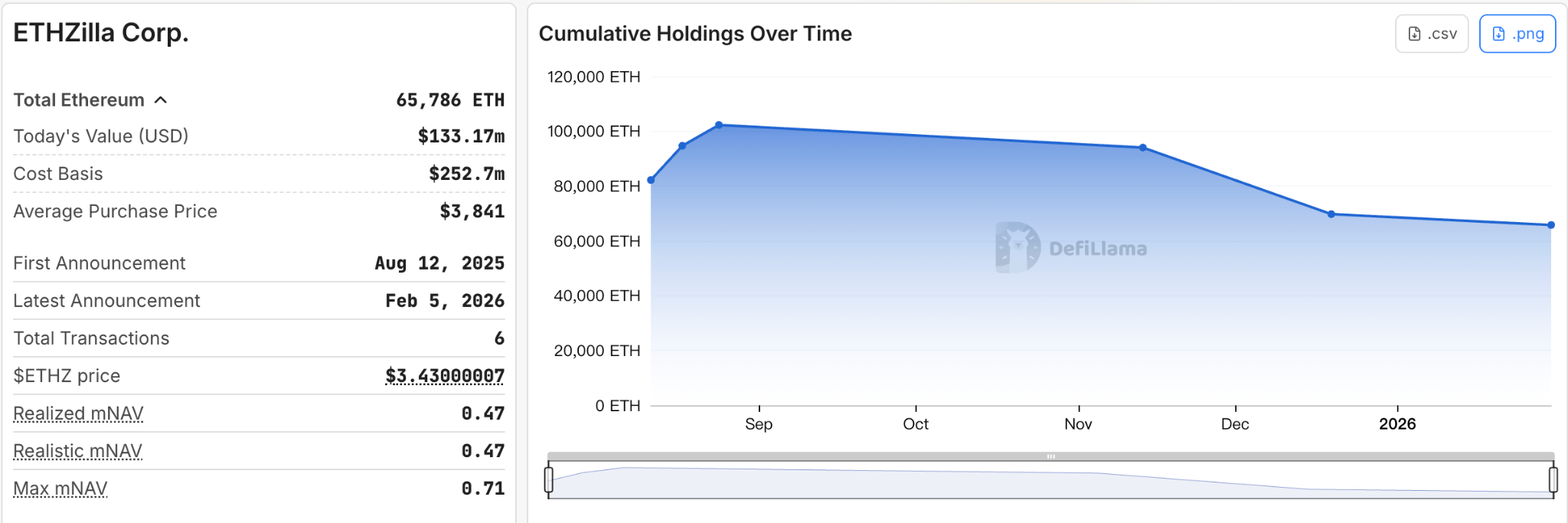
Similar to Empery, ETHZilla also embarked on the path of被迫卖币去杠杆 (forced coin selling for deleveraging). But the company is accelerating its转型 (transformation) towards RWA (Real World Asset tokenization), focusing on auto loans, home loans, land/commercial real estate, etc., with its first RWA token product expected to launch in early 2026, attempting to重塑价值 (reshape value) through business innovation.

Conclusion

The above are just a few representative samples, most of which are in the middle tier of the industry. They neither have the capital market pricing power of a company like Strategy, nor can they exit the stage悄无声息地 (silently) like the smallest companies. Beyond them, some smaller, structurally weaker DAT companies have already悄然消失 (quietly disappeared) in this round of correction;还有一些 (there are also) some companies that originally planned to transform but hadn't真正落地 (truly implemented) a treasury strategy, and have chosen to press the pause button after the financing environment suddenly tightened, even announcing termination before the project even started.

The 2026 correction acts like a mirror, reflecting the fragility and resilience of the DAT model. Those companies that relied purely on "storytelling + leverage" to rise are now paying the price for their aggressive expansion. Crypto faith may still exist, but it must ultimately coexist with the reality of cash flow, leverage management, and business sustainability.

The gap between top players and small and medium-sized companies is being持续拉大 (continuously widened) in this process. Rather than saying this is the end of the DAT model, it is more like the starting point of its stratification phase.


Пов'язані питання

QWhat is the main reason why some DAT companies are selling their Bitcoin holdings in 2026?

AThe main reason is that the price of Bitcoin has plummeted by nearly 50% from its 2025 high, causing these companies to face massive paper losses. Many, especially smaller or highly leveraged ones, are being forced to sell their crypto assets to repay debt, reduce financial leverage, and alleviate cash flow pressure.

QWhich company was the first DAT company to publicly admit to selling Bitcoin to repay debt, according to the article?

ASequans Communications S.A. (NYSE: SQNS) was the first DAT company to publicly acknowledge selling Bitcoin (970 BTC) to redeem a portion of its convertible bonds, marking a turning point for the industry.

QHow did Cango Inc. use the proceeds from its sale of 4,451 Bitcoin?

ACango Inc. used the approximately $305 million in net proceeds from the sale entirely to repay a loan that was collateralized by Bitcoin.

QWhat new business direction is ETHZilla Corporation pursuing after selling part of its ETH holdings?

AFollowing the sale of some of its ETH holdings, ETHZilla Corporation is accelerating its transition into the RWA (Real World Asset tokenization) sector, focusing on areas like auto loans, home loans, and land/commercial real estate.

QHow has Bitdeer Technologies Group's Bitcoin strategy changed in response to market conditions?

ABitdeer Technologies Group has shifted its strategy from a pure 'HODL' approach to 'mine and sell,' opting to partially liquidate its mined Bitcoin to prioritize maintaining cash flow and operational stability over long-term holding.

Пов'язані матеріали

South Korean Exchanges 'Battle' Regulators, Challenging the Boundaries of Enforcement and Legislation

South Korea's cryptocurrency industry is engaged in a rare, direct confrontation with regulators. The Financial Intelligence Unit (FIU), the primary anti-money laundering (AML) watchdog, has recently imposed heavy penalties on major exchanges like Upbit and Bithumb for alleged violations involving unregistered overseas VASPs and AML procedures. However, exchanges are now actively challenging these actions in court and through industry associations. In a significant shift, the Seoul Administrative Court ruled in favor of Upbit's operator, Dunamu, overturning part of an FIU-ordered business suspension. The court found the FIU's penalty criteria and justification insufficiently clear. Similarly, the court suspended the enforcement of a six-month business suspension against Bithumb pending a final ruling, citing potential irreversible harm to the exchange. Beyond legal battles, the industry is contesting proposed legislative amendments. The Digital Asset eXchange Alliance (DAXA) strongly opposes a draft rule that would mandate Suspicious Transaction Reports (STRs) for all crypto transfers over 10 million KRW (~$6,800). DAXA argues this "poison pill" clause violates legal principles and would overwhelm the STR system, increasing reports from 63,000 to an estimated 5.45 million annually for major exchanges, thereby crippling effective AML monitoring. This conflict highlights a structural tension in South Korea's crypto governance: comprehensive digital asset laws are still developing, while regulators rely heavily on AML enforcement. The industry's move from passive compliance to active legal and legislative challenges signifies a new phase, pressing for clearer rules and more proportionate enforcement. While short-term disputes may intensify, this clash could ultimately lead to a more mature and sustainable regulatory framework for South Korea's vibrant crypto market.

marsbit50 хв тому

South Korean Exchanges 'Battle' Regulators, Challenging the Boundaries of Enforcement and Legislation

marsbit50 хв тому

After 50x Storage Surge, Justin Sun Always Looks to the Next Decade

Sun Yuchen, known for his controversial stunts like a $30 million lunch with Warren Buffett (canceled due to a kidney stone) and eating a $6.2 million duct-taped banana, is often overshadowed by a significant fact: his decade-long track record of spotting major investment trends. In 2016, he famously advised young people to invest in Bitcoin, Nvidia, Tesla, and Tencent instead of buying property. A hypothetical $20,000 investment in Nvidia and Tesla from that list would now be worth over 50 million RMB. His latest major call was on November 6, 2025, predicting a "50x storage opportunity" tied to the AI boom, which materialized with Sandisk's stock surging nearly 50-fold by 2026. Looking ahead, Sun now focuses on the next frontier: Physical AI. He identifies four key areas: 1. **Embodied AI/Robotics**: He sees this reaching its "iPhone moment," with companies like UBTech and Galaxy General leading in commercialization. 2. **Drones**: Viewed as the first commercially viable form of Physical AI, revolutionizing sectors from warfare (e.g., AeroVironment's Switchblade) to logistics. 3. **Spatial Computing**: Beyond VR, it's about AI understanding physical space, a foundational technology for robotics and autonomous systems, exemplified by Apple's Vision Pro. 4. **Space Exploration**: After a 2025 suborbital flight with Blue Origin, Sun advocates for space as the ultimate frontier, discussing blockchain's potential role in space asset management and data transactions. His investment philosophy involves betting on entire, inevitable trends rather than single companies. For robotics, he sees Tesla (the body/manufacturer) and Nvidia (the brain/AI platform) as complementary plays. In defense drones, he highlights companies making tanks obsolete (AeroVironment) and those augmenting fighter jets (Kratos). For space, he participated in Blue Origin's flight and anticipates SpaceX's potential IPO to redefine the sector's valuation. Sun Yuchen's vision frames the next two decades not as a revolution in information flow (like the internet), but in the fundamental operation of the physical world through AI-powered robots, autonomous systems, and spatial intelligence, ultimately extending human and AI activity into space. While many still focus on conventional assets, he continues to look toward the next technological horizon.

marsbit1 год тому

After 50x Storage Surge, Justin Sun Always Looks to the Next Decade

marsbit1 год тому

The Billionaires Behind the Most Expensive Midterm Election in History

"The Most Expensive Midterm Elections and Their Billionaire Backers" This analysis details the unprecedented scale of spending in the 2026 midterm elections, highlighting the key billionaire donors shaping the political landscape. Jeff Yass, founder of Susquehanna International Group, has contributed over $81 million, ranking third among individual donors behind George Soros ($102.6M) and Elon Musk ($84.8M). Yass is a major donor to Trump's MAGA Inc. and supports school choice and various candidates. Overall, federal committees have raised over $4.7 billion this cycle, with political ad spending projected to reach $10.8 billion. Republican-aligned groups are significantly out-raising their Democratic counterparts. "Dark money" from undisclosed sources continues to grow. The core stakes involve control of Congress and policy direction for Trump's final term. Donors are also motivated by specific issues: Sergey Brin and Chris Larsen are funding opposition to a proposed California wealth tax and supporting crypto-friendly policies. Other top donors include OpenAI's Greg Brockman and his wife Anna ($50M total to MAGA Inc. and an AI-focused PAC), Richard Uihlein ($45.3M to conservative causes), venture capitalists Marc Andreessen and Ben Horowitz (each over $44M to crypto/AI PACs and MAGA Inc.), Miriam Adelson ($42.6M to GOP leadership PACs), Paul Singer ($33.9M), and Diane Hendricks ($25.8M to MAGA Inc.). The article notes that the peak fundraising period is still ahead, with major primaries approaching.

marsbit1 год тому

The Billionaires Behind the Most Expensive Midterm Election in History

marsbit1 год тому

The Largest IPO in History Is Approaching, Surpassing SpaceX, 28 Years of AI Self-Iteration, Countdown to Intelligence Explosion

"Anthropic Nears Trillion-Dollar IPO, Fueled by Explosive Growth and 2028 'Intelligence Explosion' Warning Anthropic is considering a deal valuing the AI company near $1 trillion, potentially leading to one of the largest IPOs ever and surpassing SpaceX. Its revenue has skyrocketed, with Annual Recurring Revenue (ARR) reaching $45 billion in May 2026—a 500% increase in just five months. This vertical growth curve is attributed to its key products, Claude Code and Cowork, dominating AI coding and enterprise collaboration. Beyond commercial success, co-founder Jack Clark issued a pivotal warning in an interview: there is a greater than 50% chance that by the end of 2028, AI systems will achieve recursive self-improvement—the ability to autonomously build a 'better version' of themselves, initiating an 'intelligence explosion.' This prophecy underpins the company's astronomical valuation, as the market prices in the potential for transformative and disruptive AI. Further signaling its ambition, Anthropic formed a $1.5 billion joint venture with Goldman Sachs and Blackstone, aiming to disrupt traditional consulting firms like McKinsey by deploying Claude AI for complex strategic work. This move tests AI's capacity to replace high-level cognitive labor, a precursor to its predicted autonomous evolution. The narrative presents a dual future: unprecedented economic opportunity alongside significant risks like economic restructuring and security threats. Anthropic's meteoric rise and Clark's 2028 prediction frame the coming years as a countdown to a potential technological singularity."

marsbit2 год тому

The Largest IPO in History Is Approaching, Surpassing SpaceX, 28 Years of AI Self-Iteration, Countdown to Intelligence Explosion

marsbit2 год тому

Торгівля

Спот
Ф'ючерси

Популярні статті

Що таке BITCOIN

Розуміння HarryPotterObamaSonic10Inu (ERC-20) та його позиції у крипто-просторі Останніми роками ринок криптовалют спостерігав за зростанням популярності мем-коінів, які привертають інтерес не тільки трейдерів, але й тих, хто шукає спілкування та розважальну цінність. Серед цих унікальних токенів є HarryPotterObamaSonic10Inu (ERC-20), інтригуючий проект, що поєднує культурні посилання з тканинами криптовалюти. Ця стаття досліджує ключові аспекти HarryPotterObamaSonic10Inu, вивчаючи його механізми, спільноту та його взаємодію з ширшим крипто-ландшафтом. Що таке HarryPotterObamaSonic10Inu (ERC-20)? Як випливає з його назви, HarryPotterObamaSonic10Inu є мем-коіном, побудованим на блокчейні Ethereum, класифікованим за стандартом ERC-20. На відміну від традиційних криптовалют, які можуть підкреслювати практичну корисність або інвестиційний потенціал, цей токен процвітає завдяки розважальній цінності та силі своєї спільноти. Проект спрямований на створення середовища, де зацікавлені користувачі можуть об'єднуватися, ділитися ідеями та брати участь у заходах, натхненних різноманітними культурними явищами. Однією з примітних особливостей HarryPotterObamaSonic10Inu є нульовий податок на транзакції. Цей привабливий елемент має на меті заохочувати торгівлю та участь у спільноті, позбавлену додаткових витрат, які можуть відлякувати дрібних трейдерів. Загальна пропозиція монет становить один мільярд токенів, що позначає намір підтримувати суттєву циркуляцію в межах спільноти. Творець HarryPotterObamaSonic10Inu (ERC-20) Походження HarryPotterObamaSonic10Inu дещо окутане таємницею; деталі про творця залишаються невідомими. Розвиток цього токена позбавлений впізнаваної команди або чіткої стратегії, що не є рідкістю в секторі мем-коінів. Натомість проект виник органічно, а його розвиток значною мірою залежить від ентузіазму та участі його спільноти. Інвестори HarryPotterObamaSonic10Inu (ERC-20) Щодо зовнішніх інвестицій та підтримки, HarryPotterObamaSonic10Inu також залишається невизначеним. Токен не зазначає жодних відомих інвестиційних фондів або значної організаційної підтримки. Натомість життєва сила проекту полягає в його базовій спільноті, яка інформує про його зростання та стійкість через колективні дії та залученість у крипто-просторі. Як працює HarryPotterObamaSonic10Inu (ERC-20)? Як мем-коін, HarryPotterObamaSonic10Inu функціонує передусім поза традиційними рамками, що часто регулюють вартість активів. Є кілька відмінних аспектів, що визначають, як працює проект: Транзакції без податку: Завдяки відсутності податкових зборів на транзакції, користувачі можуть вільно купувати та продавати токен, не турбуючись про приховані витрати. Залучення спільноти: Проект процвітає завдяки взаємодії спільноти, використовуючи соціальні медіа для створення шуму та сприяння залученню. Обговорення, обмін контентом та залученість є ключовими елементами, що допомагають розширити його охоплення та зміцнити лояльність серед прихильників. Відсутність практичної корисності: Слід зазначити, що HarryPotterObamaSonic10Inu не пропонує конкретної корисності в рамках фінансової екосистеми. Натомість він класифікується як токен, що призначений в основному для розваги та спільнотних активностей. Культурне посилання: Токен кмітливо вплітає елементи популярної культури, щоб привернути інтерес, зв'язуючи з ентузіастами мемів та крипто-стежками. HarryPotterObamaSonic10Inu ілюструє, як мем-коіни функціонують інакше, ніж традиційні криптовалютні проекти, увійшовши на ринок як інноваційні соціальні конструкти, а не утилітарні активи. Хронологія HarryPotterObamaSonic10Inu (ERC-20) Історія HarryPotterObamaSonic10Inu відзначена кількома значними етапами: Створення: Токен виник з вірусного мему, захопивши уяву багатьох крипто-ентузіастів. Конкретні дати створення недоступні, що підкреслює його органічний розвиток. Лістинг на біржах: HarryPotterObamaSonic10Inu з'явився на різних біржах, дозволяючи зручніший доступ і торгівлю спільноти. Ініціативи залучення спільноти: Ведення діяльності, спрямованої на покращення взаємодії спільноти, включаючи конкурси, кампанії в соціальних мережах та створення контенту від фанатів та прихильників. Плани на майбутнє: Дорожня карта проекту включає запуск колекції NFT, мерчандайзинг та електронну комерцію, пов'язану з його культурними темами, що далі залучає спільноту та намагається додати більше вимірів до його екосистеми. Ключові моменти про HarryPotterObamaSonic10Inu (ERC-20) Спільнотний підхід: Проект надає пріоритет колективному внеску та креативності, забезпечуючи, щоб участь користувачів була в центрі його розвитку. Класифікація як мем-коін: Це є його епігенез розважальної криптовалюти, що відрізняється від традиційних інвестиційних інструментів. Жодного прямого відношення до Bitcoin: Незважаючи на схожість у назві, HarryPotterObamaSonic10Inu є відмінним і не має жодного зв’язку з Bitcoin або іншими усталеними криптовалютами. Зосередженість на співпраці: HarryPotterObamaSonic10Inu створено для того, щоб надати простір для співпраці та обміну історіями серед його власників, забезпечуючи шлях для творчості та спільного зв'язку. Перспективи на майбутнє: Амбіція розширитися за межі початкової концепції в NFT та мерчандайз відкриває шлях для проекту потенційно потрапити в більш мейнстрімні сфери цифрової культури. Оскільки мем-коіни продовжують захоплювати уяву спільноти криптовалют, HarryPotterObamaSonic10Inu (ERC-20) вирізняється своїми культурними зв'язками та орієнтованим на спільноту підходом. Хоча він може не відповідати типовій моделі утилітарного токена, його суть полягає в радощах і товариськості, що підтримуються серед його прихильників, підкреслюючи еволюційну природу криптовалют в усе більш цифрову епоху. Оскільки проект продовжує розвиватися, важливо спостерігати за тим, як динаміка спільноти вплине на його траєкторію в постійно змінюваному ландшафті технології блокчейн.

1.8k переглядів усьогоОпубліковано 2024.04.01Оновлено 2024.12.03

Що таке BITCOIN

Як купити BTC

Ласкаво просимо до HTX.com! Ми зробили покупку Bitcoin (BTC) простою та зручною. Дотримуйтесь нашої покрокової інструкції, щоб розпочати свою криптовалютну подорож.Крок 1: Створіть обліковий запис на HTXВикористовуйте свою електронну пошту або номер телефону, щоб зареєструвати обліковий запис на HTX безплатно. Пройдіть безпроблемну реєстрацію й отримайте доступ до всіх функцій.ЗареєструватисьКрок 2: Перейдіть до розділу Купити крипту і виберіть спосіб оплатиКредитна/дебетова картка: використовуйте вашу картку Visa або Mastercard, щоб миттєво купити Bitcoin (BTC).Баланс: використовуйте кошти з балансу вашого рахунку HTX для безперешкодної торгівлі.Треті особи: ми додали популярні способи оплати, такі як Google Pay та Apple Pay, щоб підвищити зручність.P2P: Торгуйте безпосередньо з іншими користувачами на HTX.Позабіржова торгівля (OTC): ми пропонуємо індивідуальні послуги та конкурентні обмінні курси для трейдерів.Крок 3: Зберігайте свої Bitcoin (BTC)Після придбання Bitcoin (BTC) збережіть його у своєму обліковому записі на HTX. Крім того, ви можете відправити його в інше місце за допомогою блокчейн-переказу або використовувати його для торгівлі іншими криптовалютами.Крок 4: Торгівля Bitcoin (BTC)Легко торгуйте Bitcoin (BTC) на спотовому ринку HTX. Просто увійдіть до свого облікового запису, виберіть торгову пару, укладайте угоди та спостерігайте за ними в режимі реального часу. Ми пропонуємо зручний досвід як для початківців, так і для досвідчених трейдерів.

4.5k переглядів усьогоОпубліковано 2024.12.12Оновлено 2025.03.21

Як купити BTC

Що таке $BITCOIN

ЦИФРОВЕ ЗОЛОТО ($BITCOIN): Комплексний аналіз Вступ до ЦИФРОВОГО ЗОЛОТА ($BITCOIN) ЦИФРОВЕ ЗОЛОТО ($BITCOIN) — це проект на основі блокчейну, що працює в мережі Solana, який має на меті поєднати характеристики традиційних дорогоцінних металів з інноваціями децентралізованих технологій. Хоча він має таку ж назву, як і Bitcoin, який часто називають “цифровим золотом” через його сприйняття як засобу збереження вартості, ЦИФРОВЕ ЗОЛОТО є окремим токеном, розробленим для створення унікальної екосистеми в ландшафті Web3. Його мета — позиціонувати себе як життєздатний альтернативний цифровий актив, хоча деталі щодо його застосувань і функціональностей все ще розробляються. Що таке ЦИФРОВЕ ЗОЛОТО ($BITCOIN)? ЦИФРОВЕ ЗОЛОТО ($BITCOIN) — це токен криптовалюти, спеціально розроблений для використання в блокчейні Solana. На відміну від Bitcoin, який виконує широко визнану роль зберігання вартості, цей токен, здається, зосереджується на більш широких застосуваннях і характеристиках. Помітні аспекти включають: Інфраструктура блокчейну: Токен побудований на блокчейні Solana, відомому своєю здатністю обробляти швидкі та низьковартісні транзакції. Динаміка постачання: ЦИФРОВЕ ЗОЛОТО має максимальне постачання, обмежене 100 квадрильйонами токенів (100P $BITCOIN), хоча деталі щодо його обігового постачання наразі не розголошуються. Утиліта: Хоча точні функціональності не викладені, є вказівки на те, що токен може бути використаний для різних застосувань, потенційно пов'язаних з децентралізованими додатками (dApps) або стратегіями токенізації активів. Хто є творцем ЦИФРОВОГО ЗОЛОТА ($BITCOIN)? На даний момент особа творців і команди розробників, що стоять за ЦИФРОВИМ ЗОЛОТОМ ($BITCOIN), залишається невідомою. Ця ситуація є типовою для багатьох інноваційних проектів у сфері блокчейну, особливо тих, що пов'язані з децентралізованими фінансами та феноменом мем-коінів. Хоча така анонімність може сприяти культурі, орієнтованій на спільноту, вона посилює занепокоєння щодо управління та підзвітності. Хто є інвесторами ЦИФРОВОГО ЗОЛОТА ($BITCOIN)? Доступна інформація вказує на те, що ЦИФРОВЕ ЗОЛОТО ($BITCOIN) не має жодних відомих інституційних спонсорів або помітних венчурних капіталовкладень. Проект, здається, працює за моделлю “рівний до рівного”, зосереджуючись на підтримці та прийнятті спільноти, а не на традиційних шляхах фінансування. Його активність і ліквідність переважно розташовані на децентралізованих біржах (DEX), таких як PumpSwap, а не на встановлених централізованих торгових платформах, що ще більше підкреслює його підхід знизу вгору. Як працює ЦИФРОВЕ ЗОЛОТО ($BITCOIN) Операційні механізми ЦИФРОВОГО ЗОЛОТА ($BITCOIN) можна детальніше розглянути на основі його дизайну блокчейну та характеристик мережі: Механізм консенсусу: Використовуючи унікальний proof-of-history (PoH) Solana в поєднанні з моделлю proof-of-stake (PoS), проект забезпечує ефективну валідацію транзакцій, що сприяє високій продуктивності мережі. Токеноміка: Хоча конкретні дефляційні механізми не були детально описані, велике максимальне постачання токенів вказує на те, що воно може задовольняти мікротранзакції або нішеві випадки використання, які ще потрібно визначити. Інтероперабельність: Існує потенціал для інтеграції з більш широкою екосистемою Solana, включаючи різні платформи децентралізованих фінансів (DeFi). Однак деталі щодо конкретних інтеграцій залишаються невизначеними. Хронологія ключових подій Ось хронологія, яка підкреслює значні віхи, пов'язані з ЦИФРОВИМ ЗОЛОТОМ ($BITCOIN): 2023: Початкове розгортання токена відбувається на блокчейні Solana, позначене його адресою контракту. 2024: ЦИФРОВЕ ЗОЛОТО набуває видимості, оскільки стає доступним для торгівлі на децентралізованих біржах, таких як PumpSwap, що дозволяє користувачам торгувати ним проти SOL. 2025: Проект спостерігає спорадичну торгову активність і потенційний інтерес до ініціатив, очолюваних спільнотою, хоча на даний момент не зафіксовано жодних значних партнерств або технічних досягнень. Критичний аналіз Сильні сторони Масштабованість: Основна інфраструктура Solana підтримує високі обсяги транзакцій, що може підвищити утиліту $BITCOIN у різних сценаріях транзакцій. Доступність: Потенційно низька торгова ціна за токен може привабити роздрібних інвесторів, сприяючи більш широкій участі завдяки можливостям дробового володіння. Ризики Відсутність прозорості: Відсутність публічно відомих спонсорів, розробників або процесу аудиту може викликати скептицизм щодо стійкості та надійності проекту. Волатильність ринку: Торгова активність сильно залежить від спекулятивної поведінки, що може призвести до значної волатильності цін і невизначеності для інвесторів. Висновок ЦИФРОВЕ ЗОЛОТО ($BITCOIN) постає як цікавій, але неоднозначний проект у швидко розвиваючійся екосистемі Solana. Хоча він намагається використати наратив “цифрового золота”, його відхід від встановленої ролі Bitcoin як засобу збереження вартості підкреслює необхідність чіткішого розмежування його передбачуваної утиліти та структури управління. Майбутнє прийняття та адаптація, ймовірно, залежатиме від вирішення поточної непрозорості та більш чіткого визначення його операційних та економічних стратегій. Примітка: Цей звіт охоплює синтезовану інформацію, доступну станом на жовтень 2023 року, і можуть відбутися події, що виходять за межі дослідницького періоду.

75 переглядів усьогоОпубліковано 2025.05.13Оновлено 2025.05.13

Що таке $BITCOIN

Обговорення

Ласкаво просимо до спільноти HTX. Тут ви можете бути в курсі останніх подій розвитку платформи та отримати доступ до професійної ринкової інформації. Нижче представлені думки користувачів щодо ціни BTC (BTC).

活动图片













