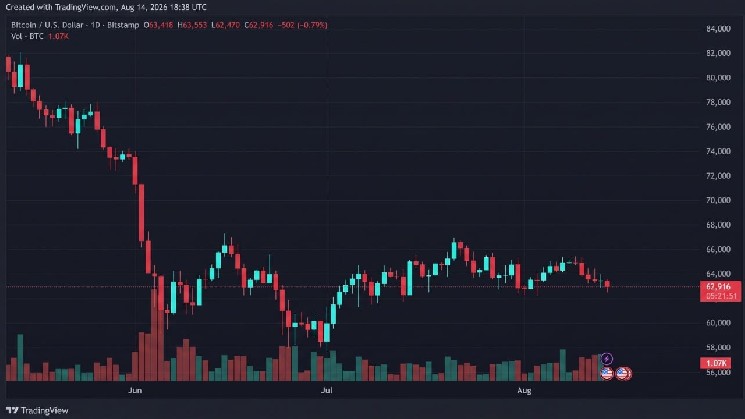
The hashrate of the Bitcoin network – the total computational power securing the blockchain – has declined significantly this year compared to record levels. CryptoQuant analyst Maartunn estimated this decline at 17% from the all-time high, while data from other services shows the hashrate has dropped from a peak in late 2025 exceeding one zettahash per second to values ranging from 850 to 920 exahashes per second during the summer.

Hashrate estimates vary among data providers depending on the averaging period used, as this metric is calculated based on block formation times rather than measured directly. However, the overall trend observed by all monitoring services points in the same direction: the computational power dedicated to Bitcoin mining has decreased compared to levels several months ago.
Mining difficulty – an indicator that adjusts every two weeks to keep the block formation time close to the 10-minute average, regardless of the participating hashrate – has moved in the same direction. According to one analysis, as of early August, difficulty was a full 19.9% lower than its record value, indicating a sharper decline than the hashrate metric.
This downturn followed a challenging period for miners in terms of profitability. It is estimated that by the end of March, publicly traded mining companies were losing about $19,000 on every Bitcoin mined, with an average weighted cost of production around $80,000 per coin, while the spot price at that time was significantly below that level.
Furthermore, public miners sold a record 32,000 BTC in just the first quarter – more than they sold in all four quarters of 2025 combined – as many opted to raise cash rather than continue increasing hashrate in a market where mining had become unprofitable at the current difficulty and electricity costs.
Miners Become 'Landlords' in the AI Sector
Hut 8, Core Scientific, TeraWulf, and IREN are among the mining companies that have signed multi-billion dollar agreements over the past year to host artificial intelligence (AI) and high-performance computing (HPC) infrastructure. Hut 8's portfolio of AI infrastructure contracts alone has grown to $26.6 billion, while across the public mining sector, the aggregate value of AI and HPC contracts currently exceeds $70 billion.
The logic is simple: mining facilities already possess two things AI data centers need most – access to cheap electricity and existing grid connections – making their repurposing much faster than building new AI infrastructure from scratch. Research firm CoinShares stated that by the end of 2026, publicly listed mining companies could derive up to 70% of their revenue from AI and HPC work, compared to roughly 30% at the time of the firm's latest mining report publication.
This represents a fundamental shift for an industry that has defined itself primarily by hashrate for over a decade.
In addition to Hut 8, companies like Core Scientific and TeraWulf have also signed multi-year, multi-billion dollar hosting agreements with AI and cloud computing clients – these deals guarantee predictable revenue for years to come in exchange for allocating power capacity that would otherwise be directed towards new mining rigs.
Investors appear to be viewing this shift positively, even as Bitcoin mining economics remain weak. A basket of mining company stocks has risen about 56% since the start of 2026, while the price of Bitcoin has fallen about 17% over the same period. CoinShares still forecasts that the hashrate could climb back to 1.8 zettahashes per second by the end of 2026, but this prediction depends on a recovery in Bitcoin's price to $100,000, which would restore mining profitability and give companies a reason to reinvest in hashrate rather than AI hosting.
end-content