Belarus Opens Door To Crypto Banks With New Presidential Decree

bitcoinistОпубліковано о 2026-01-17Востаннє оновлено о 2026-01-17

Анотація

Belarus has taken a significant step toward integrating cryptocurrency with traditional finance by issuing Presidential Decree No. 19, which establishes a legal framework for "cryptobanks." These entities, defined as joint-stock companies, will be permitted to conduct token operations alongside conventional banking and payment services. To operate, cryptobanks must be residents of the Belarus High-Tech Park (HTP) and will be registered in a special National Bank list. They will be subject to dual oversight from both the National Bank and HTP authorities, adhering to standards on capital, risk management, and anti-money laundering. Officials anticipate the first cryptobank could launch within six months, offering services such as crypto-backed loans, crypto-linked payment cards, and token salary payments for self-employed individuals. The move reinforces Belarus's strategy to formalize and attract digital asset businesses.

Belarus took a major step on January 16, 2026, when President Aleksandr Lukashenko signed Decree No. 19 to set rules for so-called “cryptobanks.” The move creates a clear legal spot for companies that want to mix token services with classic banking and payment work.

Decree Defines Cryptobanks And Rules

According to the decree, a cryptobank is a joint-stock company that may carry out token operations alongside banking, payment and other financial services.

Reports have disclosed that these firms must be residents of the Belarus High-Tech Park (HTP) and will be listed in a special register kept by the National Bank.

The new document ties cryptobank status to HTP residency, which aims to concentrate activity inside a known tech zone. That requirement also means the HTP’s rules will play a role in daily oversight.

Requirements For Market Entry

Based on reports from regulators, cryptobanks will face dual supervision: oversight from both the National Bank of the Republic of Belarus and the HTP’s governing bodies. This twin structure is meant to let token services grow while keeping closer control of financial risks.

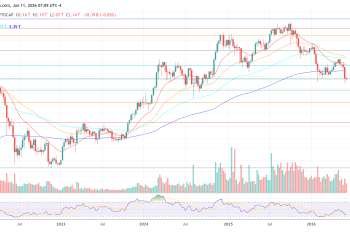
BTCUSD trading at $95,519 on the 24-hour chart: TradingView

Officials say cryptobanks will follow many of the rules that apply to non-bank credit and financial organizations, including standards for capital, risk controls and anti-money-laundering checks.

That suggests applicants will need to show robust compliance systems before being accepted into the register.

Image: Altorise

Belarus: Short-Term Business Plans

National Bank officials said that the decree could be followed by real market steps fast. Aliaksandr Yahorau, the First Deputy Chairman of the National Bank, said Belarus could see its first operating cryptobank within six months after laws and rules are aligned.

He added that cryptobanks may be able to issue loans secured by cryptocurrency, provide payment cards linked to crypto accounts, and allow self-employed people to receive salaries in tokens.

What Comes Next For Belarus

The decree builds on earlier efforts to attract tech and crypto business to Belarus, and it clearly signals a state interest in bringing token activity under formal control.

The next steps will include drafting implementing rules, creating the special registry at the National Bank, and deciding capital and licensing thresholds for applicants.

Featured image from Unsplash, chart from TradingView

Пов'язані питання

QWhat is the main purpose of Decree No. 19 signed by President Aleksandr Lukashenko on January 16, 2026?

AThe main purpose of Decree No. 19 is to create a clear legal framework for 'cryptobanks,' which are companies that combine token operations with traditional banking and payment services.

QWhat are the two supervisory bodies that will oversee cryptobanks in Belarus?

ACryptobanks will be under the dual supervision of the National Bank of the Republic of Belarus and the governing bodies of the High-Tech Park (HTP).

QWhat is a key requirement for a company to be recognized as a cryptobank in Belarus?

AA key requirement is that the company must be a resident of the Belarus High-Tech Park (HTP) and will be listed in a special register maintained by the National Bank.

QAccording to the First Deputy Chairman of the National Bank, what are some of the services that cryptobanks may be able to provide?

ACryptobanks may be able to issue loans secured by cryptocurrency, provide payment cards linked to crypto accounts, and allow self-employed people to receive salaries in tokens.

QWhat are the next steps following the signing of the presidential decree on cryptobanks?

AThe next steps include drafting implementing rules, creating the special registry at the National Bank, and deciding on the capital and licensing thresholds for applicants.

Пов'язані матеріали

Can Generative Models Finally Be Trained End-to-End? The Core Is a For Loop

This article introduces a novel training paradigm for generative models called Explorative Modeling (XM), which enables true end-to-end training. Traditionally, powerful generative models like autoregressive and diffusion models are not trained end-to-end. They are trained to predict a single small step but require iterative multi-step sampling for inference. This "exposure bias" leads to error accumulation and limits performance. The core challenge XM addresses is "mode blurring." In generative tasks, a single input (e.g., "generate a dog") corresponds to many valid outputs (multiple modes). Standard training objectives like reconstruction loss force the model to average these modes, producing unrealistic, blurry outputs. To avoid this, existing models break generation into many small, almost deterministic steps, sacrificing end-to-end training. XM tackles this by restructuring the training loop itself. Its key insight is to amplify "generative expressivity." For each training input, instead of generating one sample, the model generates K candidate outputs. Only the candidate closest to the real data is used for computing the loss and updating the model via backpropagation. This simple "best-of-K" mechanism is implemented as a short for-loop. By exploring multiple possibilities, the model learns to distribute its guesses across different modes rather than collapsing to their uninformative average. The paper demonstrates that "exploration" acts as a new, powerful scaling axis. Gains from XM increase with model size, data scale, and compute. Experiments show improvements in FID scores for image generation and significant efficiency gains, sometimes outperforming larger models without exploration. When pushed to the limit, XM enables fully single-step, end-to-end generative models. In robotics tasks, an "Explorative Policy" matched the performance of a 100-step Diffusion Policy with a single forward pass, drastically improving inference speed. While the best-of-K concept is not entirely new, the authors' contribution lies in formally understanding it as a direct method to boost generative expressivity without fragmenting the generation process. This work suggests that as models scale, enhancing exploration during training may become crucial for overcoming fundamental performance bottlenecks.

marsbit10 хв тому

Can Generative Models Finally Be Trained End-to-End? The Core Is a For Loop

marsbit10 хв тому

Annual Salary of Millions Competing for Electricians, Meta Rushes to Open Its Own Technical School

The AI boom is facing an unexpected bottleneck: a severe shortage of skilled construction workers and electricians. As tech giants like Meta, OpenAI, and Alphabet race to build massive data centers—such as OpenAI's $16 billion "Stargate" project—they are hitting a critical labor wall. The U.S. needs an estimated 130,000 more electricians, 240,000 construction workers, and 150,000 supervisors by 2030 for AI infrastructure alone, but tens of thousands of electrician jobs go unfilled each year. While AI companies offer high premiums, with electricians earning up to $280,000 annually, worker scarcity still causes massive losses—delays on a single project can cost $14.2 million per month. The complexity of building AI data centers, which require immense power (equivalent to powering hundreds of thousands of homes), sophisticated electrical systems, and advanced liquid cooling solutions, demands highly skilled technicians who are in short supply. To combat this, companies are investing heavily in training. Meta has committed $115 million to a free training school offering tuition, housing, and stipends, targeting 5,000 new workers. OpenAI is partnering with unions to secure skilled labor. These efforts are paying off, with a significant rise in Gen Z interest in trade schools over college. However, the power demands are staggering. AI data centers are driving a rapid surge in electricity consumption, projected to account for up to 12% of U.S. power use by 2028 and raising costs for consumers. Furthermore, the construction boom is project-based, leading to a potential future glut of trained workers once building peaks, which could depress wages industry-wide. The race for AI supremacy now depends as much on skilled hands as on advanced chips.

marsbit1 год тому

Annual Salary of Millions Competing for Electricians, Meta Rushes to Open Its Own Technical School

marsbit1 год тому

Торгівля

Спот
活动图片