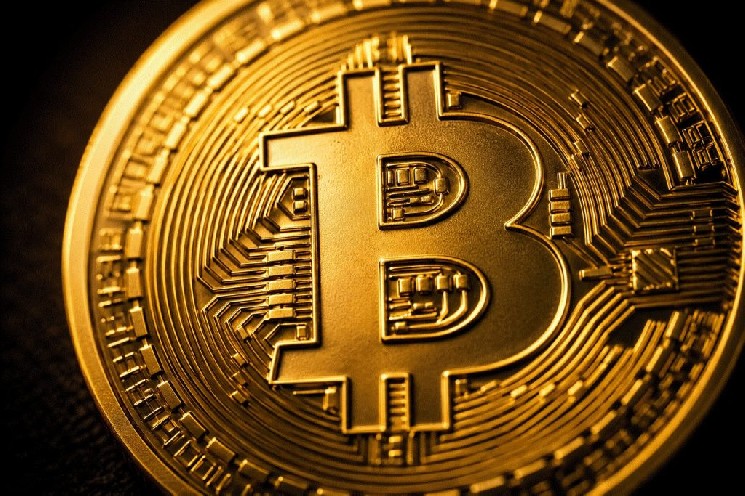
Arthur Hayes has liquidated his largest crypto positions—HYPE, NEAR, Worldcoin, and Zcash—not due to reasons intrinsic to crypto, but rather a macro reasoning chain that stretches from oil prices, the Iran war, Trump's mid-term election strategy, to the bursting of the AI bubble.
He believes Trump may reverse his stance and attack the AI industry to regain an advantage in the mid-term elections, and once the AI bubble peaks, the crypto market cannot remain unscathed; SpaceX's IPO at a $1.8 trillion valuation and a 100x price-to-sales ratio is, in his view, a ticking liquidity time bomb destined to detonate.
Highlights Summary
Why Liquidate Everything
· "Voters don't like high oil prices, they don't like energy-driven inflation rising."
· "The higher oil prices go, the more eager everyone is to negotiate, and then once oil prices drop, suddenly no one wants to reach an agreement."
Trump's Pivot Against AI
· "If he wants to pull a rabbit out of a hat, the only issue he can flip on is AI—temporarily taking up the Democrats' microphone, saying he wants to protect the American people from AI, and then everyone will forget it was the Republicans who financed all of this."
· "The most devastating thing to the AI narrative is taxes and regulation."
New Portfolio Allocation
· "Most of my liquid assets are in Treasuries and energy stocks."
· "I'm not saying AI won't continue to grow, but the market's willingness to pay forward multiples for that growth will decline, so the prices of these assets will fall."
The Math of the AI Capital Expenditure Bubble
· "I trade based on feel and instinct, not much on analysis. I feel like we are in some stage of an AI bubble, I'm not sure which stage."
· "You can't pay a 100x sales valuation for SpaceX or any AI company while both earnings and capital expenditures are decelerating. The key is how fast the growth is, what the rate of change is, and your perception of that rate of change."
· "When you invest in AI, you're not investing in earnings, you're investing in data center capex construction—you're betting on the second derivative, the acceleration or deceleration of the trend. If the trend is accelerating, you're willing to pay infinite multiples for forward revenue; if it's decelerating, you're not."
· "We've already reached an $800 billion capex scale by 2026. By 2027, this second derivative will start to decelerate—you can't pay 100x sales for SpaceX or any AI company while both earnings and expenditures are decelerating."
· "There will always be a conflict between capital and labor, whether you're voluntary or forced, at some point some sort of deal will be reached."
Why Bitcoin Underperformed AI
· "Since ChatGPT's commercialization until now, US M2 has increased by about $1.5 trillion, but AI and AI-related companies have issued about $1.5 trillion in debt during the same period—with $1.3 trillion concentrated between 2025 and 2026. AI has sucked up all the excess liquidity."
· "When a bubble bursts, all correlations go to 1—AI falls, Bitcoin falls, all assets fall together, until the dust settles and then certain specific assets start to outperform."
· "Over the next six months, due to rising oil prices and US politics, the AI complex will undergo a major correction, and Bitcoin cannot escape it either."
The Trap of the SpaceX IPO
· "The market's expectation isn't that it trades normally; the market expects this to be an IPO, it needs to surge 50%, it needs an outrageous pop to tell me the market still believes in AI, picked the right star company, and it will continue to soar."
· "SpaceX's IPO market cap around $1.8 trillion, it will directly become the seventh-largest company globally. SpaceX is trading at a valuation close to 100x price-to-sales. That's fucking ridiculous, it will be the seventh-largest company in the world and hasn't proven anything."
· "This is a classic crypto scam model: low float, high fully diluted valuation, 4% to 5% float, climbing to nearly 25% by September—insiders will be continuously dumping on you from July to October."
Evidence for an Anti-AI Strategy
· "I had Perplexity AI search all the competitive districts for any information on data center construction restrictions or local opposition legislation. The result: if Trump goes anti-AI, it would be enough for him to flip enough seats to keep the House."
· "Trump has no ideology, he only cares about winning. He sent checks to every American in 2020—that was the purest form of direct helicopter money. So don't think he won't pivot to naked populism."
The Fed, Wall, and Interest Rate Risk
· "Oil prices are higher and won't come down in the near term, the two-year Treasury yield is currently about 60 basis points above the effective federal funds rate. The market is telling the Fed: you need to hike rates."
· "What bubbles fear most is rising interest rates, the rise in the cost of capital always, in some form, prompts people to leave the casino."
· "Currently, I don't see room for Wall to cut rates. If the expectation of rate cuts is one of the pillars supporting your optimism about the AI bubble and its continuation, I think you need to seriously question that assumption."
Cryptocurrency Catalysts and Re-entry Timing
· "I genuinely don't see many signs of money printing, and even if there is money printing, it's directly flowing into AI construction."
· "If we return to the perfect economic environment of high growth and low inflation, what would you buy? Would you buy Nvidia or Bitcoin? You'd choose Nvidia without hesitation, you'd choose Samsung, right? Because they're up 50x in two years or something. Would you buy Bitcoin? Of course not."
· "That's the moment when crypto can outperform—AI has been discredited, not that it ceases to exist, but it's not skyrocketing like before, so investors need to trade something else. I hope that something else is crypto, and then liquidity will flow back to crypto."
Quick Q&A
· "Bitcoin above or below $100k by year-end?—Below."
· "$1 million into any asset today—Bitcoin, HYPE, short-term Treasuries, gold?—ExxonMobil."
Why Liquidate Everything
Host Kyle Chasse:Arthur, welcome back. Recently you sold all your Zcash, HYPE, NEAR, everyone's calling you an exit scammer, pump and dump, etc. Why did you sell everything, what's going on.
Arthur Hayes:I just published an article called "Reality Check," about five thousand words, laying out the thesis I'll summarize in a few minutes on the podcast. If you want a deeper dive into my reasoning, I strongly suggest reading it on my Substack. But essentially, the core revolves around a reflexive interaction between oil prices and Trump's midterm election rhetoric—he needs to help the GOP defeat the Democrats in November, keep the House and Senate. The problem is this Iran war thing—whether you like it or not, it's there, it's here, it's now.
So Trump and the Iranian Revolutionary Guard Corps need some sort of deal to end this conflict. And both sides have a real constraint: oil prices determine how angry different parts of the world are at each party. Trump has to worry domestically—voters don't like high oil prices, they don't like energy-driven inflation rising.
The Iranians face pressure from China and other developing countries—"What the hell are you doing? We need this oil, we need these commodities through the Strait of Hormuz. I know America attacked you, but figure it out." So the higher oil prices go, the more eager everyone is to negotiate, and then once oil prices drop, suddenly no one wants to reach an agreement. So we swing back and forth in this tug-of-war, for about three months now, or however long the war has been going.
As this process plays out, we are actually gradually depleting commercial and national stockpiles of oil and other hydrocarbons. Pick any energy analyst, their charts differ but the conclusion is the same—pre-war inventories were abundant, so people believed oil and gas were oversupplied, leading to relatively low prices.
But we are now drawing down those surpluses at an accelerating pace. We will reach some level at some point—I don't know how many billions of barrels, each analyst has their own number and projected date. Once we cross that date, things suddenly become very, very bad. And the only way to rebalance the market is to spike oil prices quickly.
That's the worst-case scenario—Trump and the IRGC can't reach a deal. By October this year, the Strait of Hormuz remains effectively blocked, only 25% to 30% of traffic gets through, but that's far from enough. The more likely scenario is, maybe some deal is reached in a month or two, and shipping through the strait resumes to some extent.
But then everyone needs to rebuild inventories, you have to rebuild national reserves, and of course you'll hoard more than before—because you just experienced firsthand what it's like to be at the complete mercy of Trump and a bunch of Iranian generals deciding whether your country receives commodities or not.
So you think: "I'm going to hoard more oil, gas, helium, everything needed to run a modern economy." This leads to more demand, which may not push prices to the highs of the disaster scenario, but still means oil, gas, and other commodity prices three or four months from now will be higher than today.
The Link Between Oil, War, and Elections
Arthur Hayes:Following this logic, Trump and his Republican buddies in this midterm election (November 2026), the House is likely to be lost. Go check the odds on Polymarket right now, the probability of Democrats retaking House control has skyrocketed to 82%.
Why is that? Clearly Trump is getting hammered on cost-of-living issues. People think inflation is bad and getting worse, and in the public's eye, Republicans are in the White House now, and this damn conflict and war are their doing, so naturally the blame falls on the GOP. That's why people think they'll lose, and lose badly.
The problem is you really can't do much about inflation—policy has long lags, supply chains are only now digesting what happened three or four months ago.
I don't think Trump can change much on the inflation narrative. People see and feel it at the gas pump, Trump has no Jedi mind trick to make you believe inflation doesn't exist—it does, you see it every other day when you fill up. So what other issue can stir the entire US political spectrum? The answer is AI data centers—regulation around them, taxes, all of that.
I think Democrats are finding a great campaign message: no more data centers, tax the AI giants, regulate AI. Because it's not just poor people losing jobs, rich people's jobs are being replaced by AI too, at least that's the fear.
Trump's Pivot Against AI
Arthur Hayes:If you, as the opposition party, can harness that fear, you have two powerful messages: one, the runaway inflation caused by the Republican war, and two, the AI construction boom essentially backed by Republican politicians. So my theory is, if Trump wants to pull a rabbit out of a hat, the only issue he can flip on is AI.
Take up the Democrats' microphone, say: "We're going to scrutinize data centers more, we're going to have an AI national dividend, tax them." That's Trumpian rhetoric, he can say a bunch of stuff, whether he does anything after November is another matter.
I think this is the only path they have a chance to win, positioning themselves as the party protecting Americans from AI, and then Americans will forget it was the Republicans who financed all of this, because people are forgetful. So I think this is the key risk.
And Trump's willingness to attack AI depends purely on oil prices, which in turn are the result of his reflexive relationship with the IRGC. The longer this war drags on without a solution, the more we accumulate commodity pressures that will cause price spikes in the future, the more likely Trump is to take aim at AI in an attempt to win the election, at least help the GOP keep the House.
Obviously, the most devastating thing to the AI narrative is taxes and regulation. We already saw it in South Korea, some Korean politician came out saying there should be some sort of national AI tax, and Cosby hit limit down that day.
So I think if this rhetoric starts being publicly pushed by the ruling party, especially by Trump, you'll see the AI bubble peak, at least over the next few months until the election, and that will drag the crypto market down with it. That's the overall core thesis. I really don't want to think about this anymore, so late last week I liquidated my entire portfolio.
New Portfolio Allocation
Host Kyle Chasse:Where are most of your liquid assets now, cash or Treasuries?
Arthur Hayes:Treasuries and energy stocks.
Host Kyle Chasse:You still think if the AI bubble bursts, energy holds up?
Arthur Hayes:We still need oil, whether you like it or not. People need oil, it powers civilization. And I'm not saying AI won't continue to grow, the issue is our willingness to pay forward multiples for that growth will decline, so the prices of these assets will fall.
That doesn't mean these companies won't have great earnings, it's just we thought they'd be even greater, and they're not, so we sell these stocks, that's the logic.
The Math of the AI Capital Expenditure Bubble
Arthur Hayes:I trade based on feel and instinct, not much on analysis. I feel like we are in some stage of an AI bubble, I'm not sure which stage. I listened to Marco Papovich's podcast over the weekend, he's a strategist at BCA, has a great YouTube channel called Geopolitical Cousins, I highly recommend subscribing.
He said a lot of things on the podcast and wrote about it too, he made an important point: when you invest in AI, you're not investing in earnings, you're investing in data center capex construction.
I often forget this too: you're investing in the second derivative, the acceleration or deceleration of the trend. If the trend is accelerating, you're willing to pay infinite multiples for forward revenue; if it's decelerating, you're not, and this thing won't rise as fast as you need it to.
He recently posted a chart showing the second derivative of capex growth rate, the larger the number the harder it is to accelerate. We're already at $800 billion by 2026, he predicts the second derivative of AI capex will start decelerating from 2027. You can't pay a 100x sales valuation for SpaceX or any AI company while both earnings and capex are decelerating.
Even if these companies' revenues are still growing, that's not the point—the point is how fast they're growing, what the rate of change is, and your perception of that rate of change. Mathematically we know, based on the law of large numbers, in the not-too-distant future, capex growth cannot be as fast as it was from 2023 to 2026, it's physically impossible.
So, when will the market discount this future and shift to "I'm no longer willing to pay 50, 60, 70 P/E for these AI stocks or supply chain companies"? When will the market realize that opposition parties worldwide are harnessing this zeitgeist—"fuck data center inflation, fuck AI taking my job"?
Why are only Elon, Sam Altman, Zuckerberg, and maybe fifteen people becoming trillionaires, privatizing all of human civilization's knowledge for themselves, where's my share?
This isn't unique to the US, the whole world is asking the same question: if AI is trained on human interaction data, using all this public and private data legally and illegally to make these things, why do they get to keep all the profits? It's a legitimate question for those with enough assets to participate in these equity stories.
At some point, the market will feel there's a backlash. There will always be a conflict between capital and labor, whether you're voluntary or forced, at some point some sort of deal will be reached. If you're holding those assets when the deal is struck, you typically get crushed. These thoughts have been swirling in my head. Then I sat down, tried to figure out what's really happening, and spent a morning liquidating.
Why Bitcoin Underperformed AI
Host Kyle Chasse:How do you think the market will move from now to year-end?
Arthur Hayes:To answer that, I've been pondering another question: why hasn't Bitcoin risen to higher levels since November 2022? I've said the same thing repeatedly on your show and many other places: it's all about liquidity. If there's more liquidity in the future, Bitcoin should rise.
But now, that's clearly wrong. Because if we count from ChatGPT's commercialization on November 30, 2022, until now, Bitcoin did rise, but Nvidia and all those AI stocks rose much more. Look at when Bitcoin peaked: last October, $125k. So, all the liquidity created during this period, my model tells me trillions have been created, so why isn't Bitcoin at $500k or $1 million? Why did it underperform AI?
I usually don't look at where money flows, I just say "more money so Bitcoin should rise," that's a lazy way of thinking, it worked in the past, but not this time. So I went back and revisited my mental model, asking myself: what did I miss? The answer is we all believe AI might be one of the most transformative technologies ever, there's massive capex construction happening, trillions.
But how much debt has AI consumed during this period? Has AI essentially crowded out all other risk assets, preemptively absorbing the excess liquidity?
At a high level, I don't usually use M2 because I find it too coarse, not granular enough, but let's use it as an example.
From ChatGPT until now, US M2 increased by at least $1.5 trillion. I went and asked a reliable Perplexity AI: how much debt has been issued to AI and AI-related companies? Estimate is about $1.5 trillion, with $1.3 trillion concentrated between 2025 and 2026.
Meaning, even though we can say this AI mania ignited in late 2022, the capital market debt pump was very back-end loaded, really ramping up only recently.
My theory is, Bitcoin could bounce from lows because there was indeed a lot of liquidity created, and AI wasn't consuming much of it until 2025, Bitcoin had blue skies to utilize that liquidity.
From 2022 to mid-2025, reverse repo declining etc., all factors favored it. But if you look at AI companies' capex and loan charts, the real volume started in 2025, especially 2026. And that's precisely the period we observed Bitcoin struggling, peaking last October, now down 50%, 60%. So if all liquidity is flowing to AI, and there's no sign of it stopping.
If there's an AI bubble correction or burst, investors at that time won't suddenly have a pile of money to rush into Bitcoin, they'll sell AI, they'll sell Bitcoin, they'll sell everything. When a bubble bursts, all asset correlations are 1. Everything falls together, until the dust settles, and then certain specific assets start to outperform.
Therefore, if I believe that over the next six months, due to rising oil prices and US politics, the AI complex will undergo a major correction, Bitcoin cannot escape it either.
It should perform better after the correction, but you have to go through that decline first. That's why I currently don't see a very favorable environment for Bitcoin and other cryptocurrencies.
And obviously I did very well on my positions in NEAR, HYPE, Worldcoin, and Zcash, I sold at a profit. I want to pocket the profits from these trades, sit on the sidelines and watch. These assets might continue to rise, but at least in my mental model, I'm uncomfortable with the risk of holding at this point, the foreseeable unknowns and how they might evolve, that's why I pulled my chips.
The Trap of the SpaceX IPO
Host Kyle Chasse:Another thing I've been thinking about, the S&P 500 is rising, but most stocks are actually falling, the entire index is being dragged by a few tech stocks. More importantly, we're about to have new listings from OpenAI, Anthropic, and SpaceX, potentially over $4 trillion in new market cap entering the stock market. Do you think these things will drain everyone's liquidity for a while? How do you see these IPOs playing out?
Arthur Hayes:I think these things will be hard to perform well, because the market's expectation isn't that they trade normally; the market expects this to be an IPO, it needs to surge 50%, it needs an outrageous pop to tell me the market still believes in AI, picked the right star company, and it will continue to soar.
SpaceX's IPO market cap around $1.8 trillion, it will directly become the seventh-largest company globally. For SpaceX to rise another 50%, it would have to be larger than Amazon. If you read its S-1 filing, you'll see SpaceX is trading at a valuation close to 100x price-to-sales. That's fucking ridiculous, it will be the seventh-largest company in the world and hasn't proven anything.
Yes it's a great idea—space data centers, the policy issues with ground data centers, I agree the logic makes sense. I follow a Substack called Semi Analysis, they do deep research on semiconductors and AI.
They wrote an article comparing the fully loaded costs of space data centers vs. ground data centers, conclusion: currently, operating a data center in space is four times more expensive than on the ground. Not only that, you don't have enough chips to realize Elon's vision, and there's still capacity to build on the ground. Building on the ground might not be as easy as you'd hope, but it's four times cheaper, so you build on the ground until you can't anymore.
According to the most optimistic estimates, space data centers won't truly reach cost parity with ground until sometime in the next decade.
So the absurd reality now is: global capital is willingly paying 100x sales for a company whose product is a full 4 times more expensive than its competitor, whose rockets also explode, and which won't make real money for the next decade.
And the worst part is, this is a classic crypto scam model: low float, high fully diluted valuation shitcoin. 4% to 5% float, climbing to nearly 25% by September, insiders will be continuously dumping on you from July to October, and it's trading as the seventh-largest company in the world, having proven nothing on this data center thesis. Other than the satellite internet business, that's done beautifully, but that's not why you're buying SpaceX.
So I think this thing will be hard to meet market expectations. I'm not saying it will fall, but even if it rises 10%, the market reaction will be "this isn't good enough, I expected a 50%, 60%, 70% pop." That will make investors start questioning: while SpaceX insiders are increasingly able to dump shares on the market, do I really want to bid for Anthropic or OpenAI's listings in September?
Pricing it this high creates an almost impossible situation to exceed expectations. If it were a $100 billion company, it could double or triple, and people would say AI is still valid, SpaceX soared because they priced at a lower market cap.
But this is maximum extraction—$1.8 trillion. To perform better than Nvidia? Very, very hard. Sorry Elon, you can't beat Jensen. I don't know who Amazon's CEO is now, but you can't beat these companies either. These companies have real revenue, are operating, have proven their thesis. SpaceX's whole thing is still basically a napkin sketch.
Given time it might prove itself, but would you really push a $1.8 trillion stock another 50% higher? So damn hard. That's why I think this will be the kind of event that severely shakes people's faith in the AI narrative, simply because it's too big, almost impossible to rise.
Host Kyle Chasse:How do you think liquidity will flow during these IPOs? Massive capital rotation? Or like Elon's style, whoever sells first sells best?
Arthur Hayes:The first one. People will get excited, pull liquidity from other assets.
If SpaceX's performance disappoints, then I think Anthropic and OpenAI will face huge pressure to lower their offering prices, and once these two AI giants are forced to cut valuations or reduce offering size just before listing, that creates an extremely damaging precedent in the market, it's essentially an official, soft admission that the AI bubble is indeed too big, we'll proactively lower future expectations ourselves.
Suddenly expectations are lowered, people hesitate: why did they lower prices after SpaceX? Why reduce the offering size? All these changes could cool investor enthusiasm. So it could be people pulling funds from elsewhere in the market, or it could be everyone just cooling on the AI bull story, slowly exiting the market, triggering a chain reaction of price declines.
Evidence for an Anti-AI Strategy
Host Kyle Chasse:I want to go back to the Trump anti-AI narrative point, some might argue that all those AI titans are the ones who helped get him elected, at least helped a lot or influenced. We know he's had many private dinners and discussions with them, they're his big donors and contributors, and he's been publicly supportive and admiring of AI.
I haven't counted how many people publicly oppose AI, I know most people don't have that warm and fuzzy feeling about AI, so this could indeed be a pretty smart pivot. But I've never heard anyone suggest it, it's a pretty bold prediction. How confident are you about this? Any signs that make you think he might go this route?
Arthur Hayes:I used Perplexity AI again, I asked it: Polymarket says Republicans will lose, is there a path to victory? Everyone must first understand an underlying political logic: why is Trump so desperate to keep the House in the midterms?
It's not for some lofty ideology, it's purely for his political self-preservation. If the House is taken by Democrats, for the next two full years, he and his whole family will receive piles of congressional subpoenas every day. Democrats can keep hounding him, harassing him continuously. He'll have zero chance to create any real legacy of what a "Trump second term" should be in his mind. I think that's why he wants to win.
I also believe Trump has no ideology, he only cares about winning. During the 2020 pandemic, he provided the largest fiscal transfer to the American public since the New Deal—sending checks, everyone got one. He didn't screen by income thresholds, massive fraud, rich and poor got checks. So to think he won't pivot to naked populism, directly catering to where public sentiment is going—and public sentiment is not liking AI.
AI elicits negative sentiment among both Republican and Democratic voters. So I asked the AI: assuming these seat projections are correct, first remove those seats that are basically safe due to redistricting. But even then, they still need to pick up some seats to keep the House.
So I asked: in all competitive, within-margin-of-error districts, are there any data center construction bans, or local legislation limiting data center construction impacts? Search all these districts for me. The result: if Trump goes anti-AI, he could flip enough seats for Republicans to win the House, because these districts have already proven, at a bipartisan level, that local residents simply don't want these data centers built where they live, and have already taken local action.
And again, it's all just rhetoric, Trump doesn't actually have to do anything. He can call Jensen and those AI titans and say: "Listen, I'm going to hammer you for the next four months, don't panic. Come November, none of this will happen." That's how he operates.
He attacks them, stocks fall, some people lose money. Look at his moves on tariffs, all his hedge fund buddies lost billions when he tried to essentially rewrite US trade infrastructure. He pulled back at the last moment, but at least he proved he's willing to try.
So I don't see any reason why, if his political strategists see an anti-AI stance could deliver enough votes, even if just rhetorically, he wouldn't do it. The only victims are the stock market, and the people losing money in stocks are just a bunch of rich people. You don't even have to actually do anything, because you're just talking, no bills will pass.
After November, it's back to "we must win the AI race against China."
So I think, given the inflation narrative is basically set in stone and unchangeable, this is a valuable path for Republicans to win the election. I don't care if oil prices drop another 50%, gasoline prices might come down a bit, but too many things are already in the pipeline, by October prices on supermarket shelves will be higher, and Trump can do almost nothing about it.
The Fed, Wall, and Interest Rate Risk
Host Kyle Chasse:Let's talk about Wall. I know there isn't much certainty yet, because his first FOMC meeting as chair is next week. Based on some of his previous statements, and the proximity of the midterms, what do you think his policy orientation will be like?
Arthur Hayes:I don't remember the specifics of his most recent speech, but there's a narrative: you can look through war-time commodity inflation, and believe the AI productivity miracle will bring inflation-free growth, therefore you can cut rates. I think that's the Wall narrative the market is willing to believe.
The unfortunate reality is oil prices are higher and won't come down in the near term, the two-year Treasury yield is currently about 60 basis points above the effective federal funds rate. The market is telling the Fed: you need to hike rates. That's the signal the market is sending to the Fed, whether they act on it, I don't know.
I also think Trump privately might temper his obsession with rate cuts, because if he wants to do something about affordability issues, the last thing he should do is have the Fed start cutting rates with inflation at 3.5% to 4%. If he truly cares about winning over some voters on affordability, cutting rates would actually cause him to lose badly in the midterms.
So I think, given market positioning, it will be extremely difficult for Wall to cut if he wants to. My base case is he stays on hold, the question is only the tone—hawkish on hold or dovish on hold? If it's hawkish on hold, implying inflationary pressures are building and the Fed may need to act in the future, the market will discount that: "they'll hike at some point."
And what bubbles fear most is rising interest rates, the rise in the cost of capital always, in some form, prompts people to leave the casino.
So I think the likelihood of him cutting is very, very low, most likely he stays on hold, and then it depends on the wording.
The Fed has very few ways to support the bubble, because oil has already pushed the two-year yield above the effective federal funds rate, oil spiking and the spread widening, yields have been rising. Currently, I don't see room for Wall to cut rates. If the expectation of rate cuts is one of the pillars supporting your optimism about the AI bubble and its continuation, I think you need to seriously question that assumption.
Cryptocurrency Catalysts and Re-entry Timing
Host Kyle Chasse:Between now and the midterms, do you think there could be any events that might give the market a short-term breather or bounce? I don't mean market manipulation, but any narratives or things happening that could bring some sort of bounce from now to year-end?
Arthur Hayes:Maybe people believe MicroStrategy will somehow keep pumping or something, that might reignite some bullish sentiment, but I genuinely don't see many signs of money printing, and even if there is money printing, it's directly flowing into AI construction. So I don't see any huge positive catalysts that could pull crypto out of this slump, or at least make it outperform AI relatively.
Because if we return to the perfect economic environment of high growth and low inflation, what would you buy? Would you buy Nvidia or Bitcoin? You'd choose Nvidia without hesitation, you'd choose Samsung, right? Because they're up 50x in two years or something. Would you buy Bitcoin? Of course not. That's the problem, AI has performed too well.
If the environment is the same, these things continue to perform well, why would you choose crypto? You'd just keep betting capex grows 100% per year in perpetuity, and keep buying these companies. Do you think that's sustainable?
And that's precisely the market's belief right now.
But if I'm an institutional investor, clients say "NASDAQ is up 50%, why are you only up 10%?"—"Because I'm hedging, I bought volatility or something." Clients will say: "Why should I give money to this manager up only 10%, instead of investing with that one up 50%?" That's the logic that consumes everyone—everyone is saying "I want to maximize returns, why aren't you participating?" That's the problem.
Host Kyle Chasse:When would you consider re-entering? What could convince you to come back?
Arthur Hayes:If by fall, oil prices behave moderately, don't spike massively, and Trump doesn't turn on the AI titans, then I might re-enter the market, see where there's value.
But all of this currently has an extremely stringent precondition—that in the coming months, the epic IPOs of SpaceX, Anthropic, and OpenAI must be hugely successful, they must even produce the most amazing, explosive pops in human history, to match the largest IPOs in human history. When reality doesn't match expectations, we're in trouble.
Host Kyle Chasse:Is there a way to gauge when the crypto market might see its next bull run?
Arthur Hayes:We need to see more money printing, and we need the printed money not to all flow to AI. When will that happen? I don't know, but I don't think it's happening now. You often say, no matter what, the only way governments get themselves out of trouble is to print money, it's inevitable.
Is there a way to gauge this timeline, or a catalyst that triggers it? If the AI bubble truly bursts, some financial institutions fail or something, you'll get a bailout.
When? I don't know. But that's the moment when crypto can outperform—AI has been discredited, not that it ceases to exist, but it's not skyrocketing like before, so investors need to trade something else. I hope that something else is crypto, and then liquidity will flow back to crypto.
I absolutely believe the answer is always printing money, the problem is only the timeline. Bitcoin is the best-performing asset in human history over the past 15 years. But unfortunately, many people didn't enter at one cent, they bought at other prices. If you entered during the ETF era, on average you're losing. Everything depends on path dependency and when you entered. Just because you entered six months ago doesn't mean Bitcoin should rise for you. I think that's a painful lesson many need to learn.
Quick Q&A
Host Kyle Chasse:Finally, a few quick-fire questions. First, Bitcoin above or below $100k by year-end?
Arthur Hayes:Below.
Host Kyle Chasse:When is altcoin season coming?
Arthur Hayes:We just had an altcoin season, just four assets. People made a lot of money on HYPE and some other coins, so I think we just had it, maybe we'll get another, but I don't know.
Host Kyle Chasse:Do you think you'll buy back HYPE before year-end?
Arthur Hayes:Yes.
Host Kyle Chasse:If you put $1 million into an asset today—Bitcoin, HYPE, short-term Treasuries, gold—what would you choose?
Arthur Hayes:ExxonMobil.