Altcoin market falls from $100B to $26.5B in volume – Can demand recover?

ambcryptoОпубліковано о 2026-03-21Востаннє оновлено о 2026-03-21

Анотація

Altcoin trading volume has sharply declined from peaks above $100 billion to approximately $26.5 billion, indicating a significant contraction in market activity and reduced risk appetite. Binance currently processes nearly 40% of this volume, with other exchanges handling the remainder. The market has entered a capitulation phase, with nearly 40% of altcoins trading near all-time lows, reflecting broad-based deterioration rather than isolated declines. Capital is rotating towards Bitcoin as a safer asset, leading to thinner liquidity and accelerated price declines in altcoins. However, such extreme conditions suggest selling pressure may be nearing exhaustion. Market structure shows stress without full capitulation, with limited liquidations and controlled selling pressure. The Futures-to-Spot ratio on Binance has reached a 1.5-year high, indicating derivatives activity is outpacing spot demand—a sign of fragile market balance. If spot demand fails to recover, the market could face renewed volatility, though current conditions may eventually favor accumulation if liquidity returns to undervalued altcoins.

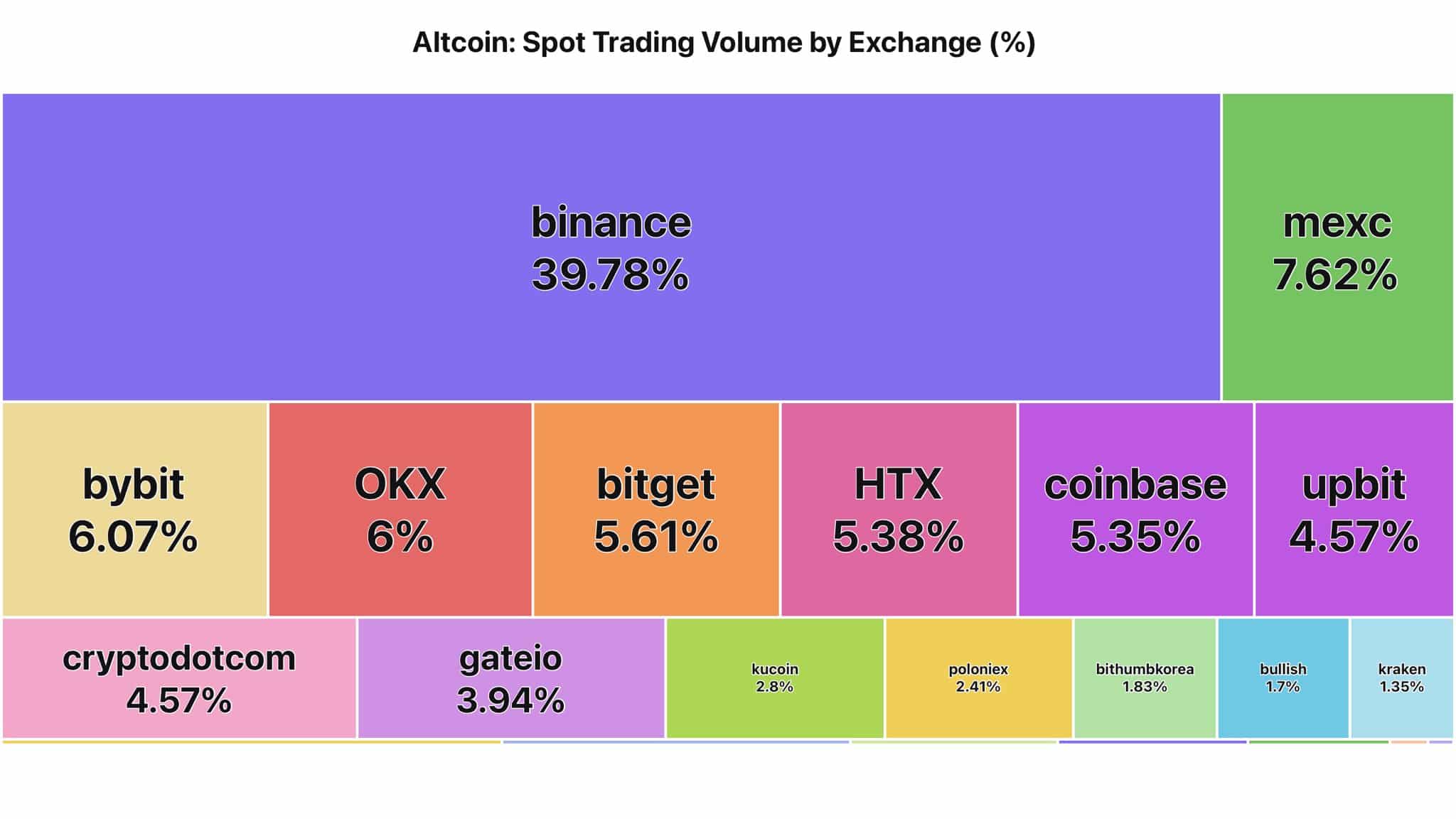
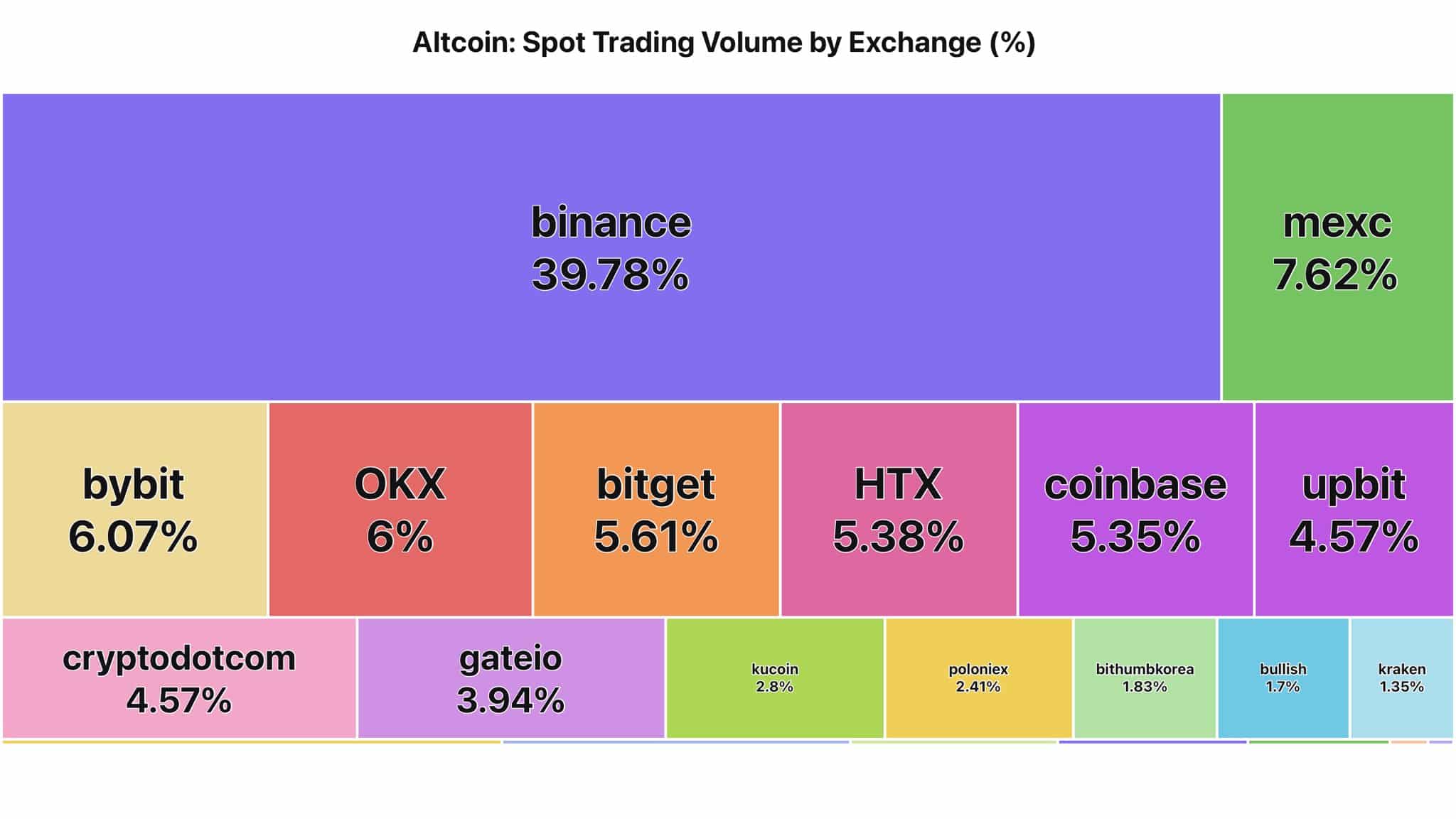
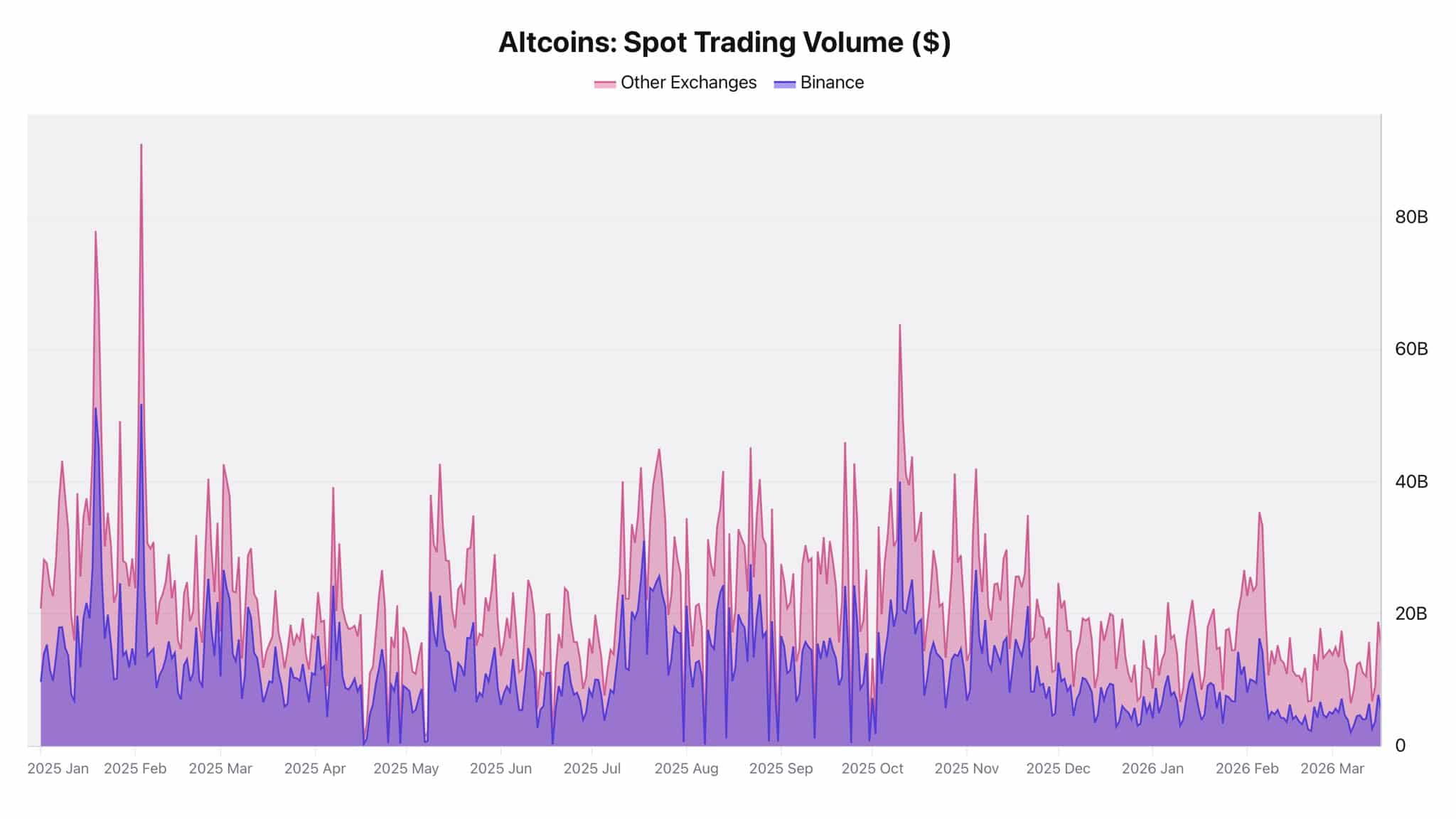
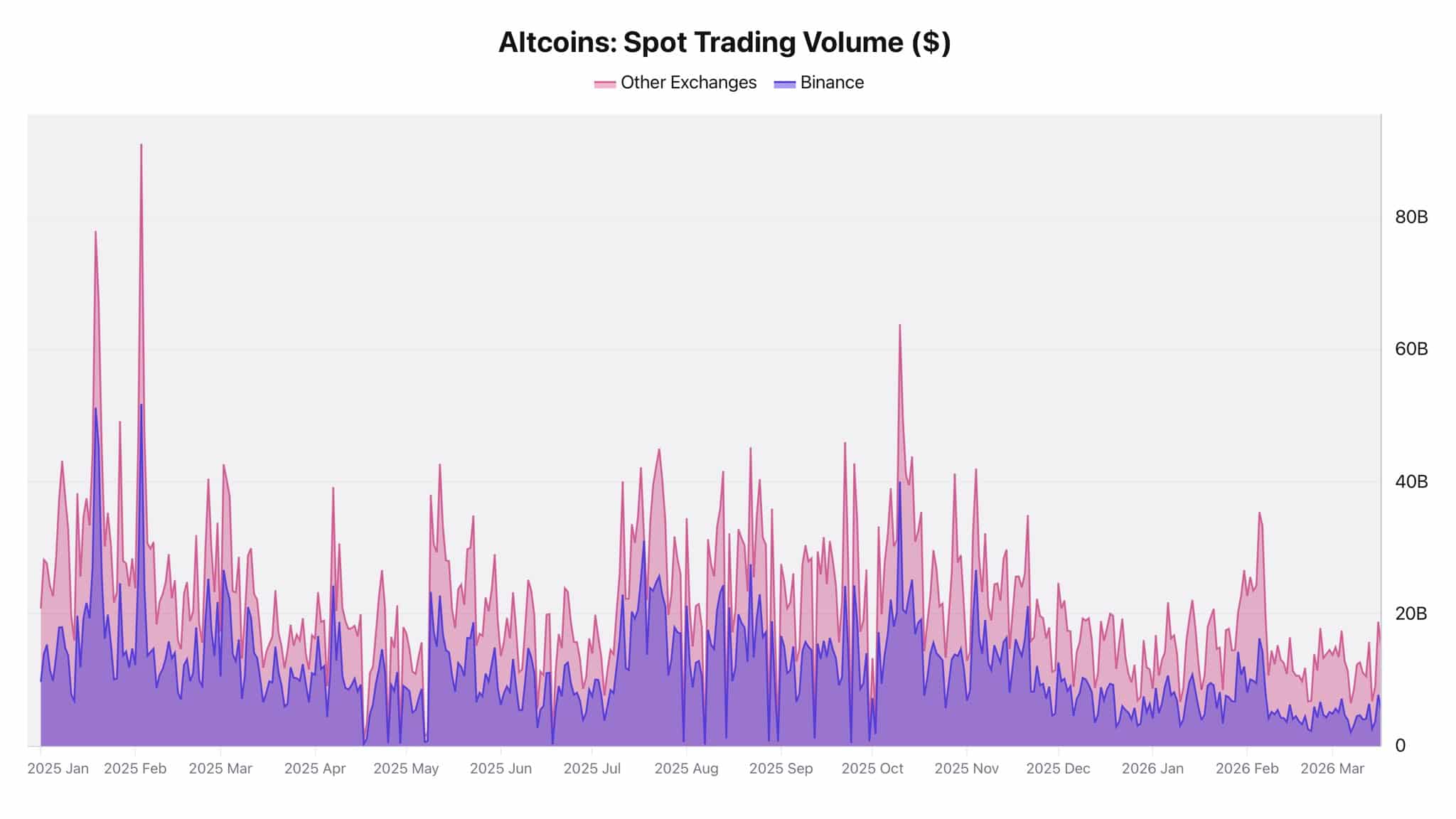
Altcoin trading volume has dropped towards $26.5 billion from peaks above $100 billion, showing a sharp contraction in activity. As this decline unfolded, Binance processed about $7.7 billion. All while other exchanges handled roughly $18.8 billion – Confirming broad-based weakness.
Source: CryptoQuant

In relative terms, Binance holds nearly a 40% share right now, with the same rising as overall participation shrinks. Earlier peaks in February and October 2025 saw volumes surge to $40–50 billion on Binance and up to $91 billion elsewhere, marking periods of strong demand.

As volumes fall across all venues, participation weakens across pairs and trade sizes, pointing to reduced risk appetite.
Source: CryptoQuant

However, this also means capital is stepping back rather than exiting entirely. As engagement compresses, volatility often declines, although such phases can precede renewed positioning once sentiment stabilizes and liquidity begins returning.
Altcoins enter capitulation zone as liquidity rotates to Bitcoin

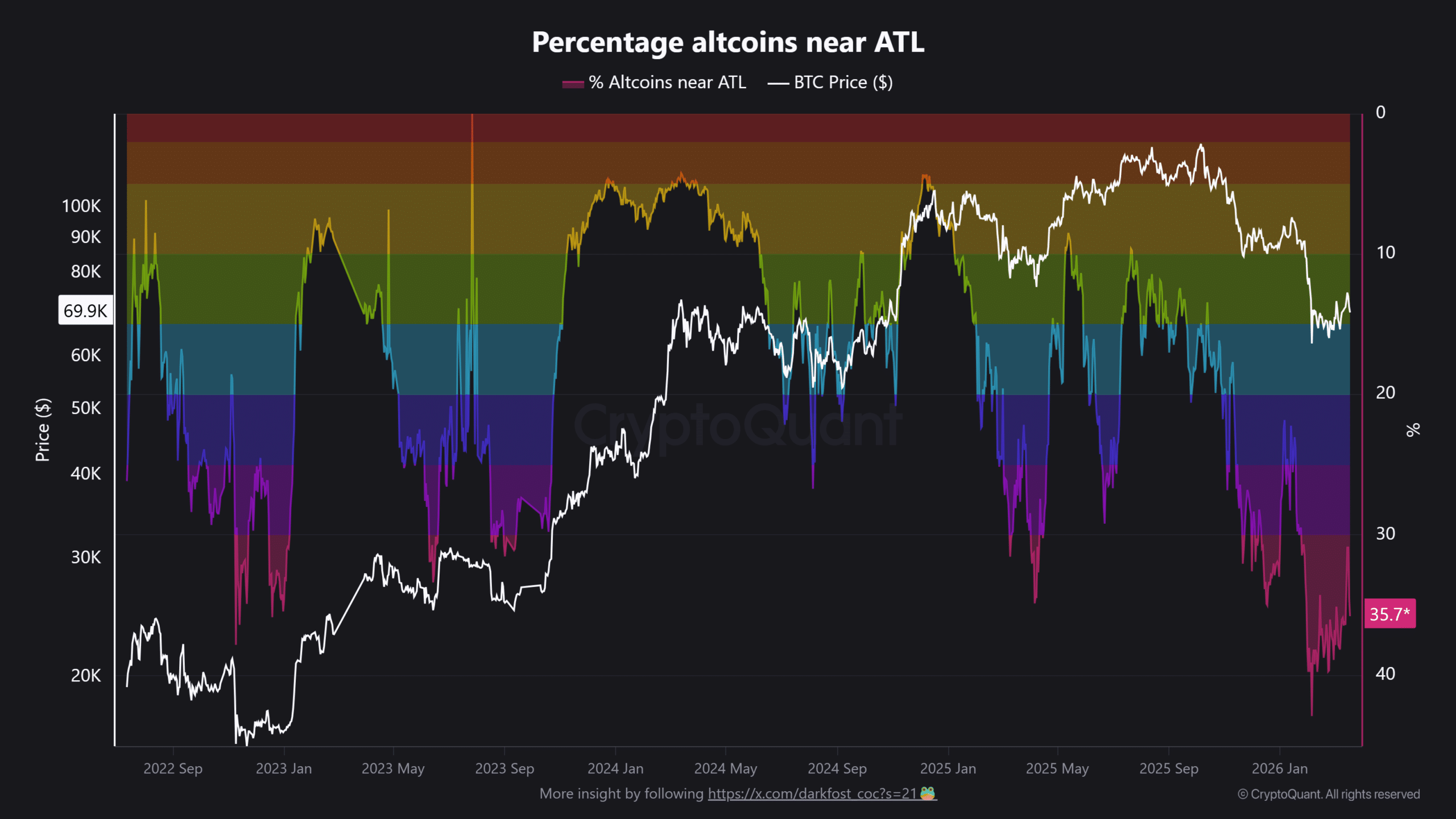
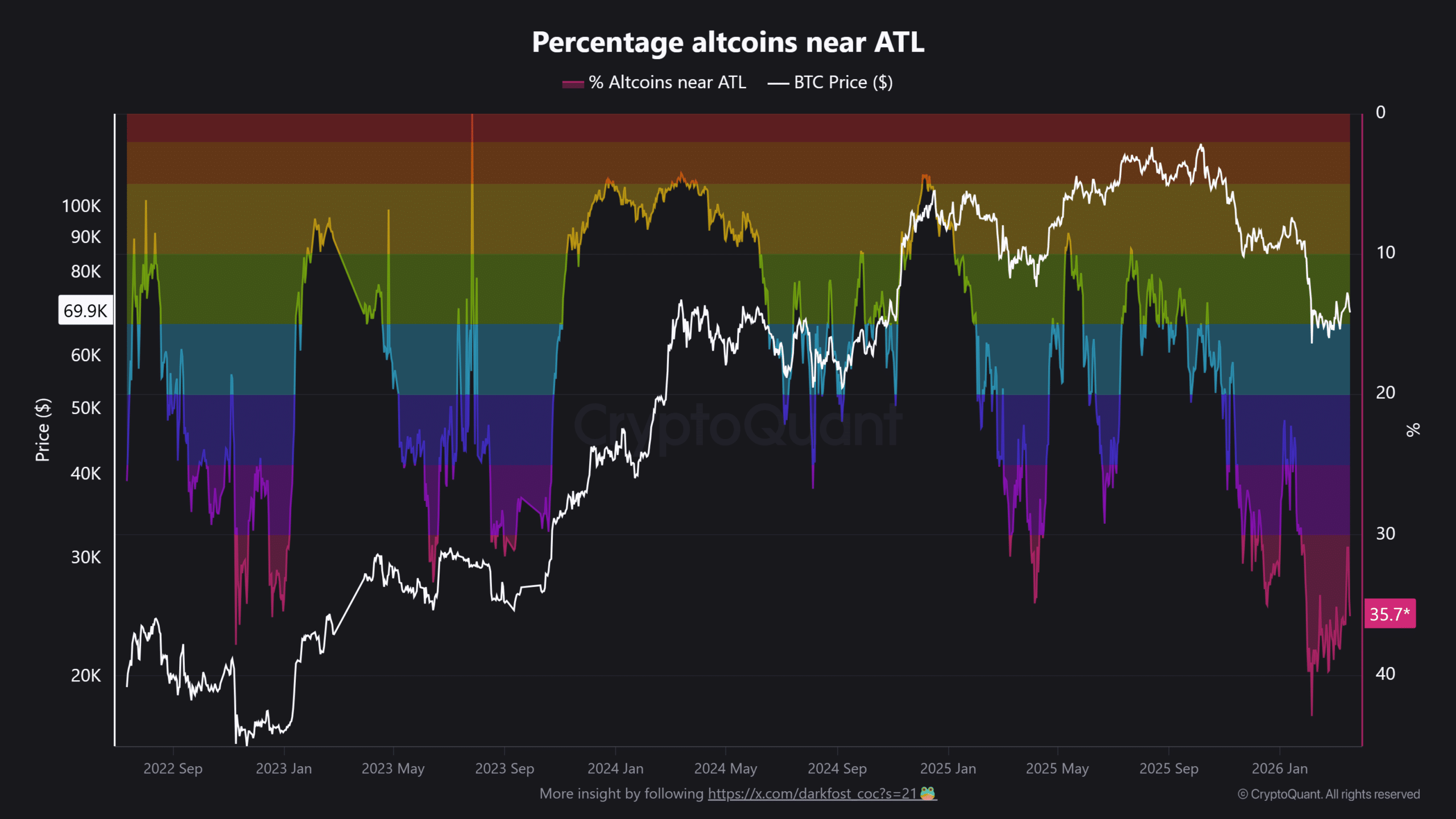
Altcoin weakness deepened as nearly 38–40% of assets traded near all-time lows, pushing the market into clear capitulation territory. As this level rises, it would reflect broad deterioration rather than isolated declines.

Source: CryptoQuant

At the same time, Bitcoin has held on relatively stronger, highlighting a widening divergence between major and risk assets. This shift signals liquidity rotation, where capital moves into Bitcoin for safety while exiting altcoins. As funds leave, altcoins face thinner liquidity and reduced demand, which accelerates price declines.

However, such extreme readings also mean that selling pressure may be nearing exhaustion. Meanwhile, participants reduce risk exposure, favoring preservation over speculation.

Such a structure implies a fragile market, one where downside risks remain. However, conditions may begin to favor accumulation if liquidity gradually returns to undervalued altcoins.

Market holds near capitulation as derivatives outpace spot demand

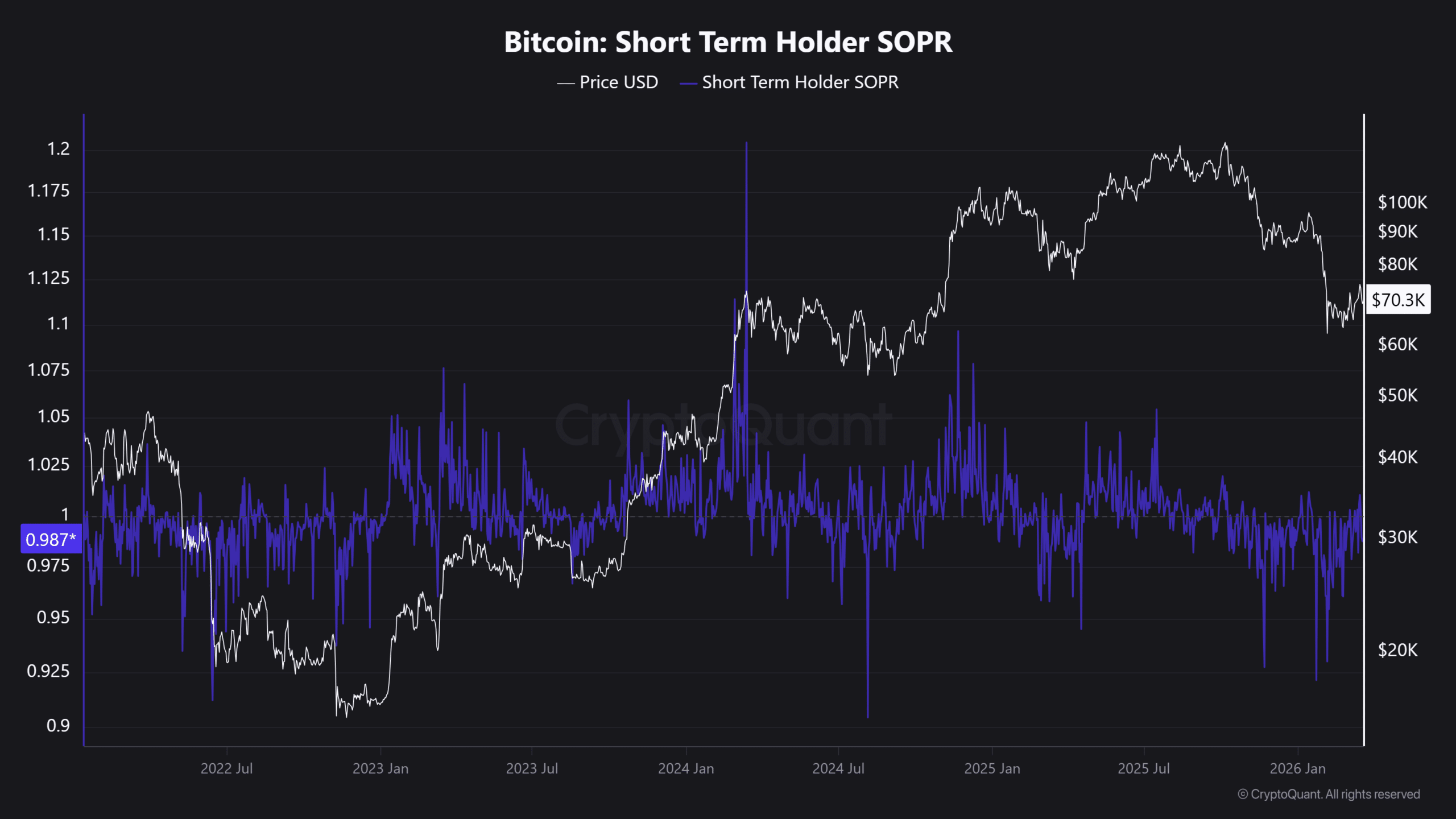
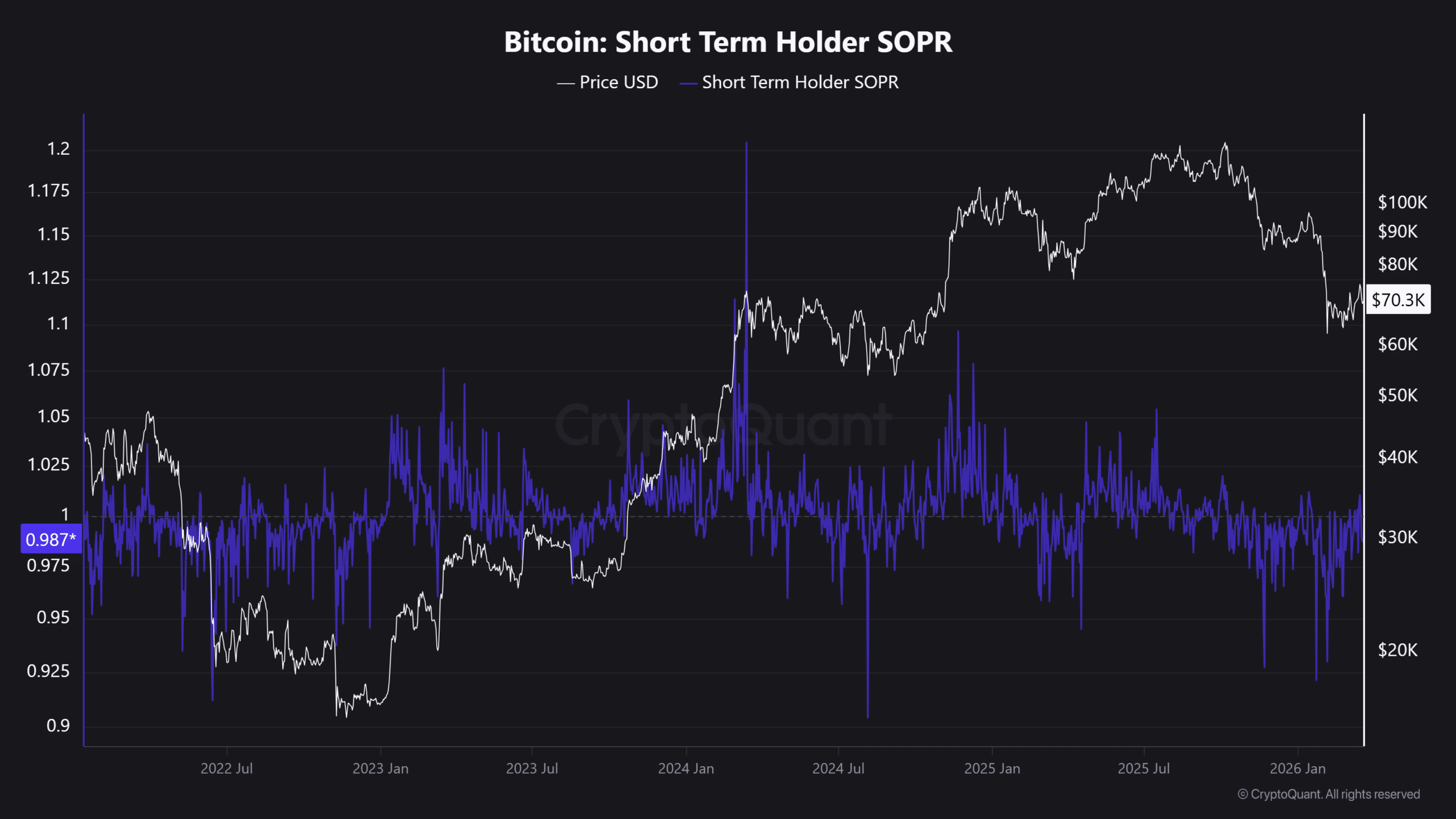
Finally, market structure revealed stress building without full capitulation, as Bitcoin [BTC] Short-Term Holder SOPR held near 0.98, reflecting realized losses around -12%. Since 2023, similar levels have often preceded deeper resets. And yet, press time selling appeared to be more controlled rather than aggressive.

Source: CryptoQuant

Consequently, liquidations have stayed subdued at $234 million, with $127 million in longs – Indicative of limited forced exits.

However, liquidity quality weakened as Binance’s Futures-to-Spot ratio climbed to a 1.5-year high. Such a shift showed derivatives activity expanding faster than spot demand.This divergence also hinted at a fragile balance, one where markets may either stabilize or face renewed volatility if spot demand fails to strengthen.


Final Summary

  • Altcoin market showed weakening demand as volumes fell to $26.5 billion and nearly 40% traded near lows, reflecting reduced risk appetite.
  • Altcoins now face thinning liquidity and sell-side pressure as capital rotates to Bitcoin [BTC], although conditions may begin favoring accumulation if demand returns.

Пов'язані питання

QWhat has happened to the altcoin trading volume according to the article?

AAltcoin trading volume has sharply contracted, dropping to $26.5 billion from peaks above $100 billion.

QWhich exchange processed the largest share of altcoin trades during this decline?

ABinance processed the largest share, handling about $7.7 billion, which represents nearly 40% of the market.

QWhat does the decline in altcoin volume and the performance of Bitcoin indicate about market behavior?

AIt indicates a liquidity rotation where capital is moving into Bitcoin for safety while exiting altcoins, reflecting reduced risk appetite and a preference for preservation over speculation.

QWhat does the high Futures-to-Spot ratio on Binance suggest about the current market dynamics?

AThe high ratio, which reached a 1.5-year high, suggests that derivatives activity is expanding faster than spot demand, indicating a fragile balance that could lead to renewed volatility if spot demand doesn't strengthen.

QAccording to the article, what might the current market conditions potentially favor in the future?

AThe current conditions may begin to favor accumulation if liquidity gradually returns to undervalued altcoins, as extreme selling pressure could be nearing exhaustion.

Пов'язані матеріали

IREN's Insanity: Selling Miners, Buying GPUs, Stock Price Up 16%

IREN, a Bitcoin mining company, saw its stock price surge 16% after releasing its quarterly earnings on May 8th. The surge was not driven by Bitcoin's price, but by the company's radical strategic shift away from cryptocurrency mining and towards AI infrastructure. The company reported a $140 million impairment charge after decommissioning and listing for sale 5,800 of its Bitmain S21 Pro mining rigs. It also maintains a policy of selling all mined Bitcoin daily, holding zero crypto assets. Despite this dismantling of its core business, investor sentiment was positive due to IREN's aggressive pivot into AI. This shift is backed by massive, long-term contracts. IREN announced a new 5-year, $3.4 billion collaboration with NVIDIA, which includes an equity investment commitment. This follows a previously secured 5-year, $9.7 billion GPU cloud services agreement with Microsoft. To support these deals, IREN acquired European data center capacity and cloud software capabilities. Management targets 480 megawatts of AI capacity, 150,000 GPUs, and $3.7 billion in annual recurring revenue by late 2026. While other North American miners are exploring hybrid "mining + AI" models, IREN is making a clean break, betting entirely on the booming demand for AI compute power. The move highlights a broader industry trend where the value of mining hardware is declining while GPU-based AI infrastructure is in critically short supply.

marsbit2 год тому

IREN's Insanity: Selling Miners, Buying GPUs, Stock Price Up 16%

marsbit2 год тому

Торгівля

Спот
Ф'ючерси
活动图片