For the first time, AI has created a virus that does not exist in nature!
The news instantly set the internet ablaze.
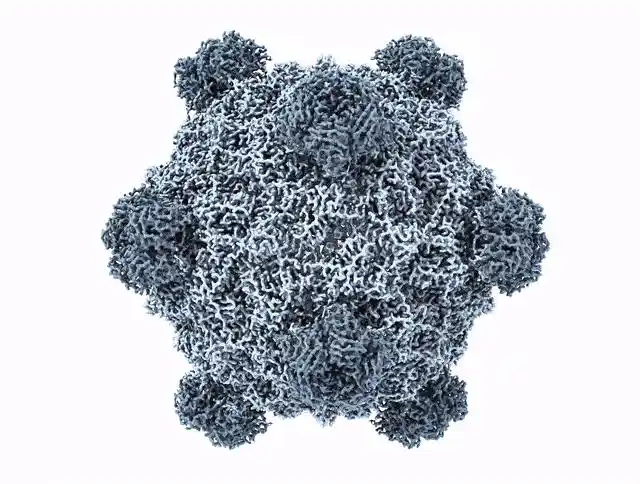
Today, a groundbreaking study from Stanford University and the Arc Institute has been published in the top journal Science.
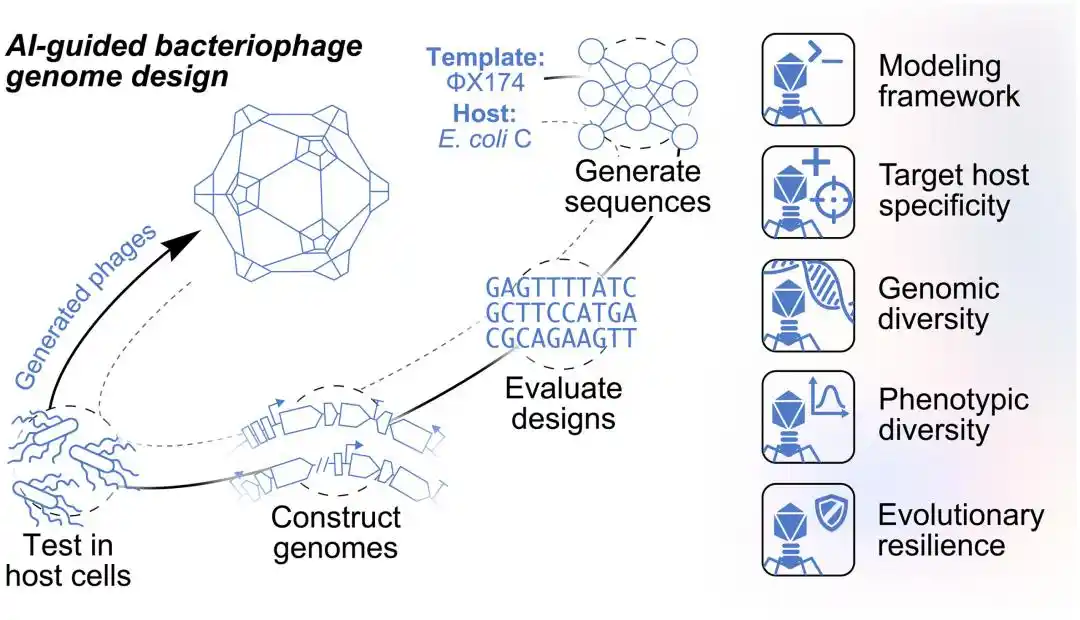
In this experiment, AI generated 700,000 viral genomes in one go. From these, 285 were selected for DNA synthesis.
The final result is astonishing—
Sixteen viruses not only "survived," but some lysed bacteria at speeds that directly outperformed the original natural virus.
This is the first time in human history that AI has designed, from scratch, the complete, viable genome of a living organism.
AI Writes 16 Viruses By Hand, All Are Alive
The model that designed this batch of new viruses is named Evo, built by the Arc Institute.
You can think of it as the "ChatGPT of the biological world."
They share the same underlying logic; the only difference is what they are "fed"—
ChatGPT reads human web pages, while Evo reads the DNA sequences written by the Creator.
During training, Evo "consumed" approximately 9 trillion nucleotides, spanning animals, plants, microorganisms, and viruses.
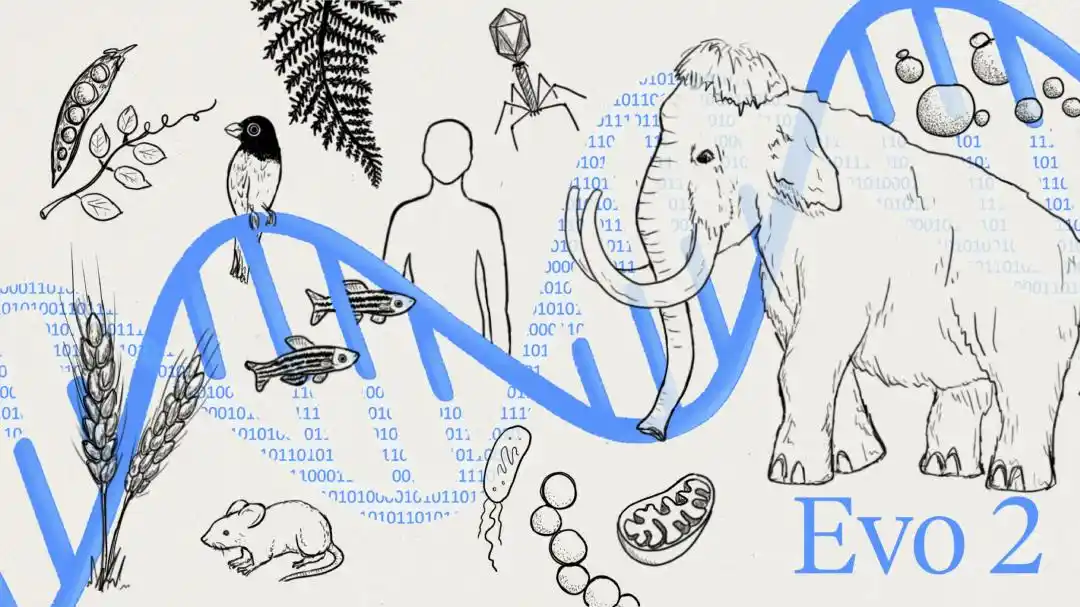
The similarity between DNA and text is actually strikingly high: nucleotides are letters, with only four—A, C, G, T; a few hundred letters form a gene, which is like a sentence.
Sentences have grammar; if the grammar is wrong, what is written becomes biological gibberish.
Biologists have spent decades only uncovering a small part of this grammar.
What Evo does is, without studying any textbooks, use massive amounts of samples to deduce this grammar on its own.

Paper address: https://www.science.org/doi/10.1126/science.aec2657
In this Science experiment, Evo produced 700,000 candidate genomes in one continuous process.
Then, the research team selected the 285 most promising ones, turned them into real DNA molecules, inserted them into E. coli, and spread them across culture dishes.
In most dishes, nothing happened; the bacteria grew normally. Until finally, a few clear spots appeared in one dish.
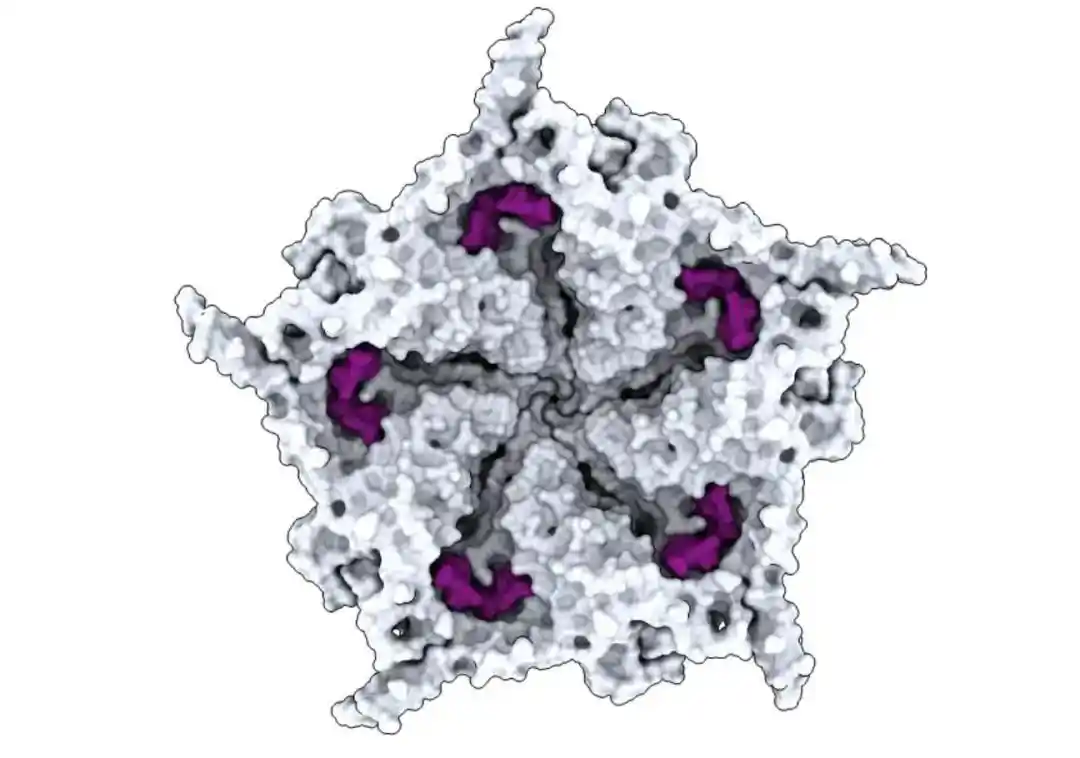
In the end, 16 new viruses—alive, capable of infection, and self-replicating—were born.
But what truly sends a chill down the spine is their "combat effectiveness."
Some of these AI-generated viruses replicate even faster than the original natural version (ΦX174).
Cryo-electron microscopy also captured a detail: on the shell of one virus, Evo-Φ36, a DNA packaging protein from a distant evolutionary relative was used.
It's as if AI, during the design process, casually took a part from another species and installed it, and it still worked.
The First Time AI Rewrote It Took 50 Years
Here, one must mention a coincidence, one chilling enough to send shivers down the spines of those in biology.
The virus that AI rewrote is called ΦX174, discovered in a Paris sewer in 1935.
It only infects E. coli, is completely harmless to humans and animals, and is a permanent fixture in molecular biology textbooks.

So the question is: Why is it so famous?
In 1977, Sanger's team completed the first full genome sequencing in human history—sequencing ΦX174.
That year, humans fully "read" all the instructions of a life form for the first time.
Forty-nine years later, today, AI has fully "written" one for the first time.
And it wrote the genome of the very same species. You must know, ΦX174 is an entry-level problem of hellish difficulty.
Its genome is only 5000 bases long with 11 genes. It sounds compact, but these 11 genes are nested and overlapping—one gene sits inside another, sharing the same string of letters.
Brian Hie, the Stanford assistant professor leading the study, directly stated, "Welcome to the era of generative genome design."

Killing Bacteria, and Capable of Unlimited "Self-Replication"
Compared to this research, what everyone truly cares about is: What does it mean for humanity?
First, let's present a set of numbers. The Lancet GRAM project predicts that from 2025 to 2050, antibiotic resistance will directly cause 39.1 million deaths.
Antibiotics are becoming less effective. One of the medical field's alternative plans is "phage therapy"—
using viruses to kill bacteria, an idea that has been around for a century.
But this path has a fatal flaw: bacteria not only develop resistance to antibiotics but also to phages. You release one type of phage, and the bacteria learn to defend against it in a few generations, rendering the therapy ineffective on the spot.


In this experiment, the team intentionally cultivated E. coli strains completely immune to the natural ΦX174, then presented two "cocktails":
One was a mixture of natural phages: it lost.
One was a mixture of AI-generated phages: it rapidly breached three resistant strains.
The weight of this result lies in the fact that it is the first proof that, facing the evolution speed of bacteria, AI can keep up by "mass-producing new weapons."
Bacteria evolve in minutes; humans take over a decade to develop an antibiotic—this is an arms race that humans are structurally losing.
And for the first time, generative models have reduced the cost of "producing new weapons" from over a decade to a single inference.
From the first time humans "read" life in 1977 to today, when AI has "written" life for the first time.
The scepter of creation is now truly in the hands of humanity and silicon-based intelligence.
References:
https://www.science.org/doi/10.1126/science.aec2657
This article is from the WeChat public account "New Zhiyuan," author: ASI Apocalypse