AI Bubble Concerns Reignite, Oracle Plunges 16%, US Stocks Mixed, Gold and Oil Under Pressure, Bitcoin Drops Over 2%

华尔街日报Опубліковано о 2025-12-11Востаннє оновлено о 2025-12-11

Анотація

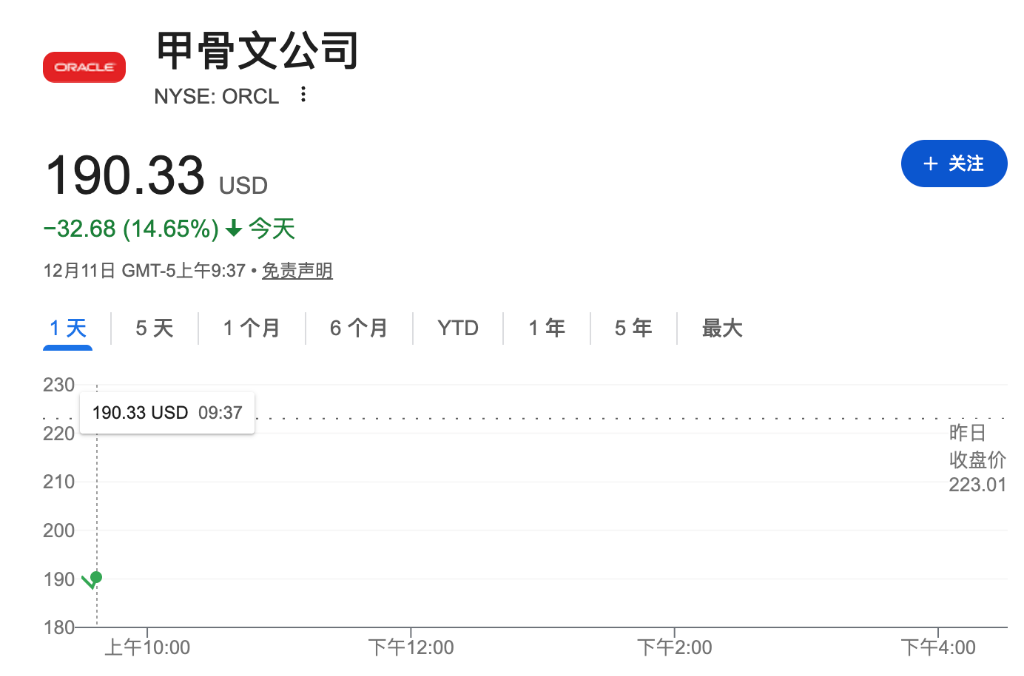
Concerns about an AI investment bubble resurfaced, triggering a broad sell-off in risk assets. Oracle's stock plummeted 16% after reporting disappointing quarterly results, with both revenue and cloud business income missing analyst expectations. The company also reported negative free cash flow and announced significantly higher-than-expected capital expenditures, largely debt-funded, for AI infrastructure. This development dampened market sentiment, particularly towards tech and AI-related stocks. Major U.S. indices were mixed, with the Nasdaq falling 0.6%. Global markets reacted similarly, with Asian and European shares mostly lower. The negative risk sentiment flowed into other asset classes. Bitcoin fell over 2%, briefly dropping below $90,000, while gold and crude oil prices also declined. In contrast, silver and copper posted gains. Analysts noted that Oracle's performance has intensified scrutiny on AI-driven spending strategies, especially those financed through debt. The market's reaction highlights growing investor caution regarding the sustainability of AI investments, marking a shift from previous excitement around capital expenditure increases in the sector.

Due to market concerns over Oracle Corporation's plans to heavily invest in artificial intelligence infrastructure, leading to a broad sell-off of risk assets, US stocks declined.

On December 11, US stocks were mixed, European stocks varied, Asian stocks gave up early gains, with most markets moving lower. US Treasury prices rose, and the US dollar saw a slight rebound. Commodities were mixed, with silver and copper rising, while gold and crude oil fell. Cryptocurrencies were under pressure, with Bitcoin briefly falling below $90,000.

Panmure Liberum strategist Susana Cruz said:

"Market caution regarding AI-related spending has significantly increased, contrasting sharply with the situation in mid-2025, when any hint of increased capital expenditure would trigger market excitement. Oracle Corporation has been the weakest link in this chain of events, primarily because a large portion of its investments are debt-financed."

Core market movements are as follows:

  • The S&P 500 opened 25.38 points lower, down 0.37%, at 6,861.30 points; the Dow Jones Industrial Average opened 25.15 points higher, up 0.05%, at 48,082.90 points; the Nasdaq Composite opened 144.94 points lower, down 0.61%, at 23,509.22 points.
  • Germany's DAX 30 index opened down 0.10%, the UK's FTSE 100 opened down 0.10%, France's CAC 40 opened up 0.21%,
    The Euro Stoxx 50 index opened down 0.03%.
  • Japan's Nikkei 225 index closed down 0.9% at 50,148.82 points, Japan's TOPIX index closed down 0.9%, South Korea's KOSPI closed down 0.66% at 4,107.77 points.
  • The 10-year US Treasury yield fell 1 basis point to 4.14%.
  • The US Dollar Index was largely flat, the euro rose 0.2% against the dollar to $1.1715.
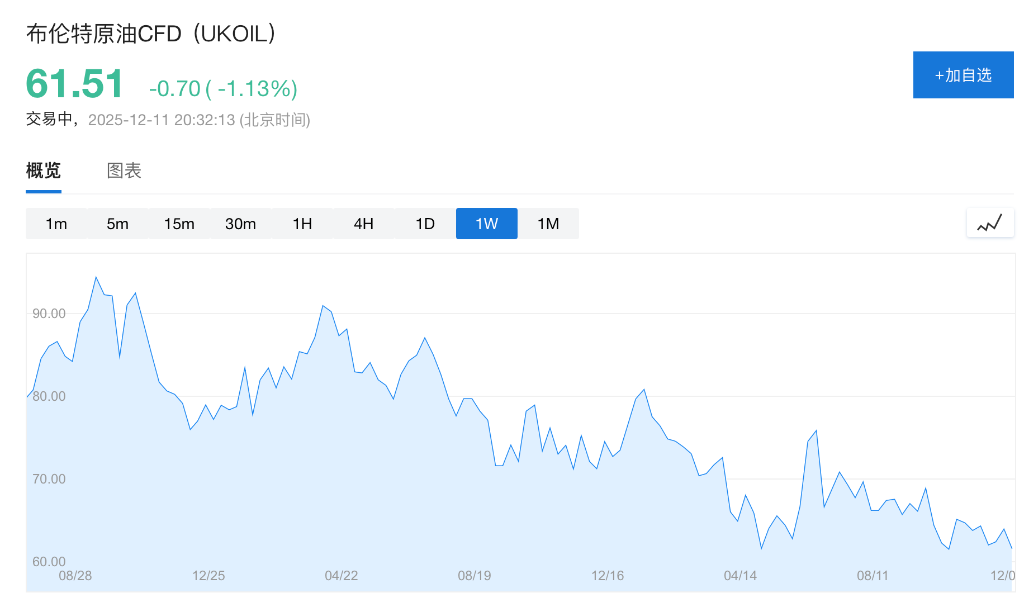
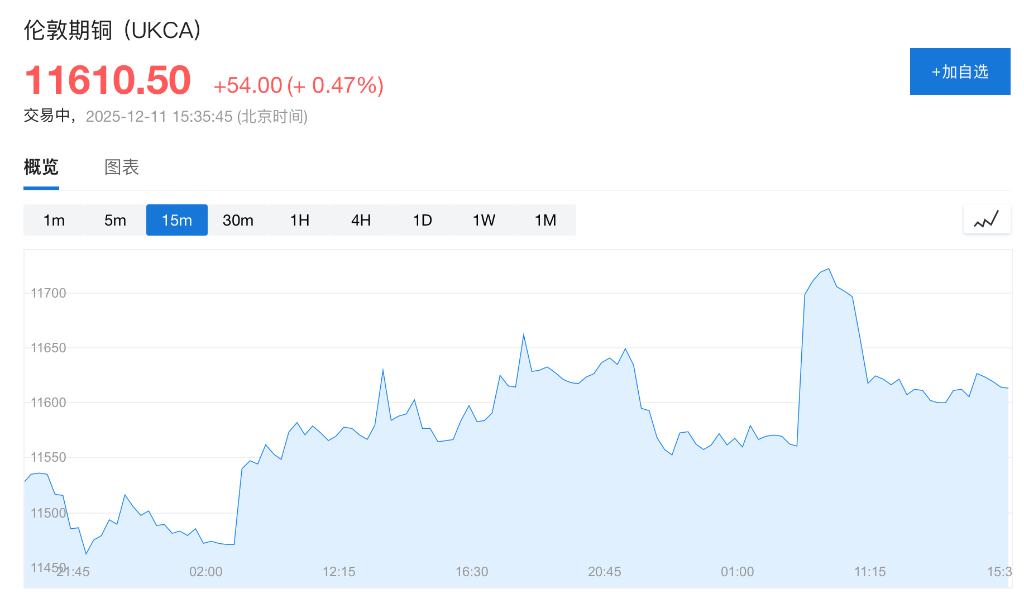
  • Spot gold fell 0.3% to $4,215.05 per ounce, spot silver extended gains to 1%, now at $62.541 per ounce, London copper futures rose over 0.5% to $11,618 per ton, Brent crude fell 0.7% to $61.51 per barrel.
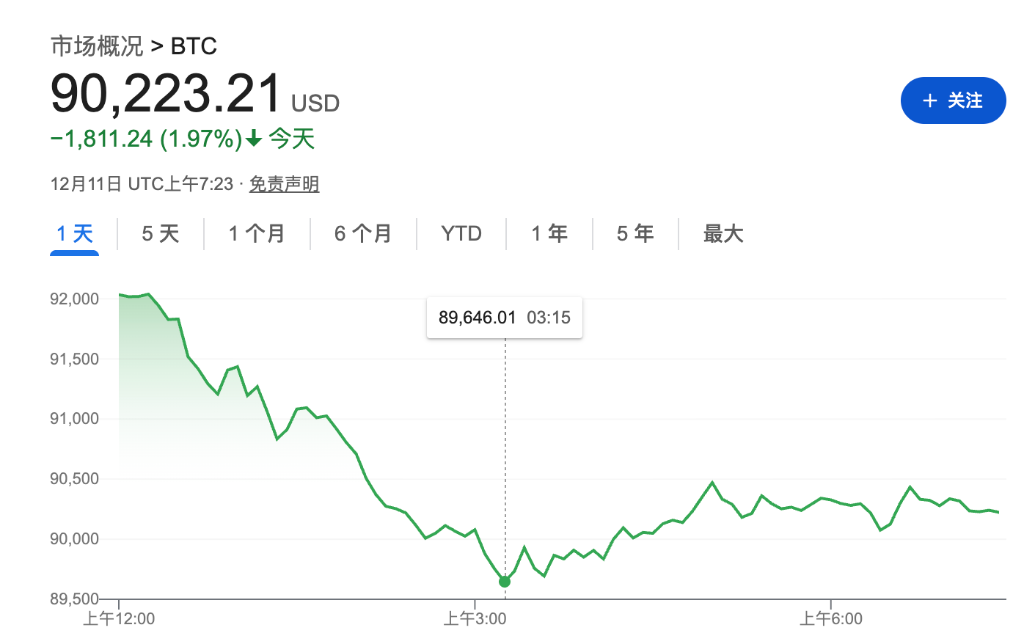
  • Bitcoin fell 2.3% to $90,224.89, Ethereum fell 4.1% to $3,204.4.

Oracle's weaker-than-expected earnings report ignited market concerns about an AI bubble, leading to a decline in tech stocks. Earlier, the optimistic market sentiment reversed after overnight gains. On one hand, positive factors such as the Fed's interest rate cut, the initiation of a $40 billion monthly Treasury purchase program (seen by the market as "stealth QE"), and dovish remarks had been fully digested. On the other hand, Oracle's sharp post-market decline due to missed revenue expectations, and the performance pressure it exposed as a key AI player, sparked worries about the return on investment in the AI sector.

According to Wall Street News, the market had expected a "hawkish rate cut" from the Fed, but the actual results showed no additional dissenters, no higher dot plot, and the anticipated strong stance from Chairman Powell did not materialize. Wall Street analysts expect the actual rate cuts next year could exceed the 25 basis points indicated by the dot plot. Leadership changes and policy uncertainty are potential drivers of market volatility in 2026.

Oracle's stock plunged 16% after hours. According to Wall Street News, the company reported its Q2 FY2026 results after the market closed on Wednesday, with both revenue and cloud business income falling short of analyst expectations. Quarterly free cash flow (FCF) was -$10 billion, and annual capital expenditures are expected to be approximately $15 billion higher than previously anticipated.

Emarketer analyst Jacob Bourne stated, Against the backdrop of ongoing uncertainty in AI spending prospects, Oracle is facing increasing scrutiny due to its debt-driven data center expansion and customer concentration risks. This revenue miss is likely to heighten concerns among already cautious investors regarding its OpenAI partnership and aggressive AI spending strategy.

Alberto Torchio, portfolio manager at Kairos Partners, said:

"Oracle's impact even surpassed the Fed's. That says it all, because we've consistently seen highly concentrated markets, with the AI theme leading the way. This doesn't mean AI is obsolete or in a bubble, but we need to look at this issue from a broader perspective."
As risk assets like global stocks fell broadly, macro risk-off sentiment dominated the market, causing oil prices to give up early gains. Previously, concerns over oil supply risks and escalating geopolitical conflicts, triggered by the US seizure of a sanctioned Venezuelan oil tanker, had pushed oil prices higher.

According to Wall Street News, the crude oil market is experiencing an unprecedented surplus. However, Brent oil prices remain stable between $61-66, primarily because the market finds it difficult to judge whether crude oil from sanctioned countries like Russia and Iran (accounting for 15% of global supply) should be counted as effective supply. Analysis suggests that sanctions make market direction unpredictable, and once floating storage moves onshore, oil prices could fall sharply.
London copper futures pared some gains, now up nearly 0.5% to $11,610.5 per ton. Earlier, buoyed by the Fed's rate cut, London copper approached record highs. So far this year, copper prices have accumulated gains of over 30%. Besides liquidity expectations, a series of mine shutdowns, concerns about overseas supply shortages, and traders rushing to buy in the US market ahead of potential tariffs have all provided upward momentum for copper prices.
Oracle's disappointing earnings report dealt a blow to market sentiment, causing Bitcoin to fall sharply, once breaking below the $90,000 mark. Tony Sycamore, market analyst at IG in Sydney, said: "The cryptocurrency space really needs to see stronger evidence that the sell-off on October 10th has completely ended, but currently, such evidence does not seem to exist."

Standard Chartered significantly lowered its year-end 2025 Bitcoin forecast from $200,000 to $100,000. Geoff Kendrick, head of global digital assets research at Standard Chartered, said: "We believe the buying activity by Bitcoin digital asset fund companies may have concluded. Therefore, we now believe that future Bitcoin price increases will essentially be driven by just one factor—ETF purchases."

Трендові криптовалюти

Пов'язані питання

QWhat was the main reason for the decline in Oracle's stock price and the broader market's risk-off sentiment?

AOracle's stock price plummeted 16% after its Q2 FY2026 earnings report showed both revenue and cloud business income fell short of analyst expectations. The company also reported negative free cash flow of $10 billion and announced significantly higher-than-expected capital expenditures, primarily debt-funded for AI infrastructure. This sparked renewed concerns about an AI bubble and the return on investment in the AI sector, leading to a broad sell-off in risk assets.

QHow did major U.S. stock indices perform at the open on December 11th?

AThe S&P 500 opened down 25.38 points (0.37%) at 6,861.30 points. The Dow Jones Industrial Average opened up 25.15 points (0.05%) at 48,082.90 points. The Nasdaq Composite opened down 144.94 points (0.61%) at 23,509.22 points.

QWhat was the performance of key commodities like gold, oil, and copper?

ASpot gold fell 0.3% to $4,215.05 per ounce. Brent crude oil fell 0.7% to $61.51 per barrel. In contrast, London copper futures rose nearly 0.5% to $11,610.5 per ton, and spot silver gained 1% to $62.541 per ounce.

QWhat happened to Bitcoin's price and what was a key factor behind the sell-off according to analysts?

ABitcoin's price fell 2.3% to $90,224.89, briefly falling below the $90,000 level. Analysts cited the negative market sentiment from Oracle's disappointing earnings as a key factor. An IG market analyst also noted that there was a lack of strong evidence that the sell-off from October 10th had conclusively ended, contributing to the pressure on cryptocurrencies.

QHow did Standard Chartered Bank revise its Bitcoin price forecast and why?

AStandard Chartered Bank significantly lowered its Bitcoin price forecast for the end of 2025 from $200,000 to $100,000. Their global head of digital assets research, Geoff Kendrick, stated that purchasing activity from Bitcoin digital asset fund companies was likely over, and future price appreciation would now be driven solely by ETF purchases.

Пов'язані матеріали

Agent Race Ends, Super Workbench Takes Over

The era of fragmented AI agents is ending. Over the past month, China's tech giants—Tencent, Alibaba, and ByteDance—have simultaneously shifted strategy: instead of launching new, standalone AI agents, they are consolidating their various agent projects into unified "super workbenches." Tencent integrated its QClaw teams into WorkBuddy, a strategic product hailed as a potential third flagship after QQ and WeChat. Alibaba is merging its QoderWork, Wukong, and MuleRun agents into a new "Qianwen Office" platform under DingTalk's leadership. ByteDance rebranded its TRAE SOLO coding agent to TRAE Work, signaling a broader focus on workflow collaboration. This convergence marks a pivotal industry consensus. The initial exploration phase, where companies rapidly built numerous overlapping agents for different scenarios, proved costly and inefficient. With open-source tools eroding technical barriers, competition has shifted from agent creation to resource consolidation and cost control. Historically, platform wars are won not by creating more products, but by simplifying them—as seen with browsers unifying web access and super-apps consolidating services. Now, the "super workbench" aims to become the unified AI entry point for work. This reflects a deeper market realization: the primary audience for AI is no longer just programmers (a market in the tens of millions) but all knowledge workers (a market of billions). The real opportunity lies in augmenting everyday tasks—managing emails, documents, data, and meetings—across the entire workday. The core battleground is becoming control over the primary AI entry point that employees use daily. Tencent's WorkBuddy leverages WeChat and Tencent Docs; Alibaba's Qianwen Office taps into DingTalk's organizational data; ByteDance's TRAE Work integrates with Feishu's workflows. Whoever owns this "super workbench" gains strategic control over orchestrating enterprise data and APIs. This shift is redefining enterprise software. Traditional SaaS applications, valued for their user interfaces, will recede into the background. Their core functionalities will be exposed as standardized "Skills" or APIs for the super workbench's agents to invoke. Software value will shift from selling user seats to charging based on API calls and outcomes delivered. The evolution of agents is moving through clear stages: first as novel standalone products, then as consolidated primary work entry points, and finally as pervasive, invisible capabilities embedded into the digital fabric. The recent moves by major tech firms signal the transition from the first stage into the second, accelerating toward the third. In the end, the most successful agent technology may become invisible—like electricity or the HTTP protocol—a fundamental, unnamed infrastructure powering work itself.

marsbit5 хв тому

Agent Race Ends, Super Workbench Takes Over

marsbit5 хв тому

Michael Saylor: 110 Reasons to Oppose BIP-110

Michael Saylor presents 110 arguments against Bitcoin Improvement Proposal (BIP) 110, a soft fork aimed at restricting certain non-monetary data storage uses (like inscriptions) on the Bitcoin blockchain. He acknowledges the proponents' valid concerns—such as node costs, fee pressure, and preserving Bitcoin's monetary focus—but fundamentally disagrees with the proposed solution. Saylor argues that BIP 110 represents a dangerous precedent of using consensus rules to enforce value judgments on transaction validity, moving away from Bitcoin's core principles of neutrality and permissionless innovation. His key objections are organized into eleven categories: 1) It violates neutrality and hard consensus by banning currently valid transactions. 2) It fails to meet the high burden of proof required for a consensus change, lacking concrete data on the alleged crisis. 3) Its seven bundled technical restrictions are overly broad, targeting generic script functionalities and blocking future upgrade paths. 4) It sacrifices compatibility and future optionality by closing off designed upgrade hooks. 5) Its temporary rules add significant complexity (grandfathering, expiry states) without sufficient justification. 6) The economic and security impacts, particularly on miner revenue and fee markets, are uncertain and unmodeled. 7) Superior, market-based tools (fee markets, relay/mining policies) already exist to manage blockchain load. 8) It stifles innovation by creating a chilling effect for developers. 9) Its modified activation mechanism (55% threshold, forced signaling) is aggressive and risks network splits. 10) The precedent it sets—using consensus to suppress disliked but legal uses—is more dangerous than the problem it aims to solve. 11) A better path exists: improving measurements, refining resource-based policies, and allowing market forces to work. Saylor concludes that Bitcoin's strength lies in its neutral rules, open markets, and hard consensus. Changing these foundational elements to target specific use cases is an unnecessary and risky "iatrogenic" intervention. He advocates for guarding Bitcoin's neutrality rather than acting as its redeemer.

marsbit21 хв тому

Michael Saylor: 110 Reasons to Oppose BIP-110

marsbit21 хв тому

Торгівля

Спот

Популярні статті

Що таке BITCOIN

Розуміння HarryPotterObamaSonic10Inu (ERC-20) та його позиції у крипто-просторі Останніми роками ринок криптовалют спостерігав за зростанням популярності мем-коінів, які привертають інтерес не тільки трейдерів, але й тих, хто шукає спілкування та розважальну цінність. Серед цих унікальних токенів є HarryPotterObamaSonic10Inu (ERC-20), інтригуючий проект, що поєднує культурні посилання з тканинами криптовалюти. Ця стаття досліджує ключові аспекти HarryPotterObamaSonic10Inu, вивчаючи його механізми, спільноту та його взаємодію з ширшим крипто-ландшафтом. Що таке HarryPotterObamaSonic10Inu (ERC-20)? Як випливає з його назви, HarryPotterObamaSonic10Inu є мем-коіном, побудованим на блокчейні Ethereum, класифікованим за стандартом ERC-20. На відміну від традиційних криптовалют, які можуть підкреслювати практичну корисність або інвестиційний потенціал, цей токен процвітає завдяки розважальній цінності та силі своєї спільноти. Проект спрямований на створення середовища, де зацікавлені користувачі можуть об'єднуватися, ділитися ідеями та брати участь у заходах, натхненних різноманітними культурними явищами. Однією з примітних особливостей HarryPotterObamaSonic10Inu є нульовий податок на транзакції. Цей привабливий елемент має на меті заохочувати торгівлю та участь у спільноті, позбавлену додаткових витрат, які можуть відлякувати дрібних трейдерів. Загальна пропозиція монет становить один мільярд токенів, що позначає намір підтримувати суттєву циркуляцію в межах спільноти. Творець HarryPotterObamaSonic10Inu (ERC-20) Походження HarryPotterObamaSonic10Inu дещо окутане таємницею; деталі про творця залишаються невідомими. Розвиток цього токена позбавлений впізнаваної команди або чіткої стратегії, що не є рідкістю в секторі мем-коінів. Натомість проект виник органічно, а його розвиток значною мірою залежить від ентузіазму та участі його спільноти. Інвестори HarryPotterObamaSonic10Inu (ERC-20) Щодо зовнішніх інвестицій та підтримки, HarryPotterObamaSonic10Inu також залишається невизначеним. Токен не зазначає жодних відомих інвестиційних фондів або значної організаційної підтримки. Натомість життєва сила проекту полягає в його базовій спільноті, яка інформує про його зростання та стійкість через колективні дії та залученість у крипто-просторі. Як працює HarryPotterObamaSonic10Inu (ERC-20)? Як мем-коін, HarryPotterObamaSonic10Inu функціонує передусім поза традиційними рамками, що часто регулюють вартість активів. Є кілька відмінних аспектів, що визначають, як працює проект: Транзакції без податку: Завдяки відсутності податкових зборів на транзакції, користувачі можуть вільно купувати та продавати токен, не турбуючись про приховані витрати. Залучення спільноти: Проект процвітає завдяки взаємодії спільноти, використовуючи соціальні медіа для створення шуму та сприяння залученню. Обговорення, обмін контентом та залученість є ключовими елементами, що допомагають розширити його охоплення та зміцнити лояльність серед прихильників. Відсутність практичної корисності: Слід зазначити, що HarryPotterObamaSonic10Inu не пропонує конкретної корисності в рамках фінансової екосистеми. Натомість він класифікується як токен, що призначений в основному для розваги та спільнотних активностей. Культурне посилання: Токен кмітливо вплітає елементи популярної культури, щоб привернути інтерес, зв'язуючи з ентузіастами мемів та крипто-стежками. HarryPotterObamaSonic10Inu ілюструє, як мем-коіни функціонують інакше, ніж традиційні криптовалютні проекти, увійшовши на ринок як інноваційні соціальні конструкти, а не утилітарні активи. Хронологія HarryPotterObamaSonic10Inu (ERC-20) Історія HarryPotterObamaSonic10Inu відзначена кількома значними етапами: Створення: Токен виник з вірусного мему, захопивши уяву багатьох крипто-ентузіастів. Конкретні дати створення недоступні, що підкреслює його органічний розвиток. Лістинг на біржах: HarryPotterObamaSonic10Inu з'явився на різних біржах, дозволяючи зручніший доступ і торгівлю спільноти. Ініціативи залучення спільноти: Ведення діяльності, спрямованої на покращення взаємодії спільноти, включаючи конкурси, кампанії в соціальних мережах та створення контенту від фанатів та прихильників. Плани на майбутнє: Дорожня карта проекту включає запуск колекції NFT, мерчандайзинг та електронну комерцію, пов'язану з його культурними темами, що далі залучає спільноту та намагається додати більше вимірів до його екосистеми. Ключові моменти про HarryPotterObamaSonic10Inu (ERC-20) Спільнотний підхід: Проект надає пріоритет колективному внеску та креативності, забезпечуючи, щоб участь користувачів була в центрі його розвитку. Класифікація як мем-коін: Це є його епігенез розважальної криптовалюти, що відрізняється від традиційних інвестиційних інструментів. Жодного прямого відношення до Bitcoin: Незважаючи на схожість у назві, HarryPotterObamaSonic10Inu є відмінним і не має жодного зв’язку з Bitcoin або іншими усталеними криптовалютами. Зосередженість на співпраці: HarryPotterObamaSonic10Inu створено для того, щоб надати простір для співпраці та обміну історіями серед його власників, забезпечуючи шлях для творчості та спільного зв'язку. Перспективи на майбутнє: Амбіція розширитися за межі початкової концепції в NFT та мерчандайз відкриває шлях для проекту потенційно потрапити в більш мейнстрімні сфери цифрової культури. Оскільки мем-коіни продовжують захоплювати уяву спільноти криптовалют, HarryPotterObamaSonic10Inu (ERC-20) вирізняється своїми культурними зв'язками та орієнтованим на спільноту підходом. Хоча він може не відповідати типовій моделі утилітарного токена, його суть полягає в радощах і товариськості, що підтримуються серед його прихильників, підкреслюючи еволюційну природу криптовалют в усе більш цифрову епоху. Оскільки проект продовжує розвиватися, важливо спостерігати за тим, як динаміка спільноти вплине на його траєкторію в постійно змінюваному ландшафті технології блокчейн.

2.2k переглядів усьогоОпубліковано 2024.04.01Оновлено 2024.12.03

Що таке BITCOIN

Як купити BTC

Ласкаво просимо до HTX.com! Ми зробили покупку Bitcoin (BTC) простою та зручною. Дотримуйтесь нашої покрокової інструкції, щоб розпочати свою криптовалютну подорож.Крок 1: Створіть обліковий запис на HTXВикористовуйте свою електронну пошту або номер телефону, щоб зареєструвати обліковий запис на HTX безплатно. Пройдіть безпроблемну реєстрацію й отримайте доступ до всіх функцій.ЗареєструватисьКрок 2: Перейдіть до розділу Купити крипту і виберіть спосіб оплатиКредитна/дебетова картка: використовуйте вашу картку Visa або Mastercard, щоб миттєво купити Bitcoin (BTC).Баланс: використовуйте кошти з балансу вашого рахунку HTX для безперешкодної торгівлі.Треті особи: ми додали популярні способи оплати, такі як Google Pay та Apple Pay, щоб підвищити зручність.P2P: Торгуйте безпосередньо з іншими користувачами на HTX.Позабіржова торгівля (OTC): ми пропонуємо індивідуальні послуги та конкурентні обмінні курси для трейдерів.Крок 3: Зберігайте свої Bitcoin (BTC)Після придбання Bitcoin (BTC) збережіть його у своєму обліковому записі на HTX. Крім того, ви можете відправити його в інше місце за допомогою блокчейн-переказу або використовувати його для торгівлі іншими криптовалютами.Крок 4: Торгівля Bitcoin (BTC)Легко торгуйте Bitcoin (BTC) на спотовому ринку HTX. Просто увійдіть до свого облікового запису, виберіть торгову пару, укладайте угоди та спостерігайте за ними в режимі реального часу. Ми пропонуємо зручний досвід як для початківців, так і для досвідчених трейдерів.

5.0k переглядів усьогоОпубліковано 2024.12.12Оновлено 2026.06.02

Як купити BTC

Що таке $BITCOIN

ЦИФРОВЕ ЗОЛОТО ($BITCOIN): Комплексний аналіз Вступ до ЦИФРОВОГО ЗОЛОТА ($BITCOIN) ЦИФРОВЕ ЗОЛОТО ($BITCOIN) — це проект на основі блокчейну, що працює в мережі Solana, який має на меті поєднати характеристики традиційних дорогоцінних металів з інноваціями децентралізованих технологій. Хоча він має таку ж назву, як і Bitcoin, який часто називають “цифровим золотом” через його сприйняття як засобу збереження вартості, ЦИФРОВЕ ЗОЛОТО є окремим токеном, розробленим для створення унікальної екосистеми в ландшафті Web3. Його мета — позиціонувати себе як життєздатний альтернативний цифровий актив, хоча деталі щодо його застосувань і функціональностей все ще розробляються. Що таке ЦИФРОВЕ ЗОЛОТО ($BITCOIN)? ЦИФРОВЕ ЗОЛОТО ($BITCOIN) — це токен криптовалюти, спеціально розроблений для використання в блокчейні Solana. На відміну від Bitcoin, який виконує широко визнану роль зберігання вартості, цей токен, здається, зосереджується на більш широких застосуваннях і характеристиках. Помітні аспекти включають: Інфраструктура блокчейну: Токен побудований на блокчейні Solana, відомому своєю здатністю обробляти швидкі та низьковартісні транзакції. Динаміка постачання: ЦИФРОВЕ ЗОЛОТО має максимальне постачання, обмежене 100 квадрильйонами токенів (100P $BITCOIN), хоча деталі щодо його обігового постачання наразі не розголошуються. Утиліта: Хоча точні функціональності не викладені, є вказівки на те, що токен може бути використаний для різних застосувань, потенційно пов'язаних з децентралізованими додатками (dApps) або стратегіями токенізації активів. Хто є творцем ЦИФРОВОГО ЗОЛОТА ($BITCOIN)? На даний момент особа творців і команди розробників, що стоять за ЦИФРОВИМ ЗОЛОТОМ ($BITCOIN), залишається невідомою. Ця ситуація є типовою для багатьох інноваційних проектів у сфері блокчейну, особливо тих, що пов'язані з децентралізованими фінансами та феноменом мем-коінів. Хоча така анонімність може сприяти культурі, орієнтованій на спільноту, вона посилює занепокоєння щодо управління та підзвітності. Хто є інвесторами ЦИФРОВОГО ЗОЛОТА ($BITCOIN)? Доступна інформація вказує на те, що ЦИФРОВЕ ЗОЛОТО ($BITCOIN) не має жодних відомих інституційних спонсорів або помітних венчурних капіталовкладень. Проект, здається, працює за моделлю “рівний до рівного”, зосереджуючись на підтримці та прийнятті спільноти, а не на традиційних шляхах фінансування. Його активність і ліквідність переважно розташовані на децентралізованих біржах (DEX), таких як PumpSwap, а не на встановлених централізованих торгових платформах, що ще більше підкреслює його підхід знизу вгору. Як працює ЦИФРОВЕ ЗОЛОТО ($BITCOIN) Операційні механізми ЦИФРОВОГО ЗОЛОТА ($BITCOIN) можна детальніше розглянути на основі його дизайну блокчейну та характеристик мережі: Механізм консенсусу: Використовуючи унікальний proof-of-history (PoH) Solana в поєднанні з моделлю proof-of-stake (PoS), проект забезпечує ефективну валідацію транзакцій, що сприяє високій продуктивності мережі. Токеноміка: Хоча конкретні дефляційні механізми не були детально описані, велике максимальне постачання токенів вказує на те, що воно може задовольняти мікротранзакції або нішеві випадки використання, які ще потрібно визначити. Інтероперабельність: Існує потенціал для інтеграції з більш широкою екосистемою Solana, включаючи різні платформи децентралізованих фінансів (DeFi). Однак деталі щодо конкретних інтеграцій залишаються невизначеними. Хронологія ключових подій Ось хронологія, яка підкреслює значні віхи, пов'язані з ЦИФРОВИМ ЗОЛОТОМ ($BITCOIN): 2023: Початкове розгортання токена відбувається на блокчейні Solana, позначене його адресою контракту. 2024: ЦИФРОВЕ ЗОЛОТО набуває видимості, оскільки стає доступним для торгівлі на децентралізованих біржах, таких як PumpSwap, що дозволяє користувачам торгувати ним проти SOL. 2025: Проект спостерігає спорадичну торгову активність і потенційний інтерес до ініціатив, очолюваних спільнотою, хоча на даний момент не зафіксовано жодних значних партнерств або технічних досягнень. Критичний аналіз Сильні сторони Масштабованість: Основна інфраструктура Solana підтримує високі обсяги транзакцій, що може підвищити утиліту $BITCOIN у різних сценаріях транзакцій. Доступність: Потенційно низька торгова ціна за токен може привабити роздрібних інвесторів, сприяючи більш широкій участі завдяки можливостям дробового володіння. Ризики Відсутність прозорості: Відсутність публічно відомих спонсорів, розробників або процесу аудиту може викликати скептицизм щодо стійкості та надійності проекту. Волатильність ринку: Торгова активність сильно залежить від спекулятивної поведінки, що може призвести до значної волатильності цін і невизначеності для інвесторів. Висновок ЦИФРОВЕ ЗОЛОТО ($BITCOIN) постає як цікавій, але неоднозначний проект у швидко розвиваючійся екосистемі Solana. Хоча він намагається використати наратив “цифрового золота”, його відхід від встановленої ролі Bitcoin як засобу збереження вартості підкреслює необхідність чіткішого розмежування його передбачуваної утиліти та структури управління. Майбутнє прийняття та адаптація, ймовірно, залежатиме від вирішення поточної непрозорості та більш чіткого визначення його операційних та економічних стратегій. Примітка: Цей звіт охоплює синтезовану інформацію, доступну станом на жовтень 2023 року, і можуть відбутися події, що виходять за межі дослідницького періоду.

159 переглядів усьогоОпубліковано 2025.05.13Оновлено 2025.05.13

Що таке $BITCOIN

Обговорення

Ласкаво просимо до спільноти HTX. Тут ви можете бути в курсі останніх подій розвитку платформи та отримати доступ до професійної ринкової інформації. Нижче представлені думки користувачів щодо ціни BTC (BTC).

活动图片











