Author: a16z crypto
Translated by: TechFlow
TechFlow Introduction: From Marco Polo's family trade to the Dutch East India Company, the essence of every commercial revolution has been 'how to make strangers collaborate.' This article by a16z outlines the 500-year evolution of organizational forms and points out the legal predicament DAOs face—it's not a technical issue, but an institutional vacuum. For practitioners considering how Web3 projects can operate within a compliant framework, this is a background article worth reading carefully.
For centuries, the core challenge of business has remained the same: how to make people with different roles, asymmetric information, and divergent interests collaborate for a common goal? The answer has almost always been some form of organizational innovation—a new structure that distributes risk, reward, and responsibility in ways the previous generation could not. Business history is also a history of collaboration.
The corporate system is the most recent great organizational leap, born for the industrial age, specifically designed to solve (and leverage) the collaboration problems of that era. But software and internet-native protocols are now reducing the overhead that was once inevitable for traditional enterprises—multiple layers of centralized management, bureaucratic bloat, and intermediation.
Existing legal structures were not designed for this new world. The only one currently emerging as a strong contender for the next organizational leap is the DUNA—a relatively new type of entity, and the only legal entity explicitly recognized in the once-in-a-generation market structure legislation currently advancing in the U.S. Congress. It is arguably the only structure truly built for internet-native organizations.
To understand why new organizational forms are emerging today, it's helpful to recall what the corporate system actually solved—and where we are heading.
How Merchants Managed Risk
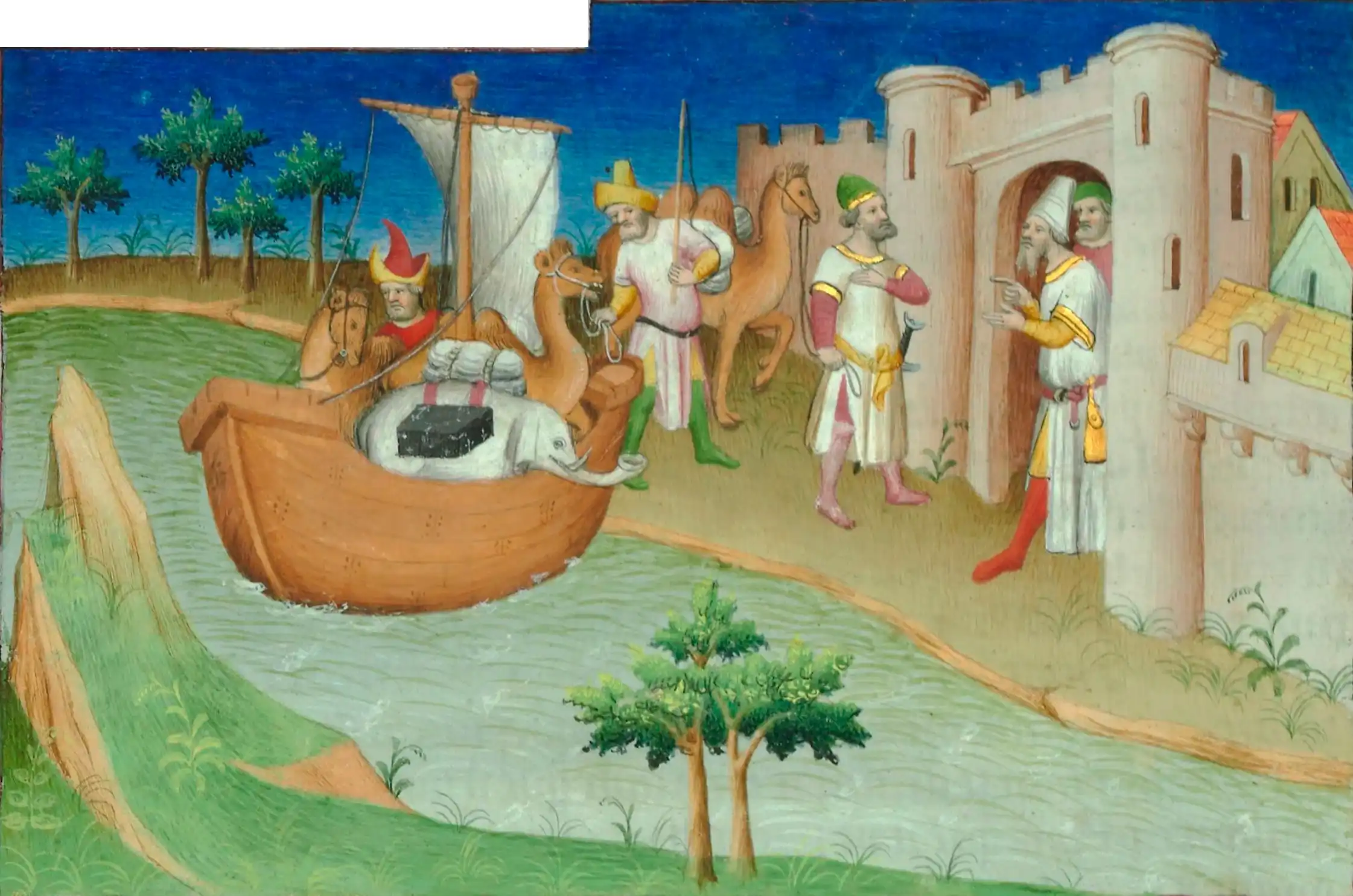
Before the corporation, business was personal: imagine Marco Polo traveling on long-distance trade expeditions with his father and uncle. In such a family business, they literally risked their lives. If a contract went wrong, personal property could be completely wiped out—or even their lives.
Merchant adventurers relied on two main forms of protection, but neither was guaranteed. The first was geopolitical: the relative peace brought by the Mongol Empire's 'Pax Mongolica.' If you offended someone favored by the Mongols, you were in trouble. The second was social: if you cheated someone, defaulted on a promise, or violated the 'Lex Mercatoria' (a self-enforcing honor code among merchants, roughly 1100–1600 AD), your reputation would be ruined, and you would be blacklisted from trade circles from Quanzhou to Timbuktu.
In the absence of strong institutions, a merchant's word was truly more valuable than gold. The Polo family had it relatively easy because they relied on blood ties. Many other commercial partnerships were not so smooth.
In the absence of strong institutions, a merchant's word was truly more valuable than gold.
A major perennial challenge in business is the tension between principals and agents; here, between investors and merchants. The medieval 'commenda' was an innovation that offered limited liability protection: investors were only liable for losses up to their invested amount, and the merchant theoretically so too. Partners shared profits according to the initial investment ratio. The commenda emerged spontaneously, predating any formal legislation. Yet, each venture could still sink with just a bit of bad weather. This model also could not scale: the commenda dissolved upon the completion of a voyage, bankruptcy, or death.

A further innovation was the Florentine 'compagnia'—think of the Medici Bank. This was a more durable and operationally complex legal entity than the commenda. A compagnia could sustain long-term commercial relationships between multiple parties but was still built on the personal liability of all partners. This was the most advanced pre-corporate tool in medieval history—the pinnacle of medieval partnership—yet still exposed partners to risk. The church and universities had long enjoyed legal personality derived from the Roman concept of 'universitas' (treating a collective as a single legal person), but commercial enterprises consistently lacked a fully separate legal identity.
These shortcomings were not addressed until the 17th century, when early modern Europe invented something new. This innovation and its legal protections made it easier for enterprises to raise capital, distribute ownership through share issuance, and protect owners from liability—this was the corporation. These corporate powers were most famously granted to the Dutch East India Company (VOC: Vereenigde Oostindische Compagnie), and like a revelation, they quickly spread elsewhere in Europe once people realized how good an idea it was. (Although the English East India Company was formed a few years earlier than the VOC, its system was far less mature, raising funds for specific voyages only and lacking a mechanism for public share offerings.)
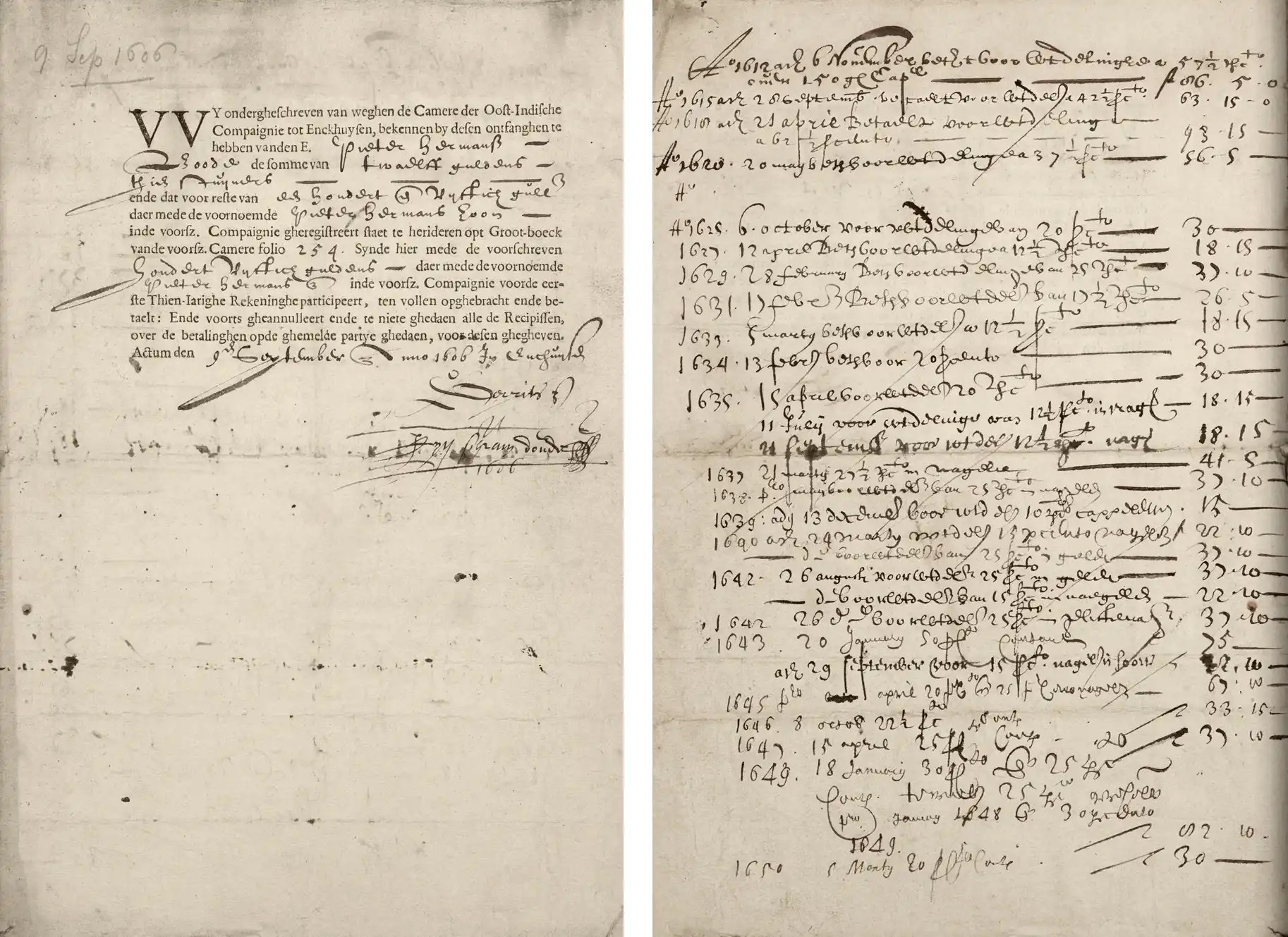
By reducing operational risk and lowering coordination costs, the corporate system made large-scale, capital-intensive enterprises possible—and created much of the modern world.
The Cost of Scale
While solving a set of real problems, the corporation also created new ones. Its first achievement was getting participants to care about each other's outcomes: by binding shareholders, directors, and ship captains to the same legal entity and the same profit line, the corporation forced parties to internalize costs they could otherwise have recklessly passed on to others. But common interest does not equal perfectly aligned incentives.
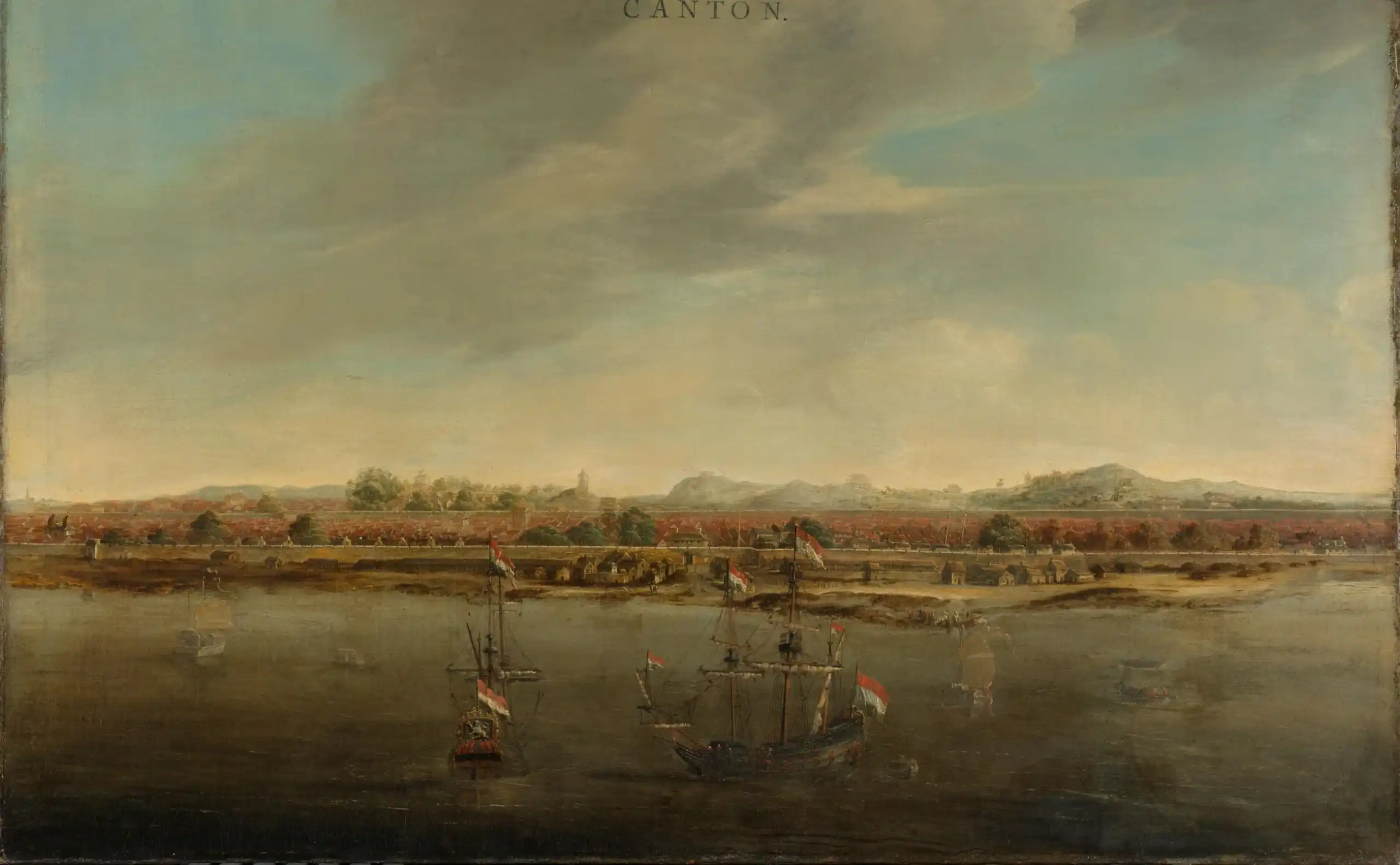
Take the VOC as an example. Its legal form was familiar yet complex: shareholders included many Dutch citizens eager for investment returns, but they were too busy with their own lives to pay attention to the VOC's daily operations or macro strategy. The board of directors, the 'Heeren XVII,' was responsible for planning how to make money for everyone. Captains and merchants on the front lines in Southeast Asia needed to make the best decisions for the company in the moment with limited information and resources.
That was the theory. In reality, the interests of these three parties were not perfectly aligned; one could benefit at the expense of the others.
Common interest does not equal perfectly aligned incentives.
How to ensure that ship captains, far from the oversight and control of the Seventeen Gentlemen, would not plunder other ships and flee with the money? Prevent merchants from taking bribes or making bigger deals for themselves in secret? Ensure the board made the right decisions? And if you were a group of shareholders who also embraced Protestant values and were uneasy about the VOC's sometimes predatory behavior, what then? These problems gave rise to various innovations in incentive design—options, dividends, audits, supervision, even so-called efficiency wages—as well as new legal protections, with the state stepping in to ensure fair play. Of course, it also spawned countless abuses of power.
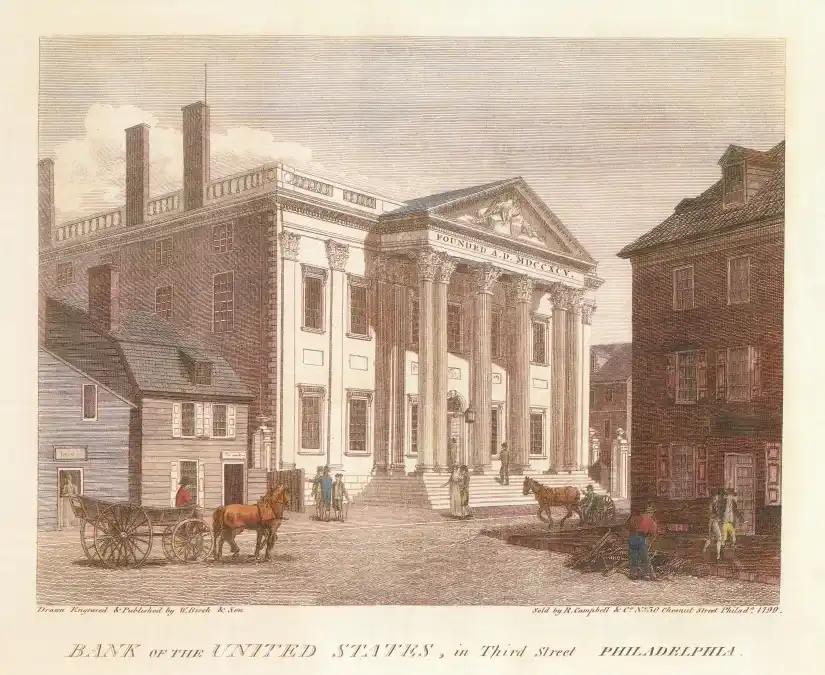
Nevertheless! The corporate system, as it evolved over time, remains the best tool we have for aligning incentives, reducing collaboration costs, creating profits, and protecting all participants.
Soon after the founding of the United States, the corporate form was recognized through special legislative charters, but initially it was extremely rare. The First Bank of the United States, chartered by Congress in 1791, was the earliest and most famous case. New York introduced the first general incorporation law in 1811. By the mid-19th century, more states allowed incorporation without a special act, and the concept of 'limited liability' gradually standardized across states. This was followed by an explosion in the number of corporations during the industrialization wave of the late 19th century, culminating with the landmark Delaware General Corporation Law of 1899.
The cooperative was another alternative that arose in the 19th century. It explored a different coordination solution: member ownership and democratic governance. Farmers, consumers, workers, and credit unions used cooperatives to more directly align participant interests with the organization itself. Cooperatives achieved success in some areas, such as agriculture (e.g., Land O'Lakes), but remained niche overall. Meanwhile, the corporate form grew increasingly popular.
Another alternative was the limited liability company, or LLC. Although the LLC has earlier predecessors like the German GmbH or the British Ltd., the LLC itself appeared quite late: Wyoming did not codify it into law until 1977. Before that, corporations offered limited liability but were rigid and faced double taxation, while partnerships were flexible but exposed participants to personal risk. The LLC combined the best of both—limited liability plus pass-through tax treatment—making it more suitable for a wider range of small businesses. Today, it has become the default form for many startups, small businesses, and investment vehicles.
Since then, a series of minor variants have emerged: the limited liability partnership (LLP, 1991), the low-profit limited liability company (L3C, 2008), the benefit corporation (2010), and so on. These are undoubtedly useful, refining the corporate form for specific purposes. But from time to time, technology changes the frontier of what is possible, giving rise to new forms that are revolutionary by comparison.
The DAO and Its Dilemma
Decentralization is one such revolutionary idea: the ability of large groups to coordinate without centralized management or trusted intermediaries.
Before the advent of crypto—and especially before Satoshi Nakamoto invented the blockchain—this possibility was more philosophical than practical. One of the earliest great innovations in crypto was the DAO, or decentralized autonomous organization. A DAO is an organization governed by rules encoded in software and managed collectively by participants rather than by a central authority. There is no centralized management team or board of directors, no Heeren XVII.
But decentralized governance is hard. Getting token holders to vote on important issues has proven more difficult than getting individual shareholders to vote for board members—and the latter already has notoriously low turnout, on par with U.S. municipal elections. Ensuring power doesn't concentrate in the hands of a few token holders is equally challenging.
Recent legal environments have exacerbated these challenges. Unfortunately, the previous U.S. administration's SEC refused to provide clear rules for crypto projects while weaponizing this ambiguity through aggressive enforcement actions against the industry. Entrepreneurship struggles to thrive under uncertainty; operating is hard enough even with clear rules.
Entrepreneurship struggles to thrive under uncertainty; operating is hard enough even with clear rules.
At the heart of the legality issue is one of the three prongs of the so-called 'Howey Test'—used by the SEC to determine if an instrument constitutes a security: (1) an investment of money; (2) in a common enterprise; (3) with profits to come solely from the efforts of others. For public companies, 'the efforts of others' includes the management operating the company. For crypto projects and their DAOs, the SEC has taken the position that the continued development of a protocol—even by a disparate group of people who may or may not hold tokens—renders the associated tokens subject to securities laws, making broad participation and on-chain trading impossible.
Just as importantly, because DAOs are not formally recognized by the state, project owners cannot avail themselves of any of the protections mentioned earlier, such as limited liability. In other words, DAO members could face unlimited personal liability, which, from a legal perspective, puts crypto governance almost back at a medieval level.
So, crypto projects follow their lawyers' advice. They set up foundations overseas as separate entities to oversee the continued development of the protocol, hoping to sever the connection between that work and U.S. business. Or they simply operate from outside the U.S. Both 'solutions' harm American innovation capability, as well as American jobs and tax revenue.
Offshore crypto foundations are, to put it politely, workarounds. These lawyer-crafted solutions shift power and continued development work to an 'independent' entity, hoping to sidestep securities regulation. While understandable in a hostile regulatory era, this strategy exposes a deeper flaw: foundations have weak incentive alignment mechanisms, limited ability to drive growth, and inevitably tend to consolidate centralized control.
But what choice do projects have when caught between 'getting sued by the SEC' and 'building a strange organizational structure that creates incentive misalignment problems'?
This is why DUNA—the Decentralized Unincorporated Nonprofit Association—is so important. It draws on the long history of business structures and governance design, pursuing the common goal of all enterprises: efficiently coordinating people around a shared purpose. But it achieves this without relying on centralized managerial control, thereby reducing the principal-agent problems and information asymmetries common in traditional corporations. For this reason, DUNA deviates from a core assumption of the Howey Test: that participants rely on the managerial efforts of others to create value.3
The Group Gets Its Own Legal Form
Before DUNA, there were only three choices for organizing and governing around crypto projects: DAOs lacked legal recognition, exposing members to potentially ruinous liability risk; traditional corporate entities forced projects into ill-fitting hierarchical structures while facing SEC regulatory actions; offshore foundations were legally and practically cumbersome, pushing much of the industry overseas.
Until recently, there was no clear way for a group of users governing a decentralized network to enjoy some of the protections of a corporation—an organizational form that blockchain technology has only just made possible. Now there is.
Simply put, DUNA turns a group of people into a legal entity. Three states—Alabama, West Virginia, and Wyoming—have now passed laws authorizing this new business structure. It combines the legal advantages of existing organizational forms with the ability for decentralized control, distinct from traditional corporations and something no previous entity has truly achieved before.
Simply put, DUNA turns a group of people into a legal entity.
What specific protections does DUNA offer? Its powers include legal personality, limited liability, perpetual existence, and state recognition—the same core elements that make the modern corporation work. Recognizing the 'legal personality' of a group allows the entity to enter into contracts on behalf of participants; limited liability ensures members are not personally liable for the organization's obligations. Together, these features allow large, loosely connected groups of people to collaborate—raising capital, holding assets, hiring management, paying taxes, making deals—without exposing members to excessive risk or ruinous liability.

Organizational forms do not take root overnight; they spread gradually through competition between states, lawyers becoming familiar, and entrepreneurs gaining trust. Before Delaware became the preferred state for incorporation, New Jersey was the dominant player;4 today, Texas and Nevada are catching up. The LLC, first approved in Wyoming, spread to all fifty states by 1997 after its tax treatment was clarified. As for DUNA, Wyoming is again the pioneer, legislating it in March 2024. Crypto protocols and communities including Uniswap Governance and Nouns DAO have already been early adopters.
Just as the corporate system gave large-scale enterprises their first native form, DUNA is now giving open, internet-scale decentralized networks their own legal form.
A New Era of Organizational Design
Think of DUNA as a legal shell that allows the governance mechanisms of a decentralized network to conduct business without introducing traditional centralized management. It builds on the Unincorporated Nonprofit Association (UNA)—a legal framework already adopted by 17 states and Washington D.C., helping groups like homeowner associations, civic associations, recreational sports leagues, religious congregations, and hobby clubs organize under the law. UNA provides lightweight governance, avoiding the heavy architecture of corporations or LLCs, allowing these groups to hold property, enter contracts, sue (or be sued) in the entity's name.5
Just as the corporate system did not replace all partnerships, DUNA will not replace everything that came before.
DUNA is similar: it allows a group of token holders or contributors to govern through on-chain rules or token-based voting without relying on a board or management team. Members enjoy limited liability protection, separating the entity's obligations from personal assets; the organization can also be understood and interacted with by courts, regulators, and counterparties.
But DUNA does not solve all problems. It does not eliminate governance challenges, does not guarantee decentralization (though to qualify as a DUNA, a DAO must have at least 100 active members), and cannot magically bypass securities laws. What it truly does is fill a specific gap: making decentralized organizations legally recognized organizations.
From informal merchant networks, to partnerships, to corporations, to LLCs, and now to DAOs, each new organizational technology has emerged when people needed new models of coordination. DUNA may mark the beginning of a new era in the evolution of organizational design. But just as the corporate system did not replace all partnerships, DUNA will not replace everything that came before. It simply expands the menu of options. And for the first time, it allows decentralized networks to be represented by a fully recognizable legal entity.
For most of human history, organizing at scale—even a modest scale—meant taking on immense personal risk. Daring entrepreneurs like the Polo family relied on family, reputation, and fragile conventions to hold everything together, always one shipwreck away from ruin.6 The corporate system changed that calculus, separating the fate of the venture from the fate of the people behind it. DUNA extends that separation to a new frontier: the community governance of blockchain-based decentralized networks.
Now, even a loosely organized group of strangers on the internet can act as a single entity—entering agreements, holding assets, taking on risk—without any single participant having to stake their livelihood. In that sense, it's a new answer to one of the oldest questions in business history.
Acknowledgments: Thanks to Aiden Slavin, Alejandro Flores, Miles Jennings, Scott Duke Kominers, Sonal Chokshi, and Steph Zinn for their valuable feedback and editing suggestions. Any errors remain the author's own.
Cooperatives seem to be a spiritual fit for internet-native organizations like DAOs, but cooperatives presuppose a relatively stable, identifiable membership group and hierarchical leadership structure, which many decentralized networks precisely lack.
Interestingly, another major U.S. contribution—corporate bankruptcy law—did not spread widely around the world for quite some time. This set of laws codified the idea that 'one can take a risk, fail, restructure, and try again,' acting as an engine of U.S. dynamism.
Wyoming attempted to address this issue in 2021 by allowing DAOs to organize as LLCs. But LLCs still assume a clear list of members, K-1 tax filings, and a profit motive. While suitable for some small investment clubs, they are awkward for a network driven by a nonprofit mission, permissionless, and with anonymous members, and they do little to address the Howey question—whether the membership interest itself constitutes a security.
That is, until then-New Jersey Governor Woodrow Wilson cracked down on his state's business-friendly incorporation laws, unintentionally doing Delaware a huge favor.
Trusts might seem like natural vehicles for decentralized groups on the surface, but they are not a good fit. Trusts are designed around a relationship between an identifiable trustee and beneficiaries, an awkward choice for organizations deliberately seeking diffuse governance.
Incidentally, Marco Polo once commanded a Venetian warship in a war between rival trading powers, was later captured and imprisoned in Genoa, and it was in prison that he dictated his famous travelogue.






