Author: Curry, Shenchao TechFlow
The barrier between the tech and sports worlds can often be broken with just one staggeringly successful venture capital investment.
NBA top-tier superstar Kevin Durant, nicknamed "The Reaper" and feared by opponents on the court, might be just as formidable—a veritable grim reaper—in the investment world.
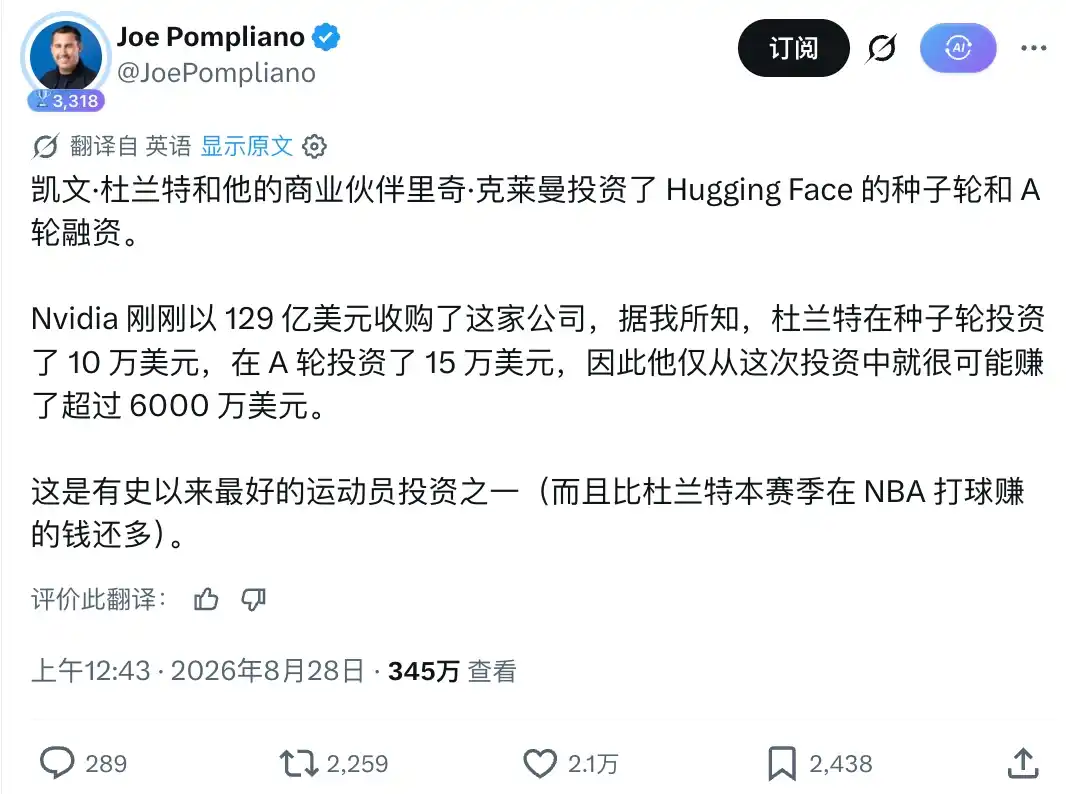
On August 27th, renowned sports media personality Joe Pompliano revealed a set of highly impactful financial figures on X: Kevin Durant and his business partner Rich Kleiman once invested approximately $250,000 in the open-source AI platform Hugging Face. With the industry outlet The Information reporting that Nvidia plans to acquire the company for $12.9 billion, the paper return on this early investment is projected to exceed $60 million.
This figure even surpasses Durant's salary of roughly $43.9 million for the 2026-27 season with the Houston Rockets. The tweet quickly sparked widespread discussion, and a "100x return report card" detailing Durant's VC triumphs promptly went viral in crypto and venture capital circles.
Betting on the "GitHub of AI": A Seed Round VC Investment That Outpaced His Annual Salary
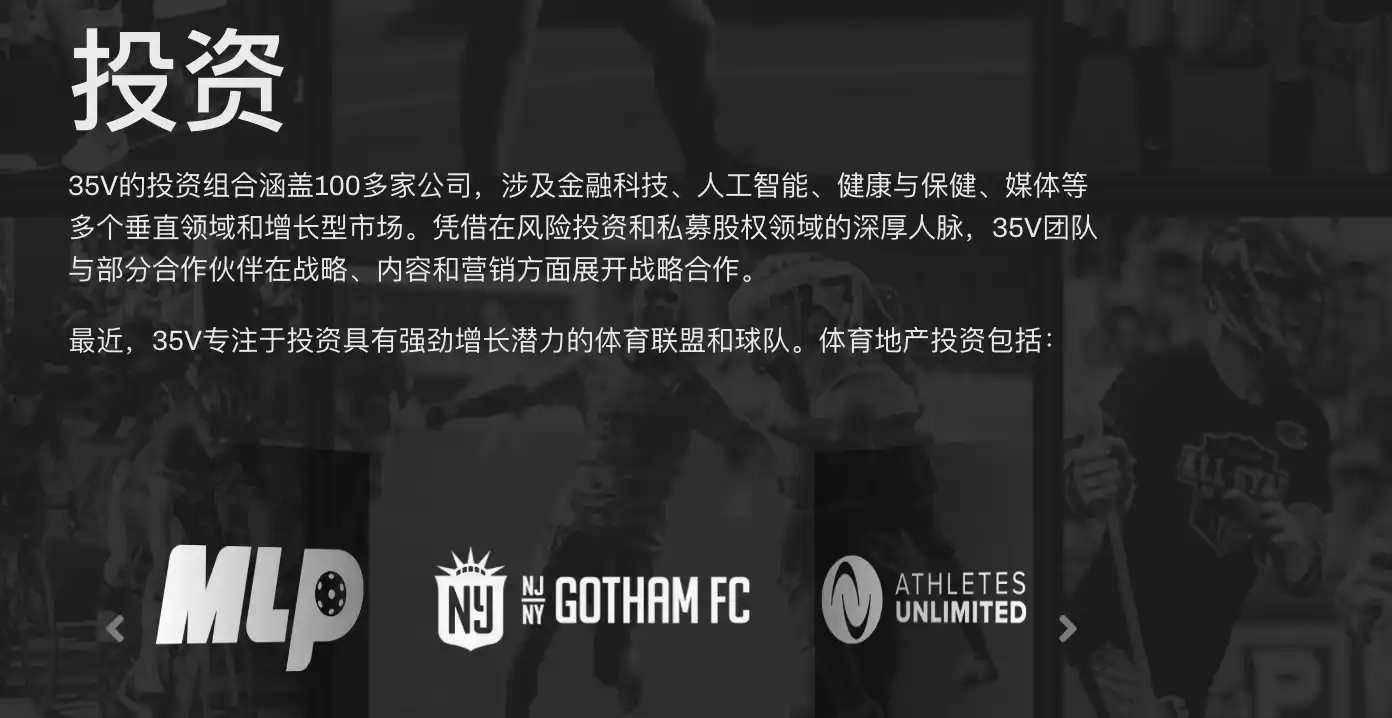
Hugging Face, founded in 2016, successfully pivoted from an early teen chat app to become today's leading open-source model community, hailed as the "GitHub of AI" within the industry. According to disclosed investment clues, Durant's family office, Thirty Five Ventures (commonly abbreviated as 35V), participated in the company's $4 million seed round (approximately $100,000) in 2018 and its Series A funding (approximately $150,000) in 2019.
This past August, the institution reached a valuation of $4.5 billion upon completing its Series D funding round. This week, rumors emerged that Nvidia made a buyout offer as high as $12.9 billion. Based on Pompliano's estimates, if a deal materializes at that valuation, this $250,000 early stake would translate into a staggering return of over 240 times its original value. This led him to remark in his tweet that this is "one of the best investments ever made by an athlete."
Unveiling Durant's Phenomenal Venture Capital Track Record
If the jaw-dropping return of turning $250k into $60 million with Hugging Face is a game-winning shot, then the comprehensive VC scorecard uncovered by the X account @burrytracker truly reveals Durant's formidable prowess as a Silicon Valley "VC veteran."
In this widely circulated portfolio review, comparing the valuations at his entry points to current or peak public market valuations reveals a screen full of mind-boggling multiples. Beyond the legendary status earned with Hugging Face (+23,900%), his bets on other tech and crypto giants remain remarkably impressive:
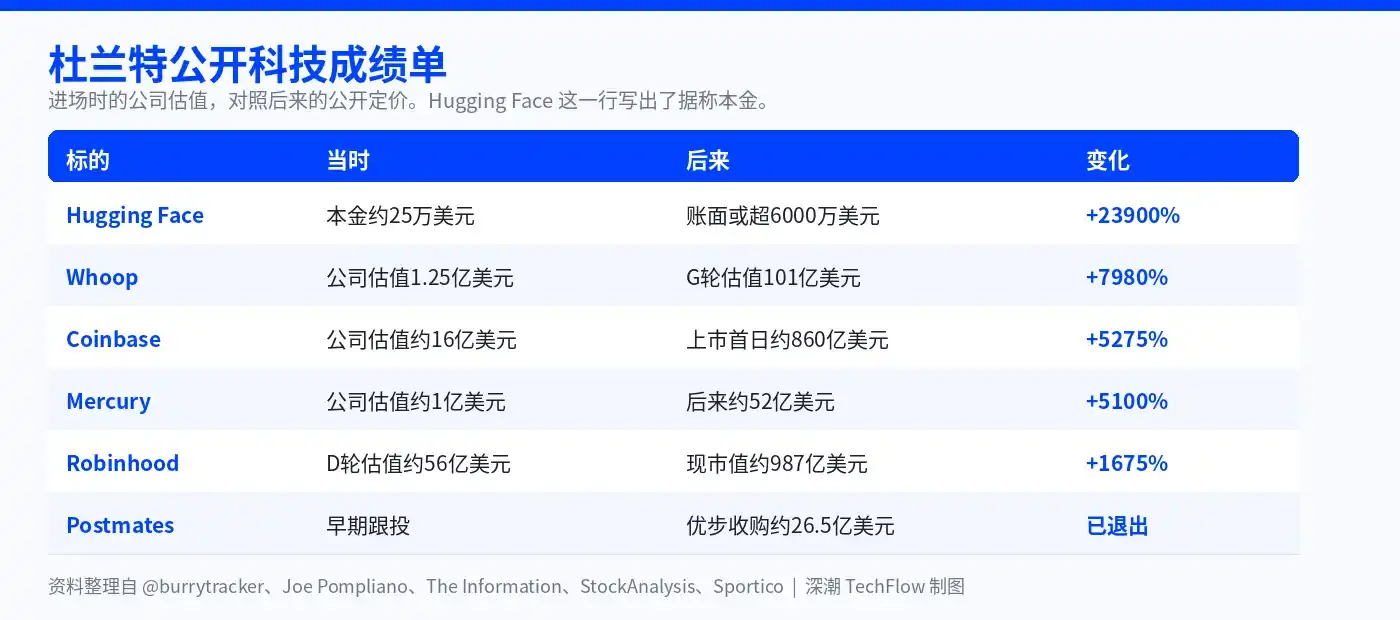
- Coinbase (+5,275%): 35V decisively entered when Coinbase was valued at just $1.6 billion, accompanying the crypto exchange through its ascent to witness its first-day public market valuation skyrocket to $86 billion.
- Whoop (+7,980%): Quietly invested in this sports wearable giant when its valuation was a mere $125 million; its valuation has now surpassed $10.1 billion.
- Robinhood (+1,675%): Invested in the Series D round at a $5.6 billion valuation; now this "retail trading hub" for stocks and crypto is nearing the $100 billion market cap mark (approximately $99.4 billion).
- Mercury (+5,100%): Banking services platform for startups, entered at a $100 million valuation, now elevated to $5.2 billion.
- Overtime (+2,480%): Sports media upstart, followed from an early valuation of $31 million all the way to $800 million.
From crypto infrastructure and online brokerages to AI and digital health, Durant's capital reach has long transcended the traditional athlete framework of "taking endorsement fees to be a mascot" for consumer goods.
This investment portfolio, encompassing tech newcomers like Rubrik and Postmates, would undoubtedly qualify as a top-tier, front-line track record even within professional Silicon Valley VC circles.
Countdown on the Court, Perpetual Motion in Capital
Although some professional investors in the comments pointed out that the table equates "the historical maximum increase in a company's market value" with "personal paper gains," overlooking equity dilution from multiple funding rounds and exit timing, it's undeniable that Durant's highly forward-looking vision has been fully validated by the market.
Unlike his generational peers—LeBron James, who leans towards brand and team equity investments, and Stephen Curry, who prefers media and consumer plays—Durant has clearly carved out a venture capital path with a more Silicon Valley geek ethos.
Today, this veteran playing for the Houston Rockets is entering the twilight of his professional career. An athlete's physical capabilities and peak performance are inevitably on a countdown, but the flywheel of his 35V capital empire may have just begun to spin at full speed. As far back as 2010, a young Durant openly stated on social media that rather than wasting time and money at clubs (nightclubs), one should invest those resources.
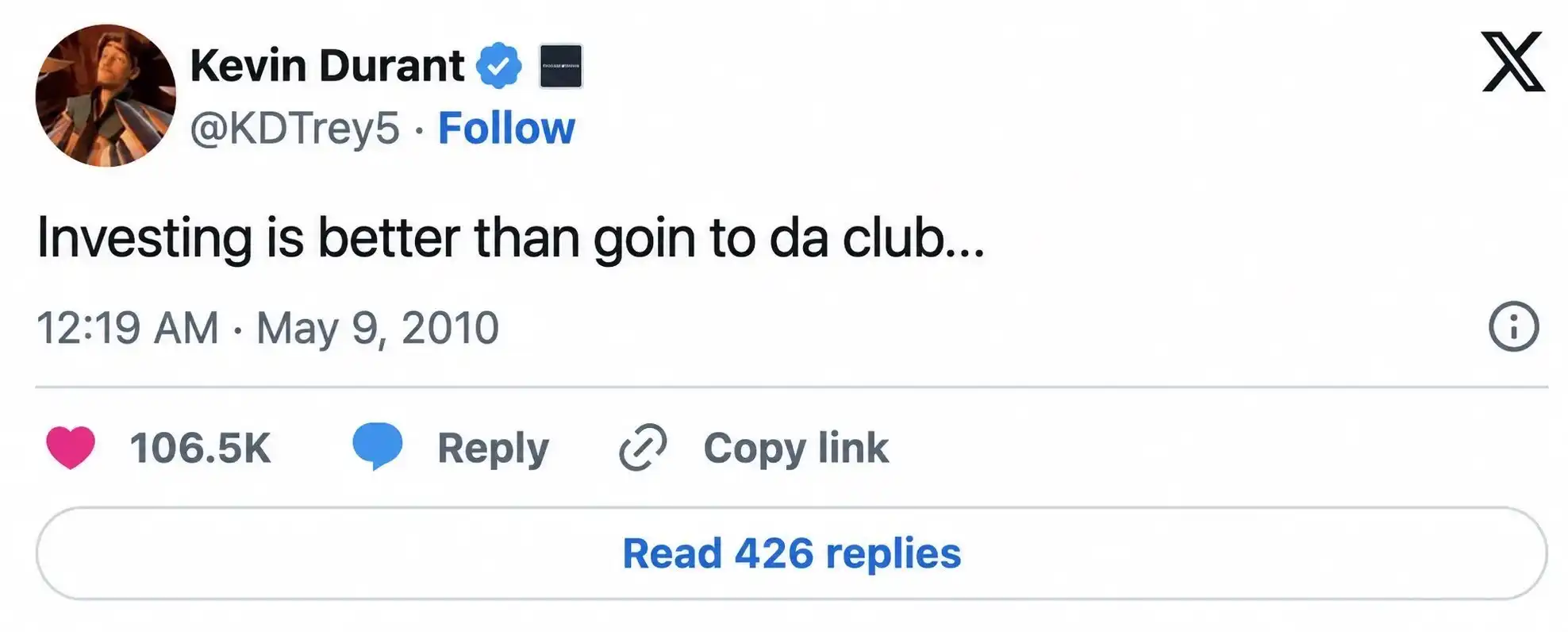
Over a decade later, the $60 million paper legend from the Hugging Face investment might still await final settlement, but he has also set an example for many athletes who go bankrupt after retirement due to reckless spending.
The basketball will stop bouncing one day, but the compound interest of capital never retires.