NGRAVE releases ZERO Firmware 1.8 with Universal QR Protocol and Polygon token support

cointelegraphОпубліковано о 2026-08-27Востаннє оновлено о 2026-08-27

Анотація

NGRAVE has launched firmware 1.8 for its ZERO hardware wallet, featuring the new open-source Universal QR Protocol for faster and more transparent QR communication. This update also adds support for major Polygon tokens, improves fingerprint performance, and enhances overall stability. The Universal QR Protocol, an open standard based on the Blockchain Commons UR ecosystem, allows for independent verification of all data exchanges. Additionally, the firmware streamlines the asset list by removing inactive tokens and discontinuing support for specific legacy blockchains. NGRAVE's companion app, LIQUID, already supports the new protocol.

August 27, 2026 – NGRAVE has released firmware 1.8 for its ZERO hardware wallet, introducing the open-source Universal QR Protocol, faster QR scanning and expanded support for tokens on Polygon. The update also improves fingerprint performance, stability and the overall user experience.

The Universal QR Protocol replaces ZERO’s previous QR communication format for wallet synchronization and transaction signing. Published under the MIT license, it is designed as an open, multi-blockchain standard that developers and security researchers can inspect, verify and build on.

For users, one of the most noticeable changes is faster QR communication. The new animated QR format uses compact, redundant data, allowing scanning to begin at any point in the sequence without waiting for it to restart. Both synchronization and transaction signing become faster and more reliable.

Expanded Polygon support

Firmware 1.8 expands ZERO’s asset support with Polygon tokens, including USDC, USDT0, WETH, WBTC, DAI, AAVE, LINK and UNI. The update also adds PAXG and AMP on Ethereum and USDT on MultiversX.

At the same time, NGRAVE has streamlined the device’s asset list by removing inactive, duplicated and legacy tokens. BNB Beacon Chain and Groestlcoin support have also been discontinued, while BNB on BNB Smart Chain remains supported.

Verify, don’t trust

The Universal QR Protocol makes communication between ZERO and NGRAVE LIQUID visible and independently verifiable. Every transfer uses an open QR format that can be decoded with independent tools, giving users greater transparency into what their device is communicating.

Built on the Blockchain Commons UR ecosystem, the protocol extends support across multiple blockchains, tokens and NFTs. Its specifications, libraries and registry are publicly available, with the registry open to community contributions.

“We designed the ZERO so nothing invisible ever crosses into or out of it. Opening the Universal QR Protocol is the last step: now you don’t even have to take our word for what the QR codes say.” – Roy, CEO of NGRAVE.

NGRAVE LIQUID already supports Universal QR, so users only need to update their ZERO to firmware 1.8, more information is available on the official website.

About NGRAVE

NGRAVE is a Belgian digital asset security company focused on self-custody solutions for individuals and institutions. Its ecosystem includes the ZERO hardware wallet, GRAPHENE backup solution and LIQUID companion app.

Пов'язані питання

QWhat are the main new features introduced in NGRAVE ZERO Firmware 1.8?

AFirmware 1.8 introduces the open-source Universal QR Protocol, faster QR scanning, expanded support for tokens on Polygon, and improvements to fingerprint performance, stability, and overall user experience.

QWhat is the key benefit of the new Universal QR Protocol for users?

AThe key benefit is faster and more reliable QR communication. The new animated QR format uses compact, redundant data, allowing scanning to begin at any point in the sequence without waiting for it to restart, making synchronization and transaction signing faster.

QWhich specific Polygon tokens are now supported by the ZERO wallet with this update?

AThe update adds support for Polygon tokens including USDC, USDT0, WETH, WBTC, DAI, AAVE, LINK, and UNI.

QWhat does the Universal QR Protocol enable in terms of transparency and verification?

AIt makes communication between ZERO and NGRAVE LIQUID visible and independently verifiable. Every transfer uses an open QR format that can be decoded with independent tools, giving users greater transparency into their device's communication.

QWhat actions did NGRAVE take regarding the device's asset list in this firmware update?

ANGRAVE streamlined the asset list by removing inactive, duplicated, and legacy tokens. Support for BNB Beacon Chain and Groestlcoin was discontinued, while BNB on BNB Smart Chain remains supported.

Пов'язані матеріали

Solana Proposals Could Lead to Reduction in Staking Yields to 2.25% and Cut Emissions by $1.5 Billion

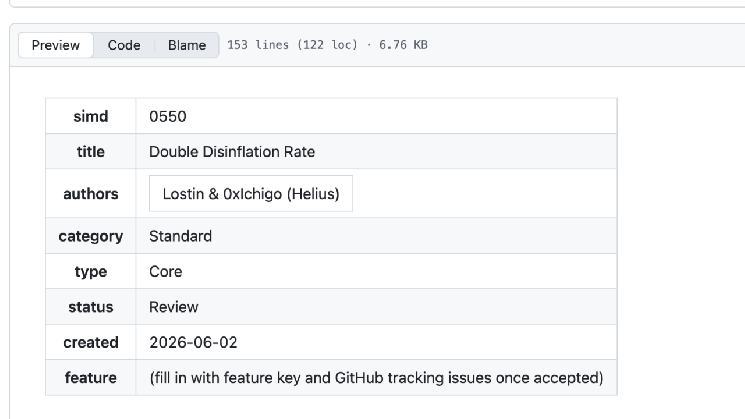
Solana is moving towards a stricter monetary model that could lead to a SOL deficit and significantly reduce staking rewards for holders. Two governance proposals drive these changes. SIMD-550, currently under vote, would double Solana's annual disinflation rate from 15% to 30%, accelerating the timeline to reach a final inflation rate of ~1.5% to the first half of 2029. The second, SIMD-553 (already approved), introduces additional token burning tied to computational units used on the network. Together, these measures could reduce SOL emission by an estimated $1.4-$1.5 billion over six years. The immediate impact would be lower staking yields, potentially falling from the current ~5.25% to approximately 4.34% in year one, 3% in year two, and 2.25% by year three. Analyst Matt Mena from 21Shares suggests inflation should be tied to economic metrics to help offset this decline. The changes also raise concerns for validator economics, with some potentially becoming unprofitable as inflation rewards decrease and voting costs may rise. However, the lower passive yield might push a significant portion of the 67.9% staked SOL into Solana's DeFi ecosystem for activities like lending and trading. This shift could boost network fee revenue to compensate for lower inflation rewards. The proposals aim to trade lower yield today for less dilution tomorrow, betting that network growth and usage will make this a worthwhile trade-off for SOL holders.

cryptonews.ru27 хв тому

Solana Proposals Could Lead to Reduction in Staking Yields to 2.25% and Cut Emissions by $1.5 Billion

cryptonews.ru27 хв тому

Chairman of Olympic Committee detained in Poland over crypto scandal

The Chairman of the Polish Olympic Committee, Radosław Piesiewicz, was detained in Warsaw in connection with a case involving the cryptocurrency exchange Zondacrypto. The detention was carried out on the order of the Katowice National Prosecutor's Office and the Central Bureau for Combating Cybercrime. Piesiewicz denies the allegations, claiming he never had accounts on the exchange or dealt in cryptocurrency, and links the detention to political persecution. He has led the Olympic Committee since 2023 and is also a parliamentarian for the Law and Justice party. The prosecutor's office initiated the case in April 2026 on grounds of fraud and money laundering amounting to approximately 350 million PLN (around €80 million). The investigation found the exchange was used to transfer funds abroad and cash out criminal proceeds, with clients unable to withdraw their assets. A total of 13 people are implicated, including the exchange's founder. Zondacrypto became the general sponsor of the Polish Olympic Committee and team in October 2025, with a contract lasting until 2028. In April 2026, Piesiewicz stated the committee could not terminate the agreement without incurring unaffordable penalties. The investigation revealed Piesiewicz received expensive gifts from exchange representatives, including a €40,000 watch, as well as paid trips to Monaco and Bergamo.

cryptonews.ru27 хв тому

Chairman of Olympic Committee detained in Poland over crypto scandal

cryptonews.ru27 хв тому

Bitcoin 'Basically Hopped' to $80K. What Will Happen to the Price in Autumn?

Bitcoin surged close to $80,000 in August, marking its fastest growth since 2024. Experts anticipate continued volatility for the autumn season, with price forecasts heavily dependent on macroeconomic conditions and regulatory developments in the US. Key drivers for the recent rise include a weakening US dollar, renewed capital inflows into spot Bitcoin ETFs, and liquidations of trading positions. The US Treasury's decision to increase long-term bond purchases has helped stabilize debt markets but pressured the dollar, leading investors to seek assets like Bitcoin as a hedge. Looking ahead, experts outline two primary scenarios for Bitcoin's price. A positive outcome, supported by favorable macroeconomics and the potential passage of the CLARITY Act regulating crypto in the US, could push Bitcoin toward $85,000-$100,000. Conversely, a negative scenario involving hawkish signals from the US Federal Reserve or regulatory setbacks could trigger a correction, potentially driving the price back down to the $62,000-$75,000 range. Institutional demand, reflected in consistent ETF inflows, is seen as a crucial stabilizing factor, gradually outweighing the influence of Bitcoin's traditional four-year cycles. Meanwhile, a broad rally in altcoins is not widely expected, as capital is likely to flow selectively into the most liquid projects. The central question for autumn is whether institutional buying can transform August's rapid surge into a sustainable upward trend.

cryptonews.ru31 хв тому

Bitcoin 'Basically Hopped' to $80K. What Will Happen to the Price in Autumn?

cryptonews.ru31 хв тому

Торгівля

Спот
活动图片