Bitcoin 'Basically Hopped' to $80K. What Will Happen to the Price in Autumn?

cryptonews.ruОпубліковано о 2026-08-27Востаннє оновлено о 2026-08-27

Анотація

Bitcoin surged close to $80,000 in August, marking its fastest growth since 2024. Experts anticipate continued volatility for the autumn season, with price forecasts heavily dependent on macroeconomic conditions and regulatory developments in the US. Key drivers for the recent rise include a weakening US dollar, renewed capital inflows into spot Bitcoin ETFs, and liquidations of trading positions. The US Treasury's decision to increase long-term bond purchases has helped stabilize debt markets but pressured the dollar, leading investors to seek assets like Bitcoin as a hedge. Looking ahead, experts outline two primary scenarios for Bitcoin's price. A positive outcome, supported by favorable macroeconomics and the potential passage of the CLARITY Act regulating crypto in the US, could push Bitcoin toward $85,000-$100,000. Conversely, a negative scenario involving hawkish signals from the US Federal Reserve or regulatory setbacks could trigger a correction, potentially driving the price back down to the $62,000-$75,000 range. Institutional demand, reflected in consistent ETF inflows, is seen as a crucial stabilizing factor, gradually outweighing the influence of Bitcoin's traditional four-year cycles. Meanwhile, a broad rally in altcoins is not widely expected, as capital is likely to flow selectively into the most liquid projects. The central question for autumn is whether institutional buying can transform August's rapid surge into a sustainable upward trend.

"RBC-Crypto" does not provide investment advice; the material is published for informational purposes only. Cryptocurrency is a volatile asset that can lead to financial losses.

If Bitcoin's price stays around $80K until the end of August, this month will become the period of fastest growth for the cryptocurrency since 2024. However, the successes of the last month of summer do not guarantee momentum in the autumn. Market participants are trying to understand whether what is happening is the beginning of sustainable growth or a local spike.

In forecasts for September, experts interviewed by "RBC-Crypto" suggested several possible scenarios. With positive developments in the macroeconomy and cryptocurrency regulation in the US, experts predict the possibility of Bitcoin's price rising up to $100K. With negative developments — a drop to $62K per coin.

Macroeconomics and the Dollar

The cryptocurrency market is approaching autumn in a noticeably stronger state than at the beginning of August. After several months of decline and consolidation, Bitcoin broke out of the $62-66K range and exceeded the $80K mark. Since the start of the month, the price of the first cryptocurrency has gained (as of August 27) about 26%.

This growth was facilitated by the weakening of the dollar, the resumption of inflows into crypto-based exchange-traded funds (ETFs), and the liquidation of trading positions, notes VG GROUP Managing Partner Vagiz Nurullov. In his opinion, the main driver in autumn will remain the American macroeconomy.

He noted the US Treasury's decision to increase the buyback of long-term bonds, which in his view helped stabilize the debt market but simultaneously increased pressure on the dollar. As a result, investors began buying gold and Bitcoin again as a hedge against the gradual depreciation of national currencies.

However, the expert warned that inflation and bond yields remain high, so the harsh rhetoric of the US Federal Reserve (Fed) is still capable of provoking a sharp correction in the markets.

Independent IT consultant Roman Nekrasov also links the rise in Bitcoin's price to the macroeconomic agenda: "The US Treasury's decision to increase the buyback of long-term bonds is reviving interest in risk assets." In his opinion, this is precisely what prompted investors to more actively return to assets like Bitcoin for hedging risks.

Cryptocurrency Regulation in the US

Another important factor influencing the market will be regulation, noted Nurullov. He recalled that in the US, a strategic Bitcoin reserve has already been created, legislation on stablecoins has been adopted, and major market regulators have begun jointly developing rules for digital assets. American authorities are gradually transitioning from "fighting cryptocurrencies to integrating them into the traditional financial system."

The main political event in September, according to Nurullov, will be the decision on the CLARITY Act bill, developed to regulate the crypto market. He noted that expectations for the law's passage have already become one of the reasons for the August growth, but passing the law in the Senate remains difficult. The failure of the vote will not change the overall favorable course of the administration, but could lead to asset sales on negative news, the expert added.

Notably, representatives of the largest asset manager — BlackRock — do not consider regulation in the US to be a factor influencing Bitcoin's price at all. They believe all necessary regulation for Bitcoin already exists and this issue has a greater impact on the decentralized finance (DeFi) sector.

"For the market, this is important because it reduces regulatory uncertainty. The less uncertainty, the higher the willingness of large capital to invest in assets," clarified Nekrasov.

Institutional Demand for Bitcoin

Institutional demand is also returning, writes Nurullov, pointing out that after a period of outflows, spot Bitcoin ETFs recorded five consecutive days of inflows totaling almost $2 billion. Now it is ETFs, funds, and corporate purchases that are increasingly determining the market direction, gradually reducing the significance of the classic four-year cycle, he emphasizes.

For the incomplete August (as of the 27th), the capital inflow into Bitcoin ETFs amounted to almost $3.3 billion. Compared to less than $200 million a month earlier and more than $7 billion in total outflow over the two months prior to that.

Nekrasov also pointed to the importance of institutional demand, noting that if the current dynamic of ETF capital inflows continues, it could become an important stabilizing factor for the price.

Forecasts for Bitcoin and Altcoin Prices

Experts do not expect broad growth in the altcoin market. In particular, Nurullov believes this may not happen: "Bitcoin benefits from the weakening dollar, whereas Ethereum and most other assets need a full return of risk appetite. Therefore, capital will most likely be selectively distributed among the most liquid and fundamentally strong projects."

Nurullov's base scenario for autumn is Bitcoin's price moving in the $74-88K range. Consolidation above $85K would open the way for Bitcoin to $95-100K.

At the same time, according to the expert, in case of a tougher stance from the Fed or the failure of the CLARITY Act, a negative scenario could materialize — then Bitcoin's price could return to $70-72K, and then to $64-67K.

"Volatility has already returned — now the question is whether institutional demand can turn the August surge into a sustainable trend," concluded Nurullov.

Nekrasov also highlights two main scenarios. The first — if the macroeconomic and regulatory backdrop remains supportive and Bitcoin manages to hold above $75K. In his opinion, only in this case can one expect Bitcoin to move towards the $85-90K range during September.

Nekrasov's second scenario is a correction with a return to previous accumulation zones around $72-75K: "In this case, expectations for growth are postponed until late autumn and clearer signals from the US Fed regarding further monetary policy."

The expert clarified that precisely because of the speed of Bitcoin's price growth in August, the momentum looks ambiguous, as "Bitcoin basically hopped to the current level."

end-content

Пов'язані питання

QAccording to the article, what are the two main scenarios for Bitcoin's price movement in autumn, and what are their respective key price levels?

AThe article outlines two main scenarios: 1) A positive scenario where, if supportive macroeconomic and regulatory conditions persist, Bitcoin could climb towards $85-90k in September, with a potential target of $95-100k if it consolidates above $85k. 2) A negative scenario where, due to a hawkish Fed stance or failure of the CLARITY Act, Bitcoin could correct back to the $70-72k range and potentially down to $64-67k. The base autumn forecast is movement within a $74-88k range.

QWhat major macroeconomic event in the US, mentioned in the article, is credited by experts for helping fuel Bitcoin's rise in August?

AThe US Treasury's decision to increase the buyback of long-term bonds is credited by experts like Vagiz Nurullov and Roman Nekrasov. This action helped stabilize the debt market but simultaneously increased pressure on the US dollar, prompting investors to turn to assets like Bitcoin and gold as a hedge against currency depreciation, thereby boosting Bitcoin's price.

QHow has institutional demand for Bitcoin, particularly via ETFs, changed recently according to the article?

AInstitutional demand has notably returned. After a period of outflows, spot Bitcoin ETFs saw five consecutive days of inflows totaling almost $2 billion in late August. For the incomplete month of August (data as of the 27th), ETF inflows were nearly $3.3 billion, a stark contrast to less than $200 million in July and over $7 billion in net outflows over the two preceding months.

QWhat is the CLARITY Act, and what potential market impact could its failure have according to market experts cited?

AThe CLARITY Act is a US legislative bill designed for crypto market regulation. Experts note that anticipation of its passage contributed to August's price growth. However, its passage in the Senate is complex. A failure in the voting, while not changing the overall favorable stance of the administration, could lead to asset sell-offs triggered by the negative news, potentially driving Bitcoin's price lower.

QWhy does expert Vagiz Nurullov believe a broad 'altcoin season' might not occur, despite Bitcoin's strength?

ANurullov believes Bitcoin benefits directly from the weakening US dollar. In contrast, assets like Ethereum and most altcoins require a full return of risk appetite among investors to thrive. Therefore, capital is likely to be selectively distributed only among the most liquid and fundamentally strong projects, rather than flooding the entire altcoin market.

Пов'язані матеріали

Solana Proposals Could Lead to Reduction in Staking Yields to 2.25% and Cut Emissions by $1.5 Billion

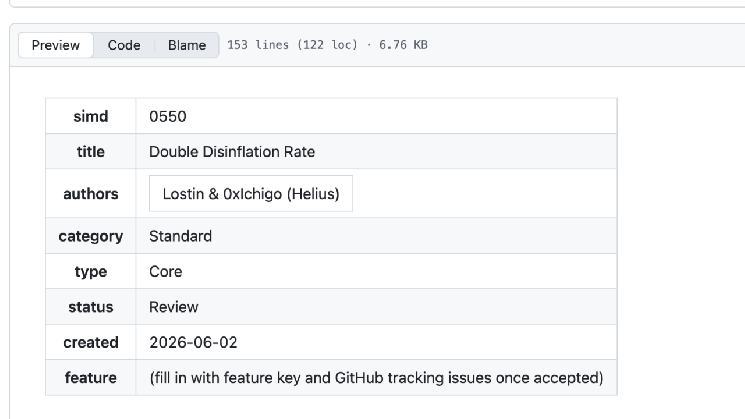
Solana is moving towards a stricter monetary model that could lead to a SOL deficit and significantly reduce staking rewards for holders. Two governance proposals drive these changes. SIMD-550, currently under vote, would double Solana's annual disinflation rate from 15% to 30%, accelerating the timeline to reach a final inflation rate of ~1.5% to the first half of 2029. The second, SIMD-553 (already approved), introduces additional token burning tied to computational units used on the network. Together, these measures could reduce SOL emission by an estimated $1.4-$1.5 billion over six years. The immediate impact would be lower staking yields, potentially falling from the current ~5.25% to approximately 4.34% in year one, 3% in year two, and 2.25% by year three. Analyst Matt Mena from 21Shares suggests inflation should be tied to economic metrics to help offset this decline. The changes also raise concerns for validator economics, with some potentially becoming unprofitable as inflation rewards decrease and voting costs may rise. However, the lower passive yield might push a significant portion of the 67.9% staked SOL into Solana's DeFi ecosystem for activities like lending and trading. This shift could boost network fee revenue to compensate for lower inflation rewards. The proposals aim to trade lower yield today for less dilution tomorrow, betting that network growth and usage will make this a worthwhile trade-off for SOL holders.

cryptonews.ru1 год тому

Solana Proposals Could Lead to Reduction in Staking Yields to 2.25% and Cut Emissions by $1.5 Billion

cryptonews.ru1 год тому

Chairman of Olympic Committee detained in Poland over crypto scandal

The Chairman of the Polish Olympic Committee, Radosław Piesiewicz, was detained in Warsaw in connection with a case involving the cryptocurrency exchange Zondacrypto. The detention was carried out on the order of the Katowice National Prosecutor's Office and the Central Bureau for Combating Cybercrime. Piesiewicz denies the allegations, claiming he never had accounts on the exchange or dealt in cryptocurrency, and links the detention to political persecution. He has led the Olympic Committee since 2023 and is also a parliamentarian for the Law and Justice party. The prosecutor's office initiated the case in April 2026 on grounds of fraud and money laundering amounting to approximately 350 million PLN (around €80 million). The investigation found the exchange was used to transfer funds abroad and cash out criminal proceeds, with clients unable to withdraw their assets. A total of 13 people are implicated, including the exchange's founder. Zondacrypto became the general sponsor of the Polish Olympic Committee and team in October 2025, with a contract lasting until 2028. In April 2026, Piesiewicz stated the committee could not terminate the agreement without incurring unaffordable penalties. The investigation revealed Piesiewicz received expensive gifts from exchange representatives, including a €40,000 watch, as well as paid trips to Monaco and Bergamo.

cryptonews.ru1 год тому

Chairman of Olympic Committee detained in Poland over crypto scandal

cryptonews.ru1 год тому

Торгівля

Спот
活动图片