The Truth of Trading: A Numbers Game of Patterns and Probabilities

深潮Опубліковано о 2025-12-26Востаннє оновлено о 2025-12-26

Анотація

The Truth of Trading: A Numbers Game of Patterns and Probability Most traders fail not due to a lack of methods or information, but because they misunderstand the nature of trading. Mark Douglas, in "Trading in the Zone," redefines the market as a probabilistic environment where an edge only materializes over a sufficiently long period. Trading is not about prediction or seeking certainty; it is a numbers game of pattern recognition. A valid trading pattern does not guarantee that any single trade will be profitable. It merely indicates a historical probability of success. Each individual trade outcome is random, but the overall probability distribution over many trades is not. Traders must evaluate performance like a casino: focus on long-term expectation and repeated execution, not single wins or losses. Accepting that "anything can happen" is liberating. It removes the emotional sting from losses, enables disciplined stop-loss execution, and eliminates hesitation. The ideal "flow state" is not excitement but emotional neutrality—executing the plan without attachment to outcomes or need to be right. Ultimately, traders cannot control results, but they can control their execution. Success comes from emotional detachment and consistent repetition. When traders stop trying to prove themselves right and let the probabilities work over time, they align with the true nature of the market: a numbers game based on pattern recognition and disciplined repetition.

Written by: AsymTrading

Compiled by: AididiaoJP, Foresight News

Most traders fail not because they lack methods, indicators, or information, but because they don't understand what trading truly is.

In "Trading in the Zone," Mark Douglas completely shatters the notion that trading is about prediction, seeking certainty, or being right. Instead, he redefines the market: it is a probabilistic environment where your edge only manifests over a sufficiently long period.

This is why many experienced traders summarize Douglas's core idea with a simple phrase:

Trading is a numbers game of pattern recognition.

This article aims to clarify what this phrase really means and how misunderstanding it can quietly destroy your otherwise decent trading system.

Trading Is Not Prediction

Douglas's most fundamental point is very direct:

You never know what will happen next, and you don't need to know.

At the level of a single trade, the market is uncertain. No pattern, indicator, or news can guarantee the outcome of the next trade. When you constantly seek certainty from a single trade, fear, hesitation, and emotional interference all emerge.

According to Douglas's definition, trading is not about predicting the next second's rise or fall but about how to effectively execute a plan amid uncertainty.

Patterns Don't Predict—They Define "Edge"

Douglas does not否定 pattern recognition. In fact, he believes traders should have their own trading methods.

What he aims to correct is the mindset traders have toward these patterns.

An effective trading pattern does not mean:

  • This trade "must" make money

  • The market "owes" you a profit

  • A single loss proves the method is "invalid"

A pattern only means one thing:

Historically, when this pattern or condition appears, the probability of making money is higher.

That's it.

Patterns only tell you probability; they don't guarantee outcomes. Once you start expecting specific results, you are no longer "trading probabilities" but "protecting your ego."

Random Outcomes, Non-Random Probabilities

This is a crucial distinction in "Trading in the Zone":

  • The outcome of each individual trade is random.

  • But the overall probability distribution over a series of trades is not random.

A truly effective trading method might lose five times in a row. This doesn't mean the method is invalid; it just doesn't align with your幻想 of "certainty."

Douglas believes traders should evaluate their performance like a casino:

Don't look at single wins or losses; look at the long-term, large sample size of trades.

Profit comes from 【Expected Value × Number of Repetitions】, not from the "rightness" of your single judgment.

"Anything Can Happen"—This Is Actually Your Edge

Douglas constantly emphasizes this phrase:

Anything can happen.

Most people see this as a threat, but Douglas means the opposite.

When a trader truly accepts that "anything can happen," they find:

  • Losses no longer feel personal

  • Stop-loss setting and execution become clean and decisive

  • Hesitation disappears

  • Overconfidence diminishes

Accepting randomness is not pessimism; it's a form of liberation.

When you let go of the obsession with certainty, your execution actually improves.

The "Flow State" Is Emotional Neutrality, Not Excited Euphoria

The "flow state" is often misunderstood as a state of high excitement or mystical feeling.

Douglas's definition is very practical. Entering the "flow state" means:

  • No emotional attachment to trading outcomes

  • No need to prove oneself "correct"

  • No fear of "making a mistake"

  • Once the trading plan is executed, there is no impulsive interference

At this point, you take the next trade simply because the plan calls for it, not because you "feel" confident or fearful at the moment.

The flow state is absolute loyalty to the trading process amidst uncertainty.

Why Is It a "Numbers Game"?

Douglas never promoted slogans, but the mathematical logic behind his thinking is very clear:

  • Identify patterns to find a probabilistic edge.

  • This edge creates a probabilistic bias.

  • You must repeatedly and extensively execute trades that align with this edge.

  • The final result can only manifest after a sufficiently large sample size of trades.

Therefore, veterans summarize it in plain language:

Trading is a numbers game of pattern recognition.

Not prediction, not intuition, not belief.

It's about probability, repetition, and discipline.

Why Do Most People Still Struggle?

Many traders rationally agree with Douglas but emotionally and behaviorally reject his conclusions.

They still:

  • Judge themselves based on the success or failure of a single trade

  • Expect every pattern to "work"

  • Feel that a loss is a personal offense

  • Modify rules mid-trade

  • Stop executing an originally effective strategy after a few losses

In other words, they verbally believe in probability but in action expect certainty every time.

Douglas's focus is not on teaching you to find a better trading method.

It's about how to correctly apply the method you already have.

In the End

This article teaches us a simple yet hard-to-accept truth:

You cannot control outcomes, but you can control execution.

Patterns give you probability, not promises. Consistent profitability requires emotional "numbness" and repetitive action.

When traders stop trying to "prove themselves right" and start letting the "probability numbers" work for them, trading truly gets on the right track.

This is the full meaning behind that phrase:

The market is a numbers game of pattern recognition.

Пов'язані питання

QWhat is the core idea of Mark Douglas's trading philosophy as presented in the article?

AThe core idea is that trading is not about prediction or seeking certainty, but rather a probability environment where success comes from recognizing patterns, executing plans consistently, and allowing the statistical edge to manifest over a large number of trades.

QAccording to the article, what does a valid trading pattern represent?

AA valid trading pattern does not guarantee a profitable outcome for any single trade. It only indicates that, historically, such a pattern or condition has a higher probability of being profitable.

QHow does the article differentiate between the outcome of a single trade and the overall probability of a trading method?

AThe outcome of any single trade is random, but the overall probability distribution of a series of trades from a valid method is non-random. Profit comes from the expected value multiplied by the number of repetitions, not from being right on a single trade.

QWhat is the 'flow state' in trading as described in the text?

AThe 'flow state' is not a state of excitement or euphoria. It is a state of emotional neutrality where the trader has no emotional attachment to results, doesn't need to prove they are right, isn't afraid of being wrong, and executes the trading plan without impulsive interference.

QWhy do most traders fail despite understanding the concept of probability, according to the article?

AMost traders fail because, while they may rationally accept the concept of probability, they emotionally and behaviorally reject it. They judge themselves on single trades, expect every pattern to work, take losses personally, change rules mid-trade, and abandon effective strategies after a few losses, essentially seeking certainty in every outcome.

Пов'язані матеріали

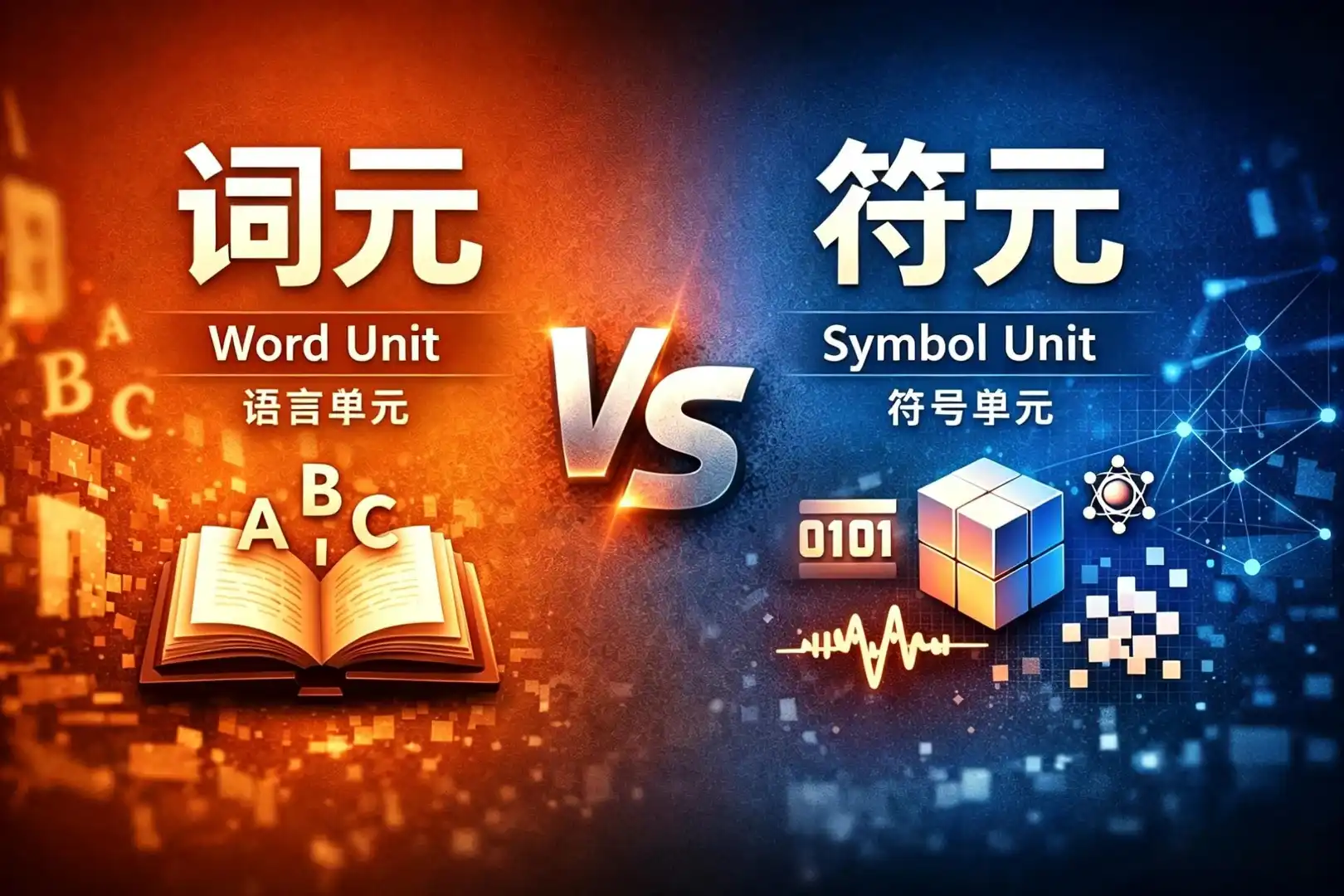
From 'Word Unit' to 'Symbol Unit': The Debate Over the Chinese Translation of 'Token' and Its Underlying AI Cognitive Implications

Recent discussions have emerged regarding the official Chinese translation of the AI term "Token," which has been recommended as “词元” (Cíyuán, meaning "word unit") by the National Committee for Terminology in Science and Technology. While this translation is argued to align with historical usage in natural language processing (NLP) and is considered concise and communicable, this article presents a critical counterview advocating for “符元” (Fúyuán, meaning "symbol unit") as a more structurally accurate and future-proof alternative. The author argues that defining Token based on its origin in NLP—as a linguistic semantic unit—overlooks its evolution into a general-purpose, discrete symbolic unit used across multimodal systems (text, image, audio, etc.). Using “词元” ties the concept too narrowly to language, causing cognitive misalignment and semantic drift when applied in non-linguistic contexts. By contrast, “符元” reflects Token’s fundamental role as a symbol in information theory and computation, independent of modality. The article further critiques the reliance on metaphorical extensions (e.g., comparing image patches to “words”) as insufficient for rigorous terminology. It highlights risks including confusion with existing linguistic terms like Lemma (also translated as “词元”), poor cross-lingual reversibility (e.g., difficult back-translation to English), and systemic misunderstanding among non-expert audiences. In conclusion, the author emphasizes that terminology should align with computational essence—not historical usage or explanatory convenience—to ensure conceptual clarity and scalability in AI’s multidisciplinary future. “符元” is proposed as a more neutral, stable, and structurally coherent translation for Token.

marsbit11 хв тому

From 'Word Unit' to 'Symbol Unit': The Debate Over the Chinese Translation of 'Token' and Its Underlying AI Cognitive Implications

marsbit11 хв тому

Aave Mired in a Crisis of Confidence: Service Providers Exit En Masse, Failures in Technology, Governance, and Risk Control

Aave, a leading DeFi lending protocol, is facing a severe internal crisis marked by the departure of key service providers, raising concerns about its governance, security, and future direction. The crisis began when Chaos Labs, the protocol's long-time risk management provider, terminated its relationship with Aave. The firm cited financial losses, the exit of other major contributors, and fundamental disagreements over the risk architecture of the upcoming Aave V4. Aave Labs declined Chaos Labs' demands for a significant fee increase and exclusive control over key functions like risk management and oracle services. This exit followed the departure of two other critical partners. BGD Labs, the primary technical contributor to Aave V3, accused Aave Labs of forcing an aggressive transition to V4 by limiting V3 development and devaluing its work. Subsequently, the Aave Chan Initiative (ACI), a major governance service provider, announced its planned exit, criticizing Aave Labs for centralizing power and controlling a large portion of voting tokens. The conflict highlights a central paradox within DAOs: the tension between founder-led vision and decentralized governance, and between long-term protocol health and short-term capital interests. Aave Labs is pushing for a more integrated and efficient "Aave Will Win" model with V4, arguing it is necessary for competing at an institutional level. However, critics warn this centralization comes at the cost of the protocol's decentralized credibility and increases systemic risk. The immediate impacts include a potential security downgrade, a loss of institutional knowledge, and damaged community trust. While Aave Labs views this as a painful but necessary transition, the market is watching cautiously as the protocol navigates this period of significant internal turmoil.

marsbit40 хв тому

Aave Mired in a Crisis of Confidence: Service Providers Exit En Masse, Failures in Technology, Governance, and Risk Control

marsbit40 хв тому

Торгівля

Спот
Ф'ючерси

Популярні статті

Як купити BTW

Ласкаво просимо до HTX.com! Ми зробили покупку Bitway (BTW) простою та зручною. Дотримуйтесь нашої покрокової інструкції, щоб розпочати свою криптовалютну подорож.Крок 1: Створіть обліковий запис на HTXВикористовуйте свою електронну пошту або номер телефону, щоб зареєструвати обліковий запис на HTX безплатно. Пройдіть безпроблемну реєстрацію й отримайте доступ до всіх функцій.ЗареєструватисьКрок 2: Перейдіть до розділу Купити крипту і виберіть спосіб оплатиКредитна/дебетова картка: використовуйте вашу картку Visa або Mastercard, щоб миттєво купити Bitway (BTW).Баланс: використовуйте кошти з балансу вашого рахунку HTX для безперешкодної торгівлі.Треті особи: ми додали популярні способи оплати, такі як Google Pay та Apple Pay, щоб підвищити зручність.P2P: Торгуйте безпосередньо з іншими користувачами на HTX.Позабіржова торгівля (OTC): ми пропонуємо індивідуальні послуги та конкурентні обмінні курси для трейдерів.Крок 3: Зберігайте свої Bitway (BTW)Після придбання Bitway (BTW) збережіть його у своєму обліковому записі на HTX. Крім того, ви можете відправити його в інше місце за допомогою блокчейн-переказу або використовувати його для торгівлі іншими криптовалютами.Крок 4: Торгівля Bitway (BTW)Легко торгуйте Bitway (BTW) на спотовому ринку HTX. Просто увійдіть до свого облікового запису, виберіть торгову пару, укладайте угоди та спостерігайте за ними в режимі реального часу. Ми пропонуємо зручний досвід як для початківців, так і для досвідчених трейдерів.

596 переглядів усьогоОпубліковано 2026.03.01Оновлено 2026.03.01

Як купити BTW

Як купити FRAX

Ласкаво просимо до HTX.com! Ми зробили покупку FRAX (FRAX) простою та зручною. Дотримуйтесь нашої покрокової інструкції, щоб розпочати свою криптовалютну подорож.Крок 1: Створіть обліковий запис на HTXВикористовуйте свою електронну пошту або номер телефону, щоб зареєструвати обліковий запис на HTX безплатно. Пройдіть безпроблемну реєстрацію й отримайте доступ до всіх функцій.ЗареєструватисьКрок 2: Перейдіть до розділу Купити крипту і виберіть спосіб оплатиКредитна/дебетова картка: використовуйте вашу картку Visa або Mastercard, щоб миттєво купити FRAX (FRAX).Баланс: використовуйте кошти з балансу вашого рахунку HTX для безперешкодної торгівлі.Треті особи: ми додали популярні способи оплати, такі як Google Pay та Apple Pay, щоб підвищити зручність.P2P: Торгуйте безпосередньо з іншими користувачами на HTX.Позабіржова торгівля (OTC): ми пропонуємо індивідуальні послуги та конкурентні обмінні курси для трейдерів.Крок 3: Зберігайте свої FRAX (FRAX)Після придбання FRAX (FRAX) збережіть його у своєму обліковому записі на HTX. Крім того, ви можете відправити його в інше місце за допомогою блокчейн-переказу або використовувати його для торгівлі іншими криптовалютами.Крок 4: Торгівля FRAX (FRAX)Легко торгуйте FRAX (FRAX) на спотовому ринку HTX. Просто увійдіть до свого облікового запису, виберіть торгову пару, укладайте угоди та спостерігайте за ними в режимі реального часу. Ми пропонуємо зручний досвід як для початківців, так і для досвідчених трейдерів.

578 переглядів усьогоОпубліковано 2026.03.03Оновлено 2026.03.03

Як купити FRAX

Що таке MANTRA

I. Вступ до проектуMANTRA - це блокчейн першого рівня RWA з пріоритетом безпеки, здатний дотримуватися та забезпечувати виконання регуляторних вимог реального світу. Створений для установ та розробників, MANTRA пропонує бездозвільний блокчейн для дозволених додатків.Ключові особливості: * Створено за допомогою Cosmos SDK, сумісний з IBC, з підтримкою CosmWasm * Захищений через суверенний набір валідаторів PoS * Масштабований до 10 тис. TPS * Вбудовані модулі, SDK та API для створення, торгівлі та управління регуляторно сумісними RWA * Поліпшений досвід користувача для залучення неоригінальних користувачів та установ до Web3.1) Основна інформаціяНазва: MANTRA (OM)III. Пов'язані посиланняБіла книга:https://docs.mantrachain.io/Офіційний вебсайт:https://www.mantrachain.io/Експлорери:https://mintscan.io/mantraСоціальні мережі:https://x.com/MANTRA_ChainПримітка: Вступ до проекту походить з матеріалів, опублікованих або наданих офіційною командою проекту, які є лише для довідки і не є інвестиційною порадою. HTX не несе відповідальності за будь-які прямі або непрямі збитки, що виникають внаслідок цього.

532 переглядів усьогоОпубліковано 2026.03.04Оновлено 2026.03.04

Що таке MANTRA

Обговорення

Ласкаво просимо до спільноти HTX. Тут ви можете бути в курсі останніх подій розвитку платформи та отримати доступ до професійної ринкової інформації. Нижче представлені думки користувачів щодо ціни A (A).

活动图片